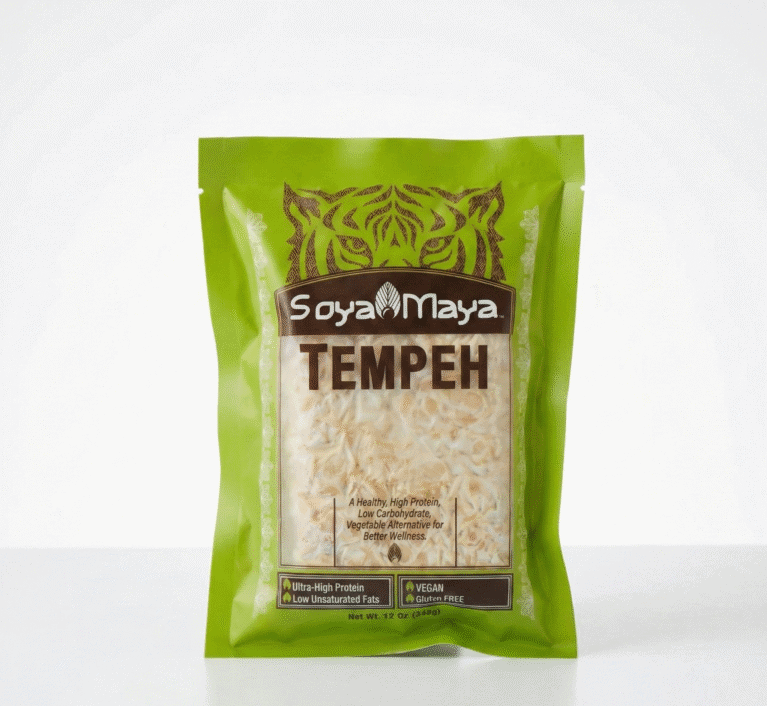
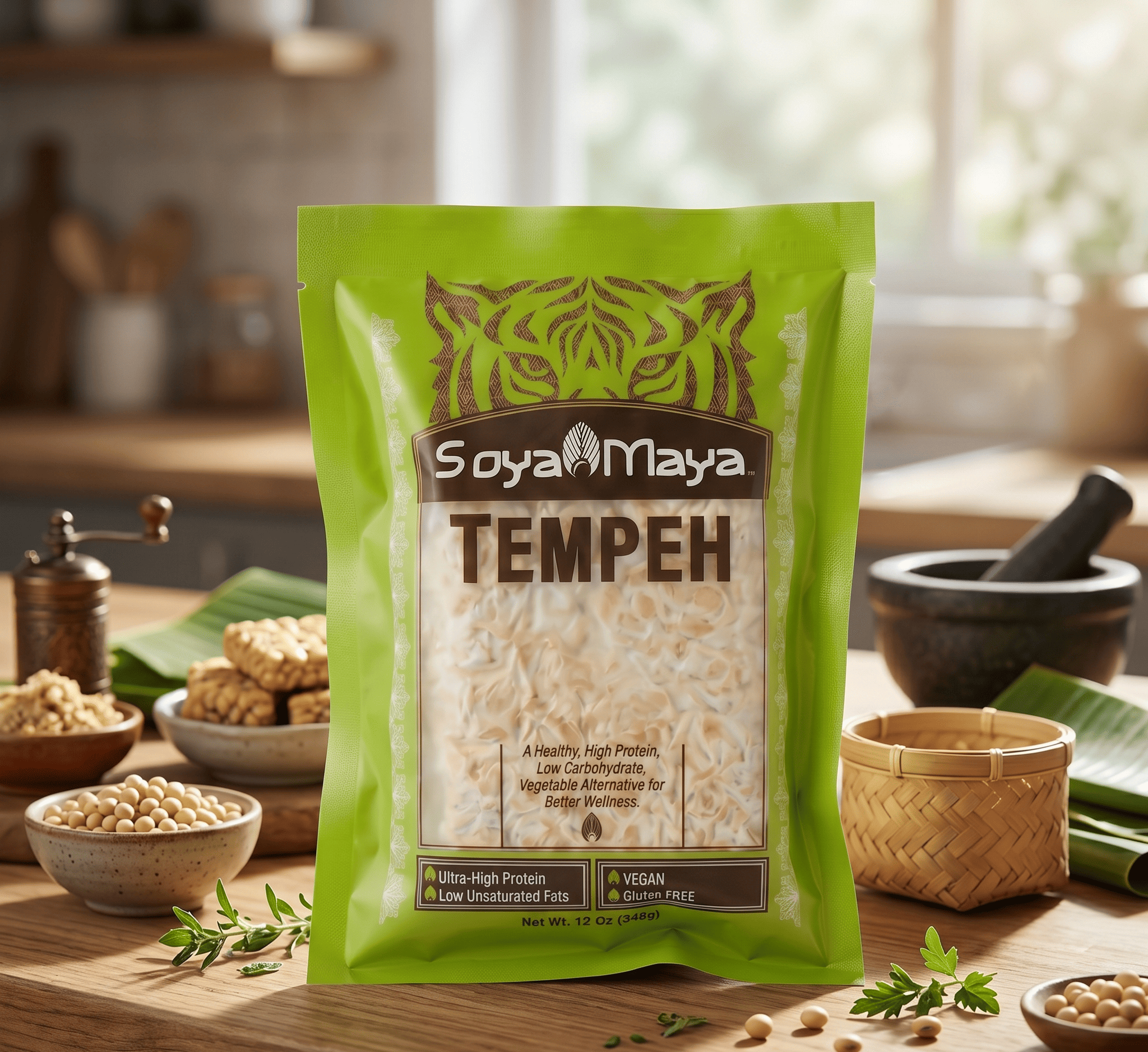
Non-GMO tempeh is easy to find these days, thanks to a growing number of grocery stores, online vendors, and local producers offering it. Labels like USDA Organic help confirm that…
Local soybeans are often non-GMO, especially in Asia. In places like Indonesia, farmers use heirloom seeds and traditional methods. This is different from the United States, where nearly all soybeans…
A good tempeh cake isn't luck. It's the result of three things: exact moisture, proper airflow, and a steady, warm temperature. When you get these right, the soybeans knit together…
Fermentation gets predictable fast when the right microbes take charge early. Rhizopus mold for tempeh like ours at SoyaMaya, or lactic acid bacteria for sauerkraut. In tempeh, LAB kick off…
Tempeh fermentation originated in Central Java, Indonesia. It did not have a single inventor. The process developed gradually through long-standing food practices involving soybeans, natural molds, and warm tropical conditions.…
Fermentation helps your health by using microbes to transform food. This makes nutrients easier for your body to absorb and can improve digestion. Our personal experience supports this. Eating fermented…
Yes, you can make excellent tempeh at home. It's more practical and affordable than you might think, and you get to control the final flavor. We began making it ourselves…
Tempeh ferments best between 80°F and 92°F (27°C to 33°C). The sweet spot is 86°F (30°C), which encourages strong mycelium growth in about a day or two. We've tried making…
Tempeh ferments in about 24-48 hours as Rhizopus oligosporus grows at 30-32°C, binding soybeans into a firm, white cake with a nutty aroma. That timeframe holds steady when the beans…
Rhizopus oligosporus is a fungus. It turns cooked soybeans into tempeh. We use it as a starter culture. In our work, it reliably forms a firm, white, protein-rich cake in…