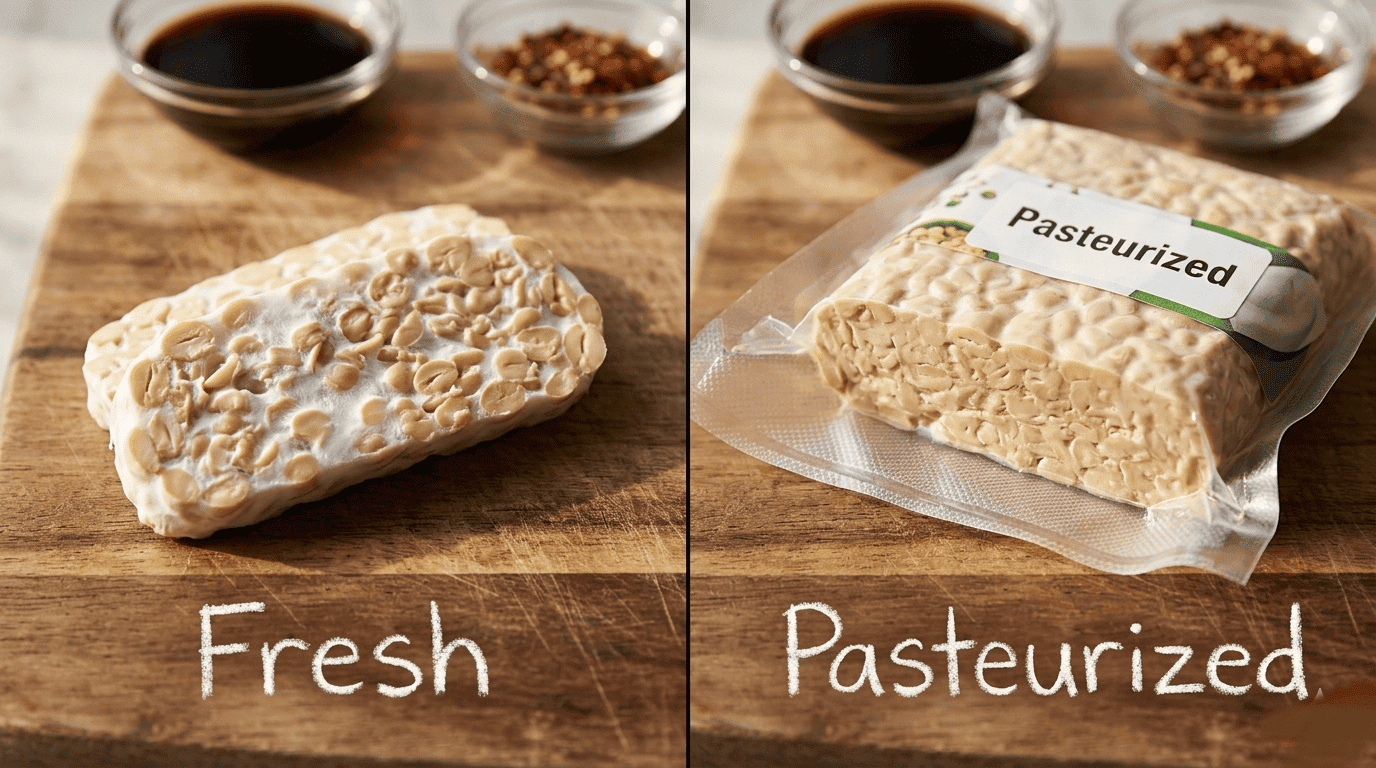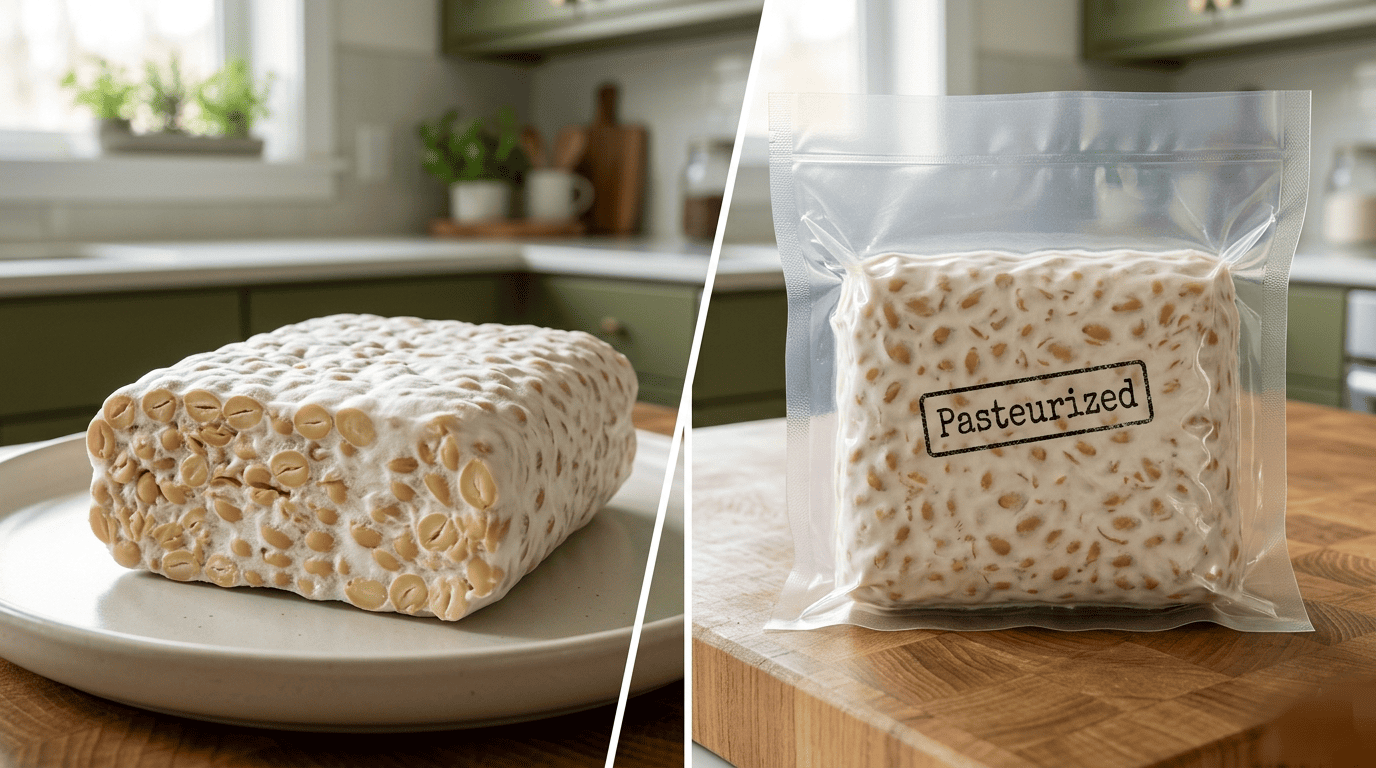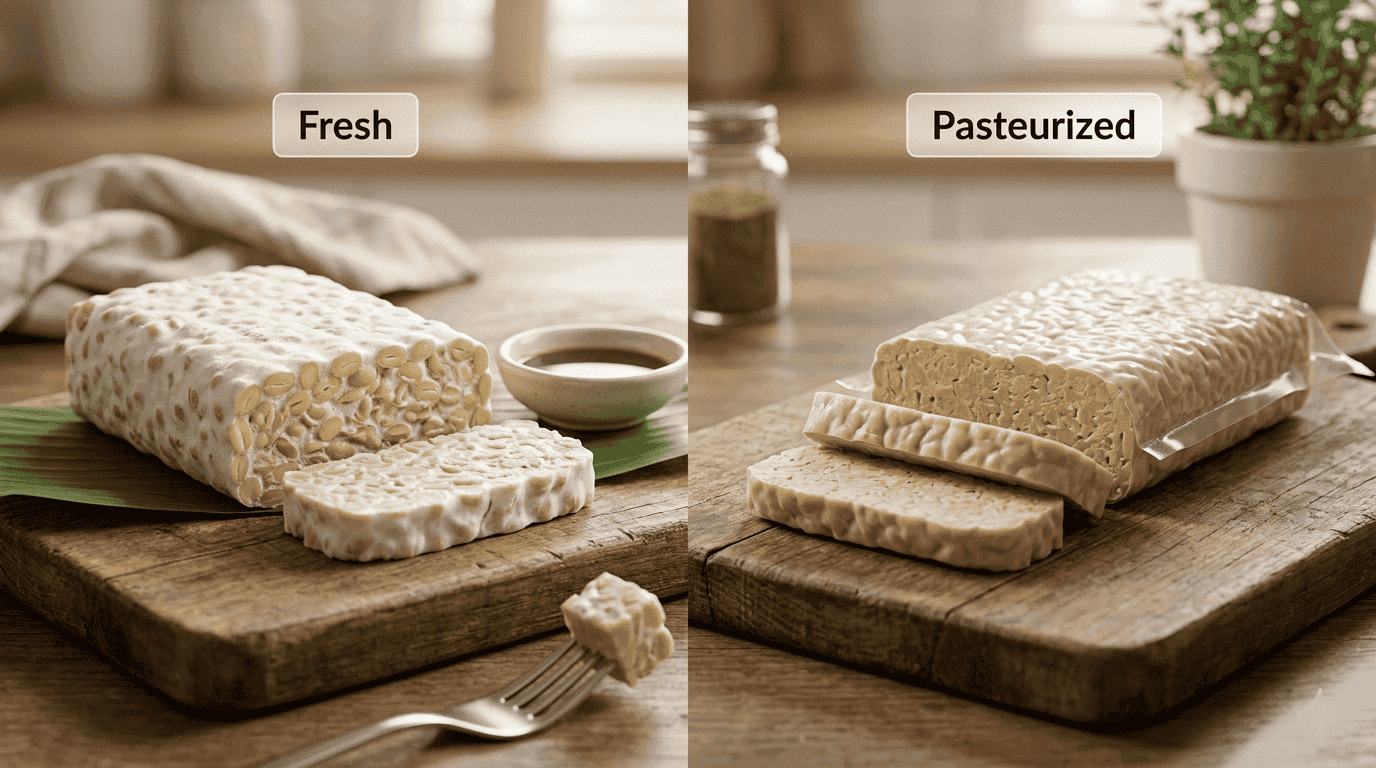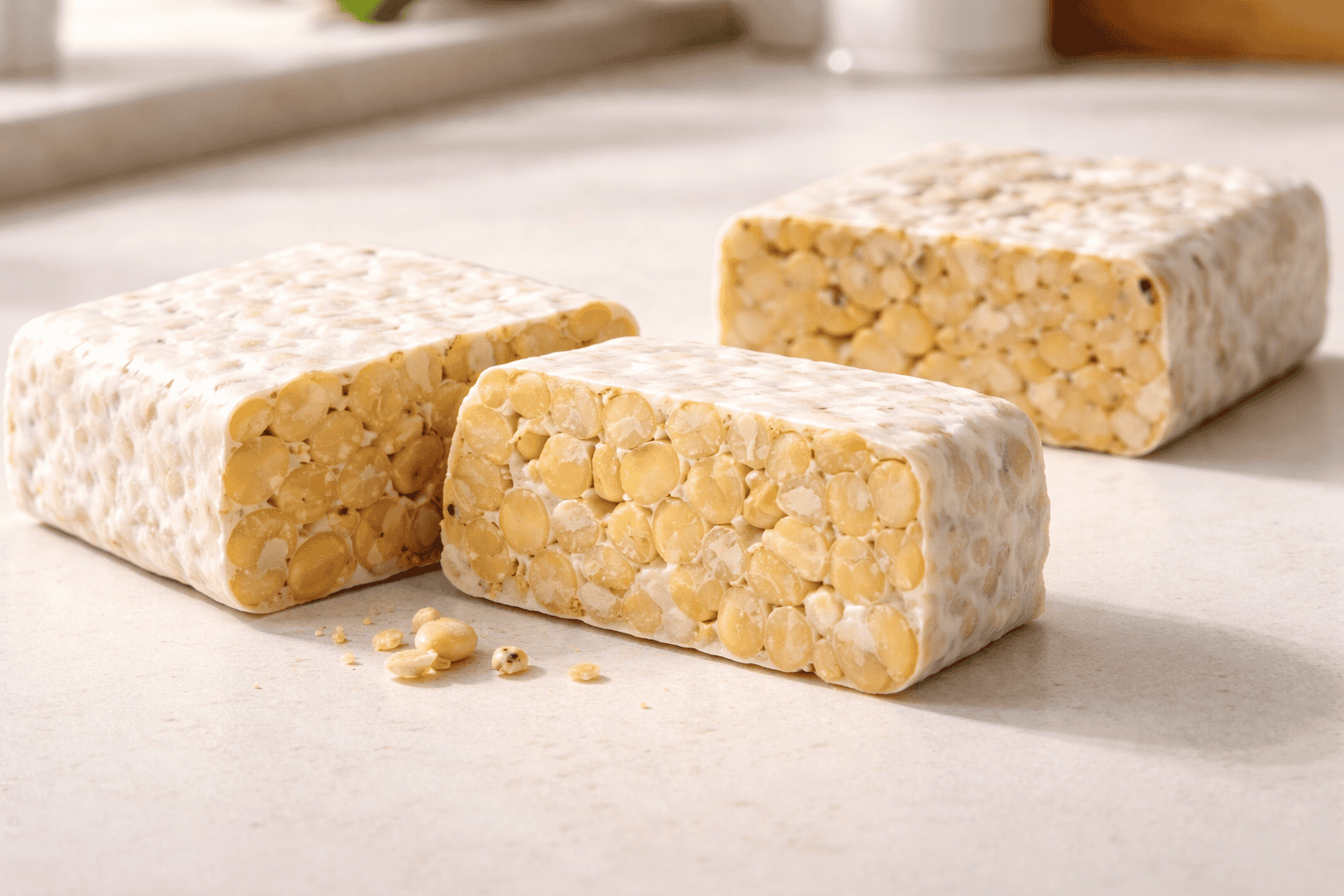
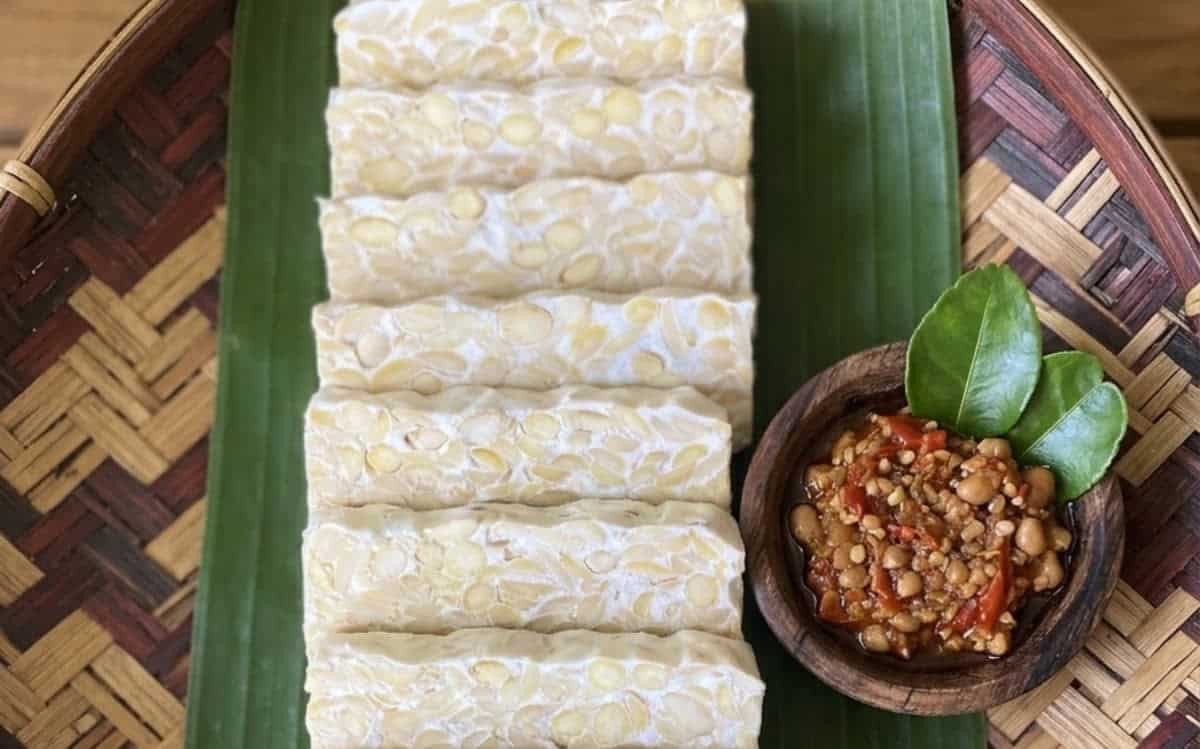
This is what real whole soybean tempeh looks like: a solid block of whole, organic soybeans woven together by a soft white mold. You can see every bean. The texture…
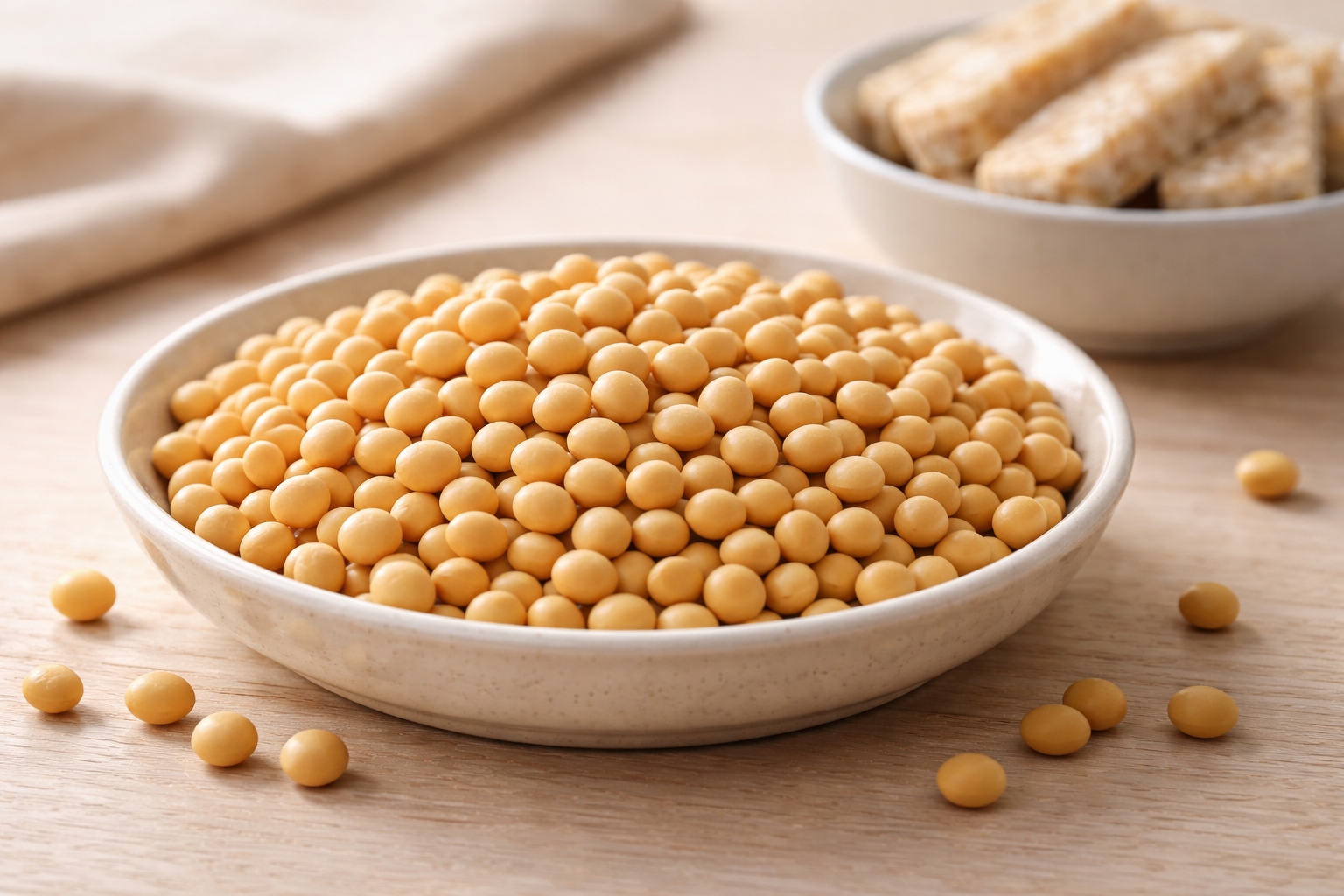
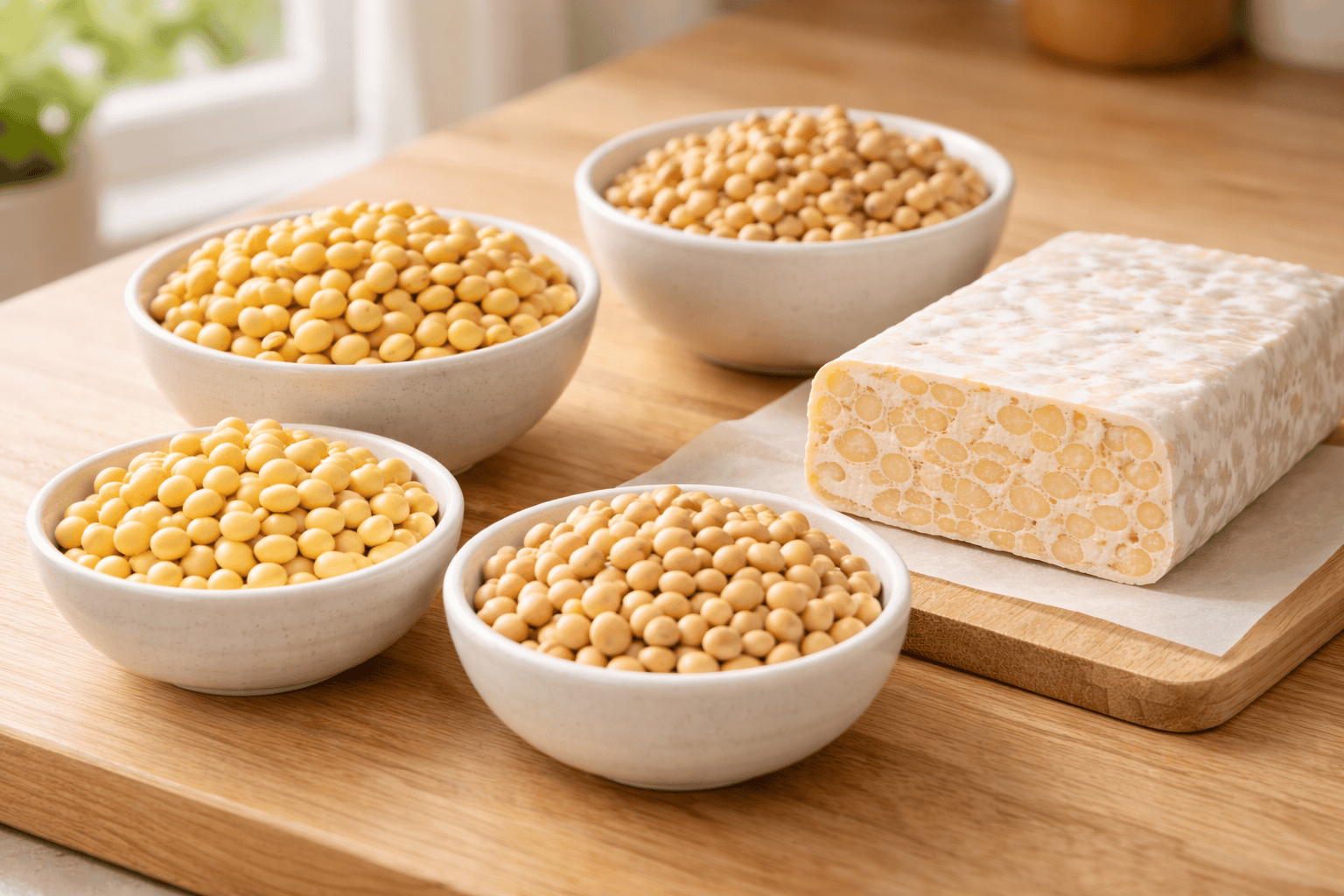
The best soybeans for tempeh are whole, dried yellow soybeans (Glycine max). They give you a firm block, a strong fermentation, and plenty of protein. We've run tests on dozens…
We turn soybeans into tempeh through fermentation. We use a particular culture called Rhizopus oligosporus. It breaks down the beans, making them firmer, boosting the protein you can actually absorb,…
We make a lot of tempeh. After years of testing in our own kitchen, we're convinced the best beans are fresh, whole, yellow soybeans that are non-GMO. They have a…
Forget the whole beans. If you want tempeh that slices clean and holds up in the pan, you need to start with dehulled soybeans. We learned this the hard way…
Flavor starts with the bean. Whole soybeans give you a mild, nutty base, a little sweetness, and a natural savoriness that soaks up other flavors during cooking or fermenting. We've…
We start with whole, non-GMO soybeans. It’s a foundational choice for us. While raw beans are nutrient-dense, the real magic happens in the kitchen: a 100g serving of our prepared…
Whole soybeans are incredibly nutritious, and we build our recipes around them at SoyaMaya. The numbers speak for themselves: 100 grams of prepared tempeh delivers a concentrated 19-20 grams of…
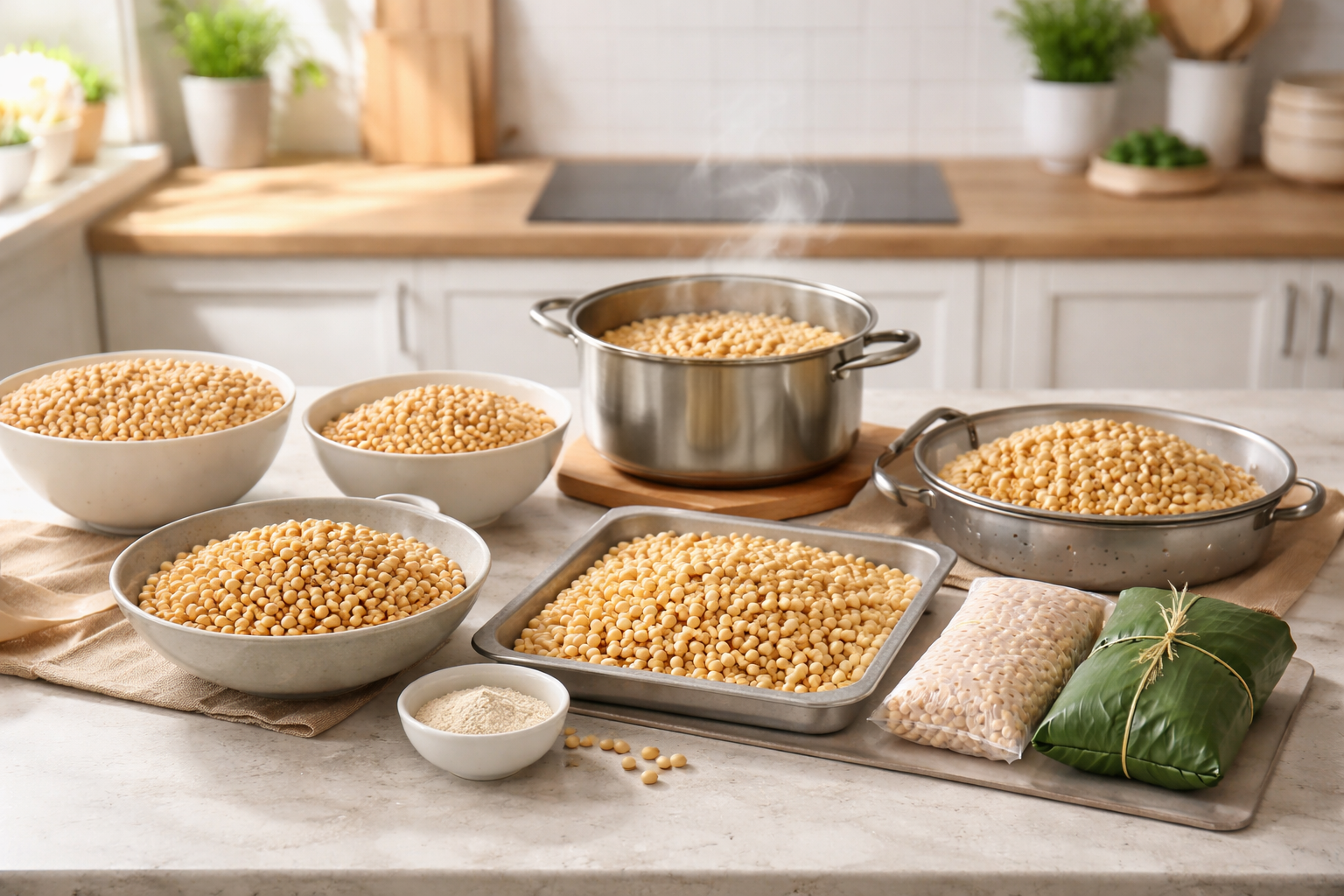
The texture of tempeh isn't random. It's decided before fermentation even starts, in how the soybeans are prepared. Whole beans and split beans create completely different structures as the Rhizopus…
Tempeh is soybeans, fermented and pressed. We make it in our kitchen. A serving has about 11 grams of protein, and because we use the whole bean, all the fiber…