
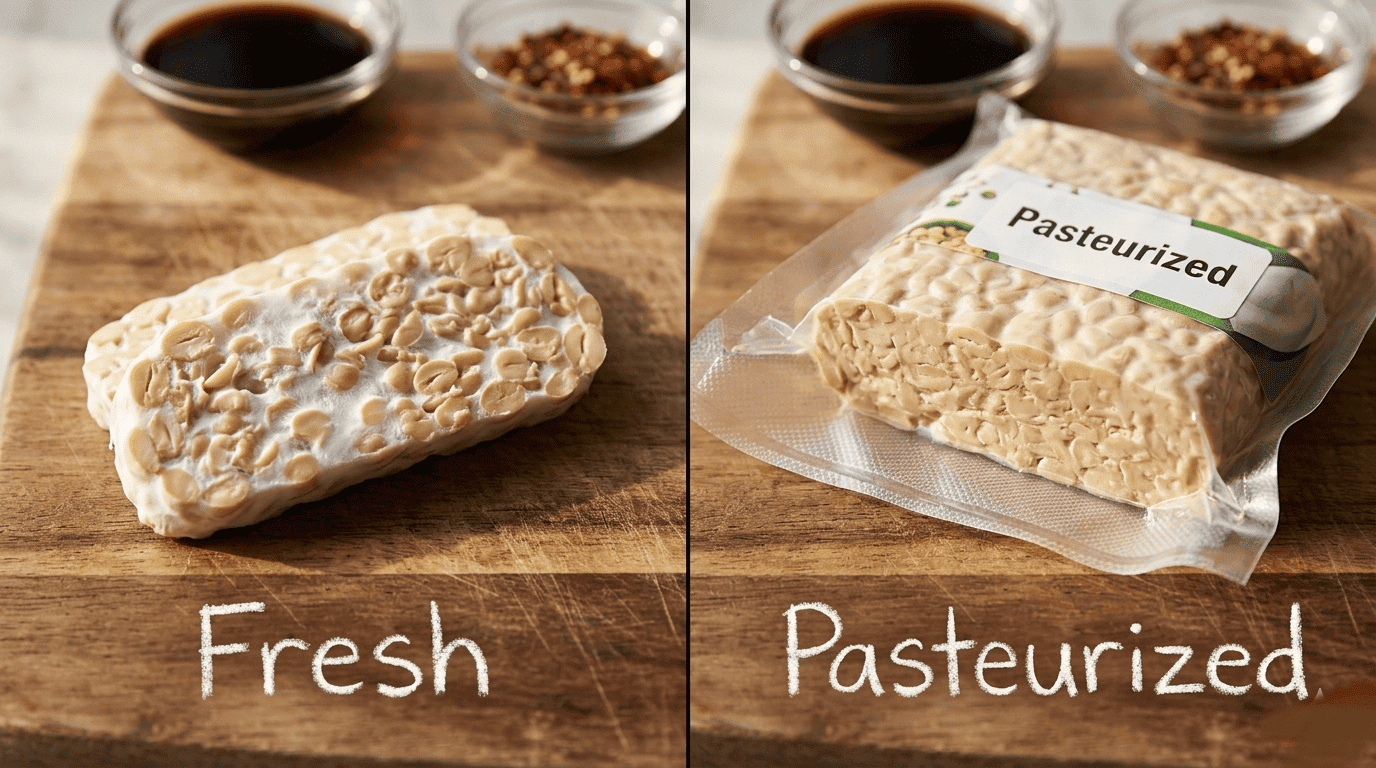
Fresh tempeh has a nutty, yeasty flavor that feels alive. Pasteurized tempeh is milder, flatter, and can have a slight bitterness.
That bitterness happens because pasteurization stops fermentation early. The heat breaks down proteins into bitter peptides before the full flavor develops.
If you cook both types together, the difference is obvious. Fresh tempeh has a distinct nutty profile and an active, yeasty aroma. Pasteurized tempeh is bland and has a softer smell.
SoyaMaya Fresh Tempeh is made the traditional way — no preservatives, no shortcuts. Delivered to your door.
Order Fresh Tempeh →The reason is straightforward. Fresh tempeh contains the active fermentation culture Rhizopus oligosporus. Pasteurization heats it above 70°C, killing the culture and halting flavor development.
Harvard Health points to fermentation research showing that the process creates bioactive peptides and isoflavones. These compounds give tempeh its savory character.
We use fresh batches at SoyaMaya. The flavor we get is complex and hasn’t been dulled by heat processing.
Quick Flavor Snapshot: Fresh vs Pasteurized Tempeh
- Fresh tempeh delivers stronger tempeh umami flavor
- Pasteurized tempeh has a pasteurized tempeh flat flavor
- Texture, aroma, and flavor absorption all shift
Fresh Tempeh’s More Complex Flavor
Fresh tempeh has a richer taste because it’s still actively fermenting. This ongoing process creates amino acids and aromatic compounds, which boost those nutty, mushroom-like, and yeasty notes-something we consistently notice when working with fresh tempeh in our daily cooking
We really notice this when we taste the tempeh right after cooking it. The smell is mushroomy, a mix of warm soy and fresh bread. In a recent analysis by International Journal of Food Microbiology
“The mushroom odour compounds, 3-octanone and 1-octen-3-ol, were only detected from soybean and soybean tempeh.” – International Journal of Food Microbiology
That depth comes from the microbes still working.
The fermentation keeps producing flavor molecules, including glutamates that give tempeh its umami richness. NIH research shows fermented foods can have up to twice as many free amino acids, which directly affect taste.
The texture is different too. Fresh tempeh feels cohesive and moist. The mycelium holds the soybeans together tightly, giving a satisfying bite that complements its meaty flavor.
We’ve also watched the flavor change over time. When stored correctly, fresh tempeh develops a slightly deeper tang and a subtle sour note, but it doesn’t turn unpleasant.
Here’s what builds that complexity:
- Active fermentation keeps building flavor
- Mycelium growth improves the fungus flavor and aroma
- Natural enzymes increase the umami depth
- Flavor changes gradually while it’s refrigerated
That’s why, in our kitchen, fresh tempeh usually doesn’t need a lot of extra seasoning. The base flavor already has plenty of character on its own.
Milder or Slightly Bitter Pasteurized Tempeh
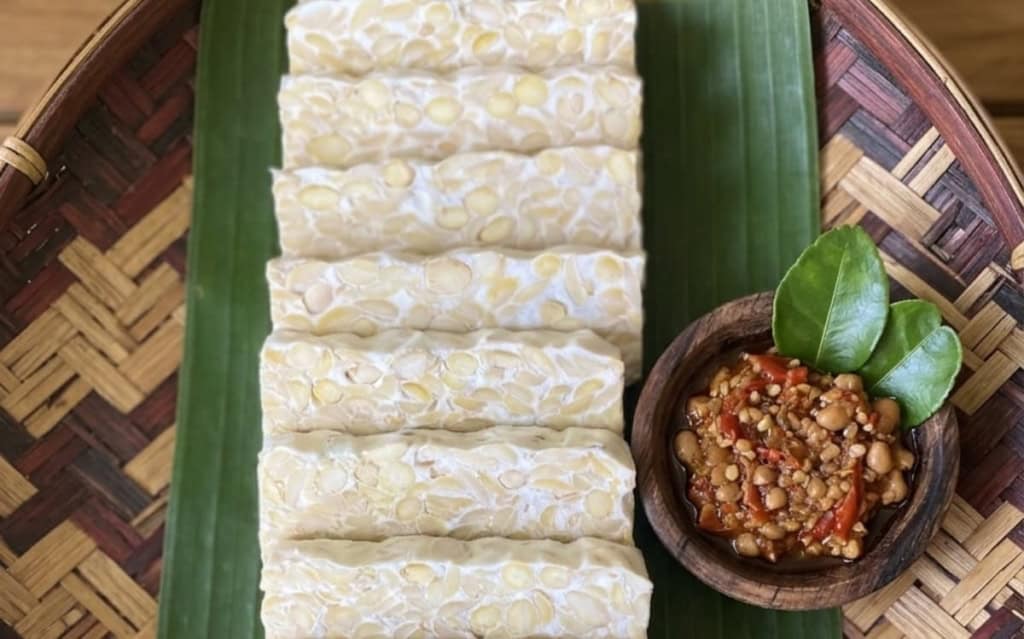
Pasteurized tempeh just tastes simpler. The heat kills everything, so the flavor stops, this is exactly what happens during pasteurized tempeh processing.
It loses its smell, and sometimes you get a bitter taste, or just the taste of cooked beans.
We find it tastes stale. A bit off, really, if it sits around. Heating messes with the proteins and strips away the stuff that makes it smell good.
Scientific analysis of volatile compounds shows that thermal processing leads to a significant reduction in the aromatic esters that give fresh tempeh its depth. That explains the flat taste.
The smell isn’t right either. No fresh, yeasty note. It leans toward a plain bean smell, or something slightly musty. If storage isn’t perfect, that off aroma can show up.
The texture changes. It gets drier. Crumbly, especially after freezing. This changes how the flavor comes through when you cook it.
Here are the main reasons.
- Heat stops fermentation. It kills flavor growth.
- It loses the volatile compounds, so the aroma gets weak.
- The structure changes, making it drier.
- Storage can make it taste musty or bitter.
Because of all this, pasteurized tempeh needs help. It usually depends on a marinade to make up for its simpler flavor.
Texture and Aroma After Cooking
Fresh tempeh stays tender and aromatic after cooking, while pasteurized versions behave differently, something we consistently see when comparing fresh vs pasteurized tempeh side by side in the pan.
We see this clearly when pan-frying. Fresh tempeh releases a flavor that builds with the heat. Pasteurized tempeh needs help to get to that same level.
Here’s how they compare.
| Attribute | Fresh Tempeh | Pasteurized Tempeh |
| Texture After Cooking | Tender, cohesive, structured | Firmer, drier, sometimes crumbly |
| Aroma After Cooking | Yeasty, nutty, mushroom-like | Mild, cooked soy smell |
| Flavor Release | Strong and develops during cooking | Limited, depends on added seasoning |
| Moisture Retention | Retains moisture well | Reduced moisture, can dry out |
| Response to Heat | Flavor intensifies with frying or grilling | Needs pre-treatment (like steaming) |
The cooking method matters. Fresh tempeh shines when fried or grilled. Its natural oils and fermentation compounds develop more. Pasteurized tempeh often needs pre-steaming to soften its base flavor first.
Freezing plays a role too. Research into food structure shows that freezing creates ice crystals that expand and create micro-fractures in the mycelium, making the texture more porous.
This helps tempeh absorb flavor, but it doesn’t bring back the lost complexity.
In our kitchen, we see customers notice the difference most when cooking simply. Less processing means more natural aroma stays.
Before we go deeper, it helps to understand how storage keeps shaping flavor over time.
Storage Effects on Flavor Difference
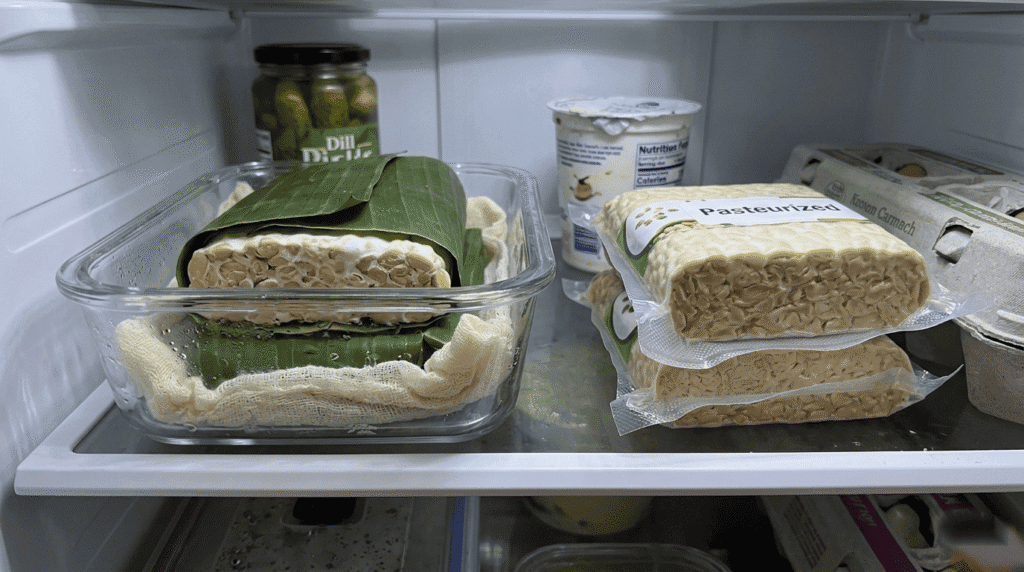
Does storage affect the flavor difference? It’s one of the biggest factors.
Think of fresh tempeh as a living ingredient. The cultures inside are still active, even after you bring it home. Storing it in the fridge doesn’t just pause it; the fermentation slowly continues.
This means the flavor doesn’t stay static. Over two or three days, you might notice the taste becoming richer, with a more pronounced nutty, savory depth. It’s a subtle change, but it’s real.
Pasteurized tempeh is different. The heat treatment stops all biological activity. Its flavor is essentially frozen in time from the moment it’s packaged.
You get consistency-it will taste the same next week as it does today-but you lose that potential for development. The taste often feels one-dimensional by comparison.
This aligns with what we know about food. USDA pointers note that foods with active, live components typically have a shorter prime window.
That’s our fresh tempeh: best enjoyed within a few days for peak flavor. Pasteurization trades that peak for longevity, extending shelf life to weeks, sometimes months.
Here’s the practical breakdown:
- Fresh Tempeh: Develops a deeper, more complex flavor as it sits (properly refrigerated).
- Pasteurized Tempeh: Taste remains stable and consistent, but can lack complexity.
- The Risk of Improper Storage: If fresh tempeh gets too warm, the cultures can over-ferment, producing a strong ammonia odor. Both types can spoil if left out.
- Freezing: A great option for fresh tempeh you won’t use immediately, though it becomes more crumbly. It halts the flavor development. Pasteurized tempeh freezes well, too, but you’re just preserving its initial state.
This is why we’re meticulous about our process, from fermentation to packaging. We’re not just selling a protein; we’re delivering a specific, living flavor experience that’s at its best for a brief time. That careful handling is how we make sure you get that experience.
Choosing Fresh vs Pasteurized Tempeh
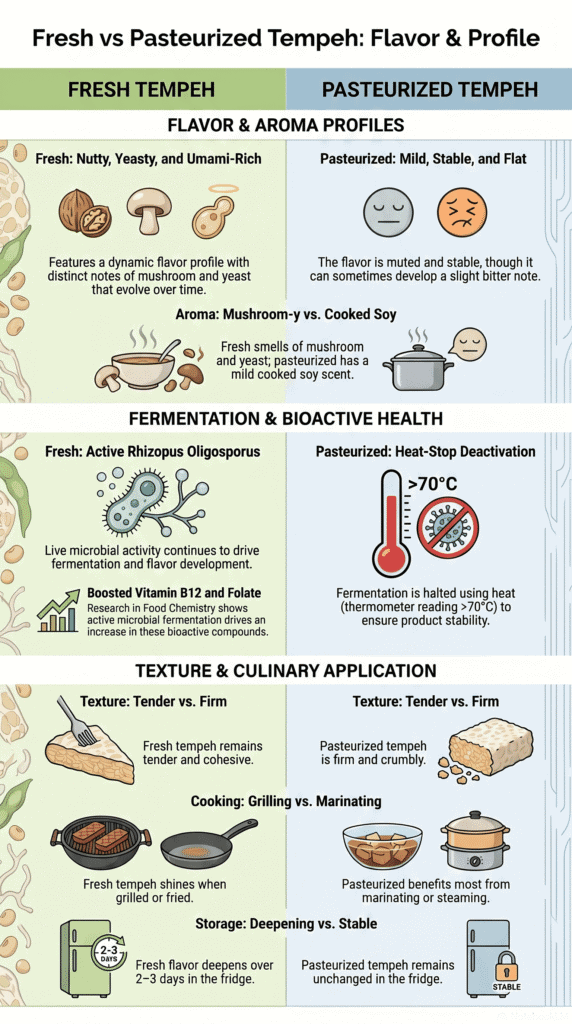
Choose fresh tempeh for richer flavor, less seasoning. Choose pasteurized for convenience, longer storage.
We cook it daily. Fresh tempeh stands out in simple dishes. A quick pan-fry already gives you a full, strong umami taste.
Pasteurized tempeh is different. It needs marinades because its base flavor is mild.
As recommended by the Culinary Institute of America, marinating is a critical technique to infuse flavor into denser proteins like pasteurized tempeh.
Here is how we decide.
- Fresh tempeh
- Best for grilling, frying, or light seasoning.
- Ideal for highlighting fresh tempeh flavor.
- Great when tempeh is the main focus.
- Pasteurized tempeh
- Works well with sauces and marinades.
- Good for meal prep and storage.
- Better if you steam it before cooking.
How you cook it matters.
- Grilled tempeh gets deeper, a bit smoky.
- Steamed tempeh stays mild and soft.
- Marinated tempeh depends on absorption.
We usually pick fresh tempeh. It just means you don’t need a lot of extra seasoning.
SoyaMaya Insight on Better Flavor
Source: SoyaMaya
Fresh tempeh gives you better flavor, smell, and texture. It’s the better choice if you care about taste.
From our experience, the difference is big. Fresh tempeh has a full flavor with layers. You get nuttiness, a mild tang, and natural umami. Pasteurized tempeh feels more like a plain, neutral base.
Research from Food Chemistry demonstrates
“Folate and vitamin B12 contents were mainly influenced by microbial activity during fermentation. Tofu had lower folate and vitamin B12, but equal isoflavone contents as tempeh.” – Food Chemistry
People seem to agree. Industry research shows a clear trend toward ‘clean label’ products, with a majority of consumers now actively seeking minimally processed, plant-based options, especially plant-based ones.
We focus on making fresh tempeh at SoyaMaya. We think the flavor should come from fermentation, not from a lot of seasoning. That means keeping the flavor from the mold, the soybeans, and the natural fermentation process.
Fresh tempeh also brings:
- A stronger smell advantage.
- A more satisfying aftertaste.
- Better natural fit with simple cooking.
FAQ
What is the real fresh vs pasteurized tempeh flavor difference?
The fresh vs pasteurized tempeh difference is clear in both flavor and intensity. Fresh tempeh flavor is vibrant, showing a nutty flavor tempeh, yeasty flavor tempeh, and a light mushroom flavor tempeh.
In contrast, pasteurized tempeh taste is milder and sometimes bland tempeh pasteurized, with less depth. These pasteurized tempeh flavor differences happen because heat stops fermentation and reduces flavor complexity.
Why does fresh tempeh have a stronger aroma and taste?
Fresh tempeh flavor is stronger because active fermentation continues to develop compounds. This process creates a fermented soy flavor with a yeasty aroma tempeh and a mushroomy aroma fresh tempeh.
The result is a live tempeh flavor with noticeable tempeh umami richness and slight tanginess. Compared to pasteurized tempeh flat flavor, fresh tempeh brighter flavor feels more complex and layered.
Does pasteurized tempeh always taste bland or bitter?
Pasteurized tempeh that tastes bland is common, but it does not always taste that way. Pasteurized tempeh taste can be mild, and sometimes it develops a bitter taste pasteurized tempeh if the heating process is too strong.
Some people also notice an off-taste pasteurized tempeh or a pasteurized tempeh stale taste. Proper cooking and seasoning can improve the overall pasteurized tempeh flavor.
How do cooking methods affect tempeh flavor and texture?
Tempeh cooking methods affecting flavor play a major role in the final taste. Fried tempeh flavor becomes richer and crispier, which enhances tempeh umami flavor.
Grilled tempeh taste adds a smoky layer, while steamed tempeh flavor and boiled tempeh taste remain lighter and simpler. Fresh tempeh texture stays firm and structured, while pasteurized tempeh texture becomes softer and more uniform after processing.
How can you tell if the tempeh smell is still good or gone bad?
Tempeh smell fresh vs pasteurized can vary, but good tempeh should smell clean and slightly yeasty. A yeasty note or mild mushroom scent usually indicates freshness.
An ammonia smell tempeh or strong tempeh off-aroma often signals spoilage. Tempeh smell still good should not be sharp, rancid, or overly sour, while tempeh smell gone bad is usually unpleasant and overpowering.
A Clear Flavor Advantage You’ll Notice Fast
You can taste the difference right away, and it changes how you cook from the first step. Fresh tempeh gives a deeper, fuller bite with less effort in the pan, while pasteurized tempeh often needs more seasoning to feel complete. It shows up in every dish, affecting time, flavor, and consistency.
This simple choice reduces prep, keeps flavors balanced, and helps you cook confidently every day. Choose SoyaMaya for better results fresh tempeh here.
References
- https://www.sciencedirect.com/science/article/abs/pii/
- https://researchportal.helsinki.fi/sv/publications/effect-of-soybean-processing-on-content-and-bioaccessibility-of-f/
Related Articles
- https://mayasaritempeh.com/fresh-tempeh/
- https://mayasaritempeh.com/fresh-vs-pasteurized-tempeh/
- https://mayasaritempeh.com/what-is-pasteurized-tempeh/
SoyaMaya Fresh Tempeh
Traditionally fermented, no preservatives, shipped fresh and frozen to your door. The real deal, direct from us.
