
Fresh tempeh is the answer. It’s the real food you’re looking for, without the fuss. We got tired of bland, processed options and started making our own, just to taste something alive again.
That humble block of fermented soybeans changed everything, it gave us a solid, simple protein source and turned hectic weeknights into something manageable.
Our kitchen became a place for easy, nourishing meals, not a chore. Forget the complicated recipes and long ingredient lists. This is about getting good food on the table. Stick around, and let’s see how fresh, live tempeh can do the same for you.
SoyaMaya Fresh Tempeh is made the traditional way — no preservatives, no shortcuts. Delivered to your door.
Order Fresh Tempeh →Key Takeaways
- Fresh, unpasteurized tempeh offers superior flavor and live cultures you can’t get from shelf-stable versions.
- Proper storage, freezing is best, preserves its quality and makes meal prep effortless.
- Its firm texture and nutty taste make it a versatile, high-protein swap for meat in any recipe.
What is Artisanal Tempeh?
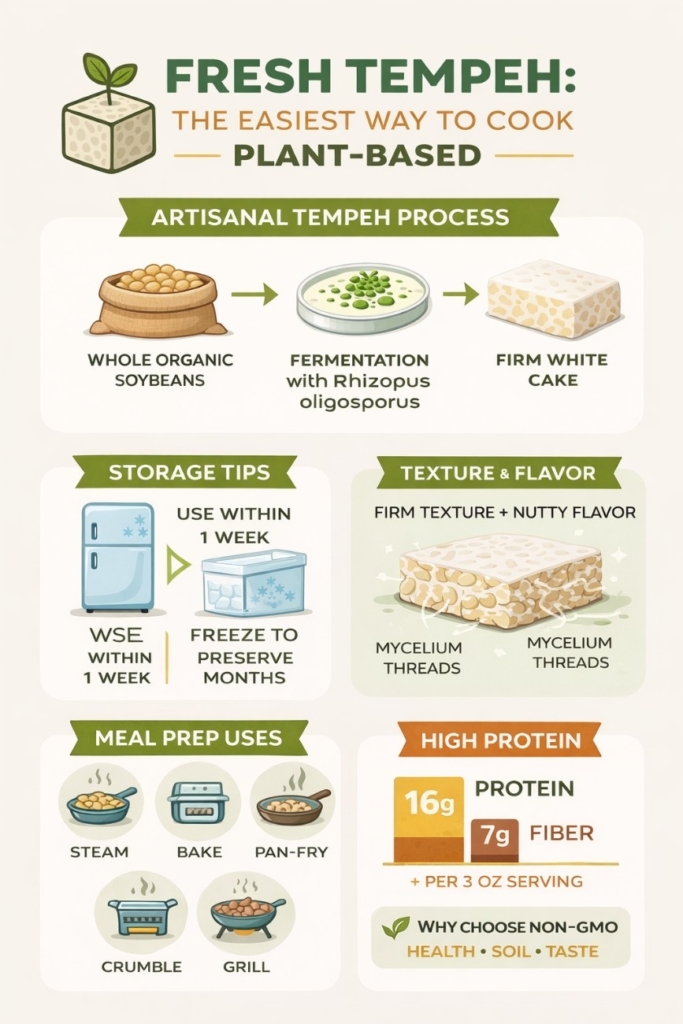
You see it in the fridge section, a solid white block. Artisanal tempeh is that, but deeper. It’s the product of careful, small-batch fermentation.
We use organic, non-GMO soybeans from Indiana farms. They’re soaked, cooked, and then inoculated with a traditional Rhizopus oligosporus culture.
This isn’t a factory process. It’s a slow, warm incubation for about 48 hours. The mycelium grows, weaving through the beans, binding them into a dense, cohesive cake. It’s alive when you get it. That’s the point.
You’re not just buying protein, you’re buying a food that’s still actively beneficial, teeming with the results of fermentation that mass-produced versions often cook away.
- It starts with whole, organic soybeans.
- A heirloom starter culture is mixed in.
- It ferments in a warm, controlled space.
- The result is a firm, white cake of live tempeh.
This method isn’t new. It’s centuries old, originating in Indonesia.
” Over decades of human history the pioneering practice of food fermentation has added taste to cultural ethos and has expanded significantly from household level to gradually improve the available food resources combat the hidden hunger.” – Gazalla Akhtar et al, Microorganisms in Food and Health,
But doing it right, with attention to sourcing and time, that’s what makes it artisanal. We think that care translates directly to your plate. The texture is firmer, the nutty flavor is more pronounced, and it cooks up with a heartiness that flimsier products can’t match. It feels substantial in your hand, which is the first sign you’re working with something good.
How to Store Tempeh
Credits: The Advice Alley
You bring it home. Now what? Fresh tempeh is a living food, and it will continue to ferment slowly in your fridge.
That’s fine, for a few days. You’ll want to use it within a week for the best flavor and texture. Keep it in its packaging, or transfer it to a breathable container. If you see more black or gray spots forming, don’t panic.
That’s just the spores maturing, and it’s perfectly safe to eat. The smell should be earthy, nutty, maybe a little mushroomy. If it ever smells sharply of ammonia or turns slimy, it’s past its prime. But here’s the real trick, the one that changed how we use it: freeze it.
Stick the whole package in the freezer. It halts the fermentation process right where it is. For meal prep, this is a game changer.
You can pull out a block, thaw it on the counter or steam it straight from frozen, and it’s ready to go. Frozen, it keeps for months without losing quality.
This simple step transforms fresh tempeh from a perishable item into a reliable pantry (or rather, freezer) staple. It means you always have a high-protein, whole-food base for dinner, which takes the pressure off on busy nights.
Whole vs Split Soybeans in Tempeh
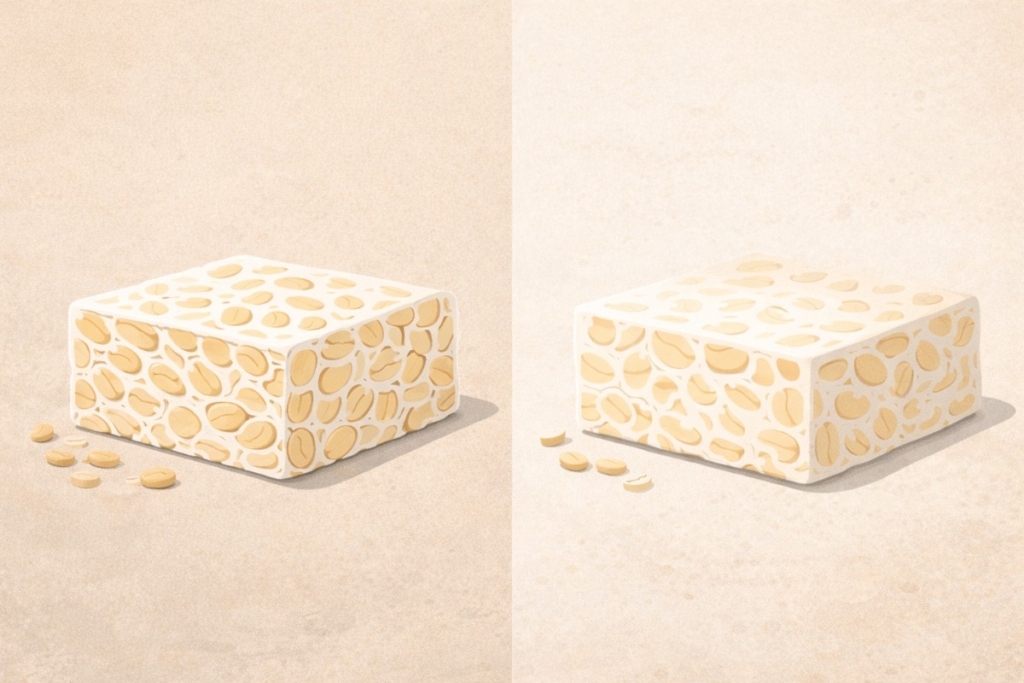
Not all soybeans are prepared the same way for tempeh. Traditional, artisanal tempeh like ours uses whole soybeans. The beans are dehulled, but they remain intact. This matters. Whole beans give the tempeh a distinctly firm, chewy texture. They create little pockets and an uneven surface that’s perfect for grabbing onto marinades and sauces.
“In the earliest stages of production, whole soybeans are gathered to be soaked overnight which allow the ingredients to soften its texture and further be dehulled when boiled for 30 minutes.” – Wiki Ubc
They also retain more of the bean’s natural fiber. Split soybeans, which are cracked in half, are sometimes used. They ferment a bit faster and can yield a slightly softer, more uniform cake. It’s a texture preference, really. But we prefer whole beans.
They provide a heartier bite, something that stands up to stir-frying or grilling without falling apart. That substantial mouthfeel is part of what makes tempeh so satisfying as a meat alternative.
You’re not eating a mushy paste, you’re eating distinct, fermented beans held together by a network of fuzzy white mycelium. It’s a whole food, in the truest sense..
Fresh vs Pasteurized Tempeh
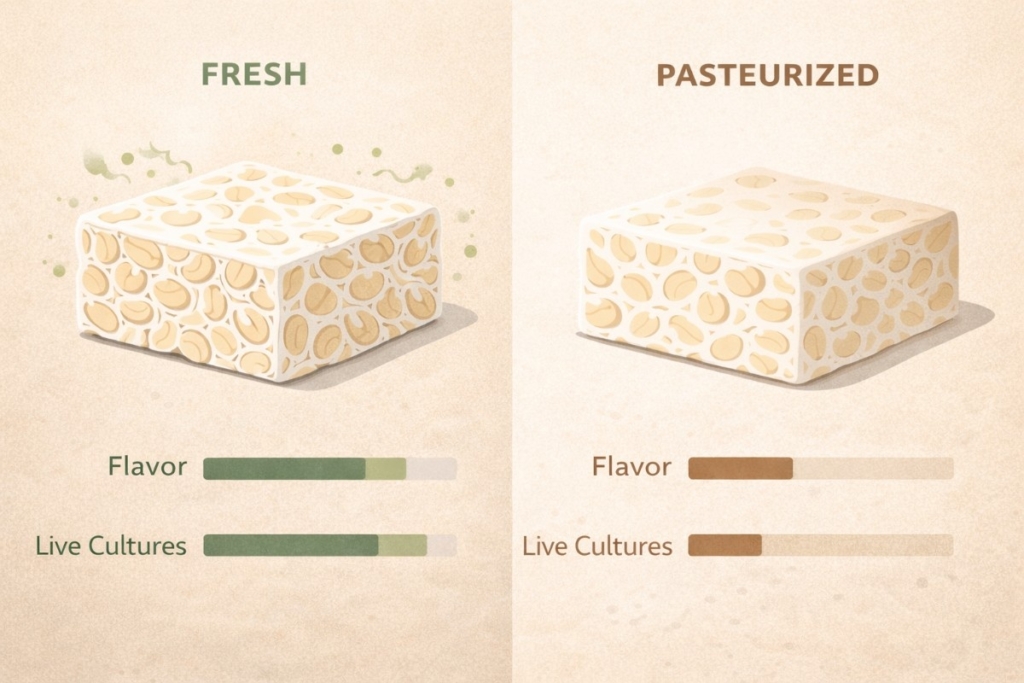
This is the big divide in the tempeh world. Most tempeh you find on a supermarket shelf is pasteurized. It’s been heat-treated to kill the live mold and stop fermentation. This gives it a much longer shelf life, sometimes weeks or months.
The trade-off is flavor and potential benefit. Pasteurization mellows the flavor significantly. That distinctive, deep nuttiness is dialed back.
More importantly, the live cultures are gone. Fresh, unpasteurized tempeh is alive. It contains those live Rhizopus oligosporus cultures and the enzymes they produce.
While cooking will kill the live probiotics, the fermentation process has already done the work. It pre-digests the soybeans, breaking down anti-nutrients like phytic acid and making the protein and minerals inside more accessible for your body to absorb.
The flavor is also brighter, more complex. You get that earthy, umami-rich taste in its full glory. We chose to sell our SoyaMaya tempeh fresh-frozen because we believe that’s how it’s meant to be eaten.
You get all the character and nutritional advantages of a live-fermented food, with the convenience of long-term storage thanks to your freezer.
Benefits of Non-GMO Soybeans
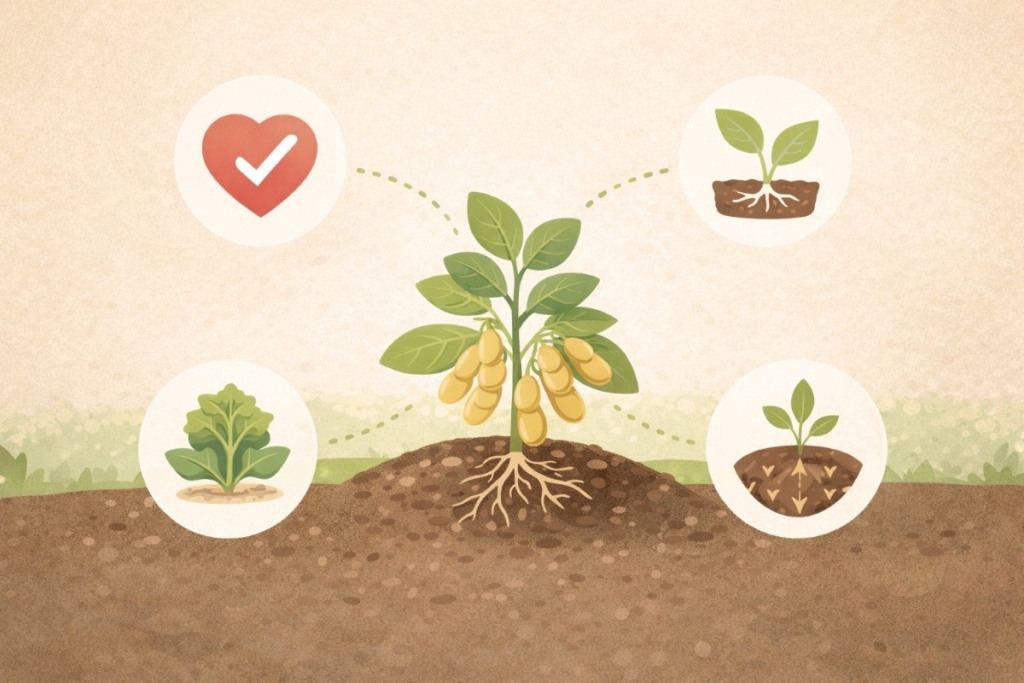
We choose non-GMO, organic soybeans for better taste and ethical reasons.
- Non-GMO varieties are often older strains, bred for flavor and nutrition, not just yield.
- They deliver a cleaner, purer soybean taste after fermentation.
- Organic, non-GMO farming supports soil health, biodiversity, and reduces pesticide use.
- Choosing tempeh made from these beans means avoiding herbicide residues common in conventional soy.
- We source from trusted local farms, ensuring quality, sustainability, and fair farmer practices.
Starting with high-quality beans makes all the difference in fresh tempeh.
Understanding Tempeh Fermentation
Tempeh is made using a friendly mold called Rhizopus oligosporus.
- Soybeans are soaked overnight to soften and activate enzymes.
- Beans are then dehulled and cooked until tender but firm.
- After cooling, a tempeh starter (mold spores) is mixed in evenly.
- The beans are spread thin and kept warm and humid at about 88°F (31°C).
- Over 24–48 hours, white mycelium grows, binding the beans into a firm cake.
- The mold breaks down sugars and proteins, creating tempeh’s unique flavor and making it easier to digest.
- When fully covered in white mycelium, fermentation is complete.
This natural process transforms simple soybeans into a tasty, protein-rich superfood.
The Firm Texture of Tempeh Explained
That satisfying, sliceable firmness comes from the fungal net. Unlike tofu, where soy milk is coagulated into a soft curd, tempeh’s structure is physical.
The Rhizopus mycelium grows through and around each individual soybean, weaving them together in a tight, three-dimensional web. It’s like a natural edible glue. When you slice into a good block of fresh tempeh, you can sometimes see the tiny threads holding the beans together.
This structure is why tempeh can be cubed, sliced thinly, crumbled, or grilled without disintegrating. It holds its shape under heat. The use of whole beans contributes to this chewiness. A block made from split beans might be slightly softer.
That firm, chewy texture is what sets tempeh apart as a superior plant-based protein, making it ideal for protein chips and snacks that deliver both crunch and nutrition.
This firm texture is a huge asset in the kitchen. It means you can treat tempeh much like you would chicken or beef in recipes, cut it into chunks for a stew, slice it for a sandwich, or crumble it for a taco filling. It provides a hearty, toothsome bite that many other plant-based proteins lack.
The Nutty Flavor Profile of Tempeh
That signature taste isn’t just “soy.” It’s the taste of fermentation. As the mold does its work, it produces enzymes that break down the beans’ proteins and fats into simpler, more flavorful compounds.
Amino acids, peptides, and fatty acids are released, creating a savory, umami depth. There are hints of nuts, mushrooms, and a mild earthiness. It’s a complex flavor that stands on its own but also plays incredibly well with others.
It’s not a blank slate like plain tofu, it’s a co-star. This inherent savoriness is why tempeh works so well with bold flavors. It can stand up to a spicy peanut sauce, a tangy barbecue glaze, or a rich coconut curry without getting lost.
The flavor deepens when you cook it. Steaming it first for about 10 minutes mellows any slight bitterness and opens its pores, allowing it to absorb marinades deeply.
Then, when you pan-fry or bake it, the edges get crispy and caramelized, adding another layer of deliciousness. It’s a flavor that grows on you, in the best way.
How to Buy Tempeh in Bulk
If you use tempeh often, buying in bulk saves money and hassle.
- For ready-made tempeh, like at SoyaMaya, their “Fresh Frozen Tempeh – Wholesale” is great for weekly meal prep, small cafes, or families.
- A 10oz bag works for a few meals, but buying a wholesale case means you won’t run out.
- If you want to make tempeh at home, buy whole, non-GMO soybeans from trusted sources (natural food co-ops or reputable online stores).
- Look for the Non-GMO Project Verified label.
- Buying beans in bulk (e.g., 25-pound bags) is cheaper and ensures steady supply.
- Store beans in a cool, dry place in airtight containers.
Buying in bulk reduces packaging waste and often supports smaller producers, making your kitchen more sustainable and budget-friendly.
Using Tempeh for Meal Prep
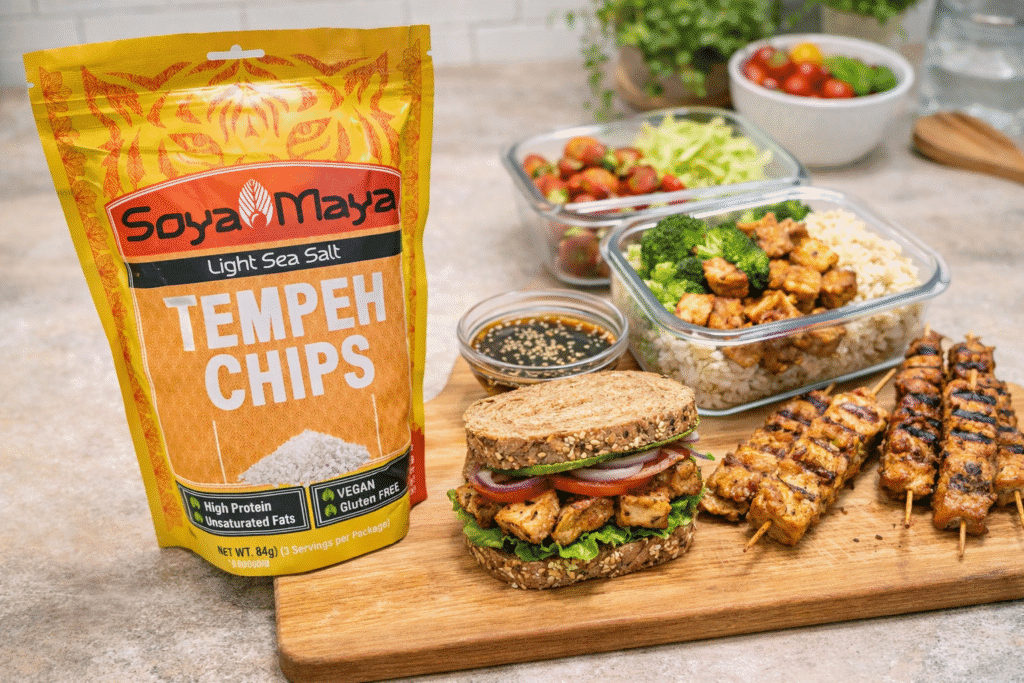
This is where fresh tempeh shines. Its longevity when frozen and its cooking versatility make it a meal prep powerhouse. On a Sunday, take a block of our fresh-frozen tempeh straight from the freezer. Steam it for 15 minutes to thaw and tenderize it.
Now, you have options. Cube it and toss it in a marinade, soy sauce, ginger, garlic, and a touch of maple syrup is a classic. Let it sit while you cook grains and chop vegetables. You can then bake a whole sheet pan of it for 20 minutes at 400°F until crispy.
Divide those crispy cubes into containers with rice and broccoli for lunch. Or, slice it thinly, marinate it, and pan-fry it for sandwiches throughout the week.
You can also crumble the steamed block into a skillet and cook it like taco meat with spices. A single block can become the protein base for four different meals.
- Steam and cube for stir-fries or grain bowls.
- Slice and marinate for sandwiches or salads.
- Crumble and spice for tacos or pasta sauce.
- Bake whole and slice for entrées.
Its nutrition profile supports this, too. A 3-ounce serving packs about 16 grams of protein and 7 grams of fiber. It keeps you full and fueled.
By prepping it ahead, you’re setting yourself up for success. You’re much more likely to eat well on a busy Wednesday if a delicious, protein-packed tempeh bowl is just a quick reheat away. It turns the intention of healthy eating into a practical, easy reality.
| Cooking Method | Best Tempeh Cut | Ideal For |
| Steaming | Whole block or cubes | Improving texture and flavor absorption |
| Baking | Cubes or slices | Grain bowls and weekly meal prep |
| Pan-frying | Thin slices | Sandwiches and salads |
| Crumbling | Crumbled tempeh | Tacos, pasta sauce, stir-fries |
| Grilling | Thick slices | Hearty main dishes |
Let Fresh Tempeh Simplify Your Cooking
Fresh tempeh is a practical, high-protein solution for easy meals.
- It offers richer flavor and nutrition thanks to live fermentation, unlike pasteurized versions.
- It freezes well, so you can keep it on hand for the week.
- Made with whole, non-GMO beans and live culture for the best taste and texture.
- Use it as a versatile base(—)marinate, grill, bake, or crumble.
- Keeps plant-based eating simple, reliable, and satisfying.
Keep some fresh-frozen tempeh in your freezer and see how it transforms your cooking.
FAQ
How is artisanal tempeh different from traditional Indonesian tempeh?
Artisanal tempeh follows the same foundation as traditional Indonesian tempeh but is produced in small batches with closer control. It uses fermented soybeans bound by Rhizopus oligosporus, often made from non-GMO soybeans. Unlike mass-produced tempeh, artisanal tempeh prioritizes fermentation time, texture, and flavor rather than speed or extended shelf life.
Does live tempeh still support digestion after cooking?
Live tempeh contains active cultures before cooking, but heat deactivates them. The digestive benefits come from the fermentation process itself. Tempeh fermentation reduces phytic acid and other anti-nutrients, which improves protein and mineral absorption. It also creates prebiotic fiber that supports gut health even after cooking.
How can you tell if fresh tempeh has gone bad?
Fresh tempeh may develop gray or black spots as it ages, which are usually safe. Spoilage signs include a slimy surface, a strong ammonia smell, or a sharp sour odor. Over-fermented tempeh smells unpleasant rather than earthy or mushroomy. Tempeh showing these signs should not be eaten.
Should you refrigerate tempeh or freeze tempeh for best shelf life?
Refrigerate tempeh if you plan to use it within several days. Freezing tempeh is better for long-term storage because it stops fermentation completely. Tempeh freezer storage can extend shelf life for several months without damaging texture. Frozen tempeh remains suitable for most cooking methods and meal prep.
What makes tempeh a stronger plant-based protein than tofu?
Tempeh is made from whole soybeans rather than soy milk, which preserves fiber and structure. This results in higher tempeh protein content, added fiber, and a firm, chewy texture. Fermentation improves amino acid availability and digestibility, making tempeh a more nutrient-dense plant-based protein than tofu.
Why Fresh Tempeh Makes Plant-Based Cooking Easier
Fresh tempeh brings plant-based cooking back to what it should be: simple, nourishing, and satisfying. With its firm texture, deep nutty flavor, and benefits of live fermentation, it fits easily into real-life meals. Freeze it, prep it once, and rely on it all week. Made with care, quality soybeans, and small-batch fermentation, dinner feels doable again. Discover thoughtfully crafted tempeh from SoyaMaya.
References
- https://www.sciencedirect.com/topics/agricultural-and-biological-sciences/tempeh
- https://wiki.ubc.ca/Course:FNH200/Projects/2023/Tempeh_and_Fermentation
SoyaMaya Fresh Tempeh
Traditionally fermented, no preservatives, shipped fresh and frozen to your door. The real deal, direct from us.
