
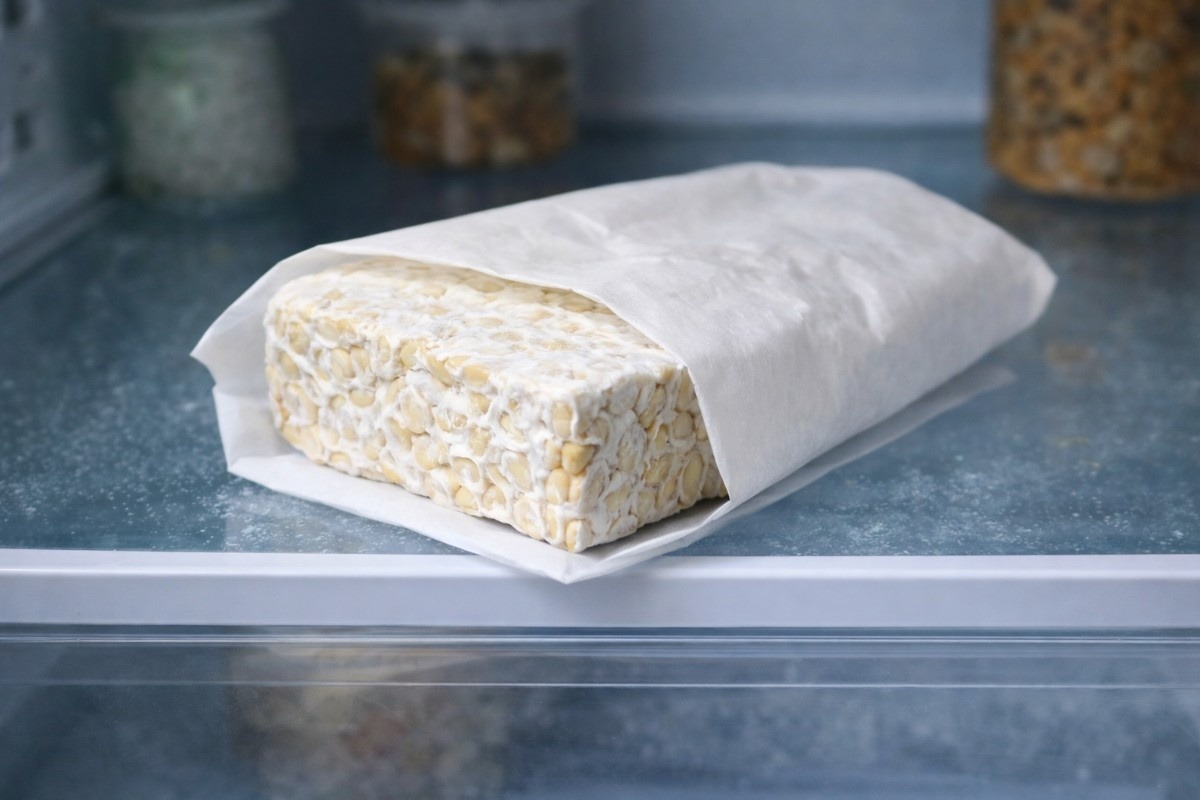
The direct answer is to treat fresh tempeh like the living food it is, by managing temperature and moisture. The secret isn’t a special trick, it’s understanding its living heart.
We make SoyaMaya the traditional way, which means the fermentation never fully stops, that’s what builds the nutty flavor and Vitamin B12. But it also means you’ve got to be a good host to those cultures.
Get this right, and a single pack can stay perfect for weeks. Keep reading to learn how to master its care, cut down on waste, and always have a flawless block ready for the pan.
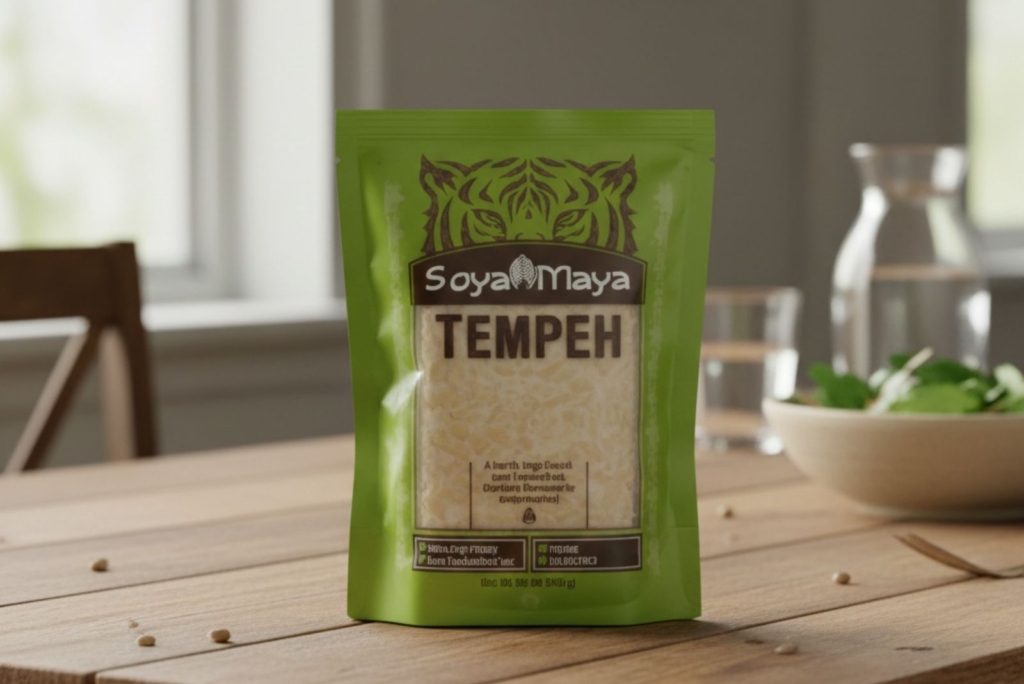
SoyaMaya Fresh Tempeh is made the traditional way — no preservatives, no shortcuts. Delivered to your door.
Order Fresh Tempeh →Key Takeaways
- Cold is your best friend: Refrigerate or freeze immediately to slow the live fermentation that causes spoilage.
- Keep it dry and sealed: Moisture and air are the enemies of freshness; use airtight containers and absorbent paper.
- Trust your senses: A nutty smell and firm texture mean it’s good; discard anything mushy or smelling strongly of ammonia.
How to Store Fresh Tempeh
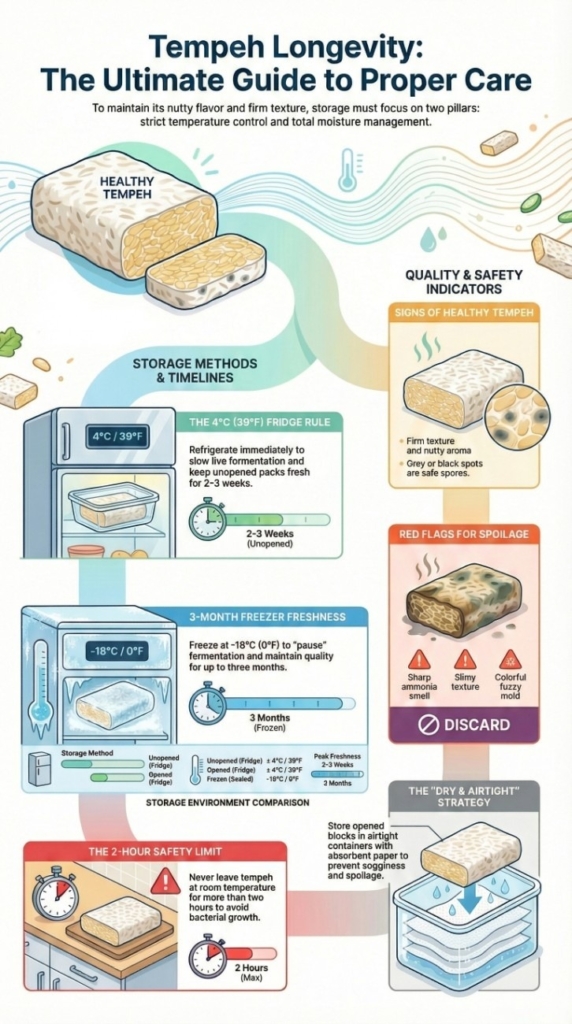
You need a two-part strategy: temperature control and moisture management. From the moment you get it home, your fresh tempeh belongs in the cold. The ideal refrigerator temperature is 4°C (39°F) or lower. This cold environment puts the live cultures into a state of dormancy.
It slows their activity to a crawl, preserving the texture and flavor you want. An unopened, vacuum-sealed pack can live happily here for weeks. The second part is keeping it dry. Even in the fridge, condensation can form.
That excess moisture is a breeding ground for unwanted bacteria and can make the tempeh soggy. If your original packaging is vacuum-sealed and intact, it’s already doing this job for you.
Don’t open it until you’re ready to use it. That seal is its best protection. Think of it as the tempeh’s own little climate-controlled capsule.
- Step 1: Refrigerate immediately at or below 4°C (39°F).
- Step 2: Keep the vacuum seal intact until use.
- Step 3: If opened, pat dry and use an airtight container.
Can You Freeze Fresh Tempeh?
Not only can you, we highly recommend it for long-term storage. Freezing is like hitting the pause button on fermentation. It doesn’t kill the culture, but it stops it almost completely.
For our SoyaMaya Fresh Frozen Tempeh, we blast-freeze it right after sealing to preserve that just-made quality. You can do the same at home. If you have a full, unopened vacuum pack you won’t use soon, just toss the whole thing in the freezer. It’s already packaged for it.
“Freezer ternperatur storage could retain the tempeh’s quality which is comparable to the fresh tempeh.” M. P. Vaidehi and A. Rathnamani, Food science
For an opened block or a portion you want to save, slice it first. Maybe slice it for future stir-fries, or cube it for stews.
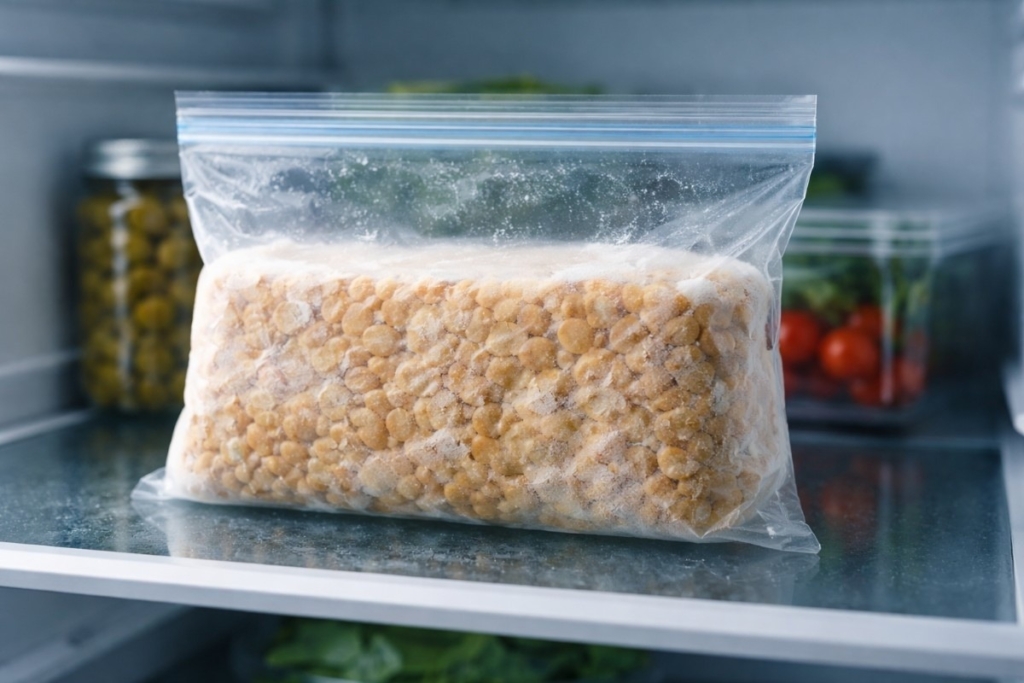
This gives you ready-to-cook portions. Place the slices in a single layer on a parchment-lined tray, freeze them solid (about an hour), then transfer the frozen pieces to an airtight freezer bag. This “flash freezing” step prevents them from sticking together in a giant lump.
Squeeze all the air out to prevent freezer burn. Label the bag with the date. In a standard home freezer at -18°C (0°F), it will keep its best quality for about three months.
How Long Does Tempeh Last?
This is where people get tripped up. There’s the technical shelf life and the peak freshness life. An unopened, vacuum-sealed pack of our tempeh can last in your fridge for up to 60 days from its production date.
That’s the date on the pack. But for the best texture and mild, nutty flavor, you really want to use it within two to three weeks. After that, it continues to age. It develops a stronger, more earthy flavor and the edges might get a bit drier. It’s still perfectly safe, but the character changes.
“Nowadays, Indonesian people are fond of fried tempe due to its savory flavor and crunchy texture.” Andreas Romulo and Reggie Surya, International Journal of Gastronomy and Food Science
Once opened, the timeline compresses. You’ve introduced air and likely some moisture. For optimal quality, use open tempeh within two to three days. If you store it perfectly dry in an airtight container, you might stretch that to a week or even ten days.
You’ll notice it becomes firmer and the flavor intensifies. Some traditional cooks in Indonesia actually prefer it this way, slightly aged, for certain dishes. It’s a matter of taste.
- Unopened vacuum-sealed: Up to 60 days for some brands; check label and aim for 2-3 weeks for peak freshness. Varies by pasteurization and packaging.
- Opened: 2-3 days for best quality; up to 5-7 days if perfectly dry/airtight.
- Frozen: 3 months for best texture; remains safe beyond that but may develop freezer burn.
| Storage Method | Temperature | How Long It Lasts | Quality Notes |
| Unopened, vacuum-sealed (fridge) | ≤ 4°C / 39°F | Up to 60 days (brand-dependent) | Best flavor and texture within 2–3 weeks |
| Opened, stored airtight (fridge) | ≤ 4°C / 39°F | 2–3 days (up to 5–7 days if very dry) | Flavor intensifies, texture becomes firmer |
| Frozen, sealed properly | −18°C / 0°F | Up to 3 months | Safe beyond this, but texture may degrade |
| Left at room temperature | 20–30°C / 68–86°F | 2 hours max | Risk of spoilage and bacterial growth |
Best Way to Thaw Frozen Tempeh
How you thaw it matters more than you think. The best method, hands down, is the slow thaw in the refrigerator. Just move the sealed bag or container from the freezer to the fridge the night before you plan to cook.
This gradual warming lets the texture recover beautifully, with minimal moisture loss. It might take 8 to 12 hours for a full block.
Need it faster? The cold-water thaw is your next best bet. Keep the tempeh in its vacuum seal or freezer bag.
Submerge it in a bowl of cold water. Change the water every 30 minutes to keep it cold. This can thaw a block in an hour or two.
Never, ever thaw tempeh at room temperature or in warm water. The outside will get warm and mushy while the inside is still frozen, creating a perfect storm for off-flavors and potential bacterial growth.
Cook thawed tempeh soon; store leftovers airtight in the fridge up to 2 days the cell structure, leaving you with a crumbly, less pleasant texture.
Storing Opened Tempeh in Fridge
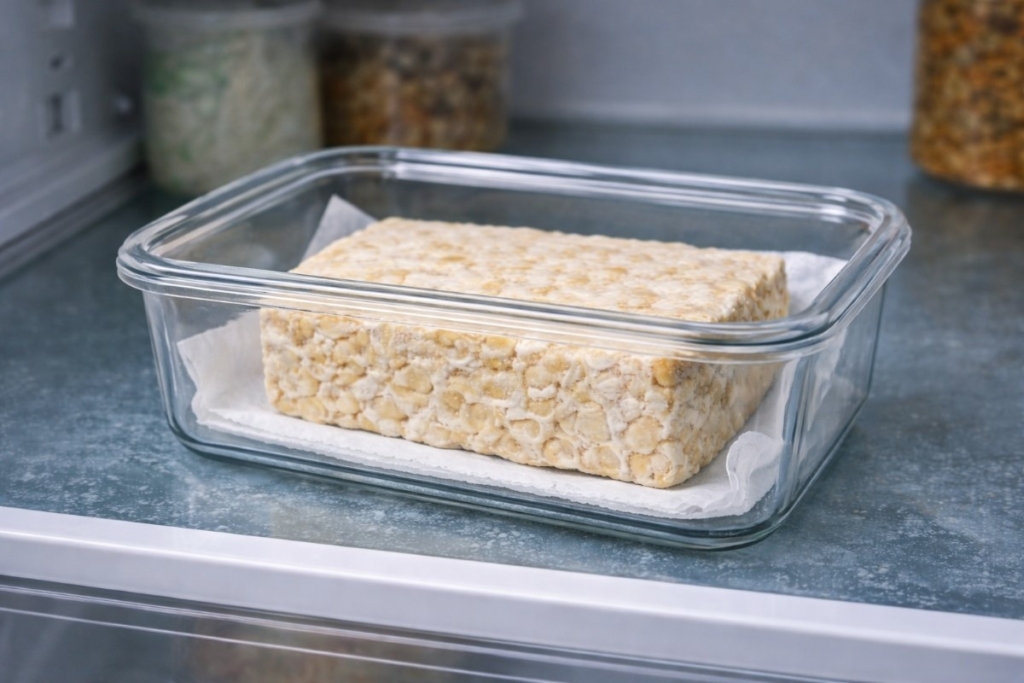
You used half a block for stir-fry last night inside the fridge. Now what? The goal is to manage moisture and limit air exposure. First, pat the remaining block completely dry with a clean paper towel. Any surface moisture invites spoilage.
Then, you have a couple of good options. An airtight glass container is ideal. Place a folded piece of absorbent paper (a clean paper towel or coffee filter) at the bottom, put the tempeh on top, and seal it tight.
If you don’t have a container, wrap the block tightly in plastic wrap, squeezing out as much air as possible. Then, place that wrapped block inside a resealable plastic bag, press out the air, and seal. The double layer helps.
Never just leave it on a plate covered with foil or plastic. That’s a surefire way to find a slimy surprise a few days later. In humid climates, some folks even tuck a dry bay leaf into the container, a traditional trick to help absorb ambient moisture.
Does Tempeh Need to Be Refrigerated?
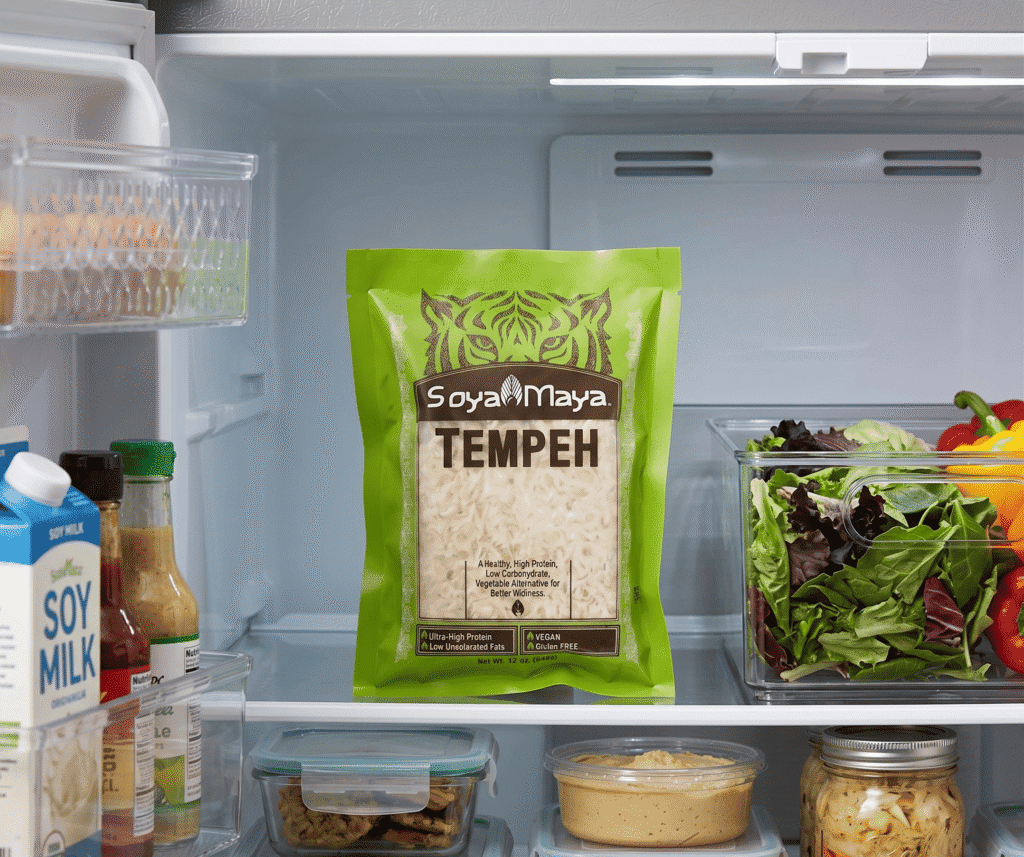
Absolutely, and without delay. Think of it like milk. You wouldn’t leave milk on the counter after shopping, right? Tempeh demands the same respect. The live cultures inside are dormant in the cold but become active rapidly at room temperature.
In a warm, humid kitchen, those cultures can over-ferment in just a few hours. This isn’t just about flavor going off, it’s a food safety priority. Pathogens can find a happy home in warm, protein-rich environments.
We vacuum-seal our fresh frozen tempeh for a reason. That seal locks out air and locks in a cold environment until you’re ready to use it. Once you break that seal, the race is on. The general rule is the two-hour rule: don’t let it sit out above 4°C (about 39°F) for more than two hours total.
If your kitchen is particularly warm, make that one hour. When we craft it, we move it from the fermentation room to the freezer shock tunnel almost immediately. You should aim for a similar swiftness from store to fridge.
Signs That Tempeh Has Spoiled
Tempeh will tell you when it’s past its prime. You just have to listen. Your nose is the best tool. Fresh tempeh has a pleasant, earthy, slightly nutty smell.
Some even say it smells like mushrooms. Spoiled tempeh often develops a sharp, acrid smell reminiscent of ammonia. If it makes you recoil, don’t second-guess it. Toss it.
Then, look and feel. The natural, safe rhizopus mold is white and binds the beans together. As it ages, it may develop grey or black spots, these are just spores and are harmless. What you don’t want to see is fuzzy, bright green, blue, or pink mold.
That’s a different, potentially harmful organism. Feel the texture. It should be firm and hold together tightly. If it’s become mushy, slimy, or is falling apart into crumbly pieces, it’s gone.
Deep yellow/orange with bad smell/slime is suspect; minor yellowing may be edible after trimming, especially if accompanied by a bad smell, is another red flag.
How to Vacuum Seal Tempeh
A home vacuum sealer is a fantastic tool for extending the life of fresh tempeh, especially if you buy it from a local maker or make it yourself. The principle is simple: remove the air. Oxygen fuels spoilage and unwanted microbial growth.
By creating an airtight, anaerobic environment, you dramatically slow down all those processes. It’s the same technology we use for our retail packs.
The key is to seal it at the right time. For homemade tempeh, let it cool completely after fermentation. If it’s still warm, it will sweat inside the bag and create moisture. Place the whole block or sliced portions into a vacuum sealer bag.
Use the “gentle” or “moist” setting on your machine if it has one, to avoid crushing the delicate texture. Watch as the machine pulls out the air and seals the bag tight.
A proper seal feels rock-hard. Label it with the date and store it in the fridge or freezer. This single step can give you that 60-day fridge life we talk about.
Tips for Keeping Tempeh Fresh
It starts at the store. Check the date. Pick the pack with the latest production or use-by date. When you get home, put it away first.
Don’t let it languish on the counter while you put everything else away. In your fridge, don’t stack it under heavy items or against the back wall where it might freeze especially for keeping the Tempeh fresh.
You want a consistent, cold spot. If you buy from us at the Mayasari Grill or online, you’re getting it at its peak, often just days after we make it. That gives you the longest possible window.
Plan your usage. Think of your fridge as short-term storage (1-2 weeks) and your freezer as the long-term archive (1-3 months). When you open a pack, have a plan for the rest within a few days. Maybe you use half for tacos tonight and cube the other half for a curry later in the week. A little forethought prevents that last-minute scramble to use it up before it turns.
What Happens If Tempeh Is Left Out?
This is where things go wrong quickly. Left at room temperature, especially in a warm kitchen, the dormant rhizopus culture springs back to life. It starts metabolizing the soybeans again, producing heat as a byproduct. You might actually feel the packet get warm to the touch. This accelerated fermentation produces stronger flavors and ammonia-like compounds very fast.
Within two to four hours, the quality degrades noticeably. The texture can become unpleasantly soft or crumbly. Beyond that window, the risk of harmful bacterial growth, like listeria, increases significantly. Traditional methods, like wrapping in banana leaves, could extend room-temp life to a day or two in a cool, dry place by managing moisture, but it’s a risky game. Refrigeration is the only reliable method. Spoiled, left-out tempeh isn’t just a waste of food, it’s a potential health hazard. When in doubt, remember the two-hour rule and when in doubt, throw it out.
Your Guide to a Fresher Kitchen
Storing tempeh well isn’t just about preventing waste, though that’s a great reason. It’s about respecting the craft that went into making it. It’s about honoring that living culture that transforms simple soybeans into something packed with protein and flavor. When you manage temperature and moisture with care, you unlock the full potential of every block. You get to enjoy that perfect, firm texture and rich taste exactly when you want it, whether it’s been in your kitchen for three days or three weeks.
The beauty of a well-stocked tempeh supply is spontaneity. You can decide to make a hearty tempeh bacon for breakfast, a crispy protein for your salad at lunch, or a savory stir-fry for dinner, all without a special trip to the store. It empowers your plant-based cooking. We built SoyaMaya on the idea of bringing wholesome, nourishing food to your table, and that includes knowing how to keep it at its best until you’re ready. So, pat it dry, seal it tight, and keep it cold. Your future meals will thank you.
FAQ
How long does fresh tempeh last in the fridge when stored properly?
Fresh tempeh storage depends on consistent cold temperature and proper moisture control. When stored unopened at 4°C, tempeh can stay fresh in the refrigerator for two to three weeks. Once opened, the tempeh shelf life in the fridge becomes shorter. Keeping it dry, sealed, and placed away from warm areas helps preserve texture, flavor, and overall tempeh quality.
Do I need to refrigerate tempeh immediately after buying it?
Yes, refrigerating tempeh immediately is necessary for food safety. Tempeh contains live cultures, and ongoing fermentation accelerates quickly at room temperature. If tempeh is left out too long, bacterial growth increases and food safety risks rise. Follow the tempeh two-hour rule and place it in the refrigerator as soon as you get home.
What are the clear signs that tempeh has spoiled?
Tempeh spoilage signs are noticeable through smell, texture, and appearance. Fresh tempeh has a nutty or earthy scent. A strong ammonia smell, mushy texture, or crumbling structure indicates spoilage. Green mold means the tempeh should be discarded. Grey or black spots are safe spores, but slime or sharp odors signal unsafe tempeh.
Is freezing tempeh safe, and how should I thaw it?
Freezing tempeh safely stops fermentation and preserves it for up to three months at minus 18°C. Freezing sliced tempeh helps maintain texture and prevents freezer burn. To thaw frozen tempeh, use an overnight defrost in the refrigerator or a cold water thaw. Never refreeze thawed tempeh, as it damages structure and quality.
What’s the best way to store opened tempeh in the fridge?
Opened tempeh should be stored with moisture and air exposure controlled. Pat the tempeh dry before storage. Place it in an airtight glass container with absorbent paper, or wrap it tightly in plastic wrap. Proper sealing helps prevent spoilage, especially in humid or tropical environments, and reduces unnecessary food waste.
One Simple Rule for Tempeh That Lasts for Weeks
Keeping tempeh fresh for weeks comes down to one habit: treat it like the living food it is. Keep it cold, keep it dry, and limit air exposure, and you’ll get better flavor, firmer texture, and less waste. That’s exactly how we care for every batch we make. When stored well, tempeh is always ready, whether for a quick stir-fry or a slow weekend meal. Ready to stock your kitchen? Shop SoyaMaya tempeh.
References
- https://journals.sagepub.com/doi/pdf/10.1177/156482659001200125
- https://repository.ipb.ac.id/handle/123456789/57196
SoyaMaya Fresh Tempeh
Traditionally fermented, no preservatives, shipped fresh and frozen to your door. The real deal, direct from us.
