
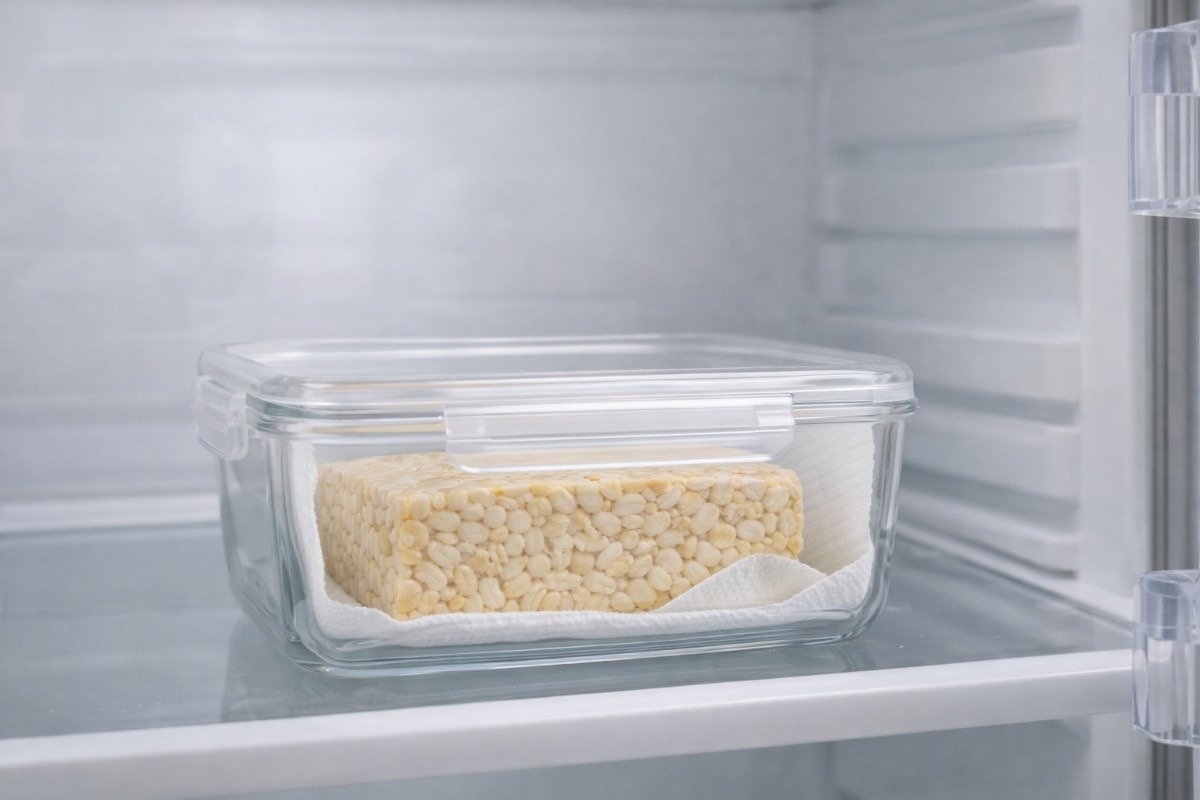
The best way to store fresh tempeh? Treat it like it’s alive. Because it is. Get it into your fridge, set between 35 and 40 degrees Fahrenheit, right after you bring it home. That cold slows the fermentation down, the very process that gives tempeh its firm texture and nutty flavor. If you don’t, well, you’re in for a surprise. We once left a package out too long and watched our dinner slowly turn into something for a biology lab. Want to keep your tempeh perfect, spot the signs of trouble, and make sure every slice is just as good as the first? Let’s get into it.
Key Takeaways
- Refrigerate fresh tempeh immediately at 35–40°F to safely slow its live culture.
- Freeze it properly for long-term storage, but expect a slightly crumbly texture upon thawing.
- Trust your senses: discard tempeh with a strong ammonia smell, slimy texture, or black mold.
How should fresh tempeh be stored immediately after purchase?
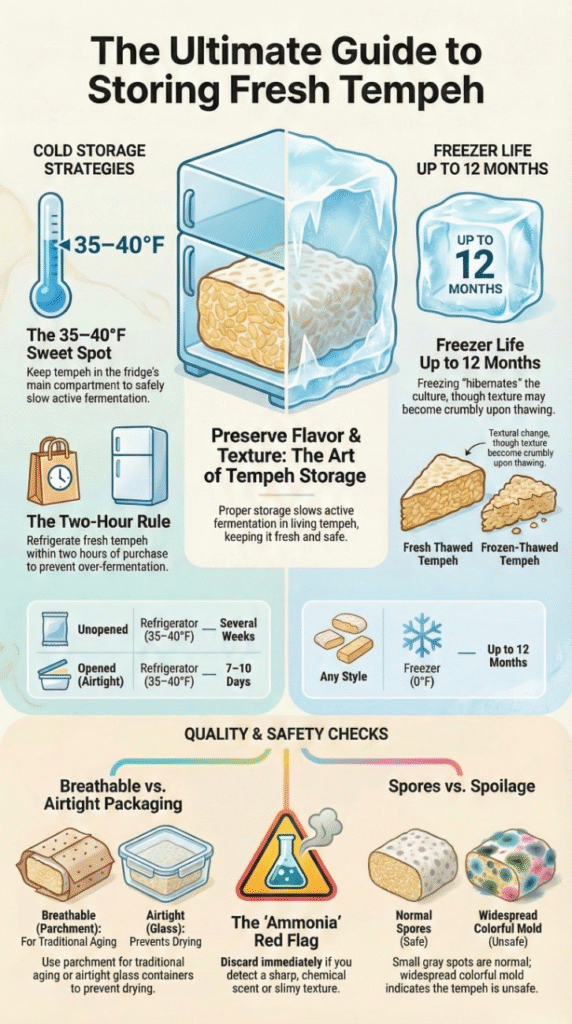
You should move fresh tempeh to the refrigerator right away. Think of it as ushering a guest into a cool room on a hot day. The goal is to slow everything down. The USDA recommends keeping perishable foods below 40°F to prevent rapid bacterial growth, and tempeh, with its active Rhizopus culture, is no exception.
Leaving it on the counter, even for a few hours, lets fermentation run wild. The culture stays warm and active, eating through the soybeans faster. This can lead to over-fermentation before you even open the package. You might see more gray spores or notice a stronger smell sooner. We always slide our SoyaMaya blocks into the fridge’s main compartment, not the door, where the temperature is most consistent. It’s the first, most critical step for quality.
SoyaMaya Fresh Tempeh is made the traditional way — no preservatives, no shortcuts. Delivered to your door.
Order Fresh Tempeh →- Get it cold quickly, ideally within two hours of purchase.
- Target that fridge sweet spot of 35–40°F (2–4°C).
- Avoid the fridge door where temperatures fluctuate.
If you ever wonder where to buy fresh tempeh that carries this kind of quality and freshness, local artisan producers are often the best sources for hand-crafted products you can trust.
How long does fresh tempeh last in the refrigerator?
Its lifespan in your fridge depends entirely on its packaging and when you opened it. An unopened, vacuum-sealed package is a sealed environment. It can last for several weeks, sometimes up to a month, because the lack of air drastically slows the culture. Once you break that seal, the clock starts ticking faster.
For opened tempeh, you’re looking at a window of about 3 to 10 days. This range comes from our own observations and those of traditional Indonesian tempeh producers. A block wrapped in breathable material might age toward the shorter end, developing a deeper flavor.
One transferred to an airtight container might make it to ten days. The key is consistency. A stable, cold fridge gives you the longer end of that range. A fridge that’s often opened, or where the tempeh is stacked under other items, creates warmth pockets that shorten its life.
- Unopened & vacuum-sealed: Several weeks.
- Opened & repackaged: 3 to 10 days.
- Key factor: Consistent, cold temperature.
| Tempeh Condition | Storage Method | Expected Shelf Life |
| Unopened package | Refrigerator (35–40°F) | Several weeks |
| Opened, breathable wrap | Refrigerator (35–40°F) | 3–5 days |
| Opened, airtight container | Refrigerator (35–40°F) | 7–10 days |
What is the best packaging for storing fresh tempeh?
The best packaging controls moisture and gas exchange. It’s a balancing act. You need to contain the tempeh without suffocating it or letting it dry out. For short-term fridge storage, breathable wraps are the traditional gold standard. Banana leaves, used for centuries, allow the tempeh to breathe while holding in just enough moisture. A clean, dry kitchen towel or parchment paper works on the same principle.
For most modern kitchens, an airtight container is the practical champion after opening. It prevents the tempeh from absorbing other fridge odors and stops it from drying out into a hard brick. Place a paper towel at the bottom to absorb excess moisture, which can lead to sliminess.
We package our SoyaMaya Fresh Frozen Tempeh with this in mind, using materials that protect it until you’re ready. Once opened, shifting it to a sealed glass container can extend its good life to about a week.
- Breathable (traditional): Banana leaves, parchment paper. Allows aging.
- Airtight (modern): Glass or plastic container with a lid. Prevents drying and odor transfer.
- Pro tip: For those curious about who makes handcrafted tempeh with such attention to detail, choosing artisanal brands ensures superior care throughout the process.
- Pro tip: Add a dry paper towel to absorb condensation.
Should fresh tempeh be frozen for long-term storage?
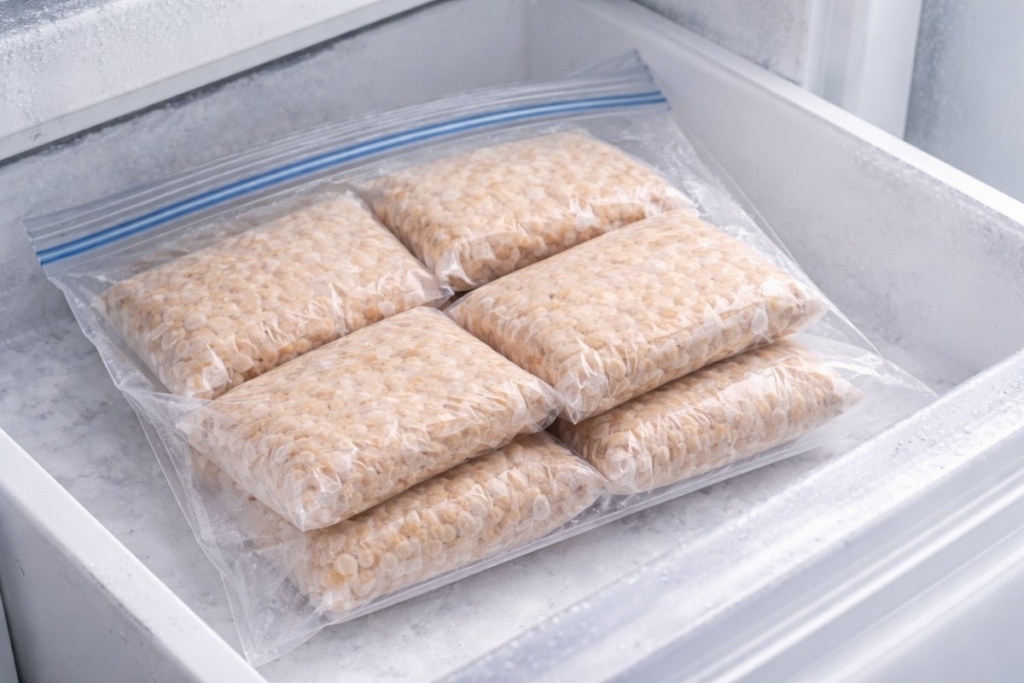
Absolutely, freezing is your best bet for long-term storage. It effectively pushes the pause button on fermentation. The FDA notes that freezing at 0°F (-18°C) keeps food safe indefinitely, but for quality, we find tempeh is best used within 12 months. The cold doesn’t kill the culture, it just sends it into hibernation.
There is a trade-off. The ice crystals that form can slightly break down the tempeh’s mycelial structure. This means thawed tempeh often has a crumbly texture.
Don’t see this as a flaw. It becomes a feature for dishes like crumbles, chili, or taco fillings where you want it to absorb marinades and sauces deeply. For a solid slice, it still works wonderfully in stir-fries or when steamed first. Freezing is perfect if you buy in bulk or find a great sale.
- Maximum quality timeframe: Up to 12 months in a deep freeze.
- Texture change: Becomes more crumbly, excellent for absorbing flavors.
- Best use: Ideal for cooked dishes like stews, crumbles, and stir-fries.
If you want to ensure you’re getting a tempeh with optimal freshness to freeze, the how to store tempeh principles guide you through handling it from purchase to long-term care.
How do you freeze and thaw tempeh correctly?
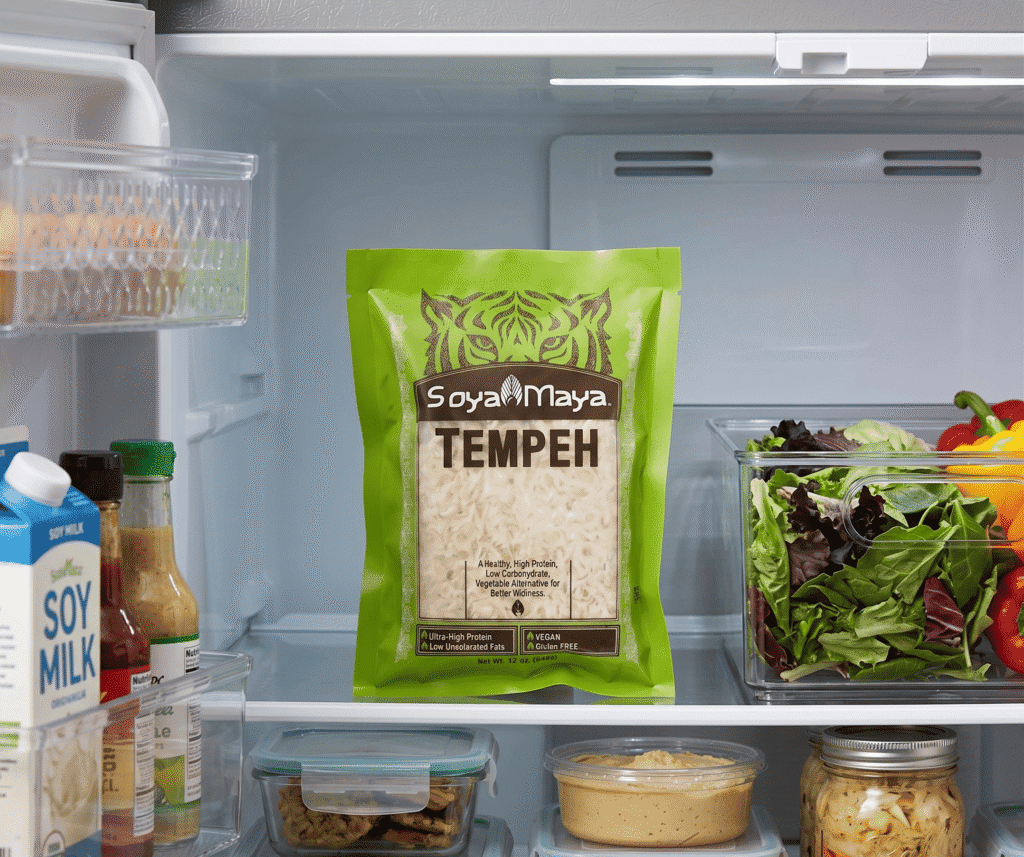
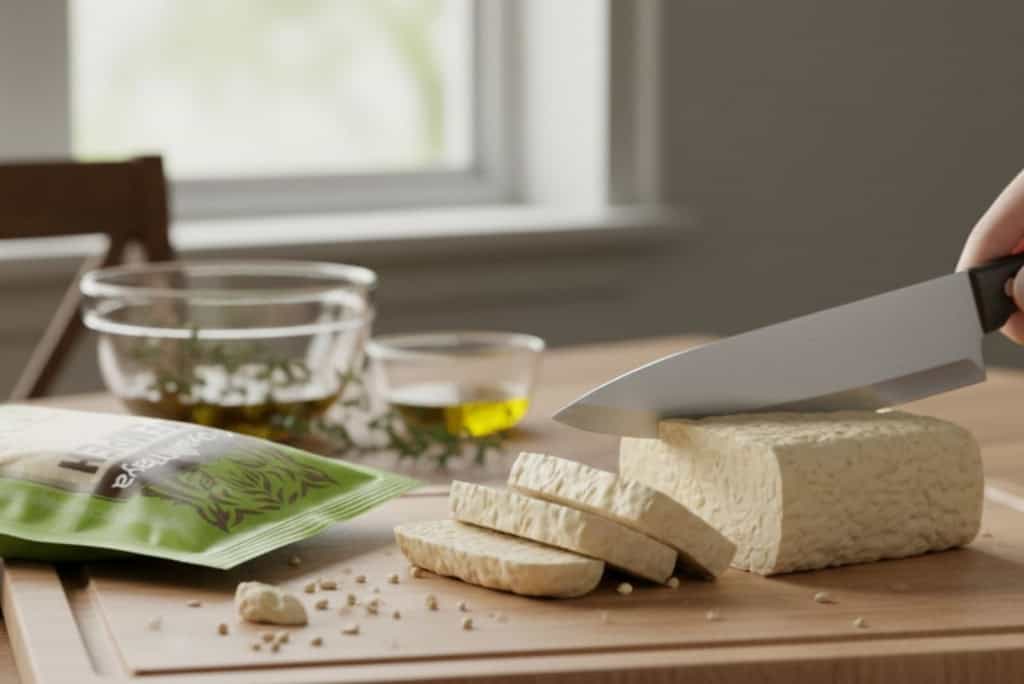
Doing it right minimizes texture loss. First, if you have a large block, cut it into the portions you typically use. This way, you only thaw what you need. Wrap each portion tightly in plastic wrap or aluminum foil. This first layer is crucial to prevent freezer burn, those dry, grayish patches caused by air exposure.
Then, place the wrapped portions into a heavy-duty freezer bag. Squeeze out as much air as possible before sealing. Label it with the date. To thaw, the best method is patience. Move the portion you need from the freezer to the refrigerator and let it thaw overnight. This slow thaw helps some of the moisture redistribute. For a quicker method, you can cook it directly from frozen in a pan with a bit of water or broth, steaming it until thawed and then proceeding with your recipe.
- Portion and wrap tightly in plastic or foil.
- Place in a freezer bag, remove air, label, and date.
- Thaw overnight in the refrigerator for best results.
Avoid thawing at room temperature or in warm water, as this can create a mushy exterior.
What are the signs that fresh tempeh has spoiled?
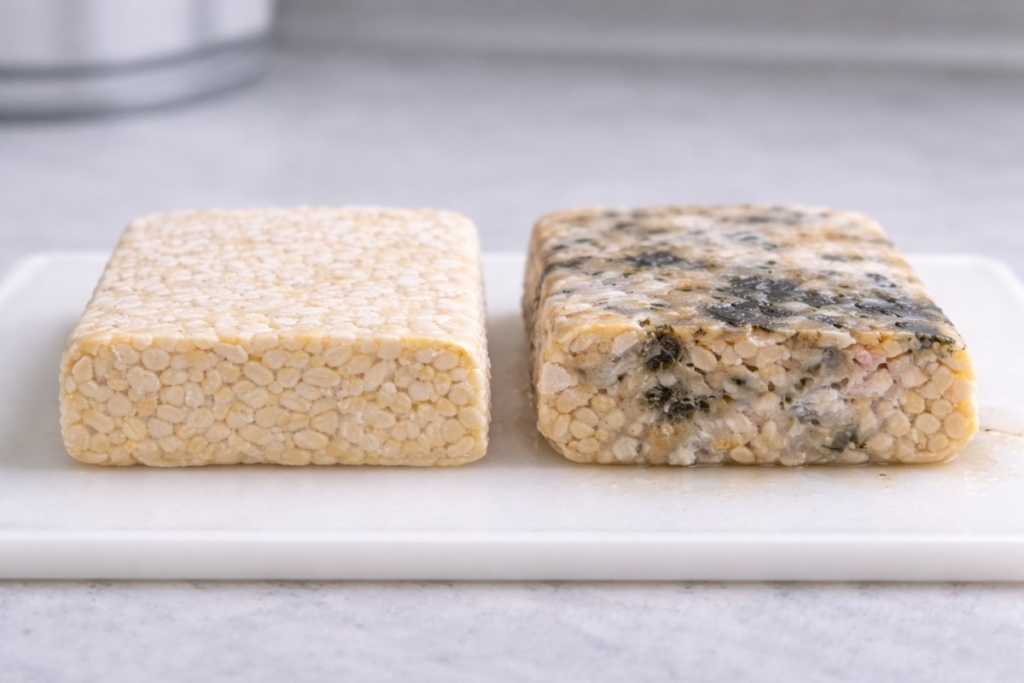
You have to trust your nose and eyes. Fresh tempeh has a pleasant, nutty, almost mushroom-like smell. Spoilage announces itself with a sharp, penetrating ammonia odor. It’s unmistakable and means the proteins have broken down too far. If it smells like cleaning products, don’t eat it.
Visually, look for significant color changes beyond mild graying. Small gray or black spots are usually just harmless rhizopus spores. But if you see widespread black, green, or pink mold, that’s a bad sign. Feel the texture [1].
“The parameters of raw tempeh included color, compactness, and aroma, whereas those for fried tempeh were texture, aroma and overall acceptability.” – Kustyawati, M.E et al, International Food Research Journal
Fresh tempeh is firm and holds together. Spoiled tempeh often becomes slimy, mushy, or unpleasantly sticky.
Food safety experts warn that any food left in the “danger zone” (above 40°F) for more than 1-2 hours can grow harmful bacteria, and tempeh’s porous structure is no exception. When in doubt, throw it out.
- Smell: A strong ammonia scent is the primary red flag.
- Sight: Widespread colorful mold (not small gray spots).
- Touch: A slimy or disintegrating texture.
Are there alternative ways to store tempeh without refrigeration?
Yes, methods that remove moisture have been used for ages. Dehydration is the most effective. By slicing tempeh thinly and drying it completely in a dehydrator (or a very low oven), you remove the water that microbes need to live.
This creates tempeh chips or jerky that can be stored in an airtight container in a cool, dark pantry for months.
“The applicatio of lactic acid bacteria in fermented soy products serves not only to enhance the nutritional profile but also to inhibit the growth of spoilage microorganisms, thereby extending the product’s shelf life through natural bio-preservation.” – H.L. Wang & L.R. Beuchat, International Journal of Food Microbiology
This echoes traditional Indonesian methods of preservation in tropical climates. It’s a fantastic way to make shelf-stable snacks or a protein topping for salads.
To use it, you typically need to rehydrate the slices in broth or water before cooking. It’s a different experience from fresh tempeh, chewy and concentrated in flavor, but it solves the storage problem beautifully without a freezer.
- Dehydration: Removes moisture, allowing pantry storage for months.
- Use: Creates chewy tempeh chips or jerky; requires rehydration.
- Context: A practical, traditional solution for long-term, non-refrigerated storage.
Making Your Tempeh Last
Storing fresh tempeh isn’t about stopping nature, it’s about guiding it. You’re managing a living food to extend its peak. The benefits of proper storage are a longer shelf life, less food waste, and consistently good flavor in your cooking.
Whether you choose the fridge for the week’s meals or the freezer for future recipes, you’re in control. We keep our own SoyaMaya tempeh this way, from our kitchen to yours. Ready to put this into practice? Grab a block of fresh tempeh from our shop and taste the difference careful storage makes.
FAQ
Can fresh tempeh stay safe at room temperature briefly?
Fresh tempeh contains live cultures and active fungal growth, so room temperature storage is very limited. At a cool room temperature, fresh tempeh should sit out for no more than 1–2 days. Warm conditions speed up fermentation and bacteria growth. Once tempeh stays above 40°F for several hours, the risk of spoilage and harmful bacteria increases significantly.
What packaging best protects fresh tempeh flavor and texture?
Proper fresh tempeh storage depends on moisture control and gas exchange. Traditional options like banana leaves or other breathable wraps allow fermentation gases to escape while limiting moisture buildup. For modern storage, an airtight container lined with paper helps prevent drying and excess humidity. Avoid stacking tempeh tightly, as trapped warmth accelerates spoilage.
How can you tell if tempeh is spoiled or unsafe to eat?
Tempeh spoilage signs are usually easy to identify. A strong ammonia smell indicates excessive protein breakdown. A slimy texture, widespread discoloration, or mushy structure signals unsafe fermentation. Small gray mold or black spots can occur naturally, but green, pink, or heavy black mold means the tempeh should be discarded immediately.
Does freezing tempeh change its texture or quality?
Freezing tempeh causes water crystals to form inside its dense structure. This process often results in a crumbly texture after thawing, which is normal and safe. Using freezer bags and removing excess air helps prevent freezer burn. For best quality, frozen tempeh should be used within 12 months and thawed slowly in the refrigerator.
Can cooked or marinated tempeh be stored differently?
Cooked tempeh has lower moisture and reduced fungal activity, which makes it easier to store. Refrigerate cooked tempeh in an airtight container and use it within several days. Marinated tempeh freezes well when portioned before freezing. Avoid refreezing thawed tempeh repeatedly, as this affects texture, moisture, and flavor quality.
Keeping Fresh Tempeh Flavor Alive, One Block at a Time
Proper storage keeps fresh tempeh firm, nutty, and worth every slice. By refrigerating promptly, freezing with care, and knowing when to let it go, you protect flavor and safety. These habits mean less waste and better meals all week. We use the same approach with our SoyaMaya tempeh at home, because living food deserves care. Ready to cook with tempeh made with purpose? Shop SoyaMaya.
References
- http://ifrj.upm.edu.my/24%20(02)%202017/(38).pdf
- https://ejournal.unib.ac.id/agroindustri/article/view/7429
Related Article
- https://mayasaritempeh.com/how-to-store-tempeh/
- https://mayasaritempeh.com/where-to-buy-fresh-tempeh/
- https://mayasaritempeh.com/who-makes-handcrafted-tempeh/
SoyaMaya Fresh Tempeh
Traditionally fermented, no preservatives, shipped fresh and frozen to your door. The real deal, direct from us.
