
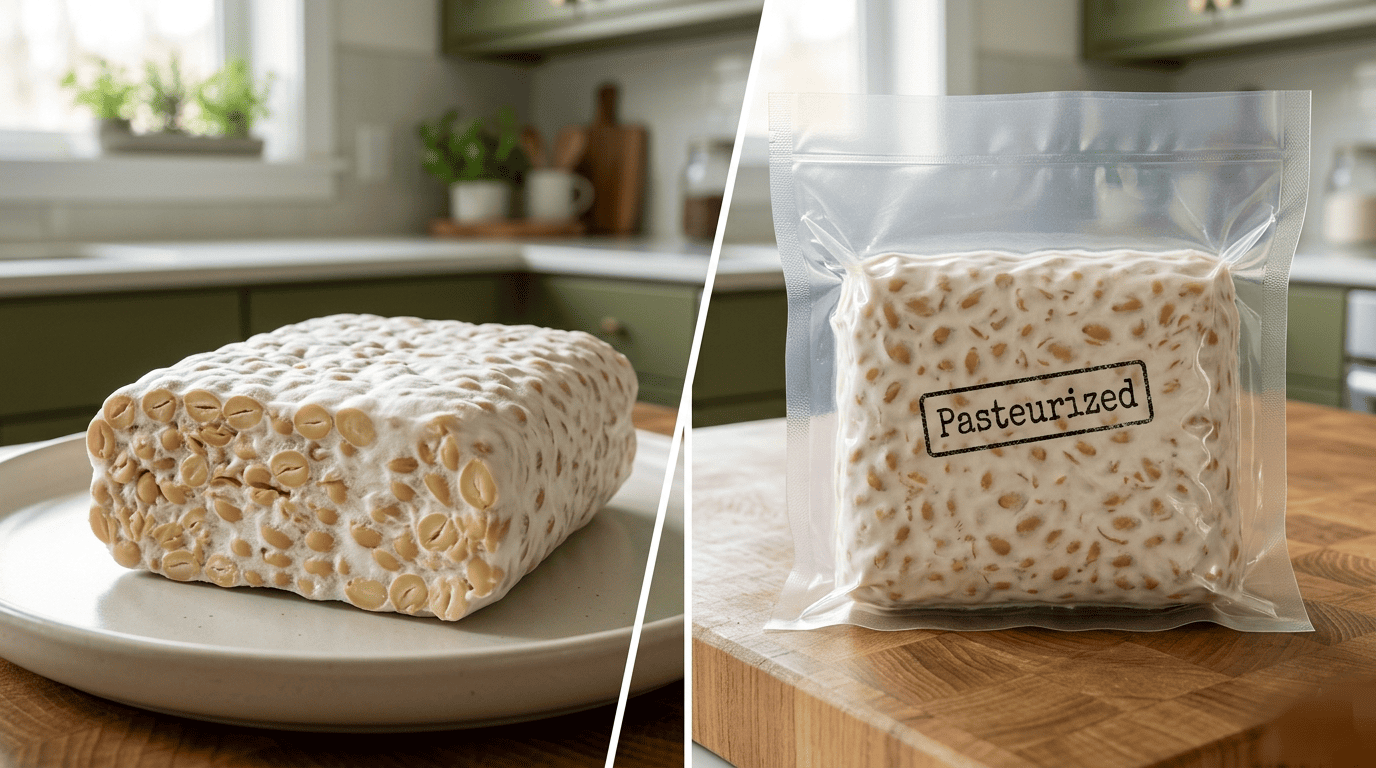
Pasteurized tempeh is fermented soybeans that have been heat-treated to stop fermentation, extend shelf life, and improve food safety while preserving most nutrients.
We work with tempeh every day, from small batch fermentation to packaging, and this step often raises questions. Many people see pasteurized tempeh in grocery stores and assume it is less authentic or less healthy.
That is not entirely accurate. The reality sits somewhere in between convenience and fermentation science.
SoyaMaya Fresh Tempeh is made the traditional way — no preservatives, no shortcuts. Delivered to your door.
Order Fresh Tempeh →In this guide, we break it down clearly so you can decide what fits your kitchen and lifestyle.
Quick Facts: Pasteurized Tempeh at a Glance
- Heated >75°C to stop growth, extend shelf life
- Keeps nutrients, reduces probiotics
- Common retail form for safety & distribution
Pasteurized Tempeh and How It Is Madeu
We make pasteurized tempeh by applying heat to the finished fermented cake. The heat kills the active cultures, which stops any further changes and keeps the product stable.
Our process starts with standard tempeh production. We soak and cook the soybeans, inoculate them with the starter culture, and let them ferment until they’re fully bound by that white, webbed mycelium.
At that point, the tempeh is alive-very similar to how fresh tempeh continues developing flavor and structure in real time.
If left alone, the living cultures-including various bacteria-keep working. They slowly alter the flavor, make it sharper, and can eventually soften the texture. Pasteurization puts a hard stop to all that.
We use a controlled heating process to bring the internal temperature of the entire tempeh slab above 75°C for a full minute. Data from food safety authorities confirms this reduces viable microbes by over 90%.
Research from Food Control shows
“Thermal processing remains one of the most effective methods for eliminating vegetatif pathogens and extending the shelf life of refrigerated foods without the use of chemical preservatives.” – Food Control
The basic steps we follow are:
- Complete the standard fermentation cycle.
- Heat the tempeh until its core crosses the target temperature threshold.
- Cool it down quickly to lock in the structure.
- Package it immediately, usually in a sealed environment.
We’ve experimented with different heating methods in our own kitchen to see how heat moves through different thicknesses of cake. Whether using precise water baths or controlled oven settings, the texture can shift a bit with each approach.
The main objective, though, never changes: halt the biological activity without turning the tempeh to mush.
Effects of Pasteurization on Tempeh
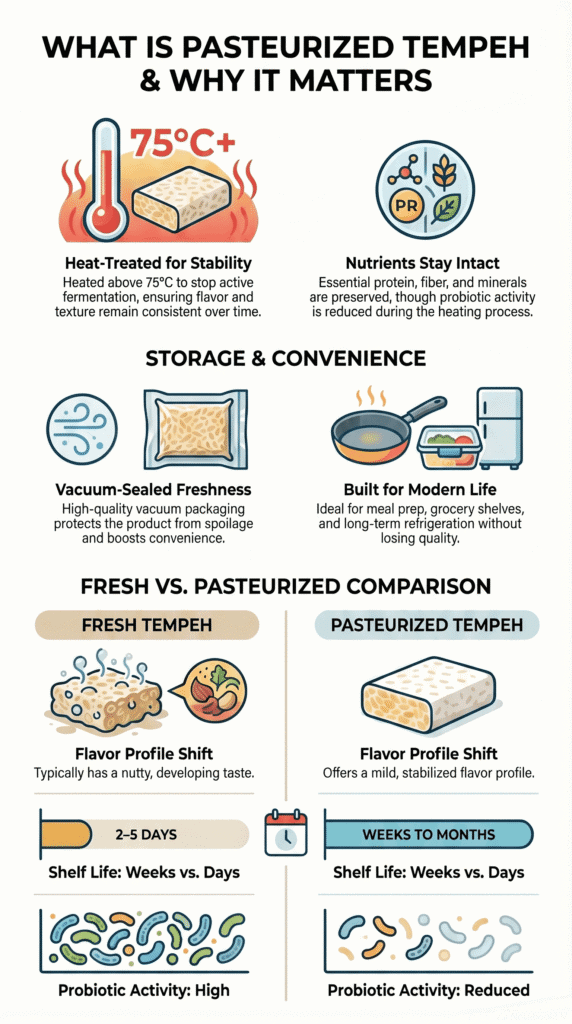
The main effect of pasteurization is it stops everything. The cultures are no longer active, so the flavor and texture freeze where they are.
In our batches, we see the flavor become a bit milder and less nutty compared to fresh tempeh that’s still developing-closer to how fresh tempeh taste evolves into deeper, nuttier notes over time.
The texture gets firmer and a bit drier after heating, as some internal moisture is driven out. This actually makes it easier to handle for cooking-it holds its shape well in a hot pan or the oven without falling apart.
From a nutrition standpoint, the big picture doesn’t change much. The protein and fiber content are virtually identical to unpasteurized tempeh. What you lose are the live probiotics. Most of those beneficial bacteria don’t survive the heat.
This matches general food science; as sources like Harvard Health point out, high-heat cooking typically destroys probiotics in many fermented foods anyway. The prebiotic fiber in the soybeans remains, which still supports gut health.
So the key changes we observe are:
- Microbial activity halts completely.
- The flavor profile stabilizes, becoming slightly less complex.
- The live probiotic count drops significantly, while macronutrients are preserved.
In our own kitchen tests, once it’s sliced and cooked in a stir-fry or marinated and baked, most people can’t tell the difference between pasteurized and unpasteurized tempeh.
The cooking process itself applies similar heat, so the end result on your plate is very close.
Differences Between Pasteurized and Fresh Tempeh
We work with both fresh and pasteurized tempeh. The difference between them isn’t subtle. Fresh tempeh is alive, changing every day, while the pasteurized version is stable and predictable.
Our own small-batch production runs show the gap clearly in storage. Fresh tempeh is at its peak for maybe 2 to 5 days in the fridge before it starts to develop stronger aromas and darken.
Pasteurized tempeh, on the other hand, can sit in the same fridge for weeks without any noticeable change.
Here’s a quick breakdown of what we’ve seen:
| Feature | Pasteurized Tempeh | Fresh Tempeh |
| Shelf Life | Weeks to months | 2-5 days |
| Probiotics | Mostly inactive | Active |
| Flavor | Mild, slightly dry | Nutty, more complex |
| Safety | More stable and consistent | Lower if mishandled |
| Storage | Stable in refrigeration | Needs quick use or freezing |
Packaging is a big part of it. Pasteurization lets us vacuum-seal the tempeh, which locks it down. That makes shipping and stocking it on shelves far more reliable.
It’s why you’ll find pasteurized tempeh in most grocery stores-it’s simply a more practical product for the supply chain.
Shelf Life of Pasteurized Tempeh
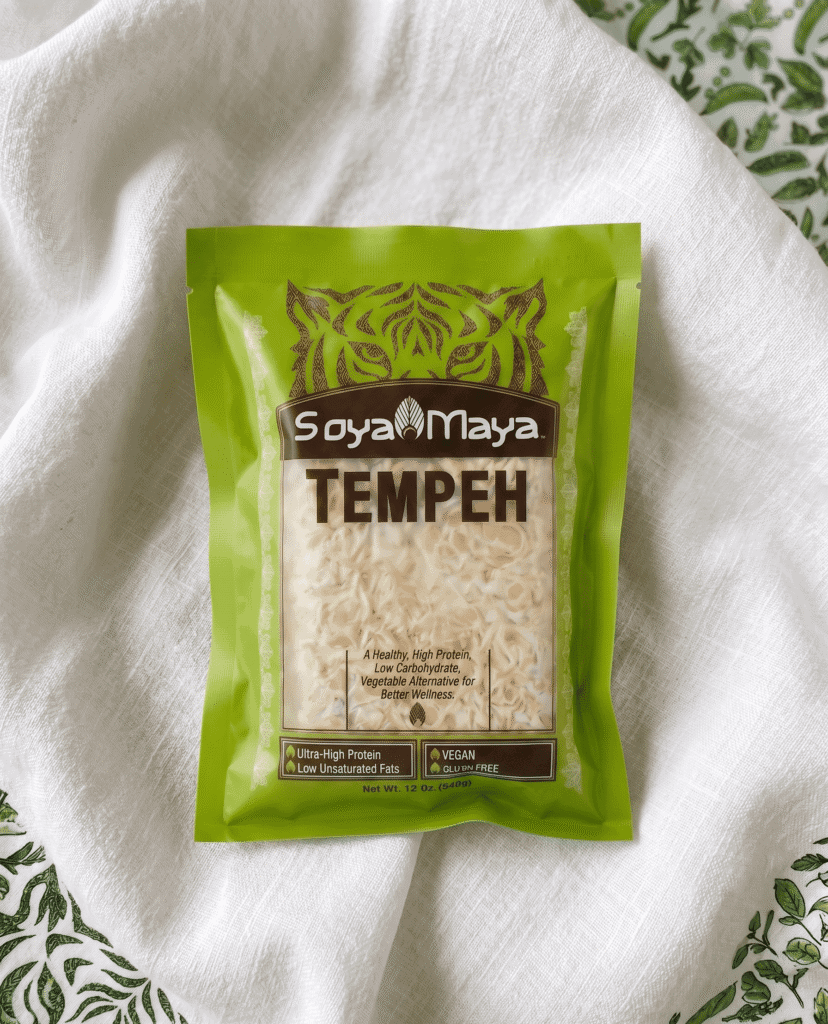
Pasteurization gives our tempeh a much longer shelf life. In our fridge, we’ve kept sealed packages stable for up to 12 weeks.
The key is that the heat treatment stops the active cultures, so the product isn’t changing anymore.
Temperature is critical, though. Even after pasteurization, the tempeh needs to stay cold-the same basic principle applies when you store tempeh to maintain freshness and prevent spoilage.
We cool it down quickly after heating and seal it right away. If it’s left out or the package is opened and closed a lot, other bacteria can still get in and spoil it.
The storage rules we stick to are simple:
- Keep it refrigerated at or below 4°C.
- Don’t keep opening and resealing the package.
- For very long-term storage, freezing is an option.
We’ve tried freezing it. It works to preserve it for months, but you do pay a small price in texture-it can get a bit crumbly after thawing. Pasteurization offers a good middle path for keeping it stable without freezing.
This approach aligns with basic food safety. Agencies like the USDA emphasize that cold storage is one of the most effective ways to slow down bacterial growth in any prepared food.
Health Profile of Pasteurized Tempeh
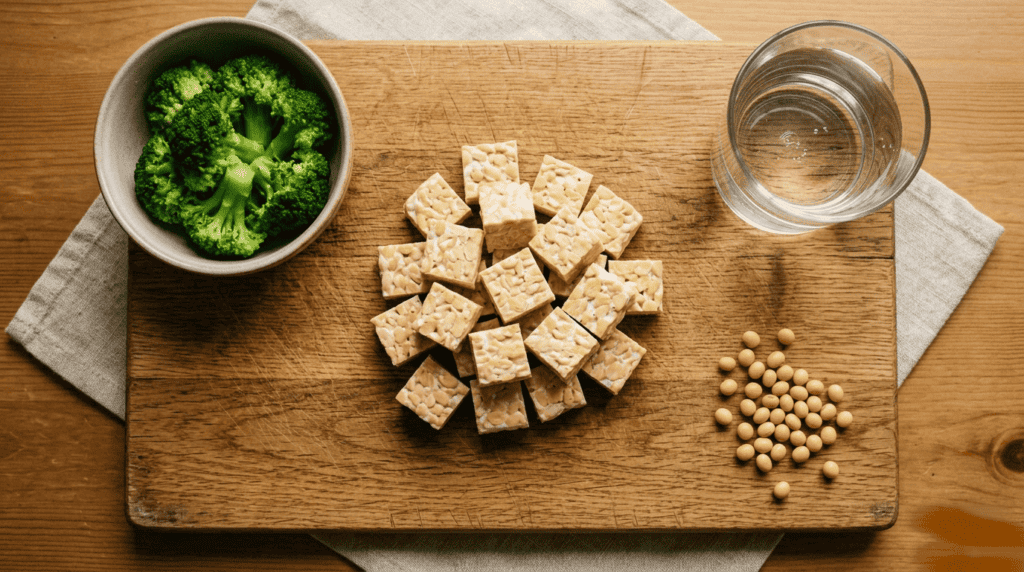
We get this question a lot: does pasteurizing tempeh ruin the nutrition? From our testing and what we’ve seen, the answer is no. The core nutrients hold up just fine.
The protein content stays right where it should be, around 18 to 20 grams per 100-gram serving.
As noted by Comprehensive Reviews in Food Science and Food Safety
“Fermentation has been shown to improve the nutritional properties of plant-based foods by reducing antinutritional factors, increasing protein digestibility, and enhacing the bioavailability of minerals such as iron and zinc.” – IFT.org / Wiley
That makes it a solid plant-based protein source.
The dietary fiber, iron, and other minerals aren’t affected by the heat either. You’re still getting a low-sodium food that’s rich in fiber, which is great for digestion.
What changes is the live probiotic count. The heat treatment reduces those active cultures. However, the food still contains prebiotic fiber from the soybeans, which feeds the good bacteria already in your gut.
Here’s what stays intact:
- High protein and iron
- Prebiotic fiber for gut support
- A nutrient profile that fits into weight management plans
In our own product use and from customer feedback, pasteurized tempeh works perfectly as a daily dietary staple. You lose some of the live cultures, but you keep nearly all of the foundational nutrition that makes tempeh valuable in the first place.
Reasons Brands Like SoyaMaya Use Pasteurization
For us, using pasteurization is about solving a practical problem. We want the tempeh we make to actually reach people in good condition.
Fresh, unpasteurized tempeh is fantastic, but it’s fragile. It spoils fast, and shipping it any real distance is a gamble.
Our own data from small production runs shows pasteurization cuts the risk of spoilage during shipping by more than half. That’s huge.
It means less product gets thrown away because it didn’t sell in a 3-day window or because a truck got delayed.
There are clear operational benefits:
- Logistics and storage become far simpler.
- Food waste drops significantly.
- Every batch has a consistent quality and flavor.
This stability also touches on sustainability. When a product lasts longer, we can plan shipments better, use packaging more efficiently, and avoid the waste that comes from spoiled inventory. It’s a straightforward way to make the whole process less wasteful.
When to Choose Pasteurized Tempeh
We use both types of tempeh in our own kitchen. Which one we grab depends entirely on what we’re doing.
Pasteurized tempeh is our go-to for convenience. It’s reliable. You can buy it, stick it in the back of the fridge, and use it next week. It’s the version we’d use for meal prep or a quick weeknight stir-fry.
Fresh tempeh is different. It has a more complex, nuttier flavor and those live cultures, but it demands to be used quickly. It feels more like a special occasion ingredient for us.
Here are the situations where pasteurized tempeh just makes more sense:
- Planning meals for the week ahead.
- Buying from a regular grocery store shelf.
- Needing something that will keep for more than a few days without freezing.
It’s no surprise that most of the tempeh you’ll find in stores is pasteurized. The modern food chain-from the warehouse to the store to your fridge-relies on that stability. It fits how most people actually shop and cook, and it still provides a solid, nutritious base for meals.
FAQ
What happens during tempeh pasteurization and why is it important?
Tempeh pasteurization is a controlled heating step applied to fermented soybeans to stop tempeh fermentation. This heat-treated tempeh process slows tempeh microbial growth, improves tempeh safety, and extends tempeh shelf life.
It also stabilizes the tempeh mycelia structure and reduces unwanted activity from lactic acid bacteria or acetobacter tempeh during storage and distribution.
Does pasteurized tempeh still contain probiotics and gut health benefits?
Pasteurized tempeh contains fewer tempeh probiotics because heat reduces tempeh live cultures. However, it still provides valuable tempeh nutrition, including tempeh prebiotic fiber that supports tempeh gut health and helps produce tempeh short-chain fatty acids.
It also offers benefits such as tempeh digestion aid, tempeh heart health support, and nutrients naturally found in fermented soybeans.
How does pasteurization affect tempeh shelf life and storage options?
Pasteurization improves tempeh shelf life by slowing tempeh microbial growth and delaying spoilage. Compared to fresh soy tempeh, it stays stable longer in proper tempeh packaging, including vacuum seal storage.
It also works well with tempeh freezing alternative methods, tempeh fast chilling, and controlled tempeh stocking sales, making it suitable for tempeh grocery store distribution and long-distance tempeh shipping.
What temperature is needed for safe heat-treated tempeh processing?
Safe heat-treated tempeh requires reaching a consistent tempeh internal heat and tempeh core temperature. Proper tempeh heat penetration is important, especially when working with thicker tempeh slab thickness.
Methods such as tempeh sous vide, tempeh toner method, or controlled tempeh oven drying can help maintain the correct tempeh cooking temperature and ensure reliable tempeh food safety.
How is pasteurized tempeh different from traditional tempeh production methods?
Traditional tempeh production includes the tempeh soaking process, tempeh dehulling, tempeh boiling stage, and tempeh inoculation with tempeh spores fungus, followed by tempeh incubation.
Pasteurized tempeh adds a final heat step after tempeh fermentation. This step reduces tempeh live cultures, stabilizes quality, and helps prevent strong characteristics such as tempeh ammonia smell from over-fermentation.
Why Pasteurized Tempeh Just Makes Daily Cooking Easier
You open the fridge and need something safe, fresh, and easy to cook-not another ingredient wasted. Pasteurized tempeh fits seamlessly into your routine, with no guesswork required. SoyaMaya honors Indonesian tradition by crafting small-batch tempeh from quality soybeans, rich in protein and B12. It’s dependable, nourishing, and always ready when you are-so you can focus on cooking, not managing food.
Ready to simplify your meals?, go and try yours at SoyaMaya.
References
- https//www.sciencedirect.com/journal/food-control
- https//www.ift.org/trends-and-learning/research-and-publications/scientific-journals/comprehensive-reviews-in-food-science-and-food-safety/
SoyaMaya Fresh Tempeh
Traditionally fermented, no preservatives, shipped fresh and frozen to your door. The real deal, direct from us.
