

Unpasteurized tempeh is as close as you get to tempeh in its most natural state. It’s freshly fermented with Rhizopus mold and hasn’t gone through heat treatment, so the cultures are still alive and active. This is the kind you’ll usually find from local makers, not supermarket shelves. The trade-off? It doesn’t last long, just a few days unless refrigerated. But in return, you get a richer flavor, a firmer bite, and nutrients that are easier to absorb thanks to fermentation. Even so, despite being “raw,” it still needs to be cooked before eating.
Quick Reads: Spotting Real Unpasteurized Tempeh Fast
- Banana-leaf tempeh signals traditional, fresh
- 24-48h shelf life shows “live” tempeh
- Buy direct or from trusted makers like SoyaMaya
Quick Ways to Identify Fresh, Living Tempeh
We’ve handled hundreds of batches at SoyaMaya, and fresh tempeh has a few simple tells.
First, packaging matters. Our fresh tempeh isn’t vacuum-sealed.
SoyaMaya Fresh Tempeh is made the traditional way — no preservatives, no shortcuts. Delivered to your door.
Order Fresh Tempeh →It’s wrapped in banana leaves or perforated plastic. That’s because the live mycelium needs air to survive after fermentation, which is exactly what you want when handling fresh tempeh in its active state. A sealed, airtight package kills it.
Second, timing is key. Real fresh tempeh is typically sold within 24 hours of completing its fermentation cycle. The use window is tight, you’ll want to use it within 24 to 48 hours.
That’s why we keep our batches small and skip any post-fermentation heat treatment. It’s the same way tempeh has been made across Indonesia for generations.
Your best clues are at the market. Look for labels like “tempe segar hari ini” or ask vendors directly when it was made. Avoid anything with long shelf-life claims or that’s sitting in vacuum packs.
Fresh tempeh needs refrigeration and quick turnover.
When you get it home, smell and feel it. It should have a mild, nutty aroma and a firm, compact texture. If you notice sour notes or any slimy feel, it’s past its prime.
We’ve learned this by comparing dozens of batches from different suppliers. Once you know these signs, spotting the fresh stuff becomes straightforward.
Traditional Markets as a Primary Source
You can spot fresh tempeh at a wet market right away. It’s wrapped in banana leaves.
We buy ours in East Java and Yogyakarta markets all the time. That banana leaf wrap means it was made the traditional way, without heat treatment after fermenting.
The sellers there get new stock every single day. Because they sell so fast, the tempeh is almost always from that morning. We’ve seen this over and over.
A few things we’ve noticed:
- Banana leaf wrapping means traditional fermentation
The leaves let air in, so the tempeh stays alive.
- Daily turnover means fresh stock
They sell out quickly, so you’re buying today’s batch.
- Prices are low, usually Rp 3,500-10,000 per piece
It’s cheap because it comes straight from local makers.
- Buy it early in the morning
Go before lunchtime to get the best, freshest pieces.
Buying Directly from Small Producers
Small producers often make the kind of tempeh we prefer, fresh and untouched by heat treatment.
We’ve worked with local makers in Malang who prepare tempeh for their own neighborhoods. Everything is done by hand, using traditional starter cultures, not the industrial strains from factories.
Here’s what we’ve learned:
- They make only what the local area needs
Small-scale production means limited batches, but top quality.
- They sell close to home and quickly
Tempeh goes from their kitchen straight to nearby buyers, ensuring freshness.
- They often choose non-gmo or local soybeans
This choice reflects a commitment to quality and sustainability.
- We can check the quality ourselves
Direct contact means we can see their process and feel confident in what we buy, especially when learning how to identify whole soybean tempeh that reflects true traditional fermentation.
Buying tempeh this way connects you to the heart of tradition, flavor, and freshness. It’s not just food, it’s a craft.
Evaluating Online Marketplaces for Tempeh
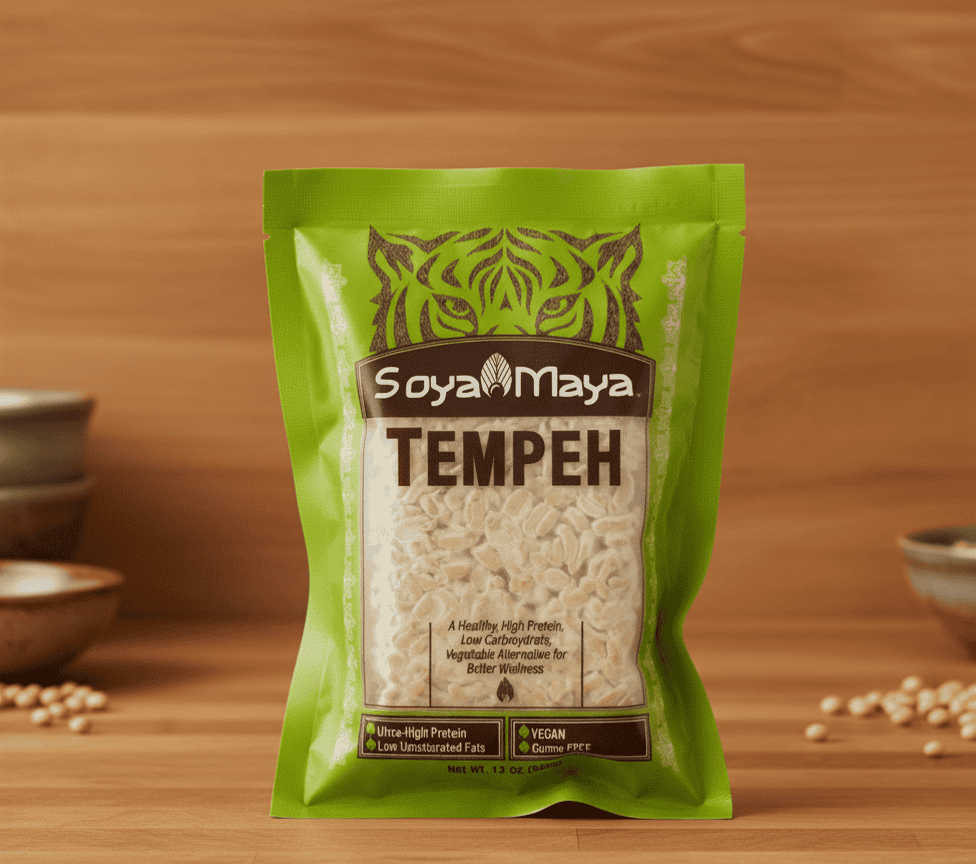
You can spot fresh tempeh at a wet market almost instantly. The telltale sign? It’s wrapped in banana leaves.
We often buy ours at markets in East Java and Yogyakarta. That banana leaf wrapping signals something important: the tempeh was made the traditional way, without any heat treatment after fermenting.
Those leaves allow the tempeh to breathe, keeping it alive and fresh.
The sellers at these markets get new stock every day. Because they move their products quickly, the tempeh is nearly always made that same morning. We’ve seen this again and again, and it makes a difference.
A few things we’ve noticed:
- Banana leaf wrapping means traditional fermentation
The leaves let air in, so the tempeh stays alive and fresh.
- Daily turnover means fresh stock
Since they sell quickly, you know you’re getting that day’s batch.
- Prices are low, usually Rp 3,500-10,000 per piece
It’s affordable because it comes straight from local makers, cutting out middlemen.
- Buy it early in the morning
If you want the best, get there before lunchtime. Afternoon leftovers just don’t compare.
Comparing Unpasteurized and Pasteurized Tempeh
We’ve worked with both unpasteurized and pasteurized tempeh. The difference is obvious once you handle them.
Unpasteurized tempeh has live cultures. It lasts maybe one to three days. Pasteurized tempeh is heat-treated. It can last for weeks or even months, which is why many people look into the benefits of unpasteurized tempeh when choosing between the two.
Research from the U.S. National Institutes of Health demonstrates
“Sufficient evidence exists in the literature supporting tempeh fermentation as a low-cost, health-promoting, and sustainable food processing technology to produce protein-rich foods.” – U.S. National Institutes of Medicine
Pasteurized versions are made to be shipped far away. Fresh, unpasteurized tempeh is made to be eaten right now.
Here’s a quick comparison:
| Feature | Unpasteurized | Pasteurized |
| Shelf Life | 1-2 days (room), 7-10 days (fridge) | Weeks to months |
| Packaging | Breathable (banana leaves, perforated wrap) | Vacuum-sealed or frozen |
| Microbes | Live cultures present | Mostly inactive |
| Availability | Local markets, small producers | Supermarkets, mass retail |
Harvard Health notes that fermented foods with live cultures might help with digestion. But cooking the food is still important for safety.
At SoyaMaya, we lean toward the unpasteurized side. We focus on getting fresh tempeh to people quickly, not on making it last a long time in storage.
Availability of Unpasteurized Tempeh Outside Indonesia
Finding unpasteurized tempeh beyond Indonesia’s borders isn’t easy. We’ve searched markets abroad, and usually, it only shows up in specialty producers’ shops or niche health stores.
Most tempeh you’ll find internationally has been pasteurized. According to World Vegan Travel, this step helps extend shelf life and makes shipping less complicated. But it also means the live cultures, which make tempeh unique, are often lost in the process.
The logistics of keeping tempeh alive through long-distance shipping, combined with strict food safety regulations, keep unpasteurized tempeh from reaching many shelves internationally.
If you do come across it, these are likely places and signs to look for:
- Health food store tempeh sections
These specialty sections are where you’ll have the best chance of finding raw tempeh.
- Labeled as raw tempeh or live tempeh
Packaging usually makes it clear when the cultures are still active.
- Refrigerated or frozen during shipping
Cold storage is critical, without it, the tempeh won’t survive the journey.
- Availability depends on the region
Some cities and countries have a few options, while others have none at all. It’s unpredictable.
Specialty Brands That Offer Unpasteurized Tempeh
Artisan producers, those small-scale makers committed to tradition, are carrying the torch for unpasteurized tempeh.
These craftspeople work in small batches, nurturing live cultures with care and avoiding heavy processing that kills the microbes that give tempeh its unique health benefits and flavor.
As noted by Mark Messina, PhD
“If tempeh is cooked at a high temperature for a long time or pasteurized, the microbes inherent in this product will be killed.” – Soy Nutrition Institute Global
A few things stand out about these brands:
- They focus on probiotic tempeh, aiming to keep those live cultures intact
- Often, they experiment beyond soy, using bases like chickpeas or lentils to diversify flavors and textures
- Their products fit squarely into the niche world of fermented foods, attracting enthusiasts who know their way around this category
- Temperature-controlled shipping keeps the tempeh fresh and alive during transit, which isn’t easy but necessary
These brands aren’t mass-producing a product for the widest market, they cater to a narrow but passionate group.
Folks who seek authentic, living tempeh even outside Indonesia. It’s a rare find, and when you get your hands on it, it’s a real connection to craft and tradition.
Checking Health Food Stores for Fresh Tempeh
Health food stores can be a mixed bag when it comes to unpasteurized tempeh. Sometimes you’ll find it, sometimes you won’t.
For example, chains like Coop in Switzerland occasionally offer fresh, live tempeh, but it really depends on their supply chain and season.
You’ll usually spot it in the refrigerated section, often labeled as non-gmo tempeh, signifying that it appeals to customers looking for cleaner, less processed foods.
If you want the best chance at scoring some, check early in the day or call ahead. Also, availability can shift with the seasons; when demand or supply dips, it vanishes off the shelves.
So yes, health food stores are worth a look if you’re on the hunt, but don’t count on them for consistent, everyday access. It’s more like a pleasant surprise when they have it, and one to grab before it’s gone. Health food stores might have unpasteurized tempeh, but it’s not always there.
We’ve seen chains like Coop Switzerland offer fresh options sometimes. It really depends on their supply.
- The stock changes with the season.
- You’ll usually find it in the refrigerated section.
- It’s often labeled as non-gmo tempeh.
- They only have limited quantities, much less than what you’d find in a local market.
Making Your Own Unpasteurized Tempeh
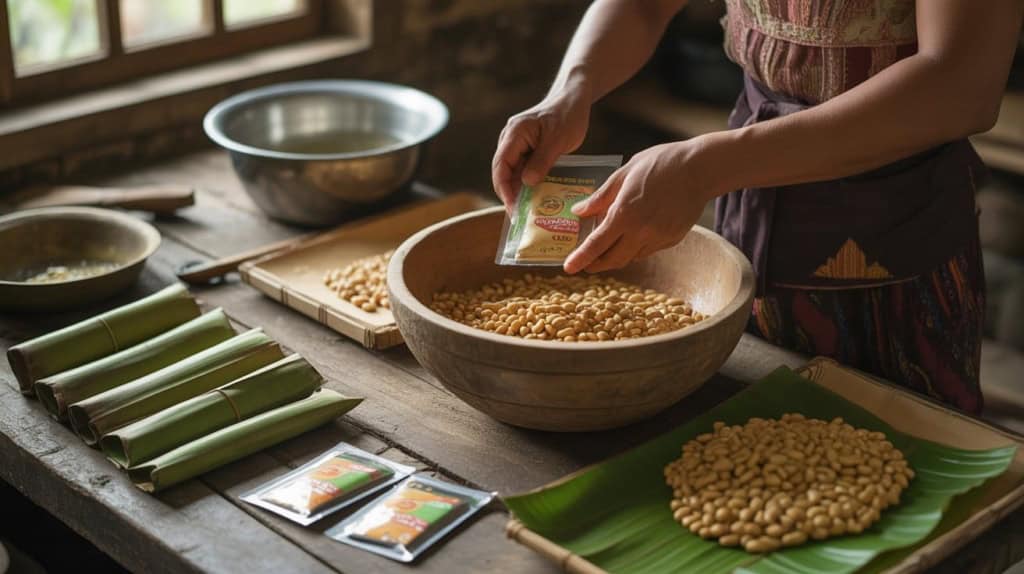
Making tempeh at home puts you firmly in the driver’s seat. You get to decide exactly how fresh it is, no guesswork, no hidden processing.
We’ve given it a try ourselves, and honestly, the process isn’t as tricky as it sounds once you learn the basics.
You start with a starter culture, the crucial Rhizopus mold, which ferments the soybeans. Keep the temperature just right, usually around 30°C, and within 24 to 48 hours, your tempeh should be ready.
Here’s what you’ll need: clean soybeans and a starter culture. Then, you create warm, humid conditions so the mold can do its job and produce fully live tempeh.
The best part? You’re not locked into soybeans only.
Chickpeas, lentils, and other beans work well too, letting you experiment with flavors and textures. This flexibility makes home tempeh-making not just satisfying but also creative.
It does take attention and patience, but producing your own fresh tempeh, with all its living cultures intact, offers a level of freshness and quality that you rarely find in stores.
Finding the Best Unpasteurized Tempeh Near You
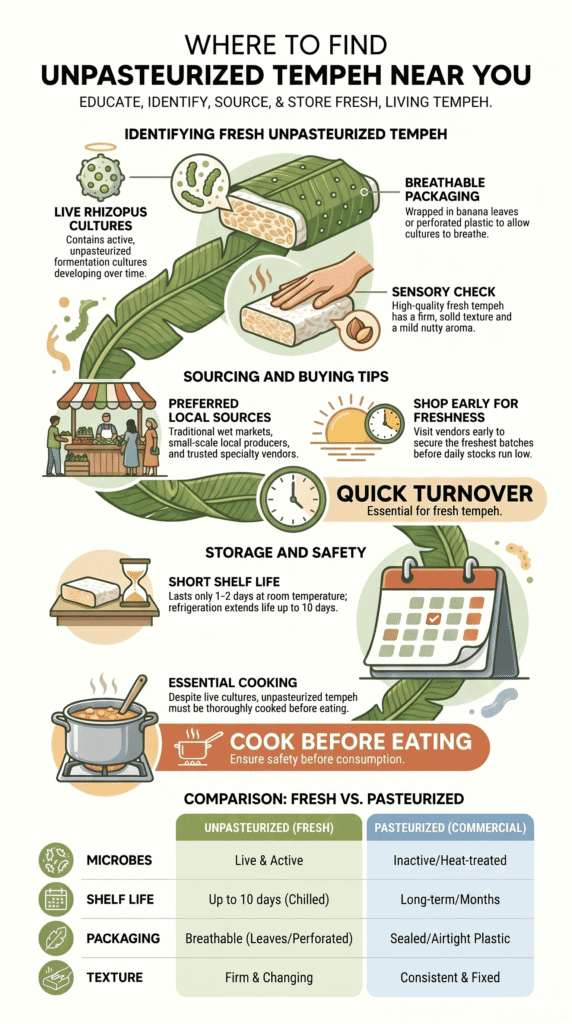
The easiest way to find unpasteurized tempeh is close to home, through local markets, small-batch makers, or sellers who can deliver it quickly after fermentation.
That said, relying on day-to-day market supply can be unpredictable. Availability shifts, and freshness isn’t always consistent. Working with a trusted regional producer makes a difference. You get a steady supply, better handling, and tempeh that arrives at its peak, every time.
At SoyaMaya, we follow traditional ways. We keep our supply chain short and reliable. This keeps the tempeh truly fresh. We don’t try to make it last longer artificially.
- Buy it within 24 hours of production.
- Pick local suppliers instead of big stores.
- Make sure it hasn’t been heat-treated or preserved.
- Keep it in the fridge and cook it soon.
FAQ
Where can I find unpasteurized tempeh near me locally?
You can usually find unpasteurized tempeh through local sources, farmers markets, specialty stalls, or small vendors who make and sell it fresh.
In many regions, the best time to look is early in the morning, when new batches have just finished fermenting. It also helps to ask directly, producers, suppliers, and nearby shops often know exactly when fresh tempeh is ready and available.
What is the difference between raw tempeh and pasteurized tempeh?
Raw tempeh, also known as fresh tempeh or live tempeh, still contains active tempeh culture and rhizopus tempeh growth. Pasteurized tempeh has been heat-treated, which stops fermentation and removes live cultures.
Unpasteurized tempeh is a fermented tempeh product with probiotic potential, while pasteurized versions are more stable and last longer in storage.
How do I know if tempeh is truly unpasteurized?
You can identify unpasteurized tempeh by checking for labels such as tempeh unprocessed, tempeh no preservatives, or tempeh live cultures.
Fresh tempeh from artisanal tempeh makers or local tempeh farms often has a shorter shelf life and may still show slight fermentation activity. You should always ask tempeh vendors whether the tempeh fermentasi alami has been heat-treated.
Can I buy raw tempeh online or only in local markets?
You can buy tempeh raw both online and in local markets. Some tempeh producers and tempeh suppliers offer tempeh delivery or tempeh online services.
However, because raw tempeh is perishable and usually has a tempeh 7 day shelf life, buying from nearby tempeh shops, health food stores tempeh sections, or asian markets tempeh areas is often more reliable.
Is it safe to eat unpasteurized tempeh directly?
You should not eat unpasteurized tempeh, including tempeh mentah or tempeh hidup, without cooking it first.
Although it is a probiotic tempeh with live cultures, proper cooking is recommended to ensure safety. Heating the tempeh does not remove its nutritional value and helps reduce potential risks from unwanted microorganisms.
Stay Close to Fresh Tempeh
You can taste the difference when tempeh is truly fresh, it’s firmer, smells clean, and cooks better right away. But finding unpasteurized tempeh isn’t always easy if you’re not near a local producer, and it often sells out quickly. That’s why it helps to choose a reliable source like we offer, so you’re not guessing about quality or freshness, with tempeh handled right from start to finish. Get fresh tempeh now with SoyaMaya
References
- https://pubmed.ncbi.nlm.nih.gov
- https://www.soyconnection.com/continuing-education/education-credits/newsletter-article-list/soy-and-the-microbiota-microbiome
Related Articles
- https://mayasaritempeh.com/fresh-tempeh/
- https://mayasaritempeh.com/how-to-find-whole-soybean-tempeh/
- https://mayasaritempeh.com/benefits-of-unpasteurized-tempeh/
SoyaMaya Fresh Tempeh
Traditionally fermented, no preservatives, shipped fresh and frozen to your door. The real deal, direct from us.
