
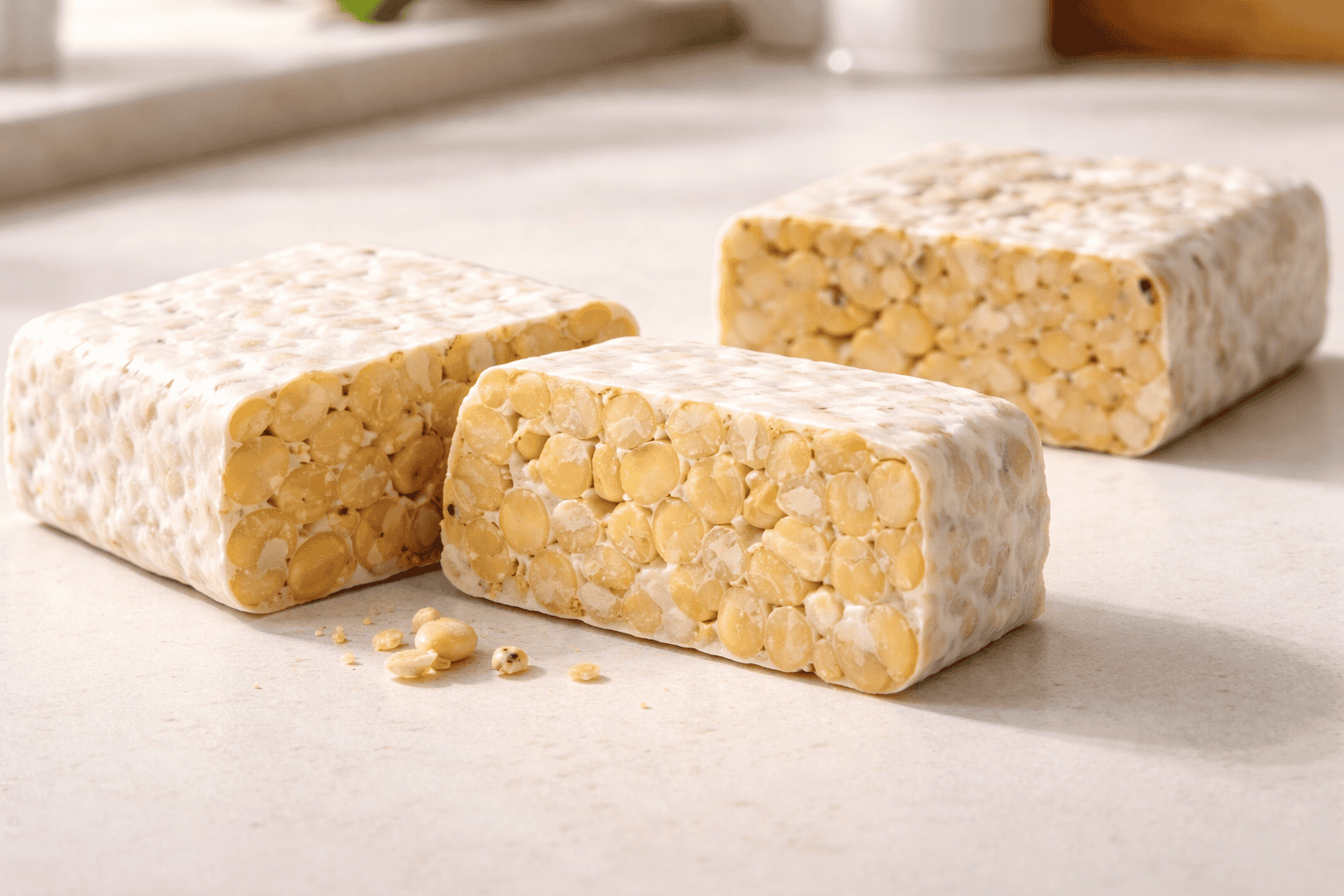
This is what real whole soybean tempeh looks like: a solid block of whole, organic soybeans woven together by a soft white mold. You can see every bean.
The texture is firm and meaty, and the flavor is mild and nutty, not sour. We make it ourselves, so we’ve spent a lot of time checking other products.
Many use cracked beans or add grains like rice, which makes the tempeh softer and sweeter. It’s a different product. If you’ve ever picked up a package and felt unsure, we get it. It took us years to learn the signs. Want to know how to tell? Let’s go through it together.
SoyaMaya Fresh Tempeh is made the traditional way — no preservatives, no shortcuts. Delivered to your door.
Order Fresh Tempeh →Tempeh Truths at a Glance
- Authentic tempeh is made from whole, intact soybeans. This structure gives it a characteristically firm, sliceable texture that doesn’t crumble.
- A clean ingredient list, just soybeans and a culture, and a block that’s firm, dry, and evenly white are your best signs of minimal processing. Avoid anything with a sour smell or added grains.
- The most reliable sources are often local producers at farmers’ markets or specialty grocers. These sources typically offer fresher products with clearer production methods.
What Is Whole Soybean Tempeh?
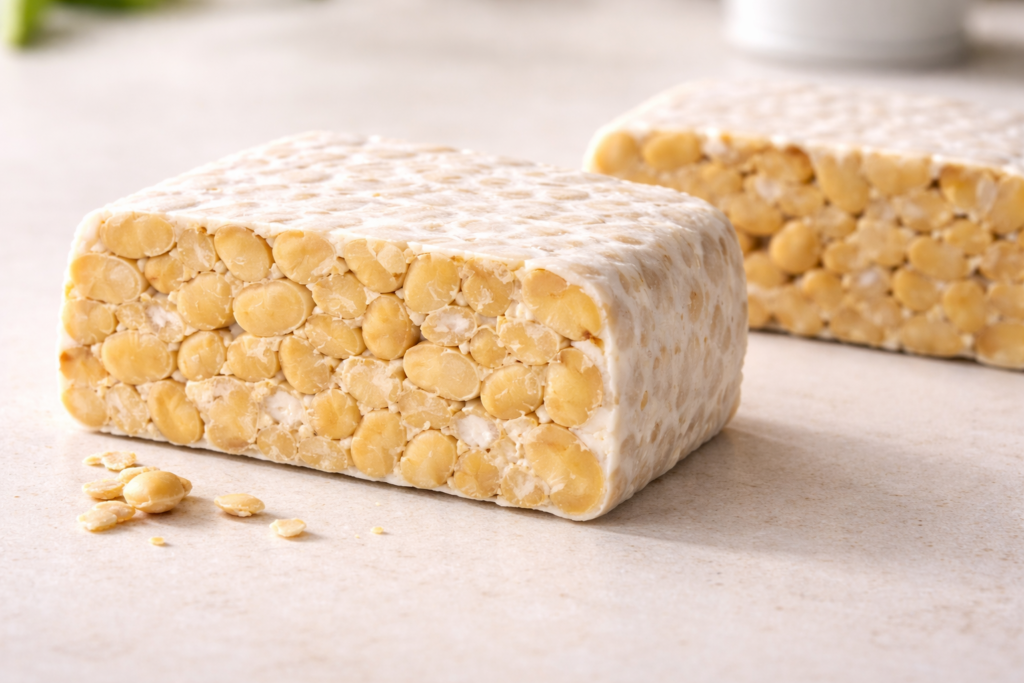
It’s tempeh in its most basic, traditional form. We start with whole, non-GMO soybeans and a specific culture called Rhizopus oligosporus. Over a day or two, the culture grows a network of white mycelium that binds the beans into a solid cake.
The beans stay intact, you can see each one clearly through the webbing. You can read more about the step-by-step fermentation process in understanding tempeh soybean prep.
As highlighted by Wikipedia
“Tempeh begins with whole soybeans, which are softened by soaking, dehulled, then partly cooked. The soybeans have to cool down to allow spore germination and abundant growth of mycelium [forming] a solid cake.” – Wikipedia
The result is a firm, dense block with a mild, nutty smell. Nutritionally, it’s a powerhouse. A 100-gram serving packs around 20 grams of complete protein, along with fiber and minerals.
The fermentation process, noted by groups like the FAO, breaks down compounds that can make beans hard to digest, so your body can use the nutrients more easily.
You can tell it’s made right by its structure:
- Visible whole beans throughout the block.
- A clean, white mycelium binding everything evenly.
- A firm, sliceable texture that isn’t wet or crumbly.
This is the standard we use for our own tempeh. It’s simple, but getting it right takes careful attention to every step.
How Can You Identify True Whole Soybean Tempeh?
It comes down to a few simple checks. We use this list every time we pick up a new product, whether at the store or a market.
First, look at it. The individual soybeans should be clearly visible and intact, held tightly together by a mat of white mycelium. There shouldn’t be any dark spots or slimy patches.
The block should feel firm and dense in your hand, not soft, wet, or crumbly. For a deeper comparison of soybean types and how they affect tempeh, check out our guide on whole vs split soybeans tempeh.
Next, read the label. The ingredient list is short. It should say “whole soybeans” and a starter culture like Rhizopus oligosporus. That’s it.
Sometimes you’ll see vinegar. Avoid any product that lists added grains, like rice or millet, or other fillers. The FDA requires ingredients to be listed clearly, so this is your most reliable tool.
Finally, trust your nose. A fresh, well-made tempeh has a mild, pleasant smell, earthy and nutty, like fresh mushrooms. If it smells strongly sour, bitter, or like ammonia, the fermentation was off or it’s starting to spoil.
| Check | What to Look For | Why It Matters |
| Visual | Whole beans visible, tightly bound by white mycelium; no dark or slimy spots | Ensures authentic fermentation and proper texture |
| Texture | Firm, dense, springy; not soft, wet, or crumbly | Confirms proper binding and freshness |
| Label | Ingredients: whole soybeans + starter culture only; no grains or fillers | Guarantees minimal processing and traditional tempeh |
| Aroma | Mild, earthy, nutty; not sour, bitter, or ammonia-like | Signals correct fermentation and edibility |
These quick checks make it easy to spot the real thing.
Where Can You Buy Whole Soybean Tempeh?
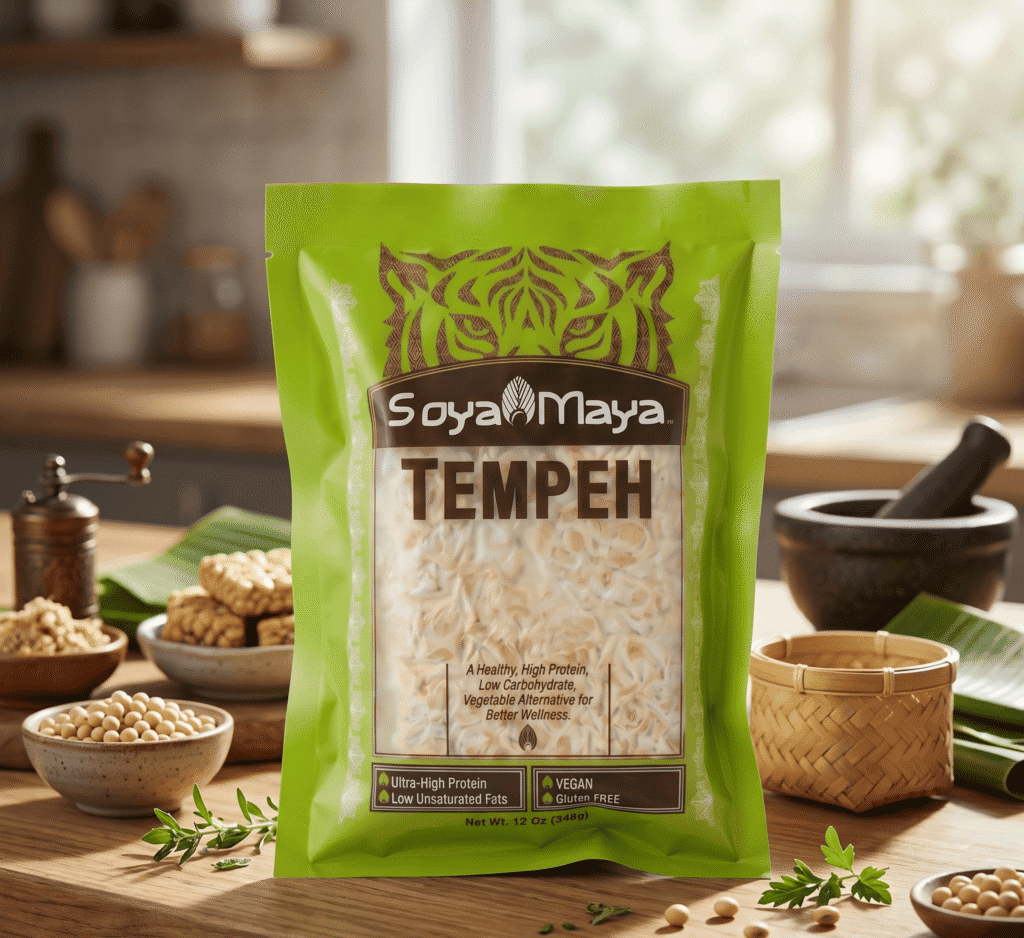
You can find it in a few different places, but the quality and authenticity can vary a lot depending on where you shop. We’ve tried them all.
Grocery chains and health food stores are the most convenient. You’ll usually find it in the refrigerated section. Just know that many of these products are pasteurized for a longer shelf life, which can slightly soften the texture and mute the flavor.
For the freshest options, consider browsing our fresh tempeh selection, which ensures careful fermentation and firm texture.
Online stores and specialty shops offer the widest variety. You can find small-batch producers who focus on traditional methods. The downside is shipping, tempeh is a live culture, so heat or long transit times can affect it. Look for sellers who use insulated packaging.
Local markets, especially Indonesian or Asian grocers, are often the best bet for fresh, authentic tempeh. It’s usually made nearby and sold quickly. The trade-off is that it might not always be in stock.
Most fresh tempeh is good for about 5 to 7 days in the fridge. The USDA notes that proper, cold storage is key for keeping fermented foods safe and tasty.
In our experience, buying directly from a local producer or a trusted small maker online usually gets you the best texture and flavor. That’s why we make and sell ours fresh-frozen, to lock in that quality right after fermentation.
What Should You Look for on Tempeh Labels?
We read them carefully. A good label tells you exactly what you’re getting before you even open the package.
First, check the ingredient list. “Whole soybeans” should be the first, and ideally, the only, main ingredient. You might see a starter culture (like Rhizopus oligosporus) and sometimes a bit of vinegar.
Avoid products that list added grains, such as rice or millet, or any preservatives. These change the texture and flavor.
Look for a non-GMO claim. Many soybeans are genetically modified. Choosing a product that’s verified non-GMO, like those with the Non-GMO Project’s Butterfly seal, means the soybeans were sourced to avoid GMOs.
The Non-GMO Project runs a strict verification program to back up that claim, which matters for both food purity and how well the fermentation works.
Packaging matters too. We prefer vacuum-sealed packs. They keep air out, which helps the tempeh stay fresh longer.
If the package is clear, even better, you can see the beans and the white mycelium right through it, which is a quick visual check for quality.
These simple checks on the label and package help you find a consistent, authentic product every time.
How Do You Find Authentic Tempeh in Local Markets?
Start by visiting markets that serve Indonesian or other Asian communities. That’s where we often find the best, most traditional tempeh. The product is usually made locally and sold almost immediately.
Look for packaging that says “tempe kedelai utuh”, this is the Indonesian term for whole soybean tempeh. Don’t expect fancy labels. The wrapping might be a simple plastic bag or even a banana leaf, which is a traditional method.
Don’t hesitate to ask the seller a question. A simple “When was this made?” can tell you a lot. Authentic, fresh tempeh often has a very short shelf life because it’s made in small batches, sometimes daily.
Pick up the block and look at it. It should feel firm and dense. The surface should have an even, white, fuzzy coating of mycelium, with the outlines of whole beans clearly visible underneath.
Avoid packages with slimy, colorful (pink/green) spots; however, tiny dark gray or black specks are often just harmless spores.
In places where tempeh is a daily staple, this is the norm, sold fresh from the morning’s production. That lack of storage time makes a noticeable difference; the flavor is cleaner and the texture is at its best.
We apply these same checks to our own sourcing. In a local market, the simplest presentation and the shortest shelf life are your strongest clues for finding the real thing.
How Can You Test Tempeh Quality Before Buying?
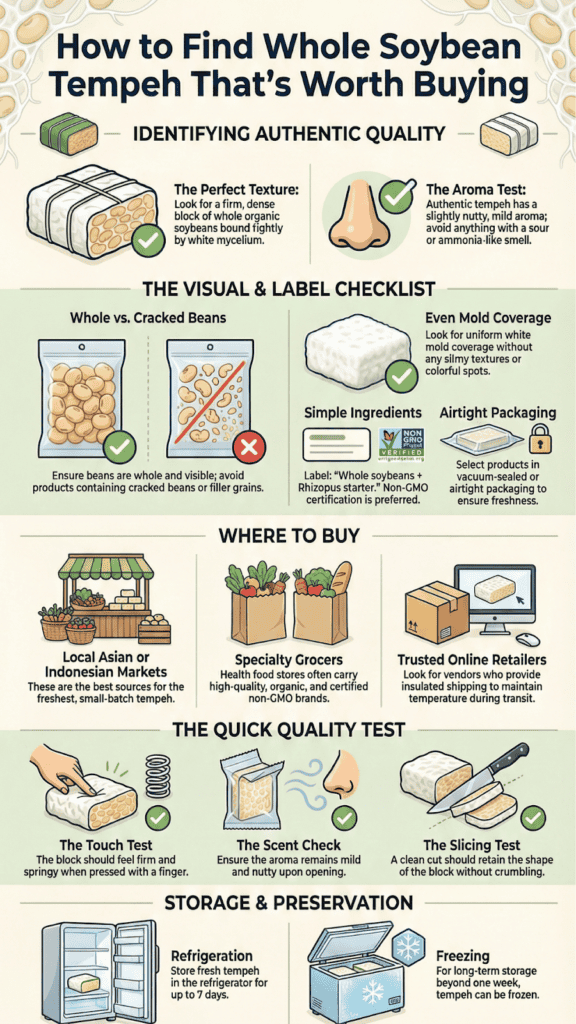
You can do a few quick checks right in the store. We do this every time.
Data from ScienceDirect / International Journal of Food Microbiology demonstrates
“Good quality tempeh is characterized by a firm, compact texture and a pleasant, nutty aroma. The soybeans should be completely covered and bound together by a thick, white, uniform mycelium. The individual beans should be visible, indicating the use of whole legumes rather than a processed paste.” – ScienceDirect
First, feel it. Gently press the package. A good block should feel firm and spring back slightly, not soft or mushy. It should feel dense and heavy for its size.
Look at it closely. The surface should be covered in an even, fuzzy white mold. You should clearly see the outlines of whole soybeans packed tightly underneath.
Avoid any package with green, black, or pink spots, that’s mold you don’t want. Also, pass on blocks that look wet or have pooled liquid.
Smell it. This is important. If the packaging allows, take a quick sniff near the seal. Fresh, well-fermented tempeh has a mild, pleasant smell, earthy and nutty, like mushrooms.
A sharp ammonia smell or a slimy film are the strongest indicators of spoilage. If you can see it unwrapped, notice how it cuts. A quality block slices cleanly with a knife, holding together without crumbling.
That clean cut shows the mycelium network is strong and has properly bound the beans. These checks take just a moment. Once you know what to look for, spotting a good block becomes instinctive.
FAQ
Where can I buy whole soybean tempeh locally or online?
You can buy whole soybean tempeh at fresh market tempeh vendors, Asian grocery stores, Indonesian markets, or health food store tempeh sections. Organic store whole tempeh often carries non-GMO whole soybean tempeh too.
You can also buy whole soybean tempeh online from reputable online whole soybean tempeh shops. Always check the tempeh packaging for transparency and clean label whole soybean tempeh.
How do I identify authentic whole bean tempeh easily?
Authentic whole bean tempeh has firm whole bean tempeh blocks with clearly visible whole soybeans. White mycelium should bind the soybeans evenly, creating a compact whole soybean tempeh texture.
Fresh whole soybean tempeh has a mild aroma, nutty taste, and dense block structure. Choose unprocessed soybean tempeh without fillers or grains to ensure traditional fermentation whole tempeh quality.
What is the difference between whole soybean tempeh and processed tempeh?
Whole soybean tempeh contains 100% soybeans, forming pure soybean blocks with even mycelium coverage and no crumbling texture. Processed tempeh may contain soy blends, fillers, or grains, which reduce protein content and change texture.
Artisanal whole soybean tempeh or handmade whole bean tempeh ensures high protein whole soybean tempeh, vegan whole soybean tempeh benefits, and traditional fermentation whole tempeh quality.
How should I store and preserve whole soybean tempeh properly?
Fresh whole soybean tempeh should be stored in the refrigerator for short-term use. Freezing whole tempeh blocks extends shelf life while maintaining texture and flavor.
Vacuum packed whole tempeh or banana leaf wrapped whole tempeh retains freshness better. Proper storage preserves white mycelium binding soybeans, maintains firm whole bean tempeh blocks, and protects the nutty taste and aroma of fresh whole tempeh.
What should I check when buying whole soybean tempeh for quality?
Check the tempeh ingredients list and look for clean label whole soybean tempeh. Ensure it is minimally processed, free from fillers or grains, and has even mycelium coverage. Inspect dense tempeh block structure with no crumbling.
Avoid fake or low-quality tempeh. Prefer sustainable whole soybean tempeh with eco-friendly packaging to ensure authenticity, freshness, and high protein whole soybean tempeh benefits.
What Real Tempeh Should Feel Like
You can tell when tempeh misses the mark; it feels too soft or looks overly processed, and the flavor just doesn’t sit right. That often means the beans aren’t whole or the process was rushed, costing texture and nutrition. For something reliable, SoyaMaya focuses on whole soybeans and careful fermentation, giving you firm, clean-tasting tempeh you can trust. Ready to choose a better tempeh? Shop at SoyaMaya
References:
- https://www.sciencedirect.com/topics/agricultural-and-biological-sciences/tempeh
- https://en.wikipedia.org/wiki/Tempeh
Related Articles:
- https://mayasaritempeh.com/fresh-tempeh/
- https://mayasaritempeh.com/whole-vs-split-soybeans-tempeh/
- https://mayasaritempeh.com/understanding-tempeh-soybean-prep/
SoyaMaya Fresh Tempeh
Traditionally fermented, no preservatives, shipped fresh and frozen to your door. The real deal, direct from us.
