
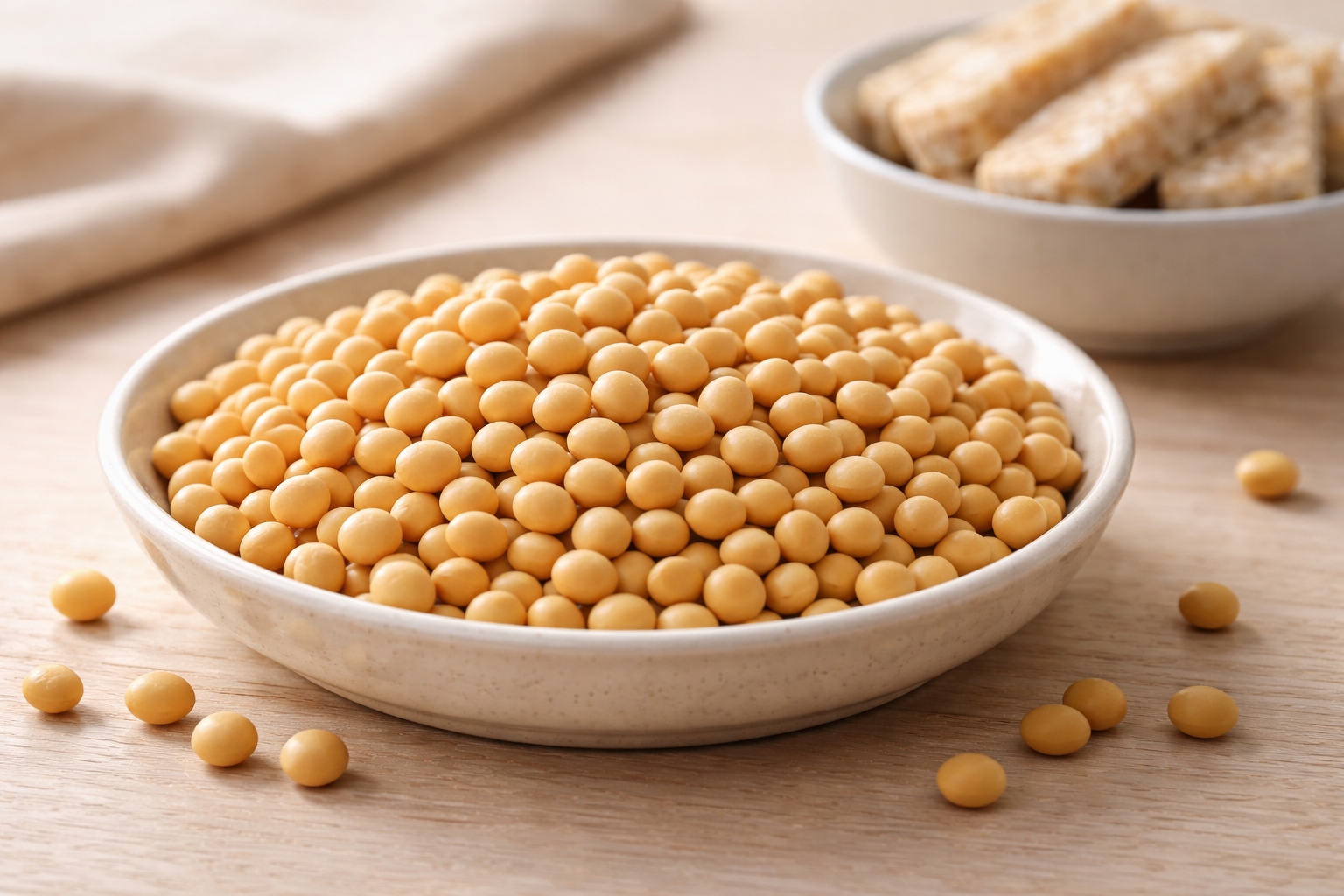
The best soybeans for tempeh are whole, dried yellow soybeans (Glycine max). They give you a firm block, a strong fermentation, and plenty of protein.
We’ve run tests on dozens of soybean types, in our home kitchens and through our work. The bean choice is critical. It controls how fast the mycelium spreads and how the finished cake holds together.
Certain beans knit into a solid, dense slab. Others produce a crumbly mess, or the mold grows in inconsistent spots. Learning this upfront avoids spoiled batches and lost time. This is what we’ve learned from doing it ourselves, and what really works.
SoyaMaya Fresh Tempeh is made the traditional way — no preservatives, no shortcuts. Delivered to your door.
Order Fresh Tempeh →Soybean Secrets for Better Tempeh
- Yellow soybeans are still the most dependable choice for consistent tempeh.
- The size of the bean, how fresh it is, and its moisture level all directly impact the final texture and how the mold grows.
- High-quality, non-GMO soybeans simply make better tempeh, with a cleaner taste and a more robust structure.
Why Are Yellow Soybeans the Best Choice for Tempeh?
Yellow soybeans (Glycine max) are ideal for tempeh. Their size is balanced, they’re easy to dehull, and they support a strong, binding Rhizopus mycelium.
Research from Chemical Engineering Transactions shows
“To produce tempe, yellow-seeded soybeans were the most popular and widely used raw material. Soybean-fried tempe indicated the highest overall rating. This study provides an insight towards introducing tempe and its acceptance as a potential food choice.” – Chemical Engineering Transactions
We always come back to yellow soybeans because they’re predictable. Their structure lets the mold spread evenly across the batch, forming a solid, compact block.
These beans usually have 35–40% protein, which leads to a protein-rich tempeh. The Food and Agriculture Organization (FAO) notes that soybean fermentation improves how easily our bodies can digest and absorb nutrients.
In traditional Indonesian practice, particularly in Java, yellow soybeans have been the standard for centuries. That long history speaks to their reliability and balance.
- Easy to peel during soaking and dehulling
- Balanced size for even fermentation
- Produces a firm, sliceable texture
From our hands-on work, yellow soybeans are still the foundation for good tempeh, whether you’re making it at home or producing it commercially. For a closer look at selecting fresh soybeans, check out our guide on how to find whole soybean tempeh.
What Are the Main Types of Soybeans Used for Tempeh?
The main types are yellow, black, and green soybeans. Yellow beans are the most effective for fermentation and texture.
As noted by Wikipedia
“The type of soybean first used to make tempeh was the black soybean, which was a native plant. This later changed with the importation of white or yellow soybeans and the rise of the tofu industry on the island.” – Wikipedia
We’ve tried them all, and they each act differently during the process.
| Type | Characteristics | Suitability |
| Yellow soybeans | Medium size, hulls remove easily | Best choice |
| Black soybeans | Higher antioxidants, much thicker hull | Moderate |
| Green soybeans | High moisture, immature (edamame) | Poor |
Black soybeans (Glycine soja) can make a tempeh with a deeper, almost earthy flavor. Their thicker skins, though, slow the fermentation down. We usually have to soak and cook them longer.
Green soybeans, often sold as fresh edamame, have too much water in them. That extra moisture messes up the binding and often causes the batch to fail.
For most situations, just using yellow soybeans sidesteps a lot of extra trouble and gives you reliable results every time. If you want to see the difference in fresh tempeh made from quality beans, explore our fresh tempeh selection.
What Makes Yellow Soybeans Ideal for Fermentation?
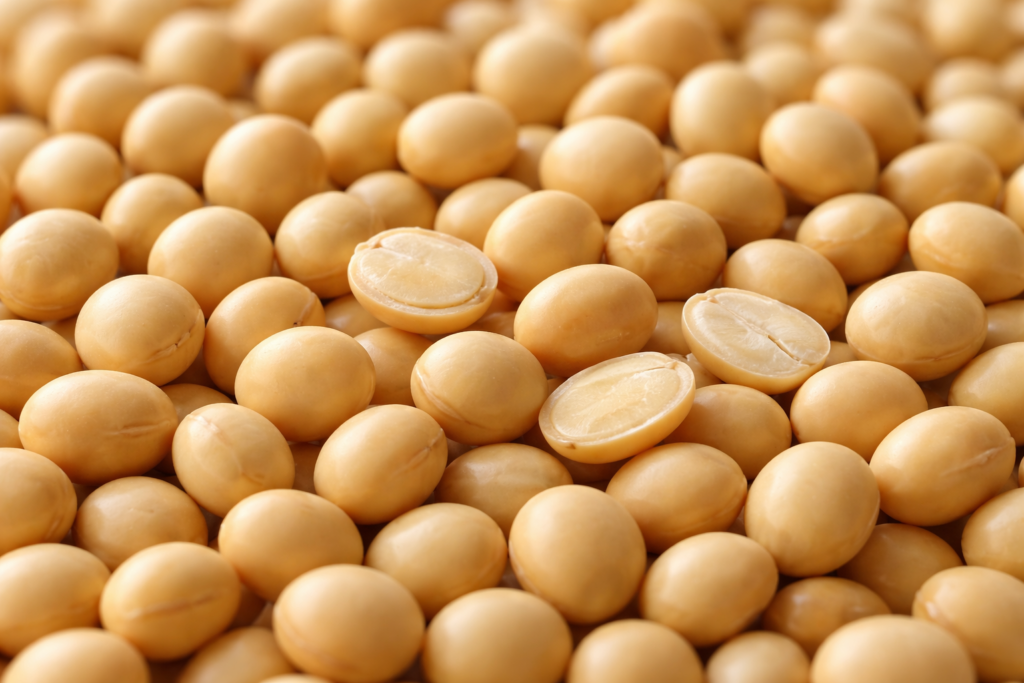
Yellow soybeans have a protein-to-starch ratio that’s just right. It lets the Rhizopus oligosporus mold grow quickly and evenly.
We’ve seen that fermentation quality gets better when beans soak up water uniformly and keep their shape during cooking. Yellow soybeans handle both of those things well.
This nutrient balance lets the mycelium spread fast and bind the beans tightly. USDA data shows that soybeans with a balanced composition lead to more efficient fermentation.
- Strong mycelium binding across the entire surface
- Stable texture after boiling and drying
- Supports even mold coverage
This is part of why we use non-GMO soybeans in our SoyaMaya work. Clean inputs support a clean fermentation.
When the beans are right, the whole process runs smoother and you can predict the outcome.
How Should You Select Soybeans for Tempeh?
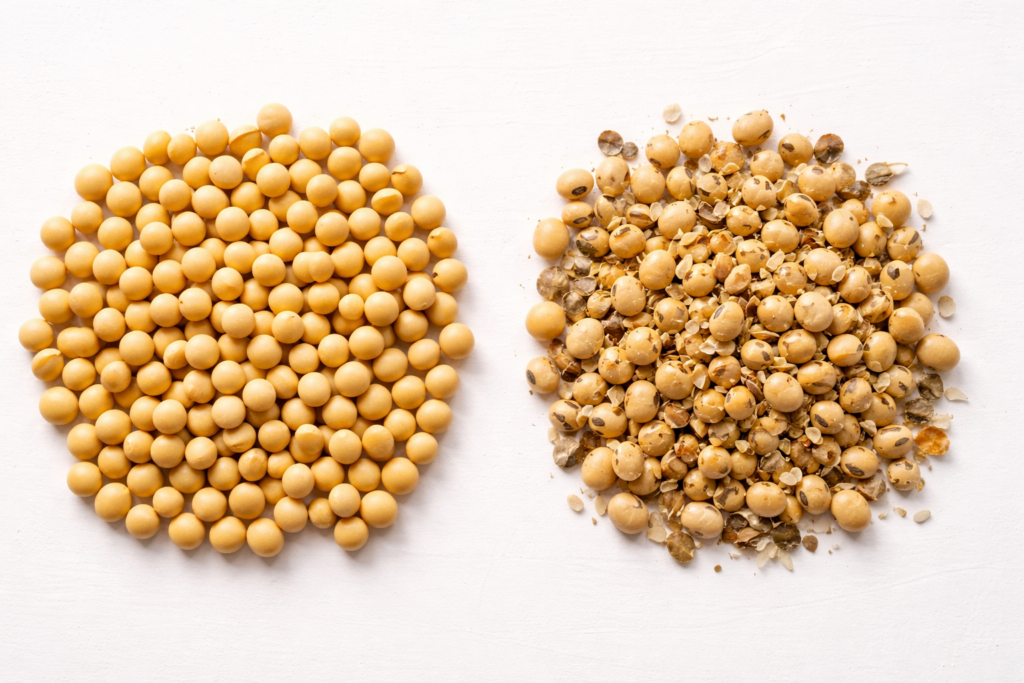
Pick whole, dried, and undamaged soybeans. This ensures they hydrate properly and ferment well.
We treat bean selection as the first step toward quality. Even minor flaws can mess up the fermentation.
We look for beans graded for tempeh, with a consistent size and clean look. Agricultural data shows that 1kg of dry beans yields roughly 1.7kg of fresh tempeh, so efficiency is key.
Using carefully selected soybeans makes a difference in the final texture, learn more about how to find whole soybean tempeh to ensure consistent results.
- Use whole soybeans, not split or cracked ones.
- Choose organic beans to minimize chemical interference.
- Look for uniform size so they cook evenly.
- Check for low moisture content to prevent spoilage.
Freshness matters too. Beans from a newer crop absorb water better and tend to ferment more uniformly. These simple checks improve your texture and your chances of success.
Can You Use Other Soybean Varieties or Alternatives?
Yes, you can use other legumes, but soybean-based tempeh is still better in texture, nutrition, and fermentation consistency.
We’ve tested alternatives like chickpeas and lentils, mostly for recipe variety. They can ferment, but the structure isn’t the same.
- Chickpeas make a softer, more crumbly tempeh.
- Lentils ferment faster but don’t hold a firm shape.
- Fava beans create a denser block.
Soybeans have roughly 10–13% fat, which adds to the flavor and shelf stability. The National Institutes of Health (NIH) points out the specific nutritional advantages of fermented soy over other legumes.
Mixing legumes with soybeans can sometimes improve texture, but pure soybean tempeh is still the most dependable. For consistent results, we stick with soybeans as the foundation.
Why Do Bean Size and Structure Matter in Tempeh?
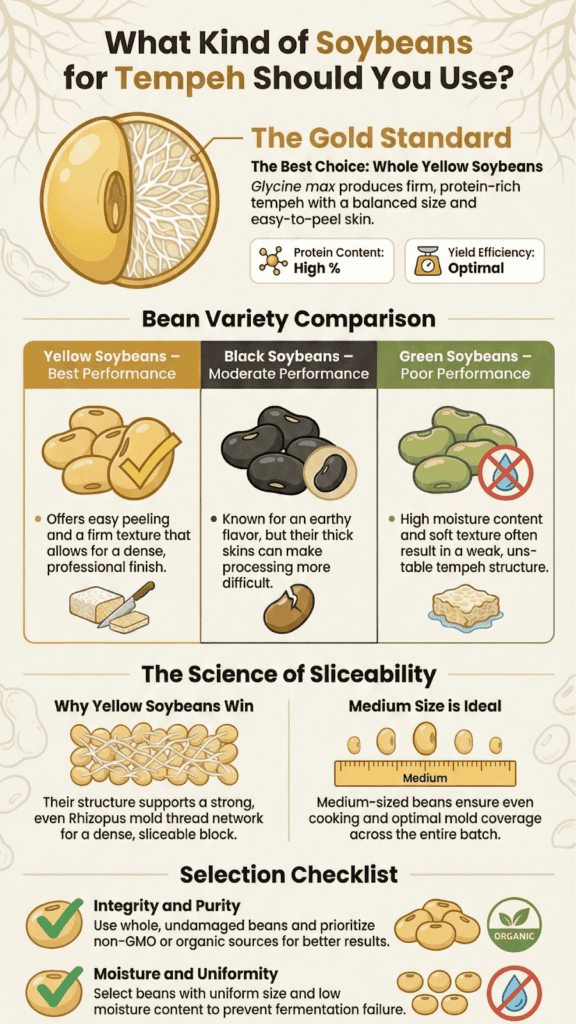
Bean size directly affects fermentation speed and how well the block binds. Medium-sized beans give you the best balance for consistent results.
We’ve watched how size changes everything during fermentation.
Small beans soak up water fast and can overcook, leading to a mushy texture. Large beans often stay too firm, which stops the mold from binding them properly.
Uniform beans create better airflow and let the Rhizopus mold grow evenly, which leads to a solid, cohesive slab.
- Medium size supports even cooking.
- Uniform beans improve mold coverage.
- Balanced structure prevents weak spots.
That’s why we pay close attention to uniformity in our batches. Consistency at this basic level makes the final tempeh better.
FAQ
What are the best soybeans for tempeh making at home?
The best soybeans for tempeh are whole, high-quality beans that are fresh, clean, and free from cracks or damage. Non-GMO soybeans tempeh or organic soybeans for tempeh are ideal for traditional fermentation.
Yellow soybeans tempeh and white soybeans tempeh both work well. Choosing soybeans with high protein tempeh and low oil content ensures firm tempeh blocks and consistent Rhizopus mold growth.
How does soybean size affect tempeh texture and fermentation?
Soybean size for tempeh texture is important because uniform soybeans tempeh cook evenly and support consistent mold growth. Large soybeans tempeh require longer fermentation, while small soybeans tempeh can become too soft.
Split soybeans tempeh or soybeans without skins tempeh can affect firmness. Selecting soybeans with proper moisture content tempeh ensures optimal fermentation absorption and produces tempeh with a firm, uniform texture.
Which soybean varieties are suitable for traditional and artisanal tempeh?
The soybean variety for tempeh influences flavor, texture, and fermentation efficiency. Local soybeans tempeh in Indonesia and imported soybeans tempeh from countries like the US, Canada, or Brazil are commonly used.
Premium soybeans for fermentation or food-grade soybeans tempeh produce consistent results. Protein-rich soybeans tempeh and low-oil soybeans tempeh support firm tempeh blocks and promote healthy Rhizopus mold growth.
How does soybean preparation influence homemade tempeh quality?
Raw soybeans tempeh preparation requires proper soaking and boiling. Soybeans soaking quality tempeh affects softness, while soybeans boiling quality tempeh influences peeling ease and splitting after boiling.
Dehulled soybeans tempeh or hulled soybeans tempeh should be dried before inoculation. Properly dried soybeans for tempeh improve fermentation absorption, support uniform mycelium growth, and result in a firm, white-mold-covered tempeh block.
What should I consider when choosing soybeans for commercial tempeh production?
For commercial tempeh, bulk soybeans tempeh supply must be consistent in quality, size, and freshness. Soybeans storage conditions tempeh and low moisture soybeans tempeh are critical to prevent spoilage.
Eco-friendly soybeans tempeh, pesticide-free soybeans tempeh, or chemical-free soybeans tempeh ensure safe, sustainable production. Soybeans fermentation compatibility and Rhizopus growth suitability are essential for reliable artisanal or industrial tempeh production.
Better Soybeans, Better Tempeh
Better soybeans, better tempeh. You notice it right away when the beans aren’t right; the texture turns loose, breaks apart, and the taste feels off. It often starts with how the soybeans absorb water and hold together during fermentation, which affects everything.
For reliable results, SoyaMaya uses carefully selected soybeans and controlled methods, giving you a firm, clean-tasting tempeh every time. Ready to upgrade your tempeh? Shop at SoyaMaya
References:
- https://www.cetjournal.it/cet/23/106/228.pdf
- https://en.wikipedia.org/wiki/Tempeh
Related Articles:
- https://mayasaritempeh.com/fresh-tempeh/
- https://mayasaritempeh.com/whole-vs-split-soybeans-tempeh/
- https://mayasaritempeh.com/how-to-find-whole-soybean-tempeh/
SoyaMaya Fresh Tempeh
Traditionally fermented, no preservatives, shipped fresh and frozen to your door. The real deal, direct from us.
