
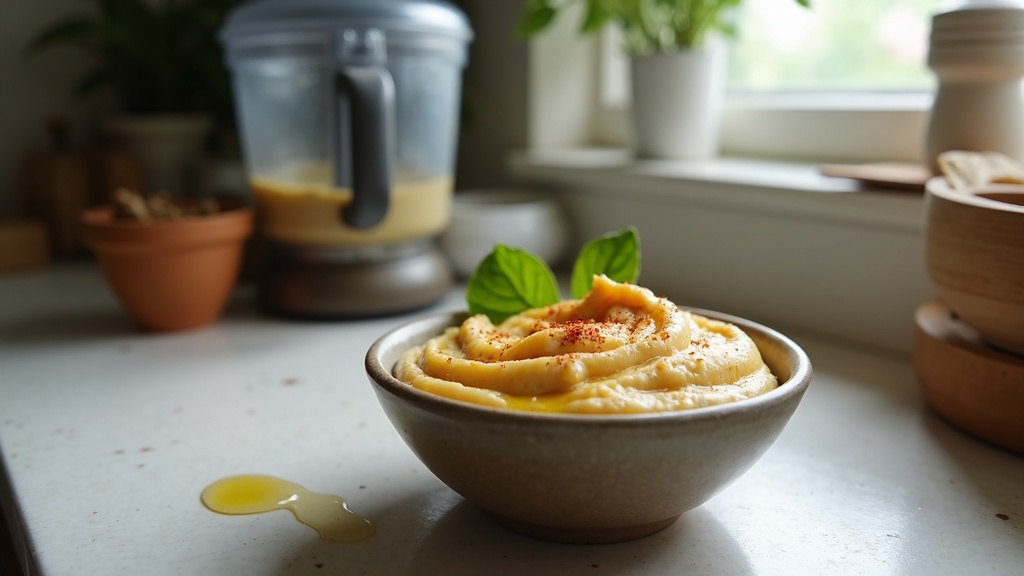
Most store-bought dips feel mysterious, but hummus is different,you can actually see what goes into it. A healthy hummus starts with chickpeas, tahini, lemon juice, olive oil, and garlic, blended into a smooth, plant-based spread with protein, fiber, and heart-healthy fats, and no preservatives.
We make it often at home because it’s quick, flexible, and built from real ingredients you already know. Chickpeas have anchored Middle Eastern cooking for centuries, and this method respects that history while still fitting modern nutrition goals. If you want a creamy, everyday dip, this is how we make it.
Key Takeaways
- We control sodium, texture, and freshness when we make hummus ourselves.
- Healthy hummus delivers plant protein, fiber, and monounsaturated fats in one bowl.
- Small technique choices create a smoother, more satisfying dip.
What Makes Hummus Dip Healthy?
We’ve noticed over time that the hummus we make at home leaves us feeling better than most store-bought versions, and it really comes down to a few simple choices, especially when we pair it with whole-food snacks like tempeh protein chips instead of refined crackers.
Soya Maya Tempeh Protein Chips — 100% plant-based, high protein, no artificial additives. Ships to your door.
Get Your Chips →Here’s what we build it on:
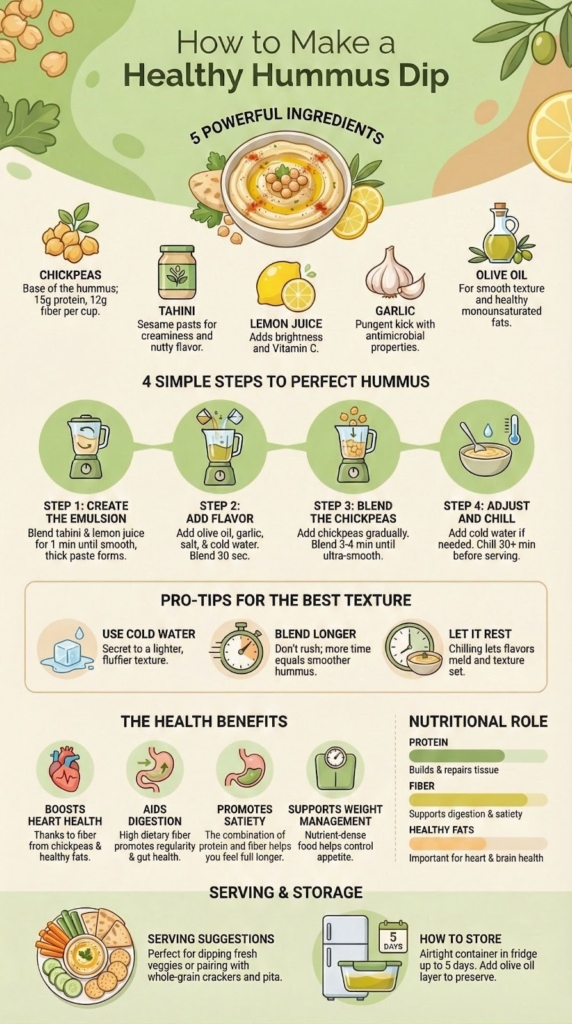
- Chickpeas
About 1 cooked cup gives roughly 15 g protein and 12 g fiber. For us, that means hummus keeps us full without feeling heavy. - Extra virgin olive oil
It adds mostly monounsaturated fats, which are linked with better heart health when they replace saturated fats. We also find it makes the dip more satisfying than low‑fat versions. - Fresh lemon juice and garlic
Lemon brings vitamin C and brightness. Freshly chopped garlic has those active sulfur compounds that are studied for gut and immune support, and we can actually taste the difference when it’s fresh.
We also pay close attention to what we leave out. We skip added sugar, stabilizers, and unnecessary oils. When we portion our own hummus, a typical 1/4 cup serving lands around 150 calories, which fits easily into daily meals and snacks without crowding out other foods we want to eat.
| Ingredient | Nutritional Role | Health Benefit |
| Chickpeas | Plant protein, dietary fiber | Supports digestion, promotes fullness, and helps stabilize blood sugar |
| Tahini (Sesame Paste) | Healthy fats, minerals | Provides calcium and iron while enhancing creaminess |
| Extra Virgin Olive Oil | Monounsaturated fats | Supports heart health and improves cholesterol balance |
| Fresh Lemon Juice | Vitamin C, antioxidants | Adds brightness and supports immune function |
| Garlic | Sulfur compounds | Offers antimicrobial and antioxidant properties |
Which Ingredients Are Needed for a Healthy Hummus Dip?
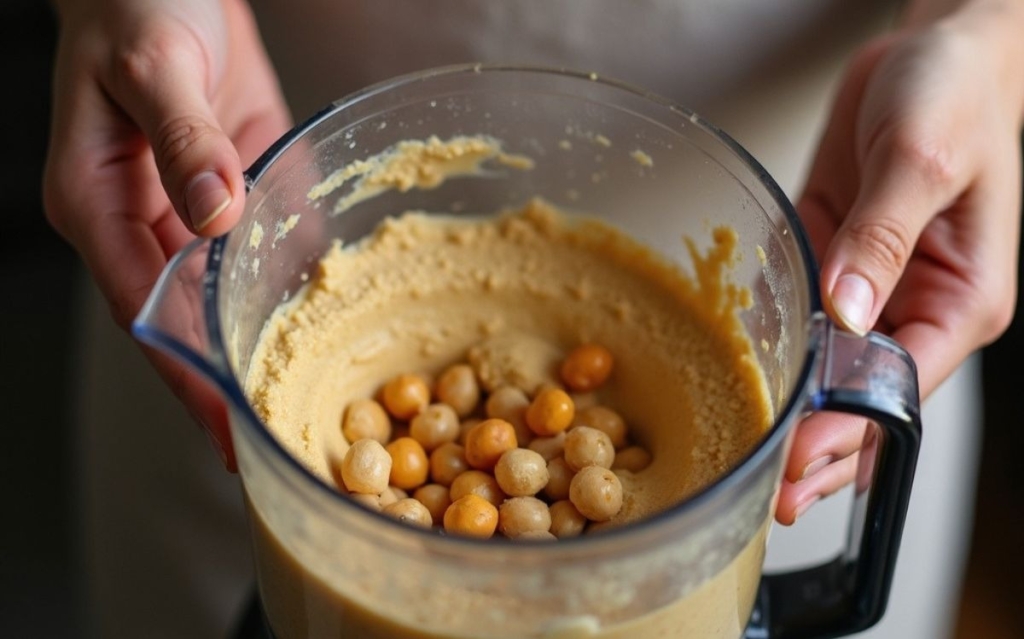
We keep our hummus pretty simple, and that’s usually when it tastes and feels best, particularly when we know it will be served with crunchy sides and tested across different best dips for tempeh chips we rotate through at home.
Our core ingredients:
- Chickpeas
We usually use two 15‑ounce cans, drained and rinsed. Low‑sodium helps us control the salt. Cooked‑from‑dry also works if we plan ahead. - Tahini
We look for tahini with just one ingredient: sesame seeds. It adds creaminess, healthy fats, and minerals like calcium and iron when we use it regularly. - Fresh lemon juice
We use about 1/3 cup. Fresh tastes brighter than bottled and balances the richness. - Garlic
One to two cloves is enough for us,strong, but not harsh. - Extra virgin olive oil
This adds flavor, healthy fat, and helps the hummus blend smoothly. - Cold water or aquafaba
We add it slowly to thin the dip without extra calories.
We sometimes peel the chickpea skins or briefly boil them with a pinch of baking soda when we want extra-smooth hummus. It does make a difference in texture. For flavor and a bit more nutrition, we’ll add small amounts of cumin, paprika, or sumac, and then finish by adjusting the salt at the very end.
How Do You Make Healthy Hummus Dip Step by Step?
We’ve made this hummus so many times at home that the steps feel automatic now, but each one really does change the texture.
Here’s how we do it:
- Add tahini and fresh lemon juice to the food processor.
Blend for about 1 minute. This makes a creamy base so the hummus turns out lighter instead of dense. - Add olive oil, garlic, salt, and a splash (about 2 tablespoons) of cold water.
Blend again for about 30 seconds, scraping the sides. It should look pale and fluffy. - Add half the chickpeas, blend about 1 minute.
Add the rest, then blend 2–3 more minutes. We’ve learned that extra blending time is what makes it really smooth.
After that, we add cold water a tablespoon at a time until the texture feels right,soft, but not runny. Then we chill the hummus for about 30 minutes so it thickens a bit and the flavors settle. The final result is a creamy dip that spreads easily on bread or scoops well with vegetables.
What Are the Health Benefits of Eating Hummus Regularly?
Credits: Kunal Kapur
We’ve seen in our own kitchen that when we keep hummus around, we snack better and feel more steady between meals.
Eating hummus often helps in a few clear ways:
- Better digestion and fullness
The fiber from chickpeas supports gut health and steadier blood sugar. Research on legume‑rich diets links them with a lower risk of heart disease, and we definitely notice hummus keeps us full longer than crackers or other refined snacks. - Heart support from healthy fats
The extra virgin olive oil in our hummus brings mostly monounsaturated fats, which are tied to better cholesterol balance when they replace saturated fats. Garlic adds antimicrobial and antioxidant effects, especially when we use it fresh. - Weight and energy balance
Because hummus combines protein, fiber, and fat in one spread, it keeps us satisfied without piling on calories. Our usual 1/4 cup serving sits around 150 calories, which makes it easy to pair with raw vegetables, whole grain bread, or bowls.
On a daily level, we like that hummus is blood sugar friendly and fits vegan, dairy‑free, and gluten‑free patterns, so it works well for mixed households and shared meals.
How Should Healthy Hummus Be Served and Stored?
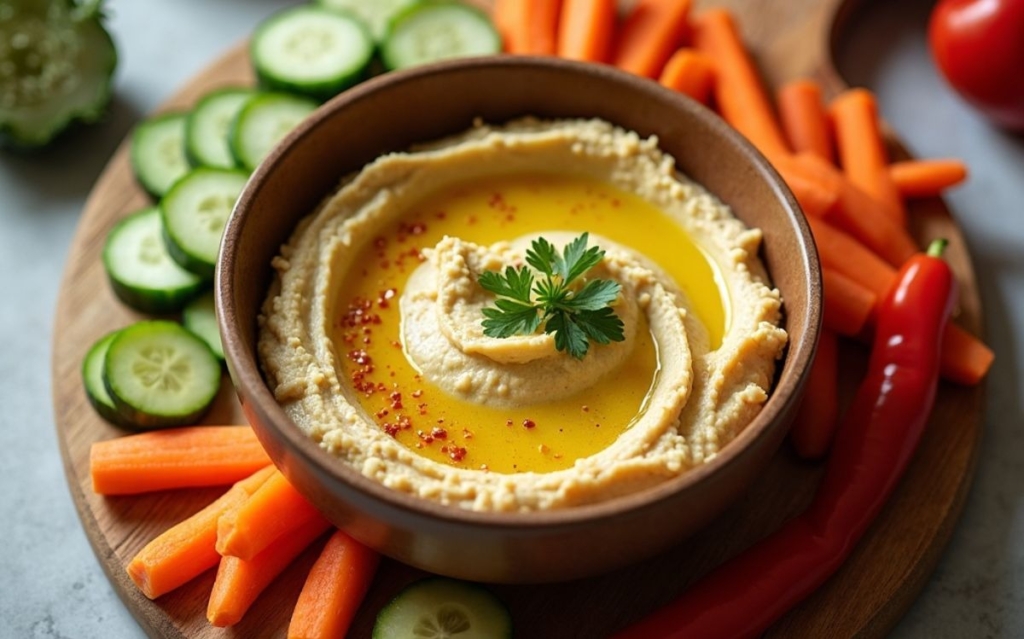
We’ve found that hummus is one of those foods that fits into almost any meal if you set it up right.
For serving, we usually:
- Scoop it with carrot sticks, cucumber slices, or bell pepper strips when we want a quick snack.
- Pair it with whole grain pita or bread, or serve it as part of an easy snack spread when pairing dips with tempeh chips makes more sense for energy and staying power.
- Spread it in wraps or grain bowls instead of heavier sauces.
- Thin it with a little water or lemon juice to use as a simple salad dressing base.
For storage, we keep our hummus in an airtight container in the fridge, at standard cold‑food temperature (around 40°F or below). We’re comfortable keeping it for up to 4–5 days. When we remember, we add a thin layer of olive oil on top to keep it from drying out at the surface.
It also does well for meal prep. We pack it into small containers for office lunches or post‑workout snacks. Before serving, we give it a quick stir to bring back the smooth texture.
FAQ
How can I make a creamy, smooth hummus texture at home?
To achieve a creamy hummus texture, start with fully cooked chickpeas that are very soft. You can use canned chickpeas or dry chickpeas that are soaked and cooked thoroughly. Peeling chickpeas or cooking them briefly with baking soda improves smoothness. Blend them with tahini paste, fresh lemon juice, garlic, and cold water in a food processor or blender until emulsified.
Is healthy hummus suitable for weight management and daily snacking?
Healthy hummus works well for weight management because it is a high protein dip and a fiber rich hummus. The combination of plant protein, healthy fats, and complex carbohydrates helps you feel full longer. As a low calorie dip when eaten in proper portions, it supports blood sugar friendly eating and reduces unnecessary snacking between meals.
What makes hummus a heart healthy and gut friendly food?
Hummus is considered heart healthy because it contains chickpeas, extra virgin olive oil, and tahini, which provide monounsaturated fats that support cardiovascular health. Chickpeas contribute fiber that aids digestion and gut health. Garlic adds antimicrobial properties, while spices such as cumin and paprika provide antioxidant compounds that support anti inflammatory eating patterns.
Can hummus fit special diets like gluten free or dairy free eating?
Homemade hummus naturally fits gluten free, dairy free, and nut free diets when made with basic ingredients. It also aligns with clean eating goals because it uses real food ingredients without preservatives. When served with vegetables like carrot sticks, cucumber slices, or bell peppers, it becomes a versatile veggie dip suitable for many dietary needs.
How should hummus be stored for meal prep and food prep use?
For meal prep, store homemade hummus in an airtight container in the refrigerator. Proper fridge storage keeps hummus fresh for several days without affecting flavor or texture. Hummus can also be frozen in small portions for longer storage. Before serving, stir the hummus well to restore smooth consistency and balanced seasoning.
How Making a Healthy Hummus Dip Fits Our Way of Eating
Making healthy hummus at home gives us control over ingredients and how it makes us feel. It supports heart health, digestion, and steady energy, while still being simple enough for busy days. We approach food the same way at SoyaMaya,using organic soybeans, careful fermentation, and real ingredients that actually nourish.
If you’re building a plant-forward kitchen, hummus pairs naturally with tempeh and other daily protein staples.
Explore what we cook with here: Shop SoyaMaya
References
- https://health.clevelandclinic.org/health-benefits-of-chickpeas
- https://www.fda.gov/food/buy-store-serve-safe-food/refrigerator-thermometers-cold-facts-about-food-safety
Related Articles
- https://mayasaritempeh.com/tempeh-protein-chips/
- https://mayasaritempeh.com/pairing-dips-with-tempeh-chips/
- https://mayasaritempeh.com/what-are-the-best-dips-for-tempeh-chips/
Soya Maya Tempeh Protein Chips
High-protein, plant-based, made from real tempeh. No artificial flavors. Crunchy and satisfying every time.
