
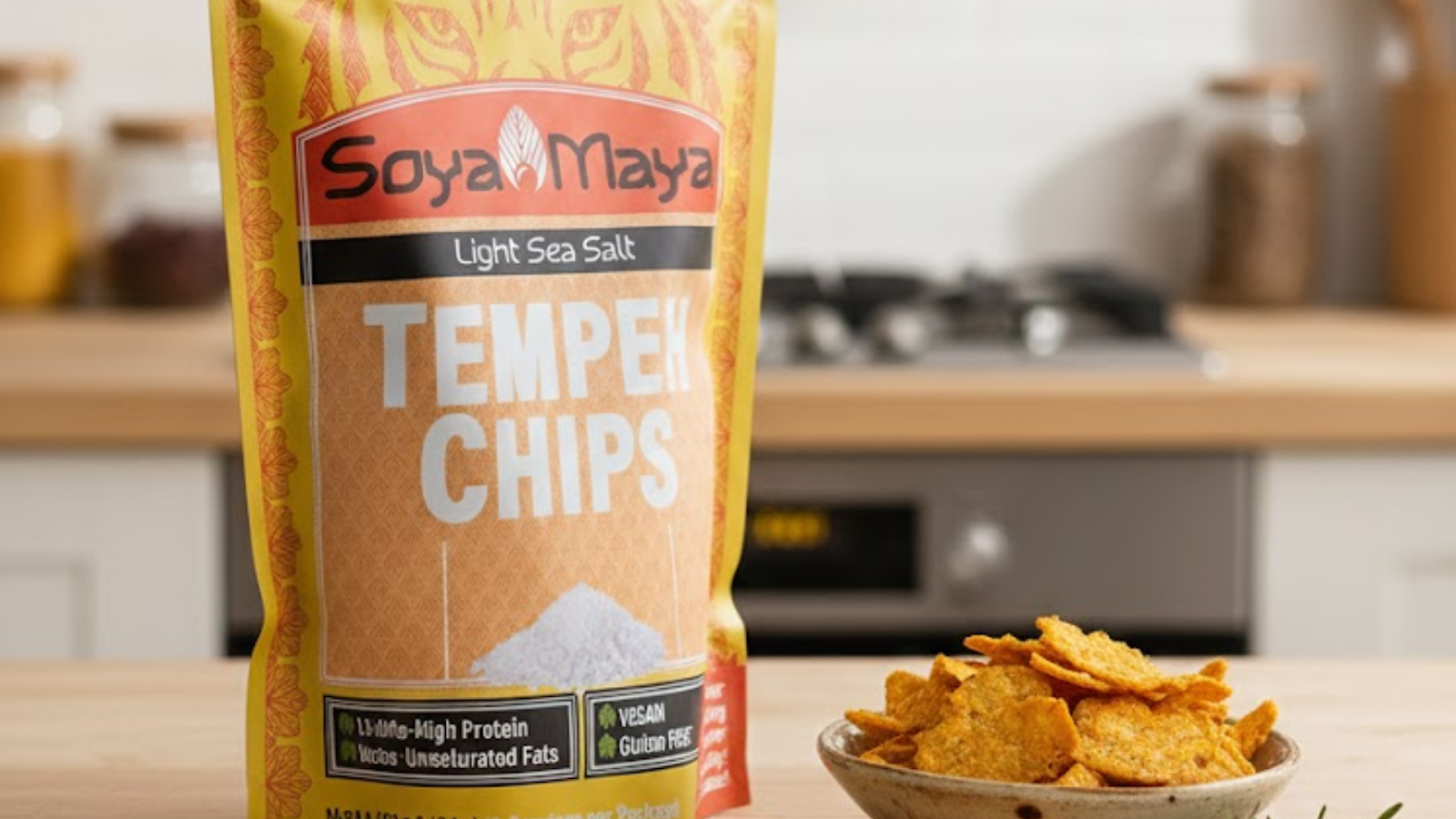
Uncover the process of crafting flavored tempeh chips using fresh, wholesome ingredients. Learn how SoyaMaya brings you healthy snacks bursting with flavor.
Making flavored tempeh chips is more than just a cooking process; it’s an art form rooted in tradition and flavor. At SoyaMaya, we take great pride in transforming high-quality non-GMO soybeans into crispy, delicious snacks that burst with exciting flavors.
By harnessing the power of fermentation and seasoning, we create not just a snack, but a nourishing experience that packs a punch.
Soya Maya Tempeh Protein Chips — 100% plant-based, high protein, no artificial additives. Ships to your door.
Get Your Chips →Whether you’re a longtime tempeh fan or just curious about this unique ingredient, our journey from soybean to chip showcases both the craftsmanship and care we put into every batch. Keep reading to discover how we bring these tasty treats to life and the benefits they offer!
Key Takeaway
- Flavored tempeh chips are crafted through fermentation, slicing, frying, and seasoning.
- SoyaMaya uses high-quality non-GMO soybeans for a delicious and nutritious final product.
- Enjoy a healthier snack option without sacrificing taste, perfect for any occasion.
The Craftsmanship Behind Each Chip

Making flavored tempeh chips is a fascinating process that combines culinary art with fermentation. We at SoyaMaya take pride in transforming humble soybeans into crispy, delicious snacks packed with flavor and nutrition.
These chips go through several stages, from fermentation to frying, ensuring that every bite is not only tasty but healthy too.
“Fermentation is cooking with microbes. Instead of fire or an oven, you’re harnessing bacteria, moulds, and yeasts to do the work.” – Natoora
At a high level, the process follows a few key steps:
- Selecting high-quality, non-GMO soybeans
- Preparing and cooking the beans for fermentation
- Fermenting the soybeans into tempeh
- Slicing, seasoning, and frying the tempeh into chips
The journey begins when we select the best non-GMO soybeans. We soak these beauties overnight, often using a splash of citric acid to soften the hulls. This step is crucial, as it prepares the beans for the cooking phase.
After boiling the soybeans to perfection, we introduce Rhizopus oligosporus mold, letting nature do its thing, fermenting for about 24 to 50 hours. It’s during this fermentation process that the soy transforms into tempeh, developing that distinct nutty flavor and gaining a host of health benefits.
Our Tasty Process
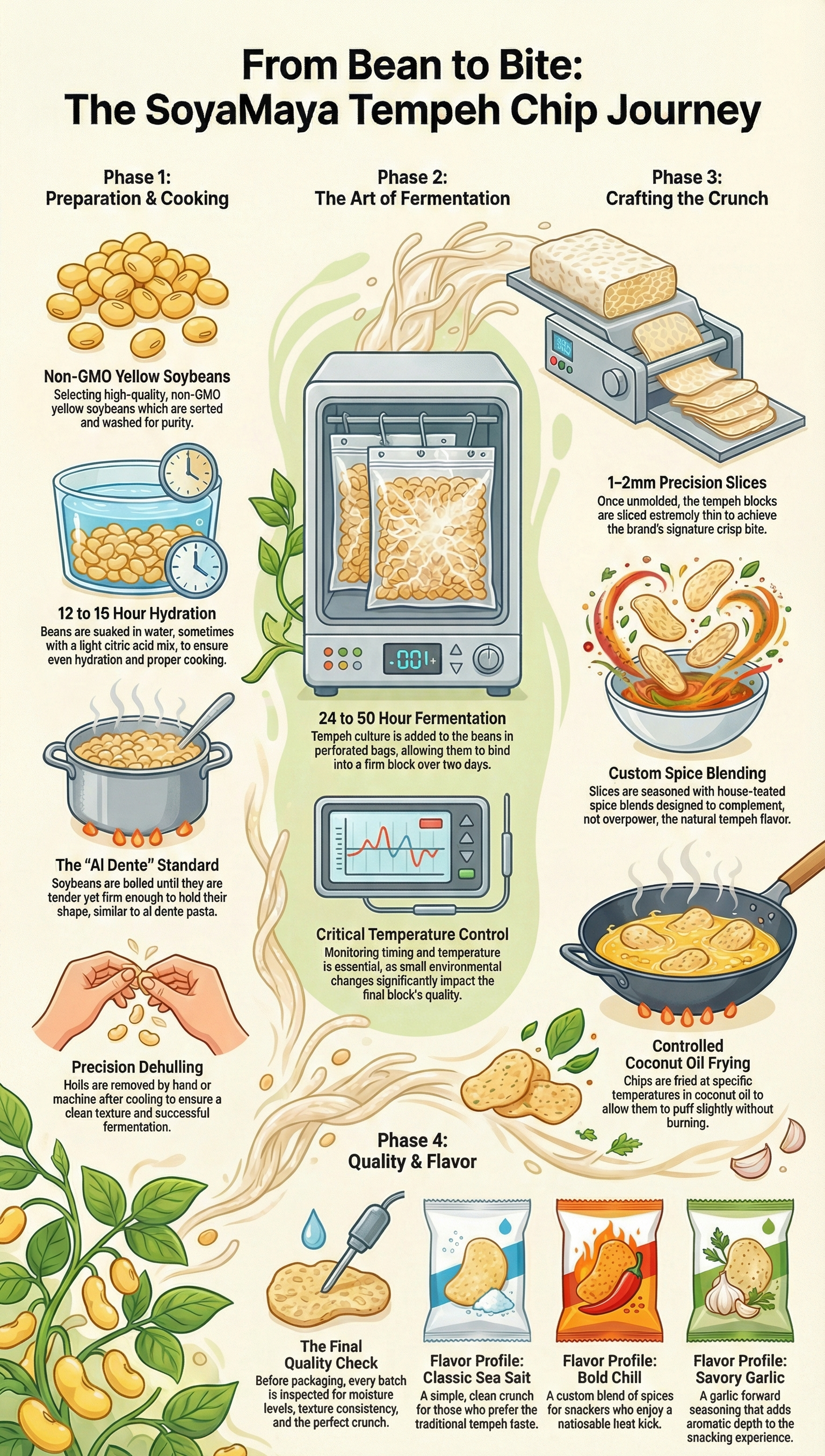
Here’s a closer look at how we turn soybeans into those irresistible flavored tempeh chips you’re munching on:
Soybean Preparation
We start by selecting high-quality, non-GMO yellow soybeans. Once they arrive, we sort and wash them, then soak them in water (sometimes with a light citric acid mix) for about 12 to 16 hours. From experience, this step matters, it helps the beans hydrate evenly and cook properly later on.
“If the soaking time is short, the protein or fiber cannot absorb enough water.”– Lei Zhang et al, NCBI
Cooking and Dehulling
After soaking, we boil the soybeans until they’re tender but still hold their shape, similar to al dente pasta. We drain and cool them before removing the hulls, either by hand or machine. This step keeps the texture clean and helps the fermentation work the way it should.
Fermentation
This is where things really start to change. We add the tempeh culture to the hulled soybeans and pack them into perforated bags. Over the next 24 to 50 hours, the beans bind together as the fermentation does its work, forming a firm block of tempeh. We keep a close eye on temperature and timing here because small changes make a big difference.
Slicing and Shaping
Once the tempeh is ready, we unmold it and slice it thin, about 1–2mm. Thin slices give us that crisp bite we’re after. In some batches, shaping helps keep sizes consistent, while still keeping the process hands-on.
Seasoning
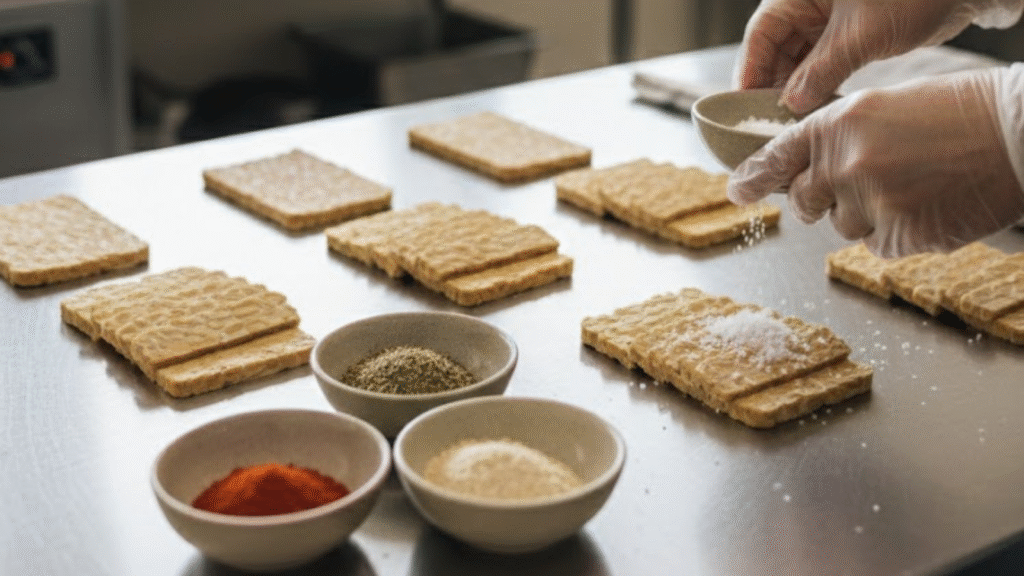
This is where flavor comes in. We season the slices with spice blends we’ve tested ourselves, adjusting levels until they hit the right balance. Nothing fancy, just flavors that work well with tempeh and don’t overpower it.
Frying and Cooking
We fry the chips in coconut oil at a controlled temperature so they puff slightly and turn crisp without burning. We’ve tried other methods, but frying gives the texture and taste we prefer.
Quality Control and Packaging
Before packaging, we check moisture, texture, and crunch. Every batch should taste the same as the last one we enjoyed. Once approved, we pack the chips carefully to keep them fresh until they’re opened and eaten.
Flavor Variations to Explore
At SoyaMaya, our talented team crafts a range of unique flavors that cater to diverse taste preferences, building on the wholesome base of tempeh protein chips that make every bite both satisfying and nourishing.
From classic sea salt to bold chili and garlic, there’s a flavor for everyone. A few popular options people often gravitate toward include:
- Classic sea salt for a clean, simple crunch
- Chili blends for those who enjoy a noticeable kick
- Garlic-forward flavors that add depth without overpowering
Trying out different seasonings is a fun way to customize your snacking experience. So whether you’re entertaining guests or just treating yourself, our flavored tempeh chips will elevate any occasion.
Bringing Flavor to Life
Credits: SOYASOYANG
At SoyaMaya, we believe that healthy snacking shouldn’t be boring, which is why creative development like our upcoming spicy mustard flavor focuses on combining bold taste with real nutritional value.
Our flavored tempeh chips reflect our commitment to quality and sustainability, marrying nutritious ingredients with exciting flavors. Each crunch tells a story of our dedication to craftsmanship and care.
What makes these chips easy to enjoy again and again comes down to a few simple things:
- Thoughtful seasoning that balances flavor and nutrition
- Ingredients chosen with care and sustainability in mind
- A crunch that feels satisfying without being heavy
What Makes Our Flavored Tempeh Chips Easy to Love
Curiosity about what spicy mustard tempeh chips taste like often comes from how well bold flavors can still feel balanced, and that same approach shapes every variety we create.
| Core Element | How It Shows Up | Why It Matters |
| Thoughtful Seasoning | Balanced spice and flavor | Enjoyable taste without overpowering |
| Quality Ingredients | Carefully sourced tempeh | Supports nutrition and sustainability |
| Satisfying Crunch | Light yet crispy texture | Feels indulgent without being heavy |
| Flavor Variety | Spicy and milder options | Fits different preferences and moods |
| Nutrient-Rich Base | High-protein tempeh | Supports a more balanced snack choice |
Whether you’re craving a bold kick or something more subtle, our flavored tempeh chips are designed to satisfy without compromise. They’re easy to enjoy, easy to return to, and made to fit naturally into everyday snacking.
We invite you to explore our range and experience how flavor and health can truly go hand in hand.
FAQs
How does tempeh become the base for flavored chips?
Production starts with soybean sorting cleaning, then hull removal dehulled beans preparation. The beans may use a citric acid soak overnight before boiling soybeans tender. After cooling, Rhizopus oligosporus inoculation begins fermentation in perforated plastic bags fermentation rooms. Mycelium white binding visible shows cake formation, usually during a 24-48 hour fermentation cycle under humidity controlled environment conditions near 86F optimal mold growth.
What happens after the tempeh is fully fermented?
The firm cake goes through slicing thin uniform thickness or grinding tempeh dough prep, depending on the style. Some makers use a 60% bean 40% starch ratio with cereal flour mixing ratio, potato flakes blend volume, or tapioca flour crispiness boost. Salt seasoning dough mix and pregelatinized starch binding help structure before extruder shaping strips and die cutting chip size.
How are tempeh chips fried and made crispy?
Slices or shaped pieces enter deep fat frying coconut oil or another trans fat free frying medium. Factories control frying temperature 375F with fry time 6-15 seconds for expansion puffing 3x volume. Oil draining excess removal follows, then cooling. This frying draining cooling process creates the light crunch people expect from vegan plant based snack production.
When and how are flavors added to tempeh chips?
Seasoning powder application happens after frying while chips are still warm. Blends may include chili powder spice blend, garlic powder umami boost, onion powder savory note, turmeric colorant natural dye, or sugar balance heat sweet. Some recipes use MSG flavor enhancer optional. Flavored variants chili hot, rosemary herb infused, BBQ smoky tempeh crisps, or sweet spicy fusion blends are common.
How do producers keep flavored tempeh chips fresh and safe?
After seasoning, chips move to packaging nitrogen flush systems or nitrogen packaging oxygen barrier bags. Vacuum sealing freshness lock and shelf life extension months help maintain crunch. Facilities often follow HACCP food safety compliance and ISO quality management system rules. Extra checks like metal detector contamination check and optical sorting defect removal protect consumers.
Snack Time with Benefits
Flavored tempeh chips are more than something to crunch on. They’re made from fermented, non-GMO soybeans and give you plant protein and Vitamin B12 in every bite. You get bold flavor without giving up balance. It’s the kind of snack that feels good to keep reaching for, whether you’re working, sharing, or just taking a break.
Ready to snack with intention? Visit the SoyaMaya shop and grab your flavored tempeh chips today.
References
- https://natoora.com/en-GB/stories/at-the-table-with-dr-johnny-drain/
- https://pmc.ncbi.nlm.nih.gov/articles/PMC8528789/
Related Articles
- https://mayasaritempeh.com/tempeh-protein-chips/
- https://mayasaritempeh.com/upcoming-spicy-mustard-flavor/
- https://mayasaritempeh.com/what-will-spicy-mustard-tempeh-chips-taste-like/
Soya Maya Tempeh Protein Chips
High-protein, plant-based, made from real tempeh. No artificial flavors. Crunchy and satisfying every time.
