
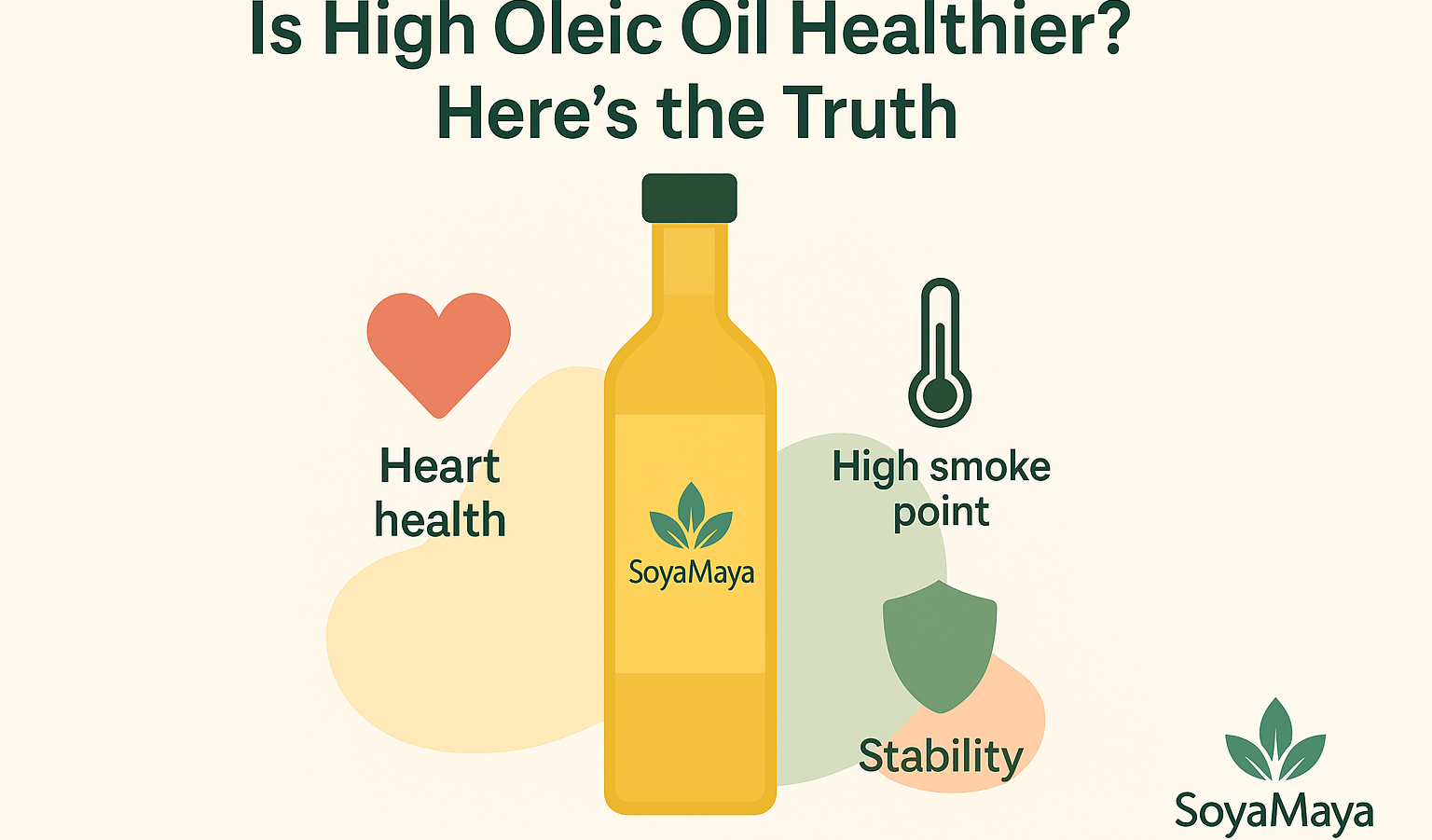
High oleic oil stands apart from standard vegetable oils through its molecular structure, which packs more heart-healthy monounsaturated fats into each drop. At SoyaMaya’s tempeh production facility, the switch to high oleic oils resulted in products that stayed fresh longer without compromising taste.
The oil’s stability at high temperatures also means less degradation during cooking, preserving both flavor and nutritional value. While no single ingredient promises perfect health, understanding high oleic oil’s properties helps make smarter cooking choices. Read on to discover the science behind this oil’s benefits and practical ways to incorporate it into daily meals.
Key Takeaway
- High oleic oil boasts a fatty acid profile that supports heart health better than many traditional oils.
- Its oxidative stability makes it ideal for cooking at higher temperatures without breaking down easily.
- Using high oleic oil can contribute to healthier blood lipid levels when it replaces saturated and some polyunsaturated fats.
What is High Oleic Oil? Why Does It Matter?
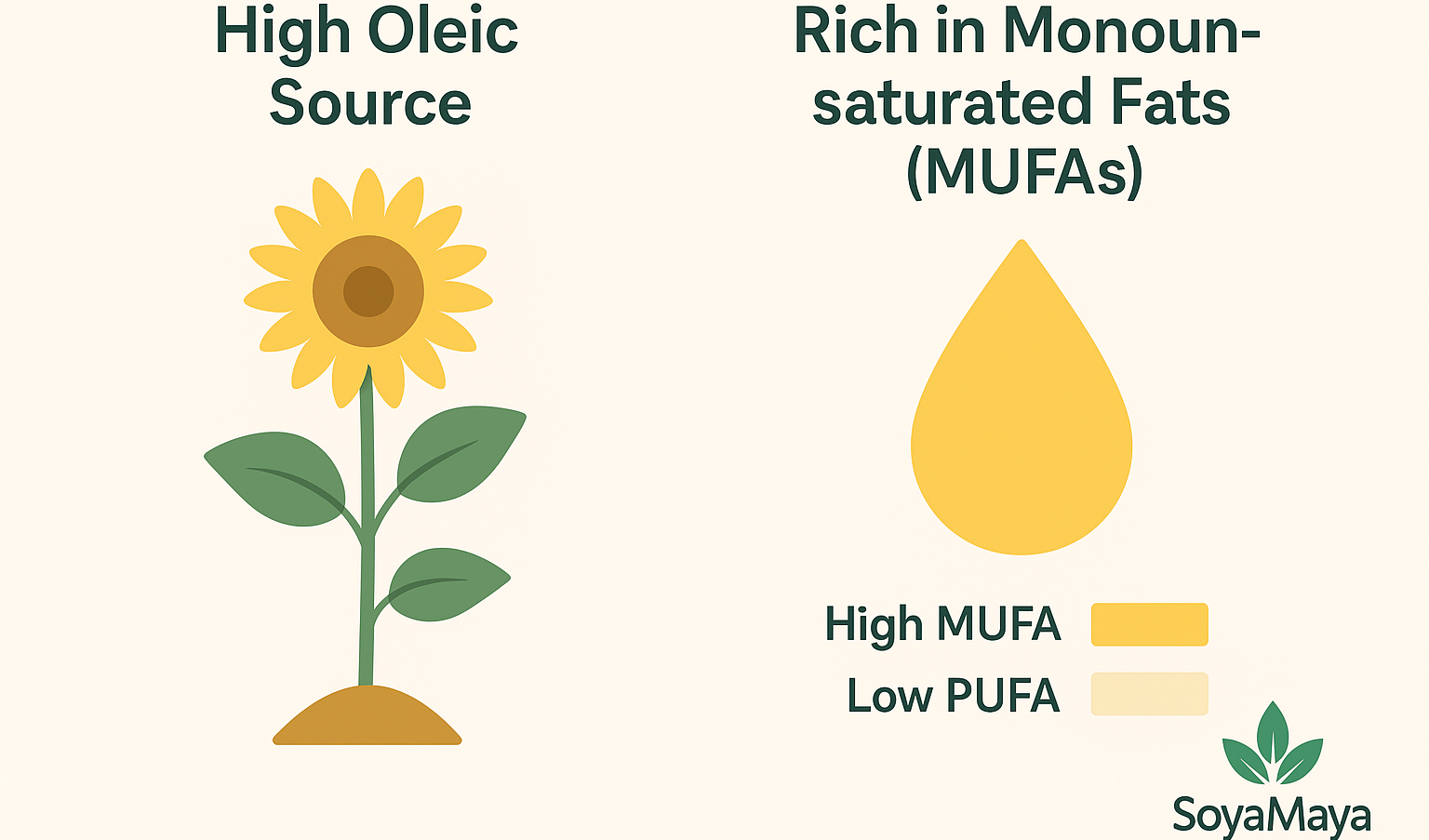
High oleic oil comes from specially bred vegetable crops that produce more oleic acid, one of nature’s most stable fats. While traditional vegetable oils pack loads of polyunsaturated fats that can go rancid quickly, high oleic oils contain more monounsaturated fats, the same heart-healthy fats found in olive oil and avocados, offering many of the benefits of high oleic oils that support heart and metabolic health. At SoyaMaya, our locally-sourced Indiana soybeans create tempeh with a rich, nutty essence that stays fresh longer, thanks to these special oils. [1]
Soya Maya Fresh Tempeh is made the traditional way — no preservatives, no shortcuts. Delivered to your door.
Order Fresh Tempeh →The science behind high oleic oils isn’t complicated – plant breeders selected seeds with naturally occurring traits that boost oleic acid production. No genetic modification needed, just patient selection over many growing seasons. These oils have become a game-changer in commercial kitchens and food production, where maintaining quality through high-heat cooking used to be a constant challenge.
High Oleic Oil vs. Other Cooking Oils: Key Differences
Fat Composition:
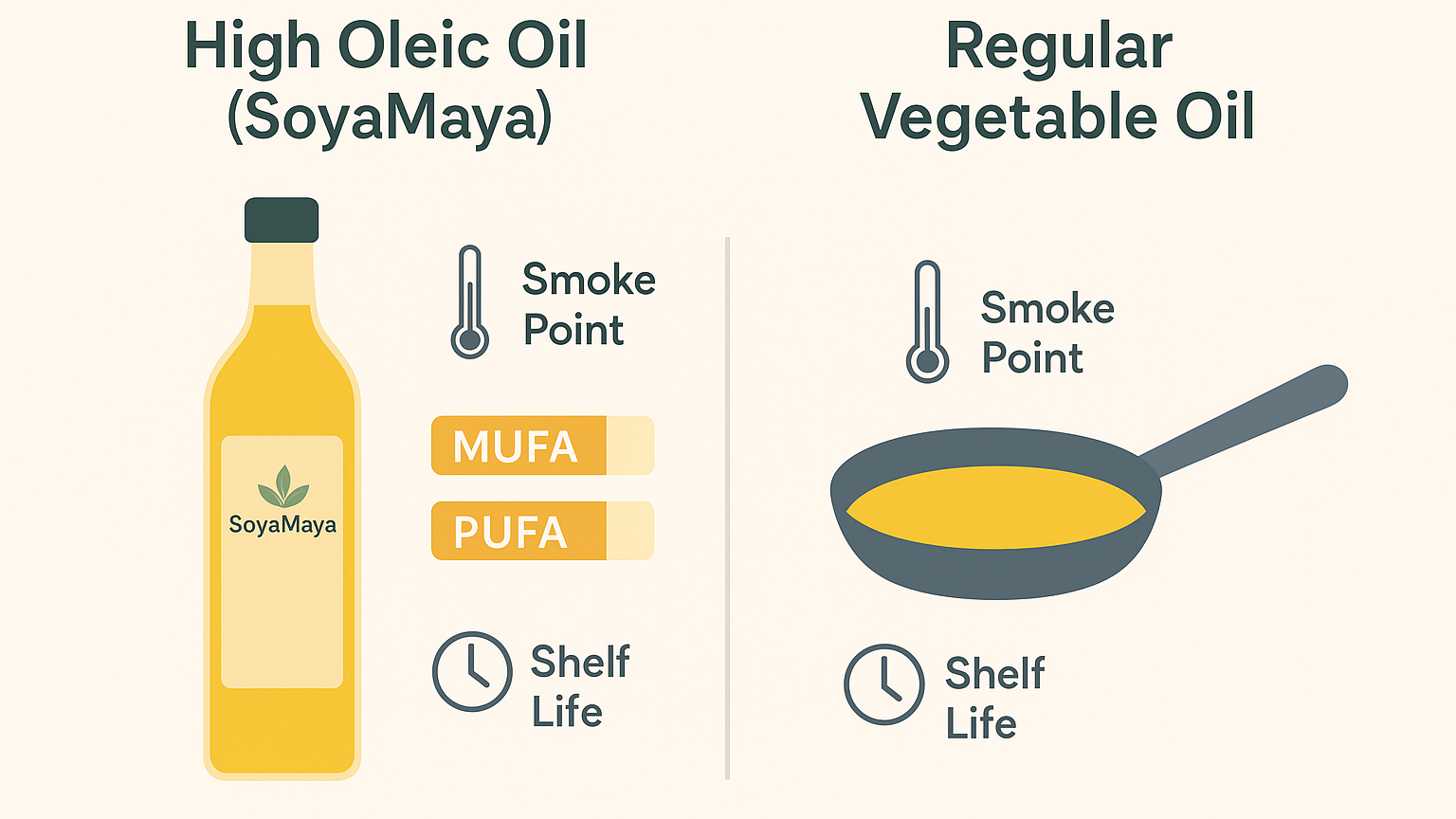
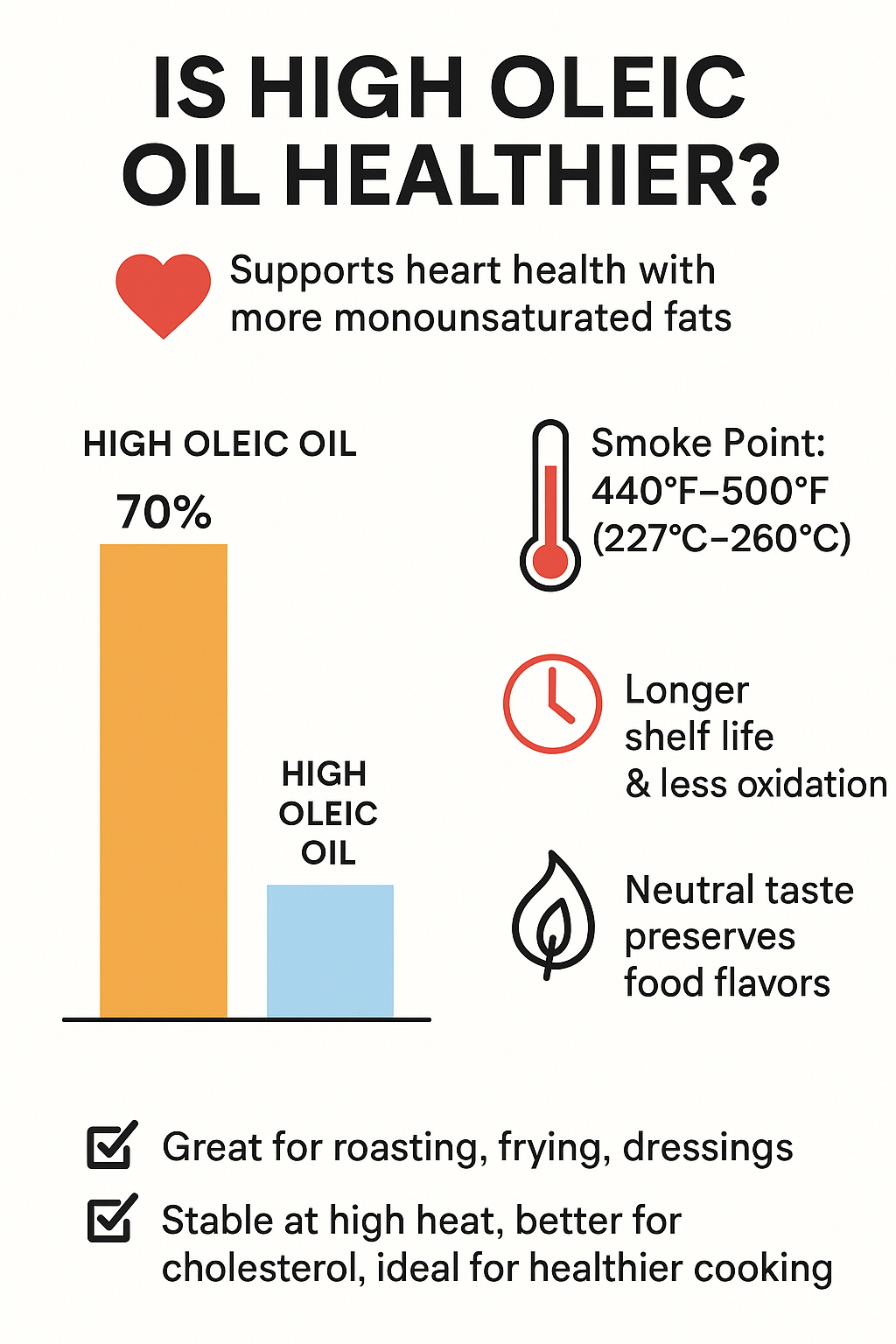
The fat makeup of high oleic oil sets it apart – it’s packed with oleic acid (a monounsaturated fat) instead of the polyunsaturated fats that dominate regular vegetable oils. Research shows this composition helps manage cholesterol levels effectively: it brings down LDL (the problem one) while boosting HDL (the beneficial one) when used to replace saturated fats in meals. [2]
Oxidative Stability:
High oleic oils have impressive staying power against breakdown from heat, light, and air exposure. This oxidative stability ensures they stay fresh longer and remain trans fat free even under high heat, preventing the formation of harmful compounds during cooking. In practical terms, foods cooked with these oils keep their intended flavors and stay fresh days longer than those prepared with conventional oils.
Smoke Point and Cooking Performance:
With smoke points typically ranging from 440°F to 500°F (227°C to 260°C), high oleic oils can handle serious heat without breaking down or smoking. This makes them perfect for everything from deep frying to high-temperature roasting, and they won’t leave that burnt, acrid taste that can ruin a dish.
Flavor Profile:
Most high oleic oils have a clean, subtle taste that doesn’t overpower other ingredients. At SoyaMaya, this quality proves essential – it lets the authentic Indonesian spices in our tempeh shine through without competing flavors. The oil works behind the scenes, adding richness while letting the main ingredients take center stage.
Home cooks might notice these oils cost a bit more than standard versions, but their extended shelf life and versatility in the kitchen often make up for the initial investment. Plus, their health benefits and cooking stability mean less waste and better results in the long run.
Health Benefits of High Oleic Oil
Heart Health:
The human heart craves good fats, and high oleic oil delivers exactly that. Research points to a fascinating connection between monounsaturated fats, like oleic acid, and improved blood lipid profiles. When people switch from butter or shortening to high oleic oils, their bodies respond positively – LDL (the less desirable cholesterol) tends to drop, while HDL (the helpful kind) often rises. This shift might sound small, but it adds up to meaningful changes in cardiovascular health over time.
Inflammation and Oxidative Stress:
Our bodies face constant cellular stress, yet high oleic oil might offer some protection. Recent studies suggest that oleic acid works quietly in the background to calm inflammatory responses – think of it as a gentle mediator in cellular conversations.
One of its standout features? High oleic oil stands strong against heat degradation during cooking (up to 450°F/232°C), producing fever harmful compounds compared to conventional vegetable oils. This stability means less oxidative stress for cells, which face enough daily challenges already.
Comparison to Saturated Fats:
While coconut oil and palm oil (loaded with saturated fats) remain popular, their effects on cholesterol can’t be ignored. These oils tend to push LDL cholesterol up, which isn’t ideal for most people’s cardiovascular health. High oleic oil presents a practical alternative – it performs beautifully in the kitchen, from sautéing to baking, while offering a healthy fat composition. For anyone looking to maintain stable cholesterol levels without giving up their favorite recipes, high oleic oil bridges that gap between health and culinary needs.
The switch to high oleic oil doesn’t require radical lifestyle changes, just mindful substitutions in everyday cooking. Whether drizzling it over roasted vegetables or using it as a base for homemade salad dressings, its subtle flavor lets other ingredients shine while quietly supporting better health outcomes.
Practical Considerations: Choosing and Using High Oleic Oil
Source Variety:
When walking down the oil aisle at any grocery store, it’s easy to get overwhelmed. High oleic oils spring from multiple crop sources – sunflower, safflower, canola, and certain soybean varieties stand out among the choices. At SoyaMaya, the decision to use high oleic soybeans wasn’t random.
These specific beans pack a dual punch of protein and oleic acid, making them ideal for tempeh production and contributing to both nutritional quality and flavor stability. The beans also give our products a subtle, nutty undertone that customers have grown to recognize.
Processing and Purity:
Not every high oleic oil delivers the same benefits. Commercial processing (which often involves harsh chemicals and high heat treatments) can strip away natural compounds that make these oils special. Some manufacturers push their oils through intensive refining processes, leaving behind a product that’s technically “pure” but missing key nutrients.
SoyaMaya takes a different approach – working with organic, non-GMO soybeans and maintaining small-batch fermentation cycles. This means more hands-on attention to each batch, slower production times, and careful monitoring of temperature conditions (typically between 85-95°F during fermentation).
Incorporating into a Balanced Diet:
Yes, high oleic oils offer health advantages, but they’re still fats – packing about 120 calories per tablespoon. The key lies in thoughtful incorporation rather than liberal use. A balanced approach might include drizzling these oils over roasted vegetables, using them in homemade salad dressings, or adding a small amount to morning smoothies.
Pairing high oleic oils with omega-3 rich foods (like flaxseeds, chia seeds, or fatty fish) creates a more complete fatty acid profile. Adding plenty of fiber-rich vegetables helps slow down fat absorption and keeps meals satisfying without overdoing the calories.
For optimal storage, keep these oils in dark glass bottles away from direct sunlight, and try to use them within 6-8 months of opening. The natural compounds in less-processed versions can break down over time, so paying attention to storage conditions helps preserve their benefits.
Is High Oleic Oil Right for You? A Decision-Making Framework
Credits: The World of Agriculture
The world of cooking oils can feel overwhelming – just a glance at the grocery store shelves proves that point. High oleic oil stands out as a newer option gaining attention from both home cookies and health professionals. Before switching your go-to cooking oil, consider these key points to determine if it’s a good fit for your kitchen and lifestyle.
Quick Self-Assessment Checklist
- Are you actively working to reduce saturated fats in your meals?
- Do you frequently cook at temperatures above 400°F (204°C)?
- Would you prefer a neutral-tasting oil that doesn’t mask food flavors?
- Have heart health and cholesterol levels been on your mind lately?
Making Your Decision
High oleic oil shines in everyday cooking, whether sautéing vegetables or baking your favorite banana bread. Its stability at high heat (smoke point around 450°F/232°C) means less degradation and better flavor retention in your dishes.
The oil works particularly well for:
- Roasting root vegetables
- Pan-searing proteins
- Making homemade salad dressings
- Light stir-frying
- Baked goods that need a neutral oil base
But here’s the reality check – no single ingredient creates a healthy diet. While high oleic oil offers benefits like heart-healthy monounsaturated fats and vitamin E, it’s just one piece of the nutrition puzzle. Someone eating mostly whole foods, plenty of vegetables, and mindful portions will get more value from switching to high oleic oil compared to someone whose diet consists mainly of processed foods.
Think of high oleic oil as a useful tool, not a miracle solution. Consider your cooking habits, health goals, and overall eating patterns when deciding if it deserves a spot in your pantry.
FAQ
1.What makes high oleic oil different from regular cooking oils?
High oleic oil differs from most cooking oils because it contains a higher amount of monounsaturated fats (MUFAs) and fewer polyunsaturated fats (PUFAs). This composition gives it better shelf life, higher heat stability, and lower trans fat formation during deep frying. Compared to standard vegetable oils like corn oil or sunflower oil, it stays fresher and more stable.
2.How does high oleic oil support heart health and cholesterol balance?
High oleic oils are rich in oleic acid, a heart-healthy fatty acid that helps lower LDL cholesterol and support HDL cholesterol. Replacing saturated fats from palm oil or coconut oil with high oleic soybean or canola oil may reduce the risk of coronary heart disease. These oils promote better blood lipid profiles and overall cardiovascular health.
3.Why is high oleic oil widely used in the food industry?
The food industry uses high oleic oil for its excellent resistance to oxidation, which helps food products stay shelf stable and flavorful longer. Its stable double bonds make it suitable for high heat cooking and deep frying. Packaged foods, snacks, and other oil-based products benefit from its consistent texture and longer shelf life.
4.How does high oleic oil compare to PUFA-rich and cold-pressed oils?
Compared to high PUFA oils or cold-pressed olive oils, high oleic oils remain more stable during heat cooking. PUFA oils such as sunflower oil and safflower oil tend to oxidize faster at high temperatures. Meanwhile, extra virgin olive oil is ideal for dressings but less suited for deep frying, making high oleic oils a more versatile option.
Conclusion
High oleic oil offers a heart-healthier fat profile rich in oleic acid, helping balance cholesterol and resist oxidation during cooking. Its heat stability keeps flavors clean and fresh. At SoyaMaya, we use high oleic soybeans to boost our tempeh’s nutrition and taste, perfect for wholesome, delicious eating.
Discover better-for-you tempeh and snacks at SoyaMaya Shop. Your kitchen and heart will thank you.
References
- https://holistichealthpathways.com/glossario/what-is-high-oleic-oils-benefits-and-uses/
- https://www.hbnobulk.com/blogs/natural-essential-oils/high-oleic-vs-regular-key-differences-in-safflower-oils
Related Articles
- https://mayasaritempeh.com/what-are-the-benefits-of-high-oleic/
- https://mayasaritempeh.com/are-high-oleic-oils-trans-fat-free/
- https://mayasaritempeh.com/benefits-of-high-oleic-soybeans/
Soya Maya Fresh Tempeh
Traditionally fermented, no preservatives, shipped fresh and frozen to your door. The real deal, direct from us.
