
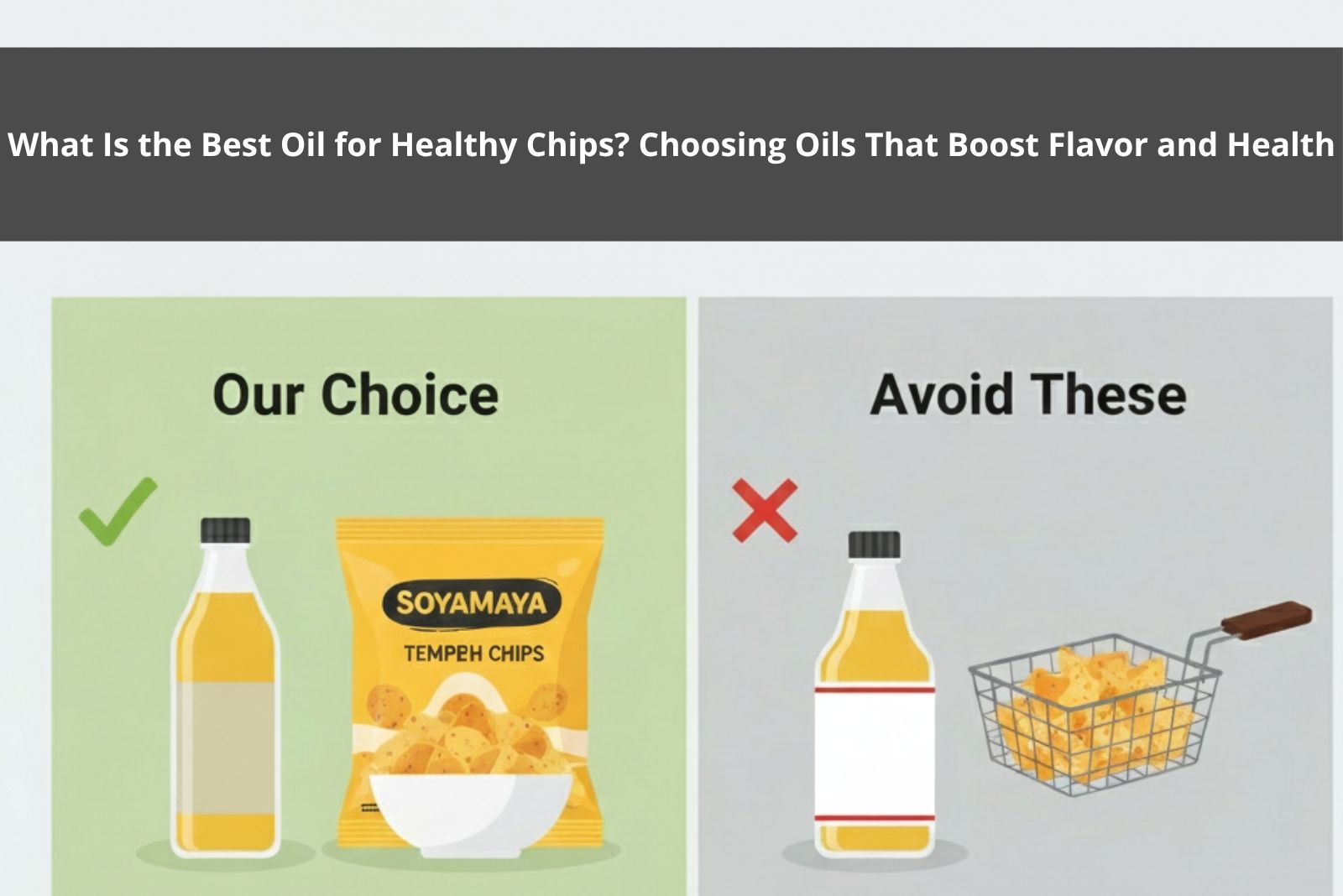
When it comes to frying chips, the oil you pick really shapes the outcome. The best oil for healthy chips isn’t just about frying temperature or cost, it’s about stability, flavor, and how it affects your health.
We’ve spent plenty of time in the kitchen testing oils, and here’s the straightforward truth: high oleic oils like sunflower and soybean, along with avocado oil, lead the pack for healthy, tasty chips.
Keep reading to find out what is the best oil for healthy chips and we’ll walk you through why these oils work best and how they impact your chips and wellbeing.
Soya Maya Tempeh Protein Chips — 100% plant-based, high protein, no artificial additives. Ships to your door.
Get Your Chips →Key Takeaway
- High oleic oils provide excellent heat stability and keep chips crisp longer.
- Avocado oil offers high smoke point plus heart-healthy fats and a buttery flavor.
- Avoid oils high in unstable polyunsaturated fats or trans fats for better health.
Why Oil Choice Matters for Chips

Oil is the unsung hero of frying chips. It’s not just about frying temperature or how quickly it cooks. The chemistry inside the oil changes as it heats, and those changes can affect the taste, texture, and healthfulness of your chips.
When cooking, oil undergoes oxidation and degradation, breaking down into compounds that might taste off or even impact your health negatively (1).
For instance, oils rich in polyunsaturated fats can oxidize faster, causing rancidity and unpleasant flavors. On the other hand, oils with high monounsaturated fats (like oleic acid) resist oxidation better, which means less harmful breakdown and a longer usable life.
Here’s a quick snapshot of what we look for in a chip-frying oil:
- Stability at high frying temperatures (usually around 350-375°F).
- Neutral or pleasant flavor that complements the chips.
- Fatty acid composition that supports health (more monounsaturated fats).
- Resistance to oxidation and rancidity.
- A smoke point high enough to avoid burning during frying.
When we started experimenting in our kitchen at SoyaMaya, these factors guided us toward the oils we now trust.
What We Use for SoyaMaya Chips
- High oleic sunflower and soybean oils, for their stability and mild flavor.
- Occasionally, avocado oil, when we want a richer flavor and nutritional boost.
The High Oleic Oils Advantage
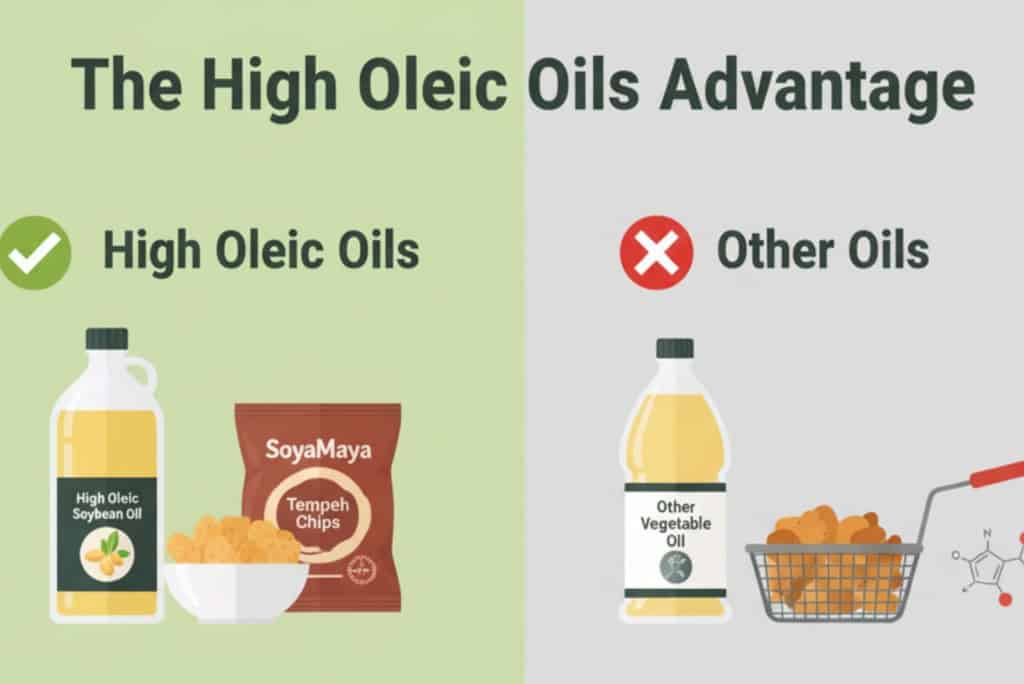
High oleic oils have a fatty acid profile rich in monounsaturated fats, mainly oleic acid, which ties directly to the benefits of high oleic soybeans in terms of stability and health performance.
That matters because frying oil is exposed to heat, air, and food moisture, all of which speed up oil breakdown.
- Longer fry life means less frequent oil changes and less waste.
- Better retention of chip crispness and flavor.
- Lower formation of harmful oxidation products.
We’ve found that chips fried in high oleic oils stay crispier and taste fresher for longer. Plus, these oils have a mild flavor that doesn’t overpower the natural taste of the chips.
Using these oils is a practical choice, especially if you’re making chips at home or on a small scale like we do at SoyaMaya. They strike a balance between health and performance without breaking the bank (2).
Avocado Oil: Flavor and Health in One Bottle
Avocado oil stands out for its very high smoke point—around 520°F—which is well above typical frying temperatures. This means it can handle frying without breaking down quickly.
But there’s more to avocado oil than heat tolerance:
- It’s packed with monounsaturated fats that support heart health.
- Contains antioxidants and vitamins that may protect cells.
- It adds a subtle buttery flavor that can enhance chip taste.
When we include avocado oil in SoyaMaya’s recipes, it brings a noticeable richness that pairs beautifully with our tempeh chips. It’s a bit pricier but worth it for special batches or when you want to treat yourself.
Olive Oil: Use With Care
Olive oil, especially extra virgin, is famous for its health benefits. It’s rich in antioxidants and monounsaturated fats. But there’s a challenge: its smoke point is lower (around 375°F for extra virgin), which limits deep frying. Overheating olive oil can produce off-flavors and degrade its healthful properties.
We occasionally use light or refined olive oil when frying at lower temperatures. It’s a solid choice when you want that olive oil flavor in kettle-style chips, but it requires careful temperature control.
Oils to Approach Cautiously
Some oils popular for cooking aren’t the best for frying chips if health is your goal:
- Conventional corn oil and standard soybean oil have high polyunsaturated fats that oxidize quickly under heat.
- Partially hydrogenated oils, which contain trans fats, are best avoided entirely for health reasons.
At SoyaMaya, we steer clear of these to keep chips tasty and wholesome.
Other Considerations for Frying Oil
Source: Dr Eric Burg DC
Choosing the right oil starts with understanding different types of cooking oils, from their smoke points to how they break down under heat, and here’s a quick snapshot of what we look for in a chip-frying oil:
- Frying temperature should be steady and not too high to avoid oil breakdown.
- Reusing oil multiple frying cycles can increase the formation of degradation products.
- Proper storage in cool, dark places slows rancidity.
- Blended oils with added antioxidants sometimes improve shelf life.
Maintaining oil quality matters because it directly affects the chip’s flavor, texture, and your health.
Why SoyaMaya Chooses These Oils
Our tempeh chips are crafted to be both delicious and nourishing. Using high oleic soybean blends lets us deliver chips that crunch just right and keep their flavor without excess oil absorption or off-tastes. We believe in clean ingredients, so our oil choices mirror that philosophy.
Choosing oils with a better fatty acid profile also means our chips boast better nutritional value. Combining that with organic, non-GMO soybeans, our chips stand apart not just for taste but for their health qualities.
Making Your Chips Healthier at Home
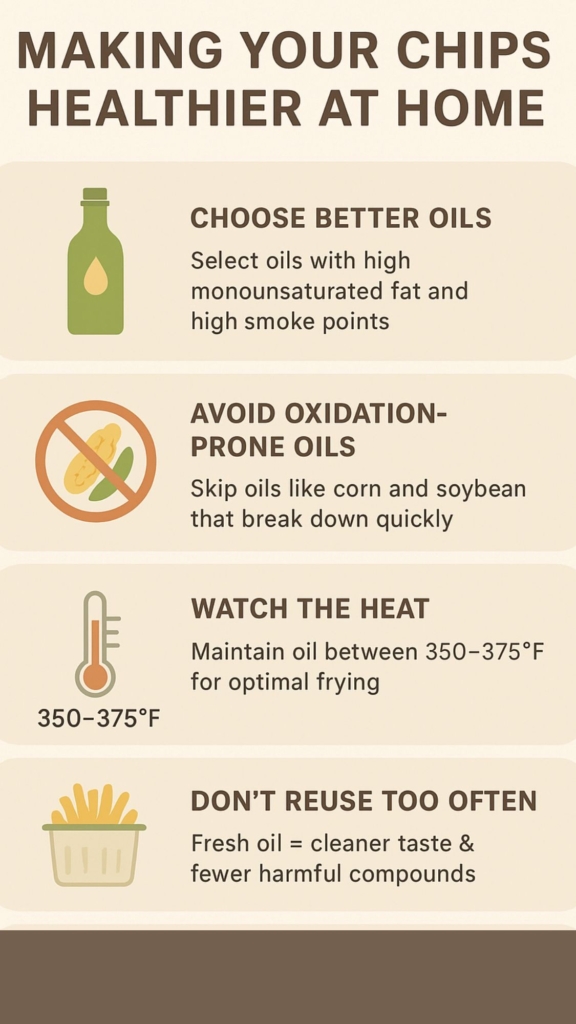
If you’re frying chips yourself, here are a few tips we swear by:
- Select oils with high monounsaturated fat content and high smoke points.
- Avoid oils prone to oxidation like conventional corn or soybean oil.
- Monitor oil temperature carefully, aiming for about 350-375°F.
- Don’t reuse oil too many times; fresh oil makes a big difference.
- Store oil away from heat and light to preserve freshness.
These simple steps help you get crispy, tasty chips that don’t just satisfy cravings but also treat your body well.
FAQs
What is the smoke point and why does it matter for frying chips?
The smoke point is the temperature at which oil starts to smoke and break down chemically. When oil reaches this point, it releases harmful compounds and off-flavors, making your chips taste burnt or bitter.
Choosing an oil with a high smoke point, like avocado or high oleic sunflower oil, means it can handle frying temperatures without degrading quickly. This ensures your chips stay crispy and flavorful while reducing health risks associated with overheated oil.
How does fatty acid composition affect oil stability during frying?
Fatty acid composition determines how oils react to heat. Oils high in monounsaturated fats, like oleic acid, resist oxidation better, meaning they stay stable longer during frying.
Polyunsaturated fats break down faster, creating off-flavors and potentially harmful compounds. Saturated fats are generally stable but may not be the healthiest option.
At SoyaMaya, we prefer high oleic oils because they combine good frying performance with better health profiles, leading to tastier and safer chips.
Can you reuse frying oil safely for making chips?
Reusing frying oil is common but requires care. Each frying cycle causes oil degradation through oxidation, hydrolysis, and polymerization, which lowers oil quality and safety.
To reuse oil safely, keep frying temperatures steady around 350-375°F, filter out food particles, and store oil in a cool, dark place.
However, after several uses, oil can develop off-flavors and harmful compounds, so it’s best not to reuse it indefinitely. Fresh oil ensures better chip flavor and health benefits.
Why are trans fats bad for frying oils and health?
Trans fats form mainly through partial hydrogenation of oils and are linked to increased heart disease risk. They raise bad cholesterol levels and lower good cholesterol. During frying, oils with trans fats degrade poorly and can produce harmful compounds.
Many countries have regulations limiting or banning trans fats in food products. At SoyaMaya, we avoid oils with trans fats to keep our chips both delicious and heart-healthy, focusing on natural oils with clean fatty acid profiles.
How does oil absorption affect chip texture and health?
Oil absorption during frying influences chip texture and calorie content. Too much oil makes chips greasy and soggy, while the right amount creates a crisp, light texture. Oil type affects absorption; oils with lower viscosity and good frying performance reduce oil retention in chips.
Health-wise, less oil absorption means fewer calories and less unhealthy fat intake. Using stable oils like high oleic blends helps maintain chip crispness and minimizes unwanted oil soaking into the food.
What role do antioxidants in oil play during frying?
Antioxidants in oil slow down oxidation, protecting the oil from breaking down when heated. Natural antioxidants like vitamin E and polyphenols help maintain oil’s flavor and nutritional quality during frying.
Oils richer in antioxidants, such as avocado and extra virgin olive oil, resist rancidity longer and produce fewer harmful compounds. At SoyaMaya, we appreciate oils with good antioxidant content because they support chip quality and add subtle health benefits without compromising taste.
Is coconut oil a healthy choice for frying chips?
Coconut oil is stable at frying temperatures due to its high saturated fat content, which resists oxidation. However, saturated fats are controversial in nutrition, with some experts advising moderation due to potential heart health concerns.
Coconut oil gives chips a distinctive flavor that may not suit all palates. While it performs well in frying, we prefer oils higher in monounsaturated fats for long-term health benefits and a more neutral taste, aligning with SoyaMaya’s balanced approach.
How do oil refining methods impact frying oil quality?
Refining removes impurities, free fatty acids, and some antioxidants from oils, increasing smoke point and stability for frying. Refined oils have a neutral flavor and longer shelf life but may lose some nutritional compounds.
Cold-pressed or unrefined oils retain more nutrients but often have lower smoke points and stronger flavors, limiting frying use. We use carefully refined high oleic oils to balance frying performance with health benefits, ensuring our chips stay flavorful and nutritionally sound.
What is oil polymerization and how does it affect frying?
Polymerization is a chemical process where oil molecules link together under heat, forming thick, sticky residues. This happens during prolonged or repeated frying at high temperatures.
Polymerized oil degrades frying quality, causing dark discoloration, off-flavors, and unhealthy compounds. It also leads to increased oil viscosity, making chips greasy. Proper frying temperature control and timely oil replacement help prevent polymerization. At SoyaMaya, we monitor oil quality closely to keep our chips crisp and safe.
Why do some oils impart flavor to chips while others don’t?
Oils vary in their flavor profiles. Neutral oils like refined high oleic sunflower or soybean oil barely affect chip taste, letting the natural flavors shine. Others, like avocado or coconut oil, add buttery or tropical notes, enhancing the overall flavor experience.
Olive oil brings a fruity taste but can dominate if overused. Choosing the right oil depends on desired flavor balance. We select our frying oils to complement our tempeh chips’ nutty taste without overpowering it, preserving authentic enjoyment.
Picking the Right Oil Benefits You and Your Chips
Choosing the best oil for healthy chips is more than a kitchen detail. It shapes the entire eating experience, from flavor and texture to your long-term health.
High oleic oils and avocado oil offer the best balance of heat stability, taste, and nutrition. At SoyaMaya, we’ve tested and trusted these oils to make our tempeh chips stand out.
If you want chips that are crisp, flavorful, and better for your heart, start with the right oil. Explore our SoyaMaya shop for fresh frozen tempeh and protein chips made with care and premium ingredients. Let your next snack be both wholesome and delicious.
References
- https://www.sciencedirect.com/science/article/pii/S2590157525003888
- https://medium.com/@sogekebosun/13-tips-to-help-balance-work-family-life-4a89a7560322
Related Articles
- https://mayasaritempeh.com/benefits-of-high-oleic-soybeans/
- https://mayasaritempeh.com/are-high-oleic-oils-trans-fat-free/
- https://mayasaritempeh.com/understanding-different-types-of-cooking-oils/
Soya Maya Tempeh Protein Chips
High-protein, plant-based, made from real tempeh. No artificial flavors. Crunchy and satisfying every time.
