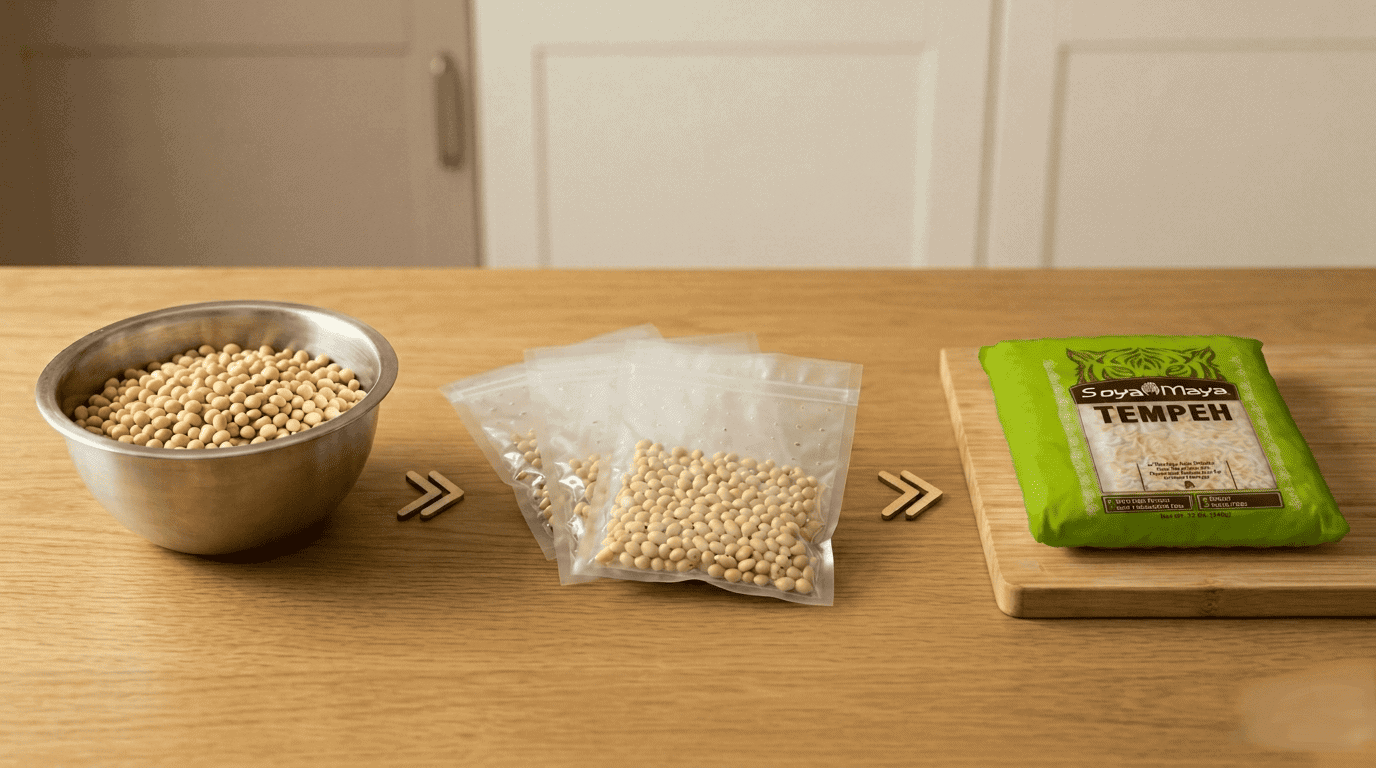
A good tempeh cake isn't luck. It's the result of three things: exact moisture, proper airflow, and a steady, warm temperature. When you get these right, the soybeans knit together…
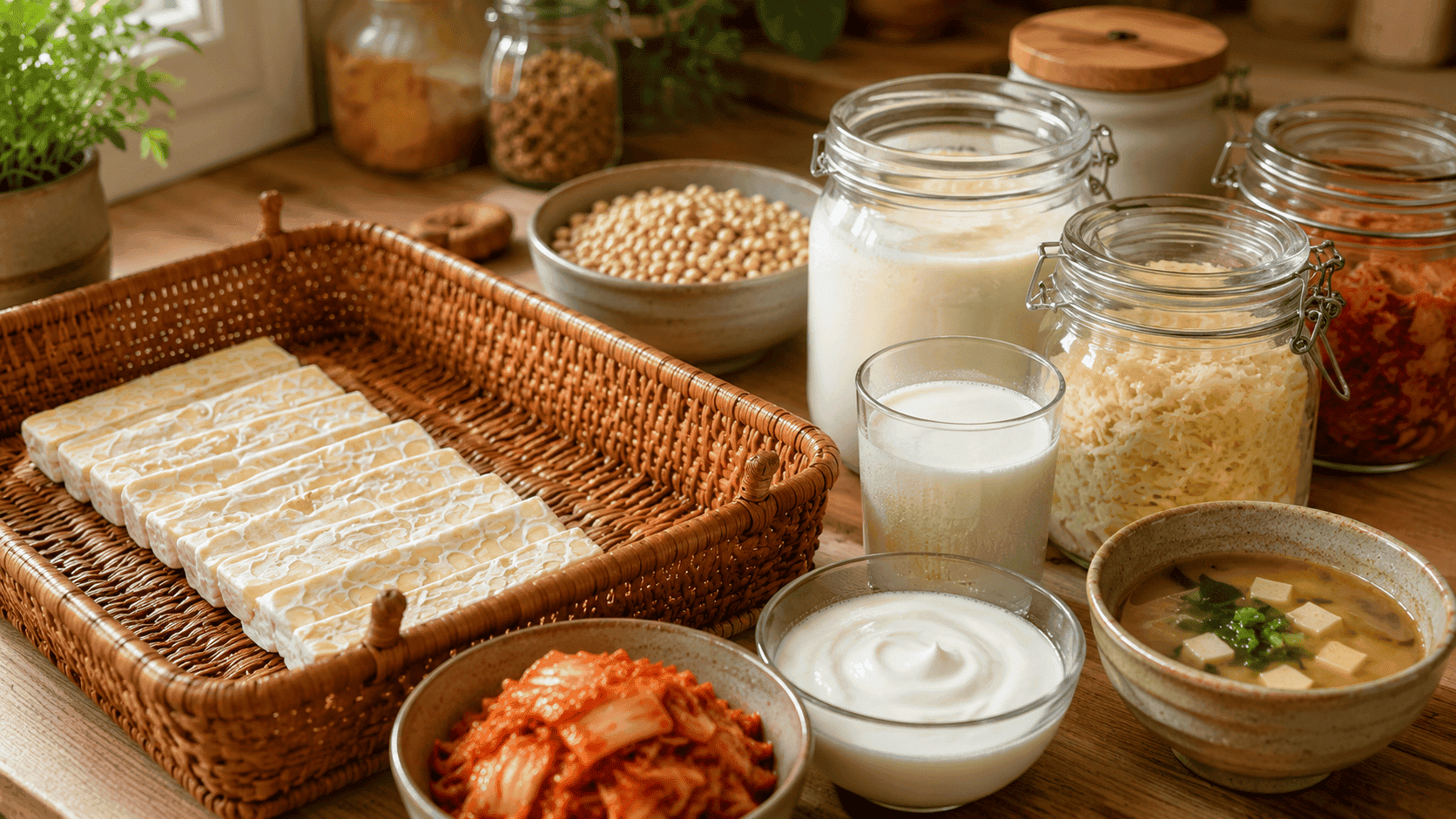
Fermentation helps your health by using microbes to transform food. This makes nutrients easier for your body to absorb and can improve digestion. Our personal experience supports this. Eating fermented…
Yes, you can make excellent tempeh at home. It's more practical and affordable than you might think, and you get to control the final flavor. We began making it ourselves…
Tempeh ferments best between 80°F and 92°F (27°C to 33°C). The sweet spot is 86°F (30°C), which encourages strong mycelium growth in about a day or two. We've tried making…
Rhizopus oligosporus is a fungus. It turns cooked soybeans into tempeh. We use it as a starter culture. In our work, it reliably forms a firm, white, protein-rich cake in…
Tempeh is made by letting bacteria and mold work on soybeans. First, bacteria acidify the beans. Then, a specific mold called Rhizopus grows through them, weaving everything into a solid…
Start with cooked soybeans and a pinch of starter culture. The real magic is the mold Rhizopus oligosporus, which grows a dense, white network of threads that binds the beans…