
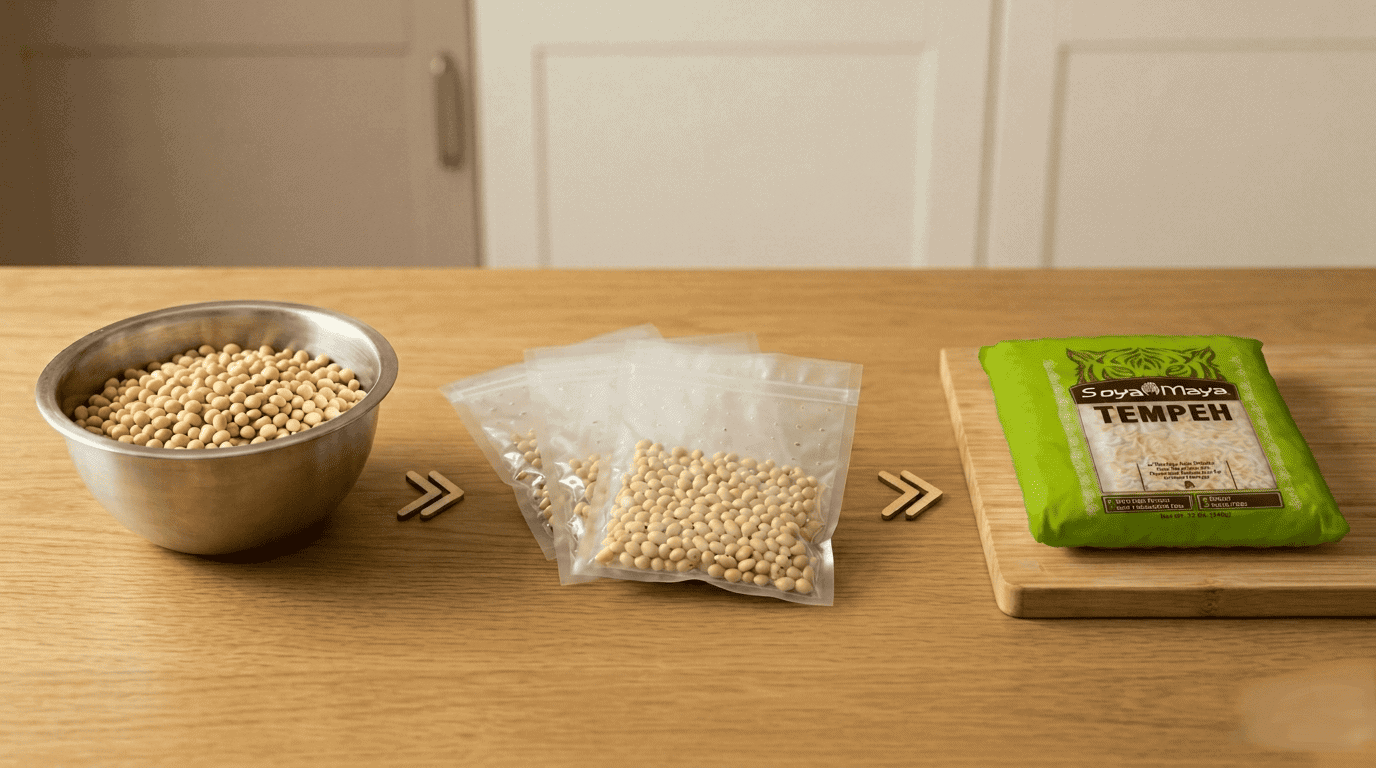
Tempeh is made by letting bacteria and mold work on soybeans. First, bacteria acidify the beans. Then, a specific mold called Rhizopus grows through them, weaving everything into a solid cake in just a day or two. This fermentation, as noted by Today’s Dietitian, breaks down compounds that make the soy easier to digest and safer to eat.
At SoyaMaya, we’ve seen firsthand that controlling each step, soaking, acidifying, and incubating, is what separates good tempeh from great tempeh. Every choice changes the final texture, smell, and nutrients. To see how each part of the process works, read on.
Quick Guide: How Tempeh Fermentation Works
- Two-stage: bacteria + Rhizopus oligosporus
- 28-32°C and airflow control fermentation success
- Boosts protein digestibility, lowers anti-nutrients
Tempeh Fermentation and How It Works
We’ve seen this microbial handoff hundreds of times in our own kitchen. The transformation from soaked soybeans to a solid cake isn’t a single event, it’s a two-act play, a genuine succession.
SoyaMaya Fresh Tempeh is made the traditional way — no preservatives, no shortcuts. Delivered to your door.
Order Fresh Tempeh →First, the bacteria move in. They don’t make a show of it, but their work is critical. They quietly acidify the beans, lowering the pH to a point that shuts out most other microbes.
This is the invisible groundwork, the security system that lets the main event proceed without interference.
Then the headliner arrives: the mold Rhizopus oligosporus. Once it takes hold, you can see it happen. A white, cottony network of mycelium weaves through the beans, binding them into a dense, cohesive block you can actually slice.
This is solid-state fermentation in action. The microbes work directly on the solid beans, not in a broth, and that’s the only way to get tempeh’s signature firm, nutty texture.
From our bench, the whole process takes a solid day or two, usually 24 to 48 hours. Get the temperature and humidity right in the incubator, and you can literally watch the white fuzz do its job, knitting everything together.
Why does this two-stage system matter so much? The science lines up with what we see on the counter every week.
- It builds the structure. The mycelium is the physical glue.
- It makes the final product safer. The initial acidification creates a defensive environment.
- It boosts nutrition. The fermentation breaks down compounds that can interfere with nutrient absorption.
Think of it this way: the bacteria set the stage, and the mold builds the house. That microbial succession isn’t just a neat trick, it’s the non-negotiable core of what makes tempeh, tempeh.
Getting a feel for this foundation changes everything. It informs how we source our beans, how we set up each batch, and how we troubleshoot when something looks off. It’s the basic rulebook, and once you understand it, the rest starts to make a lot more sense.
Role of Lactic Acid Bacteria in Fermentation
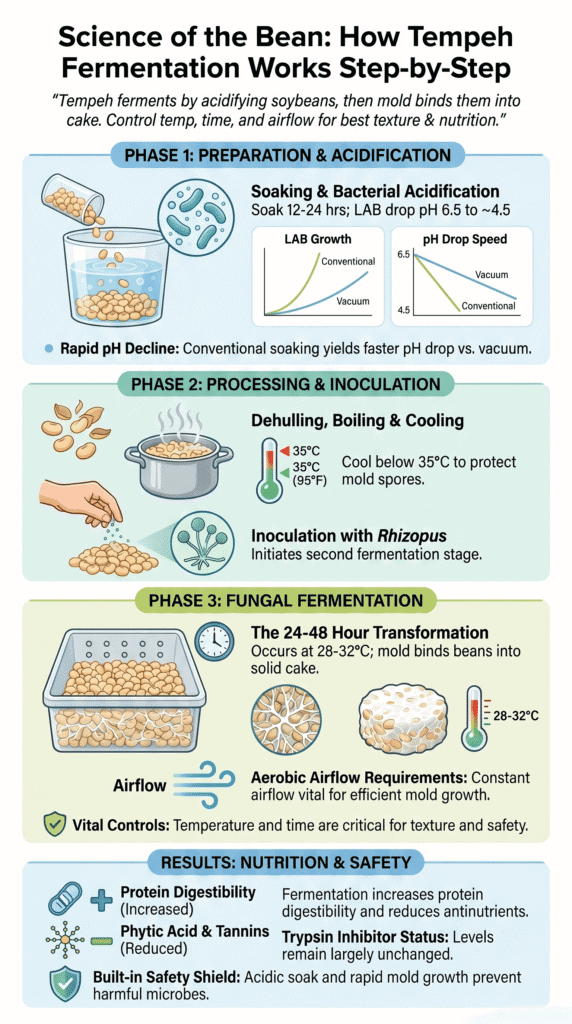
Soaking the beans isn’t just about making them soft. It’s where the real work starts. For half a day or more, the beans sit in water and something cool happens.
Natural bacteria, the good kind, wake up and start eating. They make the water acidic.
We watch the pH drop. It goes from a neutral 6.5 down to about 4.5, which is like weak vinegar. This sour environment is key. It stops bad germs from growing and gets the beans ready for the next step. It’s our safety net.
- Soaking Time: 12-24 hours
- Main Actors: Lactic acid bacteria
- pH Change: 6.5 → ~4.5
Research from Sabrinatami et al. shows
“the crude protein content increased significantly while phytic acid and tannin contents of the beans changed significantly” – Journal of Food Quality and Hazards Control
Sometimes we add a splash of vinegar to the soak water. It helps lock in that acidity, especially when we’re making a big batch. Getting this first stage right means everything that follows has a much better chance of working.
The mold needs a clean, sour playground to do its job.
Soybean Preparation Before Fermentation
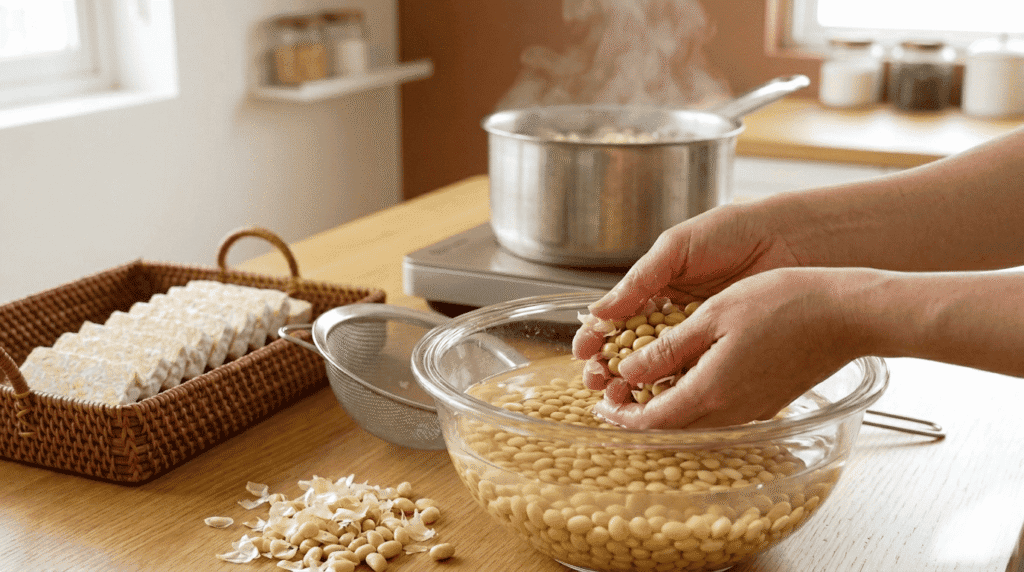
There’s a specific order to this: soak, dehull, boil, cool. Each step fixes a problem. If you skip one, the whole batch can fail later on. Good prep is what makes the tempeh turn out right, and getting the soybean prep right is what sets the foundation for consistent fermentation.
After the acidic soak, we take the skins off the beans. Dehulling them isn’t just busywork. It lets the mold’s roots spread through the beans without hitting a tough barrier.
The texture is better, and the fermentation is more even.
Boiling comes next. We cook them just enough to soften them up, but we stop before they turn mushy. They need to keep their shape.
Then comes the part most people rush: cooling and drying. The beans must be completely cool, under 95°F (35°C), and feel dry when you touch them. If they’re wet or warm when we add the starter, bad bacteria can win instead of the mold we want.
- Cooling Target: below 35°C (95°F)
- Key Check: Beans feel dry to the touch
- Why it Matters: Even moisture stops contamination
In our experience, this whole stage is about control. Getting the beans to the right texture, temperature, and dryness is what sets up a strong, white mycelium network. It’s the difference between a solid cake and a failed batch.
Fungal Stage in Tempeh Fermentation
This is where you see the magic happen. After we mix the beans with a starter culture full of Rhizopus oligosporus spores, the mold wakes up.
It starts growing thin, white threads called mycelium that weave through every bean, gluing them into one solid block.
The whole process takes a day or two. We keep an eye on the temperature, holding it between 28°C and 32°C. Around 12 to 16 hours in, the batch will often feel warm to the touch.
That heat is a good sign, it means the mold is actively growing and breathing.
Airflow is crucial here. This mold needs oxygen to do its job, so we never pack the beans too tightly. It’s an aerobic process.
- Temperature Range: 28-32°C
- Fermentation Time: 24-48 hours
- Key Need: Oxygen and steady airflow
As the network gets thicker, the beans fuse together. This is the tempeh binding process, and it’s also one of the clearest signs of high quality tempeh. But the mold is doing more than just acting as glue.
It releases enzymes that break down the beans’ proteins and other compounds, which changes the flavor and makes nutrients easier for our bodies to use. The final texture, the nutty smell, and the quality of the cake are all decided in this stage.
Nutritional Benefits of Tempeh Fermentation
We see it clearly: the beans that come out of fermentation are much easier on the stomach than plain cooked soybeans. The mold doesn’t just glue things together; its enzymes work like tiny scissors, cutting apart tough compounds.
For example, phytates, which can block your body from absorbing minerals, get broken down. At the same time, helpful plant compounds called isoflavones actually become more available.
The process turns a good food into a better one, and in some cases even contributes to the development of nutrients associated with B12 tempeh depending on fermentation conditions.
| Nutritional Aspect | Before Fermentation | After Fermentation | Why It Matters |
| Protein Digestibility | Moderate | Higher | Enzymes break proteins into simpler amino acids, making them easier to absorb. |
| Phytates (Anti-nutrients) | High | Reduced | Lower phytates improve mineral absorption like iron and zinc. |
| Isoflavones (Bioactive Compounds) | Less available | More available | Fermentation converts them into more bioactive forms. |
| Overall Digestibility | Lower | Improved | Pre-digestion by microbes reduces gut strain and bloating. |
In a recent analysis by Thulesen et al.
“a significant high increase in free amino acids by breaking down proteins and achieving over 80% reduction in the anti-nutrients phytic acid, vicine, and convicine . Furthermore, they concluded that fermentation enhanced in vitro protein digestibility” – Food Chemistry
This matches what health experts at Harvard Health Publishing point out: fermentation can create gut-friendly compounds and improve how well our bodies use protein.
In our own batches, we track this change. Controlling the temperature and timing isn’t just about making a solid cake; it’s about unlocking more nutrition.
The main takeaways are straightforward:
- Fewer anti-nutrients
- Better protein breakdown
- Improved overall digestibility
For us, getting the fermentation right is a direct way to improve the food’s nutritional profile. It’s a core part of why we do things the way we do.
Temperature and Time in Fermentation Success
Temperature and time are the two main levers we pull. They directly control what the mold does, and what other microbes might try to do.
We keep a very close watch on the heat. The sweet spot is between 28°C and 32°C (82°F to 90°F). If it gets cooler, the whole process slows to a crawl.
If it gets warmer, we risk killing the good mold or encouraging bad bacteria to take over.
The clock is just as important. Letting it ferment for around 24 hours gives you a softer, more delicate cake. Pushing it closer to 48 hours makes it much firmer and develops a stronger, nuttier flavor.
- Ideal Temperature: 28-32°C
- Short Fermentation (~24 hrs): Softer texture
- Longer Fermentation (~48 hrs): Firmer cake, stronger flavor
But it’s not just heat and time. Humidity and airflow are part of the equation too. The mold needs oxygen to breathe, so we make sure it’s not packed too tightly.
Research from sources like ScienceDirect confirms that keeping all these conditions stable is the key to consistent results and avoiding failed batches. In our experience, losing control of any one factor is usually why a batch goes wrong.
Safety of Tempeh for Small Producers Like SoyaMaya
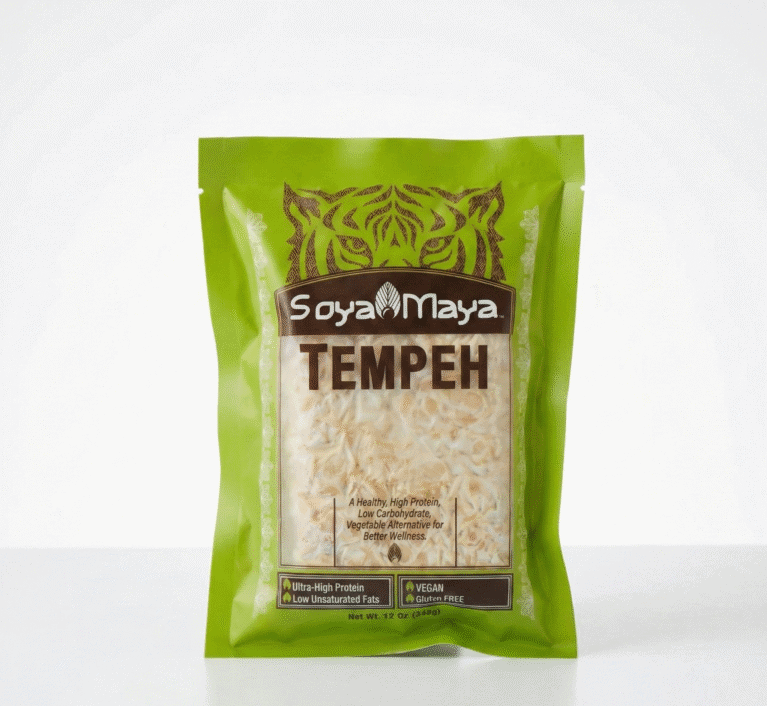
The way we make tempeh is actually designed to keep it safe. It uses two main guards.
First, the beans get an acidic bath (the soak). That sourness keeps a lot of bad germs from growing early on. Second, we add the good mold.
It grows so fast and thick that it basically crowds out anything else that might try to move in.
It’s interesting – the pH level actually goes up during fermentation, back toward neutral. But by then, the good mold is already in charge and running the show.
Being clean is a huge deal. We wash and sanitize every bowl, tray, and tool. We’re also careful about air. The mold needs to breathe, but we don’t want dirty air bringing in new germs.
- Acidic soak + fast mold growth = natural safety
- Everything must be very clean
- We control the air that reaches it
Health experts, like those at the BC Centre for Disease Control, say that controlling the fermentation conditions like this is a key part of food safety.
We also just smell it. Good tempeh has a mild, nutty, almost mushroom-like smell. If it starts to smell strongly like ammonia or chemicals, we know it’s gone too far. That’s a sure sign to throw that batch out.
Impact of Soybean Type on Tempeh Production
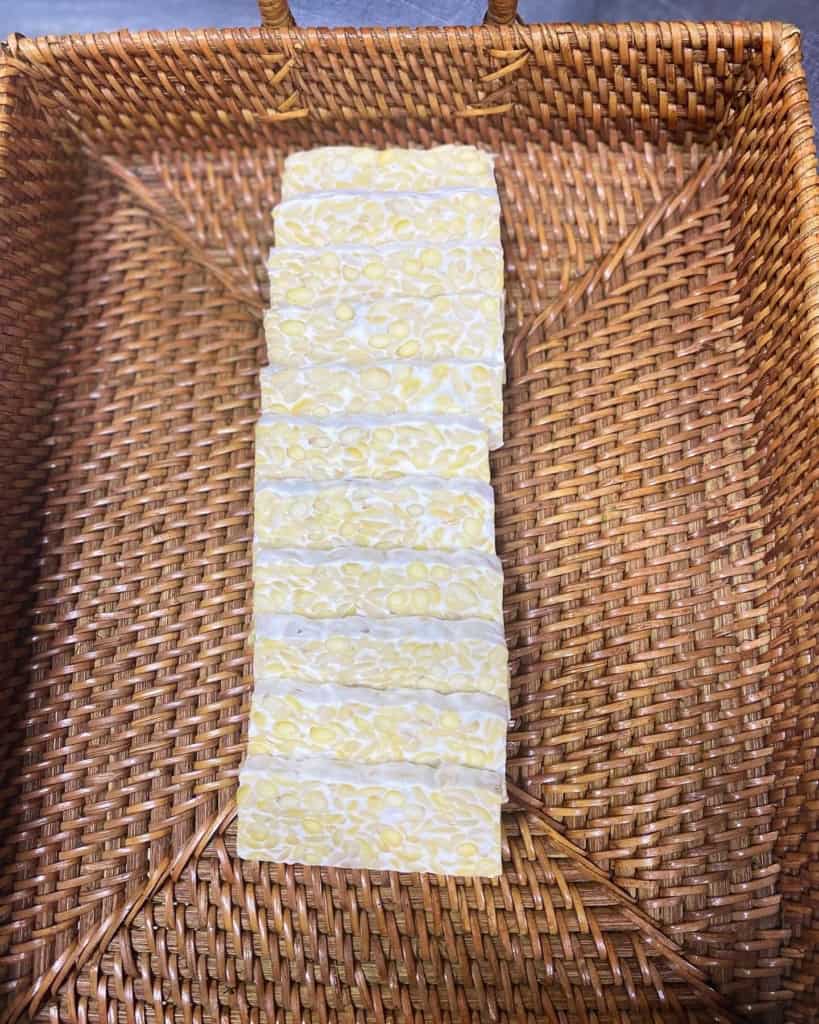
Where we get our soybeans is the first big choice we make, and it sets the tone for everything that follows.
In the U.S., the landscape is dominated by genetically modified crops, over 90% of soybean fields grow from GMO seeds. So, non-GMO beans aren’t just sitting on a shelf; you have to go find them.
Sourcing them is a deliberate process that involves extra steps and cost.
- They’re less common. We work directly with farmers on specific contracts to secure the supply.
- They cost more. The premium for identity-preserved, non-GMO beans is a real line-item in our budget.
- It requires paperwork. We maintain a full trail of certificates and records, from the farm to our door, to verify the origin. It’s an administrative layer you don’t have with conventional beans.
Once the beans arrive at our facility, the actual making of the tempeh doesn’t change. We soak them, cook them, inoculate them with our culture, and ferment them. The method, the timing, the care, that all stays consistent.
What isn’t consistent is the story. Choosing non-GMO beans is a clear statement. It speaks directly to a specific kind of customer and fundamentally shapes two things:
- The label on our package.
- The person who feels confident picking it up.
For us, the bean source isn’t a minor detail. It’s one of the core decisions that defines what our product is about from the very start. The process in our kitchen is a constant, but the narrative begins right here, with the seeds we choose to buy.
FAQ
How does the tempeh fermentation process work from start to finish?
The tempeh fermentation process begins with soaking soybeans for tempeh to soften them and support the soybean fermentation process. Next, boiling soybeans for tempeh cooks them fully, and dehulling soybeans tempeh removes skins that block mold growth.
After drying soybeans before fermentation, the tempeh inoculation process adds a tempeh starter culture containing Rhizopus spores tempeh. During incubation, mold fermentation of soybeans leads to mycelium formation, which binds the beans into a compact cake.
What conditions control how tempeh fermentation works best at home?
How tempeh fermentation works depends on stable tempeh fermentation conditions. You must maintain proper tempeh fermentation temperature control, humidity, and airflow. The correct tempeh incubation temperature supports aerobic fermentation tempeh because the mold needs oxygen.
A balanced tempeh fermentation environment also keeps pH stable and reduces contamination risk. These tempeh fermentation control factors ensure even tempeh mold growth and consistent tempeh cake formation.
Why does mold bind soybeans into a solid tempeh cake?
In Rhizopus oligosporus fermentation, the mold produces a dense tempeh mycelium network made of thread-like filaments. This structure explains how mold binds soybeans together.
During solid state fermentation tempeh, the filaments grow between beans and connect them tightly. This tempeh binding process creates a firm structure, improves tempeh texture formation, and ensures the cake holds together during slicing and cooking.
How long does the tempeh fermentation timeline usually take?
The tempeh fermentation timeline usually lasts between 24 hour fermentation tempeh and 48 hour tempeh fermentation under proper conditions. Early tempeh fermentation stages show small white patches, which later spread evenly across the beans.
Tempeh fermentation time depends on temperature, airflow, and starter quality. Because the mold produces heat, monitoring tempeh fermentation heat generation helps prevent over fermentation tempeh and uneven growth.
How can I tell if something went wrong during fermentation?
Tempeh fermentation troubleshooting requires checking smell, color, and texture carefully. A normal tempeh fermentation smell is clean and slightly nutty. A strong tempeh ammonia smell indicates over-fermentation.
Under fermentation tempeh results in loose beans that do not bind. Tempeh black spores usually signal aging or sporulation. Preventing contamination of tempeh requires clean tools, proper airflow, and controlled tempeh fermentation humidity.
Consistent Tempeh Starts with Smart Fermentation
You’ve likely seen batches turn uneven, too soft, or lacking that firm bite. Small shifts in time or temperature can affect both structure and nutrition. It shows in the final product.
It doesn’t have to be complicated. With proper control and balance, SoyaMaya produces tempeh with consistent texture and dependable nutrition, so you can skip the guesswork and get reliable results every time. Shop now with SoyaMaya
References
- https://jfqhc.ssu.ac.ir/article-1-1322-en.html
- https://www.sciencedirect.com/science/article/pii/S0308814626012082
Related Articles
- https://mayasaritempeh.com/understanding-tempeh-soybean-prep/
- https://mayasaritempeh.com/what-makes-tempeh-high-quality/
- https://mayasaritempeh.com/what-is-b12-tempeh/
SoyaMaya Fresh Tempeh
Traditionally fermented, no preservatives, shipped fresh and frozen to your door. The real deal, direct from us.
