
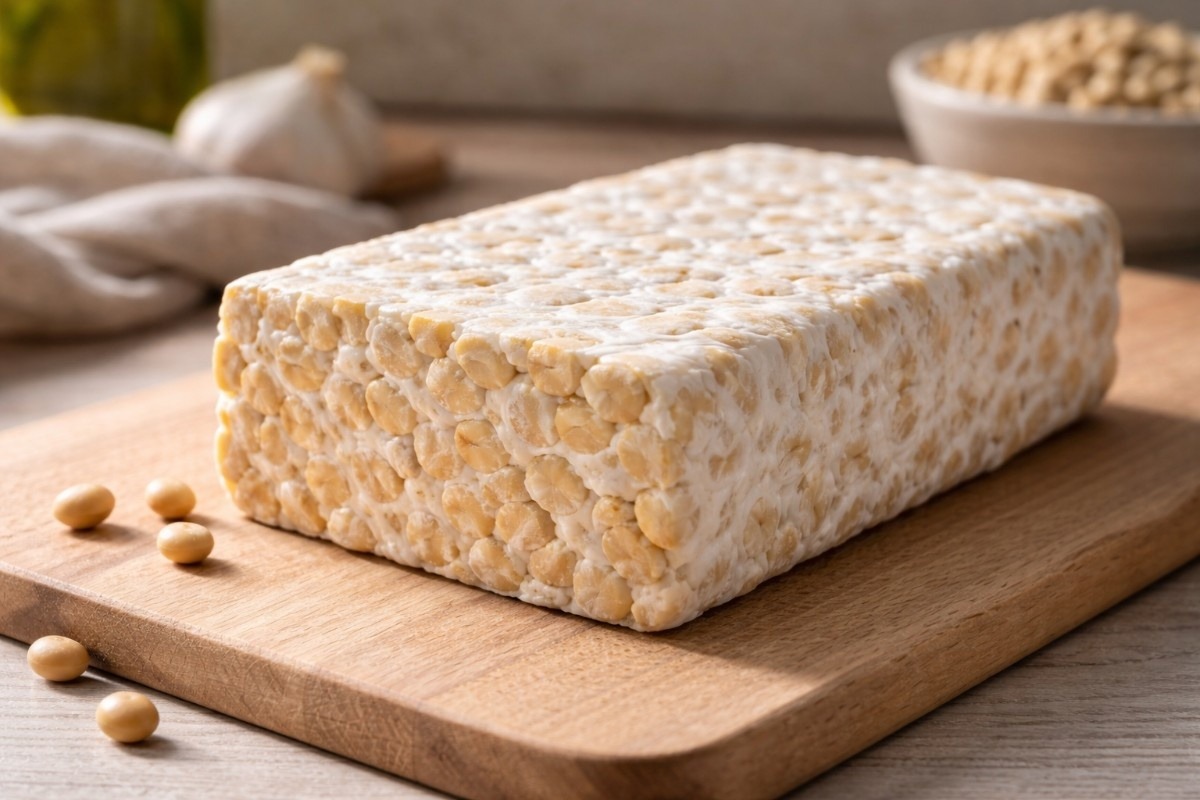
Look for a block that’s bright white and webbed together tight, like fine cotton. It should be firm enough to slice, with a clean, nutty smell. If it’s sour or smells like ammonia, that’s a sign things went wrong.
We’ve seen it all in our kitchen. A good fermentation makes the tempeh more nutritious, and the taste is cleaner, deeper. A bad batch turns bitter, or just falls apart in your hands. That’s the real difference.
So, how do you spot the good stuff every single time? It’s simpler than you think. Here’s what to look for.
SoyaMaya Fresh Tempeh is made the traditional way — no preservatives, no shortcuts. Delivered to your door.
Order Fresh Tempeh →Key Takeaways
- A solid, white cake with no dark spots is the first visual clue.
- The aroma should be fresh and nutty, never sharp or sour.
- Proper fermentation boosts protein availability and adds Vitamin B12.
The First Glance: Reading the Visual Story of Tempeh
I remember the first time I made tempeh at home, years before our restaurant. The Indiana summer heat made the tiny kitchen feel like an incubator itself. I watched, hoping for that perfect white bloom. When it worked, the block was firm and smelled like fresh mushrooms.
When it didn’t, well, let’s just say the smell was unforgettable, and not in a good way. That hands-on trial and error taught me more than any manual could. You learn to see and smell quality long before you taste it.
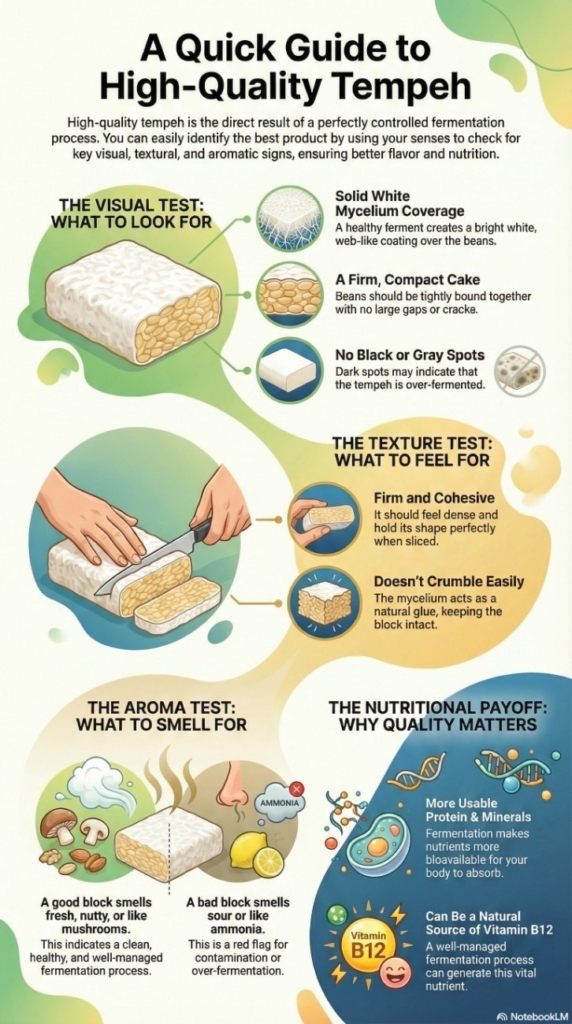
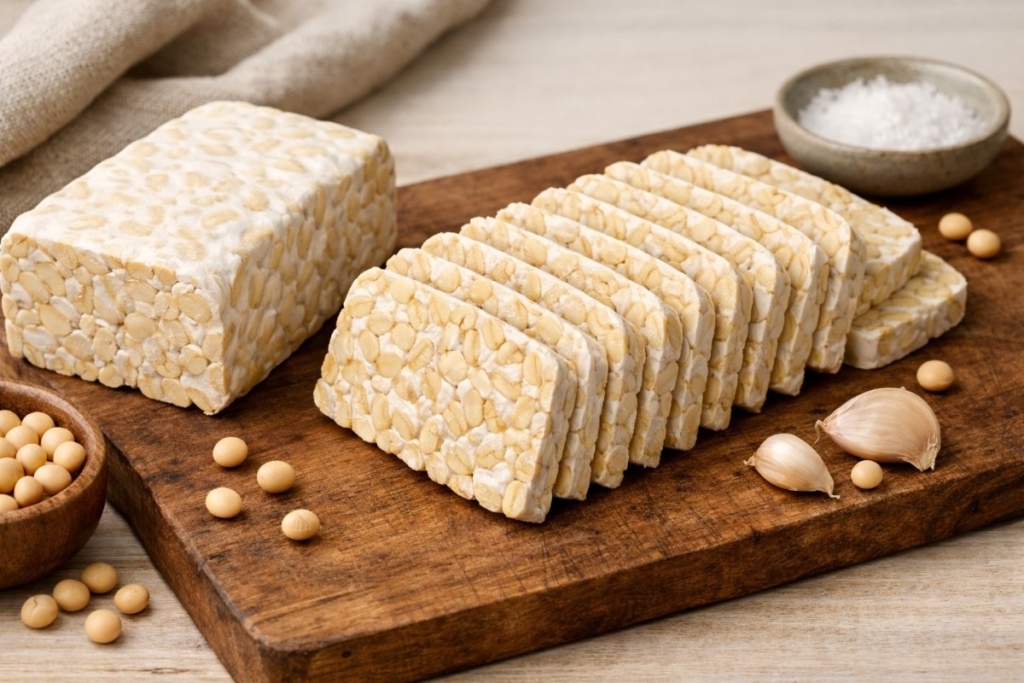
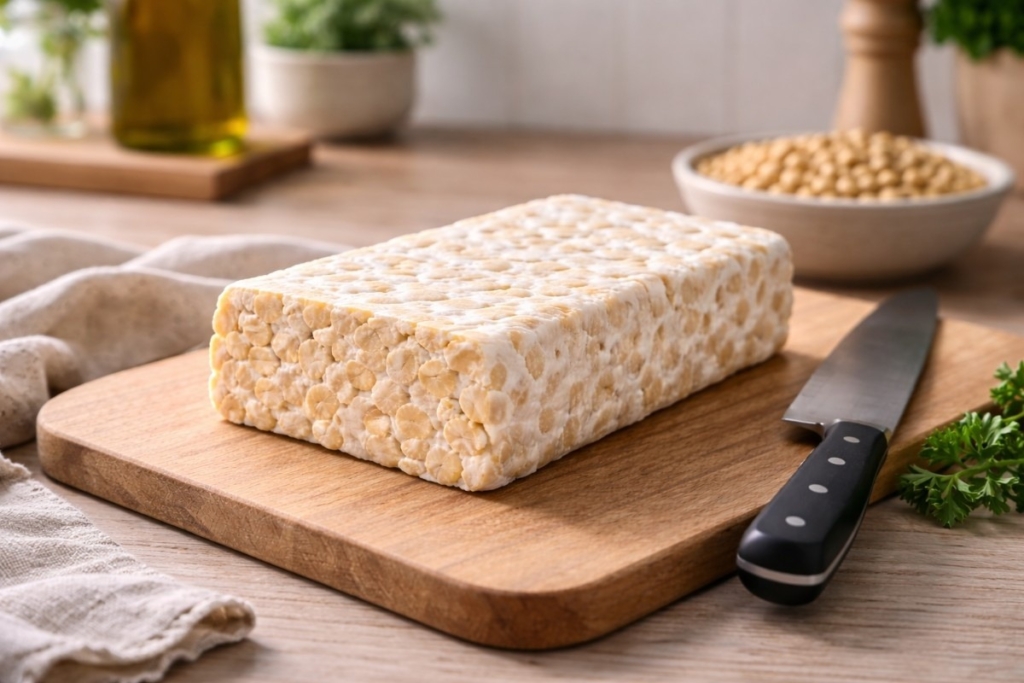
Look at it. A premium tempeh block is a unified, compact cake. The white mycelium, those fine fungal threads, should envelop the soybeans completely. You shouldn’t see many gaps or individual beans poking through. It looks cohesive, like it grew together as one piece.
This uniform white coverage is the hallmark of a healthy Rhizopus oligosporus culture. It means the fermentation environment was just right.
Any black or gray spots, especially early on, are spores. While not always harmful, they often signal the fermentation went a bit too long or the temperature spiked.
A clean, bright white color indicates a fresh, controlled process. We check our batches constantly during their 48-hour ferment. The goal is to halt it at peak mycelial growth.
- Uniform white mycelium covering the surface.
- A solid, compact cake that holds together.
- No visible cracks or large gaps between beans.
- Absence of black or slimy spots.
The Importance of a Firm, Cohesive Texture
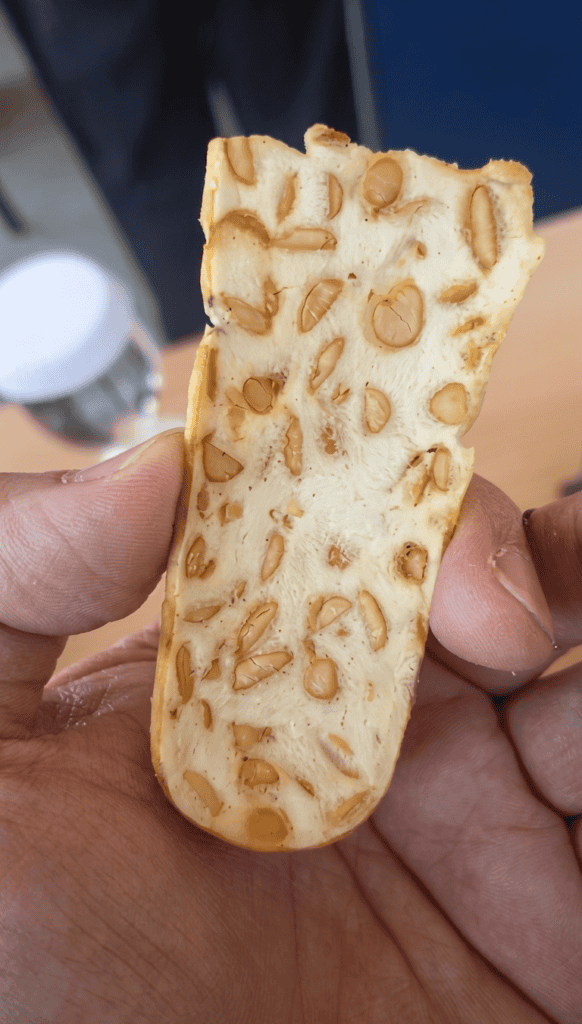
Now, pick it up. It should feel firm but not rock-hard, with a slight springiness. Give it a gentle squeeze. A quality tempeh has a dense, cohesive structure because the mycelium has woven through every bean, acting as a natural glue. It shouldn’t crumble at the edges.
“Fresh, high-quality tempeh is characterized by a clean, mushroom-like odor and a compact, white mycelium that completely binds the soybeans into a firm, sliceable cake.” M.J.R. Nout, International Journal of Food Microbiology
It’s the difference between a steak and ground beef, structurally. That firmness translates to a better bite in every dish, from stir-fries to our protein chips.
This structural integrity comes from patience. Rushing fermentation leads to weak mycelial networks. The beans need that full time, usually around two days, to truly bind. It’s a slow, natural process that can’t be hurried.
The result is a texture that stands up to marinating and cooking without falling apart. A well-bound block is a sign of a complete and successful fermentation, which directly impacts the final nutritional quality you get from the food.
The Telltale Aroma of a Clean Ferment
This is the most telling test. Bring the tempeh close and take a sniff. What you’re looking for is a mild, pleasant, and slightly nutty or mushroom-like aroma. It should smell fresh and earthy, something that makes you think of cooking, not a chemistry lab.
A sour smell, or worse, a sharp ammonia odor, is a red flag. It means unwanted bacteria got a foothold during fermentation or the tempeh is over-fermented. That ammonia scent comes from protein breakdown.
It’s a sign the process wasn’t clean or was poorly controlled. We’re fanatical about our starter culture and sanitation for this exact reason. The smell tells the whole story of the process.
A clean aroma means a clean flavor. Tempeh with off-odors will often carry bitter or unpleasant tastes into your food.
A fresh, nutty smell guarantees a mild, versatile base that will absorb your marinades and spices beautifully, without fighting them with background bitterness.
This is the sensory confirmation that the fermentation was managed correctly from start to finish, reflecting the standards that come with authentic Indonesian tempeh.
| Aroma Type | What It Indicates | Quality Assessment |
| Mild nutty or mushroom-like | Healthy fermentation | High quality tempeh |
| Clean and fresh | Balanced microbial activity | Safe and well fermented |
| Sour or sharp | Uncontrolled fermentation | Poor quality |
| Ammonia-like smell | Over-fermentation or contamination | Avoid consumption |
The Foundation of Quality: Sourcing and Process
It all starts with what you can’t see: the soybeans. We source non-GMO soybeans from Indiana farms we know.
The beans are cleaned, dehulled, and cooked just so. This preparation is crucial. If the beans aren’t cooked properly, the mold can’t do its job. If they’re not dehulled well, you get a gritty texture.
The starter culture is another invisible hero. It’s a pure strain of Rhizopus oligosporus. Using a reliable, vibrant starter is non-negotiable. We maintain ours carefully. Then comes the environment.
Fermentation needs a steady, warm temperature, around 88°F to 90°F, and good airflow. Too hot, and you kill the culture. Too cold, and it goes dormant. We monitor our incubation closely, because this stage builds everything, the texture, the nutrition, the flavor.
Finally, the process is halted at the right moment. For us, that’s when the mycelium is thick and white, and the block pulls away cleanly from its package. It’s then quickly frozen to lock in that peak quality.
This attention to each step, from farm to freezer, is what separates a thoughtful product from a commodity. The quality you see and smell is the direct result of these controlled production factors, which is why choosing artisanal tempeh enhances both flavor and nutrition.
The Nutritional Payoff of Perfect Fermentation
This is where quality becomes more than sensory. A fully realized fermentation actually changes the food for the better. The mold’s enzymes pre-digest the soybeans. They break down complex proteins and starches, making them easier for your body to absorb.
More importantly, it reduces phytic acid, a compound in plants that can block mineral absorption. So, the iron and zinc in tempeh become more bioavailable to you. The fermentation process also generates nutrients.
Notably, it can produce Vitamin B12, a vital nutrient often scarce in plant-based diets. Our tempeh is a natural source of B12 because of how we manage this biological process.
You’re not just getting protein. You’re getting more usable protein, more accessible minerals, and beneficial probiotics from the live culture.
A poorly fermented block misses these nutritional highs. The difference is in your body, not just on your palate.
This enhanced nutritional value is the ultimate benefit of seeking out a high-quality, well-fermented tempeh, which is a key reason to choose artisanal over commercial.
Your Guide to a Superior Tempeh Experience
Understanding what makes tempeh high-quality transforms you from a passive buyer into an informed cook. You can confidently select a product that will deliver on texture, flavor, and nutrition.
It empowers you to choose foods that support your health without compromising on taste. That firm, white, fragrant block is your starting point for countless better meals.
“Tempeh consumption is associated with many health benefits including antidiabetic, improve cognitive functions, cholesterol-lowering properties, anticancer, anti-aging, gut improvement and antidepressant effects.” Sze QiTeoh et al, Future Foods
We built SoyaMaya to be that reliable starting point. Our Fresh Frozen Tempeh is our answer to every point in this guide, grown from non-GMO Indiana soybeans, fermented in small batches, and frozen at peak perfection to capture all its benefits.
We invite you to experience the difference that a focused fermentation makes. See the quality for yourself and feel how a truly well-made tempeh performs in your favorite recipes.
FAQ
How does unpasteurized tempeh affect freshness and nutrition?
Unpasteurized tempeh retains a live tempeh culture, which directly affects tempeh fermentation quality and nutrition. Because it is minimally processed tempeh, beneficial microbes remain active and support probiotic tempeh benefits. This results in better tempeh nutritional value, a clean tempeh aroma, a fresh tempeh smell, and a cleaner finish compared to heat-treated tempeh.
Why does premium tempeh hold together better when sliced?
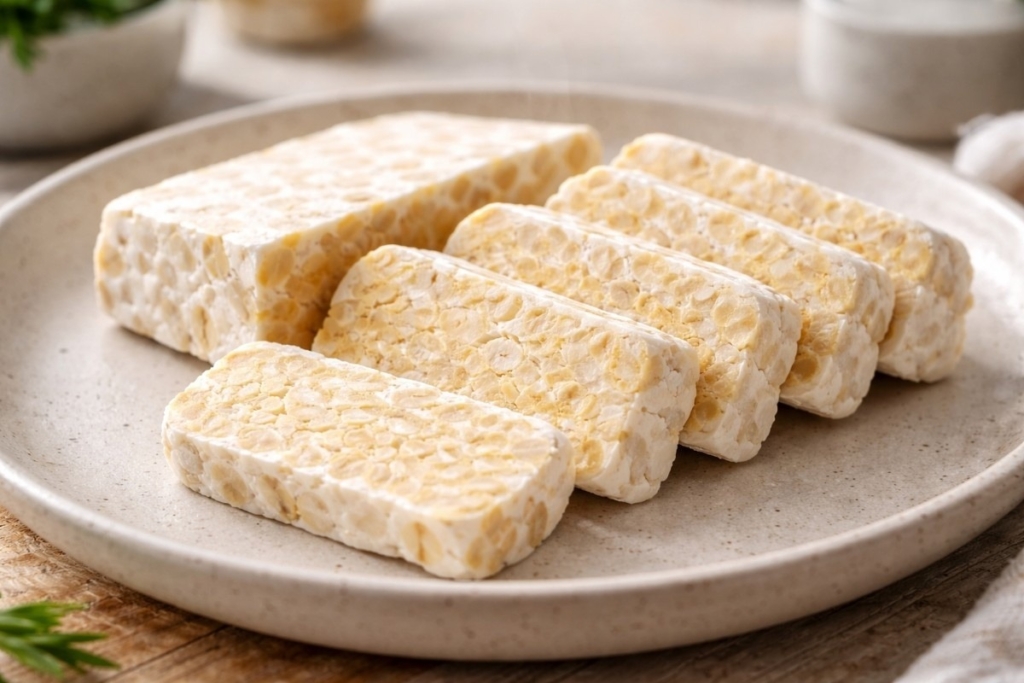
Premium tempeh texture comes from dense soybean binding created during proper tempeh incubation. When whole soybean tempeh ferments evenly, the mycelium binds the beans into a compact tempeh cake. This produces a firm tempeh texture that slices cleanly and holds its shape, which is one of the most reliable high quality tempeh characteristics.
What role does the starter culture play in tempeh quality?
The starter culture controls the entire fermentation process. A traditional tempeh starter made from rhizopus culture tempeh drives natural fermentation tempeh and stable soy fermentation quality. When the culture is healthy, it creates even tempeh mycelium coverage, white mycelium tempeh appearance, and a well fermented tempeh without ammonia smell or off flavors.
Why do some tempeh blocks taste bitter or sour?
Bitter or sour tempeh usually results from poor fermentation control. Factors such as incorrect temperature, excess moisture, or uneven airflow disrupt traditional tempeh fermentation. High-quality tempeh shows tempeh bitterness absence, a clean tempeh aroma, and tempeh not sour flavor. The taste should be nutty, mild, and balanced with a natural umami tempeh profile.
How can you tell if tempeh is truly fresh at purchase?
Fresh tempeh quality is visible and easy to identify. Look for a bright white color, a compact structure, and balanced tempeh moisture balance. Freshly made tempeh smells clean and nutty, not sharp. Tempeh with short shelf life freshness, no preservatives, and chemical free processing is usually produced in smaller batches with better fermentation control.
Why Fermentation Is the Final Test of Tempeh Quality
High-quality tempeh is easy to recognize once you know the signs: bright white mycelium, a firm, cohesive texture, and a clean, nutty aroma. These cues signal careful fermentation that delivers better flavor, structure, and nutrition.
Choosing well-fermented tempeh leads to improved cooking results and greater bioavailable protein, minerals, and natural benefits in every meal, helping you enjoy food that truly supports both taste and long-term health without compromising tradition, sustainability, or everyday kitchen confidence. Ready to taste the difference? Shop SoyaMaya tempeh.
References
- https://doi.org/10.1111/j.1365-2672.2004.02471.x
- https://www.linkedin.com/posts/duncanalney_soya-maya-the-hot-emerging-soy-snack-brand-activity-7392281540975644672-4BCr
Related Article
- https://mayasaritempeh.com/what-is-artisanal-tempeh/
- https://mayasaritempeh.com/finding-authentic-indonesian-tempeh/
- https://mayasaritempeh.com/why-choose-artisanal-over-commercial/
SoyaMaya Fresh Tempeh
Traditionally fermented, no preservatives, shipped fresh and frozen to your door. The real deal, direct from us.
