
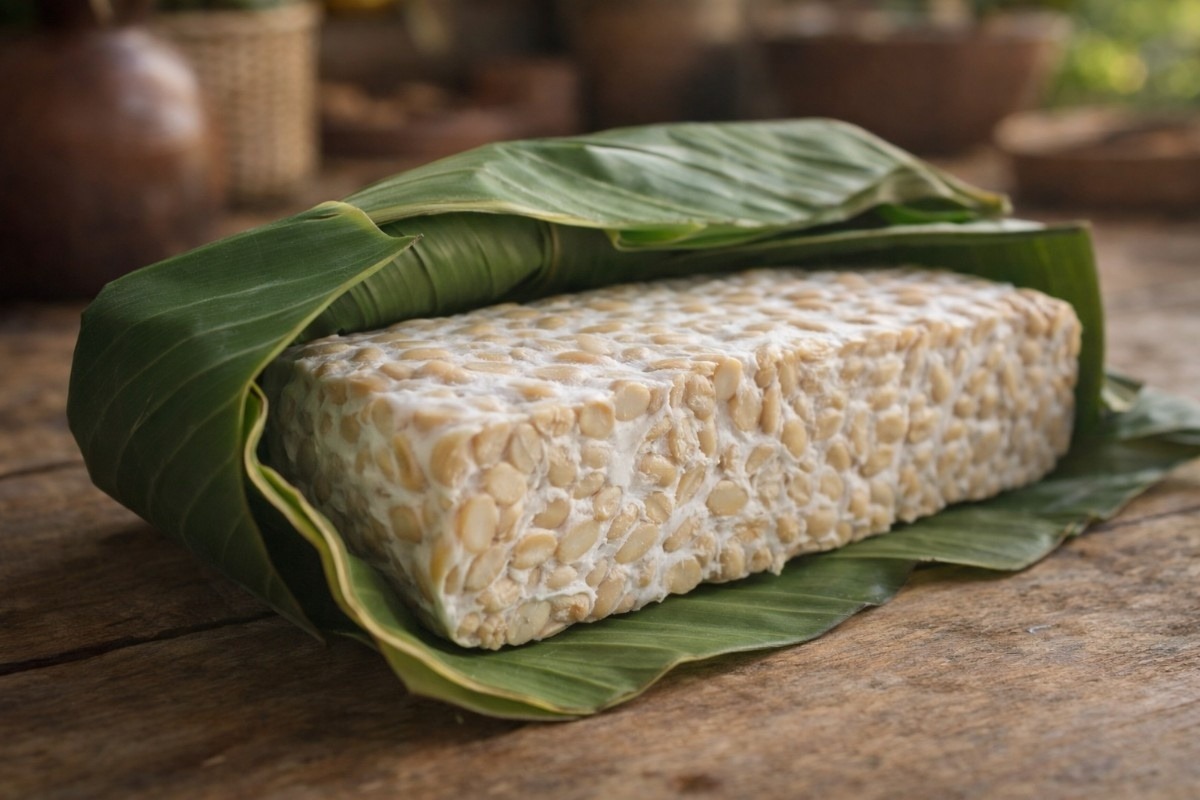
You’ve followed the recipe perfectly, but your tempeh dish still doesn’t taste like it should. We’ve been there. The problem usually isn’t your cooking, it’s the tempeh. Cheap, mass-produced blocks can be bland, or worse, smell a bit off. Authentic Indonesian tempeh is different.
It has a deeper, nuttier flavor and a firm, solid texture that holds up in a stir-fry or marinade. That’s the secret ingredient you’re missing. We tested dozens of brands to figure out what makes the real thing so special, and what to avoid at the store. If you want your meals to finally taste right, keep reading. We’ll show you how to find it.
Key Takeaways
- Authentic tempeh is defined by its fermentation in banana leaves, not plastic, which creates a unique flavor and firm texture.
- You can identify it by a solid white cake of mold, a fresh nutty smell, and the absence of sour or ammonia odors.
- Sourcing it means looking for small-batch producers who use traditional methods, whether locally or from trusted importers.
What Authentic Indonesian Tempeh Really Is
The soybeans were from an Indiana farm, the room was warm, and we wrapped the batch in banana leaves my mother had sent over. The smell that filled the kitchen after two days wasn’t just familiar, it was a piece of home. That smell, earthy and clean, is the first sign you’ve got the real thing.
SoyaMaya Fresh Tempeh is made the traditional way — no preservatives, no shortcuts. Delivered to your door.
Order Fresh Tempeh →“A fungus, Rhizopus oligosporus or Rhizopus oryzae, is used in the fermentation process and is also known as tempeh starter.” – Wikipedia
Authentic tempeh is more than just fermented soy. It’s a specific process that hasn’t changed much in centuries. The soybeans are soaked, dehulled, and cooked. Then they’re mixed with a live starter culture. This is where it gets interesting.
The mix is traditionally packed into banana leaves, not plastic trays. The leaves let the tempeh breathe during its 24 to 48 hour fermentation.
This creates a different texture, a firmer bite. It also imparts a very subtle, almost imperceptible, note to the flavor. You can’t get that from plastic. So, what are you actually looking for in a block of real tempeh? Let’s break it down.
This artisanal process of small-batch fermentation ensures that each block develops the perfect balance of flavor and texture, which you can explore further by understanding the artisanal tempeh craftsmanship behind it.
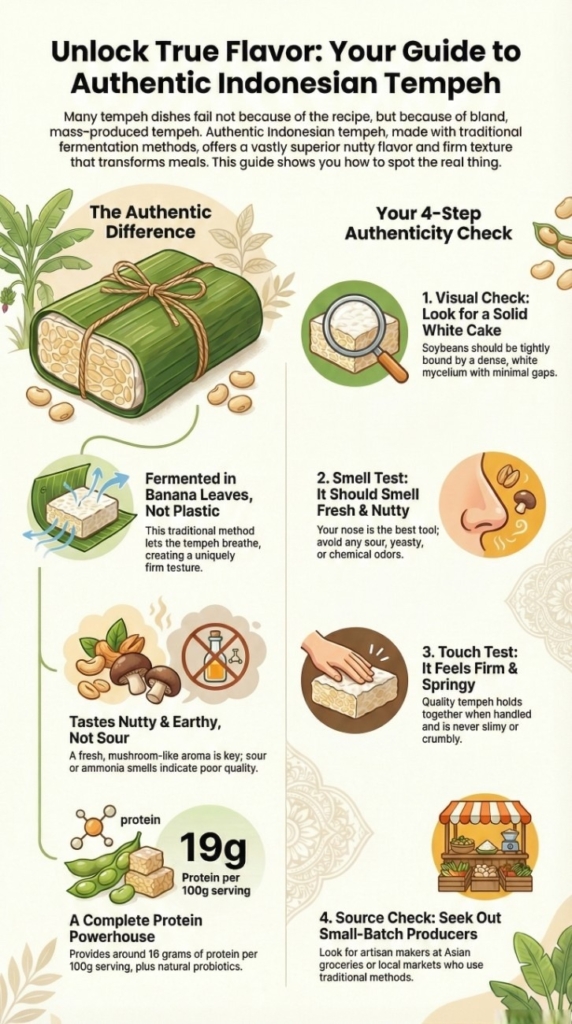
- The Look: A solid, cohesive block. It should be webbed through with a dense, white mycelium. A few gray or black spots are normal, but they should be minimal.
- The Feel: Firm and springy to the touch. It should hold together when you pick it up.
- The Smell: This is the biggest tell. It should smell nutty, mushroomy, and fresh. If it smells sour, yeasty, or like ammonia, it’s past its prime or wasn’t made correctly.
The production is a quiet art. After inoculation, the beans are left in a warm space, ideally between 30°C and 37°C. We keep a close eye on ours. You can literally see the white threads growing, knitting the beans together into that famous cake.
This stage is delicate. Too cold, and the mold won’t grow. Too hot, and it dies. Getting it right means patience and attention. When it’s done, it’s a complete protein source, about 19 grams per 100-gram serving, with the bonus of natural probiotics and B vitamins from fermentation.
This careful process is what separates heritage tempeh from the mass-produced version. The difference isn’t subtle.
How to Spot the Real Thing vs. a Mass-Produced Imitation
Walking through a traditional market in Java, you’d see piles of tempeh wrapped in banana leaves, the scent earthy and inviting. That’s the benchmark. Outside of Indonesia, you have to become a bit of a detective.
The packaging is your first clue. While not always possible abroad, tempeh that mentions traditional, banana-leaf, or small-batch fermentation is aiming for authenticity. Plastic is standard for shipping, but the process before packaging matters.
Then there’s the aroma test. Open the package. Real tempeh has a pleasant, fermented bean smell. It’s robust but not offensive.
Because fresh tempeh contains live cultures, unlike pasteurized versions, its aroma and texture remain more complex and vibrant. This distinction is important when choosing between fresh and pasteurized varieties, as detailed in the benefits of unpasteurized tempeh.
An ammonia or strong vinegar scent means the fermentation has gone too far, it’s old, or unwanted bacteria got in. Your nose is your best tool here. We’ve tossed out batches based on smell alone, it’s that reliable.
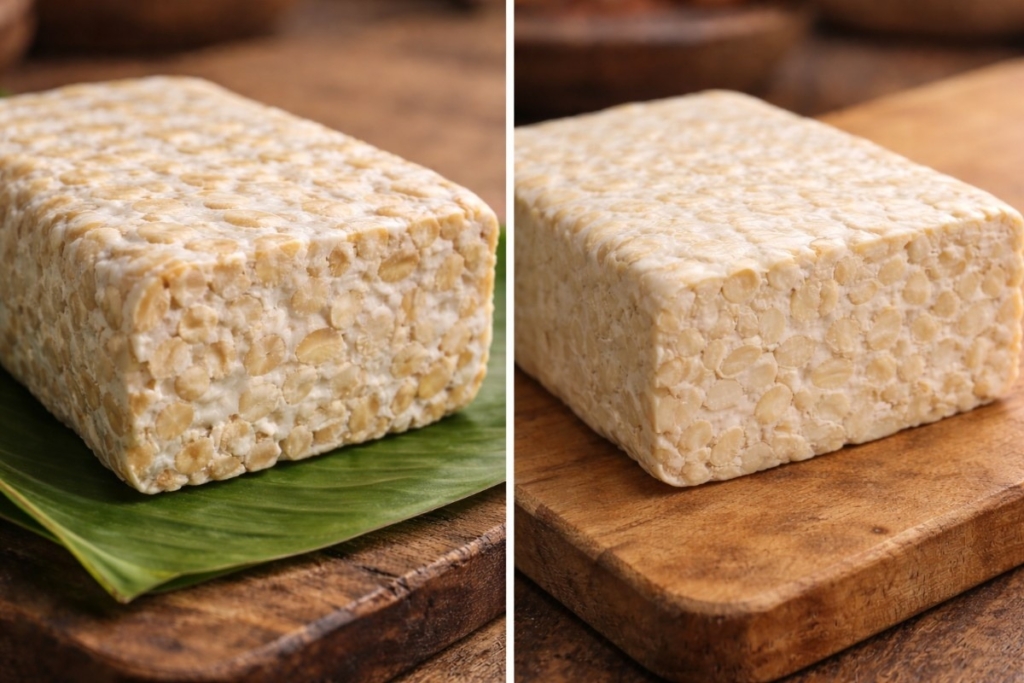
Finally, check the structure. Cut into it. The beans should be tightly bound by a mat of white mycelium. If it’s crumbly, if the beans are loose, or if the mold coverage is patchy, it’s not right.
The texture should be consistent throughout. This structural integrity is why authentic tempeh fries up so beautifully crispy on the outside while staying tender inside. A poor-quality block will just absorb oil and turn mushy or burn. To make it simple, here’s what to check for:
- Packaging Context: Look for mentions of traditional methods. Banana leaf fermentation is the gold standard.
- Visual Inspection: A solid, white cake. Minimal gaps or discoloration.
- The Sniff Test: A clean, nutty, earthy aroma. Avoid sour or chemical smells.
- The Touch Test: Firm and cohesive, not slimy or crumbly.
Finding this quality outside of Indonesia used to be a real challenge. We started making our own because we couldn’t find it.
Where to Find Heritage-Grade Tempeh Today
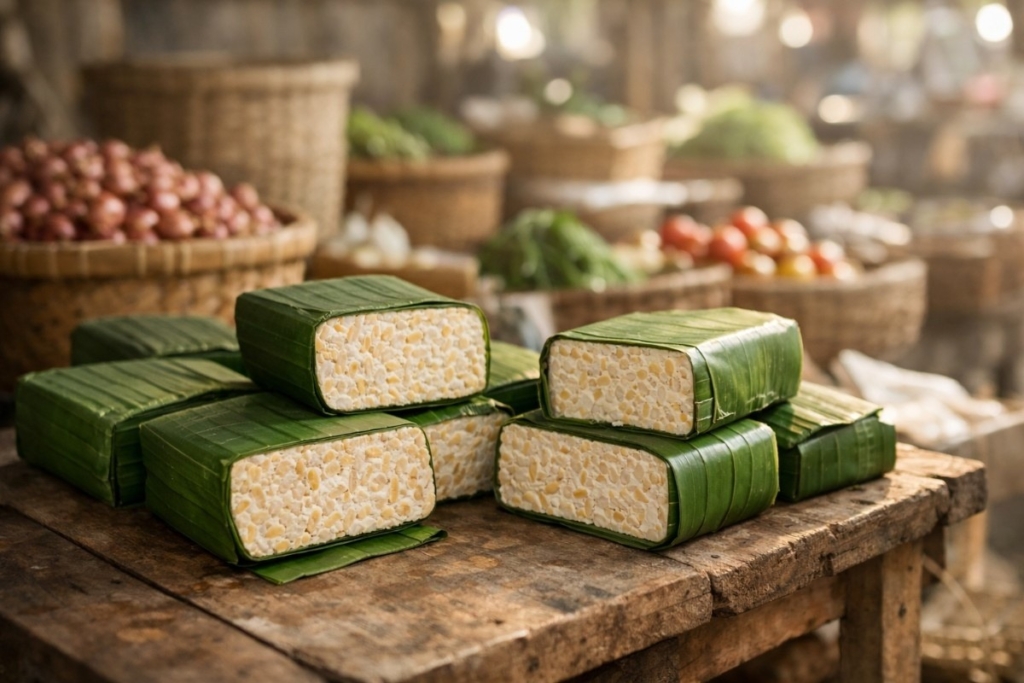
In Indonesia, your best bet is a traditional wet market. Cities like Yogyakarta or towns in Central Java are famous for it. You buy it fresh in the morning, still wrapped in those banana leaves. It’s a staple, so it’s affordable, maybe Rp 5,000 to Rp 10,000 a block.
UNESCO recognizes tempeh as part of Indonesia’s intangible cultural heritage, and you can taste why in these markets. The connection from local soybean to market stall is short and direct.
For those of us not in Indonesia, the search is different. You won’t find the leaf-wrapped version easily. Your goal is to find producers who respect the original method, even if they adapt for safety and shipping.
Look for Asian grocery stores with a good refrigerated section. Sometimes they carry frozen imports. More reliably, seek out small, dedicated producers.
The growing community focused on small-batch tempeh production embraces traditional fermentation, offering authentic flavor profiles and nutritional benefits that mass production misses.
The rise of plant-based eating has sparked a community of artisans who care about fermentation science. They’ll often talk about their process, their culture starter, and their ingredients.
This is the path we took. We source organic, non-GMO soybeans from farms right here in Indiana. We ferment in small batches to control quality. We’ve even developed a blend using high-protein and high-oleic soybeans for a richer nutritional profile.
The principle is the same as in a Javanese village: whole ingredients, careful fermentation, no shortcuts. The main difference is our location and our freezer, which lets us share it beyond our local community in Greensburg.
The region where tempeh is made influences it, a concept often called terroir. The local environment, the water, even the air carries native bacteria that join the Rhizopus mold during fermentation. Tempeh from Bali might have a slightly different profile than tempeh from Bandung.
This isn’t a flaw, it’s a characteristic. It means the tempeh will behave a little differently when cooked. Understanding this helps you choose the right tempeh for the right dish.
Why Your Tempeh’s Origin Changes Your Meal
Think of it like coffee or wine. The base ingredient is the same, but the growing conditions and processing create a spectrum of flavors. In tempeh, the “terroir” is the microbial community present during fermentation.
A traditional open-air fermentation in Java will include different local yeasts and bacteria than a controlled fermentation in another country. This complex microbial profile is what gives authentic tempeh its depth.
This matters when you cook. A tempeh with a robust, earthy profile stands up to strong flavors. It’s perfect for Tempeh Orek, that classic sweet, spicy, and dry stir-fry with sweet soy sauce and chilies.
The tempeh soaks up the glaze but keeps its meaty texture. A milder tempeh might work better in a Tempe Bacem, where it’s braised slowly in palm sugar and aromatic spices like coriander and galangal until tender and caramelized. The braising liquid penetrates deeply.
The firm, non-crumbly texture of well-made tempeh is also key. It slices cleanly for grilling or frying. It crumbles evenly for a “taco meat” or Bolognese. When you start with a superior product, you spend less time fixing its texture and more time building flavor. You’re working with it, not against it.
This reliability transforms it from an occasional ingredient to a weekly staple in your kitchen. We use it in everything from our restaurant’s signature dishes to the protein chips we make.
| Tempeh Origin | Typical Characteristics | Best Cooking Methods |
| Tempeh from Java | Firm texture, deep nutty flavor | Frying, stir-frying, grilling |
| Indonesian street market tempeh | Fresh aroma, active fermentation | Simple frying, traditional dishes |
| Small-batch fermented tempeh | Balanced flavor, even structure | Braising, marinating |
| Controlled fermentation tempeh | Mild flavor, consistent texture | Crumbling, mixed dishes |
Bringing Authentic Tempeh to Your Table
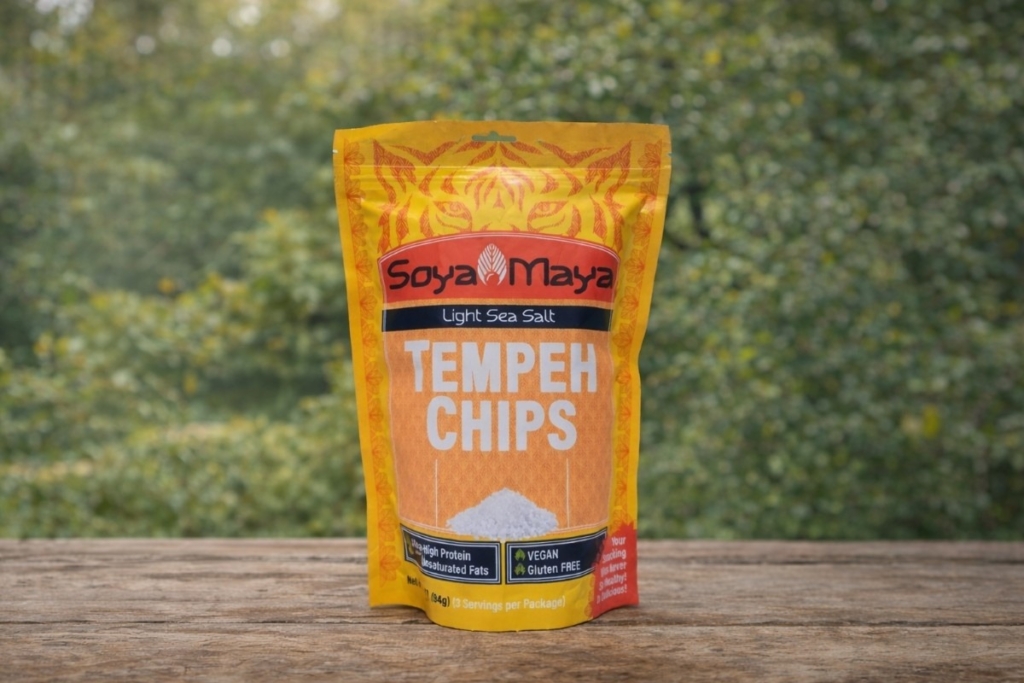
Finding authentic Indonesian tempeh is about reconnecting with the purpose of the ingredient. It’s not just a protein block, it’s a fermented food with history, flavor, and texture that mass production often misses.
You now know the signs: look for the evidence of careful fermentation, trust your nose, and seek out producers who are transparent about their process. The result in your cooking, crispier fries, richer braises, more satisfying stir-fries, is worth the search [2].
“Some area in Indonesia, Tempe is wrapped in endemic leaves like simpor leaf, and cacao leaf.” Wida Winarno, Heinrich Boll Stiftung
For us, this journey started in a home kitchen and grew into SoyaMaya. We stick to the traditional principles we learned, using non-GMO Indiana soybeans and small-batch fermentation, because that’s what makes tempeh worth eating.
It’s how we get that authentic Indonesian tempeh character, even halfway across the world. If you’re ready to experience the difference that starting with a quality product makes, you can find our fresh frozen tempeh and see where real ingredients can take your cooking.
FAQ
What does authentic Indonesian tempeh taste like compared to common tempeh?
Authentic Indonesian tempeh has a clean, nutty, and lightly mushroom-like flavor without bitterness. This Indonesian tempeh taste comes from traditional tempeh fermentation using whole soybeans and live cultures. Real fermented tempeh tastes savory and balanced, unlike many mass-produced versions that often taste flat, sour, or overly bland due to heavy processing.
How is traditional Indonesian tempeh made from soybeans?
Traditional Indonesian tempeh is made by soaking, dehulling, and cooking whole soybeans before adding a tempeh starter culture from Indonesia. The Rhizopus tempeh mold grows during the tempeh fermentation process and binds the beans together. This traditional soybean fermentation produces a firm Indonesian fermented soybean cake without preservatives or additives.
Is there a difference between fresh tempeh and pasteurized tempeh?
Fresh Indonesian tempeh contains live culture tempeh that continues to develop flavor and structure. The difference between fresh tempeh and pasteurized tempeh lies in taste, aroma, and texture. Unpasteurized Indonesian tempeh has a deeper flavor and natural aroma, while pasteurized tempeh loses complexity during heat treatment.
Why is banana leaf wrapping important in traditional tempeh?
Traditional tempeh wrapped in banana leaves, also called tempeh daun pisang, allows airflow during fermentation and helps regulate moisture. This method supports proper mold growth and contributes to authentic tempeh aroma and Indonesian tempeh texture. Banana leaves also reflect traditional Javanese tempeh practices passed down through generations.
Where do people traditionally buy tempeh in Indonesia?
In Indonesia, people traditionally buy Indonesian street market tempeh at local wet markets early in the day. Tempeh from Java is especially common and is made by small local producers. These markets show how Indonesian culinary staple tempeh functions as an everyday food rather than a specialty product.
Choosing Authentic Indonesian Tempeh Makes the Difference
Authentic Indonesian tempeh brings deeper flavor, firmer texture, and more dependable cooking results.
When tempeh is made through traditional fermentation with whole soybeans and careful handling, every dish tastes cleaner and more satisfying.
Trust your senses and choose transparency over convenience. Real tempeh is not a substitute protein, it becomes the heart of the meal. Experience traditionally crafted tempeh inspired by Indonesian heritage and made with care. Shop SoyaMaya tempeh here.
References
- https://en.wikipedia.org/wiki/Tempeh
- https://th.boell.org/en/2024/09/09/tempe-indonesia
Related Article
- https://mayasaritempeh.com/what-is-artisanal-tempeh/
- https://mayasaritempeh.com/how-is-small-batch-tempeh-made/
- https://mayasaritempeh.com/benefits-of-unpasteurized-tempeh/
SoyaMaya Fresh Tempeh
Traditionally fermented, no preservatives, shipped fresh and frozen to your door. The real deal, direct from us.
