

Fermentation helps your health by using microbes to transform food. This makes nutrients easier for your body to absorb and can improve digestion. Our personal experience supports this. Eating fermented soy products like tempeh regularly led to smoother digestion, less bloating, and a feeling of fullness without eating more.
These effects align with research from institutions like Cedars-Sinai, which links fermented foods to better gut function and reduced inflammation. While the practice is ancient, modern science continues to validate its benefits. To understand how these microscopic organisms can impact your well-being, continue reading.
Quick Gut Health Wins: Why Fermented Foods Matter
- Probiotics support gut balance and digestion
- Fermentation boosts vitamins and nutrient absorption
- Fermented foods support immunity and metabolism
Key Health Benefits of Fermentation
Fermentation isn’t just a fad. It’s a way to make your food easier on your stomach, and honestly, it makes a real difference.
SoyaMaya Fresh Tempeh is made the traditional way — no preservatives, no shortcuts. Delivered to your door.
Order Fresh Tempeh →We’ve been working with fermented soy for a while now, and the results are pretty straightforward. You eat, you feel good afterward, no heavy feeling, no weird energy slumps. It just works.
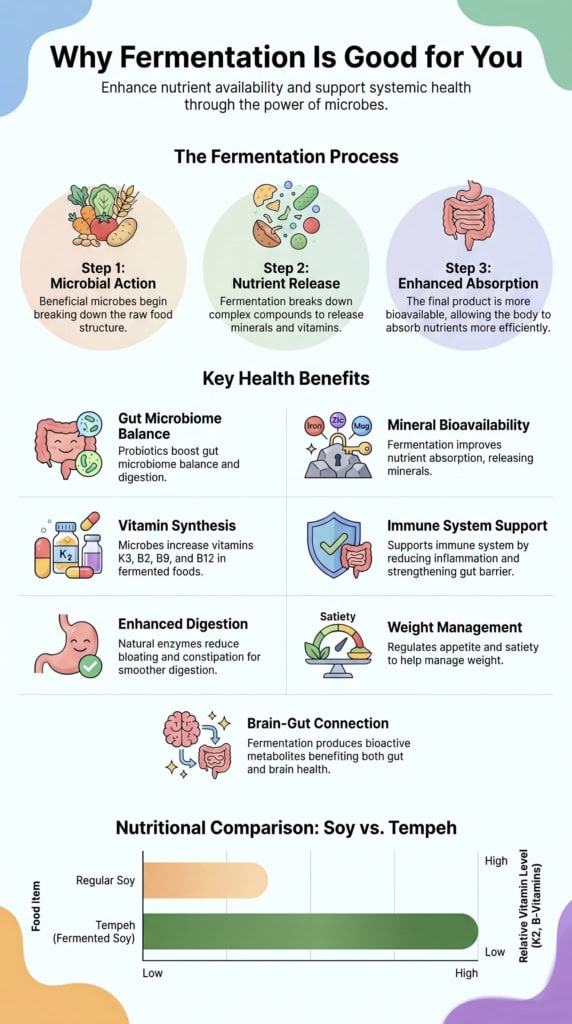
Here’s the basic idea. When food ferments, friendly microbes and natural enzymes get to work. They sort of “pre-digest” the food, breaking it down so your body has less work to do. This means you get more of the good stuff from what you eat. This natural breakdown is what makes tempeh fermentation so effective at improving texture, digestibility, and nutrient availability.
Science backs this up too, studies show fermented foods can help with digestion and support all the tiny organisms living in your gut. A healthier gut seems to lead to a stronger immune system and less overall inflammation.
From our own kitchen to yours, here’s what we consistently see:
- It helps keep your gut’s microbial community diverse and balanced.
- It makes digestion smoother because of those natural enzymes.
- It supports your body’s defenses and helps manage inflammation.
- It helps your body pull more nutrients out of the food you eat every day.
That’s the core of it. It’s a simple process with a bunch of connected benefits, which is why it’s more than just a trend, it’s a useful tool for feeling better.
Fermentation Improves Gut Health
We tried it on ourselves first. Eating fermented foods every day made a real difference. Stuff that used to make us feel bloated or sluggish just didn’t anymore. Digestion got easier.
The science checks out. Places like Harvard Health point out that fermented foods bring in good bacteria, with names like Lactobacillus and Bifidobacterium.
These guys help keep your gut’s environment stable. Other studies show people with digestive problems, like IBS, often see their bloating and irregularity get better.
Here’s basically how it helps:
- It adds helpful bacteria to your gut.
- It makes the mix of bacteria in your gut more diverse, which is good.
- The process makes short-chain fatty acids, which are like food for your gut lining.
- It helps strengthen your gut’s natural wall, so you get less irritation.
For us, the result is simple. Your gut just feels normal. Not upset, not noisy, just quietly doing its job. That calm, consistent feeling was our first clue this stuff actually works.
Fermentation Increases Nutrient Absorption
We look at fermentation differently. It’s not just about digestion; it’s about unlocking the food you’re already eating.
Some foods contain natural compounds, like phytic acid, that can lock away minerals so your body can’t use them. Fermentation breaks that lock.
Research, including studies in NIH databases, confirms this. The process significantly cuts down on phytic acid, freeing up minerals like iron, zinc, and magnesium for your body to absorb.
We see this directly in our work with tempeh. Understanding how tempeh fermentation works helps explain why fermented soy becomes easier for the body to absorb and utilize. When you compare regular soy to fermented soy (tempeh), the difference is clear.
The fermented version gives you more usable protein and makes the nutrients inside it more available. Your body doesn’t have to work as hard to get the good stuff.
Here’s a breakdown of what’s happening:
- It breaks down phytic acid, which normally blocks mineral absorption.
- This improves your body’s uptake of key minerals, zinc, iron, and magnesium.
- It boosts the activity of natural digestive enzymes, making food breakdown more efficient.
- It supports better protein digestion and makes amino acids more accessible.
We use this principle every day. In our tempeh, fermentation does the work naturally. We don’t need to add synthetic vitamins back in because the process itself makes the nutrients ready for your body.
The result is a meal that leaves you feeling properly full and energized, not just stuffed. That post-meal feeling is how we know it’s working.
Fermentation Enhances Vitamins and Bioactive Compounds
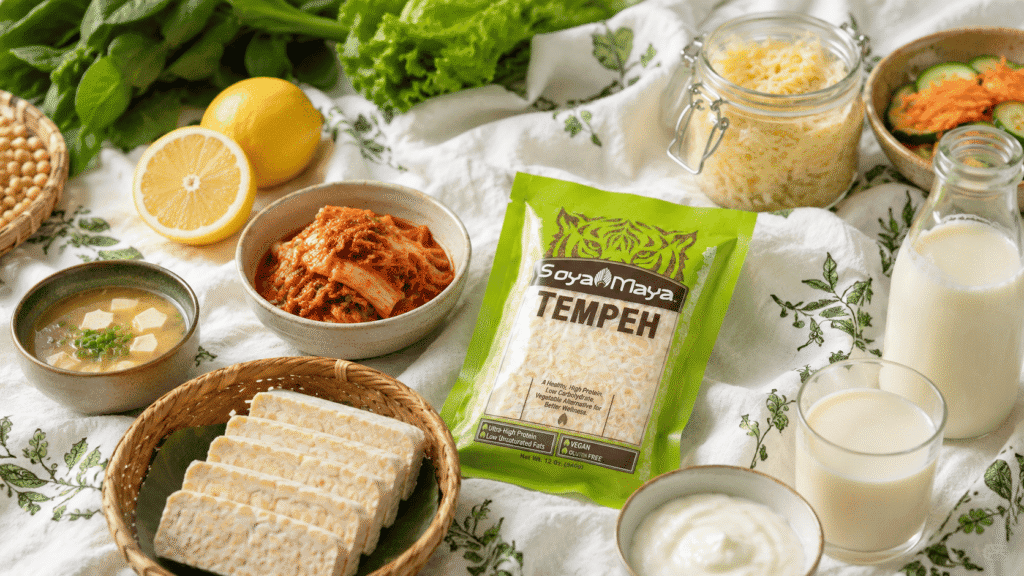
Yes, fermentation boosts vitamins and antioxidants. It’s not just about keeping food from spoiling; the microbes themselves are busy making new nutrients.
Take BBC Good Food’s report: fermentation ramps up vitamin B production (like B2 and folate) and kicks vitamin K2 levels higher. That K2 is a big deal for your heart and bones.
Research from PubMed shows
“Findings confirm that certain microorganisms can increase the levels of vitamins K2, B2, B9, and B12 in FF. Evidence of bioavailability and physiological effects is reported. Notably vitamin K2 status was effectively improved in several studies on natto (fermented soy).” – PubMed
We’ve watched it happen in our own fermented soy. The process pumps up the isoflavones and other antioxidant stuff, which helps your body fight off inflammation.
Here’s what gets better:
- More B vitamins, which help your body use energy.
- More vitamin K2, good for your heart.
- Better antioxidant compounds, which protect your cells.
- More postbiotics, those are the helpful things the microbes make as they work.
Some people call this “natural fortification.” We just call it food, finally becoming what it was meant to be.
Fermented Foods Support the Immune System
Our team’s experience with fermented foods has been straightforward-we feel better when we eat them regularly. It’s less about the hype and more about the actual results.
The science backs this up. About 70% of our immune system is connected to the gut. If the gut isn’t happy, the whole system feels off.
A 10-week study from Cedars-Sinai showed people eating fermented foods had lower levels of 19 different inflammatory proteins. One of those, interleukin-6, is a major marker for inflammation.
As noted by Foods Journal
“Their bioactive metabolites contribute to improved gut barrier function, modulation of immune responses, and overall metabolic health.” – Foods Journal
We’ve seen the difference ourselves. On weeks when kimchi, sauerkraut, or kefir are part of our meals, digestive issues are less frequent. Energy levels feel more consistent, without the usual afternoon crashes.
Here’s what we think is happening based on the research and our own observations:
- The gut sends better signals to the immune system.
- Natural antimicrobials in fermented foods help keep bad bacteria in check.
- The gut lining gets stronger, which means fewer “leaks” that trigger immune stress.
- It supports an overall eating pattern that keeps immunity running smoothly.
The process isn’t flashy. You won’t feel a dramatic shift overnight. But over time, these foods quietly help the body handle daily stress and outside threats more effectively. It’s a slow, steady build, not a quick fix.
Fermented Foods Are Easier to Digest
Here’s the practical side of fermentation: it breaks down food for you. Proteins and carbs get partially broken down before they even hit your stomach. Think of it as a head start for your digestive system.
We noticed this “pre-digestion” effect pretty fast. Heavy meals, especially ones with a lot of protein, just sat better. There was less of that sluggish, heavy feeling afterwards.
Healthline reports this happens because the fermentation process turns complex nutrients into simpler forms the body can use more easily.
| Food Type | Regular Version | Fermented Version Benefit |
| Soybeans | Harder to digest for some people. | Tempeh is easier to tolerate and digest. |
| Milk | Lactose may cause digestive discomfort. | Yogurt and kefir contain cultures that break down lactose. |
| Vegetables | Fiber can sometimes feel heavy. | Fermented vegetables may feel lighter on digestion. |
| Carbohydrates | Faster blood sugar spikes after meals. | Fermented foods may support steadier blood sugar response. |
| Protein-rich Meals | Can leave a heavy feeling after eating. | Fermentation helps break proteins into simpler forms. |
A few examples from our own kitchen and the research:
- Lactose in yogurt and kefir becomes easier to handle. The live cultures do the work your gut sometimes struggles with.
- Fermented soy, like tempeh, is often better tolerated than plain soybeans. The texture and taste change, and so does how your body accepts it.
- We saw less bloating. Things just seemed to move through more smoothly, which can relieve constipation.
- Blood sugar spikes leveled out. Foods that might normally cause a quick rise and crash had a milder effect, which is good for insulin sensitivity.
This all ties into weight management, but in a simple way. When you digest food well and feel comfortably full, you’re less likely to overeat or snack out of discomfort. It’s not a magic trick, it’s just your body working the way it should, with less hassle.
Fermentation Supports Mental Health
The idea that what you eat can change how you feel isn’t just a hunch anymore. Some of the live bacteria in fermented foods seem to talk directly to your brain.
This “gut-brain axis” is a real connection. Think of it as a two-way street between your stomach and your head. The mix of bacteria living in your gut can actually change the levels of chemicals in your brain that affect your mood.
Research from PubMed Central points to specific strains, like Lactobacillus helveticus, that are tied to better mood and less anxiety in studies.
For us, the changes weren’t dramatic, but they were noticeable. When our digestion was smooth, our minds felt clearer. We had fewer of those afternoon mental crashes during busy work periods. It felt like a background hum of stress had been turned down.
Here’s what the science suggests is happening:
- The microbes send signals up to the brain that can support its function.
- They produce substances (short-chain fatty acids) that are like fuel for brain health.
- They help maintain the pathways that link gut health to mental health.
- A balanced gut environment seems to dial down the body’s overall stress reaction.
The research here is still new, and it’s not a cure-all. But the link between a healthy gut and a steadier mood is getting harder to dismiss. It’s one more reason to pay attention to what’s on your plate.
Heart Health and Weight Benefits of Fermentation
The benefits of fermented foods seem to reach your heart and waistline, too. It’s not an overnight transformation, but a slow, steady shift.
BBC Good Food reviewed studies showing these foods can help with cholesterol and overall heart health.
Our own experience lined up with this. We found our appetite was just… simpler. A meal that included something fermented, like a side of sauerkraut or a glass of kefir, left us feeling properly full. That constant urge to reach for a snack between meals faded.
Looking at the research, a few key areas stand out:
- Blood sugar control gets better. Your body handles sugars from food more smoothly, which is good for insulin sensitivity.
- It supports weight management, mostly by helping regulate appetite. You feel satisfied with less.
- Some studies show a drop in “bad” LDL cholesterol. This is a direct plus for cardiovascular health.
- General metabolic health markers often improve over time. Things like blood pressure and triglycerides can move in a healthier direction.
You won’t see these changes in a week. They’re the result of making these foods a regular part of how you eat, not a temporary fix. The effects build up quietly, which is exactly what makes them sustainable.
Safety of Regular Fermented Food Consumption

Yes, fermented foods are generally safe when you handle them right. But we’ve all heard the horror stories-a batch goes wrong, and suddenly you’re dealing with more than just a funky smell.
Food safety is the absolute foundation of what we do at SoyaMaya. We don’t mess around with it.
We lean on solid science, like the guidelines from the National Collaborating Centre for Environmental Health. They’re clear: control your pH, manage salt levels, and nail your storage conditions. That’s the baseline.
Our daily checklist is built on a few non-negotiables:
- Getting the acidity (pH) exactly right to block bad bacteria
- Obsessive cleanliness in every step of prep
- Watching the clock and the thermometer during fermentation
- Tossing anything that smells or looks even slightly off
This isn’t just theory for us. We’ve learned from our own mistakes over the years, a batch that fermented too fast in a hot kitchen, a lid that wasn’t quite clean.
Those experiences taught us that consistency in process is everything. Careful fermentation control, clean ingredients, and stable temperatures are also what make tempeh high quality in both safety and texture. You can’t get lazy, not even once.
So when we make SoyaMaya, we treat every jar with the same strict routine. We know people are putting this in their bodies, and that’s a responsibility we take seriously. Safe fermentation isn’t an accident; it’s the result of paying very close attention, every single time.
Dietary Guidelines and Fermented Foods
We’re seeing a real change in how people think about food. The new dietary guidelines are a perfect example. They’re telling people to eat more fermented foods.
The USDA’s 2025-2030 advice is clear. It lists kimchi, kefir, and sauerkraut as good choices for a healthy diet. The focus is on whole foods, not things from a factory. This isn’t just a small update. It’s a major shift.
People are moving away from processed snacks and meals. They want food that does more than just fill them up. They want food that actually helps their body.
So what’s the advice? It’s simple. Eat fermented foods regularly. Your gut will thank you. Choose preservation methods that are natural. Let your diet help fix your gut health. Always pick foods that are minimally processed and full of nutrients.
Honestly, this feels like common sense finally getting a microphone. The research has been growing for years, showing how good these foods are. It’s not a trend.
It’s a return to how food should be. We see this every day in our work. Making food the slow, careful way isn’t just tradition. It’s the right way to do it. Science is just catching up.
FAQ
How do probiotics improve gut health naturally?
Probiotics help increase beneficial bacteria in the digestive system, which supports gut microbiome balance and stronger digestive health. These good bacteria help maintain gut flora balance, improve intestinal health, and support smoother digestion.
Regular consumption of fermented foods may also reduce bloating and improve digestion support. Many people notice fewer digestive discomforts after adding probiotic-rich foods to their daily diet consistently.
Why are fermented foods helpful for digestion support?
Fermented foods support digestion because microbial fermentation creates digestive enzymes, lactic acid bacteria, and postbiotics that help break down food more effectively. This process improves nutrient absorption and increases bioavailability, allowing the body to use nutrients more efficiently.
Fermentation also helps reduce anti nutrients that can block mineral absorption. Many fermented foods support digestive wellness by helping reduce constipation, bloating, and occasional digestive discomfort.
Can fermented foods strengthen the immune system?
Fermented foods can support immune system health by improving gut barrier function and increasing microbiota diversity. A healthy gut microbiome plays an important role in immune resilience because much of the immune system is connected to digestive health.
Fermented foods also contain antimicrobial compounds and antioxidant activity that support inflammation reduction. Regular consumption of immune boosting foods may help the body maintain better overall digestive and immune balance.
Do fermented foods support weight management and metabolic health?
Fermented foods may support weight management by improving satiety, appetite regulation, and metabolic health. Some fermented foods help support blood sugar control and insulin sensitivity, which can help stabilize energy levels and reduce unnecessary snacking.
Fermentation also supports the gut brain axis, which influences hunger and digestion. Combined with balanced eating habits, fermented diet benefits may contribute to healthier digestion and long-term weight loss support.
How does fermentation improve nutrient absorption in foods?
Fermentation improves nutrient absorption by increasing enzyme activity and breaking nutrients into simpler forms that the body can absorb more easily. This process improves bioavailability, mineral absorption, and vitamin synthesis in fermented foods.
Certain fermented foods naturally produce vitamin B compounds and vitamin K2 during fermentation. Fermented soy benefits and other traditional fermented foods may also support microbiome restoration, digestive wellness, and overall gut health through better nutrient absorption.
Why Fermented Foods Deserve a Place in Your Daily Routine
Digestive issues can leave you feeling heavy and drained, even when you eat well. Fermentation helps break food down more easily, improving nutrient absorption while reducing bloating and discomfort after meals. Adding fermented foods to your routine does not have to be complicated. SoyaMaya tempeh offers a simple, nutritious way to support gut health and everyday wellness through meals you already enjoy.
References
- https://pubmed.ncbi.nlm.nih.gov/41127087/
- https://pubmed.ncbi.nlm.nih.gov/40647113/
Related Articles
- https://mayasaritempeh.com/understanding-tempeh-fermentation/
- https://mayasaritempeh.com/how-does-tempeh-fermentation-work/
- https://mayasaritempeh.com/what-makes-tempeh-high-quality/
SoyaMaya Fresh Tempeh
Traditionally fermented, no preservatives, shipped fresh and frozen to your door. The real deal, direct from us.
