
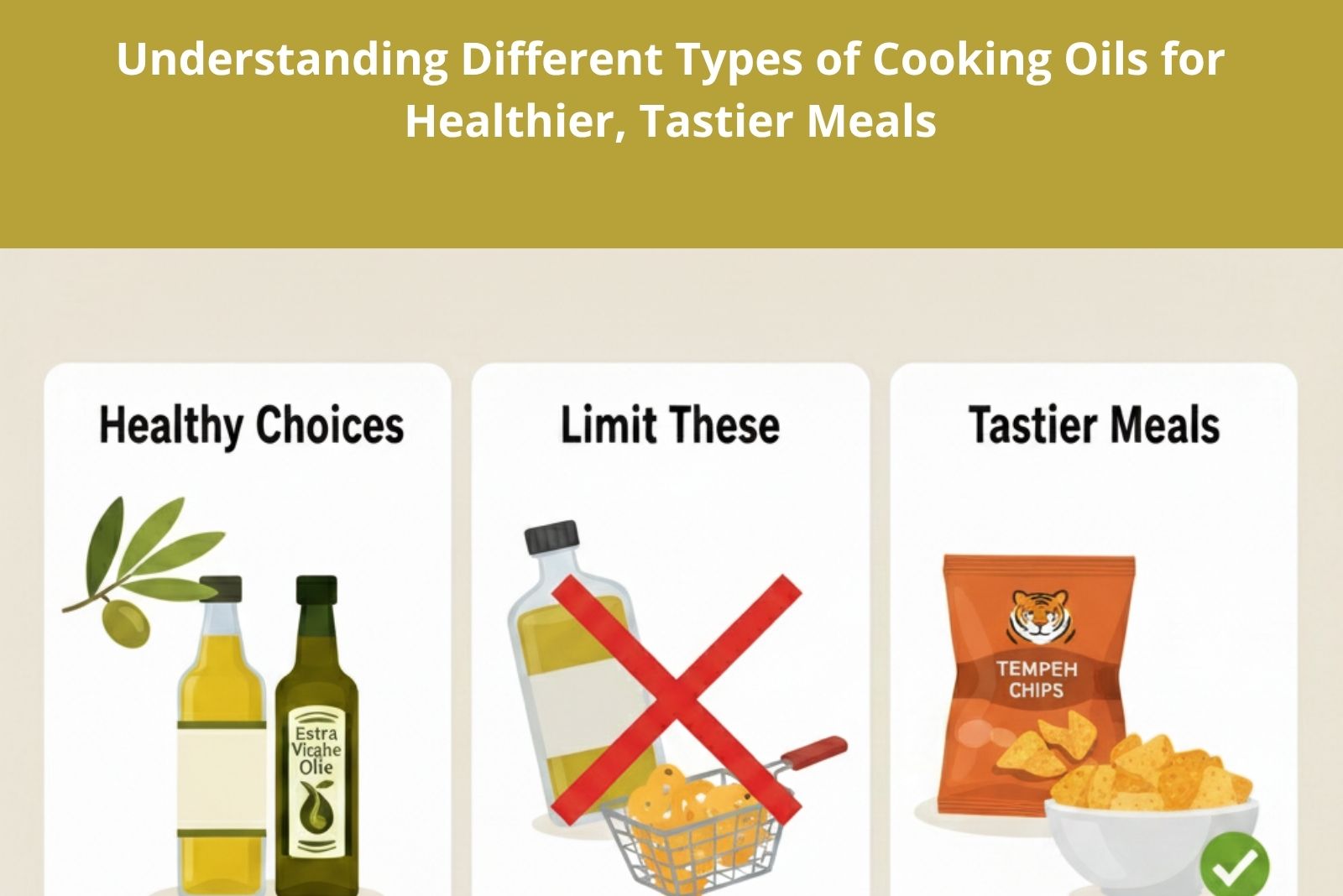
When it comes to cooking oils, there’s more to consider than just grabbing the first bottle off the shelf. We often find ourselves wondering which oil suits roasting, frying, or salad dressings, and which oils bring the best health perks.
The truth is, each oil carries its own unique smoke point, flavor, fat content, and nutritional profile that can make or break your dish,and your health.
At SoyaMaya, we’ve spent years experimenting with various oils alongside our fresh frozen tempeh and protein chips, learning what works best for different meals and why it matters. Keep reading to get a clear picture of understanding different types of cooking oils
Soya Maya Fresh Tempeh is made the traditional way — no preservatives, no shortcuts. Delivered to your door.
Order Fresh Tempeh →Key Takeaway
- Cooking oil smoke points affect what heat methods you should use them for.
- Fat composition,saturated, monounsaturated, polyunsaturated,impacts health benefits.
- Flavor profiles and oil processing matter for taste and nutrition in your dishes.
What Makes Cooking Oils Different?
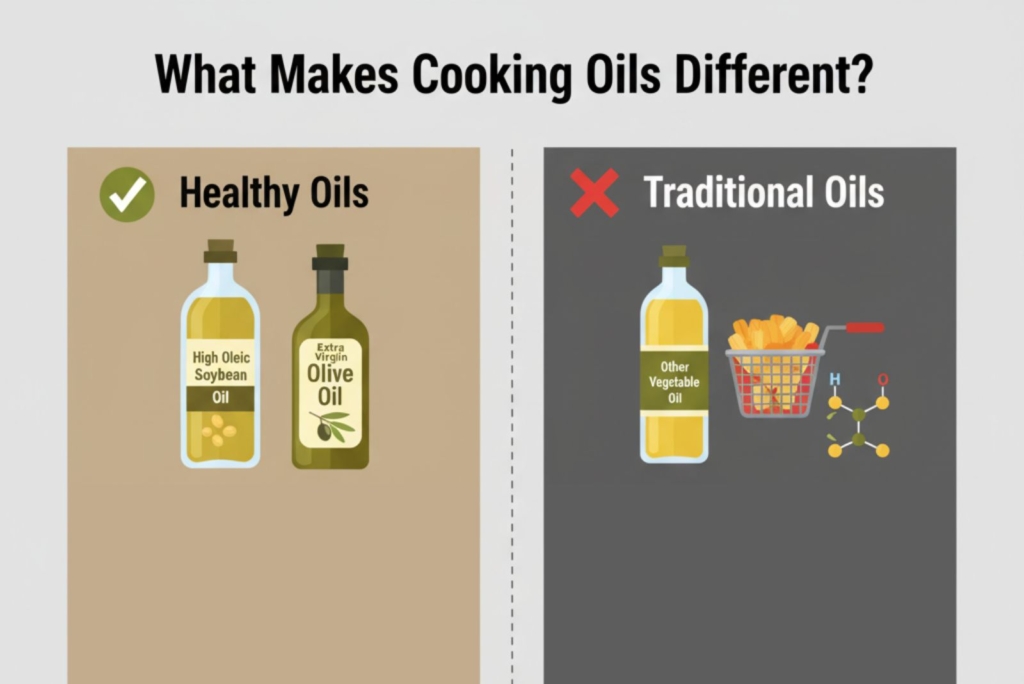
The world of cooking oils might seem simple, but it’s a lot like picking the right tool for a job. You wouldn’t use a screwdriver to hammer a nail,same goes for oils. Their smoke points, flavors, and fat types guide how best to use them.
Extra virgin olive oil, for example, is rich in monounsaturated fats and antioxidants. It has a peppery, robust flavor that shines in salad dressings or low-heat cooking.
But try frying at high heat with it, and you might burn off those precious nutrients and create unhealthy compounds.
- Smoke point: Around 375°F, not great for deep frying
- Flavor: Fruity, peppery
- Best uses: Dressings, drizzling, light sautéing
On the other hand, avocado oil offers a high smoke point,up to 520°F,and a mild buttery flavor that stands up well to grilling or roasting. It packs heart-healthy monounsaturated fats and vitamin E, making it a versatile choice for many cooking styles.
We’ve found that keeping a few different oils around lets us match flavor and cooking method perfectly. One oil just can’t do it all.
Exploring Popular Cooking Oils and Their Uses
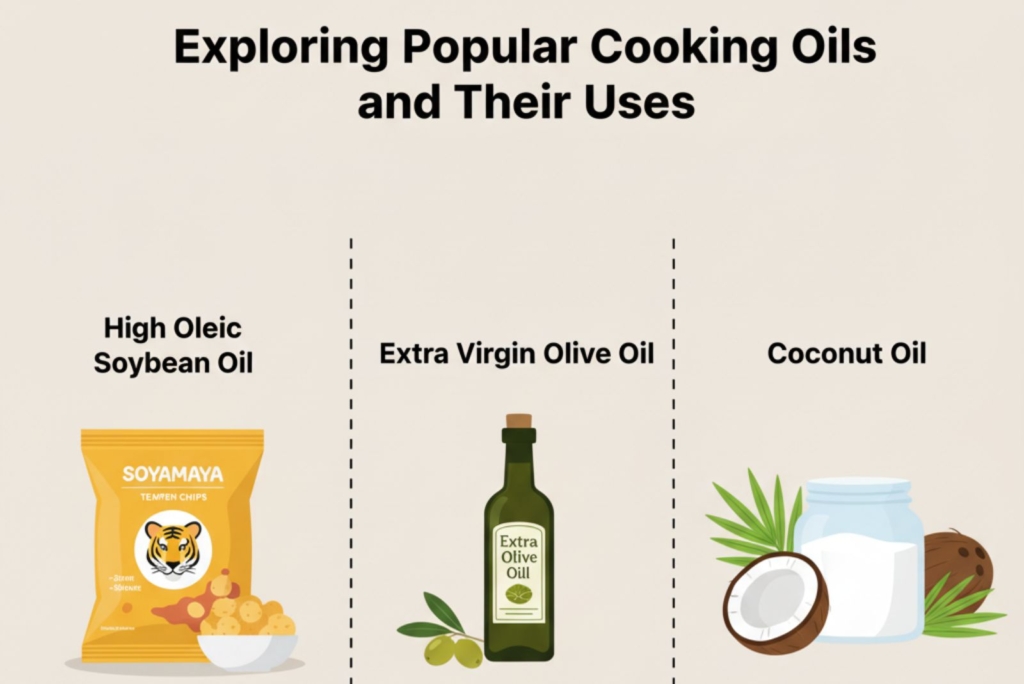
There’s a lot of talk about saturated versus unsaturated fats and how each impacts health. Coconut oil, for instance, is high in saturated fats, especially medium-chain triglycerides (MCTs), which some studies suggest may offer unique energy benefits.
It’s solid at room temperature and has a distinct coconut flavor, great for baking or vegan dishes where that taste fits.
Canola oil is another kitchen staple. It’s neutral in flavor with a smoke point around 430°F, making it practical for frying, baking, and sautéing. Plus, it has a balanced omega-3 and omega-6 fatty acid profile that suits everyday cooking needs.
Sunflower oil, especially the high-oleic type, is light and neutral too, with a high smoke point around 450–510°F. That makes it a good choice for frying and roasting, especially if you want an oil that won’t overpower your food’s flavor.
- Peanut oil: Mild nutty flavor, smoke point ~450°F, good for deep frying
- Sesame oil: Strong flavor, usually used as a finishing oil rather than for cooking
- Vegetable oils: Often blends or refined oils with neutral flavor and smoke points ~400-455°F
We often rotate between these oils depending on the recipe and desired taste. For example, those nutty notes of peanut oil pair beautifully with stir-fries, while sunflower oil handles high heat roasting without fuss.
Processing, Shelf Life, and Storage
Cold-pressed or virgin oils retain more nutrients and flavor but tend to have lower smoke points and shorter shelf lives. Refined oils undergo more processing, making them more stable for cooking at higher temps, but often at the expense of flavor and some antioxidants.
Oil oxidation and rancidity are real concerns, especially if oils sit open or exposed to heat and light. We keep our oils in dark, cool places and use them within a few months after opening to maintain freshness (1).
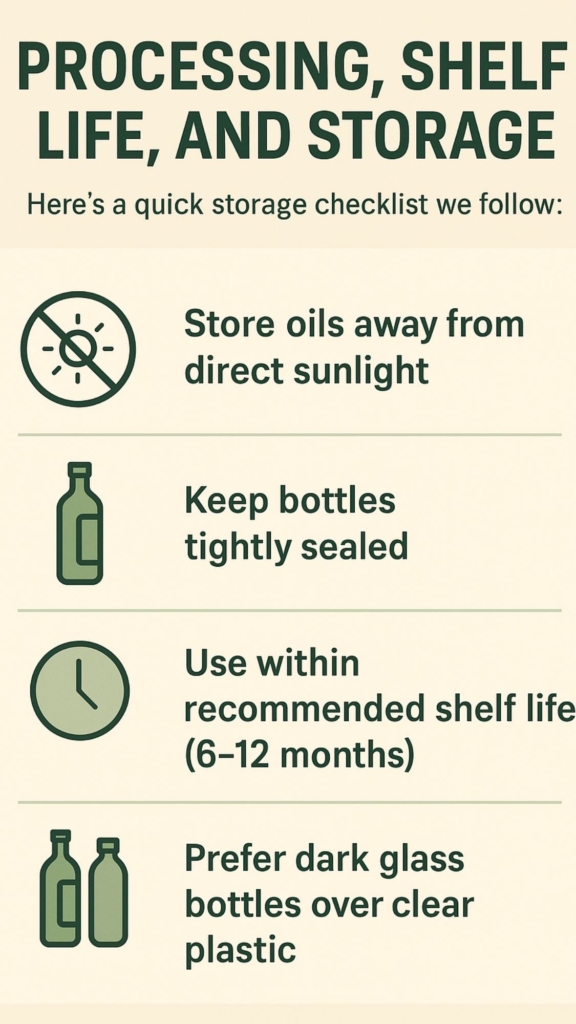
Here’s a quick storage checklist we follow:
- Store oils away from direct sunlight
- Keep bottles tightly sealed
- Use within recommended shelf life (usually 6-12 months)
- Prefer dark glass bottles over clear plastic
These little habits preserve oil quality, ensuring you get both the flavor and health benefits you expect.
Fatty Acids and Health Impact
Oils are mostly made of fats, but not all fats are created equal. Monounsaturated fats (like those in olive and avocado oils) are generally considered heart-healthy.
Polyunsaturated fats (found in sunflower and canola oils) include essential omega-3 and omega-6 fatty acids but can be prone to oxidation if overheated.
Saturated fats, as in coconut oil, are more stable for cooking but have a mixed reputation in health discussions. Trans fats, mostly found in industrially hydrogenated oils, are best avoided.
We like to think of cooking oils as a spectrum where balancing types is key. Using a variety of oils with different fatty acid compositions helps us enjoy both flavor and nutrition without overdoing any one type.
Flavor Profiles and Culinary Applications
Source: Ethan Chlebowski
The oil you choose also affects the taste and aroma of your food. Sesame oil, for example, offers a toasty, nutty flavor perfect for finishing Asian dishes but would overpower delicate salads if used excessively.
Light olive oil has a neutral profile suited for roasting or frying when you don’t want strong olive notes. Meanwhile, extra virgin olive oil’s peppery kick is ideal for dipping bread or drizzling over grilled veggies (2).
We’ve learned that pairing oil flavor with food type can elevate a dish. A simple salad becomes memorable with bright extra virgin olive oil, while a hearty stir-fry benefits from the mild nuttiness of peanut oil.
Why SoyaMaya Cares About Cooking Oils
At SoyaMaya, we believe that quality ingredients make all the difference. Our Fresh Frozen Tempeh and Protein Tempeh Chips pair beautifully with a variety of cooking oils.
We’ve found that keeping a few different oils around lets us match flavor and cooking method perfectly, and learning who benefits from high-oleic foods also helps us choose oils with better nutrition.
Plus, sourcing ingredients sustainably and locally,just like we do with our soybeans,means we care about what goes into our food and how it’s made. When you cook with intention, from the oil to the main ingredient, the results can be pretty satisfying.
FAQs
What is the difference between extra virgin olive oil and light olive oil?
Extra virgin olive oil is made from the first cold pressing of olives, preserving strong flavor and antioxidants. It has a lower smoke point (~375°F), making it best for dressings or low-heat cooking.
Light olive oil is more refined, with a milder flavor and higher smoke point (~465°F), suitable for frying and roasting.
While extra virgin offers more health benefits, light olive oil works better for cooking methods requiring higher heat without burning.
Why is smoke point important when choosing cooking oils?
Smoke point is the temperature at which an oil breaks down and starts producing smoke and harmful compounds. Cooking above this point can ruin flavor and create toxins. Oils with high smoke points, like avocado and refined canola oil, are good for frying or roasting.
Lower smoke point oils, such as extra virgin olive oil, are better for dressings or gentle sautéing. Knowing smoke points helps you avoid burnt flavors and keeps your food healthier.
Are saturated fats in coconut oil unhealthy?
Coconut oil is high in saturated fats, especially medium-chain triglycerides (MCTs), which behave differently from other saturated fats. Some research suggests MCTs may boost energy and metabolism.
However, saturated fats can raise LDL cholesterol, so moderation is key. Using coconut oil occasionally for baking or vegan dishes is fine, but balancing it with monounsaturated fats like olive or avocado oil supports overall heart health better.
How do cold pressed oils differ from refined oils?
Cold pressed oils are extracted mechanically without heat, preserving natural flavors, nutrients, and antioxidants. They tend to have stronger taste and lower smoke points.
Refined oils undergo processing to remove impurities, resulting in neutral flavor, higher smoke points, and longer shelf life. While refined oils are practical for high-heat cooking, cold pressed oils offer more flavor and nutritional benefits, making them ideal for dressings or low-heat applications.
What are the benefits of monounsaturated fats in cooking oils?
Monounsaturated fats, found in olive and avocado oils, support heart health by reducing bad cholesterol and inflammation. They’re stable enough for most cooking methods and add pleasant flavors.
These fats also promote nutrient absorption and provide vitamin E. Choosing oils rich in monounsaturated fats helps balance your diet while enhancing your dishes’ taste and texture, making them a smart choice for everyday cooking.
Can I use peanut oil for deep frying?
Yes, peanut oil is excellent for deep frying due to its high smoke point (~450°F) and mild nutty flavor. It withstands high temperatures without breaking down, which keeps fried foods crispy and tasty.
Refined peanut oil is preferred for frying, while unrefined versions suit low-heat cooking or dressings. Just be mindful if you have peanut allergies, as even refined oil may cause reactions in sensitive individuals.
How does oil oxidation affect cooking oil quality?
Oxidation happens when oils react with oxygen, especially under heat, light, or air exposure. This process causes rancidity, off-flavors, and loss of nutrients. Polyunsaturated fats like those in sunflower oil are more prone to oxidation.
Proper storage, cool, dark places with sealed containers, slows oxidation. Using fresh oils and avoiding overheating during cooking also helps maintain oil quality and keeps your food tasting fresh and healthy.
What oils are best for salad dressings?
For salad dressings, oils with rich flavor and nutritional benefits work best. Extra virgin olive oil is a top pick, offering a fruity, peppery taste and antioxidants. Walnut oil adds a subtle nutty note, while avocado oil provides creaminess with mild flavor.
These oils are usually used raw, so cold pressed versions retain their nutrients and flavor, making salads more vibrant and healthful.
How long can cooking oils be stored before going bad?
Most cooking oils last between 6 to 12 months unopened, depending on type and processing. Once opened, it’s best to use them within 3 to 6 months. Oils rich in polyunsaturated fats spoil faster.
Storing oils in cool, dark places with tight lids extends freshness. We keep an eye on smell and taste—if an oil smells sour or tastes off, it’s time to replace it to avoid rancid flavors in your cooking.
Are vegetable oils better than animal fats for cooking?
Vegetable oils like canola, sunflower, and olive oil generally contain more unsaturated fats, which support heart health better than most animal fats. Animal fats, including butter and lard, have higher saturated fat content and distinct flavors, useful in certain recipes.
Each has different smoke points and culinary uses. Balancing both types, while prioritizing quality vegetable oils, creates flavorful, healthier meals that suit a variety of cooking needs.
Wrapping Up: Benefits of Knowing Your Cooking Oils
Choosing the right cooking oil isn’t just about flavor or heat tolerance. It’s about understanding how fat types affect health, how processing impacts nutrition, and how storage preserves quality.
With these insights, you can confidently pick oils that suit your cooking style, support your wellbeing, and bring out the best in your meals.
We encourage you to try a few oils that complement our SoyaMaya products. Whether you’re pan-frying our Fresh Frozen Tempeh or crafting a salad with our protein chips, the right oil can make all the difference.
Cooking oils shape the flavor, texture, and health impact of your meals. Understanding their types, uses, and benefits helps you cook smarter and eat better.
At SoyaMaya, we’re here to support your kitchen adventures with wholesome ingredients and a passion for good food. we’re here to support your kitchen adventures with wholesome ingredients and a passion for good food.
Visit SoyaMaya shop to explore our fresh tempeh and chips. Pair them with your favorite cooking oils and taste the difference of thoughtful cooking.
References
- https://medium.com/beyond-organic-beyond-extra-virgin/olive-oil-keep-in-a-cool-dark-place-really-953fe4c53aad
- https://medium.com/@faizan_ali/extra-virgin-olive-oil-9c9cf18dda89
Related Articles
- https://mayasaritempeh.com/benefits-of-high-oleic-soybeans/
- https://mayasaritempeh.com/are-high-oleic-oils-trans-fat-free/
- https://mayasaritempeh.com/who-benefits-from-high-oleic-foods/
Soya Maya Fresh Tempeh
Traditionally fermented, no preservatives, shipped fresh and frozen to your door. The real deal, direct from us.
