
You want a snack that’s actually good for you and still tastes great, so here’s one that checks both boxes: tempeh chips. They’re thin, crunchy, rich in flavor, and made from whole fermented soybeans instead of random additives you can’t pronounce. Since tempeh naturally packs protein, fiber, and probiotics, these chips don’t just sit in your stomach, they actually help keep you steady and satisfied. You can bake them from a simple tempeh block, season them any way you like, and fit them into busy days. Want to see how to make them work in real life? Keep reading.
Key Takeaways
- Tempeh chips offer a complete plant-based protein, making them ideal for muscle support and satiety.
- The fermentation process enhances nutrient absorption and provides gut-friendly benefits.
- They are a versatile, gluten-free snack that can be easily made at home or found ready-to-eat.
What Are Tempeh Chips? Fermented Soy With a Crunch
The first bite of a tempeh chip usually surprises people. It looks like a chip, sure, but the flavor runs deeper, almost like toasted nuts with a gentle earthiness behind it.
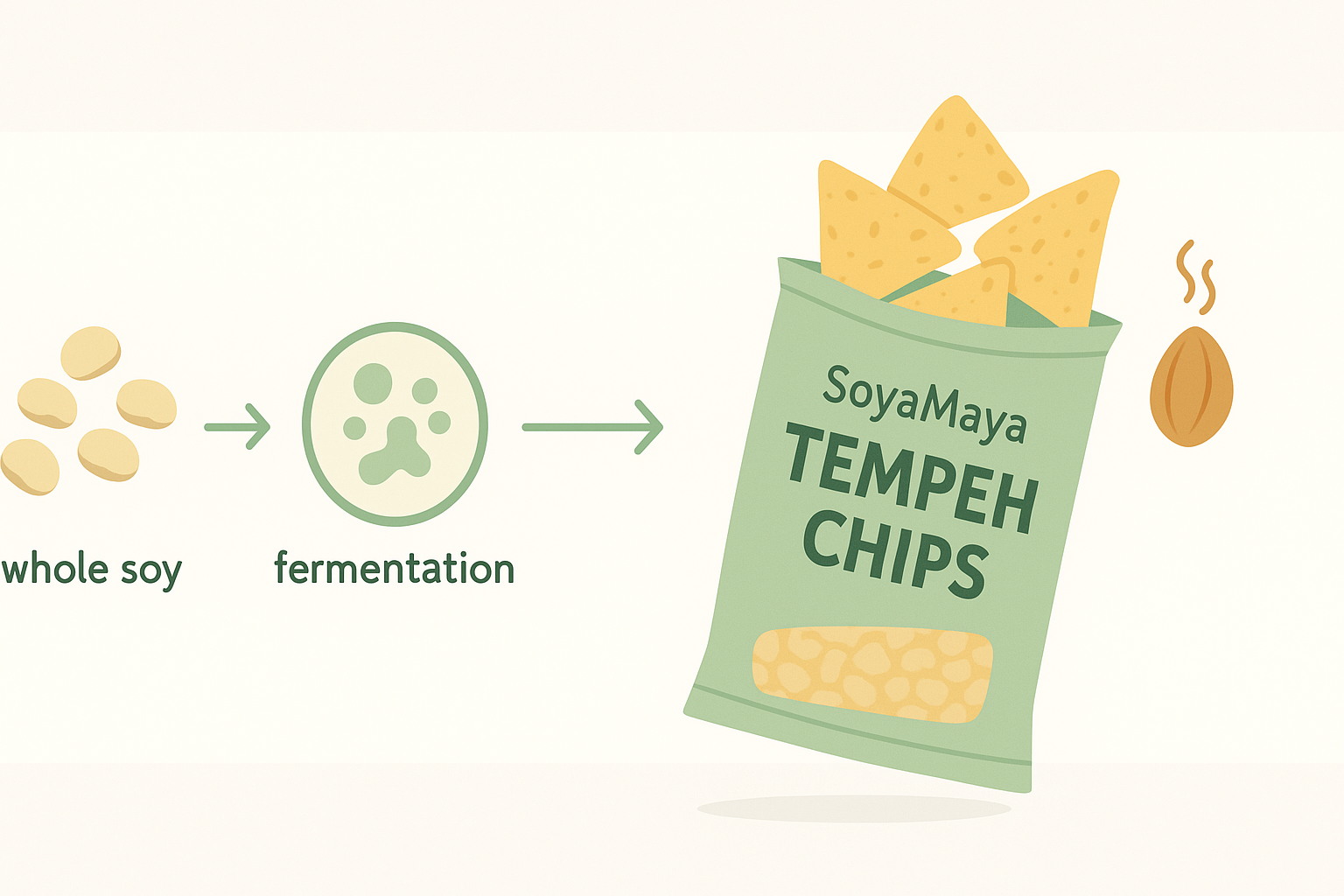
At its core, a tempeh chip is just a thin slice of tempeh, baked or air-fried until crisp, a simple transformation that turns fermented soybeans into plant-based tempeh chips that highlight the whole-food structure behind them. These chips are made from tempeh crafted from organic soybeans grown on Indiana farms, whole beans, not isolates or powders, following a traditional Indonesian fermentation method.
Soya Maya Tempeh Protein Chips — 100% plant-based, high protein, no artificial additives. Ships to your door.
Get Your Chips →A natural culture called Rhizopus oligosporus grows through the beans and binds them into a firm cake. That white, fuzzy network you sometimes see on fresh tempeh? That’s the mycelium from the culture doing its work. This fermentation is what changes everything.
During fermentation, enzymes from the culture break down complex soybean compounds. You can think of it as a kind of gentle pre-digestion.
- Dense proteins get broken into smaller units, so your body can absorb them more easily.
- Anti-nutrients that can block minerals like iron and zinc are reduced.
- Natural flavors deepen, shifting from plain bean to nutty, savory, and slightly mushroomy.
So when we slice that fermented cake thin and bake or air-fry it, you’re not just getting crunch. You’re getting a snack made from a living food that’s already been transformed.
Tempeh chips are:
- Made from fermented, whole soybeans
- Easier to digest because fermentation increases protein availability
- Formed into a firm, sliceable cake that crisps beautifully into chips
- Rich in natural umami, so they don’t need heavy flavor masking
Instead of being just another salty bite, they carry the quiet power of a traditional food shaped into a modern snack.
The Nutritional Powerhouse: Why Tempeh Chips Stand Out
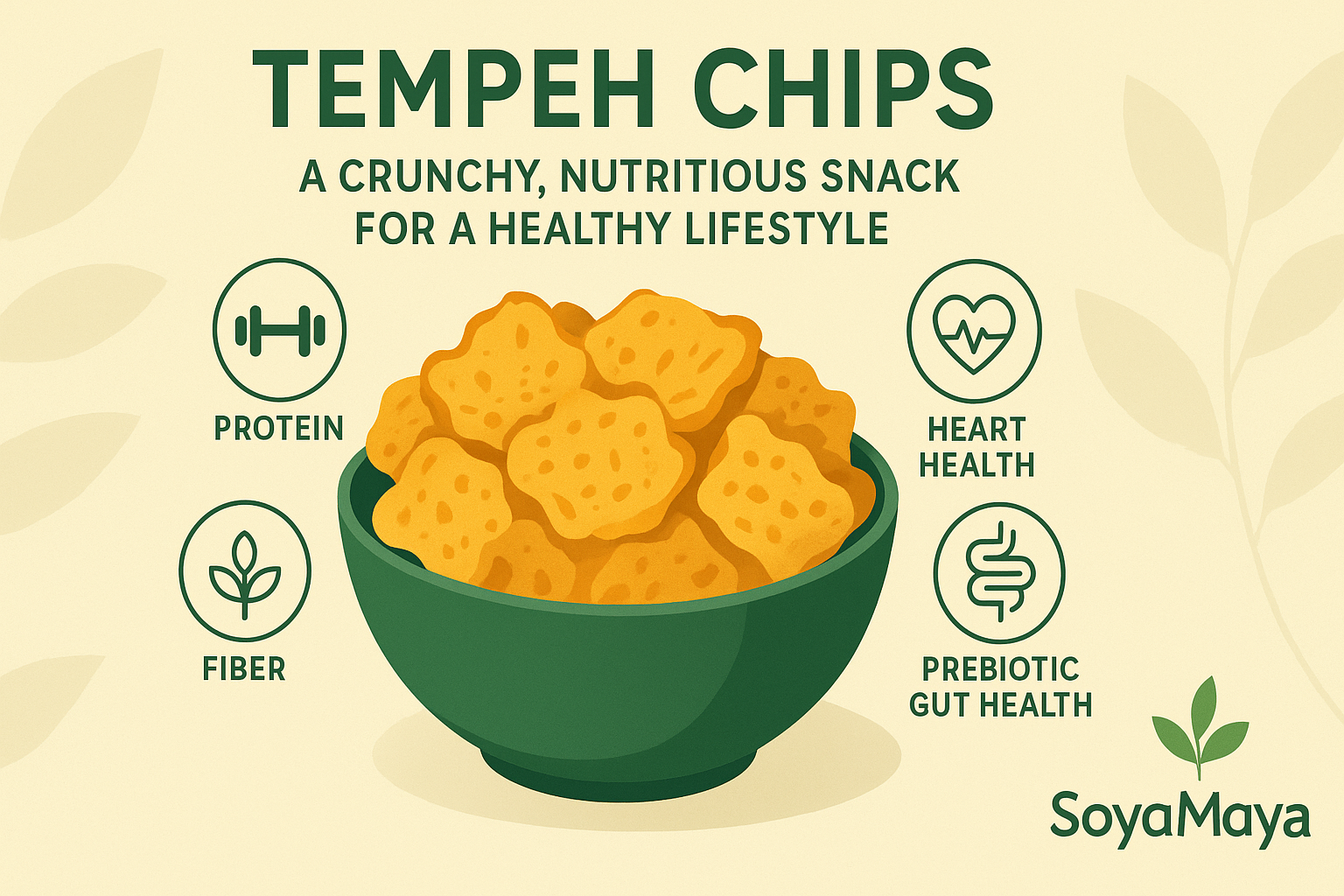
![“[Tempeh Chips: A Crunchy, Nutritious Snack for a Healthy Lifestyle] Infographic highlighting the benefits of tempeh chips.”](https://mayasaritempeh.com/wp-content/uploads/2025/12/image.png)
When you look past the crunch and check the numbers, tempeh chips start to look a lot more like a mini-meal than a casual snack:
- For 100 g of (plain) Tempeh, you typically get about ~192–195 calories.
- Protein is substantial: ~20–20.3 grams per 100 g.
- Fat content is ~10.8–11 grams, with a mix of healthy fats.
- Carbohydrates are relatively low: ~7.6–9.4 grams per 100 g.
- Regarding fiber: though many databases for plain tempeh don’t always list fiber, some sources for tempeh (especially fermented/less-refined or specially processed) indicate fiber around 3.7 g per 100 g. [1]
- On top of macronutrients, tempeh also delivers a variety of minerals and micronutrients per 100 g: e.g. calcium (~103–111 mg), iron (~2.4–2.7 mg), magnesium (~79 mg), phosphorus (~259–266 mg), potassium (~406–412 mg), as well as trace minerals like zinc, manganese, copper.
Per 100 grams, you’re usually getting around 16–20 grams of protein. That’s a serious amount for something that looks like it belongs in a snack bowl. And this isn’t incomplete protein, where a few amino acids go missing. Tempeh offers complete protein, meaning it has all the essential amino acids your body can’t make on its own. That’s rare in the plant world, which is why a lot of athletes, runners, and gym regulars keep tempeh in their rotation.
On top of protein, there’s fiber, and not just a token sprinkle. A serving gives you about 7–10 grams. That mix of high protein and high fiber is what helps you feel satisfied, not just “snacked.” It slows digestion, supports steadier blood sugar, and helps keep those sharp energy crashes away. Instead of a spike and a slump, you get a longer, smoother curve of energy.
The fermentation step adds another layer. Fermented tempeh can have increased levels of certain B vitamins, some forms even contain B12 produced by the fermentation microbes (though if you’re fully plant-based, you should still have a regular B12 source). Those B vitamins help with energy metabolism and nervous system function, so they’re not just a label decoration.
All together, tempeh chips line up less like “junk food” and more like a compact, crunchy nutrition package: protein, fiber, healthy fats, and fermentation-driven benefits in each handful.
Tempeh Chips vs. The Competition: A Smarter Snack Choice
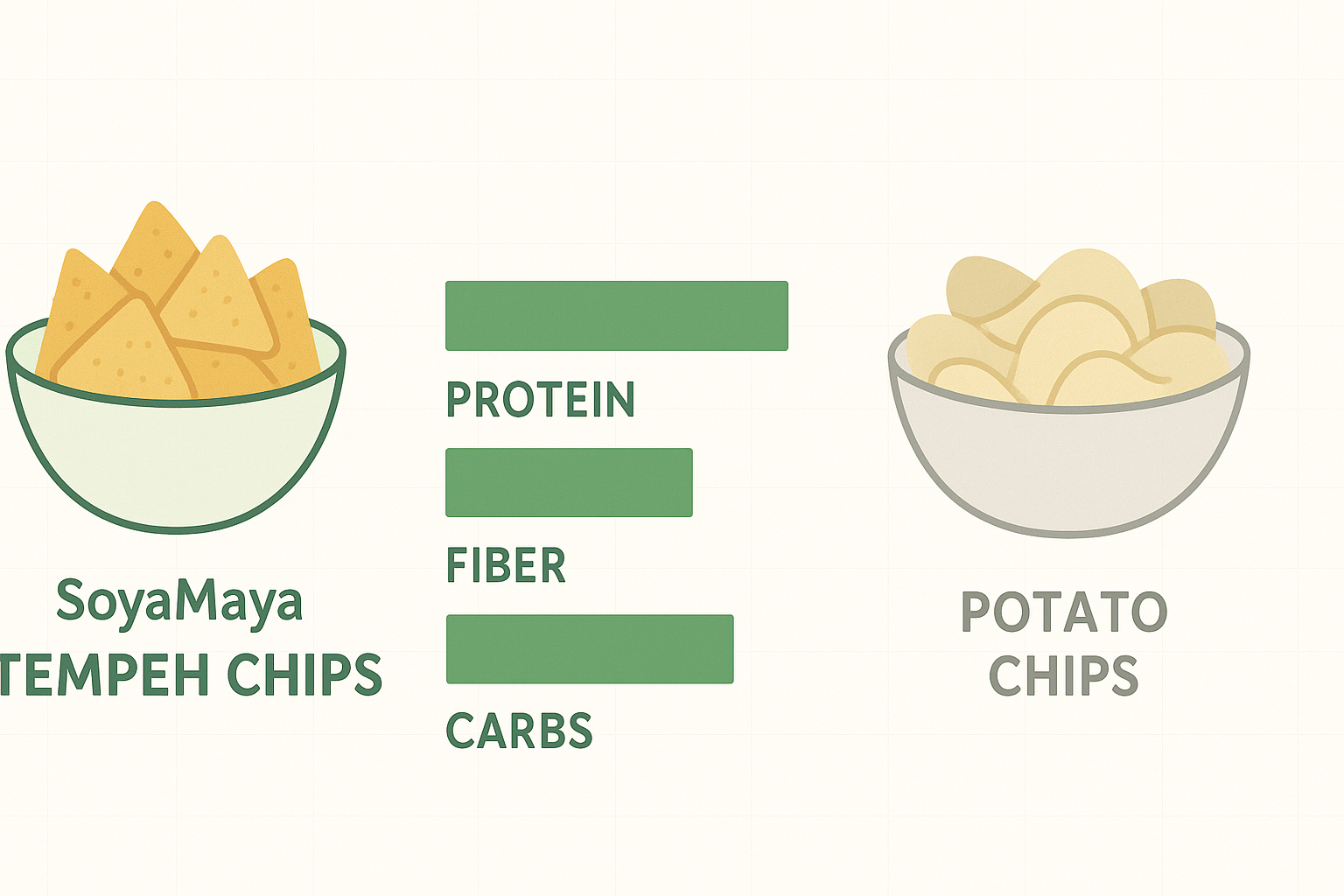
When you put a bowl of tempeh chips next to a bowl of potato chips (or other “light snacks”), the difference becomes stark, nutritionally, they’re from different planets.
How Tempeh (and by extension tempeh-based chips) compare to Potato chips
- Plain tempeh provides about 20 g of protein per 100 g, with roughly 9–10 g carbohydrates, ~10–11 g fat, and modest calories (~192–195 kcal / 100g).
- By contrast, 100 g of potato chips typically provides only ~5–7 g protein, but much higher in carbs and fats, for example one nutrition source lists ~532 kcal, ~33.98 g fat, ~54 g carbs, and just ~6.4 g protein for plain salted chips. [2]
- Another source for baked/flavored potato chips reports ~4.97 g protein, ~18.11 g fat, ~71 g carbs per 100 g.
This means that, gram for gram, tempeh delivers several times more protein than potato chips, even though potato chips carry far more calories from fat and carbs. The relatively low protein content of potato chips suggests you’re mostly consuming “empty calories” (low satiety, little nutritional benefit) compared to the protein-rich tempeh.
Potato chips are mostly simple carbs and fat. They carry very little protein and almost no fiber. You get a quick hit of energy, your blood sugar jumps, and then not long after, you’re reaching back into the bag because you never felt truly full in the first place.
Tempeh chips work differently. The mix of complete protein, fiber, and complex carbs gives you more sustained energy. You feel full longer, which can support weight management and keep you from grazing through the afternoon. Instead of chasing another handful, you can actually move on with your day.
Even when you compare tempeh chips to “better-for-you” snacks like veggie straws, puffed lentil crisps, or rice cakes, they hold their ground, especially when viewed alongside broader plant-based chips categories such as those outlined in that emphasize whole-food ingredients.Many of those products are made from refined starches with a bit of vegetable powder or legume flour. They’re light, crunchy, and fun, but they rarely bring whole-food structure or serious protein.
Tempeh chips, on the other hand:
- Are minimally processed, starting with whole, fermented soybeans
- Offer real protein, not just starch and oil
- Have fiber that actually helps digestion and satiety
- Keep the integrity of the bean, instead of turning it into a mystery flour blend
In short, they behave like a snack but act more like food.
Who Should Eat Tempeh Chips? Built for Active, Busy Lives
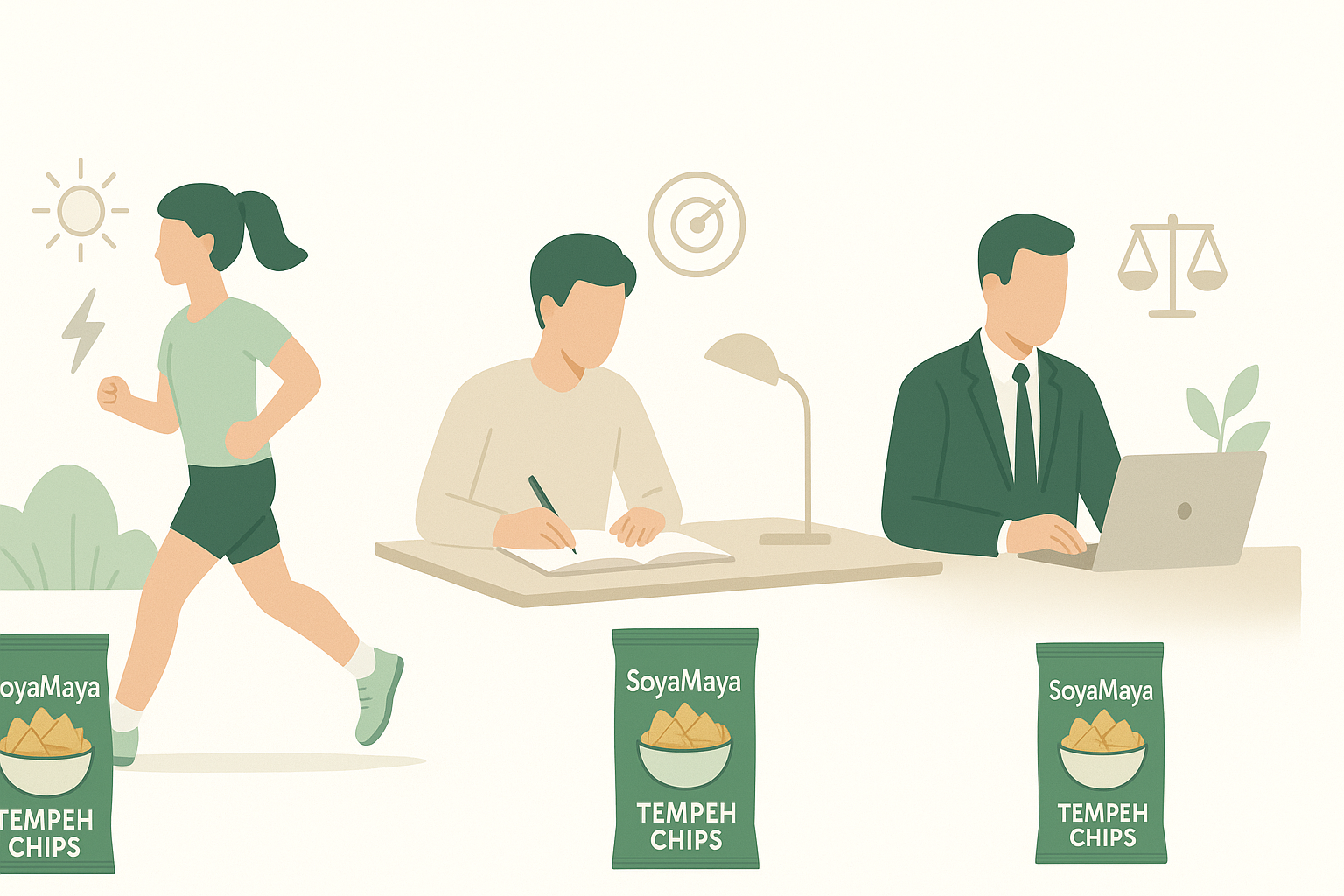
Tempeh chips fit best in the kind of life where you’re moving a lot and don’t always have time to sit down for a full plate of food.
If you’re training, hiking, lifting, or just racing between classes or meetings, the high protein content supports muscle repair and recovery. The combination of fiber and complex carbs gives you a slow, steady release of energy, making them a strong choice as a pre-workout snack or an afternoon bridge between meals.
They also slide into a wide range of eating patterns without much drama:
- Naturally vegan, since they’re made from soybeans and culture
- Gluten-free, as long as the seasonings stay wheat-free
- Friendly to low-carb or keto-ish approaches, thanks to lower net carbs compared to grain-based chips
You can picture them in different hands:
- Parents offering them as a smarter after-school snack that still feels like a treat
- Students stashing a bag in their backpack for late-study fuel
- Office workers keeping some at their desk to avoid the pull of the vending machine
The appeal sits in their simplicity. Salty, crunchy, portable, and yet, they don’t leave you with the usual snack regret. They’re for people who want a chip that actually does some work for their body, not just pass the time between meals.
Actionable Benefits: How Tempeh Chips Support Your Well-being
You don’t really expect a crunchy snack to quietly work for your health in the background, but tempeh chips kind of do. They’re not magic, they’re just built on a pretty smart process: fermentation.
The fermentation of tempeh creates bioactive peptides, small protein fragments, that researchers have linked to anti-inflammatory and heart-supportive effects. These aren’t just abstract lab terms, they’re real compounds that may help your blood vessels relax and support better circulation over time. On top of that, tempeh comes from soy, and soy is rich in isoflavones. Through fermentation, these isoflavones become more bioavailable, which means your body can actually use more of them. That’s especially helpful for hormonal balance, especially for people watching menopausal symptoms, bone health, or cholesterol levels.
These isoflavones and peptides also have antioxidant properties. Every day, your body deals with oxidative stress, from pollution, poor sleep, intense workouts, or just normal metabolism. Antioxidants help neutralize those free radicals before they can damage cells. It’s not about perfection, it’s about giving your body small, steady supports, snack by snack.
Then there’s the gut angle, which a lot of people overlook with chips. High-heat cooking can reduce probiotics, that’s true, but tempeh fermentation still leaves you with prebiotics, fermentable fibers that feed the good bacteria already living in your gut-an effect that remains present even when preparing crisp homemade versions like those detailed in the how to make tempeh chips guide. Those microbes help with digestion, vitamin production, immunity, and even mood regulation (the gut–brain link is very real, and very studied). When you eat tempeh chips, you’re not just filling your stomach, you’re feeding your microbiome.
So, each crunchy bite isn’t just about flavor. It’s a small, repeatable way to support your body in several systems at once, heart, gut, and cellular health, without needing another supplement bottle on your shelf.
- Supports heart health through bioactive compounds.
- The prebiotic fiber nourishes your gut microbiome.
- Provides antioxidants to combat daily stress on the body.
SoyaMaya Tempeh Chips: Quality and Taste You Can Trust
Some brands discover tempeh in a boardroom. SoyaMaya started in a kitchen. Back in 2002, before there was packaging or branding, there was just a family learning how to ferment soybeans well enough to share with a community, then turning that into a restaurant. That kind of long practice shows up in the final product.
We source our soybeans directly from farmers in Indiana we actually know, by name and handshake. That direct line isn’t just about checking boxes for quality, it’s about relationships, fair work, and traceability. We use a carefully chosen blend of non-GMO, high-protein, and high-oleic soybeans. High-oleic means a better fat profile, more stable, more heart-friendly. High-protein means every serving of chips gives you a meaningful boost of plant-based protein, not just empty crunch.
That attention to sourcing and fermentation is why our tempeh has a deep, nutty, almost earthy flavor, instead of a flat or beany taste. Our Protein Tempeh Chips are made from that same tempeh we’re known for in our fresh frozen line, then crafted into a ready-to-eat snack you can open and enjoy right away. No prep, no cooking, no extra oil in a pan.
We don’t believe anyone should have to pick between flavor and health. So the chips are built for both: a savory, nutty crunch that stands up on its own in a lunchbox, on a charcuterie board, or next to a sandwich, while still giving you protein, prebiotic fiber, and all the benefits of fermented soy. They’re the kind of snack you can share with someone who “doesn’t like healthy food” and still get an empty bag back.
There’s one more quiet layer to the story. A portion of every sale helps support children’s education. So every time you decide to grab a bag, you’re not just feeding yourself, you’re helping fund classrooms, books, and learning for kids who need it. It turns an everyday snack into a small, steady act of care, both for your body and for your wider community.
FAQ
1. How do tempeh chips nutrition and tempeh macros per serving help me plan a healthy lifestyle tempeh snack?
Tempeh chips nutrition gives a clear picture of protein, fiber, and healthy fats in each serving. When you check tempeh macros per serving, you see how plant based protein chips support simple goals like steady energy and balanced snacks. Many people like them because fermented soy chips offer fiber and clean eating tempeh options that fit into a healthy lifestyle.
2. Are crunchy tempeh snacks better for me than potato chips, and what makes tempeh vs potato chips different?
Crunchy tempeh snacks stand out because the tempeh fermentation process lowers antinutrient reduction tempeh issues and improves mineral absorption tempeh. When you compare tempeh vs potato chips, you see higher tempeh protein content, more tempeh fiber benefits, and steady fullness. Many people also enjoy the nutty tempeh flavor and the way these vegan crunchy snacks support simple, everyday eating.
3. How do baked tempeh chips or air fried tempeh chips support tempeh gut health and overall digestion?
Baked tempeh chips and air fried tempeh chips keep the fiber from whole soybeans while using healthy oil tempeh chips methods. The fermentation creates probiotic tempeh chips that aid tempeh digestibility improved. These chips also show tempeh phytic acid reduction, which helps your body absorb minerals. Many people enjoy the mild tang and the even, crunchy texture.
4. What nutrients in gluten free tempeh snacks support things like tempeh heart health, tempeh muscle gain, and tempeh weight management?
Gluten free tempeh snacks naturally offer complete amino acids tempeh, tempeh B vitamins, tempeh zinc iron calcium, and magnesium rich tempeh minerals. These nutrients help the body build muscle, keep energy steady, and manage hunger. The tempeh antioxidant properties and anti inflammatory tempeh compounds also support simple heart care. Many people like these nutrient dense tempeh chips for daily snacking.
Bringing Tempeh Chips Into Your Healthy Lifestyle
Tempeh chips shift snacking toward real nourishment while keeping the crunch you love. Each bite brings protein, fiber, and fermented benefits that support your body without losing the joy of snacking. Make them at home with Fresh Frozen Tempeh or grab ready-to-eat Protein Tempeh Chips for quick, whole-food fuel. Taste the difference a thoughtful, plant-based snack can make in your day.
Explore SoyaMaya snacks here: SoyaMaya Shop
References
- https://vegnt.com/foods/tempeh.html
- https://www.nutritionant.com/food/potato-chips-plain.html
Related Articles
- https://mayasaritempeh.com/plant-based-tempeh-chips/
- https://mayasaritempeh.com/plant-based-chips/
- https://mayasaritempeh.com/how-to-make-tempeh-chips/
Soya Maya Tempeh Protein Chips
High-protein, plant-based, made from real tempeh. No artificial flavors. Crunchy and satisfying every time.
