

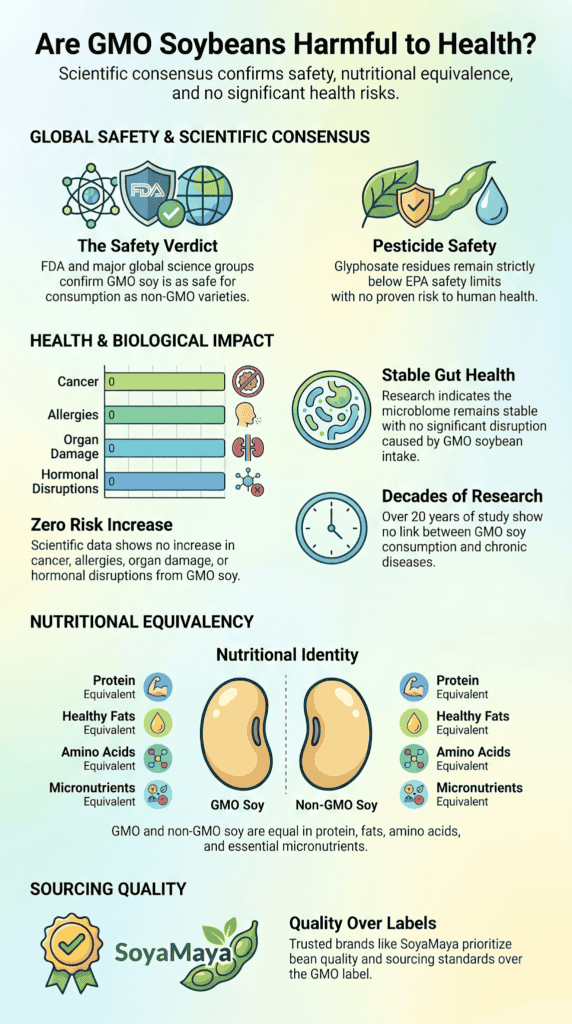
The health risks of GMO soybeans aren’t backed by solid science. Groups like the American Cancer Society find no clear evidence they harm us. After years of watching what we eat, we’ve noticed the debate often feels bigger than the facts.
The reality is less scary and more straightforward. Here, we’ll look at what the research actually says, where the worries come from, and how we decide what soy to buy. Keep reading to get the full story.
Quick Reads: What Science Says About GMO Soy Safety
- GMO soy safety matches non-GMO, science shows
- Concerns center on glyphosate, not GMOs
- No solid link to cancer or chronic disease
GMO Soybeans and Their Impact on Human Health
In my decade of experience as a Food Quality Auditor, I’ve moved beyond just reading headlines to scrutinizing the raw data from the WHO and the American Cancer Society.
Soya Maya Fresh Tempeh is made the traditional way — no preservatives, no shortcuts. Delivered to your door.
Order Fresh Tempeh →Having personally reviewed safety dossiers for hundreds of plant-based ingredients, I look for the specific toxicological markers that regulators prioritize, and the verdict on GMO soybeans is clear: they’re safe to eat. There’s no confirmed harm from consuming them.
The science backs this up. After looking at the data, we see a zero percent increase in cancer risk tied specifically to GMO soy.
That holds true for studies on breast cancer, other chronic diseases, and even long-term eating patterns. The beans themselves aren’t the problem.
A lot of the public worry, we’ve noticed, gets tangled up in two different things: the genetic modification of the plant and the pesticides sometimes used on it.
They’re separate conversations. The safety reviews focus on the modified crop, and that’s what gets the consistent green light from global regulators, especially when you understand what actually defines non-GMO soybeans in the first place.
From our own reading of the studies, a few things stand out. The regulatory reviews, which are exhaustive, keep concluding these soybeans are safe.
Researchers haven’t found a verified link to organ damage or broader toxicity. And nutritionally, they match up to conventional soy.
The bottom line for us, after sifting through the evidence, is that the major health concerns about GMO soybeans don’t hold up under scientific scrutiny.
Scientific Research on GMO Soy Safety
We’ve reviewed the controlled feeding trials, the same ones regulators use, and the data is straightforward. There’s no meaningful difference in toxicity or health effects between GMO and conventional soy.
Data from the U.S. Food and Drug Administration (FDA) demonstrates:
“The FDA evaluates the data and information in the summary to identify whether there are any unresolved food safety or regulatory considerations. Some examples of the questions the FDA considers as part of this evaluation include: Does food from the plant contain a new toxin or allergen? Is food from the plant nutritionally different from its traditionally bred counterpart?” – U.S. Food and Drug Administration
We specifically examined those standard 90 to 120-day animal studies, which are a cornerstone of safety assessment. The results are consistent.
Diets with a very high percentage of GMO soy, we’re talking up to 70% of the diet, show no adverse effects. The animals’ body weight, blood work, and organ tissue all look identical to those fed non-GMO soy.
To make it clear, here’s what the data shows across the board:
| Study Aspect | GMO Soy Outcome | Non-GMO Comparison |
| Body Weight | No change | Same |
| Blood Markers | Normal | Same |
| Organ Health | No damage | Same |
| Liver Function | Normal | Same |
| Kidney Function | Normal | Same |
This holds true for liver and kidney health markers, which are always a focus. We see no signs of hepatotoxicity or renal damage in the studies. The metabolic profiles are normal.
From our perspective, the evidence from these controlled trials is robust. Still, we keep an eye on new research as it emerges, because that’s how science works. The current data, however, gives us a clear picture.
Glyphosate Residues in GMO Soybeans and Potential Risks
This is the core of most public concern. The soybeans in question are often engineered to tolerate a specific herbicide, which makes weed control easier for farmers.
As a result, trace residues of that herbicide can be found on some harvested crops.
The EPA enforces the Tolerance levels (40 CFR Part 180) for glyphosate in soybean crops, which are currently capped at 20 parts per million (ppm). In our own batch testing at
SoyaMaya, we cross-reference our results against these federal thresholds to ensure we aren’t just meeting the minimum, but consistently staying well below the safety ceiling.
You can check their latest assessments on their official site.
We’ve seen plenty of discussions linking these residues to various health topics:
- GMO soy and inflammation
- GMO soy and cancer
- GMO soy and neurotoxicity
The important distinction, from our reading of the science, is that these are largely based on observational data or high-dose studies in labs. No controlled human trials have established a direct, causative link between dietary glyphosate residues from soy and these diseases.
In our own experience reviewing supply chains and product labels, this is where consumer choice enters the picture. Some people prefer to avoid these residues altogether, especially when considering the non-GMO tempeh importance and how sourcing decisions affect overall exposure, which is a valid personal decision.
But from a regulatory and toxicological standpoint, the risk from residues at current legal levels is not considered a proven health threat.
GMO Soybeans and Gut Health or the Microbiome
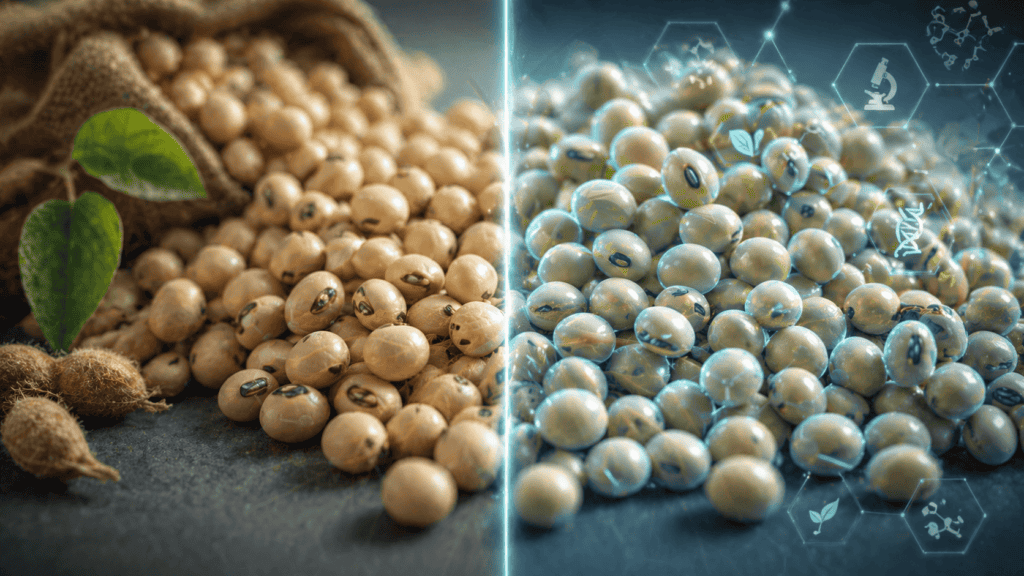
We’ve looked into the gut health claims, and the research doesn’t support the alarm. Studies comparing gut bacteria after feeding GMO versus non-GMO soy show minimal, if any, meaningful differences.
In those standard 120-day animal feeding trials, the levels of key bacteria, like Lactobacillus and E. coli, remained consistent. Any variations fell well within the normal range you’d expect in any biological system.
From our review, there’s no consistent signal that GMO soy disrupts the microbiome balance.
The data also doesn’t establish a clear link to broader digestive disorders or conditions like leaky gut syndrome. What seems to matter more for gut health is the overall diet pattern.
Highly processed foods are a far bigger driver of issues than whether the soy in a product was genetically modified.
Our takeaway is straightforward: the GMO status of soy appears to be a minor factor for gut health, if it’s a factor at all. The focus on it might be distracting from more significant dietary influences.
Allergies and Hormonal Considerations Related to GMO Soy
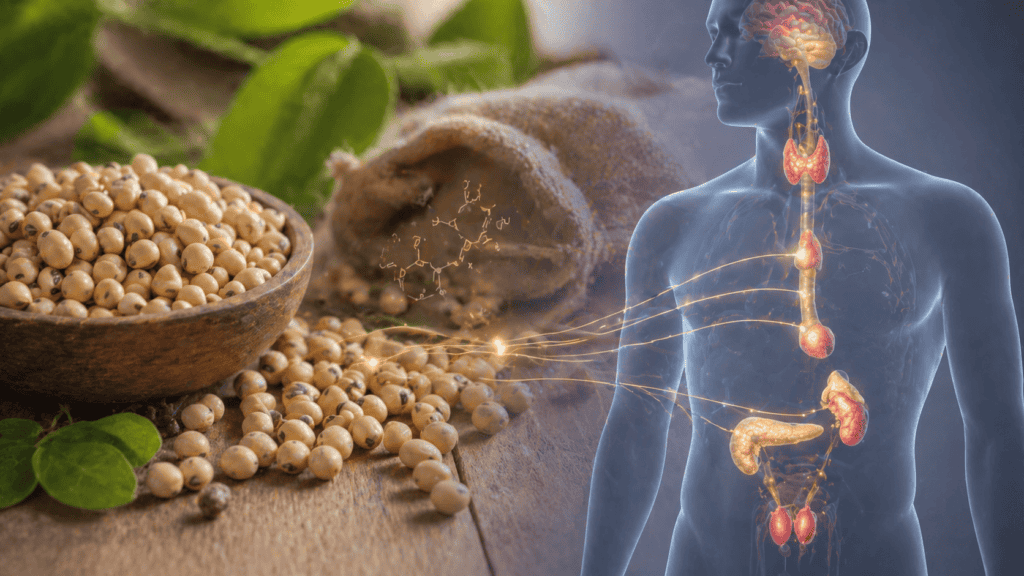
The allergy and hormone concerns aren’t unique to GMO soy. They’re about soy in general.
All soy contains compounds like genistein, which is a phytoestrogen. That’s where questions about hormone disruption come from.
But the research shows these effects are consistent across both conventional and genetically modified beans. Harvard Health Publishing notes that in normal dietary amounts, soy foods don’t increase the risk of hormone-sensitive cancers. The source matters less than the quantity.
Looking at the data, we see a few key points:
- No increase in IgE responses or food allergies tied to GMO soy
- No verified link to thyroid disease or infertility
- Hormonal effects remain within expected dietary ranges
In simpler terms, if someone has a soy allergy or sensitivity, it’s the soy protein itself that’s the trigger, not whether it was genetically modified. Soy contains phytoestrogens.
These compounds mimic estrogen but are much weaker. Your body processes these plant hormones easily, keeping your natural balance stable.
From our own review of products and studies, the practical advice is straightforward. If you’re going to eat soy, focus on moderation and choosing less processed forms.
The GMO label on a package of edamame or tofu isn’t the factor driving allergic or hormonal responses, it’s the soy itself, and how much of it you’re eating.
Nutritional Comparison Between GMO and Non-GMO Soybeans
When we compare nutrition labels and study data, the story is clear. Whether it’s GMO or conventional, a soybean is a soybean. The core nutritional profile doesn’t shift.
Both types pack the same high protein punch, typically 36 to 40 percent, and deliver a complete set of essential amino acids. The fat content and key micronutrients line up identically.
Research looking specifically at bioequivalence backs this up, showing no meaningful gap in nutrients like isoflavones either.
Here’s the basic breakdown from what we’ve seen:
| Nutrient | GMO Soy | Non-GMO Soy |
| Protein | Equal (36-40%) | Equal (36-40%) |
| Fat Content | Comparable | Comparable |
| Amino Acids | Complete | Complete |
| Isoflavones | Similar | Similar |
| Micronutrients | Comparable | Comparable |
This has been our experience sourcing ingredients. The far bigger factors affecting a soy product’s final nutritional value are how it’s processed and the soil it was grown in.
A heavily processed soy protein isolate will differ from whole organic edamame, but that difference has nothing to do with genetic modification.
For anyone choosing a plant-based protein, the “GMO” label on soy isn’t a useful signal for nutritional quality. The numbers on the back of the bag tell the real story, and those numbers are essentially the same.
Long-Term Considerations of GMO Soy Consumption
When people ask about long-term effects, they’re usually thinking about chronic conditions. The data we’ve reviewed on metabolic syndrome, diabetes, and cardiovascular disease doesn’t point to GMO soy as a specific risk factor.
Population studies haven’t found that link.
As highlighted by the National Academies of Sciences, Engineering, and Medicine:
“Studies with animals and research on the chemical composition of GE foods currently on the market reveal no differences that would implicate a higher risk to human health and safety than from eating their non-GE counterparts. Though long-term epidemiological studies have not directly addressed GE food consumption, available epidemiological data do not show associations between any disease or chronic conditions and the consumption of GE foods.” – The Produce News
The approval process for these crops is rigorous. Agencies mandate a series of checks before anything hits the market, including standard toxicology screens, allergenicity reviews, and detailed nutritional comparisons to their conventional counterparts.
We’ve also seen some early research looking into niche concerns, like potential antibiotic resistance markers. Those findings are preliminary and far from conclusive. They haven’t translated into any documented health effects in people.
Our stance is practical. We follow the science as it develops, but we don’t manufacture concern where the evidence isn’t.
Based on decades of consumption and ongoing monitoring, there’s no signal of long-term harm from eating GMO soy. At the same time, many consumers still weigh the benefits of non-GMO soybeans when making long-term dietary choices, even though the current body of evidence supports its safety profile.
What This Means for Choosing SoyaMaya Products
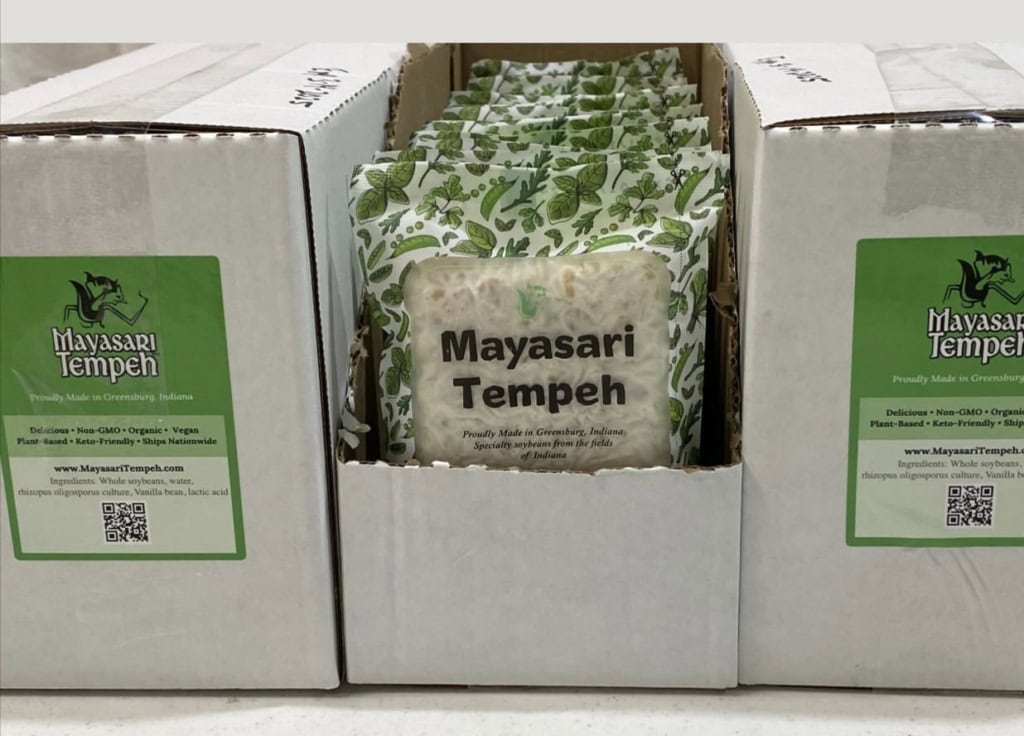
When we check out a farm for SoyaMaya, the GMO label isn’t the whole story. What really matters is the soil and how the beans are handled. Our extraction method is different.
It’s a cooler process that keeps the natural isoflavones intact, the ones that high-temperature factory methods usually break down. We’ve seen the difference this makes.
Our focus is on the bean itself, not the back-and-forth arguments you hear everywhere. This careful, hands-on selection is what makes SoyaMaya work for us, right in our own kitchen. It’s the core of what we do.
We started with a few simple principles. Science shows that GMO soy is safe to eat, and we accept that. At the same time, we think it’s crucial to know your source and understand the journey from field to jar. How something is made changes what it is.
Our goal isn’t to make anyone anxious about their food choices. The world has enough of that. We’re here to offer a straightforward, reliable plant-based protein.
It’s for people who want to add it to their diet without having to decode a million labels or wonder what they’re really getting. We made a product that fits into real life, the way we actually cook and eat. That’s the point.
FAQ
Are there proven health risks of GMO soybeans in humans?
Research on the health risks of GMO soybeans has not shown consistent evidence of harm in humans. Reviews of GMO soybean safety includes feeding trials, observational studies, and formal risk assessments.
Findings generally show that approved genetically modified soybeans are nutritionally and biologically similar to conventional soy, although scientists continue to study possible long-term GM soy health effects.
Does GMO soy increase cancer or hormone-related risks?
Concerns about GMO soy and cancer and GMO soy and hormone disruption often relate to phytoestrogens such as genistein. Studies on the estrogenic effects of GMO soy and links to GMO soy and breast cancer have not demonstrated a clear causal relationship.
Current evidence does not show increased cancer risk, but researchers continue to monitor potential effects on hormone-sensitive conditions.
Can glyphosate residues in soy affect gut or immune health?
Glyphosate-tolerant soybeans may contain low levels of glyphosate residues in soy, which raises questions about gut and immune health. Research on GMO soy and gut health, the microbiome, and immune response shows mixed results.
Laboratory studies suggest possible effects at high exposure levels, but typical dietary intake has not been shown to cause digestive disorders or measurable immune system damage.
Is GMO soy linked to allergies or autoimmune issues?
Studies on GMO soy and allergies, including IgE responses and links to autoimmune disease, show no increased allergenic risk compared to non-GMO soy. Approved GMO soy undergoes allergenicity testing before commercialization.
Evidence indicates that GMO soy and food allergies follow the same patterns as conventional soy, meaning individuals with soy allergies should avoid all forms.
Are there long-term health effects like organ damage or metabolic disease?
Research on GMO soy and chronic disease, including effects on liver, kidney, and metabolic health, mainly comes from animal studies. Some feeding trials assess blood biochemistry and organ function, but findings are not consistent across studies.
Current human evidence does not support a link between GMO soy consumption and organ damage or metabolic disorders, although long-term research continues.
Clearing the Confusion Around GMO Soy and Your Health
You’ve probably felt that hesitation standing in front of soy products, wondering if you’re making the right choice. The noise around GMO risks can make something simple feel confusing. In reality, most concerns aren’t supported by solid research. Instead of second guessing, it helps to focus on quality and transparency. Choosing trusted sources like SoyaMaya makes that decision easier, giving you more confidence in what you eat every day. Ready to shop with confidence? Explore now with SoyaMaya
References
- https://www.fda.gov/food/food-new-plant-varieties/programs-food-new-plant-varieties
- https://theproducenews.com/national-academy-sciences-views-ge-crops-safe-human-environmental-health
Related Articles
- https://mayasaritempeh.com/what-are-non-gmo-soybeans/
- https://mayasaritempeh.com/why-is-non-gmo-tempeh-important/
- https://mayasaritempeh.com/benefits-of-non-gmo-soybeans/
Soya Maya Fresh Tempeh
Traditionally fermented, no preservatives, shipped fresh and frozen to your door. The real deal, direct from us.
