

Choosing non-GMO tempeh is a direct decision to support cleaner ingredient choices and more thoughtful farming practices. It’s about selecting a whole food made from carefully sourced non-GMO soybeans that align with a more natural and minimally processed approach to eating.
In our kitchen, this commitment fundamentally changed our view of ingredients and their lasting quality. The real story isn’t just on the label, it’s in the fields where the soybeans are grown, the fermentation process, and the everyday experience of eating it. We’ll look at what that actually means for you.
What Makes Non-GMO Tempeh Matter?
- Around 70-90% of global soy is genetically modified, making sourcing a key decision
- Non-GMO tempeh supports clean-label, minimally processed diets
- It connects health, environment, and ingredient transparency
Why Do We Choose Non-GMO Tempeh Over GMO Soy?
Non-GMO tempeh offers a cleaner sourcing approach by focusing on naturally grown, traditional seeds and farming methods that avoid dependence on herbicide-tolerant crops. Data from the USDA shows herbicide use has increased significantly since the mid-1990s alongside GMO adoption.
SoyaMaya Fresh Tempeh is made the traditional way — no preservatives, no shortcuts. Delivered to your door.
Order Fresh Tempeh →As noted by the Environmental Working Group (EWG)
“The vast majority of GMO crops are engineered to withstand blasts of glyphosate, the active ingredient in Roundup. As a result, the use of this weedkiller has increased 15-fold since GMOs were introduced.” – Environmental Working Group (EWG)
We realized that much of today’s GMO soy is connected to intensive herbicide use. That detail shifted how we evaluated ingredients, especially for something like tempeh, where the whole soybean is consumed.
In our experience, non-GMO tempeh feels closer to real food. It’s not heavily processed or broken down into isolates. It stays intact, which affects both texture and how it cooks, especially when working with fresh tempeh that preserves its natural structure.
We also noticed fewer inconsistencies. The flavor feels cleaner, and the fermentation process seems more predictable.
- Fewer synthetic inputs in farming
- Whole soybean structure retained
- Less reliance on industrial processing
That combination made it easier for us to stick with non-GMO as our default.
Is Non-GMO Tempeh Actually Safer for Health?
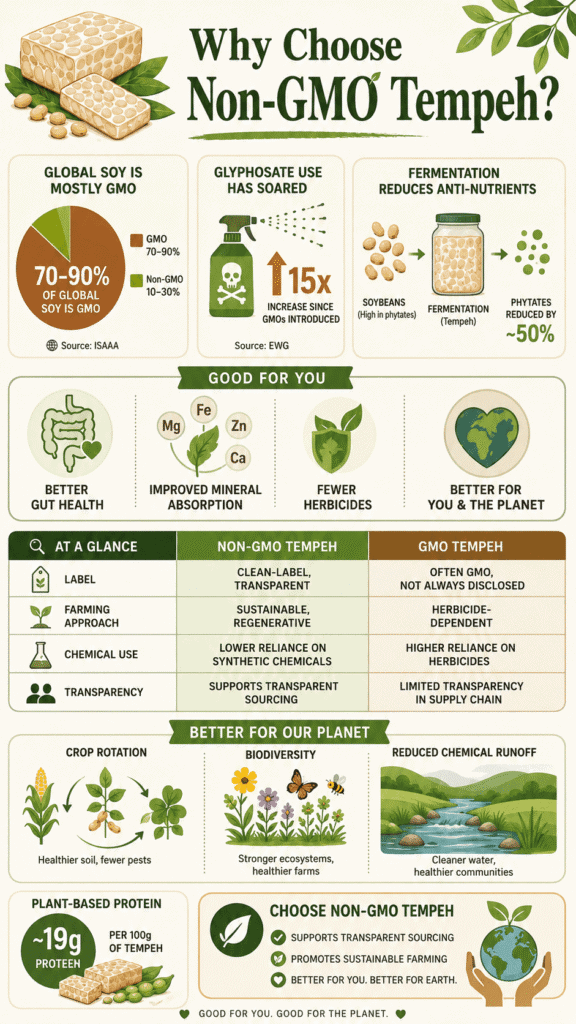
Non-GMO tempeh promotes health, sustainability, and authentic fermentation processes.
Discover the health and environmental advantages of non-GMO tempeh, emphasizing quality and sustainable farming practices.
We approach this from a practical angle. Instead of focusing on genetic modification itself, we look at the full system behind it.
Since most GMO soy is paired with herbicide-heavy agriculture, choosing non-GMO becomes a way to support simpler, cleaner inputs. It’s not about fear. It’s about preference for ingredients selected for their natural purity and integrity.
In our day-to-day meals, that shows up as a sense of balance. We’re not trying to optimize every nutrient. We’re trying to keep ingredients straightforward.
We also pay attention to how food feels after eating it. Fermented, whole soy like tempeh tends to sit better compared to more processed alternatives.
This perspective keeps the decision grounded without overcomplicating it.
How Fermentation Improves Tempeh Nutrition and Digestion
Fermentation by Rhizopus oligosporus improves digestibility and can reduce anti-nutrients like phytates by up to ~50%, according to research referenced by the National Institutes of Health.
Insights from the Journal of Applied Microbiology indicate
“The fermentation process not only reduces the levels of flatulence-inducing sugars but also significantly increases the bioavailability of essential minerals and the content of B-vitamins, particularly riboflavin and niacin.” – Journal of Applied Microbiology
We noticed this difference early on. Tempeh feels easier to digest compared to other soy products, especially when eaten regularly.
The fermentation process breaks down proteins and carbohydrates into simpler forms. That makes nutrients more accessible and reduces compounds that interfere with absorption, which closely aligns with the broader benefits of non-GMO soybeans in daily nutrition that focus on cleaner inputs and better nutrient availability.
In our cooking, this translates into meals that feel lighter but still filling.
- Improves absorption of iron and calcium
- Enhances amino acid availability
- Supports easier digestion
It’s one of the reasons tempeh stays in our weekly rotation.
Before moving deeper into gut health, it helps to understand how these fermentation changes affect the body over time.
What Are the Gut Health Benefits of Non-GMO Tempeh?
Non-GMO tempeh supports gut health through fermentation-derived compounds, prebiotic fiber, and improved protein digestibility. According to Harvard Health Publishing, fermented foods can support microbiome diversity.
We’ve found that tempeh fits naturally into meals without needing extra planning for gut health. It works quietly in the background.
The fiber content feeds beneficial bacteria, while fermentation introduces compounds that support digestion.
We also noticed fewer digestive issues compared to heavily processed plant proteins.
- Contains prebiotic fiber
- Supports microbiome balance
- Improves digestion comfort
It’s a simple way to support gut health without changing everything else.
Does Non-GMO Tempeh Affect Hormones or Long-Term Health?

Tempeh contains isoflavones, which interact mildly with estrogen receptors, but research from Harvard T.H. Chan School of Public Health shows moderate soy intake is safe for most people.
We used to hear mixed opinions about soy and hormones. Looking at actual research helped clarify things.
Isoflavones are not the same as human estrogen. Their effect is weaker and often neutral in normal dietary amounts.
In our experience, regular tempeh consumption hasn’t caused noticeable issues. If anything, it has replaced heavier protein sources in a way that feels more balanced.
This shift also aligns with broader health patterns, including improved cholesterol and heart health markers.
How Non-GMO Soy Farming Impacts the Environment
Non-GMO soy farming often relies on crop rotation and lower chemical inputs, supporting biodiversity and soil health. Reports show GMO soy dominates ~70-80% of U.S. farmland, often tied to monoculture systems.
We’ve come to see food choices as connected to farming practices. Non-GMO soy tends to come from growers committed to using non-engineered soy and methods that prioritize long-term soil health rather than short-term yield.
That difference matters over time. Soil quality affects everything from nutrient density to environmental impact.
We also appreciate the transparency that often comes with non-GMO sourcing.
- Supports crop rotation practices
- Reduces chemical runoff risk
- Encourages biodiversity
It’s a broader benefit that extends beyond the plate.
How We Approach Identifying Non-GMO Tempeh

Non-GMO soy block for healthy cooking and nutrition.
You can identify non-GMO tempeh by reviewing ingredient sourcing details, production transparency, and brands that openly share their commitment to using non-engineered soy.
We don’t rely on packaging alone. We look for supporting details that reflect the brand’s sourcing philosophy.
This includes ingredient transparency, farming practices, and sometimes even production methods.
- Look for transparent sourcing information
- Check for organic and non-GMO ingredient alignment
- Review production and ingredient details
These steps make the process more straightforward.
Before moving on, it’s worth acknowledging that not everyone sees non-GMO the same way.
Why Some People Question Non-GMO Tempeh
Skepticism around non-GMO tempeh often comes from unclear health differences and higher prices compared to conventional soy.
We’ve heard this perspective often. Some people feel the benefits are overstated or not measurable.
There’s also the cost factor. Non-GMO tempeh can be slightly more expensive due to sourcing choices and smaller-scale production standards.
- Price differences influence buying decisions
- Health benefits are sometimes debated
- Labeling can feel confusing
We understand the hesitation, but our experience has kept us consistent in our choice.
Is Non-GMO Tempeh Worth the Price?
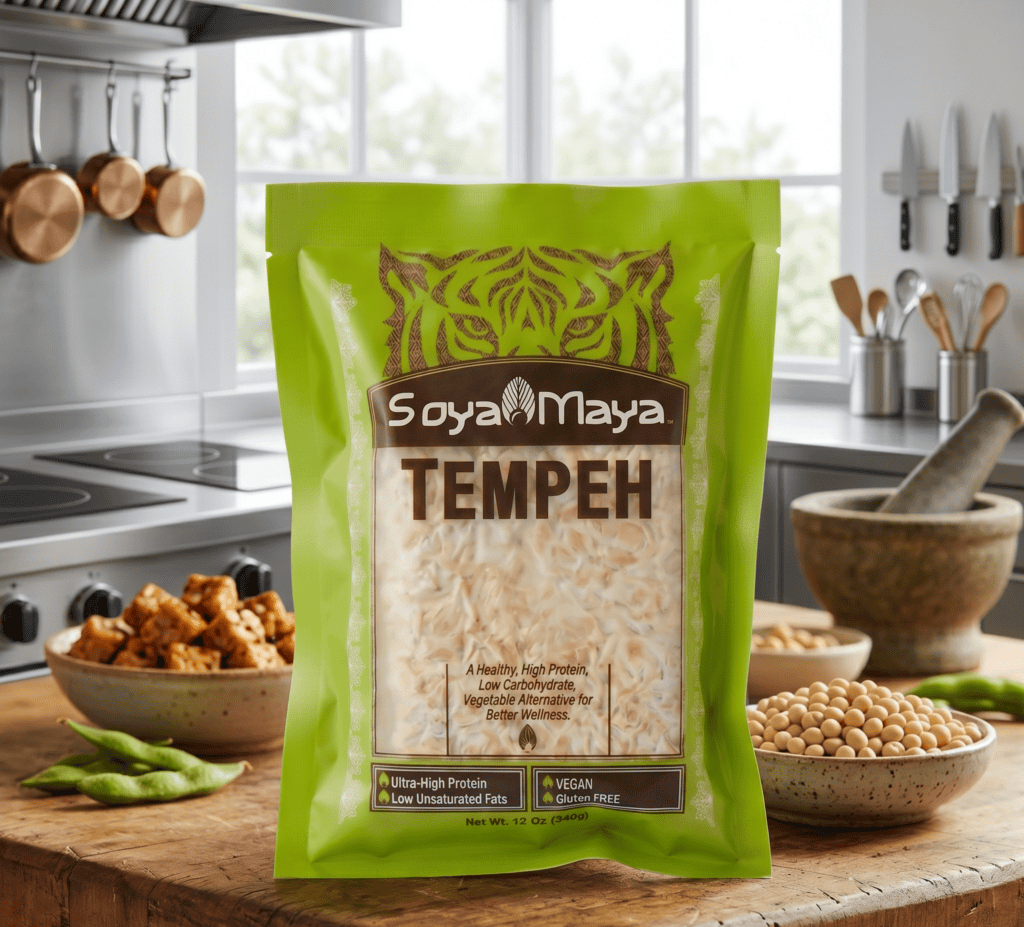
Organic SoyaMaya Tempeh, non-GMO, vegan protein source.
Fresh SoyaMaya Tempeh in eco-friendly packaging, highlighting non-GMO and vegan qualities.
Non-GMO tempeh often costs more because of ingredient sourcing and production standards, but many people see value in cleaner ingredients and better transparency.
For us, the difference feels justified because tempeh is a core ingredient, not an occasional purchase.
We also find that higher quality means less waste. Better texture and flavor lead to fewer failed meals.
- Higher production standards increase cost
- Better consistency reduces waste
- Viewed as a clean-label protein option
It’s a trade-off we’re comfortable with.
Why Non-GMO Tempeh Fits Modern Plant-Based Diets
Non-GMO tempeh aligns with plant-based diets by offering ~19g of protein per 100g in a minimally processed form. According to Mayo Clinic, plant proteins can support heart health and long-term wellness.
We rely on tempeh because it doesn’t feel like a substitute. It stands on its own.
It also fits into different meals without needing complex preparation. That flexibility matters in everyday cooking.
Using SoyaMaya tempeh has made this even more consistent for us. Since we work with carefully sourced non-GMO, high-protein soybeans sourced locally, the results stay reliable across recipes.
FAQ
Why should I choose non-GMO tempeh over GMO-based tempeh products?
Choosing non-GMO tempeh supports cleaner sourcing choices and reduces reliance on herbicide-intensive farming systems commonly associated with GMO soybeans. Non-GMO tempeh benefits include better alignment with sustainable soy farming, minimally processed ingredients, and a preference for soy selected for its natural purity and integrity.
Is non-GMO soy tempeh safer for regular, long-term consumption?
Non-GMO soy tempeh is often chosen by people who prefer foods made with simpler agricultural inputs and fewer concerns around heavy chemical use. While both GMO and non-GMO soy provide protein, many consumers prefer fermented foods made from non-engineered soy for long-term dietary consistency and ingredient transparency.
How does tempeh fermentation improve digestion and gut health?
Fermented soy and gut health improve because tempeh contains prebiotic fiber and beneficial compounds created during fermentation. The process reduces phytates and anti-nutrients in soy, making tempeh easier to digest. It also improves fermented soy protein digestibility and supports the gut microbiome, helping reduce bloating and improving overall digestion comfort.
Does non-GMO tempeh affect hormones, cholesterol, or blood sugar levels?
Non-GMO tempeh and hormones are influenced by soy isoflavones and estrogen-like compounds, but research shows moderate intake is generally considered safe. Tempeh may support cholesterol levels, blood pressure, and blood sugar balance while providing a satisfying plant-based protein alternative in balanced diets.
How can I verify non-GMO tempeh and choose the best option in stores?
Look for brands that openly share sourcing practices, ingredient details, and their commitment to using non-engineered soybeans. Since soy is considered a high-risk GMO crop, reviewing labels carefully and understanding the difference between organic and non-GMO positioning can help you make a more informed choice.
Why Non-GMO Tempeh Deserves a Spot in Your Kitchen
You can feel it when meals fall flat or leave you unsure about what you’re eating. It’s frustrating. Non-GMO tempeh helps simplify everyday cooking by offering a steady, whole-food protein made from carefully sourced ingredients you can feel good about serving regularly.
That’s where SoyaMaya comes in as a simple step forward. It keeps things consistent with careful sourcing and real fermentation, so you’re not guessing each time you cook. If you want meals that feel balanced and work naturally in daily routines, this is an easy switch that makes sense.
References
- https://www.ewg.org/herbicides-and-gmo-crops
- https://pmc.ncbi.nlm.nih.gov/articles/PMC13066425/
Related Articles
- https://mayasaritempeh.com/fresh-tempeh/
- https://mayasaritempeh.com/benefits-of-non-gmo-soybeans/
- https://mayasaritempeh.com/what-are-the-benefits-of-non-gmo-soy/
SoyaMaya Fresh Tempeh
Traditionally fermented, no preservatives, shipped fresh and frozen to your door. The real deal, direct from us.
