
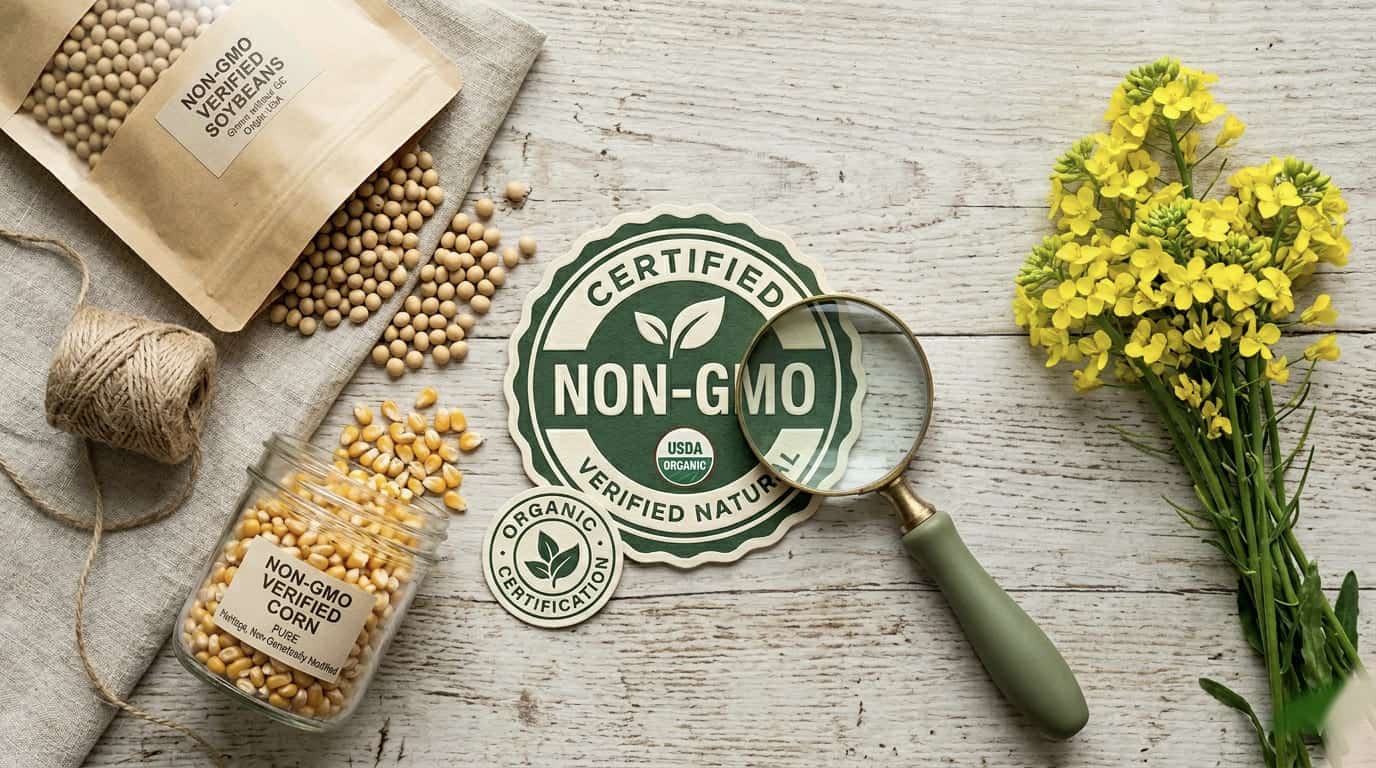
We verify non-GMO ingredients by reviewing ingredient sourcing practices, reading labels carefully, and maintaining detailed supply chain records that support the use of ingredients selected to avoid genetic modification.
This matters because, according to the USDA, more than 90% of soybeans grown in the United States are genetically modified, which affects many everyday foods.
In our sourcing work at SoyaMaya, we have seen how unclear labeling and hidden derivatives make this harder than it should be. Instead of guessing, we follow a consistent process designed around transparency, traceability, and carefully sourced non-GMO soybeans. Keep reading to learn the exact process and apply it yourself with confidence.
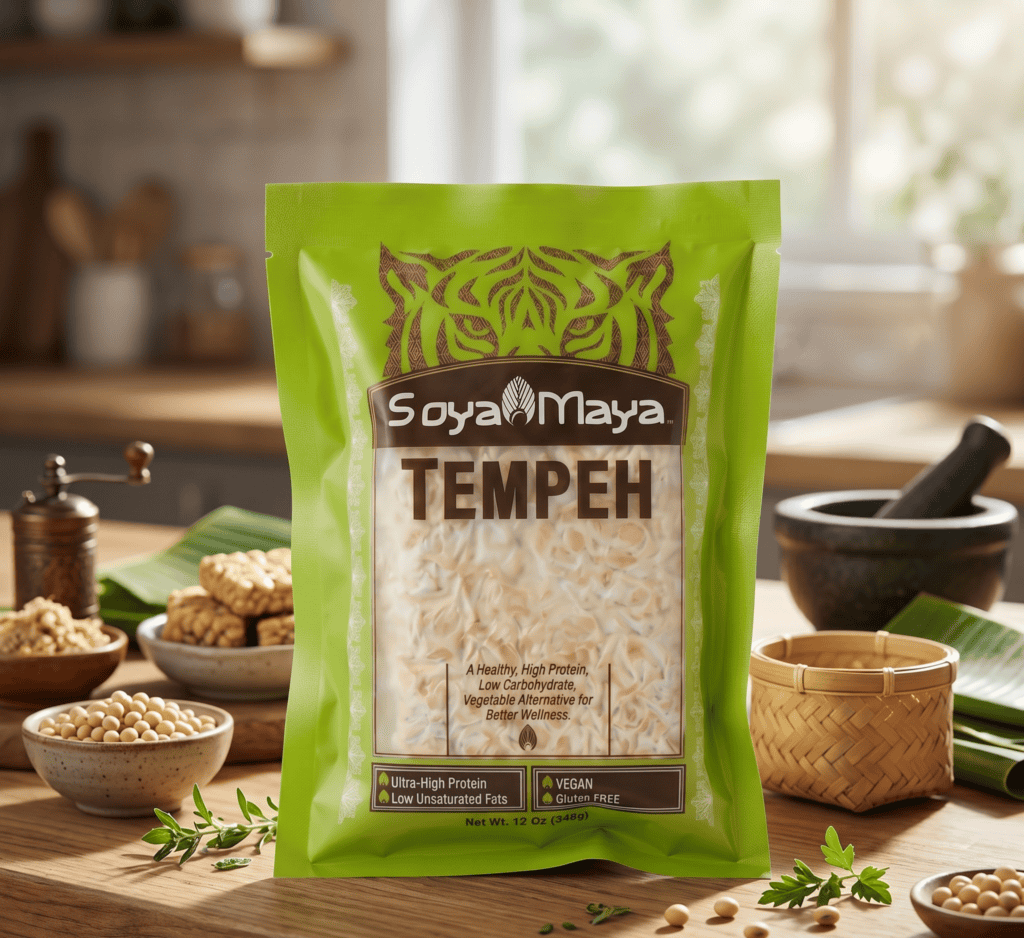
SoyaMaya Fresh Tempeh is made the traditional way — no preservatives, no shortcuts. Delivered to your door.
Order Fresh Tempeh →Quick Reads: Non-GMO Verification Essentials
- Prioritize trusted Non-GMO standards and transparent sourcing
- Check high-risk ingredients like soy and corn
- Verify with labels, databases, and supplier documentation
Understanding What “Non-GMO Ingredients” Mean
“Non-GMO” appears on many labels, but understanding what stands behind the claim matters. For us, it begins with responsible sourcing and consistent documentation, not marketing language alone.
There’s a difference between a simple “GMO-free” statement and ingredients sourced through a transparent process with traceable records. Real confidence comes from knowing where ingredients originate and how they are handled throughout production.
That means reviewing supplier records, ingredient specifications, batch information, and sourcing details that support the use of non-engineered ingredients. Without that level of visibility, claims become difficult to evaluate.
This is especially important for us because we work with soy. Most soy grown globally is genetically modified.
Sourcing soy selected for its natural purity and integrity is not the easiest path, but it reflects the standards we value at SoyaMaya. Working with carefully sourced non-GMO soybeans requires greater attention to handling, separation, and consistency from the very beginning.
Here’s what we do at SoyaMaya, straight from our playbook:
It starts with the seed. We review seed sourcing information and work closely with growers committed to using naturally grown, traditional seeds and non-engineered crop systems.
We also look at farm management practices like crop rotation and field separation methods that help reduce cross-contact with nearby GMO crops. Getting this right from the beginning is essential.
To keep everything consistent, we maintain a few key records:
- Contracts with suppliers that specify our preference for non-engineered ingredients.
- Purchase records that document ingredient sourcing for every batch we buy.
- Organized compliance files for every ingredient lot that comes in.
This system of reviewing, documenting, and tracking is what supports our non-GMO approach. It’s the foundation of how we source ingredients at SoyaMaya.
Certifications That Prove Ingredients Are Non-GMO
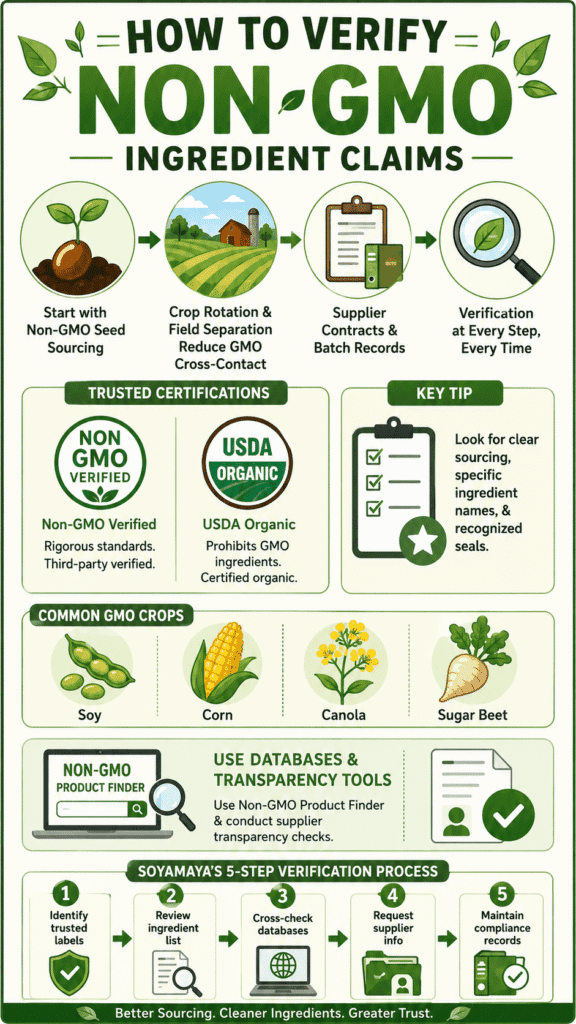
Programs like Non-GMO Project and USDA Organic standards are often used by brands to demonstrate ingredient sourcing practices focused on avoiding genetic modification, especially when evaluating non-GMO soybeans at both the ingredient and sourcing level.
They represent systems built around ingredient reviews, testing protocols, documentation checks, and supply chain oversight, especially when evaluating what are non-GMO soybeans at both the ingredient and sourcing level.
Research from Iowa State University / USDA-NIFA shows
“The Project [Non-GMO Project] emphasizes its application of technoscientific norms, especially thresholds and testing, [while] proponents of non-GMO favor a process standard.” The study notes that absolute non-GMO “purity is unrealistic in today’s agrifood system that is widely contaminated by GMOs,” – Iowa State University / USDA-NIFA
The Non-GMO Project butterfly seal appears on thousands of products because the organization follows a detailed review process.
That process includes documentation reviews, annual renewals, and ongoing ingredient oversight.
From our side of the supply chain, we understand how much structure goes into these programs. It’s more than packaging design.
These systems often involve technical oversight, supplier agreements, and regular compliance reviews. That kind of structure helps create consistency across ingredient sourcing and production.
In practice, there are a few common approaches brands use for non-GMO verification:
- Non-GMO Project Verified (the butterfly seal): Often includes product testing and facility reviews.
- USDA Organic standards: Prohibit the use of genetically engineered ingredients.
- Identity Preservation (IP) systems: Focus on lot-by-lot traceability from farm to finished product.
We also pay attention to how each program approaches verification. Some rely heavily on traceability documentation, while others include laboratory testing methods like PCR or ELISA testing through approved facilities.
What these systems add is another layer of accountability:
- Annual third-party reviews.
- Scheduled facility inspections.
- Ongoing contamination prevention planning.
This is why, for us, these programs can serve as a useful starting point when evaluating ingredient sourcing practices. They help establish a baseline for transparency and consistency.
Reading Labels to Identify Non-GMO Ingredients
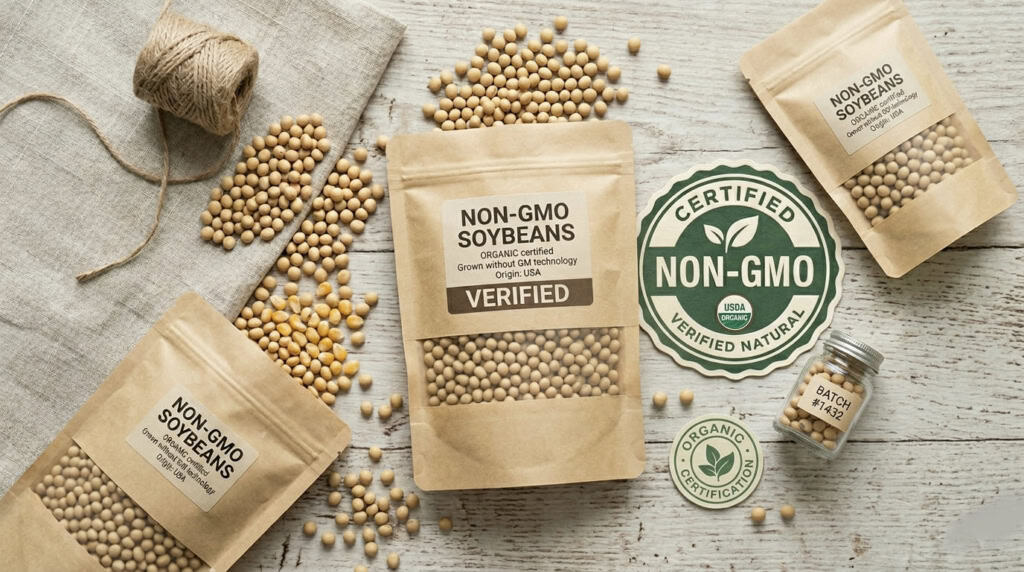
Figuring out whether something is non-GMO often starts with the label. It’s the fastest clue available, especially since many packaged foods contain ingredients commonly associated with GMO crops.
We use a simple checklist when reviewing labels. First, we look for clear sourcing language or recognizable third-party seals. A statement like “made with non-GMO soybeans” offers more clarity than vague packaging claims.
Then, we pay close attention to broad ingredient terms like “vegetable oil” or simply “sugar.”
These ingredients are commonly sourced from crops such as canola or sugar beets, which are frequently genetically modified. If the ingredient source isn’t clearly identified, we know further verification may be needed.
Our own labels follow a few clear principles:
- Be direct: We clearly describe our ingredient sourcing approach when relevant.
- Name ingredients specifically: We say “soybeans” or “coconut sugar,” not generic terms.
- Stay consistent: Packaging language matches the ingredient list.
At SoyaMaya, we intentionally keep our ingredient lists simple and transparent. We found that shorter, more specific ingredient lists make it easier for people to understand what they’re eating.
The simpler the ingredient list, the easier it becomes to recognize what’s actually inside. No guesswork required.
This isn’t only about compliance. It’s about clarity and trust built through honest communication.
Common High-Risk GMO Ingredients to Watch
When discussing GMO ingredients, a few crops appear repeatedly in processed foods: soy, corn, canola, and sugar beets.
The numbers are significant. In the U.S., nearly all corn grown, around 94%, is genetically modified.
As noted by U.S. Food & Drug Administration (FDA)
“onsite audits” and “sampling and testing of the raw material.” The regulation mandates that a supply-chain program must “provide assurance that a hazard, has been significantly minimized or prevented,” – U.S. Food & Drug Administration (FDA)
That means ingredients derived from corn, such as syrup or starch, often require closer review when evaluating non-GMO sourcing practices.
We think about high-risk ingredients in two main categories. The first includes whole crops themselves, like soybeans, corn, or cottonseed. These are easier to identify on labels, though sourcing documentation still matters.
The second category includes derivatives like oils, sweeteners, and emulsifiers.
These ingredients are more difficult to trace because they often appear under broad names such as “vegetable oil” or “natural flavors.” This is where supply chain transparency becomes especially important.
Here are some of the ingredients we monitor closely:
- Soy: Including lecithin and soy protein.
- Corn: Including corn starch, syrup, and citric acid.
- Canola: Especially canola oil.
- Sugar: Particularly sugar derived from sugar beets.
We also pay attention to certain crops that may be genetically modified depending on where they are grown, including some papaya varieties, zucchini, and alfalfa used in feed systems.
Managing this risk depends on strong recordkeeping. We maintain:
- Detailed batch records for ingredient lots.
- Production logs for internal tracking.
Procedures for investigating possible contamination concerns, especially when working with carefully sourced non-GMO soybean farming systems that require clear separation and traceability.
This documentation allows us to trace sourcing questions back to their origin quickly and maintain consistency throughout production.
Using Online Tools to Verify Non-GMO Ingredients
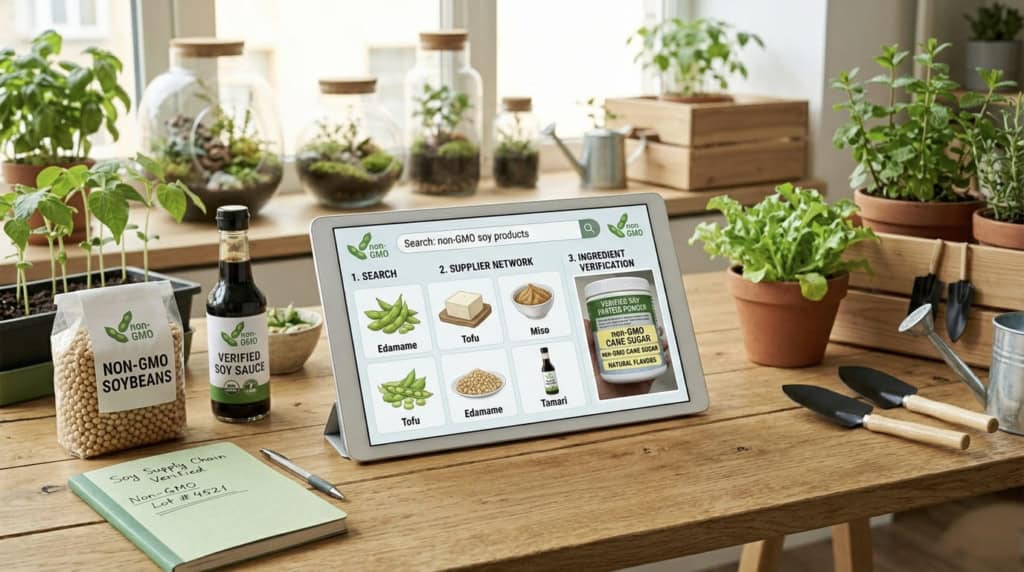
Checking online databases is a useful way to compare product claims with publicly available sourcing information.
We often use the Non-GMO Project Product Finder as a reference tool. It allows people to search products and review publicly listed verification information.
For us, this acts as an additional checkpoint after reviewing packaging and ingredient labels. A package may use broad marketing language, but databases can provide more sourcing context.
This is especially helpful for unfamiliar brands or imported products.
If we want additional confirmation, we also review:
- Public verification databases.
- Supplier ingredient reports.
- Ingredient catalogs from major sourcing companies that specify non-GMO options.
Sometimes online information is incomplete. When that happens, we contact companies directly.
Requesting ingredient details, sourcing documents, or supporting information often reveals how transparent a brand is willing to be about its supply chain practices.
We also pay attention to expert guidance around food transparency. Harvard Health notes that labels and sourcing programs help consumers make more informed decisions about food quality.
For food labeling and safety guidance, we also follow information provided by the U.S. Food and Drug Administration (FDA).
Using trusted external references helps ensure our approach is based on established sourcing practices and industry guidance, not assumptions.
Practical Strategies for Choosing Non-GMO Products
Choosing non-GMO products usually comes down to a few consistent habits. Look for transparent labeling, prioritize simple ingredients, and pay attention to high-risk crops.
Programs like USDA Organic can also provide useful guidance because they prohibit genetically engineered ingredients.
Our process is straightforward. We start by reviewing sourcing labels and ingredient lists carefully. Then we consider whether any ingredients come from commonly modified crops.
This approach helps make shopping more consistent and less confusing.
Our strategy looks like this:
- Products with transparent sourcing information come first.
- Whole foods are often easier to evaluate because they are less processed.
- Ingredients commonly associated with GMO crops are replaced with more traceable alternatives when possible.
We make similar choices in our own sourcing process.
- Use olive oil instead of unspecified “vegetable oil.”
- Choose oats or corn with clear non-GMO sourcing information.
- Avoid vague ingredient language like “natural flavors” whenever possible.
This philosophy shapes how we develop products at SoyaMaya. We focus on ingredients that are easier to trace and understand, while recognizing the broader benefits of non-GMO soybeans in maintaining sourcing transparency and ingredient consistency.
Doing this creates a sourcing system built around transparency, consistency, and trust.
Confidently Verifying Non-GMO Ingredients for SoyaMaya
Knowing whether something is truly non-GMO involves more than a single label check. It requires combining ingredient transparency, sourcing practices, documentation, and consistent review systems.
Studies show that consumers place greater trust in food claims when independent oversight or transparent sourcing practices are involved. That’s why layered verification methods matter.
At SoyaMaya, we combine practical sourcing experience with structured documentation practices to keep our standards consistent over time.
Here is our process, plain and simple.
| Step | Action Taken | Purpose |
| 1. | Identify recognized sourcing or verification labels | Establish a trusted baseline through transparent review systems |
| 2. | Review the complete ingredient list carefully | Detect high-risk or commonly modified ingredients |
| 3. | Cross-check ingredients using trusted databases | Compare claims with independent sources |
| 4. | Request sourcing information from suppliers | Support traceability and ingredient transparency |
| 5. | Maintain internal sourcing and compliance records | Promote long-term consistency across batches |
This process brings everything together: ingredient reviews, supplier checks, sourcing records, and contamination prevention planning.
Over time, consistency is what builds trust.
For us, this work isn’t theoretical. It’s part of our daily process to make sure every batch reflects the same sourcing standards and ingredient philosophy that define SoyaMaya.
FAQ
How can I verify non-GMO ingredients on product labels?
You can review product labels carefully and look for transparent sourcing language or recognized third-party review programs. Reliable non-GMO claims are usually supported by traceable ingredient sourcing and clear labeling practices.
You can also compare products against trusted databases and review ingredient transparency to help determine whether a product aligns with non-GMO sourcing preferences.
What documents support non-GMO ingredient sourcing in a supply chain?
Companies often maintain sourcing records such as ingredient invoices, batch documentation, supplier agreements, and ingredient specifications.
These records help improve supply chain transparency and support consistent sourcing practices throughout production.
Which testing methods are used when reviewing non-GMO ingredients?
Some ingredient sourcing programs use laboratory methods such as PCR and ELISA testing to screen for genetic modification in higher-risk ingredients.
Testing frequency usually depends on ingredient type, sourcing risk, and the standards followed by the manufacturer or review program.
How do audits support long-term non-GMO compliance?
Facility reviews and sourcing audits help companies evaluate production practices, ingredient handling systems, and contamination prevention procedures.
These reviews often include batch tracking, production records, equipment cleaning practices, and ingredient separation methods to support ongoing consistency.
What factors help consumers trust non-GMO claims?
Trust grows when brands provide clear labeling, transparent sourcing practices, and consistent ingredient information.
Companies that openly communicate how they source ingredients and maintain traceability systems are often viewed as more reliable by consumers seeking non-GMO products.
Why Non-GMO Verification Isn’t Optional Anymore
People want to understand what’s in their food, but unclear labels and inconsistent standards can make that difficult. At SoyaMaya, we focus on making ingredient sourcing easier to understand through transparent practices and carefully sourced non-GMO soybeans chosen for their natural integrity.
Instead of relying on complicated claims, we focus on consistency, traceability, and ingredient clarity. That approach helps us create products built with care and aligned with the values our customers expect from SoyaMaya. Explore our products here, SoyaMaya.
References
- https://faculty.sites.iastate.edu/cbain/projects/non-gmo-vs-organic-labels-purity-or-process-guarantees-gmo-contaminated-landscape
- https://www.accessdata.fda.gov/scripts
Related Articles
- https://mayasaritempeh.com/what-are-non-gmo-soybeans/
- https://mayasaritempeh.com/non-gmo-soybean-farming/
- https://mayasaritempeh.com/benefit-of-non-GMO-soybeans/
SoyaMaya Fresh Tempeh
Traditionally fermented, no preservatives, shipped fresh and frozen to your door. The real deal, direct from us.
