Non-GMO Project Verified means a product follows strict third-party standards designed to reduce the presence of genetically modified organisms through testing, traceability, and supply chain oversight. We often see this label on plant-based foods like tempeh, but it also reflects a broader sourcing system used for crops where GMO varieties are common.
Consumer Reports explains that the program relies on testing and supply chain controls to keep GMO presence below 0.9%. In our work with carefully sourced non-GMO soybeans at SoyaMaya, the label reflects a commitment to ingredient transparency, thoughtful sourcing, and consistent production standards rather than a simple packaging claim. It helps shoppers better understand the foods they choose every day.
Quick Reads: What Non-GMO Project Verified Really Means
- Non-GMO Project Verified involves strict third-party checks
- Products stay under a 0.9% GMO threshold
- The label supports transparency through independent review
The Non-GMO Project and Its Importance
The Non-GMO Project is a nonprofit organization focused on products that meet specific GMO avoidance standards. In a market filled with genetically engineered ingredients, it helps consumers identify products aligned with their preferences.
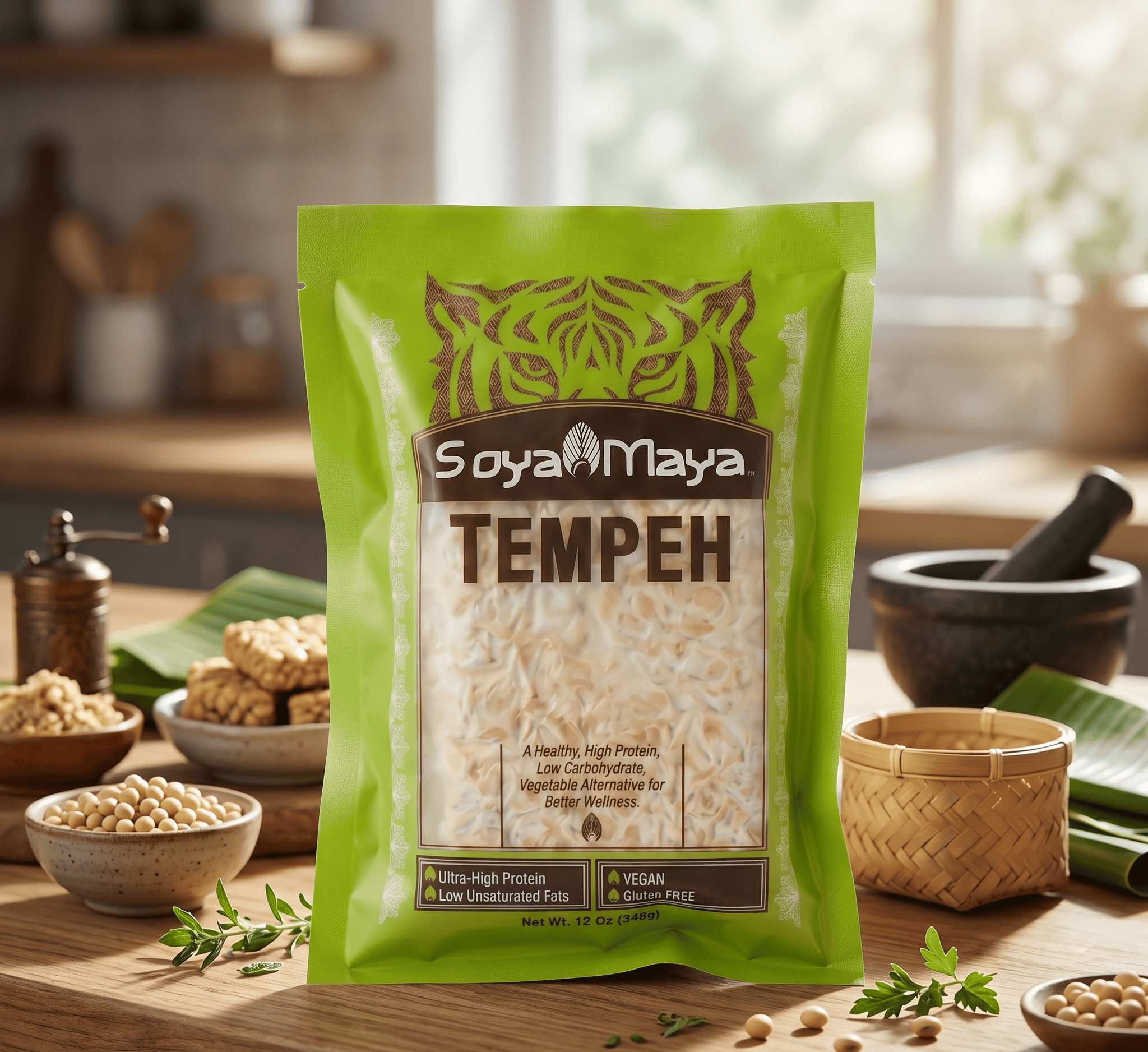
SoyaMaya Fresh Tempeh is made the traditional way — no preservatives, no shortcuts. Delivered to your door.
Order Fresh Tempeh →Its influence is significant. The organization oversees a verification system covering more than 66,000 products, influencing over $45-50 billion in annual retail sales for products carrying the label. That kind of reach shows how strongly consumers value ingredient transparency.
Consumer Reports has highlighted one major strength of the label: it relies on third-party review. Brands cannot simply make the claim on their own. In a category where wording can sometimes feel unclear, outside oversight matters.
Research from Western Kentucky University shows
“Based on these results, we detected evidence of genetic modification in 75% of soy and 83.3% of corn claiming USDA Organic Certification and 0% of soy and 100% of corn claiming Non-GMO Verified Certification.” – Western Kentucky University
We understand this firsthand through our work sourcing non-GMO soybeans selected for their natural purity and integrity. Crops like soy, corn, and canola are considered high-risk because GMO varieties are so common.
Trying to trace ingredient origins without a structured system can quickly become inconsistent. Some suppliers maintain extensive documentation while others provide very little. Programs like the Non-GMO Project create a more uniform benchmark for sourcing expectations.
We’ve also seen how the label simplifies decision-making for shoppers. Most people want cleaner ingredient choices, but few have time to investigate every supply chain themselves.
The butterfly logo offers a quick visual reference that reflects careful sourcing and ingredient oversight directly on the shelf.
How the Non-GMO Project Verification Process Works
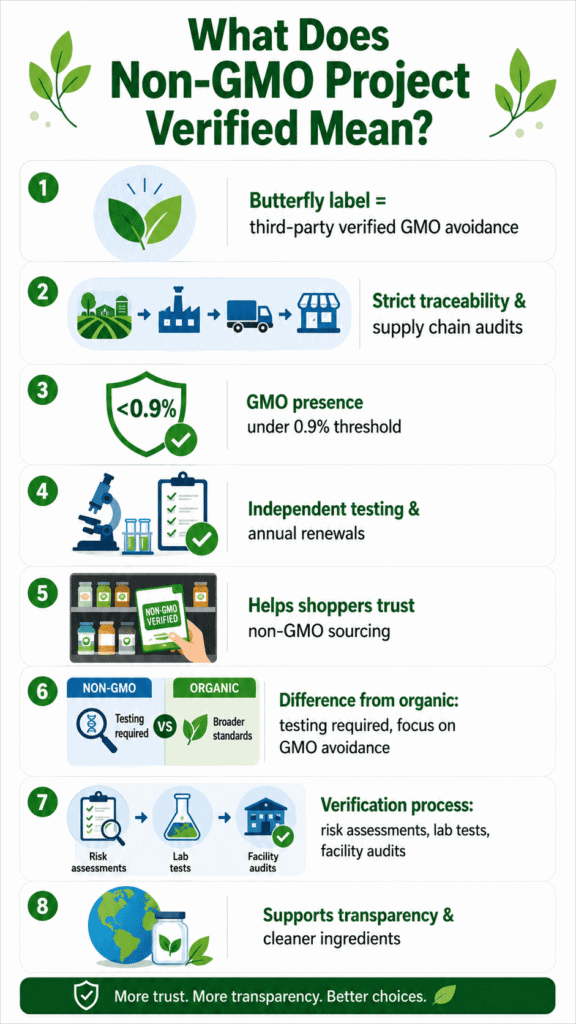
The process usually takes three to six months. It is not a simple approval step. It involves reviewing documentation, assessing ingredient risks, auditing supply chains, and conducting third-party testing.
We’ve seen how detailed the process can be. Every stage is designed to track ingredients from sourcing to finished product.
Verification typically includes several structured steps:
- A risk-based evaluation of ingredients, especially high-risk crops like soy and corn.
- Laboratory testing to detect GMO presence.
- On-site inspections and facility audits.
- Annual renewals with continued surveillance testing.
Each stage creates a traceable record. As organizations like SCS Global Services explain, companies need detailed documentation from the original seed source through final packaging to remain compliant.
Fees may begin around $115 per product, but the larger investment comes from maintaining accurate records and disciplined sourcing systems over time.
We’ve learned that pursuing these standards requires ongoing operational consistency. Ingredient documentation, storage separation, and sourcing controls all become part of daily operations.
Standards Required for Product Verification
To carry the butterfly label, products must follow detailed rules. Companies cannot intentionally use GMO ingredients, and they must maintain traceability from sourcing through final distribution. Any accidental GMO presence must remain below 0.9%. Even animal-derived ingredients such as milk or eggs must come from animals fed non-GMO feed.
We apply similar sourcing principles when selecting ingredients for SoyaMaya products. Working with naturally grown, traditional seeds and supporting careful non-GMO soybean farming practices requires consistent oversight across every stage of handling.
Here’s what the process involves:
- No intentional GMO ingredients.
- Separation between GMO and non-GMO supplies.
- Testing for high-risk crops like soy and corn.
- Review of animal feed sourcing for dairy, meat, or egg ingredients.
The standards go beyond the ingredients themselves. They also address transportation, storage, and handling practices. One mistake during shipping or warehousing can compromise separation protocols.
We understand how demanding this can be. Maintaining clear sourcing records and organized handling systems requires continuous attention.
The 0.9% threshold exists because complete elimination of trace GMO presence is extremely difficult in modern agriculture. Pollen drift, shared equipment, and transportation systems can all contribute to trace exposure. The threshold reflects a practical industry standard while still enforcing strict limits.
Differences Between Non-GMO Verified and Organic
People often ask about the difference between the Non-GMO Project butterfly and the USDA Organic seal. Both matter, but they focus on different priorities.
The main distinction lies in the standards themselves. USDA Organic rules prohibit GMOs, but they do not require mandatory GMO testing. The Non-GMO Project places stronger emphasis on testing, ingredient tracking, and traceability.
Here’s a simple breakdown:
| Feature | Non-GMO Project Verified | USDA Organic |
| GMO Testing | Required | Not required |
| GMO Threshold | 0.9% or less | Not specified |
| Who Oversees It | Independent third-party review | Government-regulated (USDA) |
| Main Focus | Avoiding GMOs | Organic farming practices |
| Supply Chain Tracking | Strict traceability required | Limited GMO traceability |
| Use Together? | Often paired with organic | Can include non-GMO ingredients but without verification |
According to the USDA, the organic label primarily focuses on farming methods such as natural fertilizers and restrictions on synthetic pesticides. It does not center on routine GMO testing across every ingredient.
The Non-GMO Project focuses specifically on testing, tracking, and auditing ingredient sourcing to reduce GMO exposure.
In our experience, the two standards often complement one another. Products made with carefully sourced non-engineered soy can align with both organic values and non-GMO sourcing priorities.
Why Brands Like SoyaMaya Choose Verification
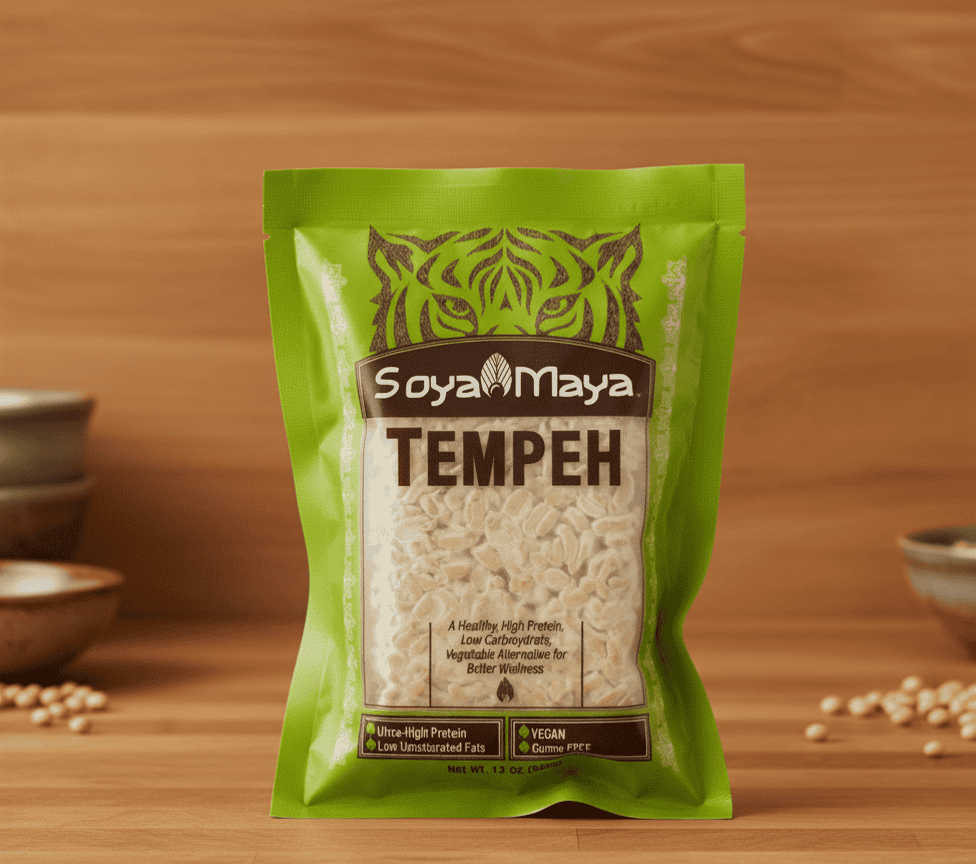
At SoyaMaya, we believe customers deserve clarity about what goes into their food.
For soy-based products, sourcing matters because GMO soy is widely used throughout global agriculture. That’s why we focus on carefully sourced non-GMO soybeans selected for consistency, flavor, ingredient integrity, and the broader benefits of non-GMO soybeans valued by many consumers.
Programs like the Non-GMO Project offer several advantages. They support transparency through outside review, align with growing demand for cleaner ingredients, and encourage brands to maintain detailed sourcing practices.
Data from organizations like FoodChain ID suggests that products associated with strong ingredient transparency often build greater consumer confidence and stronger long-term loyalty.
For us, the biggest value goes beyond labeling. Standards like these encourage disciplined sourcing, organized documentation, and operational consistency throughout production.
They reinforce the values we already prioritize every day: thoughtful ingredient selection, transparency, and attention to quality.
What the Butterfly Label Guarantees
The butterfly seal represents a product that has undergone third-party review designed to reduce GMO presence through testing, traceability, and supply chain oversight. It helps shoppers quickly understand how ingredients are sourced without needing to investigate every detail themselves.
We see it as a useful shortcut for consumers. One symbol communicates that significant sourcing and review work has already taken place.
For shoppers, that means:
- Easier identification of products aligned with non-GMO preferences.
- More transparency around ingredient sourcing.
- Independent oversight rather than brand-only claims.
Consumer Reports has described it as one of the most recognized food labels in North America because of its detailed review standards.
Data from Binghamton University demonstrates
“While the majority of participants reported that neither the Non-GMO Project verified label nor the bioengineered label influenced their purchasing decisions, in choice experiments, the majority of respondents chose products with the Non-GMO Project verified label.” – Binghamton University
We’ve seen this behavior ourselves. In busy grocery aisles, recognizable symbols help simplify purchasing decisions. Familiar labels create faster understanding and greater confidence.
Limitations of Non-GMO Project Verification
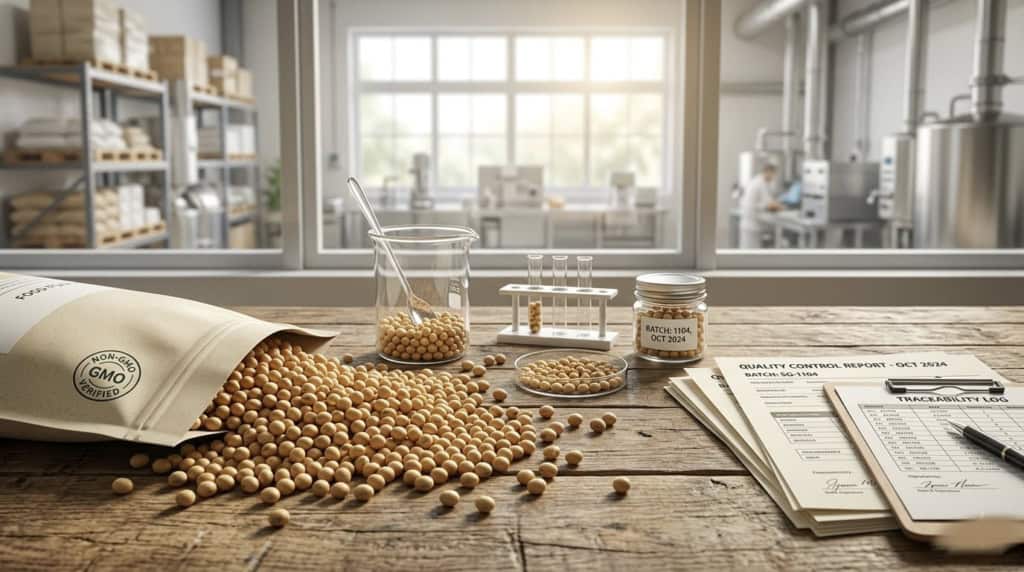
It’s important to understand that the butterfly label does not mean a product is completely free from every trace of GMOs.
Factors such as pollen drift, transportation systems, and shared agricultural equipment can introduce small amounts of accidental exposure. The goal is to reduce that presence as much as possible while staying below established thresholds.
We believe transparency matters here too. The standard reflects a rigorous prevention system, not an unrealistic promise of absolute perfection.
Here’s the practical reality:
- Products are designed to maintain extremely low GMO levels.
- Agricultural systems are not entirely isolated.
- The standards focus on prevention, monitoring, and controlled sourcing practices.
The 0.9% threshold exists because modern supply chains are complex. International non-GMO programs often use similar limits as practical benchmarks.
Reports from organizations like CommonShare support this approach, noting that testing and strict sourcing controls significantly reduce GMO exposure, even if absolute elimination is difficult.
Understanding these limits helps create realistic expectations. Consumers are supporting a structured system focused on prevention, accountability, and careful sourcing practices.
FAQ
What is the non-gmo project verified meaning in simple terms?
The non-gmo project verified meaning refers to products reviewed under strict third-party standards designed to reduce GMO exposure through ingredient testing, sourcing review, and traceability controls.
The butterfly label reflects independent oversight and sourcing transparency. It helps consumers identify products made with carefully sourced non-GMO ingredients and consistent supply chain practices.
How does the non-gmo project verification process actually work?
The process evaluates ingredients through risk assessments, testing, documentation reviews, and supply chain tracking.
It also includes ongoing audits, ingredient traceability checks, and sourcing reviews to maintain consistent compliance with non-GMO standards over time.
What does the butterfly label non-gmo meaning tell consumers?
The butterfly symbol indicates that a product has undergone independent review for non-GMO sourcing standards.
It reflects ingredient testing, sourcing oversight, and traceability practices designed to support transparency and reduce GMO exposure in food production.
What is the difference between gmo free vs non-gmo verified?
The phrase “GMO free” may not always follow consistent standards, while Non-GMO Project Verified products follow structured review systems involving testing and traceability.
Products associated with the butterfly label must meet strict sourcing and documentation requirements, including maintaining GMO presence below established thresholds.
What standards and requirements must products meet for verification?
Products must follow detailed non-GMO sourcing standards, including ingredient testing, supply chain reviews, and traceability documentation.
Companies are also expected to maintain accurate records, separation procedures, and ongoing compliance practices throughout production and distribution.
Clear Labels, Easier Choices
Standing in a grocery aisle and comparing labels can feel overwhelming. Many products make similar claims, and understanding ingredient sourcing is not always simple.
That’s why SoyaMaya focuses on transparency, carefully sourced non-GMO soybeans, and ingredients selected for their natural integrity. Our approach is built around thoughtful sourcing and clear communication, helping shoppers make informed choices with greater confidence.
Ready for simpler shopping? Explore SoyaMaya today.
References
- https://digitalcommons.wku.edu/theses
- https://searchworks.stanford.edu/articles
Related Articles
- https://mayasaritempeh.com/what-are-non-gmo-soybeans/
- https://mayasaritempeh.com/non-gmo-soybean-farming/
- https://mayasaritempeh.com/benefits-of-non-gmo-soybeans
SoyaMaya Fresh Tempeh
Traditionally fermented, no preservatives, shipped fresh and frozen to your door. The real deal, direct from us.
