
You can make perfectly crispy tempeh chips at home by slicing the tempeh thin, steaming it, drying it well, then cooking it at high heat. That’s really the whole core of it. Once the texture is right, you can play with flavor, salty, smoky, spicy, or even a bit sweet. We’ve tested this a lot in the kitchen, both in a small restaurant setting and on a weeknight stove, and the same simple rhythm works every time. If you’re curious how to do it step by step, keep reading and you’ll be able to recreate it easily.
Key Takeaways
- Proper preparation, including steaming and thorough drying, is non-negotiable for crispiness.
- A simple marinade or dry rub transforms the tempeh’s flavor profile in minutes.
- Baking and air frying offer healthier results, while pan frying delivers a traditional, ultra-crispy texture.
Preparing Your Tempeh
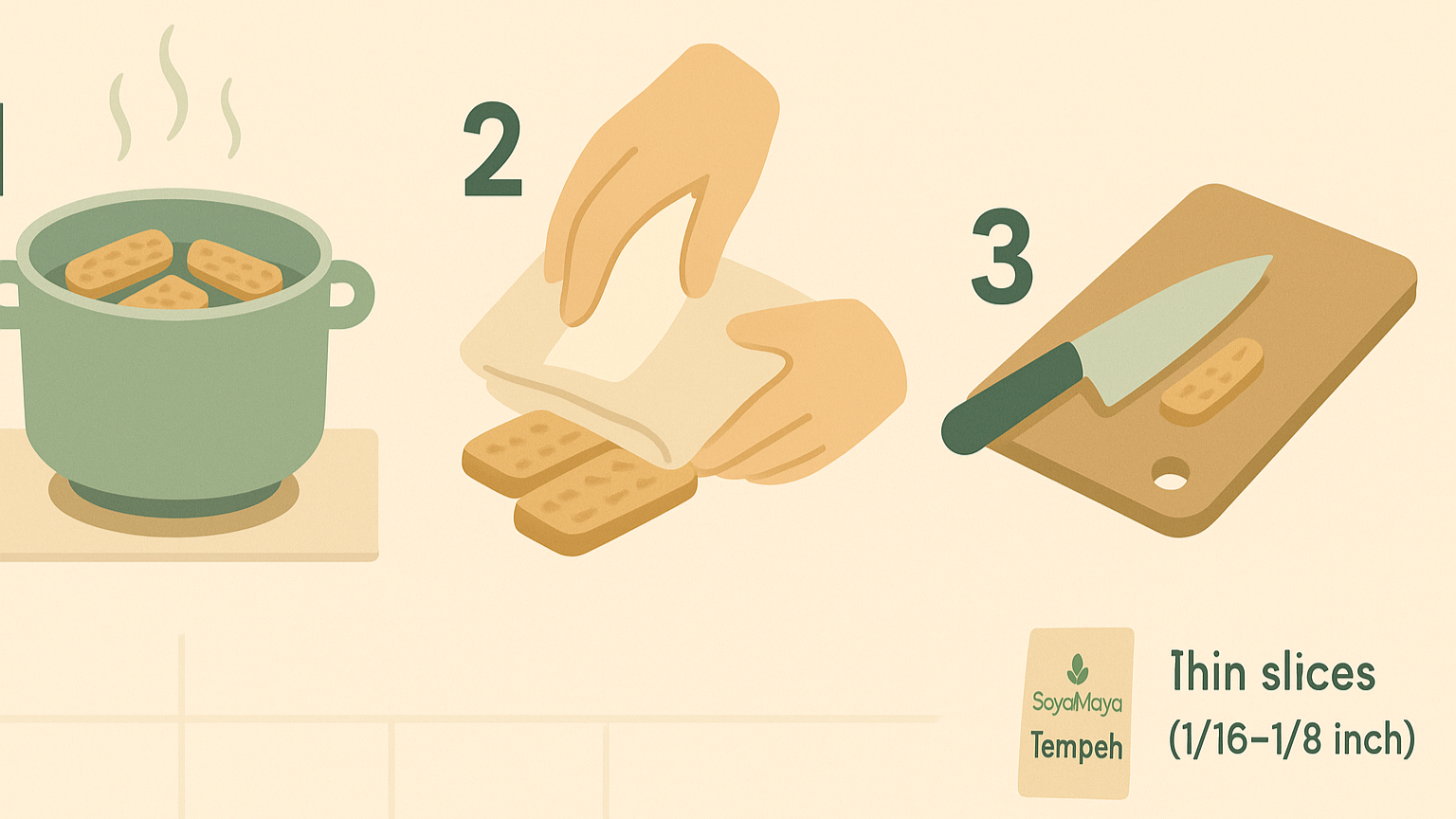
There’s a quiet kind of satisfaction in getting tempeh ready, almost like sharpening a pencil before you write. If you rush this part, the chips come out tough or bland, and you start wondering what went wrong. When you slow down and prep it right, though, the tempeh changes, it turns into something light and crisp that actually feels snackable. A bit like how soaking and rinsing potatoes changes french fries, this early care shapes everything that comes after. In our kitchen, this step isn’t negotiable.
Reduce Bitterness by Steaming or Simmering
Tempeh is fermented, and that gives it a deep, nutty taste, but it can also carry a faint bitterness, especially when eaten in thin, crunchy slices like chips. This is especially true when you’re aiming for the light, crisp texture found in many plant-based tempeh chips where clean, balanced flavor matters. If you skip this step, that slightly sharp edge often shows up more clearly once it’s baked or air-fried.
Soya Maya Tempeh Protein Chips — 100% plant-based, high protein, no artificial additives. Ships to your door.
Get Your Chips →Steaming or simmering the tempeh for about 10 minutes softens that bitterness and loosens its structure at the same time. Cooking guides commonly recommend steaming or boiling for 10–15 minutes to mellow flavor and improve texture. The heat helps break down some of the compounds that contribute to bitterness, and many cooks note that simmering or steaming before cooking leads to a more neutral, pleasant flavor. [1]
The texture opens up, the beans relax a little, and suddenly the tempeh is ready to soak in whatever flavor you throw at it. That helps when you slice it thin for “chip-style” tempeh, giving you a crunchy, snack-friendly result rather than a dense, chewy block.
Thoroughly Dry the Tempeh
Once the tempeh is steamed, water becomes your main problem. Any leftover moisture sticks around during baking or air frying and turns into steam, which is the exact opposite of what you want for chips. Instead of crisp, you get soft and slightly soggy slices.
So drying isn’t just a small side note, it’s essential. Start by patting the block dry with paper towels, pressing gently on all sides. Then leave it on a cutting board or a clean kitchen towel to air-dry for a few extra minutes. This short pause in the process is useful, because you can:
- Preheat your oven or air fryer.
- Gather your spices, sauces, and starches.
- Set up a tray with parchment if you’re baking.
When the surface feels dry to the touch, you’re ready to slice. A dry tempeh surface grips marinades and seasonings better and fries or bakes into that crisp, chip-like snap you’re after. Think of dryness here as your quiet, reliable ally.
Flavoring Your Tempeh Chips
Once the tempeh is prepped, it’s all about personality. Plain tempeh doesn’t shout; it listens. It absorbs whatever you give it, which makes it a perfect base for snacks, much like the adaptable seasoning profiles found in many tempeh chips recipes. You can go smoky, spicy, cheesy, or even a bit sweet-salty if that’s your favorite combination.
The key is even coverage. Every slice should get its fair share of seasoning so you don’t end up with one bold chip and three bland ones in the same bowl. At SoyaMaya, we play around a lot with this stage, pulling in Indonesian flavors like kecap manis and coriander, then balancing them with snack flavors more people recognize, like barbecue or chili-lime. There’s a lot of room to experiment here, and there aren’t many wrong moves, as long as you pay attention to balance.
Marinate or Season for Delicious Flavor
You have two main routes:
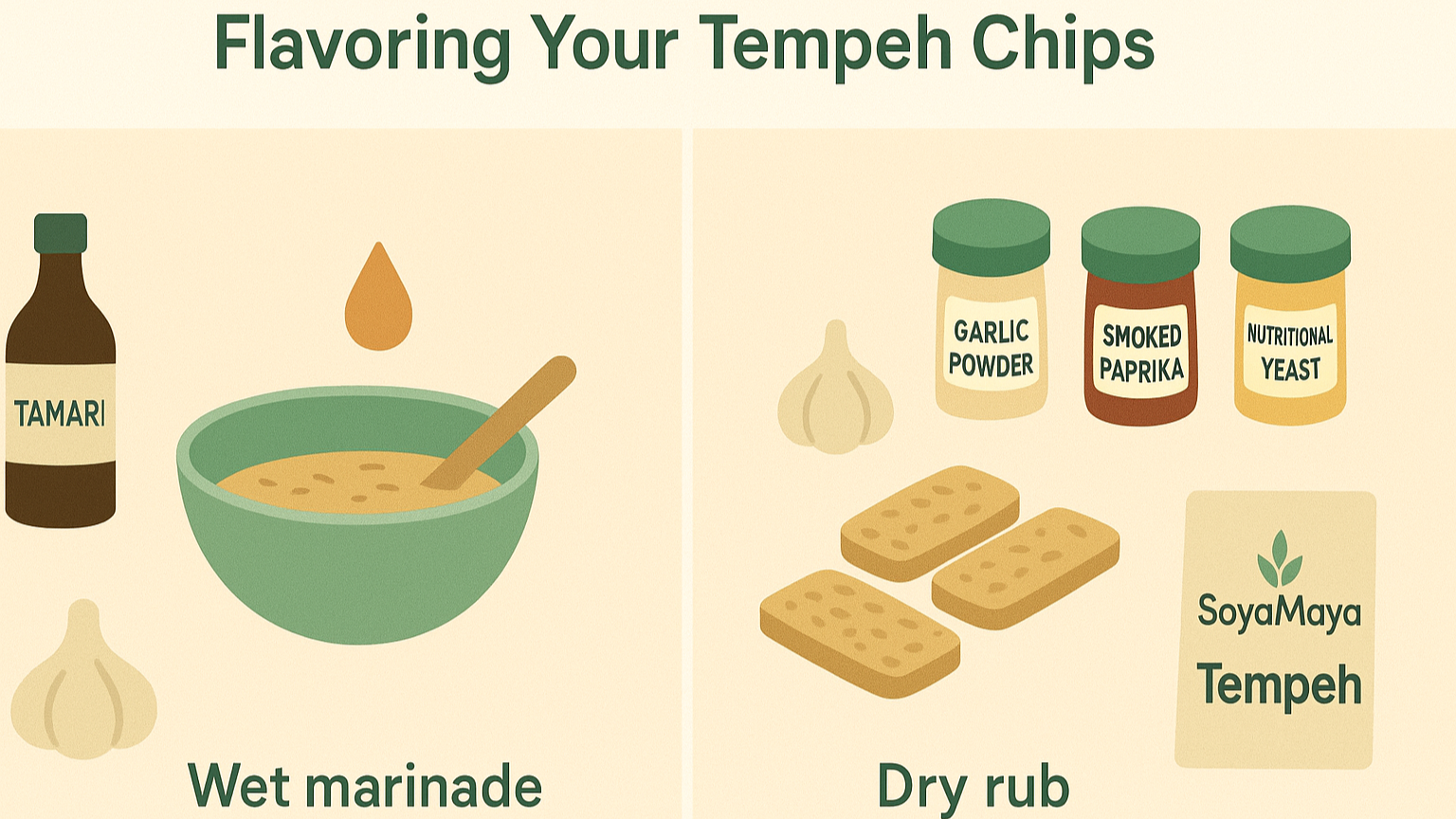
- A wet marinade.
- A dry rub.
A wet marinade sinks into the tempeh, giving it deeper, layered flavor and often a slightly caramelized edge once cooked (thanks to sugars). A dry rub, on the other hand, clings to the surface and can form a crisp, seasoned crust. Both are good, they just suit different moods and schedules.
- If you have a bit more time and want bold, sticky, rich chips, go with a marinade.
- If you’re in a hurry and want something fast and punchy, reach for a dry rub.
Either way, thin slices and even coating will matter just as much as the recipe itself.
Option 1: Wet Marinade
A simple marinade can take tempeh from bland to addictive with very little effort. Here’s a reliable base mix:
- 2 tablespoons tamari or soy sauce
- 1 tablespoon maple syrup
- 1 minced garlic clove
- 1 tablespoon tapioca starch
The tamari or soy sauce brings salt and umami, the maple syrup adds a light sweetness that helps with browning, and the garlic gives that familiar savory aroma. The tapioca starch is the quiet “magic trick” here, because it forms a thin coating that turns extra-crispy when baked or air fried.
Slice the dried tempeh into thin chips, aim for even slices so they cook at the same rate. Toss them gently in the marinade until every piece is coated but not drowning (you want a light, glossy layer, not a puddle). Let them sit for at least 10 minutes. If you have more time, 20–30 minutes gives even stronger flavor.
You can also adjust from this base:
- Add a splash of rice vinegar or lime juice for brightness.
- Stir in a little chili sauce or chili powder for heat.
- Use a bit of grated ginger for warmth and a slight kick.
When you lay the slices on your tray or air fryer basket, keep them in a single layer. That thin starchy coat will help them crisp up, turning into those crackly edges you notice first when you bite in.
Option 2: Dry Rub
When time is short, or you just prefer a less saucy chip, a dry rub works beautifully. The goal here is a mix of spices that clings well and doesn’t burn too fast.
Start with the dried tempeh slices and toss them in a bowl with:
- Garlic powder
- Smoked paprika
- A pinch of salt
- Nutritional yeast
This blend leans savory and a bit smoky, and the nutritional yeast adds a mild, cheesy depth without dairy. You can build on this base depending on what you like:
- Add chili flakes or cayenne for more heat.
- Use onion powder for extra savory depth.
- Sprinkle in a small amount of brown sugar or coconut sugar if you want a tiny sweet edge that caramelizes.
Use your hands or a spoon to make sure every slice is lightly and evenly coated. You don’t want thick clumps of spice on one spot and nothing on another. A thin, even dusting allows the edges to crisp up and keeps the seasoning from tasting harsh or powdery.
Once seasoned, the slices are ready to cook right away. As they bake or air fry, that dry mix grips the tempeh and forms a flavorful crust you can taste in every bite, which is exactly what you want from a snackable batch of tempeh chips.
Cooking Methods for Crispy Tempeh Chips
Sometimes the difference between “pretty good” and “I can’t stop eating these” is all in how you cook them. Tempeh is firm, a little dense, and full of character, so the method you use really shapes the final chip, texture, flavor, even how light or rich it feels. We tried several ways in the kitchen, again and again, just to see how far we could push the crunch. Your tools, schedule, and how much oil you like to use will all nudge you toward one method or another, but it’s worth knowing what each one does.
Baseline nutrition for raw tempeh
- According to one “raw tempeh” database entry: 100 g raw tempeh provides about 192 kcal, ≈ 20.3 g protein, ≈ 10.8 g fat, and ≈ 7.6 g carbohydrate.
- Another widely used database lists for 100 g: 193 kcal, ≈ 18.5-19.0 g protein, ≈ 10.8 g fat, and ≈ 9.4 g carbohydrate. [2]
- A third source for “cooked tempeh” gives 100 g ≈ 195 kcal, ≈ 19.9-20.0 g protein, ≈ 11.4 g fat, and ≈ 7.6 g carbohydrate.
Baking for a Healthier Option
Baking is great when you want to set things up, walk away for a bit, and still get a solid crunch without drowning the tempeh in oil.
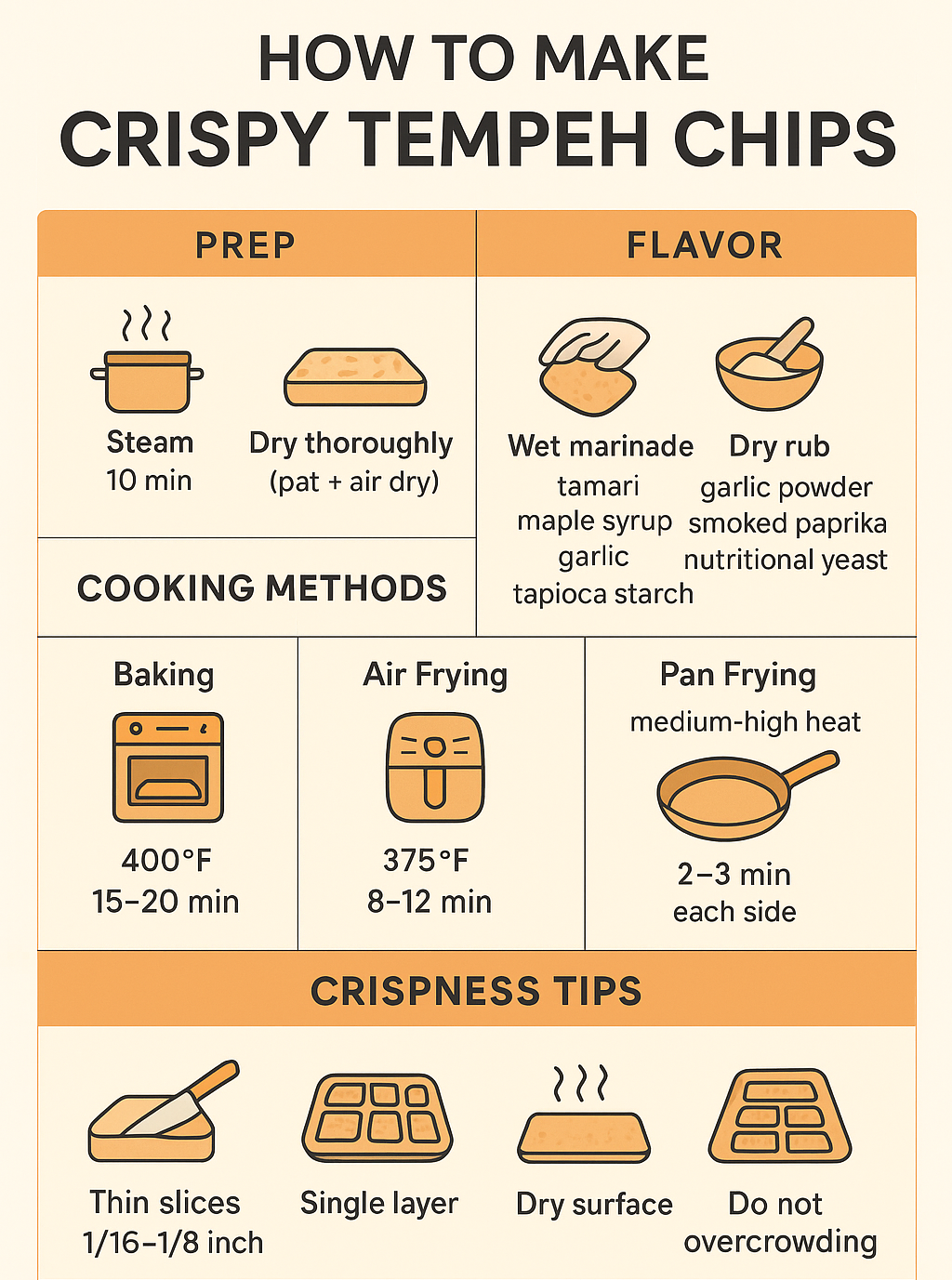
Preheat your oven to 400°F (200°C). Line a baking sheet with parchment paper so the slices don’t stick and so cleanup is easier. Arrange your marinated or seasoned tempeh slices in a single layer, making sure they don’t overlap. This space between pieces matters, it helps them dry out and crisp instead of steaming.
Bake for 15 to 20 minutes, flipping the slices halfway through so both sides brown evenly. They’re ready when they turn golden brown, firm to the touch, and feel light when you tap them with a fork. If they still feel a bit soft in the middle, give them a few more minutes and check again.
For extra crisp edges, you can switch the oven to broil for the last 1 to 2 minutes. Keep a close eye on them during this part. Tempeh can go from perfect to burnt faster than you expect, especially at the edges where it’s thinner.
If you want an even lighter texture, you can:
- Pat the slices dry before baking, especially if the marinade is very wet.
- Use a light spray of oil instead of brushing it on.
- Rotate the tray halfway through for more even heat.
Baked chips are great when you want a snack that still feels pretty clean, something you can eat a lot of without feeling weighed down.
Air Frying for a Quick and Easy Snack
If you have an air fryer, this is where it really earns its place on the counter. Air fryers act a lot like mini convection ovens, blasting hot air around the food so it crisps faster with less oil.
Preheat the air fryer to 375°F (190°C). Arrange the tempeh slices in a single layer in the basket. Try not to stack them, or they’ll steam and soften instead of crisp. If you need to cook a big batch, work in rounds.
Cook for about 8 to 12 minutes, shaking the basket halfway through to move the slices around. This helps every edge get exposed to the hot air. If you already marinated your tempeh with some oil in it, you usually don’t need any extra. If it’s a very dry seasoning, a tiny mist of oil can help the surface crisp.
You’ll know they’re ready when they’re golden, stiff, and sound a little “snappy” when you tap them with tongs. If you like them extra crisp, you can add 1–2 more minutes and check again, but go in small steps to avoid burning.
Air frying works especially well when:
- You want a fast snack.
- You’re cooking for one or two people.
- You want the crunch of frying with less oil and less mess.
The result is a crunchy, high-protein snack you can season any way you like, from smoky to spicy to sweet.
Pan Frying for a Traditional Texture
If your goal is peak crunch with deep flavor, pan frying is still the champion. This style is closest to Indonesian tempeh goreng, where tempeh is fried until it’s golden and almost shatteringly crisp.
Pour about ¼ inch of neutral oil (like avocado, canola, or sunflower oil) into a skillet and heat it over medium-high heat. You want the oil hot but not smoking. To test it, slide in a small piece of tempeh, if it sizzles right away, the oil is ready.
Lay the slices in gently, without crowding the pan. Fry for 2 to 3 minutes per side, or until the pieces turn deeply golden, with tiny bubbles forming around the edges. Flip carefully with tongs or a spatula so they don’t break.
When they’re done, move the chips to a plate lined with paper towels to drain off extra oil. As they cool, they’ll firm up even more and become very crunchy, with that classic “fried snack” bite.
If you want less oil but still like the flavor of frying, you can:
- Use a nonstick pan and just a thin layer of oil.
- Blot the slices well after cooking.
- Keep the heat steady so they crisp instead of soaking up oil.
Pan frying is the best choice when you want bold flavor, a strong crunch, and that old-school fried feel.
Tips for the Best Tempeh Chips
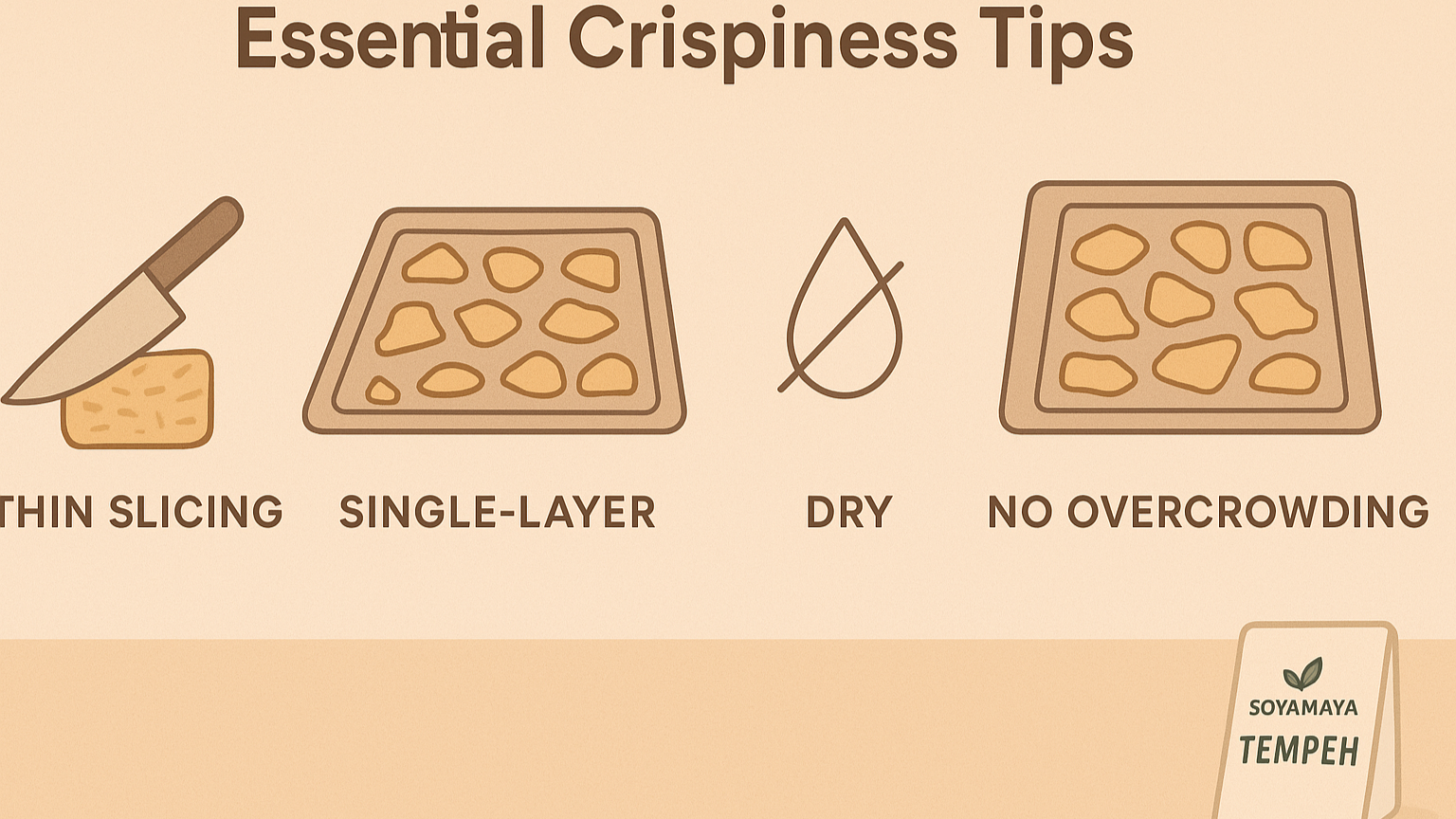
Little details add up. Often the difference between “good” and “wow” is just how you slice, space, and season the tempeh, the same principles that guide many crisp, plant-based chips designed for light, even crunch. A bit of patience here pays off later.
Achieving Maximum Crispiness
Crisp chips start with how you cut the tempeh. Thickness really matters.
Use a very sharp knife or a mandoline slicer if you have one. Aim for slices between 1/16 and 1/8 inch thick. Thin slices mean the moisture can escape quickly, so the pieces dry out and crisp instead of turning chewy. If the slices are uneven, the thinner parts may burn while the thicker ones stay soft.
A few key rules for better crunch:
- Same thickness = same cook time, same texture.
- Single layer only in the pan, basket, or tray. If the slices overlap, they trap steam and go limp.
- Dry surface: Lightly pat the slices dry before cooking if the marinade is very wet.
- Avoid overcrowding: Give each chip a bit of breathing room so hot air or oil can reach every side.
For extra crispiness, you can let the cooked chips sit on a cooling rack instead of a plate. Air can reach both sides, so they stay drier and snappier.
Flavor Variations and Storage
Tempeh is like a quiet base that takes on whatever you put on it. The cooking gives you crunch, but the seasoning gives you personality. You can keep it simple with salt, or go bold.
Right after cooking, while the chips are still warm, toss them with extra seasonings so the flavors stick better. Some ideas:
- Barbecue blend: Smoked paprika, garlic powder, onion powder, a tiny bit of sugar, and salt.
- Chili-lime: Chili powder or cayenne, lime zest, salt, maybe a pinch of cumin.
- Sweet version: Cinnamon and sugar, or coconut sugar with a touch of vanilla powder.
- Savory umami: Nutritional yeast, garlic powder, and a little salt.
Let the chips cool fully before you store them. Once they’re at room temperature, place them in an airtight container, a jar with a tight lid or a sealed container works well. They’ll usually stay crisp for about three days.
If they start to soften (humidity and steam can do that), you can bring them back to life:
- Put them in a hot oven for about 1–2 minutes, or
- Reheat them in the air fryer for a short burst.
After that quick re-crisp, they’re usually back to their original crunch, ready for snacking, salads, or serving on a snack board. Tempeh chips are simple at heart, but with the right method and a few good details, they end up feeling like something you’d keep coming back to.
FAQ
1.What helps we’ve get the best crunch when making homemade tempeh chips?
Getting a strong crunch starts with thin, even cuts using simple tempeh slice techniques. Dry the slices well, then choose a method you like: baked tempeh chips, fried tempeh chips, or a tempeh chip air fryer batch. These steps help you create crispy tempeh snacks with steady texture and flavor, even if you want low fat tempeh snacks.
2.How can we season vegan tempeh chips without making them too salty?
You can build flavor with a mix of tempeh chip spices, nutritional yeast tempeh chips mixes, and mild tempeh chip salt alternatives. Try simple tempeh spice blends or tempeh chip seasoning ideas like paprika, garlic, or light herbs. These choices keep vegan tempeh chips balanced while still giving you a bold taste that feels easy and comforting.
3.What are simple ways to prepare healthy tempeh snacks for busy days?
Focus on fast steps like air fried tempeh, baked vegan snacks, or tempeh chip recipes without oil. These options keep things light while still giving you high protein snacks. You can also try tempeh snack ideas quick, including savory tempeh bites or crispy tempeh slices you prep ahead. Store them well for steady flavor and simple grab-and-go snacking.
4.How do we store plant-based crunchy snacks like tempeh crisps so they stay fresh?
Let the chips cool fully, then place them in a dry, sealed container to keep that tempeh snack crunchiness. This helps extend tempeh chip shelf life for homemade batches. You can also explore tempeh snack storage tips to avoid soft spots. Keeping fermented soy snacks dry and away from heat helps protect the natural tempeh chip texture enhancement.
Bringing It All Together: Your Path to Perfect Tempeh Chips
Making tempeh chips at home lets you choose clean ingredients and build a high-protein, plant-based snack full of real flavor. A simple block of tempeh can turn into something crunchy, wholesome, and satisfying. We use the same approach with our SoyaMaya Fresh Frozen Tempeh, and the results never disappoint. Try your own favorite seasonings and see how good it can be.
Ready to start? Explore our tempeh in the shop: SoyaMaya Shop
References
- https://cycookery.com/article/how-to-steam-tempeh-before-cooking
- https://www.fatsecret.com/calories-nutrition/usda/tempeh
Related Articles
- https://mayasaritempeh.com/plant-based-tempeh-chips/
- https://mayasaritempeh.com/tempeh-chips/
- https://mayasaritempeh.com/plant-based-chips/
Soya Maya Tempeh Protein Chips
High-protein, plant-based, made from real tempeh. No artificial flavors. Crunchy and satisfying every time.
