
You can turn a simple block of tempeh into crispy, savory chips with bold flavor and real crunch, all in under an afternoon. Instead of waiting for the perfect snack to appear in your pantry, you’ll slice, season, and bake (or air-fry) tempeh into a plant-based chip that actually satisfies. After working with tempeh for years in our own kitchen, we’ve learned how to bring out its nutty taste, avoid any bitterness, and keep the texture light, not tough. If you’re ready to turn humble tempeh into your next go-to snack, keep reading.
Key Takeaway
- Simmering the tempeh first removes bitterness and ensures a crisp final texture.
- A bold marinade and uniform slicing are non-negotiable for flavor and even cooking.
- Choose your cooking method: frying for ultimate crunch, baking for health, or air-frying for speed.
Prep the Tempeh
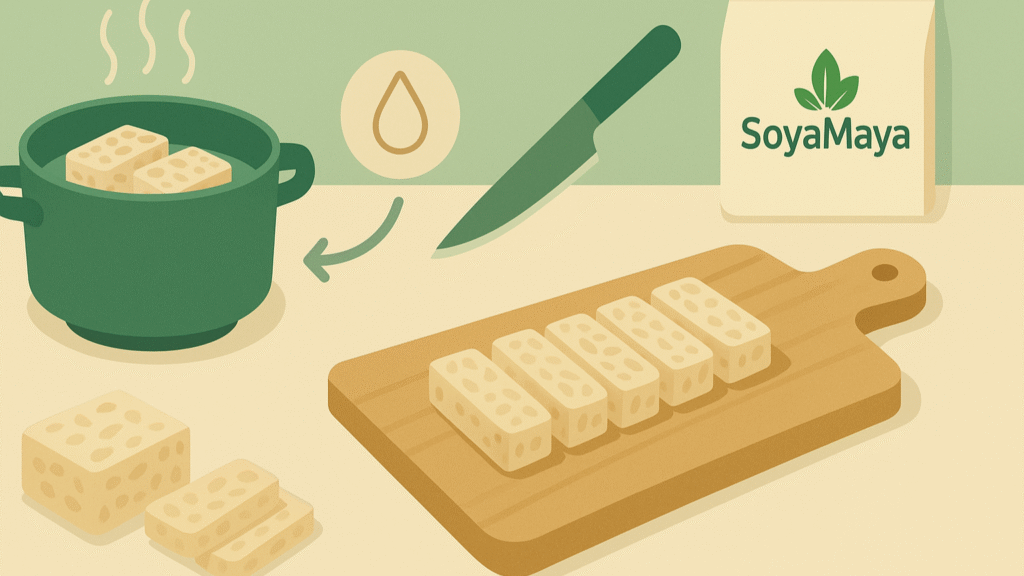
The foundation of a perfect tempeh chip really starts long before it hits the pan or the oven. This is the part a lot of people rush, then they wonder why their chips turn out chewy, rubbery, or oddly bland. When you slow down here, you can taste it later. We usually reach for our own SoyaMaya Fresh Frozen Tempeh because it’s firm and reliable, but any fresh, high-quality block will do the job. Any tempeh product you choose benefits from the fact that fresh tempeh accounts for a leading share of the global market, illustrating how consumers increasingly prefer minimally processed, flavorful versions of this fermented soybean staple. [1]
At its core, this stage is about building the right foundation before seasoning and cooking:
SoyaMaya Tempeh Protein Chips — 100% plant-based, high protein, no artificial additives. Ships to your door.
Get Your Chips →- Starting with a fresh, firm block of tempeh to ensure structure
- Gently reducing bitterness while releasing excess moisture
- Drying thoroughly so flavors adhere and crispness develops
- Allowing time for a marinade to fully penetrate the tempeh
- Slicing evenly to guarantee consistent cooking and crunch
What you’re doing in this stage is simple: you’re turning a plain block of fermented soybeans into a ready-to-season canvas, the same foundational approach used in traditional how to make tempeh chips methods where proper preparation determines both flavor absorption and final crunch. The better you prepare it, the better your seasoning will cling, sink in, and stay put through cooking.
You can think of it like prepping potatoes before making fries, if you skip rinsing or drying, you don’t get that perfect crunch. Tempeh behaves the same way. It needs a bit of gentle handling, a bit of care, and a little patience. Once you understand that, the whole process feels less like a chore and more like a small kitchen ritual that pays you back in every bite.
Simmer to Reduce Bitterness
Some tempeh comes with a faint bitterness, almost like a sharp edge on the flavor, and for snacks that can be distracting. A quick simmer is the easiest way to smooth that out. Place the whole tempeh block in a saucepan and cover it completely with water. Bring the water to a gentle boil, not a wild rolling boil, and let it simmer for about ten minutes. That short simmer does two helpful jobs at once: it mellows the flavor and starts steaming out some of the extra moisture trapped inside the block.
Moisture is the enemy of crispiness, and tempeh holds more water than it seems at first glance. If you skip this step, you might notice your chips never quite reach that light, brittle snap. Once the simmering time is up, transfer the tempeh to a cutting board or plate and pat it dry with paper towels. Press gently on all sides. Rotate it and pat again. You want it as dry as you can reasonably get it before moving on. If you have time, you can even let it sit out for 5 to 10 minutes to air-dry a bit more while you mix the marinade.
Marinate for Flavor
This is where the flavor starts to build. Sprinkling salt at the end will help, but it won’t give you that full, layered taste that makes a snack addictive. A marinade lets flavor seep down into the tempeh, so each chip tastes seasoned all the way through, not just on the surface.
In a small bowl, whisk together your base marinade. We like a simple, reliable mix: neutral oil, soy sauce or tamari, garlic powder, and a touch of smoked paprika for warmth and a soft hint of smokiness.
From here, you can go in any direction. Add maple syrup for a sweet-savory balance, chili flakes for heat, or a bit of lime juice for brightness. Toss the dried tempeh block in the marinade, turning it so every side gets coated. Make sure no dry patches remain, that’s usually where bland bites hide. Let the tempeh sit for at least 30 minutes at room temperature. If you want stronger flavor (and more perfume in your kitchen later), cover the bowl and let it rest in the fridge for a few hours or overnight. The longer it sits, the more confident the flavor becomes, and the more the tempeh soaks up those seasonings like a sponge.
It’s worth noting that tempeh isn’t just a regional snack anymore, the tempeh snack market itself is expanding, with Asia Pacific holding roughly 38 % of total global tempeh snack sales, and markets like North America growing in double digits due to rising plant-based and protein-rich snack trends. [2]
Slice Uniformly
Once the tempeh has absorbed the marinade, it’s time to think about texture. Slicing is surprisingly important here. Using a very sharp knife or a mandoline (which helps keep the thickness consistent), slice the marinated tempeh into thin, even slices. Aim for about one-eighth of an inch thick. That might feel thin, but that’s where the chip-like crunch comes from.
Uniform slices matter because they all cook at the same speed. If some slices are thick and others are paper-thin, you’ll be chasing them around the pan, pulling some out early while others stay soft. That’s how you end up with a mix of burnt edges and undercooked centers. Take a minute, slow your cutting, and line up a few slices side by side to check if they match. When the slices look consistent, you’re setting yourself up for a full tray or pan of evenly crisp, golden chips instead of a handful of lucky ones.
Cooking Methods

How you apply heat shapes the final personality of your tempeh chips. The prep work stays the same, but the method you choose changes the texture, the richness, and even how often you might make them, which is why modern plant-based tempeh chips recipes often adapt the same marinade across frying, baking, and air-frying without sacrificing crunch.
At a glance, each cooking method brings something different to the table:
- Frying delivers maximum crunch and rich, indulgent flavor
- Baking offers a lighter, everyday option with less oil
- Air-frying balances speed, convenience, and crispiness
- All methods start with the same marinated, evenly sliced tempeh
Some days you want the full, crunchy indulgence of frying. Other days, you just want a light, everyday snack you can bake while you clean up the kitchen. The nice part is you don’t have to relearn the steps for each method, the marinated, sliced tempeh is the starting point for all of them.
Frying for Ultimate Crispiness
If you’re chasing that classic, loud, shatteringly crisp chip, frying is the route that delivers without hesitation. Pour a neutral-flavored oil, like avocado oil or high-oleic sunflower oil, into a heavy skillet to a depth of about half an inch. Heat the oil to around 350°F. A candy thermometer is ideal, but if you don’t have one, you can test the oil by gently dropping in a small piece of tempeh; it should sizzle right away and start bubbling around the edges.
Carefully add a single layer of tempeh slices to the hot oil. Leave some space between pieces so they don’t steam or stick together. Fry for about 2 to 3 minutes per side until they turn a deep, rich golden brown. As they cook, you might see the edges darken first, that’s usually your sign to flip. When they’re done, use a slotted spoon to lift them out and place them on a plate lined with paper towels to drain off the extra oil.
The result, when you bite into one, is crisp all the way through, with a satisfying snap and a concentrated, savory flavor. A well-fried tempeh chip feels almost fragile, in the best way, and it’s very easy to keep reaching for “just one more.”
Baking for a Healthier Option
Baking gives you a chip that’s still nicely crispy but relies on far less oil, which makes it easier to eat as a daily snack. Preheat your oven to 400°F. Line a baking sheet with parchment paper so the slices don’t stick and are easier to flip. Arrange your marinated tempeh slices in a single layer, giving each piece a bit of breathing room. If they overlap, the overlapping parts will stay soft.
Lightly spray or brush the tops with a bit of oil, this helps with browning and crunch. Bake for 15 to 20 minutes, flipping each slice halfway through. When you flip, check their color; you want a gentle golden tone building across the surface. During the last five minutes, watch them more closely, since they can shift from perfectly done to overly dark quickly.
Baked tempeh chips turn out a little denser than fried ones but still give you a rewarding crunch, especially as they cool slightly on the tray. They travel well in lunch boxes, hold up next to dips, and feel easy to reach for on a weekday afternoon without feeling too heavy.
Air-Frying for Quick Results
The air fryer sits right between frying and baking in terms of effort and result, and it’s a great option if you want speed without a whole pan of hot oil. Preheat your air fryer to 375°F. Lay the tempeh slices in the basket in a single layer, trying not to overlap them. If your air fryer is small, cook in batches so every piece gets direct air circulation.
Cook for 8 to 12 minutes, shaking the basket or flipping the chips halfway through so both sides crisp evenly. Around the 8-minute mark, start checking for color and texture, the chips should look golden and feel firm at the edges. Different air fryers run hotter or cooler, so the first batch is a good test run.
When they’re done, the chips come out impressively crispy, with a lightness and crunch very close to shallow frying, just with much less oil. If you like having a snack you can make almost on autopilot, this method fits nicely into a busy day: marinate ahead, then air fry a quick batch whenever the craving hits.
Flavor Variations
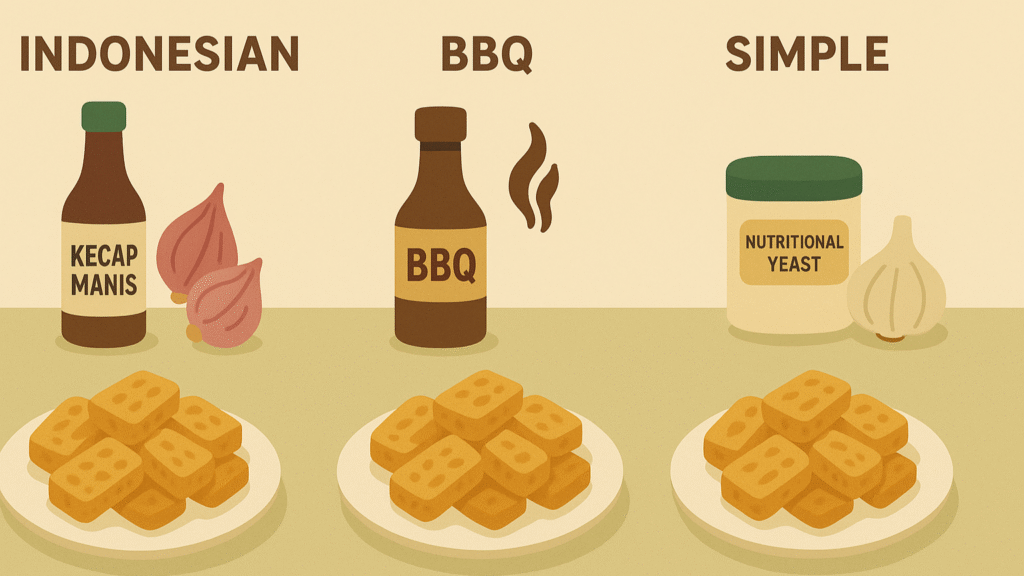
Sometimes you don’t really get how flexible tempeh is until you start playing with it. The basic marinade is just the starting line, much like classic tempeh chips preparations that rely on seasoning balance rather than heavy sauces to define their character. After that, tempeh turns into this blank slate that happily takes on whatever direction you give it, sweet, smoky, spicy, or all of them at once.
Here are a few favorite variations that build on the same base idea: thin slices, good seasoning, and enough heat to make them crisp.
Indonesian-Inspired Tempeh Chips
This version feels close to home for tempeh.
After frying the chips, sauté thinly sliced shallots and garlic in a teaspoon of oil over medium heat, just until they turn soft and fragrant. If you enjoy heat, add a chopped bird’s eye chili and stir it for a few seconds so the spice blooms in the oil.
Return the fried tempeh chips to the pan and add a generous splash of kecap manis (sweet soy sauce). Stir for about a minute, until the sauce thickens and clings to every chip. You’re aiming for glossy, sticky chips, not a wet sauce at the bottom of the pan.
You end up with chips that are sweet, spicy, savory, and just a bit smoky from the fried shallots. They’re the kind of snack you keep reaching for without realizing how many you’ve had.
BBQ Tempeh Chips
For a smoky, American-style version, trade the base marinade for your favorite barbecue sauce thinned with a little neutral oil. You want it loose enough to coat the slices lightly, not drench them.
Stir in a pinch of onion powder and, if you have it, a small dash of liquid smoke. That tiny bit goes a long way, so start light. Marinate the tempeh briefly, then bake or air-fry until the edges darken and caramelize.
The chips come out crisp, sticky at the edges, and packed with that familiar barbecue taste, sweet, tangy, smoky, without any meat involved. They pair well with coleslaw, burgers, or just a cold drink and a quiet afternoon.
Simple Seasoned Tempeh Chips
Sometimes, simple really is the best move.
A quick mix of olive oil, nutritional yeast, garlic powder, onion powder, and salt creates a cheesy, savory coating that works especially well if you’re new to tempeh. The nutritional yeast adds umami and a mild “cheese-like” taste, while the spices support the natural nuttiness of the tempeh.
This version lets the tempeh flavor stand out instead of hiding it. It’s great as a snack, on top of salads, or served next to a bowl of soup for extra crunch.
Other Quick Flavor Ideas
You can also riff on smaller, focused seasoning blends. For example:
- Savory Garlic: Garlic powder, onion powder, salt, and a touch of turmeric for color. The turmeric doesn’t change the taste much, but it makes the chips a warm golden yellow that looks great on the plate.
- Spicy Sriracha: Sriracha, a splash of lime juice, and a bit of maple syrup for balance. The syrup softens the sharp heat, while the lime keeps the flavor bright instead of heavy.
- Salt & Vinegar: Add a splash of malt vinegar to the marinade, then sprinkle the chips with flaky salt right after cooking. They’ll remind you of classic salt-and-vinegar potato chips, but with more body and a nutty base from the tempeh.
Tips for Perfect Tempeh Chips
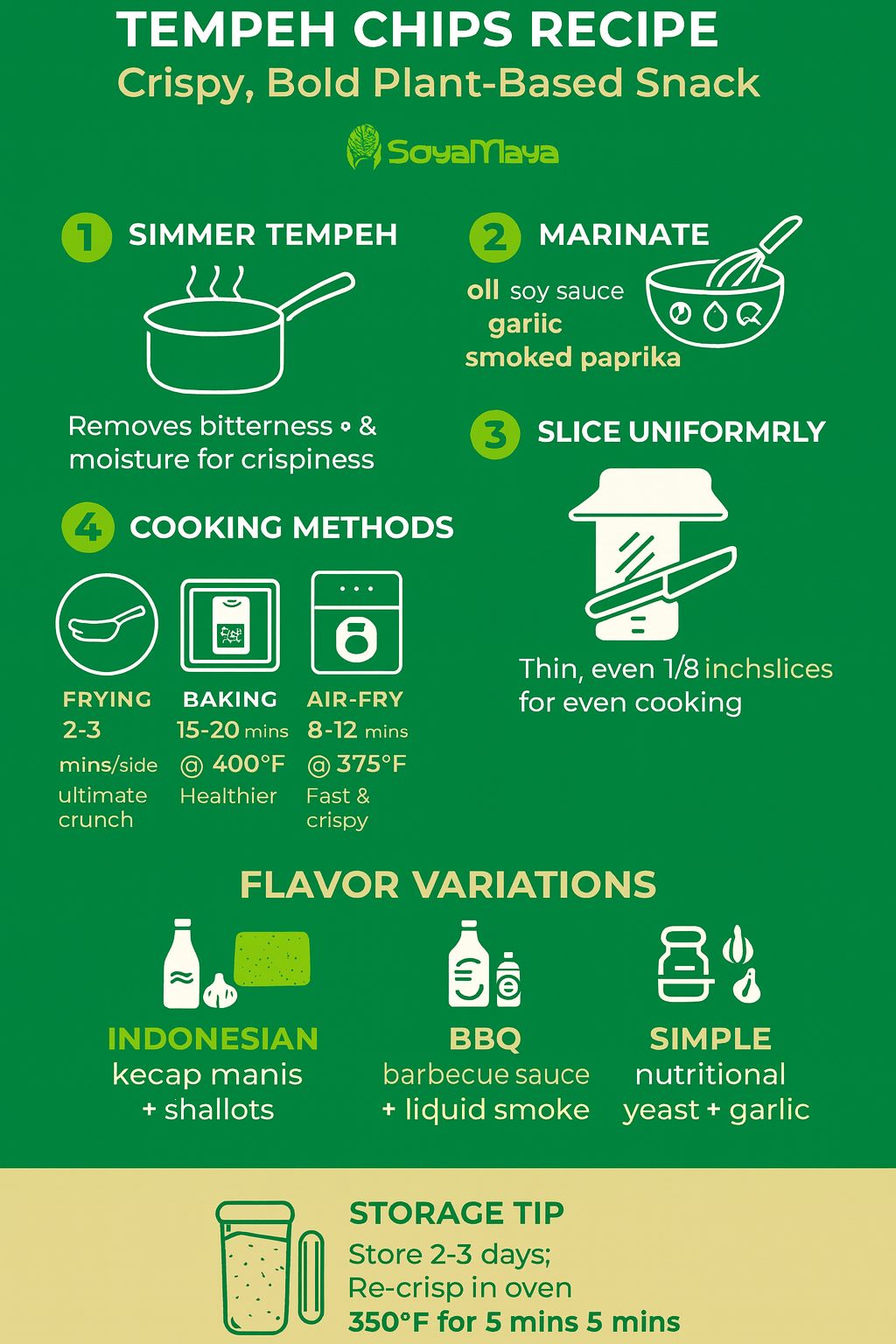
A few small details separate decent chips from the batch you can’t stop eating. These are hard-won lessons from making more trays of tempeh chips than we’d like to admit.
Before diving into the specifics, it helps to keep these core principles in mind:
- Always steam or simmer tempeh first to reduce bitterness and improve texture
- Use high–smoke point, neutral oils so seasoning stays front and center
- Apply oil lightly when baking or air frying to encourage crisping without greasiness
- Store chips properly and re-crisp gently to revive leftover batches
Steam or Boil First
Simmering isn’t your only option. Steaming the whole block of tempeh for about 10 minutes before marinating works just as well. Both methods help reduce any natural bitterness and soften the texture so it absorbs flavor more easily.
Which one you choose is really just preference and equipment. Have a steamer basket? Use it. Only have a pot? Simmer gently. The important part is to do one or the other. Don’t skip this step, it affects both taste and texture.
Choose the Right Oil
Oil choice matters, especially when frying. You want something with a high smoke point and a neutral flavor, so it doesn’t compete with your seasonings.
Avocado oil and high-oleic sunflower oil are both strong options. They stay stable at higher heat and let the spices, sauces, and tempeh flavor stay in front. For baking or air frying, a light spray of oil over the slices helps them crisp without making them greasy.
Storage
Tempeh chips are at their best when they’re fresh and still a bit warm. The crunch is sharper, and the seasoning feels more alive.
If you have leftovers, let the chips cool completely before storing them in an airtight container at room temperature. They’ll stay reasonably crispy for about 2-3 days. If they soften, spread them on a baking sheet and re-crisp them in a 350°F (about 175°C) oven for 5 minutes or so.
They might not return to that just-cooked perfection, but they’ll still taste very good, and you’ll be glad you saved them instead of tossing them.
FAQ
How can we make crispy tempeh chips at home without them turning chewy?
To make crispy tempeh chips, start with marinated tempeh slices and ensure they are patted dry. Use even slicing and choose your cooking method carefully: oven-baked tempeh, air-fried tempeh chips, or fried tempeh chips all produce different textures. Proper heat, spacing, and timing are key to achieving the ideal tempeh chip crunchiness without losing flavor.
What are some easy tempeh recipe ideas for plant-based snacks?
Easy tempeh recipe ideas include homemade tempeh chips, savory tempeh chips with garlic seasoning, spiced tempeh chips, or bold flavored tempeh served as finger food. These simple tempeh snacks make great vegan appetizers and protein-rich snacks. Combining baked tempeh chips with dipping sauces adds variety while keeping them wholesome and satisfying.
How do we store homemade vegan chips and maintain crispiness?
Crispy vegan snacks like tempeh crisps should be cooled completely before storing. Use an airtight container at room temperature for 2-3 days. For longer freshness, re-crisp in the oven or air fryer. Proper storage ensures the tempeh chip texture stays light and crunchy. This is essential for tempeh snack ideas that are prepared ahead of time.
What are some tempeh chip flavor variations and seasoning ideas?
Tempeh chip flavor variations can include spicy tempeh chips, sweet-savory tempeh crisps with kecap manis tempeh, or savory tempeh chips with garlic and nutritional yeast. Other options are baked vegan chips with herbs or spiced tempeh chips. Experimenting with marinated tempeh slices and tempeh chip dipping sauces lets you create bold flavored tempeh that complements any plant-based snack menu.
Your Crispy Tempeh Chip Adventure
Turn a simple block of tempeh into crunchy, bold chips with just a few mindful steps: prep, marinate, and cook. This Tempeh Chips Recipe gives you a reliable foundation for protein-packed, plant-based snacking using ingredients you can trust. Play with marinades and dipping sauces to make it uniquely yours. Ready to start your crispy snack journey? Get your tempeh from SoyaMaya Shop and bring the crunch to your kitchen!
References
- https://www.persistencemarketresearch.com/market-research/tempeh-market.asp
- https://growthmarketreports.com/report/tempeh-snack-market
Related Articles
- https://mayasaritempeh.com/how-to-make-tempeh-chips/
- https://mayasaritempeh.com/plant-based-tempeh-chips/
- https://mayasaritempeh.com/tempeh-chips/
SoyaMaya Tempeh Protein Chips
High-protein, plant-based, made from real tempeh. No artificial flavors. Crunchy and satisfying every time.
