
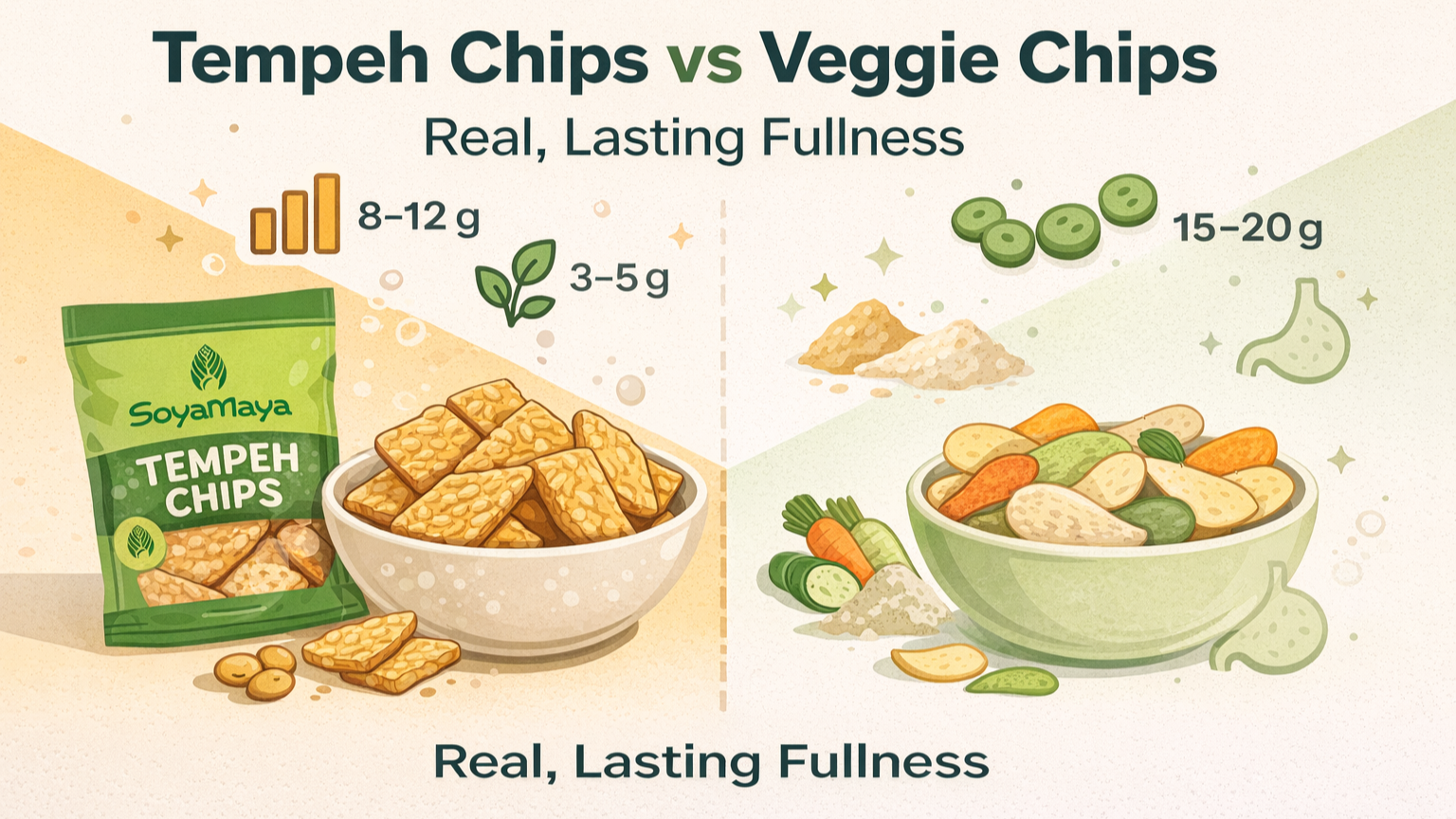
Tempeh chips are usually the better pick if you want a snack that actually feels like food, not just a quick crunch. When you compare them with most veggie chips, the gap starts at the base: whole, fermented soybeans on one side, light starch-based blends on the other. One gives you protein and real structure, the other leans on flavor and texture to feel more filling than it is. Once you see that difference, it’s hard to unsee. If you care about snacks that work as hard as they taste, keep reading to see why tempeh chips stand out.
Key Takeaway
- Tempeh chips are a complete protein source, veggie chips are mostly carbohydrates.
- Fermentation makes tempeh easier to digest and adds gut-friendly probiotics.
- The “veggie” in many veggie chips comes from powder, not whole vegetables.
Why It Matters: Choosing Smarter Plant-Based Snacks
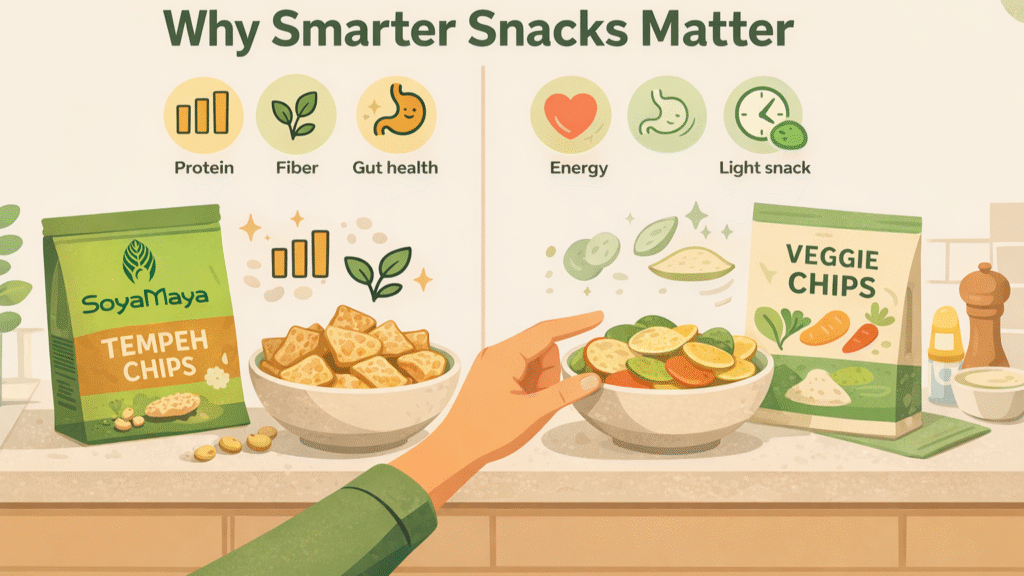
You can tell a lot about someone by how long they stand in the snack aisle. Some people just grab the shiniest bag and move on, others pause at the green labels and words like “veggie,” “plant-based,” or “baked,” hoping those phrases mean they’re making a better choice.
Veggie straws and veggie chips look like that better choice. As plant-based chips, they’re colorful, light, and they feel kinder than greasy potato chips. And in a way, they are a small step up. Less guilt, same crunch. But they still belong to the same family as regular chips: snacks built mainly for flavor, not for nourishment.
SoyaMaya Tempeh Protein Chips — 100% plant-based, high protein, no artificial additives. Ships to your door.
Get Your Chips →Tempeh chips come from a different place altogether. Instead of trying to hide what they are behind marketing, plant-based tempeh chips lean into whole soybeans, fermentation, and actual nutrition. They don’t just copy the shape and crunch of chips, they rewrite the job a snack can do for your body. It’s the difference between a snack that’s “less junky” and one that actually supports you between meals.
That’s the whole idea behind SoyaMaya Protein Tempeh Chips. They’re made from fermented soybeans (tempeh), so they keep the structure of a whole food, protein, fiber, and all, rather than turning vegetables into starch-heavy powders and re-forming them into cute shapes. When you look past the front of the bag and into the ingredient list, that’s where the philosophy really shows.
So when you’re choosing a snack, you’re not just picking a flavor. You’re choosing between something that only pretends to be healthy and something that actually pulls its weight.
Tempeh Chips: The Protein-Packed Powerhouse
Tempeh chips start with a block of fermented soybeans, the foundation behind traditional tempeh chips that bind whole soybeans into a firm, dense cake with a nutty, earthy flavor that stands up well to seasoning.To make chips, you slice the tempeh very thin, then bake or fry it until it becomes crisp. Because the base ingredient is a whole food, the nutritional benefits are substantial, you’re essentially eating concentrated, crunchy soybeans.
Tempeh itself is a nutrient-dense plant-based protein. For example, a 100-gram serving of cooked tempeh provides about 20 grams of protein, along with essential vitamins and minerals like phosphorus, magnesium, and manganese. [1]
Even once transformed into chips, tempeh retains a worthwhile nutritional profile. According to nutrition data for tempeh chips, a 60 g serving can contain around 8.4 grams of protein along with fiber, iron, and other micronutrients, making them higher in protein than many traditional snack chips.
The fermentation is the key. It pre-digests some of the sugars and proteins, making tempeh easier on your stomach. It also creates those coveted probiotics, which are rare in shelf-stable snacks. A single serving of our tempeh chips packs about 10 grams of protein. This is a complete protein, meaning it contains all the essential amino acids your body needs. It’s a snack that contributes to your daily nutrition, not just your cravings.
- Built on whole, fermented soybeans.
- Offers a complete plant-based protein.
- Contains natural fiber and probiotics.
The texture is heartier than a typical chip. It’s a solid crunch that satisfies in a way that airy puffs often don’t. You simply feel like you’ve eaten something.
Veggie Chips: A Light and Crunchy Alternative
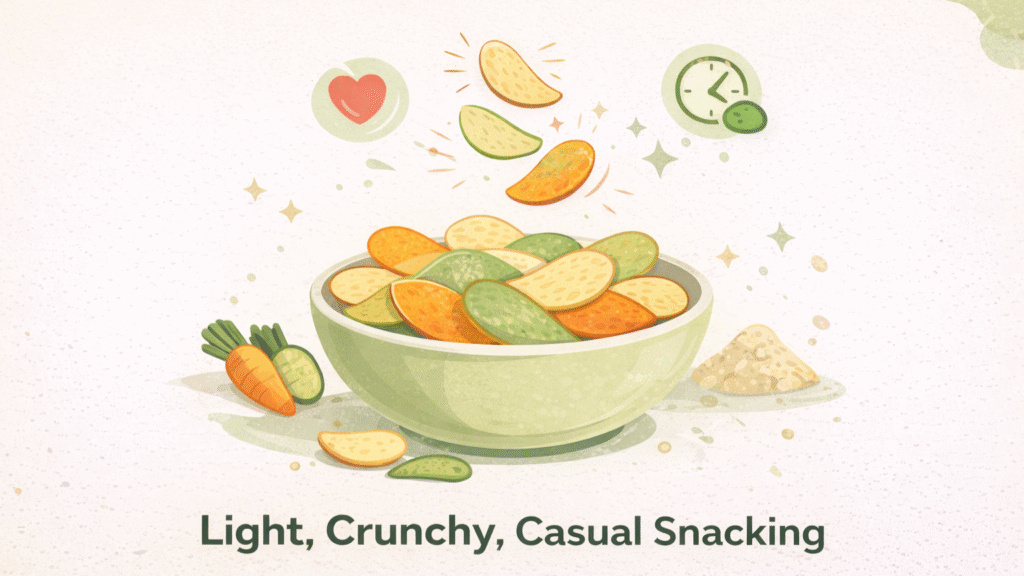
Now, let’s look at veggie chips. The popular ones, the straws and the brightly colored crisps, have a different origin story. Their primary ingredient is usually a starch, like potato or tapioca. Vegetable powders, spinach, beet, tomato, are added for color and a faint flavor. This mixture is combined with oil and salt, then extruded into fun shapes and baked or fried. The result is undeniably crunchy and light. You can eat a handful without feeling heavy.
They are a step up from traditional chips because they often have less saturated fat. The appeal is real, especially for kids or those who want a simple, familiar crunch. The problem is the nutritional profile. That lightness comes from a lack of substance. The protein content is negligible, often less than a gram per serving. The fiber is also very low. You’re mostly eating seasoned starch with a dusting of vegetable powder. It’s a snack of subtraction, taking away some of the bad stuff, but not adding much good in return.
Nutritional Comparison: Tempeh Chips vs. Veggie Chips
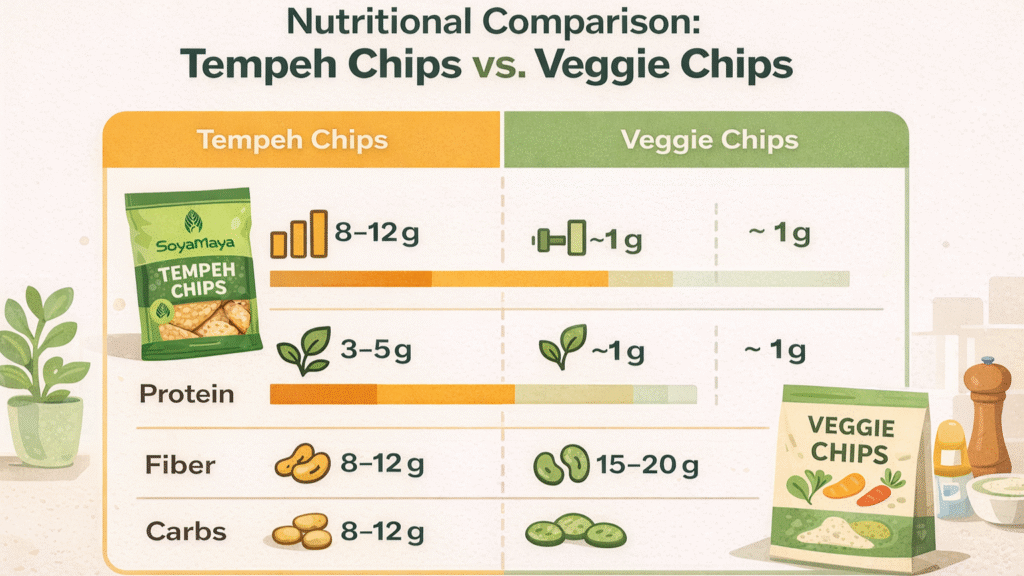
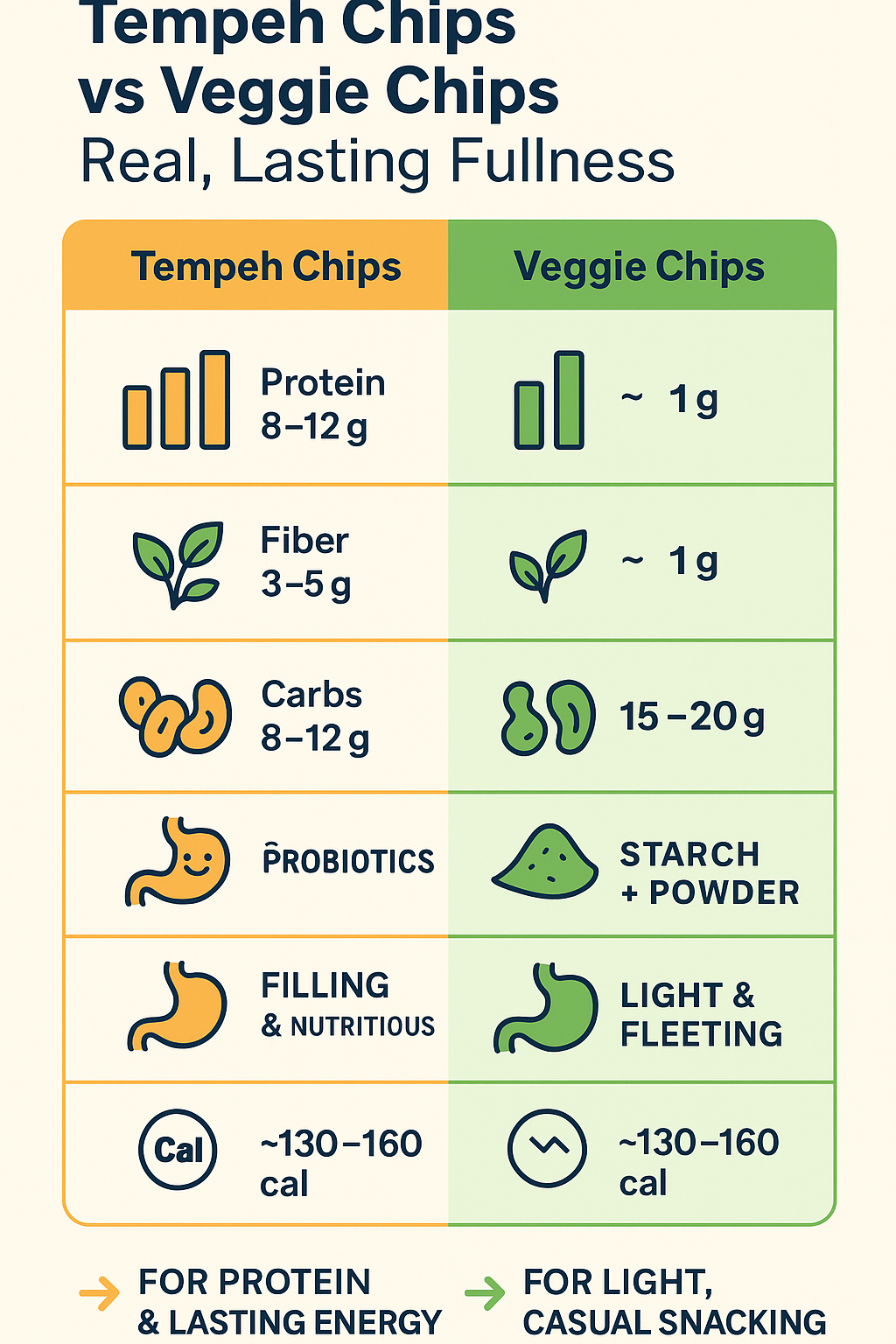
When you put the numbers next to each other, the difference stops being abstract. We’re talking about a standard one-ounce (28-gram) serving, which is basically a small handful you might eat in one quick break.
Tempeh chips are made from fermented soybeans, a protein-rich base, so even in chip form they tend to deliver more protein than typical veggie chips. Actual values vary by brand, but data from nutrition databases and snack nutrition estimates suggest: [2]
- Protein: about 6–10 g
- Calories: 130–150 kcal
- Fiber: around 3–5 grams
- Carbohydrates: roughly 10 grams (with lower net carbs thanks to the fiber)
- Fat: comparable to other chips, depending on whether they’re baked or fried
That protein is not a minor detail. It actually helps keep you full, and it supports muscles and recovery, which matters a lot if you’re active or trying not to overeat at your next meal. The fiber slows digestion, supports gut health, and helps balance blood sugar. So one small serving isn’t just a crunchy pause in your day; it’s closer to a mini protein snack that happens to be fun to eat.
Veggie chips, on the other hand, often land in a similar calorie range, around 140–160 calories for the same 28 grams. On the surface, they look comparable. But the macro breakdown is almost reversed:
- Protein: usually about 1 gram
- Fiber: often 1 gram or less
- Carbohydrates: around 15–20 grams
- Fat: similar or higher, depending on the oil used
So most of those calories come from refined carbs and fat, with very little protein or fiber to balance it out. The “veggie” part, spinach powder, beet powder, tomato powder, typically appears in tiny amounts, mostly for color and marketing appeal rather than meaningful nutrition. The vegetables are there more in spirit than in substance.
That’s why the experience of eating them feels different. With tempeh chips, you’re getting a snack that behaves more like a light, crunchy protein serving, one that can actually hold you over and contribute to your daily nutrition goals. With veggie chips, you’re mainly getting crunch and flavor, fun, but fleeting.
So while both might sit on the same shelf and share the same buzzwords, they don’t play the same role in your body. Tempeh chips are closer to food. Veggie chips are closer to entertainment. And once you see that on the label, it’s hard to unsee it.
What This Means For Your Health
This isn’t just about numbers on a label. It’s about how a snack makes you feel an hour later. That high protein and fiber content in tempeh chips promotes satiety. It slows down digestion, helping to keep your blood sugar stable and preventing that quick return of hunger. You eat a handful and you’re satisfied. The probiotics from fermentation are a bonus for your gut health, something you won’t find in any bag of veggie straws.
Veggie chips, with their high carbohydrate and low fiber content, can lead to a quicker spike in blood sugar. Without protein or fiber to slow you down, it’s easier to mindlessly eat through the whole bag. You get the crunch, but not the lasting fullness. They offer the perception of health without the substantive benefits. It’s what people call a “health halo.” For a casual snack, they’re fine. But if you’re active, vegan, or simply trying to make your snacks work for you, tempeh chips are the far superior choice.
Choosing the Right Chip for You
Sometimes the real question isn’t “Which chip is healthier?” but “What do we’ve actually need right now?” Our snacks don’t live in a vacuum. They show up when you’re tired, busy, studying, or just bored on the couch. So the “right” chip changes with your day.
It’s not that one bag is the villain and the other is the hero. Tempeh chips and veggie chips just play different roles. Think of them like teammates: one’s the strong, steady player; the other’s the fun, easygoing one.
Choose Tempeh Chips When:
- You need a snack that can pass as a small meal.
If you’re about to head to the gym, walking back from practice, or grinding through a late-night study session, tempeh chips make more sense. They bring protein, fiber, and more staying power, so you’re not hungry again 20 minutes later. - You want plant-based protein that actually counts.
For anyone eating mostly plants, vegetarian, vegan, or just “trying to eat less meat”, tempeh chips are a simple way to plug in extra protein. Since tempeh is a fermented soybean product, the protein is higher quality than what you’d get from a lot of typical snack foods. - You care about functional benefits, not just flavor.
Tempeh is fermented, which can support your gut by feeding good bacteria (indirectly, through prebiotics). So if you’re thinking about digestion, blood sugar, or feeling full longer, tempeh chips work more like a “snack with a purpose” than a mindless crunch. - You want a deep, hearty crunch that feels like real food.
Tempeh chips tend to have that firm, satisfying bite, dense, nutty, and a little earthy. They’re better when you want to feel like you ate something solid, not just something salty. They pair well with hummus, guac, or a high-protein dip if you want to build them into a mini meal.
Choose Veggie Chips When:
- You’re in the mood for something light and easy.
Movie night, game streaming, hanging out with friends, this is veggie chip territory. They’re made for casual snacking, where you want crunch and flavor but don’t really need a “serious” snack with protein goals attached. - You’re trying to move away from regular potato chips.
If you still want that familiar chip texture but feel a little weird grabbing classic potato chips every time, veggie chips can be a bridge. The experience is similar, thin, crispy, lightly salted, just with a bit of variety in flavor and color. - You’re feeding kids (or picky snackers).
The bright colors, shapes, and lighter crunch make veggie chips easy to share with younger eaters. They feel fun, not “healthy” in a forced way, which can matter for kids who rebel at anything that looks like a nutrition lesson. - You want crunch, and that’s about it.
On some days, you’re not counting grams of protein or fiber. You just want something to munch while you scroll or read. Veggie chips fit that moment: low effort, familiar, and not too filling.
FAQ
1.Are tempeh chips more filling than veggie chips for long snacking?
Tempeh chips often feel more filling than veggie chips because they come from fermented soy snacks with complete protein tempeh and high fiber tempeh. This combination slows digestion and helps control hunger. Veggie chips, vegetable crisps, and veggie straws often use veggie powder ingredients, potato starch chips, or vegetable starch puffs, which digest faster and wear off sooner.
2.How do tempeh chips and veggie chips differ in protein, carbs, and calories?
Tempeh chips deliver higher protein density from soy tempeh crunch, soy protein crisps, and plant protein crunch. Veggie chips calories usually come from root vegetable chips, veggie puffs carbs, or fried veggie puffs. This difference makes tempeh vs potato chips a clearer healthy snack comparison for people seeking low carb snacks and high protein chips.
3.Do fermented soy snacks support gut health better than veggie chips?
Fermented soy snacks, including probiotic tempeh snacks, support tempeh gut health through soy tempeh fermentation and fermented soy benefits. Fermentation can improve tempeh digestibility and soy crisp texture. Most veggie chips lack probiotic snacks benefits because processed veggie snacks lose live cultures during high-heat cooking and heavy veggie processing effects.
4.Are homemade tempeh chips healthier than packaged veggie chips?
Homemade tempeh chips use baked tempeh slices, air fried tempeh, or a simple tempeh baking method with fewer additives. This approach supports low sodium chips, non-GMO tempeh, and gluten free tempeh. Packaged veggie chips often contain veggie chip additives, higher veggie chips sodium levels, and oils that raise veggie chips glycemic index.
The Final Crunch on Your Snack Choice
The search for a better chip leads to a clear choice. One option relies on starch and vegetable powder, offering crunch without real nourishment. The other starts with whole, fermented tempeh that delivers protein, flavor, and purpose. At SoyaMaya, we choose real food made with care. Our tempeh chips fuel your body, not just cravings, and fit into a healthier way of eating.
Ready to taste the difference? Shop SoyaMaya Protein Tempeh Chips
References
- https://www.healthline.com/nutrition/tempeh
- https://www.snapcalorie.com/nutrition/tempeh_chips_nutrition.html
Related Articles
- https://mayasaritempeh.com/plant-based-chips/
- https://mayasaritempeh.com/plant-based-tempeh-chips/
- https://mayasaritempeh.com/tempeh-chips/
SoyaMaya Tempeh Protein Chips
High-protein, plant-based, made from real tempeh. No artificial flavors. Crunchy and satisfying every time.
