
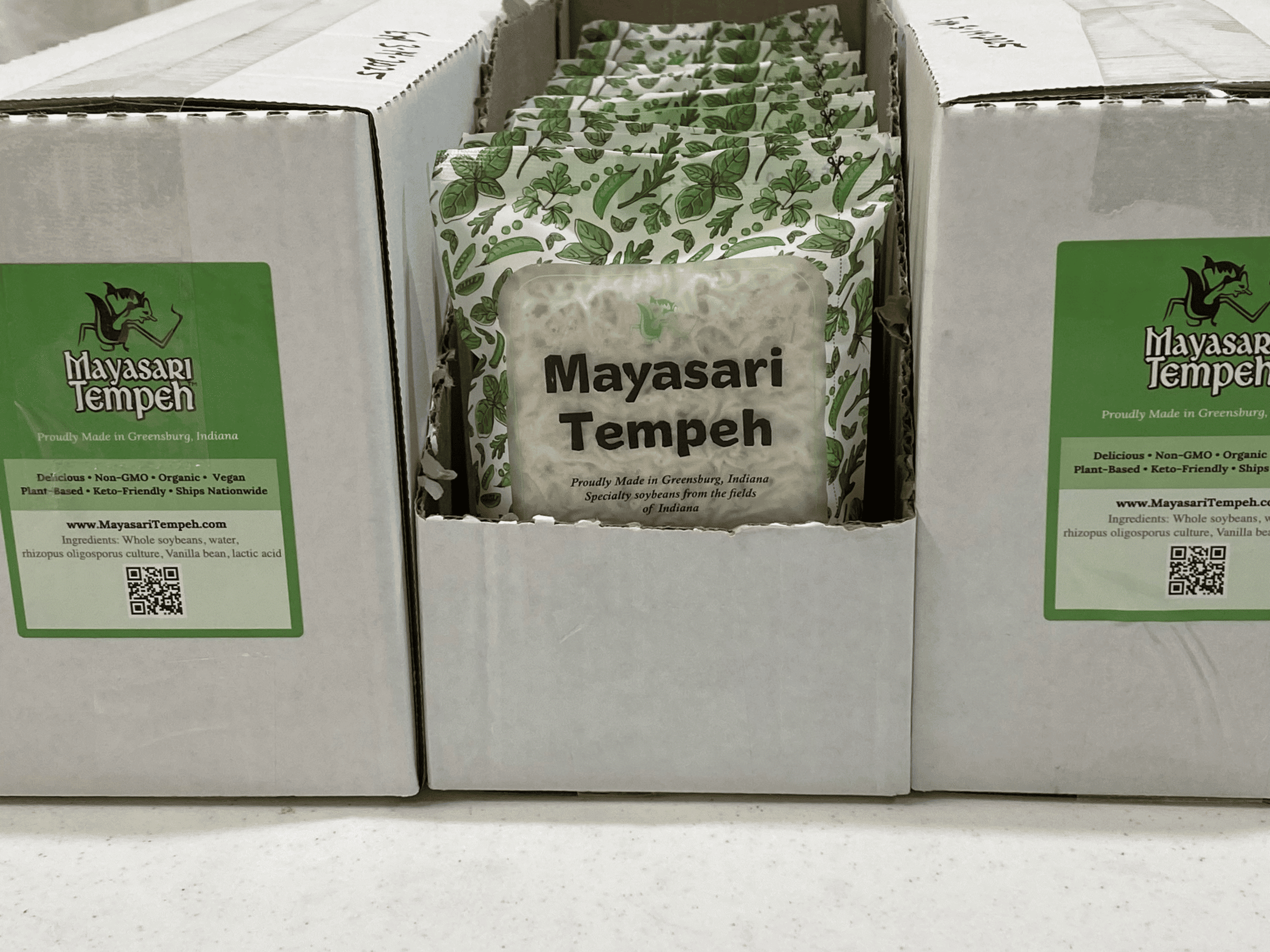
Non-GMO soybeans are a straightforward choice for cleaner food. They are grown without genetically modified seeds, which means farming uses fewer chemicals. This supports healthier soil and reduces our exposure to those chemicals. The protein you get from them is just as good as from conventional soy. Groups like the Non-GMO Project set clear rules for verifying this, so you know what you’re buying.
In our kitchen, switching to non-GMO soy was a simple change. It ended up reshaping how we look at where our food comes from and its overall quality. The real impact isn’t just about a label on a package. It’s about the farming methods, the processing, and finally, the taste on your plate. There’s more to unpack here, so let’s get into the details.
Key Takeaways
- Non-GMO soybeans support lower chemical exposure and cleaner food choices
- They are often linked to sustainable farming practices like crop rotation
- Verification through trusted certifications helps ensure transparency
Why Non-GMO Tempeh Is Important
Non-GMO tempeh matters because it reflects how the soybeans are grown, processed, and verified before reaching your plate. Choosing fresh tempeh made from high-quality beans ensures the final product remains a reliable source of clean protein. According to USDA, organic standards prohibit genetic engineering, making them a reliable proxy for non-GMO sourcing.
Soya Maya Fresh Tempeh is made the traditional way — no preservatives, no shortcuts. Delivered to your door.
Order Fresh Tempeh →We noticed early on that tempeh quality starts at the bean level. When soybeans are grown without genetic modification, they are often part of smaller, traceable supply chains.
In our experience, this translates into better consistency during fermentation. The texture feels more stable, and the flavor stays clean without bitterness.
It also aligns with traditional methods. Tempeh has been made for centuries in Indonesia using whole soybeans, long before genetic engineering became part of agriculture.
- Supports traceable, transparent sourcing
- Aligns with traditional fermentation practices
- Reduces reliance on industrial-scale monoculture
That combination is what makes non-GMO tempeh feel like a grounded, practical choice.
What Are the Benefits of Non-GMO Soybeans
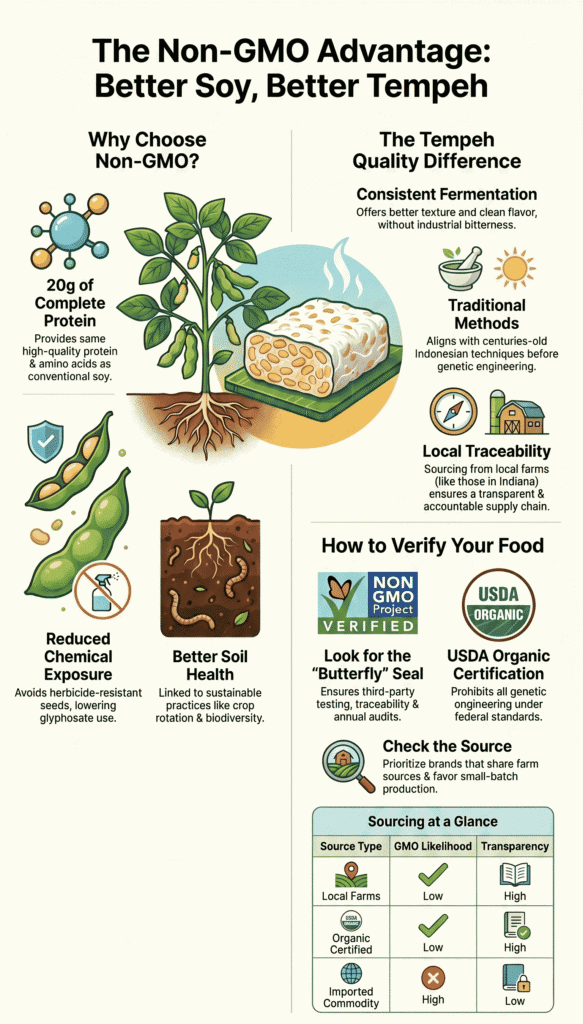
Non-GMO soybeans offer environmental, nutritional, and sourcing advantages while maintaining the same ~20g protein per serving found in conventional soy. Research cited by Harvard Health Publishing highlights soy as a complete protein with essential amino acids.
As noted by The Mayo Clinic
“Traditional soy foods, like tofu and tempeh, are generally less processed than soy protein isolates and are associated with a variety of health benefits due to their high fiber and phytonutrient content.” –Mayo Clinic Health System
We started paying attention to sourcing after learning how most large-scale soy is engineered for herbicide resistance. This often leads to higher use of chemicals like glyphosate, which raised questions for us about long-term exposure.
From a practical standpoint, non-GMO soybeans feel closer to whole food ingredients. When fermented into tempeh, they become easier to digest and richer in nutrients.
A few benefits stand out in everyday use:
- Improved nutrient bioavailability through fermentation
- Support for biodiversity and soil health
- Reduced chemical input in farming systems
These aren’t abstract ideas. We see the difference in how food tastes and how it fits into our routine.
How to Verify Non-GMO Ingredients
Verifying non-GMO ingredients requires looking beyond packaging and understanding certification systems. According to SCS Global Services, third-party verification often includes PCR testing and supply chain audits.
We learned quickly that labels can be confusing. Not every “natural” or “clean” label means non-GMO.
Reliable verification usually comes from structured systems that track ingredients from farm to final product. This includes lab testing and documentation.
Here are the key markers we look for:
- “Non-GMO Project Verified” seal with traceability standards
- USDA Organic certification as a built-in non-GMO guarantee
- Transparent sourcing information from producers
In more technical settings, documents like a Certificate of Analysis confirm GMO thresholds, often below 0.1% detection limits.
Understanding these signals makes shopping more straightforward and less dependent on guesswork.
Finding Non-GMO Certified Tempeh
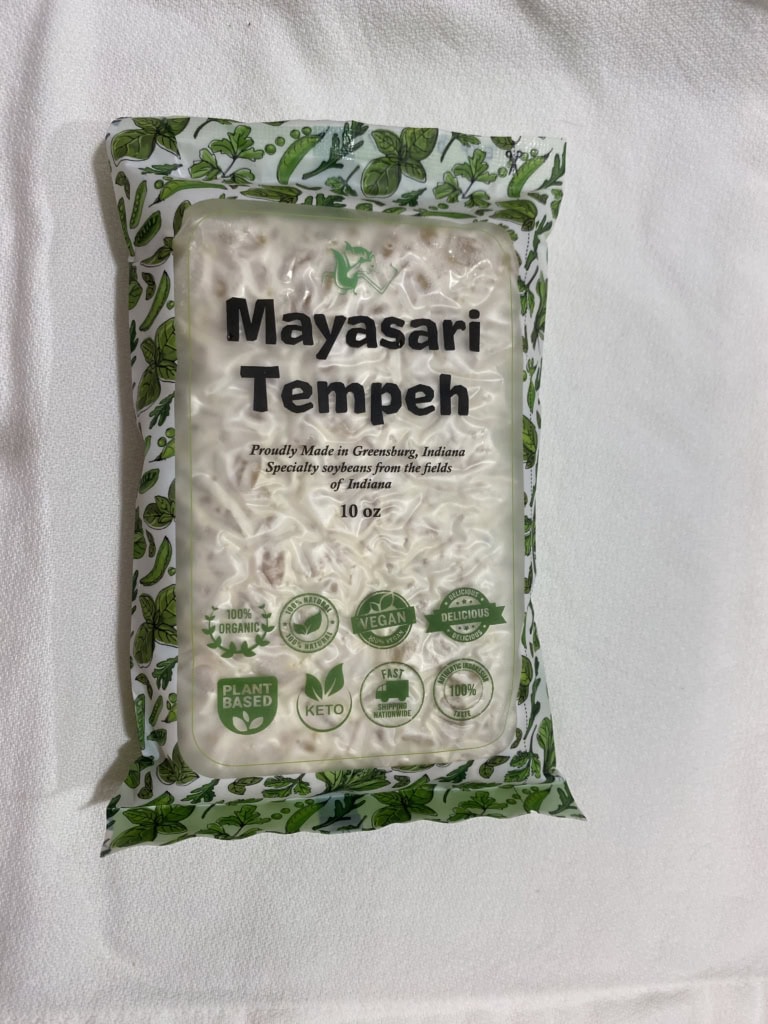
Non-GMO tempeh is easier to find when you focus on producers who prioritize sourcing transparency and small-batch production. Data from World Health Organization continues to support plant-based diets that rely on minimally processed foods.
We usually look for brands that openly share where their soybeans come from. That detail tends to signal a higher level of accountability.
This is one reason we rely on SoyaMaya in our own kitchen. We use non-GMO soybeans sourced from Indiana farms, which creates a consistent starting point for fermentation.
Another factor is how the tempeh is made. Clean fermentation environments and controlled incubation matter just as much as the ingredient itself.
- Choose brands with clear sourcing details
- Look for small-batch or artisanal production
- Check for fermentation quality standards
These steps narrow down options quickly and lead to better results at home.
What Does Non-GMO Project Verified Mean
The “Non-GMO Project Verified” label indicates that a product meets strict third-party standards for avoiding genetic engineering. According to , this includes testing, traceability, and ongoing audits.
We used to assume it was just a marketing label. It turns out the process behind it is detailed and technical.
Products must undergo risk assessment for GMO contamination, especially if soy is a primary ingredient. Testing methods like PCR are used to detect genetic material.
This certification is voluntary, which makes it more of a quality signal than a legal requirement.
- Requires annual audits and supply chain tracking
- Applies strict thresholds for GMO presence
- Focuses on high-risk ingredients like soy
It gives a clearer framework for evaluating what we’re buying.
Health Considerations Around GMO Soybeans
GMO soybeans are widely used in industrial agriculture, but concerns often focus on herbicide exposure and long-term dietary impact. A study published in National Institutes of Health explored how transgenic soy may influence gut bacteria behavior.
Data from Food Chemistry demonstrates
“The massive increase in the use of glyphosate-based herbicides on GE crops has led to increased residues in the food supply. This shift in agricultural practice has resulted in a unique chemical profile for GE soybeans compared to organic and non-GMO varieties.” –Food Chemistry Journal
We don’t approach this from a fear-based angle. Instead, we look at patterns in how food is produced and what that means over time.
Since about 95% of U.S. soybeans are genetically engineered, they are often paired with herbicide-heavy farming systems. That connection is what drives many people toward non-GMO options.
From our perspective, choosing non-GMO soy is less about risk avoidance and more about preference for simpler, more transparent food systems.
- Reduces potential exposure to herbicide residues
- Supports less chemically intensive farming
- Aligns with whole-food dietary habits
It’s a practical decision rooted in how food is grown, not just how it’s labeled.
Consumer Guide to Non-GMO Soy Choices

Choosing non-GMO soy becomes easier when you focus on sourcing, certification, and production methods. According to Mayo Clinic, plant-based proteins can support long-term health when integrated consistently.
We keep our approach simple. Instead of chasing labels, we prioritize a few clear factors that guide our decisions.
First, we look for transparency. If a brand explains where its soybeans come from, that’s a strong signal.
Second, we check for certifications that align with non-GMO standards.
Third, we consider how the product is made, especially fermentation quality.
- Prioritize transparency over marketing claims
- Use certifications as a verification tool
- Focus on minimally processed products
This approach keeps decisions grounded and repeatable.
Where to Source Non-GMO Tempeh
Non-GMO tempeh is commonly sourced from local or identity-preserved soybean producers rather than large commodity supply chains. Reports from BCCDC Food Safety highlight that ingredient quality and fermentation control directly affect final product safety.
We’ve found that local sourcing often leads to better traceability. In regions like Indonesia, soybeans are typically non-GMO by default, while imported bulk soy is more likely to be genetically modified.
SoyaMaya follows a similar principle by sourcing from local Indiana farms. That connection between farm and production helps maintain consistency.
| Source Type | GMO Likelihood | Transparency Level | Typical Use Case |
| Local Farms | Low | High | Artisanal tempeh |
| Imported Commodity | High | Low | Industrial products |
| Organic Certified | Very Low | High | Health-focused foods |
This breakdown helps us make faster decisions without overanalyzing every product.
Are Local Soybeans Usually Non-GMO
Local soybeans are often non-GMO, especially in regions that rely on traditional farming practices rather than industrial monoculture. Agricultural data shows that smaller farms tend to preserve non-modified seed varieties.
We’ve seen this firsthand when comparing sourcing across regions. Local producers tend to focus on quality over scale, which naturally supports non-GMO practices.
That said, it’s still important to verify. Not all local farms follow the same standards, and transparency varies.
- Many traditional farms use non-GMO seeds
- Smaller supply chains improve traceability
- Verification is still necessary for certainty
It’s a strong starting point, but not a guarantee.
FAQ
Why do health-conscious consumers choose non-GMO soybeans over GMO soy?
Health-conscious consumers often choose non-GMO soybeans to reduce exposure to herbicides like glyphosate, commonly used with GMO crops. They also prefer clean-label foods produced without genetic engineering. In addition, non-GMO farming supports traditional practices such as crop rotation, which helps maintain soil health, biodiversity, and long-term agricultural sustainability.
Does non-GMO soy have different nutritional benefits compared to GMO soy?
Non-GMO soybeans and GMO soybeans have similar protein content, but differences appear in quality and processing. Non-GMO soy is often used in minimally processed foods. When fermented into tempeh, it improves the bioavailability of nutrients, increases fiber content, and enhances essential amino acids, making it more beneficial for digestion and overall nutrition.
How can consumers accurately verify non-GMO soybean products?
Consumers can verify non-GMO soybeans by checking for the Non-GMO Project Verified label, which requires supply chain traceability, annual audits, and PCR testing. USDA Organic certification is also reliable because it prohibits genetic engineering. In technical cases, a Certificate of Analysis (COA) provides PCR or ELISA test results to confirm GMO-free status.
Why is glyphosate a concern in GMO soybean production?
Glyphosate is widely used with herbicide-resistant GMO soybeans, allowing farmers to control weeds more easily. However, this can lead to higher chemical residues on crops. Many consumers are concerned about long-term exposure through food. Choosing non-GMO soybeans helps reduce the likelihood of consuming products associated with heavy herbicide use.
What role does sourcing play in the quality of non-GMO soybeans?
Sourcing directly affects soybean quality and reliability. Locally grown or identity-preserved soybeans are more likely to be non-GMO and traceable. Imported commodity soy is often genetically modified. Working with transparent supply chains and trusted producers helps ensure consistent quality, proper handling, and better alignment with sustainable agricultural practices.
A Simple Shift That Actually Feels Different
You notice it right away when ingredients don’t feel quite right, the texture is off and the taste isn’t consistent. It gets frustrating. When you switch to non-GMO soybeans, meals feel more steady and easier to trust, especially when you’re cooking often and want results that don’t change every time.
That’s where SoyaMaya tempeh comes in as a practical choice you can rely on without overthinking it. It fits into your routine and supports the kind of meals you’re already making, so you don’t have to second guess what’s on your plate.
References
- https://www.mayoclinichealthsystem.org/hometown-health/speaking-of-health/tips-for-eating-more-plant-proteins
- https://doi.org/10.1016/j.foodchem.2013.12.054
Soya Maya Fresh Tempeh
Traditionally fermented, no preservatives, shipped fresh and frozen to your door. The real deal, direct from us.
