
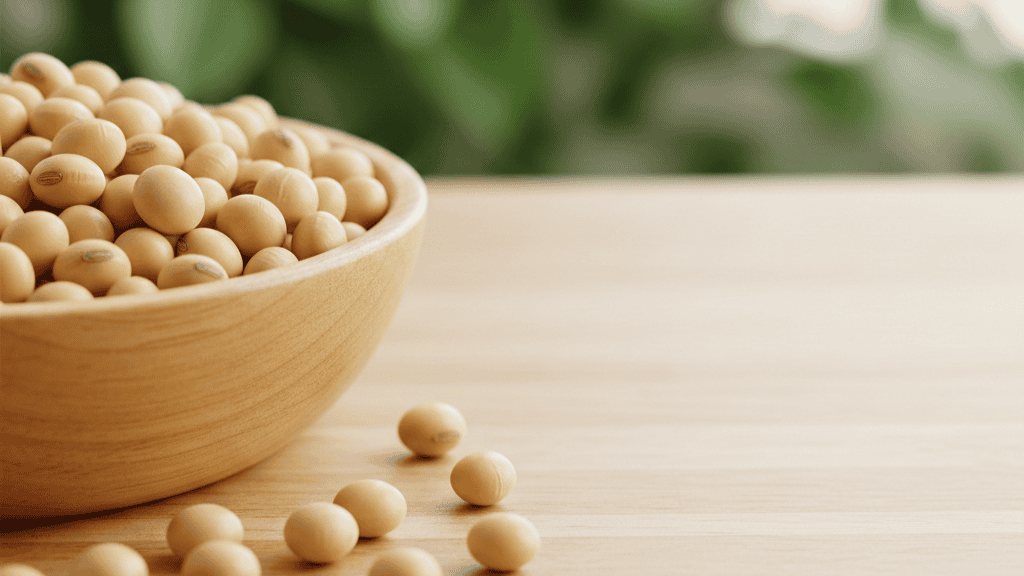
You want to know what’s truly in your food. We get that. Organic soybeans are more than just a trend; they’re a nutrient powerhouse, offering complete protein, essential minerals, and heart-healthy fats without the chemical baggage.
Their nutritional profile stands apart, providing a clean foundation for everything from muscle health to digestion. Let’s look past the hype and see what makes these beans so remarkable. Keep reading to understand how their unique composition can directly benefit your health.
Key Takeaways
- Complete protein with all essential amino acids for muscle and tissue repair.
- Rich in isoflavones and fiber, supporting heart health and digestion.
- Free from synthetic pesticides, offering a purer, more nutrient-dense option.
What Makes Organic Soybeans Different?
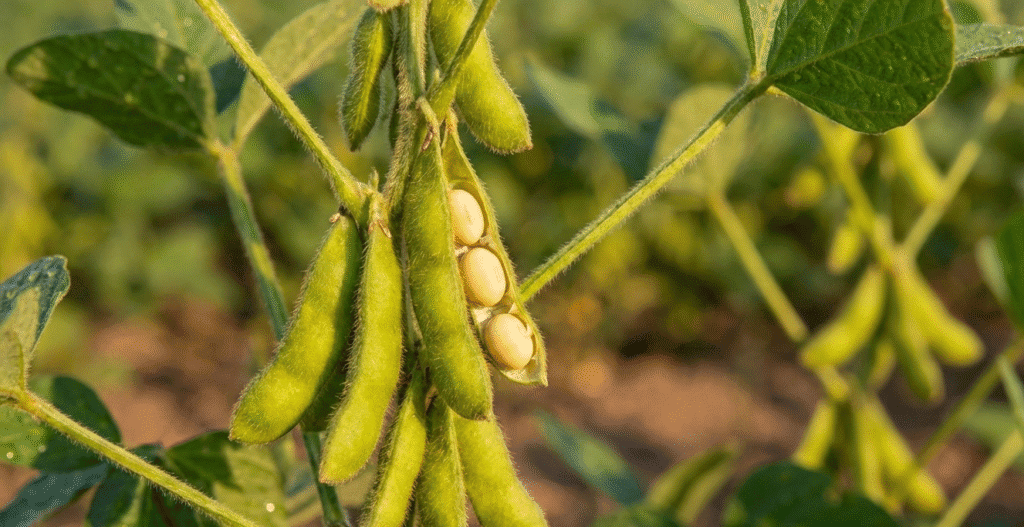
We start with the soil. Organic soybeans are grown without synthetic pesticides or herbicides, which means the plant’s natural defenses and nutrient profiles aren’t altered by chemical interference. This farming method focuses on soil health, and that health transfers directly into the bean.
Soya Maya Fresh Tempeh is made the traditional way — no preservatives, no shortcuts. Delivered to your door.
Order Fresh Tempeh →You’re getting a product that’s closer to its natural state. The commitment to sustainable farming, like we practice at SoyaMaya, isn’t just an ethical choice. It’s a nutritional one. By sourcing organic non-GMO soybeans from local farmers who share these values, the beans retain their inherent quality.
They aren’t just organic by label; they’re organic by principle.
This difference isn’t just philosophical. It shows up in the numbers. Organic soybeans often test higher in protein content and have a more favorable fat profile, with lower levels of saturated fat.[1]
They also avoid residues like glyphosate, a common herbicide used on conventional crops. When you choose organic, you’re choosing a cleaner source of nutrition. It’s a simple equation. Better inputs lead to a better output, for your body and the environment.
- Grown without synthetic pesticides or GMOs.
- Typically higher in protein content.
- Cleaner, with no glyphosate residues.
The Core Nutrients You’re Getting
Sometimes you open a food label and it feels like marketing, but soybeans read more like a lab report in the best way.
- About 13 grams of protein in just half a cup
- A complete amino acid profile (all nine essential ones)
- PDCAAS score near 1.0, on par with many animal proteins[2]
That complete protein status puts soy in rare plant company, giving your muscles and enzymes real, usable building blocks, not just filler. These beans provide about 13 grams of protein in just half a cup, and understanding what non-GMO soybeans are helps explain why their nutrient profile is so reliable.
Then you hit the isoflavones, genistein and daidzein. These act like quiet antioxidants, often called phytoestrogens, but they’re more like selective helpers. They can support cholesterol control, heart health, and even bone density. Alongside that, you get around 12 grams of fiber, which keeps digestion steady and feeds your gut microbes well.
Minerals round it out: iron for oxygen transport, plus calcium, magnesium, and phosphorus. Most of the fat is polyunsaturated, with omega fatty acids that can help calm inflammation rather than stir it up.
How These Nutrients Translate to Real Health Benefits
Credits: Dr. Eric Berg DC
You can feel the logic of soybeans most clearly when you watch what they do inside an actual body, not just on a label.
For your heart, the benefits stack up:
- Soy protein helps lower LDL (“bad”) cholesterol
- Isoflavones support healthier blood vessels
- Fiber helps manage cholesterol and blood sugar
Those effects show up again and again in studies on people who eat whole soy foods regularly, not just in lab theories.
Bones get a quiet boost, especially for women. Isoflavones can help maintain bone density as you age, while the complete protein supports muscle around those bones. For lifters, runners, or anyone just trying to stay strong, soy protein has been shown to support muscle repair and growth much like whey does after resistance training.
Then there’s your gut. That fiber feeds good bacteria, supports regularity, and may even help immune balance. Large studies now show soy is neutral or protective for cancers, including breast and prostate.
Organic Versus Conventional: It’s More Than a Label
The choice between organic and conventional soybeans has tangible nutritional implications. It’s not just about avoiding pesticides, though that’s a significant benefit. Organic soybeans consistently show a superior nutrient profile. They tend to have higher protein levels and lower levels of saturated fat.
The sugar content is also different, with organic beans containing more beneficial sugars like glucose and fructose. This points to a more robust and naturally developed bean.
| Aspect | Organic Soybeans | Conventional Soybeans |
| Farming Method | Natural soil management | Chemical-assisted |
| GMO Use | Non-GMO | Often genetically modified |
| Pesticide Residue | None | Possible glyphosate residue |
| Protein Content | Typically higher | Standard levels |
| Fat Profile | Lower saturated fat | Higher saturated fat |
| Environmental Impact | Supports soil health | Soil depletion risk |
| Consumer Benefit | Cleaner nutrition | Higher chemical exposure risk |
The absence of glyphosate is perhaps the most critical distinction. Glyphosate is the active ingredient in many conventional herbicides, and its residues are commonly found on non-organic soy crops. By choosing organic, you eliminate this exposure entirely. This matters because you’re not just eating the bean.
You’re consuming everything on and in it. Organic farming practices ensure that what you’re putting into your body is the bean itself, in its purest form. The health impact of avoiding these chemicals, even in trace amounts, is a primary reason many people make the switch. For a deeper dive into why choosing organic non-GMO soybeans matters, it’s clear that the absence of glyphosate and better nutrient profile make a significant difference
The Power of Fermentation
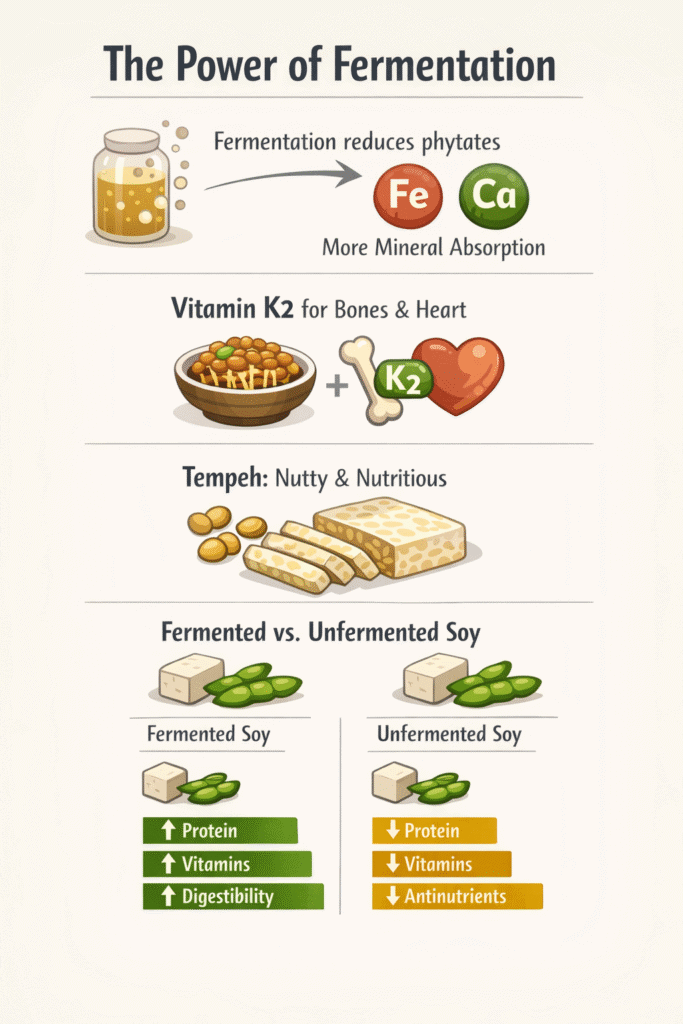
We can’t talk about soy without mentioning fermentation. This ancient process, used in products like tempeh and natto, takes the nutritional benefits of organic soybeans a step further. Fermentation breaks down anti-nutrients like phytates.
Phytates can bind to minerals like iron and calcium, slightly reducing their absorption. Fermentation reduces these phytates, making the minerals in the soybeans more bioavailable. Your body can access more of the good stuff.
Fermentation also creates new nutrients. For example, natto is an excellent source of Vitamin K2, a vitamin crucial for bone and heart health that’s harder to find in other foods. At SoyaMaya, we see this firsthand with our tempeh. The fermentation process not only gives tempeh its distinctive nutty flavor and firm texture but also enhances its nutritional profile.
It’s a natural upgrade. While unfermented soy like tofu or edamame is still highly nutritious, fermented soy offers these added advantages. It’s not that one is better than the other. It’s that fermentation provides a different, and in some ways enhanced, nutritional pathway.
Bringing Organic Soybeans to Your Table
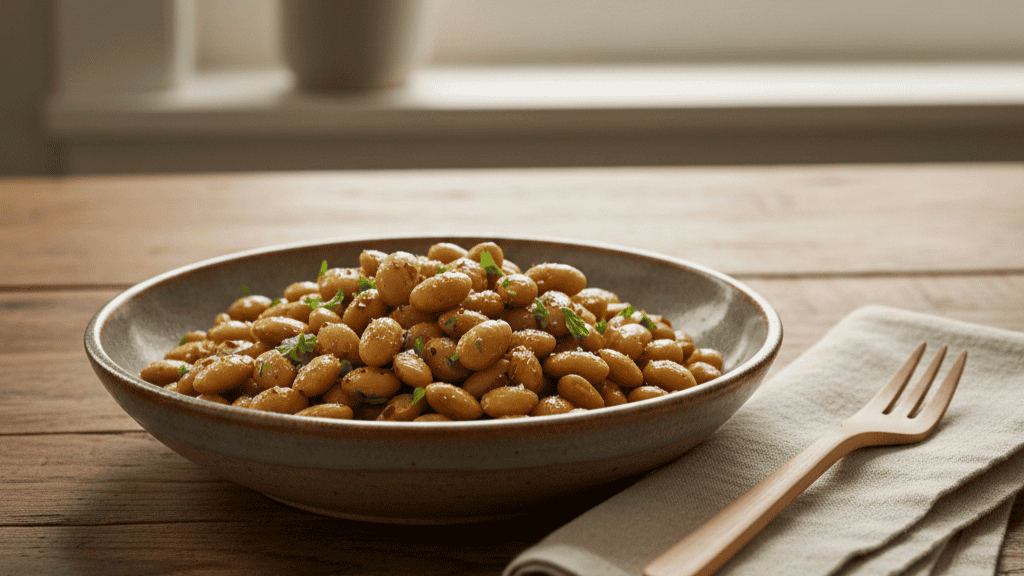
Incorporating organic soybeans into your diet is straightforward. You can boil whole beans, often sold as edamame, and sprinkle them with salt for a simple snack. They’re a great addition to salads, stir-fries, and soups.
For a more concentrated protein source, fermented options like tempeh are incredibly versatile. You can marinate and pan-fry it, crumble it for a taco filling, or bake it for a crispy texture. The key is to start with a high-quality source.
We recommend aiming for a few servings of soy foods per week to reap the benefits. A serving is about a half-cup of cooked beans or a 3-ounce portion of tempeh. If you’re new to soy, start slowly to see how your digestive system responds to the high fiber content. Remember to drink plenty of water.
The only potential downside to consider is the presence of phytates, but as we’ve discussed, this is greatly mitigated by choosing fermented products like tempeh or by proper preparation methods like soaking and cooking.
FAQ
What do soybean nutrition facts reveal about organic soybeans for daily eating?
Soybean nutrition facts show organic soybeans are nutrient-dense legumes with organic soy protein and organic soy amino acids. They provide complete protein soy, steady soy fiber intake, and moderate organic soy calories.
The soy fat profile includes polyunsaturated fats soy, unsaturated fatty acids soy, omega fatty acids soybeans, linoleic acid soy, and small amounts of soy sugars glucose and fructose soy.
How does organic soy protein compare in protein quality and amino acids?
Organic soy protein offers strong soy protein quality with a high soy PDCAAS score and PDCAAS soy rating. It supplies soy essential amino acids such as soy leucine content, soy lysine, soy methionine, soy cysteine, soy tryptophan, soy threonine, soy valine, and soy isoleucine. These nutrients support muscle synthesis in plant-based diets.
What role do soy isoflavones and phytoestrogens organic soy play in health?
Soy isoflavones include genistein benefits, daidzein content, and glycitein soy. These plant estrogens act as a mild soy estrogen mimic in the body. As phytoestrogens organic soy and soy bioactive compounds, they work with soy antioxidants and soy saponins cholesterol, linking to soy health benefits like heart health soy and bone density soy.
How do minerals and vitamins in organic soybeans get absorbed?
Organic soy calcium, magnesium soybeans, phosphorus soy, potassium soy content, iron rich soy, and folate in soybeans support daily nutrition. Soy iron absorption and calcium soy bioavailability depend on soy mineral absorption.
Anti-nutrients soy such as phytic acid soy matter. Phytates reduction improves with sprouting soy, boiling soybeans, and fermentation soy benefits.
Does organic vs conventional soy change digestion and long-term health?
Organic vs conventional soy differs in organic soy farming and pesticide free soy methods, often meaning glyphosate free soy. Digestion of soy fiber supports weight management.
Fermented soy nutrition from tempeh nutrition, natto vitamin K, tofu isoflavones, edamame organic, soy sauce organic, and soy lecithin may affect cholesterol lowering soy, stroke prevention soy, cancer risk soy, breast cancer soy, and prostate health soy.
Your Path to Cleaner Plant Protein
Organic soybean nutrition is about clarity and care. It delivers complete plant protein, essential minerals, and heart-supporting compounds, without unnecessary chemicals. Choosing organic means choosing a cleaner, more powerful form of this time-honored legume.
Enjoyed whole or fermented into our tempeh, organic soy supports everyday strength, digestion, and balance with food you can trust. This is simple, effective nutrition rooted in tradition and crafted for modern kitchens. Shop SoyaMaya Tempeh & Snacks
References
- https://en.wikipedia.org/wiki/Soybean
- https://en.wikipedia.org/wiki/Protein_Digestibility_Corrected_Amino_Acid_Score
Related Articles
- https://mayasaritempeh.com/organic-non-gmo-soybeans/
- https://mayasaritempeh.com/why-organic-non-gmo-soybeans/
- https://mayasaritempeh.com/what-are-non-gmo-soybeans/
Soya Maya Fresh Tempeh
Traditionally fermented, no preservatives, shipped fresh and frozen to your door. The real deal, direct from us.
