

You cook organic soybeans by soaking them overnight, then simmering, pressure cooking, or steaming them until they’re fully tender and easy to digest. That simple rhythm, water, time, and gentle heat, turns a hard, pale bean into something soft, nutty, and surprisingly rich. When you start with good beans, like the ones that come off small Indiana fields, the flavor shifts from bland to kind of quietly addictive. And once you nail this basic step, doors open: salads, spreads, stews, even homemade tempeh. If you want that kind of control in your own kitchen, keep reading.
Key Takeaway
- A thorough overnight soak is non-negotiable for tender, digestible beans.
- Pressure cooking is the fastest method, preserving nutrients and texture.
- Properly cooked soybeans are a versatile staple for meals all week.
Why Proper Soybean Preparation Matters

Soybeans may look plain, like just another dry bean sitting in a jar, but they behave very differently once you start working with them. When you treat them with a bit of care, you’re not only softening them so your blender or your teeth can do their job, you’re changing the way your body can use them.
Inside those small, pale beans, especially when you start with high-quality organic soybeans from reputable growers, are natural compounds like phytic acid and trypsin inhibitors. They’re not “bad” in some moral way, they’re just protective chemicals the plant uses, and they can make soy harder to digest and block your body from fully absorbing minerals and protein.
SoyaMaya Fresh Tempeh is made the traditional way — no preservatives, no shortcuts. Delivered to your door.
Order Fresh Tempeh →With the right preparation, you start to gently disarm those compounds. A long soak and a slow, steady cook help neutralize many of these anti-nutrients so they don’t get in the way. The result is a protein source your body can actually work with instead of fight against. Properly prepared soybeans offer around 36 grams of complete protein per 100 grams of dry beans, which is a serious amount for such a small ingredient. That’s one reason traditional foods like tempeh feel so satisfying and don’t sit like a rock in your stomach when they’re made well.
Good tempeh doesn’t happen by accident, it begins right at the simplest stage, with how you wash, soak, and cook the soybeans. If the beans are rushed, the final texture can turn out chalky, too firm, or strangely spongy. When the beans are handled patiently, the texture becomes tender on the inside with a pleasant bite, and the flavor stays clean and mild. All the care you put into this early step shows up later on your plate. It really does all start with the bean.
Soaking Your Organic Soybeans

This step is the one you don’t want to skip, even if you’re in a hurry. Take one cup of dry organic soybeans and pour them into a large bowl, something with enough room for the beans to expand. Cover them with cold water, using about four cups of water for every cup of beans.
The extra water matters because the beans will pull in quite a bit as they hydrate. Leave the bowl on your counter at room temperature for at least eight hours, or, if you can, overnight. As the hours pass, you’ll notice the beans swell and plump up, nearly doubling in size and becoming lighter in color. Soaking soybean typically 8 to 12 hours or overnight. During soaking, the soybeans absorb water and nearly double in size.” [1]
Once the soaking time is up, drain off the water and give the beans a thorough rinse under running water. That soaking liquid isn’t just plain water anymore; it now contains some of the oligosaccharides that can cause gas and discomfort for many people, which is one reason soaking plays a key role in unlocking the health benefits of organic soybeans once they’re properly cooked. Pouring it down the drain and rinsing the beans helps remove a portion of what might have bothered your digestion later. It’s a tiny habit with a big effect on how your body feels after you eat.
If your kitchen is very warm, you can change the soaking water once or twice to keep it fresh, and that can help too. Some people like to gently rub the beans between their hands during rinsing to loosen the skins; this isn’t required, but it can improve the texture for tempeh or tofu later on. By the time you’re done with this step, you’ll have soybeans that are hydrated, cleaner, and far more ready for cooking and fermentation. From here, every step you take builds on this foundation of a simple, long soak done well.
Cooking Methods for Organic Soybeans
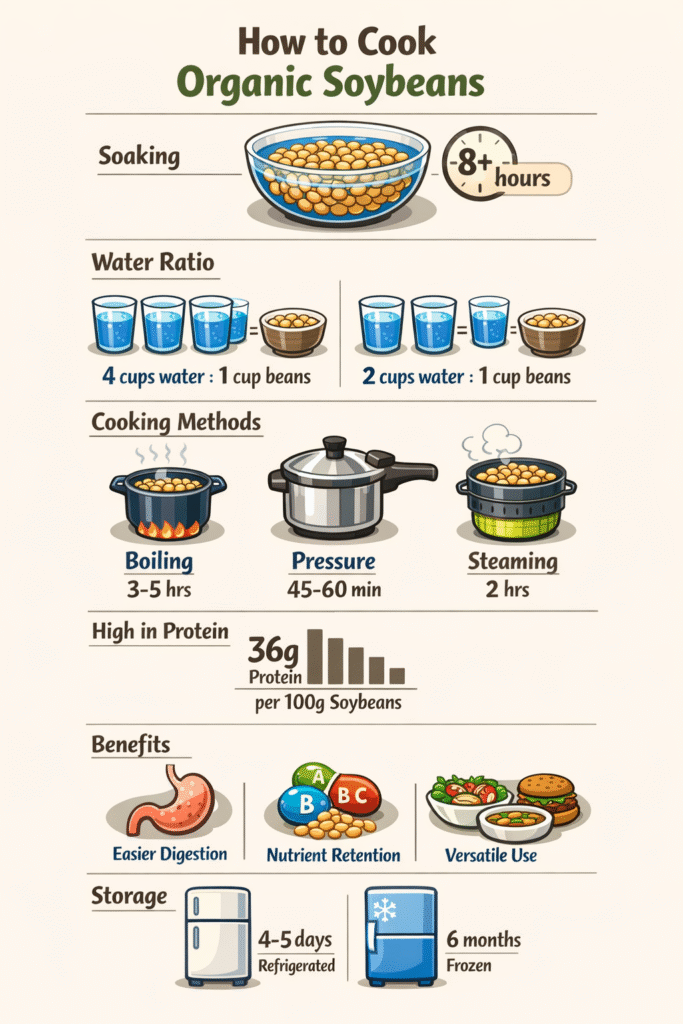
Now for the main event. You’ve got a few paths to tender beans, each with its own advantages. Whether you have all afternoon or just an hour will dictate your best choice.
One common and traditional approach is boiling soybeans on the stovetop: after soaking, place the drained beans in a pot, cover them with fresh water, bring to a boil, then reduce heat and simmer until they’re tender typically about 1 to 3 hours depending on bean age and desired texture, with older beans taking longer.[2]
Boiling Method
This is the traditional, hands-off approach. Put your soaked beans in a large pot and cover them with fresh water by about three inches. Bring it to a rolling boil, then turn it down to a gentle simmer. Let it go for three to five hours. You’ll need to check the water level now and then, adding more hot water if it gets low. Skim off any foam that forms at the top for a clearer broth. The beans are done when you can easily mash one between your fingers. No grit, just creaminess.
Pressure Cooking Method
If you’re short on time, this is your best friend. It cuts the cooking time down dramatically. Place the soaked beans in your pressure cooker with a fresh water ratio of about two cups of water to one cup of beans. Seal it up and cook on high pressure for 45 to 60 minutes. Let the pressure come down naturally for 15 to 20 minutes afterward. This method is fantastic because it locks in nutrients like B vitamins, especially when you’re cooking organic non-GMO soybeans that haven’t been altered in ways that affect their natural protein structure. The beans come out perfectly soft, ideal for mashing or for making tempeh.
Steaming Alternative
Steaming is the way to go if you want your soybeans to hold their shape. It’s great for adding to salads where you want a distinct, al dente bite. After soaking, drain the beans well and put them in a steamer basket over a couple inches of boiling water. Cover the pot and steam for about two hours. Check for tenderness with a fork. They’ll be firm but not hard. This method preserves the isoflavones, those compounds linked to heart health, better than boiling does.
Recipes and Storage

Once you have a batch of cooked organic soybeans, your kitchen options open up wider than they might look at first glance. Those small, pale beans stop being just an ingredient and start acting more like a base you can build meals around. They’re mild, filling, and they take on flavor in a gentle way, which makes them perfect for a week of easy, plant-based eating. You can tuck them into lunches, quick dinners, or even simple snacks without much effort.
Because they’re already cooked, you don’t have to think very hard at the end of a long day. A scoop here, a handful there, and suddenly you’re not relying only on bread or pasta for your energy. The soybeans quietly bring protein, fiber, and that soft, nutty flavor that works with almost any seasoning. Once you see them as a ready-to-use staple instead of a “special project,” they start to earn a regular spot in your fridge.
Recipe Ideas
You can go in many directions with these tender beans. Think of them as a blank canvas that already has a little character. They’re not loud, but they’re not boring either.
- Soybean Salad: Toss cooled beans with chopped cucumber, cherry tomatoes, red onion, and a lemon-herb vinaigrette. You can add fresh parsley, dill, or basil if you have it on hand. The soybeans soak up the dressing and give the salad more weight, so it eats like a meal, not just a side. A little crumbled feta or toasted pumpkin seeds on top can add an extra layer of texture if you like.
- Mashed Soy Burgers: Mash the beans with breadcrumbs, finely diced onion, and your favorite spices. A bit of smoked paprika, garlic powder, or ground cumin works well here. Shape the mixture into patties and pan-fry them in a thin layer of oil until both sides are golden and crisp. They hold together better if you chill the mixture for a short time before cooking, and they’re great tucked into a bun or served over a salad.
- Simple Seasoned Soybeans: While the beans are still warm, stir in a splash of tamari, a little minced garlic, and a pinch of sea salt. You can also add a drizzle of toasted sesame oil or a squeeze of lime juice. This makes a quick side dish, or a protein topping for rice, noodles, or steamed vegetables. It’s the kind of quick cooking that feels almost too easy but still tastes thoughtful.
You can also stir cooked soybeans into soups instead of using canned beans, fold them into grain bowls with brown rice or quinoa, or blend a portion with olive oil, garlic, and lemon to make a spreadable dip. The goal is to keep it simple and let the natural, nutty flavor of the organic soybeans shine through. This is how we approach our own products, aiming for a clean taste that doesn’t need to be hidden under heavy sauces or excessive seasoning.
Storage Tips
Let your cooked soybeans cool completely in their cooking liquid. This helps them stay moist and keeps their texture from drying out or turning chalky. When they’ve cooled, you can store them in an airtight container in the refrigerator for four or five days. Keeping them in some of the cooking liquid in the fridge also makes them easier to reheat gently on the stove.
For longer storage, drain them well and freeze in portion-sized bags or containers. Flattening the bags before freezing helps them thaw faster. They’ll keep well for up to six months without losing much quality. If you like to plan ahead, you can freeze different portion sizes: small bags for quick salads and larger ones for soups or stews.
When you’re ready to use them, you can thaw them in the fridge overnight, or run the sealed bag under cool water for a faster option. They warm up nicely in a pan with a little oil or broth. Having a bag of cooked soybeans in your freezer means a healthy addition to soups, stir-fries, or grain bowls is never more than a quick thaw away. It turns what could be a last-minute scramble into a calm, reliable way to eat well during the week.
FAQ
What is the safest way to prepare organic soybeans before cooking?
Start by sorting and rinsing dry beans to remove grit and debris. Use plenty of water and rinse until it runs clear to ensure grit-free soybeans. Soaking soybeans overnight with a proper water ratio helps reduce anti-nutrients soy like phytic acid and oligosaccharides. This preparation improves digestibility, supports nutrient absorption, and leads to evenly cooked organic soybeans with better texture.
How do you steam organic soybeans instead of boiling them?
After soaking overnight, rinse the beans and place them in a steamer basket soy setup over simmering water. Steam organic soy with the lid on for 90 minutes, checking tenderness using the mash test. Steaming preserves isoflavones retention and soy nutrition cooking benefits. This method creates firm, clean-tasting beans ideal for soy salad recipes and chunky soy salads.
How are soybeans prepared for tempeh and other fermented soy foods?
For hulling soybeans tempeh, soak beans, then rub off skins and rinse well. Cook until just tender, then drain completely. Proper soy dehulling improves Rhizopus inoculation during fermentation. This step is essential for Indonesian soy style tempeh, fermented soy base preparation, and homemade soy products that ferment evenly and safely.
What are the best uses for cooked soybeans in plant-based meals?
Cooked soybeans work well in versatile soy dishes like mashed soy burgers, soy hummus blend, and soup soy simmer recipes. They also form the base for soy milk, tofu soy prep, and healthy soy snacks. As a complete protein soy source with 36g protein soy per cup, they support plant-based staples and balanced vegan meal planning.
Your New Plant-Based Pantry Staple
Cooking organic soybeans from scratch is a simple kitchen skill that rewards you every time. It turns dry beans into a versatile, protein-rich staple that supports everyday health and mindful eating. Starting from whole organic soybeans keeps you connected to real food and honest preparation. Ready to cook with confidence and purpose? Start building your plant-based pantry today by shopping organic soybeans from SoyaMaya Shop
References
- https://agriculture.institute/pulses-oilseeds-processing/prepare-enjoy-soy-nuts/
- https://thekitchenplus.com/how-long-do-you-cook-soybeans/
Related Articles
- https://mayasaritempeh.com/best-organic-soybean-brands/
- https://mayasaritempeh.com/organic-soybeans-health-benefits/
- https://mayasaritempeh.com/organic-non-gmo-soybeans/
SoyaMaya Fresh Tempeh
Traditionally fermented, no preservatives, shipped fresh and frozen to your door. The real deal, direct from us.
