
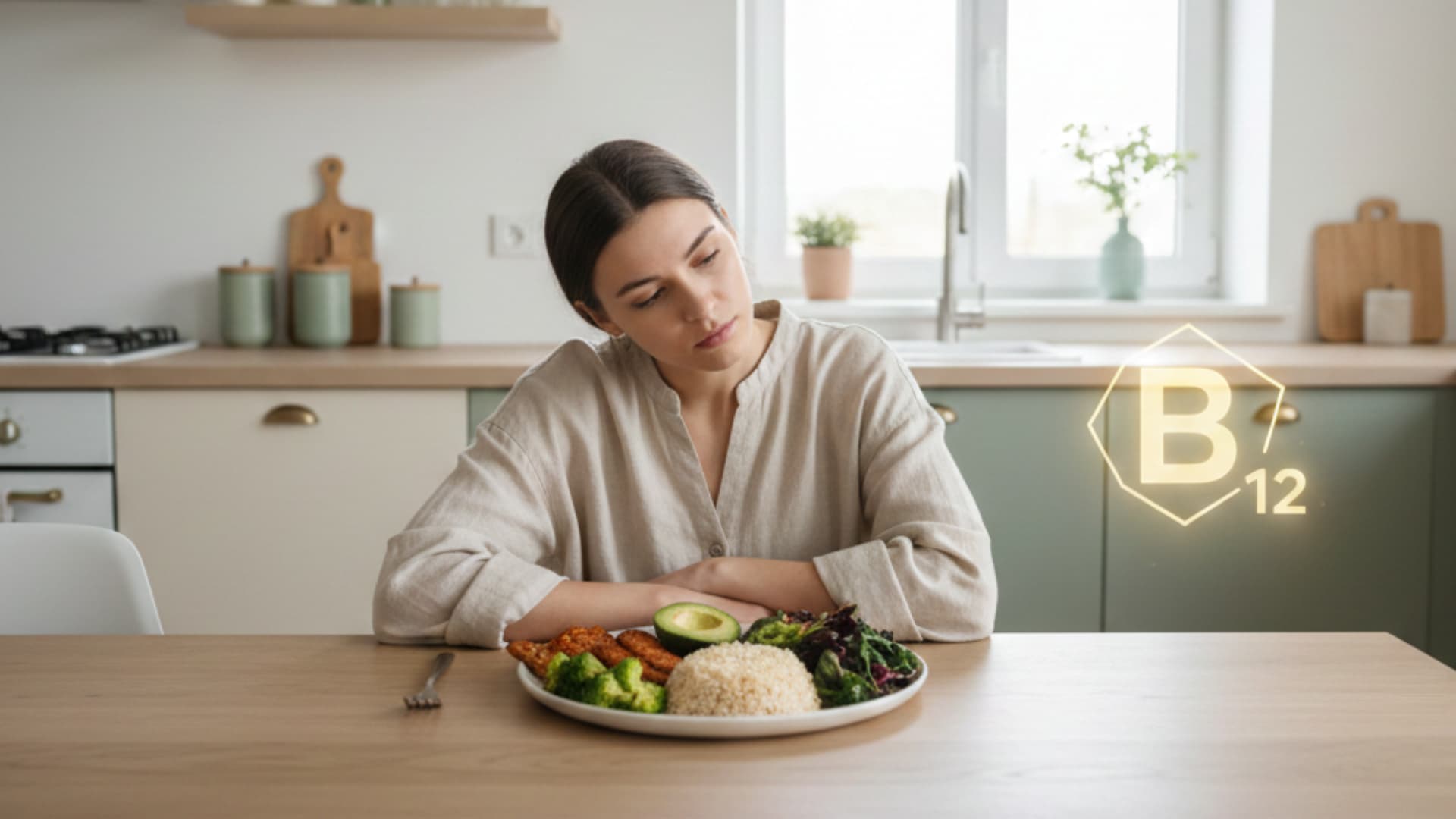
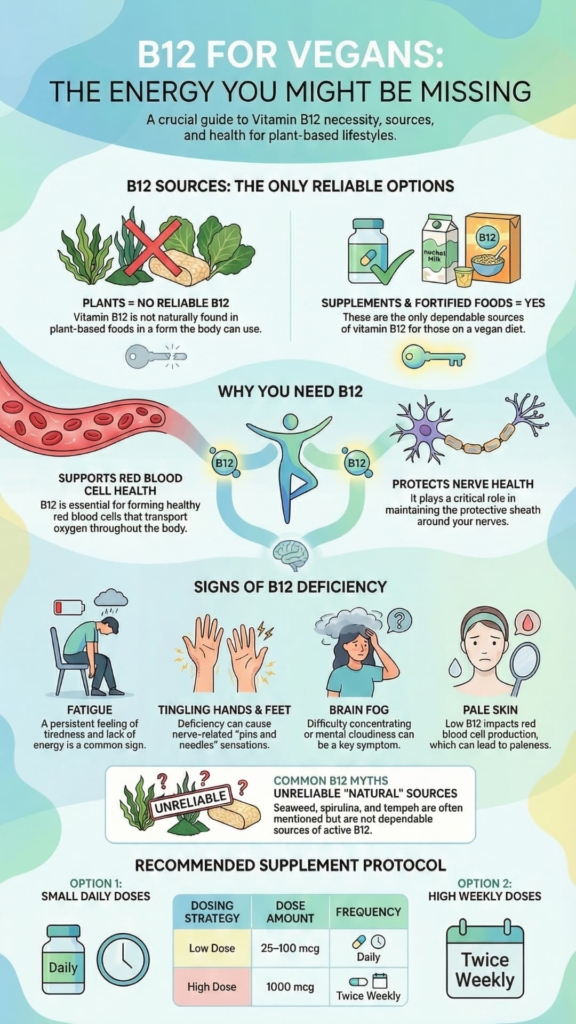
Vegans must get B12 from pills or from food with added B12. Plants do not make B12. Low B12 can cause tiredness, hand or foot numbness, and poor focus.
Sleep will not fix this. B12 is needed for nerve and red blood cell health. B12 deficiency can lead to megaloblastic anemia, where red blood cells are too large to carry oxygen properly.
The good news is, once you understand the basics, B12 is easy to build into your routine. Stay with this, and we’ll walk through it step by step.
SoyaMaya Fresh Tempeh is made the traditional way — no preservatives, no shortcuts. Delivered to your door.
Order Fresh Tempeh →Key Takeaways
- You must get B12 from fortified foods or a supplement; plants don’t provide it.
- Deficiency sneaks up slowly, damaging nerves and energy levels long before blood tests might show it.
- A simple, regular supplement protocol is the easiest and most reliable safety net.
Vitamin B12: The Quiet Nutrient That Can Change Everything
We remember the first time we really noticed it, a few years into our family’s shift to a plant-based kitchen. It wasn’t hunger. It was a quiet, heavy tiredness that didn’t go away after meals or a good night’s sleep.
We would finish breakfast and still feel drained. Our heads felt foggy, and even small tasks took more effort than they should.
We were eating well, lots of greens, legumes, and whole grains every day. Our fridge was full of good food. On paper, everything looked right.
We still felt low on energy. Something was missing, and at first we couldn’t tell what it was. It took time and a few honest talks around our dinner table to admit that we had overlooked something important.
A few things kept coming up for us:
- We felt tired even when we were eating enough
- Rest didn’t seem to fix it
- The foggy feeling stuck around
That missing piece wasn’t something we could see on our plates. We couldn’t taste it or crave it. We just slowly felt the effects of not getting enough of it. B12 is a key nutrient.
Once we started paying attention to it, a lot of those low-energy, foggy days began to make sense. It changed how we looked at our meals, not in a strict way, but in a more realistic one.
We learned that eating well isn’t just about choosing fresh food. It’s also about making sure our bodies get what they need. That experience stayed with us. It still shapes how we think about food and why we take B12 seriously today.
The Vitamin That Doesn’t Really “Grow” in Food
The most important thing to understand is that neither plants nor animals actually make B12. B12 is produced by bacteria found in the soil and within the digestive tracts of animals.
In a more ‘natural’ world, humans might have gotten trace amounts of B12 from drinking untreated water or eating unwashed vegetables. However, our modern (and much safer) food system involves chlorinated water and scrubbed produce, which removes these bacteria.
While farmed animals often receive B12 supplements in their feed to ensure their meat contains it, those of us on a plant-based path simply cut out the ‘middleman’ and take the supplement directly. [1]
Why B12 Deficiency Feels So Different
Low B12 can harm nerve and blood cells over time. It supports two quiet systems that keep you functioning. When B12 runs low, people often notice:
- A heavy, unshakeable fatigue
- Breathlessness during simple movement
- Tingling or numbness in hands and feet
- Brain fog and memory slips
- Feeling detached or weak
These are not random complaints. These signs show low B12 in nerve and blood cells. [2]
Why Plant-Based Living Requires B12 With Intention
This isn’t a flaw in plant foods. It’s a reality of modern life. B12 protects your red blood cells and maintains the delicate insulation around your nerves. Without it, oxygen delivery weakens and nerve signals blur, and the body slowly loses its sense of clarity and energy.
Plant diets must add B12 for nerve and blood cells. Without it, even the most vibrant plate of food can slowly stop sustaining you, which is why understanding what B12 tempeh actually means can change how people think about protein, fortification, and long-term plant-based nutrition.
The Persistent Myth of Plant-Based B12
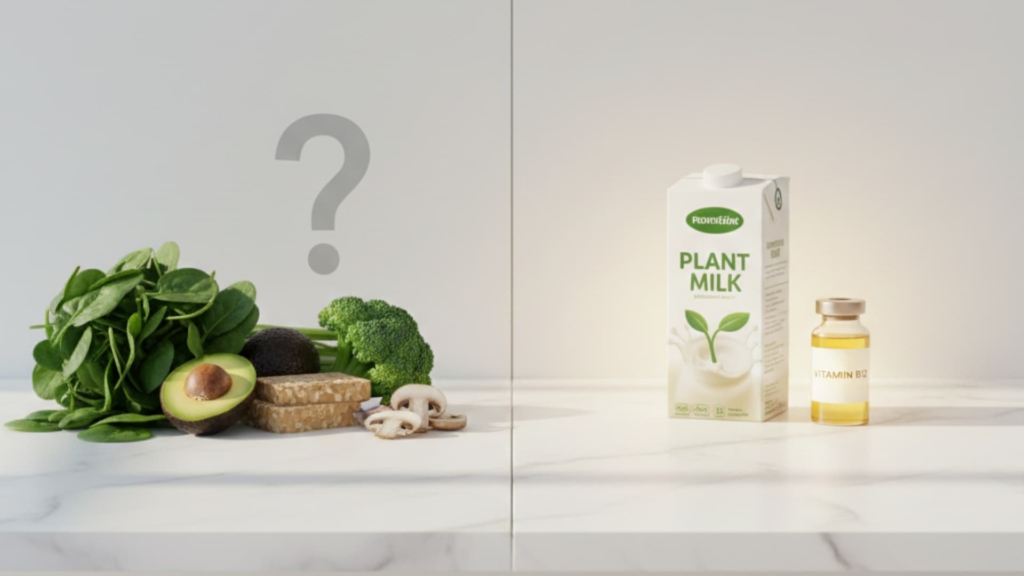
Some foods are said to have B12. Nutritional yeast, if it’s fortified, is a good source. But others are red herrings, and relying on them is a gamble with your health.
- Seaweed and spirulina: may have fake B12 that the body can not use. These can block real B12 use in the body.
- Tempeh and Fermented Foods: This is a point we know intimately. As tempeh makers, we ferment soybeans. The process can sometimes produce minute amounts of B12, but it’s inconsistent and negligible. You cannot and should not count on it to meet your needs. It’s a bonus, not a source, which is why relying on b12 fortified tempeh is the only way tempeh can truly function as a dependable B12 carrier.
- Organic Produce: The idea that soil residue provides B12 is, for most people in most places, a dangerous fantasy. It’s not a quantity you can measure or depend on.
These are the main B12 food and pill sources.
Listening to Your Body’s Early Warnings
A Slow Leak, Not a Sudden Crash
B12 loss can rise for years with no clear signs. Our liver stores B12, so we can coast for years on what we already have before anything obvious shows up. Lab tests may still show low-normal B12 while signs start.
We start dragging through mornings that used to feel easy. We feel worn down in a way that sleep doesn’t seem to fix. By the time numbers finally flag as “low,” our body has usually been trying to get our attention for a while.
The Subtle Changes We Brushed Off
We’ve seen this happen more than once, including in our own home. At first it didn’t feel serious. It felt like being a little slower, a little foggier, a little less sharp than we were used to.
We blamed long weeks, poor sleep, and stress. We reached for more coffee. We tried earlier bedtimes. We tightened up our routines.
But the tiredness stayed. It wasn’t the kind of tired you earn, it felt hollow, like the battery just wasn’t holding charge anymore.
Over time, a few quiet physical signs began to show up too:
- Our skin looked paler than usual, sometimes with a faint yellow tint
- Mouth ulcers appeared more often
- Our tongue felt sore and oddly sensitive, especially to spicy or acidic foods
These weren’t dramatic symptoms. They were small changes that made everyday life feel less comfortable.
When the Nervous System Starts to Speak
The neurological signs crept in even more quietly. We noticed a pins-and-needles feeling in our hands and feet, often on both sides at the same time. It would come and go, and because it wasn’t painful, it was easy to ignore.
We also found ourselves:
- Losing words mid-sentence
- Rereading the same paragraph
- Walking into a room and forgetting why we went there
- Feeling more irritable, flat, or low than usual
These shifts didn’t match what was actually happening in our lives. They didn’t feel like “just stress.”
Looking Back, the Pattern Was There
These weren’t random symptoms. They were our body asking for help, gently at first, then more clearly. Looking back, the signs were there long before any test confirmed what we were missing. Low B12 caused long-term loss of energy and focus. Low B12 signs can start mild and grow worse.
Building Your Simple B12 Protocol
The science is clear on how much you need, but the math is a bit surprising. The National Institutes of Health sets the Daily Value at 2.4 mcg for most adults.
However, our bodies are quite picky about how they absorb B12, it’s like a narrow doorway where only a few people can pass through at a time.
To ensure that at least 2.4 mcg actually makes it into your bloodstream, you have to “overwhelm” the system with a much higher dose.
This is why a supplement might show 50,000% of your daily value; it’s not an overdose, it’s just accounting for your body’s low absorption rate.
Here is how that looks in practice for your routine:
| Frequency | Supplement Dose | Why so high? |
| Daily | 25 – 100 mcg | Smaller doses are absorbed more easily, so you need less total. |
| 2x per Week | 1,000 mcg | High doses ‘force’ a small amount through the gut via passive diffusion. |
Many doctors advise 1000–2000 mcg of B12 two or three days per week. It’s what we do. You just have to pick a day, maybe Sunday and Wednesday, and make it a habit.
As for the form, cyanocobalamin is the most studied, stable, and affordable. If you are a heavy smoker or have kidney issues, consult a doctor before choosing cyanocobalamin.
Methylcobalamin is a premium, active form some prefer. Both work. Choose a reputable brand, and consider a sublingual tablet or spray that dissolves under your tongue, as it may offer more direct absorption. Check with a doctor for a B12 and Methylmalonic Acid (MMA) test if you suspect a deficiency
Making It Part of a Full Life
What We Think About in Our Own Kitchen
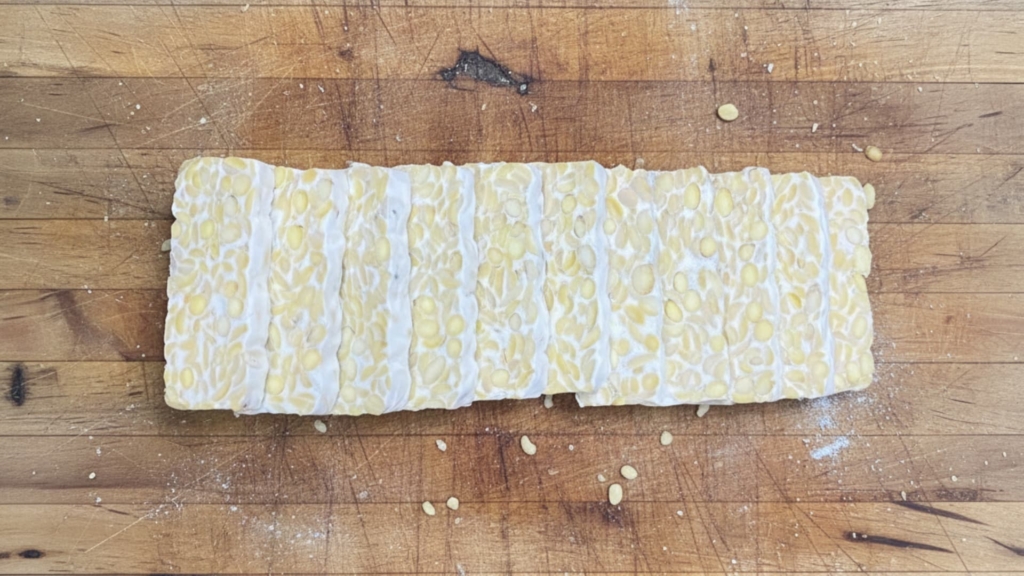
We think about this every day in our kitchen at SoyaMaya. Good food must also meet long-term nutrient needs. We care deeply about what goes into our food and what doesn’t, and we carry that same care into how we talk about nutrition.
We craft our tempeh slowly and with intention. We choose organic Indiana soybeans because they’re clean, consistent, and have a naturally nutty flavor that doesn’t need much help to taste good, a standard that aligns closely with the best organic soybean brands known for soil integrity, traceability, and fermentation stability.
We ferment in small batches, keep our process simple, and pay attention to texture, aroma, and freshness. It’s something we feel good serving to our own families, not just to our customers.
Where We Draw a Clear Line
But even with all that care, we don’t pretend that one food can do everything. B12 is where we draw a clear line. We’ve learned, sometimes the hard way, that this is one of those nutrients that has to be layered in on purpose.
In our own routines, that usually looks like:
- Pairing our meals with a fortified food
- Keeping a simple B12 supplement on hand
- Paying attention to our energy and focus over time
That’s how we build a way of eating that actually holds up, not just in the first few months of eating well.
What We’ve Noticed in Real Life
We talk about this openly in our own kitchen because we’ve felt the difference ourselves. When B12 is off, energy dips. Focus slips.
Mood changes in ways that don’t quite make sense. When it’s back where it should be, things feel steadier. Mornings are easier. Our patience comes back. We move through our days with more clarity and less drag. Low B12 can harm health.
Basic Maintenance for a Real Body
credits: Dr. Sarah Ballantyne
This isn’t a weakness of a vegan or plant-based lifestyle. It’s simply a fact of modern human biology. Our food systems are different now.
Our environments are different. B12 is a daily need like water and sleep. It is a basic nutrient the body needs each week.
FAQs
Why do vegans need vitamin B12 for blood and nerve health?
Vegans need vitamin B12 because it supports red blood cell formation, protects the nervous system, and helps prevent cognitive decline. Plant foods do not provide a reliable source of B12. Low vitamin B12 levels increase the risk of nerve damage and vitamin B12 deficiency. Blood tests can check B12 status, methylmalonic acid, and homocysteine levels to guide safe daily intake and proper supplementation.
What are safe vegan sources of B12 during pregnancy and aging?
B12 for vegans usually comes from fortified foods and B12 supplements. Foods fortified with B12 include breakfast cereals and nutritional yeast. The body must absorb B12 using intrinsic factor, which becomes less efficient with age. Older adults and pregnant women often need careful intake of B12, regular blood tests, and guidance from a registered dietitian to maintain healthy vitamin B12 levels.
Can plant based foods provide reliable natural B12 sources?
Plant-based foods do not provide reliable natural sources of B12. The primary source of B12 comes from animal products, which is why vegans and vegetarians face increased risk of vitamin B12 deficiency. To maintain adequate intake, vegan and vegetarian diets must include fortified foods or B12 supplements. These options protect long-term vegan health and prevent low vitamin B12 levels.
Which blood tests track B12 status and heart risk?
Blood tests measure vitamin B12 levels, red blood cell size, methylmalonic acid, and homocysteine levels. Elevated homocysteine levels are linked to cardiovascular disease and increased risk of heart disease. Health professionals compare results with dietary reference intakes and daily intake targets. This process helps adjust B12 intake to reach adequate B12 levels, especially for people following vegan and vegetarian diets.
What deficiency symptoms warn vegans about nervous system damage?
Signs and symptoms of vitamin B12 deficiency include tingling in the hands or feet, fatigue, memory problems, poor concentration, and balance issues. Low vitamin B12 harms red blood cells and damages the nervous system. Vegans, vegetarians, older adults, and pregnant women should maintain adequate intake through fortified foods or supplements and schedule regular blood tests to protect long-term health.
Choosing Tempeh You Can Truly Trust for Vitamin B12
So where does this leave you Empowered hopefully Planning B12 supports healthy nerves blood cells and lasting energy SoyaMaya offers America’s only B12 tempeh made from organic Indiana soybeans.
Small-batch fermentation delivers plant-based protein delicious flavor and peace of mind. Choose Fresh Frozen Tempeh or crunchy Protein Tempeh Chips to nourish your day support local farmers and help fund children’s education in Indonesia. Enjoy wholesome food rooted in Indonesian tradition today with confidence balance naturally.
Get Your B12 the Delicious Way with SoyaMaya Shop
References
- https://www.vegansociety.com/sites/default/files/uploads/downloads/Vitamin_B12.pdf
- https://pubmed.ncbi.nlm.nih.gov/39373282/
Related Articles
- https://mayasaritempeh.com/b12-fortified-tempeh/
- https://mayasaritempeh.com/what-is-b12-tempeh
- https://mayasaritempeh.com/best-organic-soybean-brands
SoyaMaya Fresh Tempeh
Traditionally fermented, no preservatives, shipped fresh and frozen to your door. The real deal, direct from us.
