
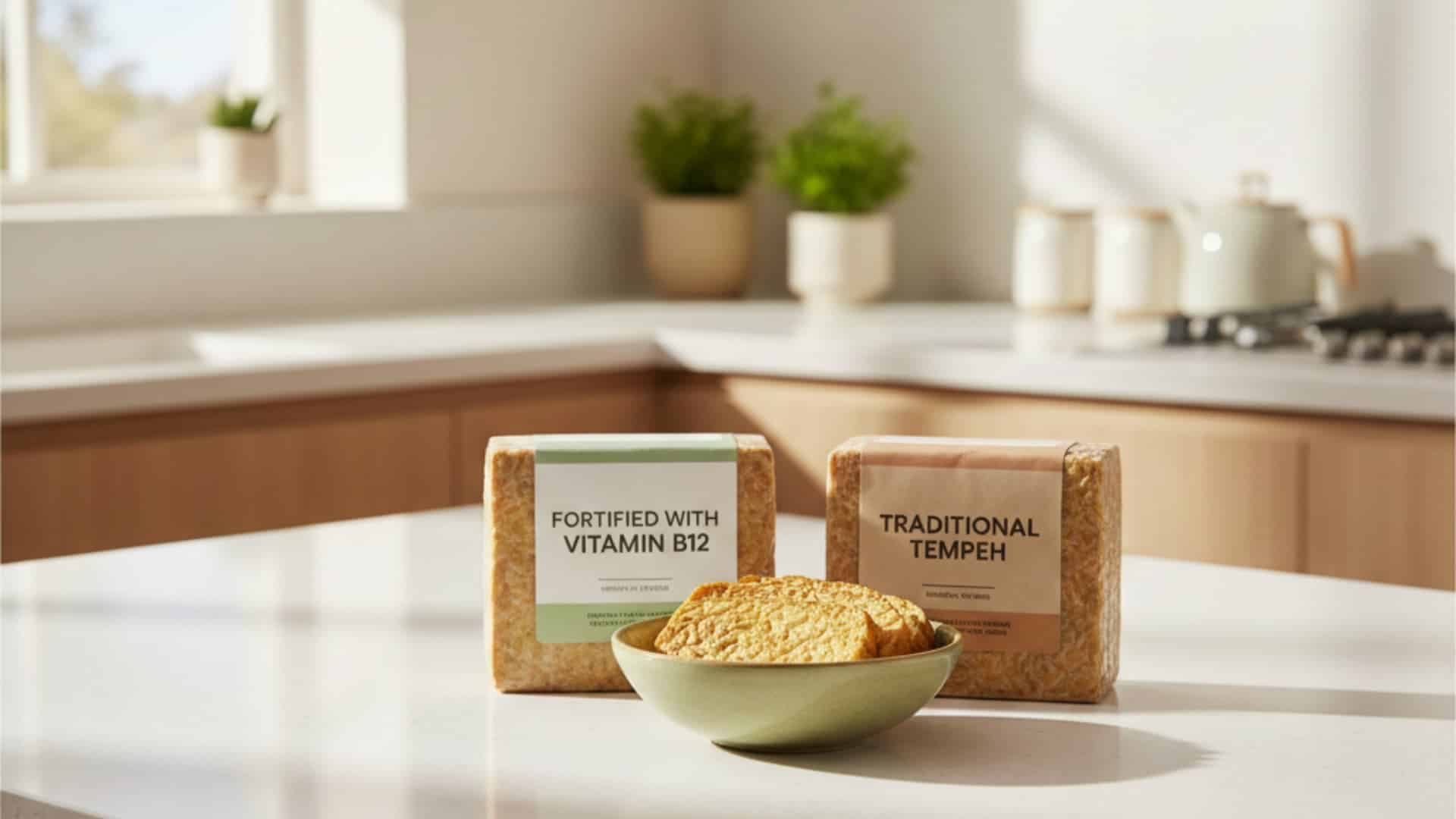
We make tempeh, and we’ve spent years testing batches and tracking fermentation. Here’s the honest truth: it’s still very hard to find store-bought tempeh you can truly rely on for vitamin B12.
Most brands contain little to no B12. The few that do often depend on natural fermentation, which can change from batch to batch. That means the B12 level isn’t always steady.
If you want predictable nutrition, look for tempeh that is clearly fortified or made with a tested, consistent process. Keep reading to learn how to spot the difference and what it means for your health.
SoyaMaya Fresh Tempeh is made the traditional way — no preservatives, no shortcuts. Delivered to your door.
Order Fresh Tempeh →Key Takeaways
- Natural B12 in tempeh is unreliable. It depends on specific bacteria that aren’t always present.
- Fortified brands are rare but offer real nutritional value. They add a consistent, measurable amount.
- The label is your most important tool. Look for B12 listed in the nutrition facts and the ingredient list, not just in the marketing.
The Moment You Realize Not All Tempeh Is the Same
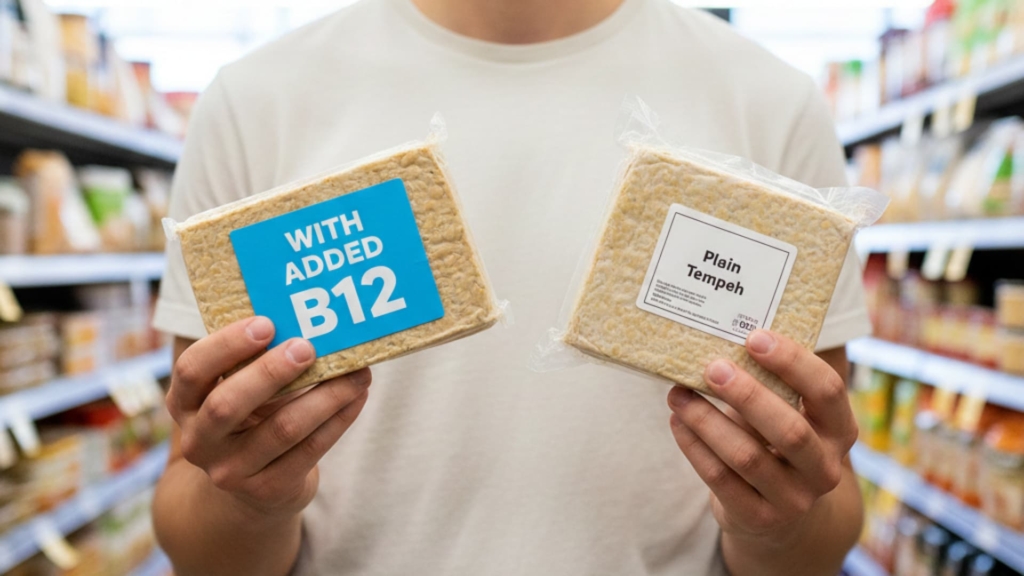
You walk into a store, or you’re scrolling online, and you see it. “Tempeh.” Maybe it says “high-protein” or “fermented superfood.”
You’re a savvy shopper, you’re thinking about your B12 intake, and you wonder, Is this one of the good ones? Does this have what I need?
I’ve been there, on both sides of the counter. As someone who crafts tempeh from organic Indiana soybeans, this question isn’t academic. It’s personal. We get emails about it. We see the confusion. Most tempeh brands do not show clear B12 data.
The truth is, most commercial tempeh brands are not a dependable source of vitamin B12. They might be fantastic for protein, for texture, for a meaty bite in your stir-fry. B12 is hard to get on a plant diet. You can’t just assume. You have to know. [1]
What We’ve Learned From Making Tempeh Every Week
Here’s why we’re so careful with how we talk about this. We’ve made thousands of batches. We’ve watched fermentation behave beautifully one week and stubbornly the next.
Heat, air, and rest time change what grows in tempeh. From the outside, two packages can look identical. On the inside, nutritionally, they can be very different, especially when comparing traditional tempeh to b12 fortified tempeh that is produced with controlled, measurable nutrition.
Some of the biggest variables we’ve seen over time include:
- How fresh the soybeans are when they arrive
- How long they soak and rest before inoculation
- Room temperature swings during fermentation
- Airflow and moisture levels in the fermentation space
These steps change what grows in tempeh.
The Assumption We Hear All the Time
Over the years, we’ve had customers write in saying, “I thought all tempeh had B12.” Some were feeling run-down. Some were new to plant-based eating and genuinely trying to do things right. That’s when we realized how widespread the assumption had become.
Tempeh has this reputation: fermented = “extra nutritious.” And in many minds, that automatically becomes: fermented = B12.
But fermentation alone doesn’t guarantee it, and understanding what B12 tempeh actually means helps explain why natural fermentation can’t be relied on for steady intake. Some microbes make B12-type forms, but:
- Not all of those compounds are usable by the human body
- Not all fermentation environments support the right microbes
- Not all batches even from the same producer behave the same
Furthermore, some natural batches contain “pseudo-B12”, analogues that look like the vitamin in a lab test but aren’t bioactive or usable by humans. This means two tempeh blocks can look identical but have very different nutritional value.
Why We Don’t Treat B12 as an Accident
From our side of the production table, we don’t treat B12 as a happy accident. We look at it as something that has to be handled intentionally, measured, and understood. We don’t want anyone building their daily nutrition on a guess.
When we talk about what’s in our tempeh, it’s because we’ve actually paid attention to what comes out of our process, built on clean, carefully selected non-GMO soybeans, not just what might come out of a theoretical one.
For us, that means:
- Tracking fermentation conditions carefully
- Paying attention to batch consistency
- Being cautious about what we claim and how we say it
- Making sure customers aren’t relying on assumptions for critical nutrients
What We Hope You Take With You
So when you’re standing there in the store, turning a package over in your hands, your instinct to question is the right one. You’re not being picky. You’re being responsible.
Tempeh can absolutely be part of a strong, satisfying, plant-based routine, we live on it ourselves, but B12 is too important to leave to assumptions.
Knowing where your tempeh comes from, how it’s made, and what’s really in it isn’t overthinking. It’s simply taking care of yourself. And that’s something we’ll always stand behind.
Why “Natural B12” in Tempeh Is a Gamble
Credits: Knowledge Tasters
Traditional tempeh relies on a mold called Rhizopus oligosporus to bind the soybeans. While this mold creates the texture, it doesn’t produce B12.
That comes from “hitchhiker” bacteria like Klebsiella or Citrobacter. In traditional, open-air fermentation, these bacteria might show up and produce B12 in decent amounts. [2]
But here’s the catch: Modern production prioritizes cleanliness and consistency. Clean rooms designed for food safety effectively block these B12-producing bacteria.
This is why a study from a village in Indonesia might show high B12, but the block you pick up in a local grocery store likely has trace amounts, or none at all.
The Reality of Modern Production: Why B12 Is So Rare
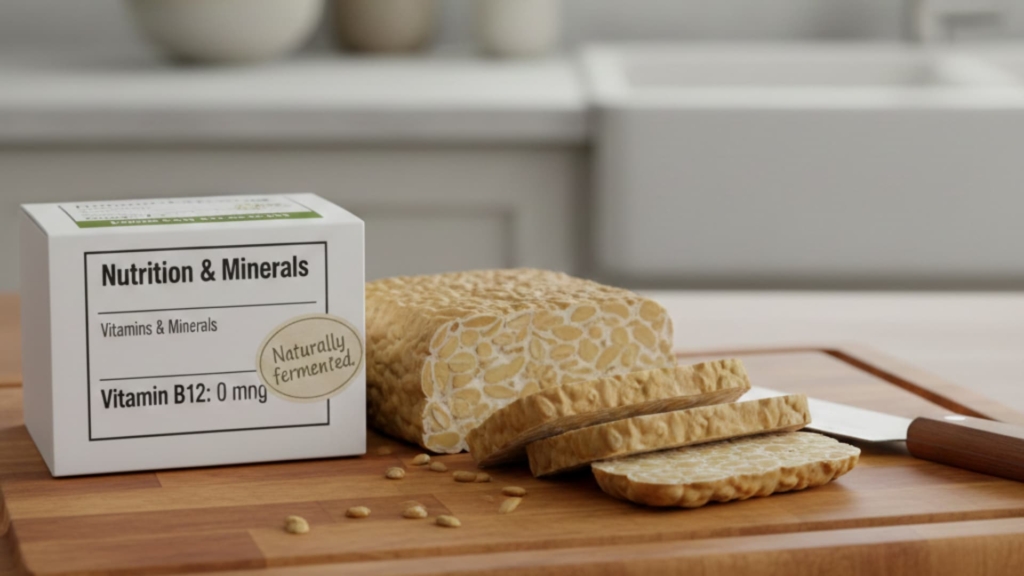
From the outside, it looks like fermentation does all the work. Inside the fermentation room, we’ve learned that modern safety and natural B12 are often at odds:
- The Mold vs. The Bacteria: The primary mold, Rhizopus oligosporus, is biologically incapable of creating B12. Without specific, “wild” bacteria present, the B12 count stays at zero.
- The Sterility Paradox: Hygienic standards that keep food safe also systematically remove the microbes that produce B12. We choose safety, but it comes at a nutritional cost.
- The “Natural” Gamble: Even when B12 bacteria are present, their activity is unpredictable. Levels fluctuate wildly based on room temperature, airflow, and bean moisture.
- The Lab vs. The Plate: Some natural batches contain “pseudo-B12”, analogues that look like the vitamin in a lab test but aren’t bioactive or usable by humans. You might see a number on a report, but your body can’t actually use it.
In short, you can’t build a health routine on a “maybe.” This is why we stopped leaving B12 to chance.
What We Saw When We Tested Our Own Batches
You can’t build a nutritional plan on a “might.” Your body needs a consistent 2.4 micrograms per day. Relying on standard store-bought tempeh for that is, frankly, a risky strategy.
We learned this early on. When we first started making tempeh, just for ourselves, and then for our kitchen, we decided to test it.
The results surprised us. One batch would show a little B12. The next would show nothing at all. Then another would show trace amounts again. There was no steady pattern we could trust.
From our side of the table, that wasn’t good enough. Not for us, and certainly not for anyone who might be depending on tempeh to cover such an important daily need.
That’s when we stopped treating B12 as something that might “just happen”, and started treating it as something that had to be handled deliberately.
The Fortification Difference: When B12 Is Guaranteed
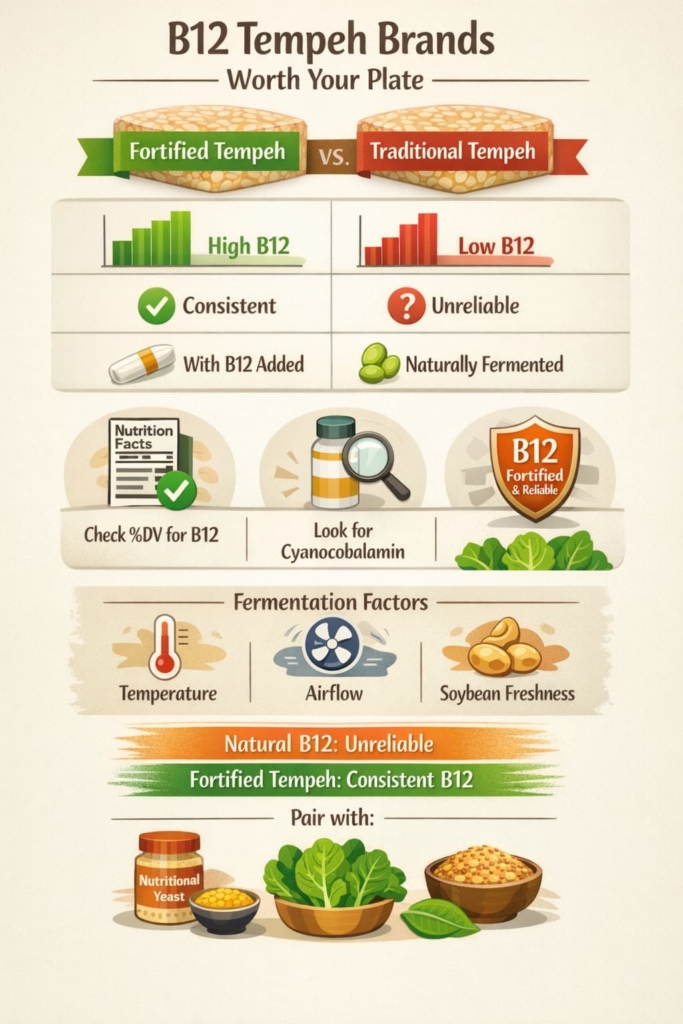
Fortified Tempeh vs Traditional Tempeh
The benefit is straightforward. You can incorporate this tempeh into your diet and know exactly what you’re getting. It removes the guesswork. It turns tempeh from a “maybe” into a “yes.”
| Feature | Fortified Tempeh | Traditional Tempeh |
| B12 content on label | Clearly listed and measured | Rarely listed or not listed |
| Reliability of B12 | Stable and consistent per serving | Unpredictable and inconsistent |
| Type of B12 | Cyanocobalamin (heat-stable, researched) | Wild microbial byproducts |
| Effect after cooking | Nutrient level remains dependable | B12 may degrade or disappear |
| Best for vegans | Reliable daily B12 source | Not dependable for B12 needs |
| Nutrition confidence | You know exactly what you get | You are guessing |
For vegans and vegetarians, this is huge. It’s one less supplement to remember, one more way to get vital nutrition from whole, fermented food.
The trade-off, some purists might say, is that it’s not “traditional.” But I’d argue that providing dependable nutrition is its own, deeply important tradition.
Navigating the Aisles: How to Choose Your Tempeh

So, you’re in the store. You’re facing the refrigerator section. What do you do? First, ignore the front of the package for a minute. Turn it over. Look at the Nutrition Facts label.
Scan for “Vitamin B12.” Does it have a percentage listed? If it does, that’s your strongest signal. If it doesn’t, assume the B12 content is negligible or nonexistent for your dietary planning.
Next, look at the ingredient list. Is B12 listed there? It might be near the end. Seeing it here confirms fortification. If you don’t see it, and there’s no percentage on the nutrition label, you’ve got a standard, unfortified tempeh. It can still be a fantastic product, high in protein, fiber, and probiotics, but you’ll need to get your B12 elsewhere.
- Always check the Nutrition Facts panel for a B12 %DV.
- Scan the ingredient list for added cyanocobalamin.
- Prioritize brands that are transparent about their nutrition.
Now, let’s talk about us, about SoyaMaya. This isn’t a hard sell, it’s just our story. When we realized how unreliable natural B12 was, we made a choice.
We wanted our tempeh to be a true nutritional pillar. So, we worked to create a product that provides it. Our focus was always on clean, organic ingredients from farms we know in Indiana.
Adding a reliable source of B12 felt like the next, logical step in that mission. It wasn’t about being trendy, it was about being complete. About making something we could feed our own families with total confidence.
Building a Diet That Works With Tempeh
Let’s be practical. Even if you find a good B12 tempeh brand, it’s wise not to put all your eggs in one basket. Tempeh is a brilliant food, but it’s part of a bigger food picture. We use it that way ourselves, as a reliable, high-protein, fermented base that we can build real meals around.
We crumble it into salads when we want something hearty but still fresh. We slice it thin and pan-fry it for sandwiches when we’re short on time. We marinate it and bake it for bowls that carry us through long days in the kitchen. It’s flexible, filling, and easy to work with, but we don’t expect it to carry our entire nutrient load on its own.
Here are a few ways we like to round out a tempeh plate:
- A sprinkle of fortified nutritional yeast on top for extra B12 and a savory finish
- Leafy greens on the side to bring in iron and folate
- A squeeze of lemon or something acidic to help your body absorb that iron better
- Whole grains or root vegetables to keep the meal grounded and filling
Each food adds a key nutrient. Each ingredient does a different job, and together they make the meal stronger than any single piece could on its own.
And listen, if you can’t find, or simply don’t choose, a fortified tempeh, that’s okay. We’ve been there ourselves, especially in the early days when options were limited. What matters is being aware.
You’ll need to be intentional about getting B12 from other fortified foods or a supplement. There’s no shortcut around that.
A few habits that have helped us stay on track:
- Keeping a consistent B12 source in our routine
- Not assuming any single food is “covering everything”
- Checking in with our doctor once in a while
- Getting a simple blood test when something feels off
The goal isn’t just to avoid deficiency. It’s to feel steady, clear-headed, and well-supported in your day-to-day life. Good health needs steady food plans, one good habit at a time.
FAQs
How can I check real tempeh B12 content before buying?
Real tempeh B12 content is rarely consistent unless the product has been tested and clearly labeled. Vitamin B12 tempeh made through controlled fermentation or fortification usually lists tempeh B12 levels per serving. Look for statements about B12 fortified tempeh, active B12 tempeh, or bioavailable B12 tempeh. These details confirm that the tempeh provides measurable and dependable B12 nutrition.
Is natural vitamin B12 tempeh better than fortified options?
Natural B12 tempeh can form during tempeh fermentation B12 processes that involve specific B12 bacteria tempeh strains. However, B12 levels often vary between batches. B12 fortified tempeh provides predictable tempeh vitamin content because the added amount is measured. People who need steady intake usually benefit more from fortified options than from relying on natural fermentation alone.
Which tempeh brands high B12 usually provide better nutrition?
Tempeh brands high B12 usually use controlled production, verified testing, and clear nutrition labeling. They often emphasize tempeh nutrition B12, high protein tempeh B12, and gut friendly tempeh B12 values. Many also highlight non GMO tempeh B12, organic tempeh B12, and sustainable tempeh B12 practices. These features indicate stronger quality control and more dependable nutrient delivery.
Can soy-free tempeh still offer plant based B12?
Soy free tempeh B12 can supply plant based B12 tempeh when produced with specific bacterial cultures or fortification. Lupin tempeh B12 and other fermented soy B12 alternatives may include B12 bacteria tempeh during processing. Always review tempeh vitamin content labels to confirm bioavailable B12 tempeh. Without verified labeling, B12 amounts may be too low to meet daily needs.
How does tempeh fermentation affect B12 absorption?
Tempeh fermentation B12 changes how nutrients are released and digested in the body. Certain Rhizopus B12 tempeh cultures and supporting bacteria improve tempeh digestibility B12 and tempeh B12 absorption. This process can also increase tempeh probiotics B12 and mineral utilization. Well-managed fermentation makes tempeh meat substitute B12 easier to absorb than many unfermented plant foods.
Choose Tempeh With B12 You Can Verify
You must trust the B12 label. Look beyond marketing, read nutrition panels, and choose brands that clearly list what they provide.
Transparency means responsibility. SoyaMaya began in a home kitchen and grew into a mission to make traditional tempeh meet modern nutritional needs.
We use clean, organic soybeans, slow fermentation, and clearly added Vitamin B12, so you know exactly what you’re getting.
If you want dependable, protein-rich tempeh you can count on, your answer is here. Trust What’s on Your Label, Choose SoyaMaya B12 Tempeh.
References
- https://www.tempeh.info/health/vitaminB12.php
- https://pubmed.ncbi.nlm.nih.gov/2380647/
Related Articles
- https://mayasaritempeh.com/b12-fortified-tempeh/
- https://mayasaritempeh.com/what-is-b12-tempeh/
- https://mayasaritempeh.com/what-are-non-gmo-soybeans/
SoyaMaya Fresh Tempeh
Traditionally fermented, no preservatives, shipped fresh and frozen to your door. The real deal, direct from us.
