
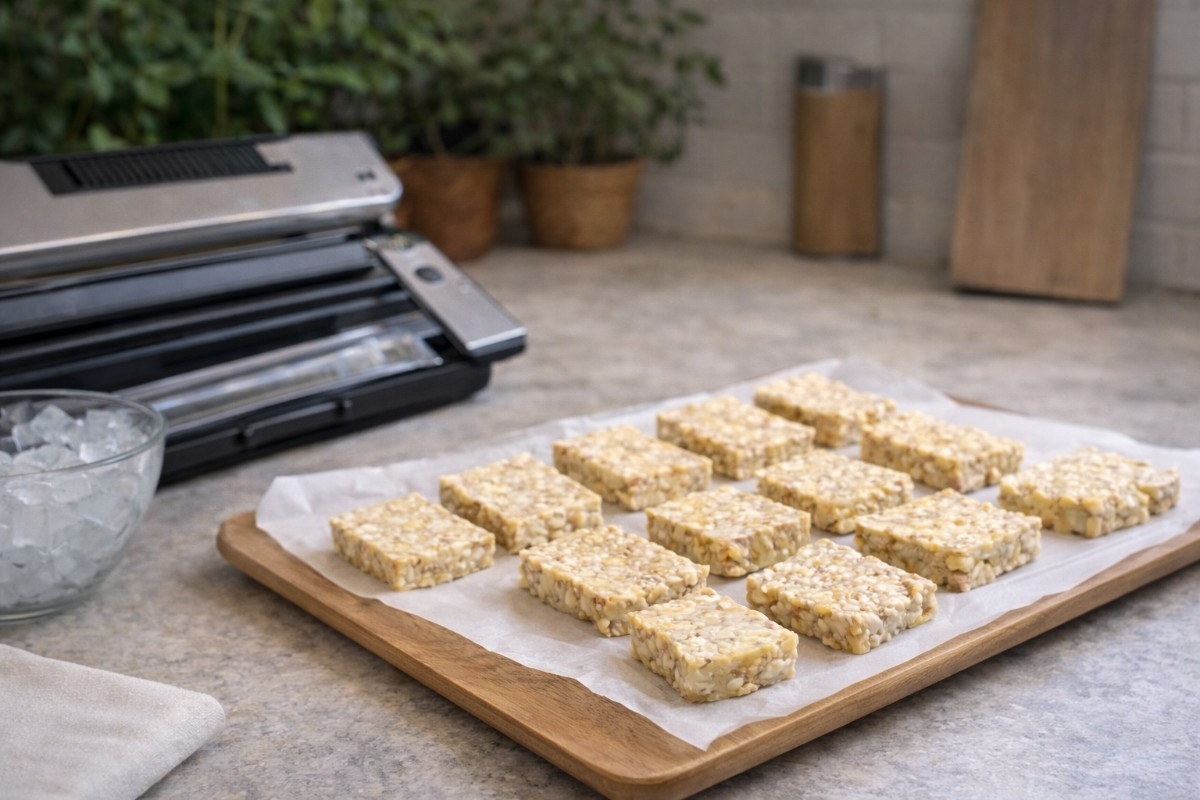
You can keep your tempeh fresh for a month by vacuum sealing it. This simple trick removes the air that leads to mold, saving that firm, nutty block from the compost bin. We vacuum seal every batch of our own SoyaMaya tempeh that isn’t used immediately. It turns a potential rush into a relaxed, planned meal. If you’ve ever had to throw out a tempeh block speckled with gray spots, you’ll understand the relief. This method solves that problem for good. Here’s exactly how to do it, so you can cut down on waste and cook whenever you like. Read on to get the steps right.
Key Takeaways
- Vacuum sealing works by removing oxygen, the main culprit behind tempeh mold and spoilage.
- A quick pre-freeze is the best trick to protect the tempeh’s delicate texture from the sealer’s suction.
- Properly sealed, tempeh can last 30 days in the fridge or over six months in the freezer.
From a Personal Lesson in Loss to Lasting Freshness
I remember the first time I lost a whole batch of homemade tempeh to an aggressive fuzz of gray mold. It was a humid Indiana summer day, the kind where the air feels thick. I’d left the blocks wrapped in a towel on the counter, just for a day too long.
The loss felt personal, a waste of good soybeans and time. That’s when we got serious about storage. In our kitchen at SoyaMaya, vacuum sealing went from a commercial step to a household essential.
SoyaMaya Fresh Tempeh is made the traditional way — no preservatives, no shortcuts. Delivered to your door.
Order Fresh Tempeh →It’s not just for selling; it’s for saving. It turns a perishable fermented food into a pantry staple, or really, a freezer staple. You buy berries in season and freeze them, right. This is the same idea, but for protein.
“The quality of tempeh is highly influenced by mold growth because of its role in forming a compact texture, white color, and functional properties as well as consumer acceptance.” Maria Erna Kustyawati et al, International Journal of Food Science
Why Air is the Enemy of Your Tempeh
Tempeh is alive, in a sense. The Rhizopus mold, that white mycelium that binds the soybeans, is a living culture. It goes dormant when you cool it, but it doesn’t fully stop. More importantly, other airborne microbes are looking for a home.
Oxygen is their ticket in. Vacuum sealing tempeh solves this by creating a barren, airless environment. No air means no opportunity for mold spores to settle and thrive.
This is key to understanding how signs that tempeh has spoiled can prevent waste and keep your plant protein fresh longer. It also drastically slows oxidation, which is what turns the edges dark and can create off-flavors.
The goal is to press pause, to keep the tempeh in the state you love: firm, marbled with white, and smelling faintly of nuts and mushrooms.
- It prevents mold growth by removing the oxygen spores needed.
- It locks in moisture to prevent freezer burn in long-term storage.
- It preserves the texture and sensory quality far better than plastic wrap.
Think of it as putting your tempeh into hibernation. You’re giving it a stable, quiet place to wait until you’re ready for it.
This is the core principle behind how we store our own Fresh Frozen Tempeh. We seal it at peak freshness, right after fermentation, so that when it arrives in your kitchen, it’s essentially in the same state it left ours. You’re just continuing the chain of preservation.
What You’ll Need to Get Started
You don’t need a commercial setup. A standard home vacuum sealer does the job perfectly. We use a basic FoodSaver model in our test kitchen. The real key is in the bags.
Get the ones with the textured channels, sometimes called “grip strips.” These allow air to be pulled out from around the product even if there’s a little moisture, which gives you a better seal. You’ll also want parchment paper.
Not wax paper, parchment. It’s your insurance policy against the machine getting too aggressive and compressing the soft tempeh.
Finally, have a tray or a plate that fits in your freezer. A flat surface for the initial freeze makes all the difference. That’s the whole list. The machine, the right bags, parchment paper, and a freezer tray. It sounds simple, and it is, but each piece matters.
The bags are non-negotiable. Using generic plastic bags or trying to seal with a straw just won’t create the same airtight environment.
The textured channels are crucial because tempeh, even when patted dry, retains a bit of moisture from fermentation. Those channels give the air a path to escape without the liquid getting sucked into the sealer’s mechanism.
As for the machine, any brand that has a “gentle” or “moist” setting will work beautifully. If it doesn’t, you can use the manual pulse function, which we’ll get to. The goal is controlled suction, not a violent crush.
Preparing Your Tempeh for the Seal
This is the most important step, and where most folks rush. If you put a fresh, room-temperature block of tempeh directly into the bag and hit the vacuum, you’ll end up with a compressed, dense brick. The machine will squeeze all the air out from between the beans, compacting the delicate mycelium structure.
To avoid this, many recommend methods similar to those used for how to store tempeh, drying the surface and pre-freezing, to protect the texture and make vacuum sealing effective.
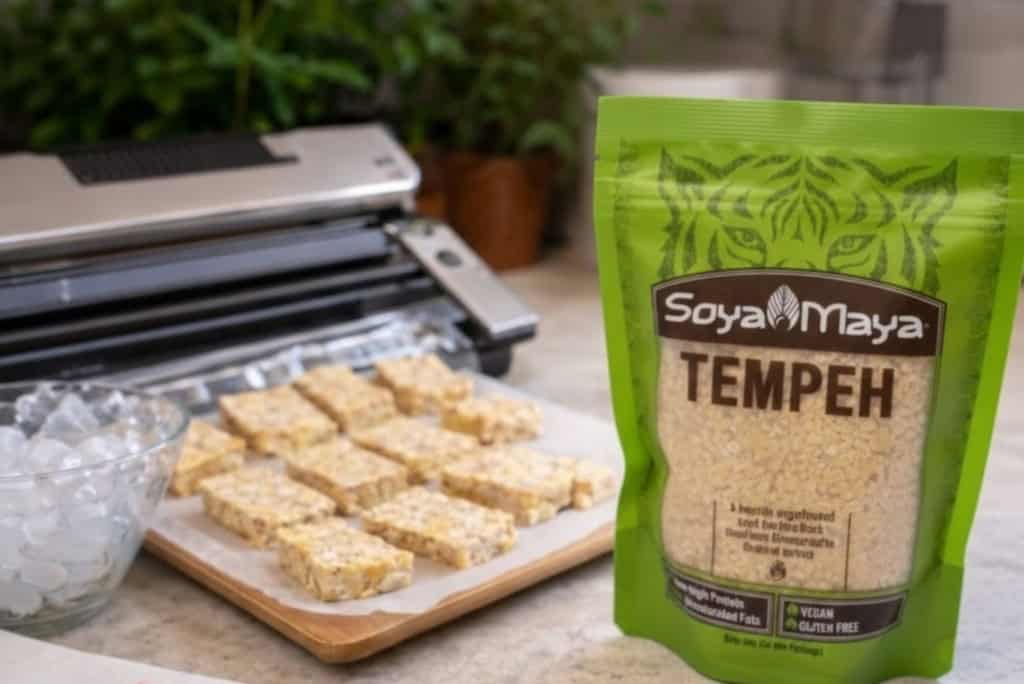
The trick is to firm it up first. For our SoyaMaya tempeh, we take the 10oz block straight from its freezer state (it’s shipped frozen for freshness).
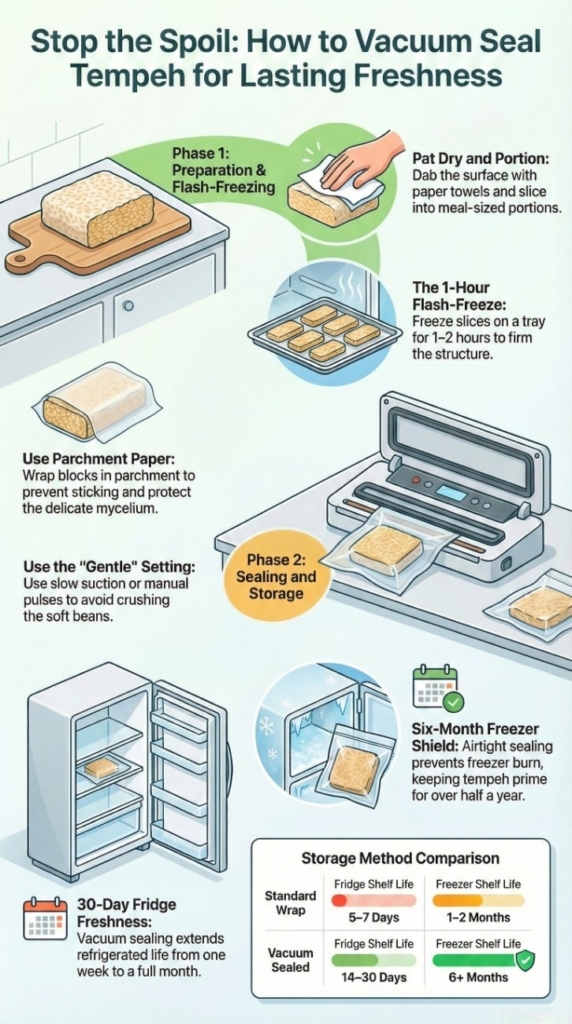
If you’re using fresh tempeh, you start here. Let the tempeh come to room temperature if it was refrigerated. Pat the entire surface firmly with a paper towel. You’re not rubbing, just dabbing, to take off any surface moisture.
Then, you have a choice. You can slice it into the portions you normally use, maybe into four steaks or cubes for stir-fry. This is great for meal prep. Lay the pieces on a sheet of parchment paper on that freezer tray, making sure they aren’t touching.
Pop the whole tray into the freezer for just one to two hours. You’re not trying to freeze it solid, just to get it firm to the touch, like a chilled stick of butter.
This “flash-freezing” gives the structure enough integrity to withstand the vacuum’s pull. If you’re sealing a whole block, wrap it loosely in a sheet of parchment paper first, then do the same short freeze. The parchment prevents any sticking and adds a protective layer.
| Step | What to Do | Why It Matters |
| Surface drying | Pat tempeh dry with paper towels | Reduces moisture pulled into the vacuum sealer |
| Portioning | Slice tempeh into planned serving sizes | Supports meal prep and avoids resealing |
| Pre-freezing | Freeze 1–2 hours until firm, not solid | Prevents compression during vacuum sealing |
| Parchment wrapping | Wrap loosely before freezing | Protects texture and prevents sticking |
| Spacing | Leave space between pieces | Ensures even freezing and sealing |
The Gentle Art of the Vacuum Seal
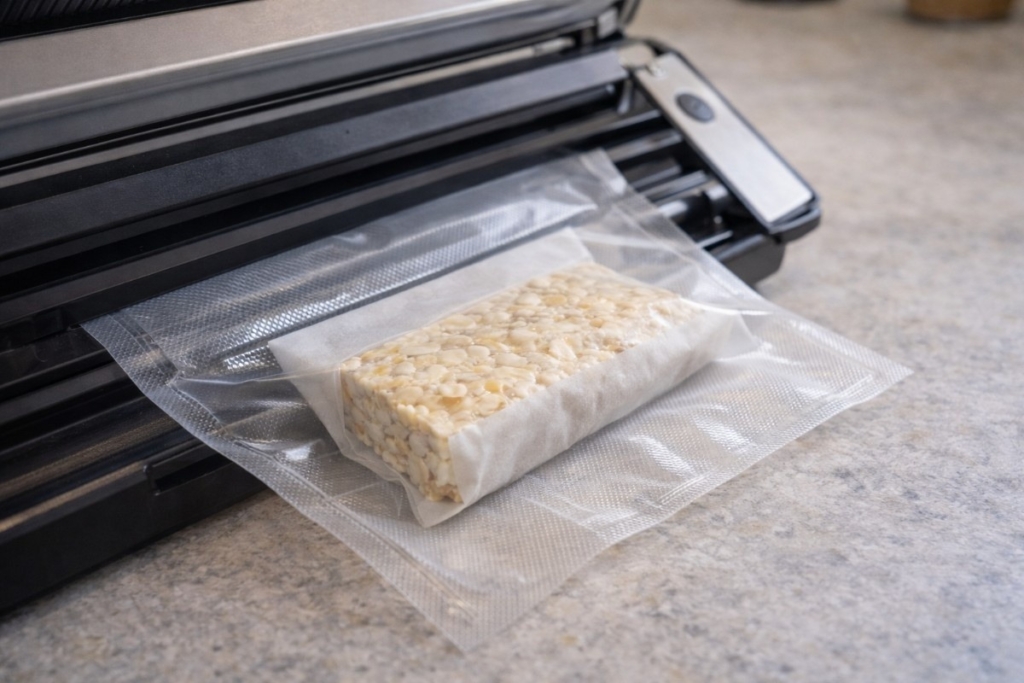
Now for the main event. Take your firm, parchment-wrapped tempeh portions from the freezer. If you sliced them, you can place a few portions in one bag, but don’t overcrowd. Leave a good three inches of empty bag at the top above the tempeh.
This gives the machine plenty of material to grab and seal. If your sealer has a “gentle” or “moist” setting, select that.
This setting uses slower, less aggressive suction. Place the open end of the bag into the machine and press the button. Watch the bag shrink around the tempeh. You’ll see it conform, but because the tempeh is firm and wrapped in parchment, it holds its shape.
If your machine doesn’t have a special setting, use the manual pulse or hold function. Press the button to start the vacuum, and watch closely.
The moment you see the bag start to press tightly onto the tempeh, release the button to stop the suction, then immediately press the seal button. This hands-on method gives you perfect control. You’re removing the air but stopping before the pressure deforms the food.
Once you hear the seal cycle finish, wait a second, then remove the bag. Feel it. It should be tight, with no air pockets, but the outline of the tempeh inside should still be recognizable, not pancaked. That’s success.
- Always leave 3+ inches of bag space for a clean seal.
- Use the “gentle” setting or manual pulse for control.
- The bag should be tight but the tempeh’s shape should be preserved.
For an extra layer of security, especially for tempeh going into long-term freezer storage, you can double-bag. After the first seal cools, simply place the entire sealed bag into a second one and repeat the process.
It’s overkill for fridge storage, but for something you might keep frozen for half a year, it’s cheap insurance against tiny tears or freezer odor transfer.
How Long Your Sealed Tempeh Will Really Last
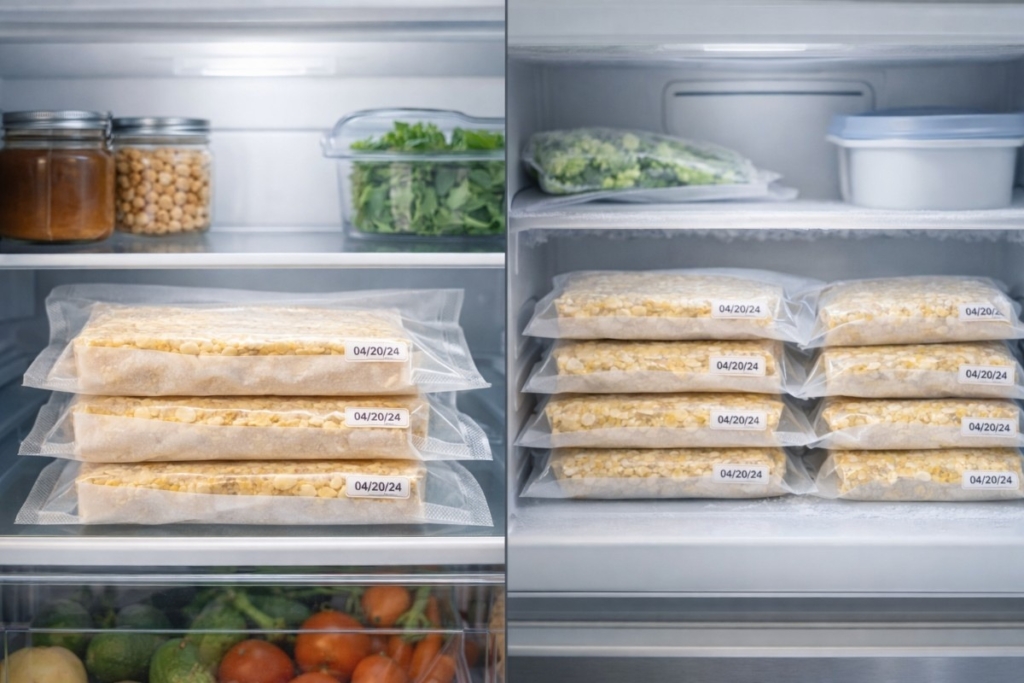
So what does this effort buy you? In practical terms, a lot of peace of mind. Vacuum-sealed fresh tempeh stored in the back of your refrigerator, where the temperature is a consistent 5°C (41°F), can easily last 14 to 30 days.
This timeframe matches perfectly with recommendations on storing opened tempeh in fridge, ensuring optimal shelf life without compromising flavor or nutrition.
We’ve tested this repeatedly. The absence of air simply prevents the biological processes that lead to spoilage. You’re not just delaying the mold by a few days, you’re extending the prime window of usability by weeks.
For freezer storage, the timeline expands dramatically. Properly vacuum-sealed tempeh will maintain excellent quality for six months or more. The vacuum seal is the key defense against freezer burn, which is just dehydration caused by air exposure.
Compare this to standard storage. A block of tempeh in its original plastic wrap or transferred to a zip-top bag might last 5 to 7 days in the fridge before you see signs of trouble.
In the freezer, without a vacuum seal, you’re looking at 1 to 2 months before ice crystals and freezer burn start to degrade the texture and flavor. The vacuum sealer pays for itself not in fancy features, but in saved food.
You can buy in bulk, or make a large batch at home, and preserve it at its best without worry. Thawing is simple, too. Just move the sealed bag from the freezer to the fridge and let it sit for 24 hours. The slow thaw in its protected environment helps retain the perfect texture.
The Pasteurization Question
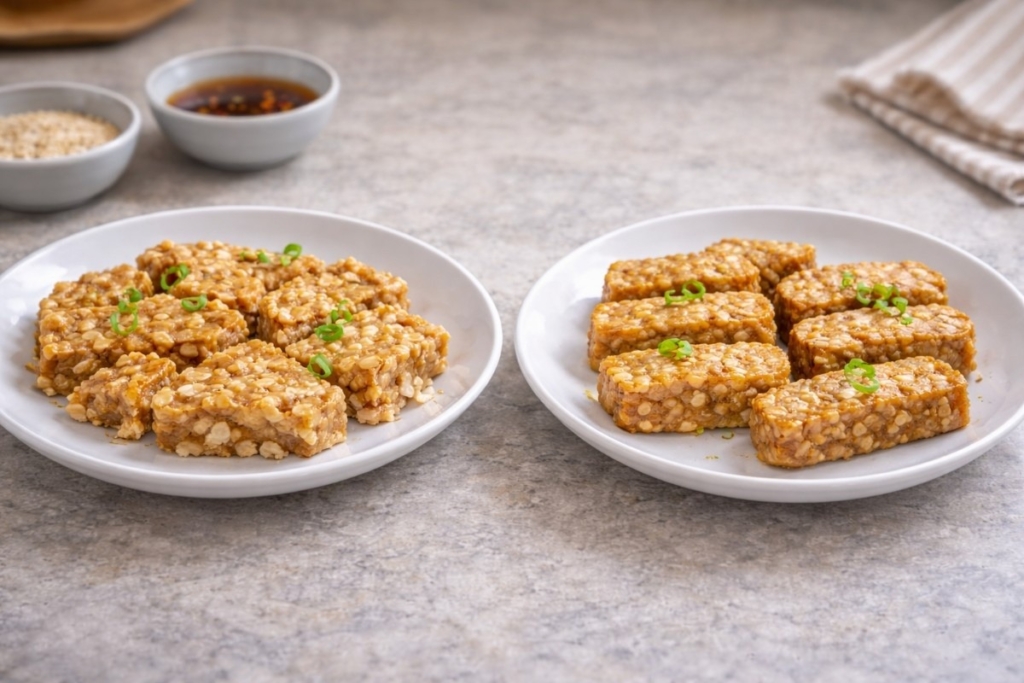
You might read about commercial producers pasteurizing tempeh before sealing. This involves heating the tempeh to 80-90°C (176-194°F), often by steaming, to fully deactivate the live culture. It’s a guaranteed way to halt all fermentation and extend shelf life even further for refrigerated products.
” It can be concluded that the fermentation time of soy sauce and tempeh could increase the total flavonoid content, while pasteurization increases antioxidant capacity but decrease the total flavonoid content.” – Felix Widodo and Dianna Lo
The vacuum sealing method we’ve outlined, especially paired with freezing, achieves the same goal, long-term preservation, without the risk of altering the texture. The cold temperature of the freezer effectively pauses all biological activity just as well as heat, and the vacuum seal protects it.
We don’t pasteurize our SoyaMaya Fresh Frozen Tempeh before we vacuum seal and freeze it. We let the cold do the work, trusting that the quality of the fermentation and the integrity of the seal will preserve it perfectly.
And it does. For you, at home, focus on the cold, firm prep and the careful seal. That’s where the real magic happens.
Your Next Batch, Preserved
Vacuum sealing tempeh transforms it from a perishable ingredient into a reliable kitchen staple. It’s the difference between planning meals around a ticking clock and knowing you have a solid source of plant protein ready when inspiration strikes.
The method is straightforward: firm it up with a short freeze, use a gentle seal, and store it cold. This locks in the nutty flavor and firm texture you want, preventing waste and saving money.
We rely on this process to ensure every block of our tempeh reaches you with its quality intact, and you can use the same technique to extend that freshness in your own kitchen. It turns preservation from a chore into a simple, satisfying habit.
FAQ
Can you vacuum seal tempeh safely at home?
Yes, you can vacuum seal tempeh safely at home when you follow proper food handling steps. Vacuum sealing tempeh removes oxygen that causes spoilage, but safety depends on storage temperature. Seal only fresh tempeh, keep it refrigerated or frozen immediately, and never store vacuum packed tempeh at room temperature for extended periods.
What is the best way to preserve tempeh for long-term storage?
The best way to preserve tempeh long term is to vacuum seal it and freeze it. This method limits oxygen exposure, slows fermentation activity, and prevents freezer burn. Compared with other tempeh storage methods, freezing vacuum sealed tempeh maintains texture and flavor while extending tempeh shelf life for several months.
Should you refrigerate or freeze vacuum sealed tempeh?
Whether you refrigerate or freeze vacuum sealed tempeh depends on how long you plan to store it. In the refrigerator, vacuum sealed tempeh shelf life is usually up to a few weeks at a stable temperature. For longer storage, tempeh freezer storage is safer and better for preventing spoilage.
How does vacuum sealing affect tempeh texture after freezing?
Vacuum sealing fresh tempeh protects its texture by reducing moisture loss during freezing. When combined with proper tempeh packaging for freezing, it limits ice crystal formation that causes dryness or crumbling. Some texture change is normal after freezing, but vacuum sealing preserves firmness far better than loose wrapping or containers.
What is the best way to store opened or homemade tempeh?
The best way to store opened or homemade tempeh is by using airtight storage and cold temperatures. Vacuum sealing unused portions supports tempeh meal prep storage and extending shelf life. Always handle tempeh with clean hands, seal it promptly, and keep it refrigerated or frozen to maintain food safety and quality.
Vacuum Sealing: The Simple Way to Make Tempeh Last a Month
Vacuum sealing is one of the simplest ways to take control of how you store tempeh. By removing air and pairing it with cold storage, you protect flavor, texture, and freshness far beyond standard wrapping. A short pre-freeze and a gentle seal help tempeh hold its structure and quality. With this approach, tempeh stops being a rush-to-use ingredient and becomes a dependable protein you can rely on, week after week. Ready to stock your freezer with tempeh made this way? Explore our Fresh Frozen Tempeh and Protein Tempeh Chips at SoyaMaya.
References
- https://pmc.ncbi.nlm.nih.gov/articles/PMC6191950/
- https://www.e3s-conferences.org/articles/e3sconf/pdf/2023/62/e3sconf_ictced2023_01006.pdf
Related Article
- https://mayasaritempeh.com/how-to-store-tempeh/
- https://mayasaritempeh.com/storing-opened-tempeh-in-fridge/
- https://mayasaritempeh.com/signs-that-tempeh-has-spoiled/
SoyaMaya Fresh Tempeh
Traditionally fermented, no preservatives, shipped fresh and frozen to your door. The real deal, direct from us.
