
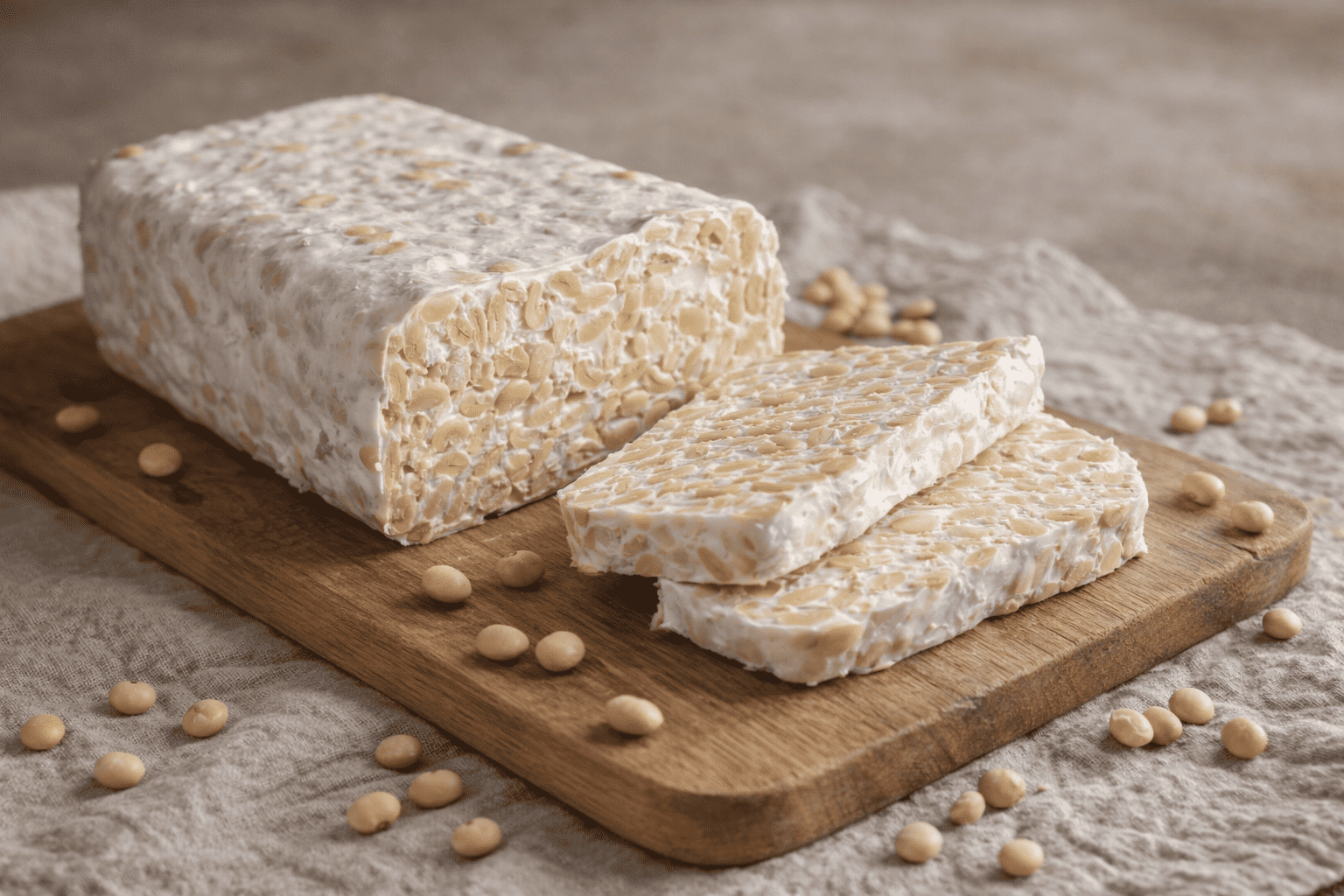
Fresh artisanal tempeh is different, you can taste it. It’s not that rubbery, vacuum-sealed block from the supermarket. This is the real thing, small batches, unpasteurized, made the old way so the living cultures stay active. That process locks in a deep, nutty flavor and a full spectrum of nutrients that the processed kind loses. We started SoyaMaya to bring that authentic piece of Indonesian tradition here, alive and kicking, straight to your kitchen. Want to know why this humble fermented cake is such a powerhouse, and how to make the most of it? Stick around, we’re getting into all of it.
Key Takeaways
- It’s a living food, defined by its active fermentation and lack of high-heat processing.
- The small-batch, traditional process creates a better texture and more complex, nutty flavor.
- Its nutritional profile is enhanced, offering complete protein, fiber, and potential B vitamins.
What Makes Fresh Artisanal Tempeh Unique?
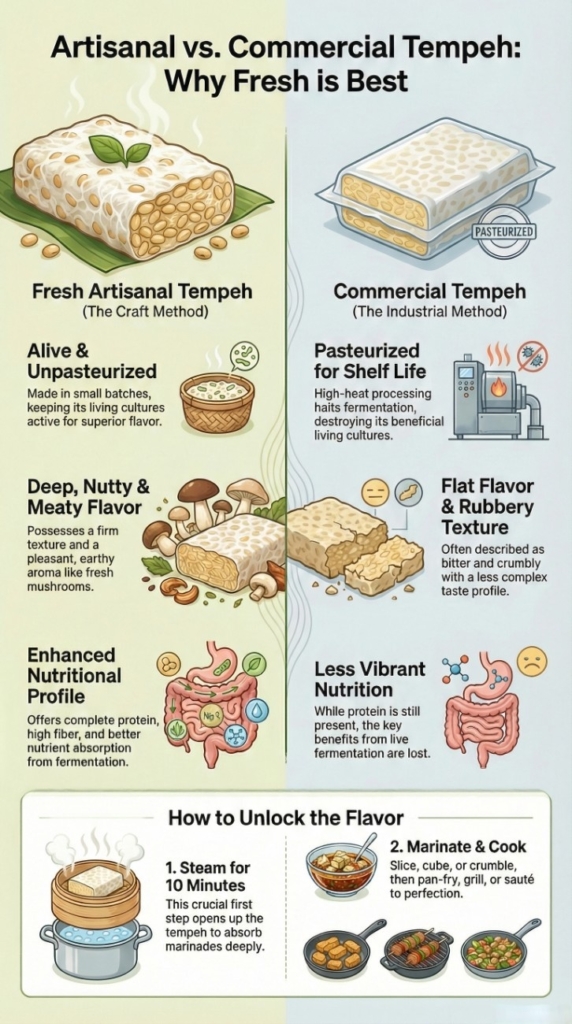
You see it in the fridge at the co-op, a solid, beige block wrapped in plastic. Maybe you’ve tried it, found it a bit bitter, a bit crumbly.
We think you might have gotten the wrong one. Real fresh artisanal tempeh is something else entirely. It should feel substantial in your hand, smell faintly of mushrooms and fresh earth, like rain on soil. It’s warm to the touch when it’s first done, a living thing. That’s the heart of it, right there. It’s alive.
SoyaMaya Fresh Tempeh is made the traditional way — no preservatives, no shortcuts. Delivered to your door.
Order Fresh Tempeh →This isn’t just another meat substitute rolling off a conveyor belt. This is a craft. It starts in places like Surabaya, Indonesia, where the air is warm and humid, perfect for fermentation. The process is simple, almost ancient.
Whole soybeans are cleaned, soaked, and cooked. Then they’re inoculated with a traditional culture called Rhizopus oligosporus. This is the magic starter. The beans are left to rest for 24 to 48 hours in a warm space, around 30°C (86°F).
That’s when the white, fibrous mycelium weaves everything together into a firm, cohesive cake. It’s this live fermentation, stopped at its peak and frozen fresh, that defines the artisanal approach.
So what does “artisanal” really mean here, when you compare it to the commercial brick you might know?
- It’s unpasteurized. The live cultures are kept intact.
- It’s made in small batches, allowing for close attention. This careful fresh tempeh process ensures the highest quality and authentic texture.
- It uses premium, often organic or non-GMO soybeans.
- The focus is on flavor and texture, not just shelf life.
The difference ends up on your plate. Commercial tempeh is often pasteurized, a heat process that stabilizes it for shipping and long storage. That process also halts fermentation, which can flatten the flavor and alter the texture.
The protein content is still there, but something of the soul is missing. The artisanal version, untouched by that high heat, retains a vibrancy. It’s that difference between store-bought bread and a loaf still warm from a local bakery. One is food, the other is an experience.
How This Living Food is Crafted, Step by Step
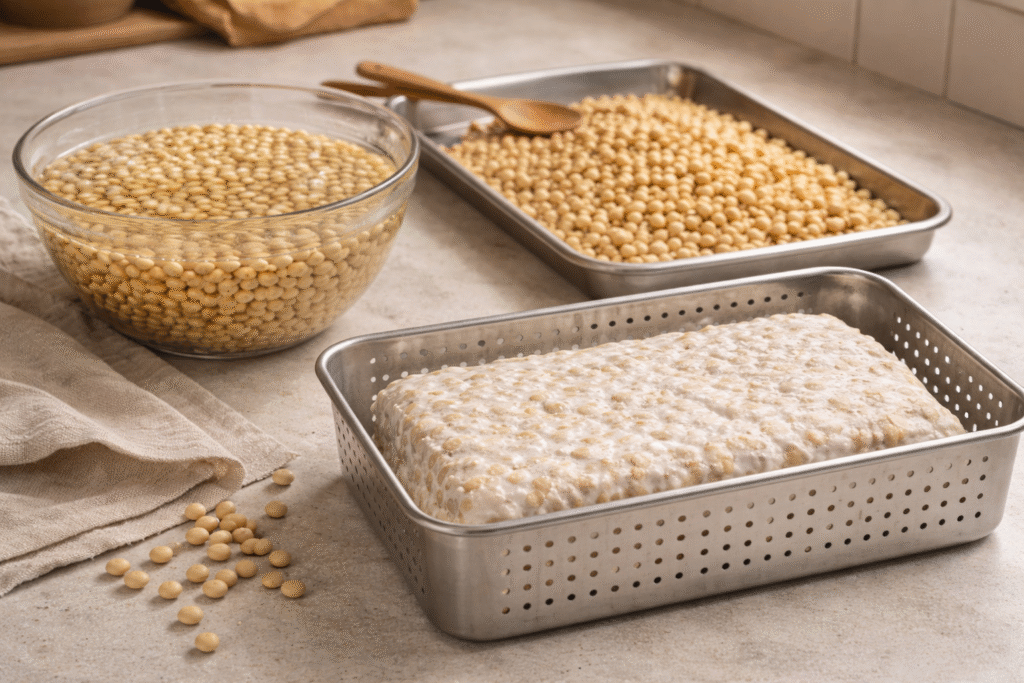
We do this every week at our place in Greensburg, Indiana. The rhythm of it is meditative. It has to be right. Here’s how fresh artisanal tempeh comes to be, from bean to block.
- We start with whole, Non-GMO soybeans, often sourced from Indiana farms just miles away. They’re cleaned and soaked overnight, which begins to soften them and activate germination.
- The next day, the hulls are removed. This step is crucial for the right final texture, it allows the mycelium to bind the beans more evenly.
- The beans are then cooked until they’re tender but not mushy. After draining and cooling, they’re mixed with the Rhizopus oligosporus culture. This is the point of no return, where fermentation begins.
- The inoculated beans are spread into perforated containers or bags. These allow the culture to breathe. They’re placed in a warm, controlled environment.
- For the next day or two, the magic happens. The white mycelium grows, weaving through and around each soybean, creating a solid mat. You can watch it happen, see the white fuzz grow and bind. When it’s fully bound and just slightly warm, it’s done.
- This is where we freeze it. Immediately. This pauses the fermentation at its absolute peak, preserving that live, fresh state without resorting to pasteurization. What you get is real fermented tempeh, paused in time.
| Process | Why It Matters |
| Whole soybeans are soaked and cleaned | Activates beans and prepares them for fermentation |
| Hulls removed | Allows mycelium to bind beans evenly |
| Beans are cooked and cooled | Creates the right texture for fermentation |
| Inoculated with tempeh starter culture | Introduces beneficial fermentation mold |
| Fermented in warm conditions (24–48 hours) | Mycelium grows and binds beans into a solid cake |
| Frozen immediately at peak fermentation | Preserves live cultures without pasteurization |
Why Your Body Will Thank You for Choosing It
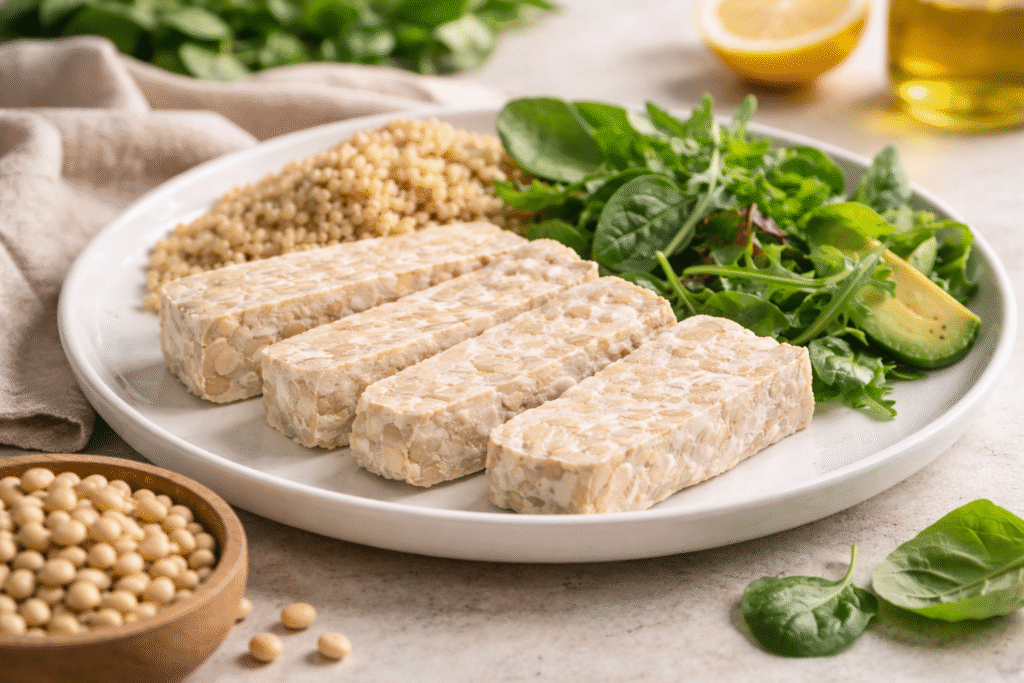
You pick it for the taste, but you stay for how it makes you feel. The live fermentation does more than create structure, it pre-digests the beans. This breaks down complex sugars and proteins, making everything inside more accessible to your body.
Our process resembles the artisanal tradition you find in the what is artisanal tempeh approach, which preserves these nutritional qualities.
The fiber content is significant, and it acts as a prebiotic, feeding the good bacteria in your gut. Then there’s the protein, a complete plant-based protein, meaning it has all nine essential amino acids your body needs.
A single serving packs a powerful punch. Some studies suggest the fermentation process can increase the bioavailability of minerals like iron and zinc.
There’s also the potential for B vitamin production, including B12, during fermentation, though levels can vary. We specifically craft our SoyaMaya tempeh to be a source of this essential vitamin.
Think of it as nutrition through transformation. The soybean is good, but the fermented soybean cake is exceptional.
- Enhanced digestibility and nutrient absorption.
- A complete protein source for muscle repair and energy.
- Dietary fiber for gut and heart health.
- A potential source of B vitamins from fermentation.
The Flavor and Feel of the Real Thing
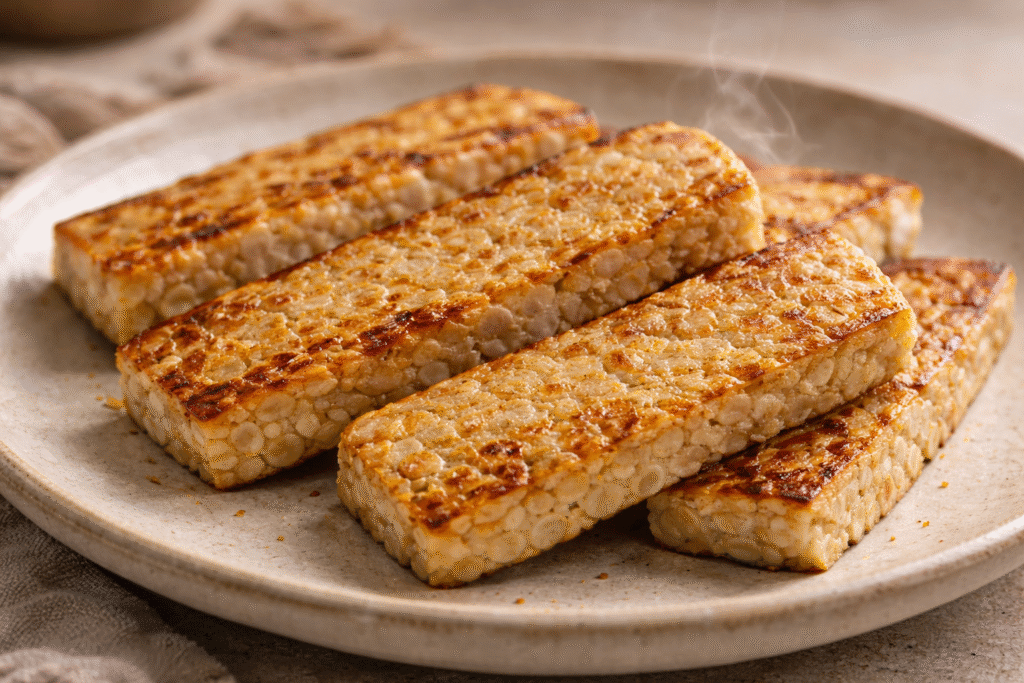
So you’ve got this block of fresh artisanal tempeh. What should you expect? First, the aroma. It’s mild, slightly yeasty or nutty, reminiscent of fresh mushrooms. There’s no strong ammonia smell if it’s fresh.
The color is a creamy, off-white, densely covered in the white mycelium. You might see the beans clearly underneath, bound tightly together.
The texture is firm and chewy, meaty in a way that makes it so satisfying as a center-of-the-plate item. When you bite into a well-cooked piece, it has a pleasant resistance, then yields. The flavor is earthy, nutty, with a definite umami richness that soaks up marinades and spices beautifully.
It’s not bitter. Properly made fresh tempeh should not have a harsh bitterness. That’s often a sign of over-fermentation or spores developing, which doesn’t happen when it’s frozen at the right time.
Bringing It Into Your Kitchen
This is where the fun begins. Because it’s so versatile. For our fresh frozen tempeh, we always recommend a quick steam for about 10 minutes first. This does a couple things, it mellows any remaining edge and opens up the pores of the tempeh, helping it absorb marinades deeply.
From there, the world is yours. Slice it into thin strips, marinate in tamari, maple syrup, and a touch of smoked paprika, then pan-fry until the edges are crispy. Crumble it and sauté with taco seasoning for a fantastic plant-based taco filling.
For a perfect pairing, try some of our creamy dips for crunchy chips that complement the nutty tempeh flavor and add a delightful texture contrast.
Cube it and add it to a robust stir-fry with vegetables. You can even slice it thick, marinate, and grill it for a summer barbecue. It’s that minimally processed tempeh quality that lets the ingredient shine, whether you’re making a quick weeknight meal or something more elaborate.
Identifying a Truly Fresh Block
You want to make sure you’re getting the good stuff. If you’re buying from a local maker or a fridge at a farmer’s market, use your senses.
- Look for an even, white mycelium coverage. A few gray or black spots might be okay (they’re spores), but it should be mostly white.
- Smell it. It should have a pleasant, fresh bread smell or a mild mushroom aroma. Avoid anything with a sharp, ammonia-like scent.
- Feel it. It should be firm and dense, not slimy or mushy.
- If it’s truly fresh and unpasteurized, it needs to be kept cold. It should be refrigerated or frozen at the point of sale [1].
Since most of us aren’t buying it warm from the fermentation cabinet, frozen is your best guarantee of that fresh, live quality. That’s why we freeze ours right away. It locks in that perfect state.
A Tradition with New Roots
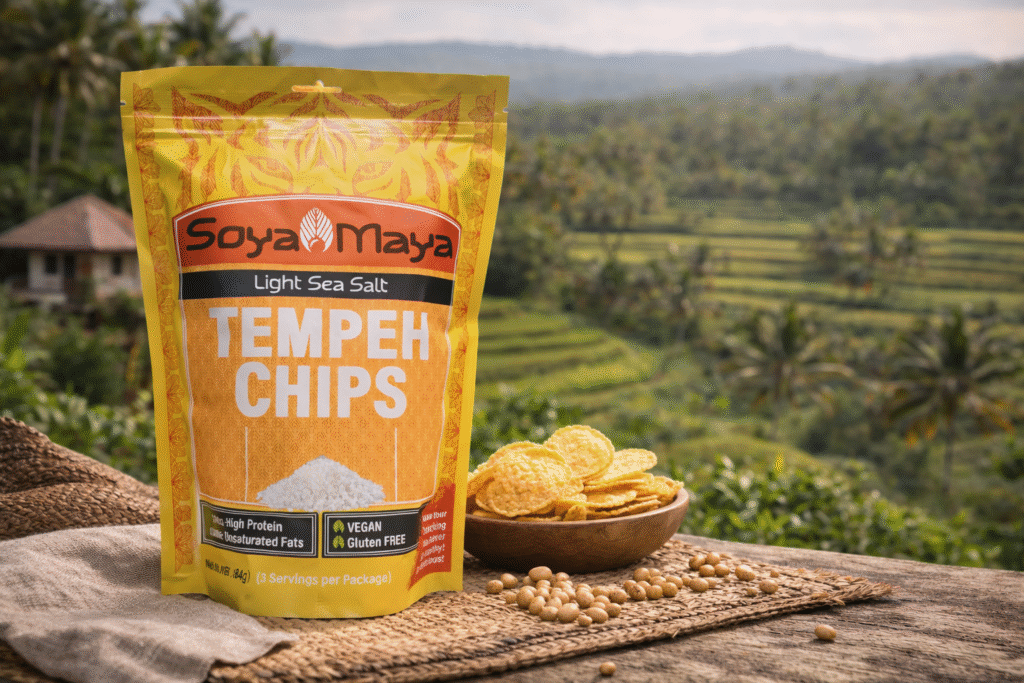
This craft began, and continues daily, across Indonesia. In cities like Surabaya, it’s a staple, often made and sold on the same day.
That connection to place and tradition is what inspired us. We wanted to bring that authentic, careful process here, using the amazing soybeans grown in our own Midwest.
It’s a tradition that has traveled well, taking root in small kitchens and facilities around the world, each adding their own local touch but respecting the core, slow method.
Your Next Step with Live Fermentation
Understanding what is fresh artisanal tempeh changes how you shop and cook. It moves from being an anonymous protein block to an intentional choice for flavor, nutrition, and supporting a more thoughtful way of making food.
It’s about choosing a fresh plant based protein that hasn’t had its life processed out of it. It’s about the nutty taste, the satisfying chew, and the quiet knowledge that you’re eating something made with care [2].
We keep making it this way because we believe food should be both nourishing and a joy. If you’re ready to experience the difference that live, small-batch fermentation makes, we’d be honored for you to try ours. See for yourself how a traditional method can elevate your meals.
FAQ
Is fresh artisanal tempeh safe to eat raw or undercooked?
Fresh artisanal tempeh is fully fermented, but it should be cooked before eating. Although some people describe it as raw tempeh, cooking improves digestibility, flavor, and texture. Steaming or sautéing reduces bitterness and enhances the natural nutty taste. Cooking also ensures that fresh tempeh remains safe and enjoyable as a minimally processed, whole soybean food.
How should fresh tempeh be stored to prevent spoilage?
Fresh tempeh must be kept cold at all times. Refrigeration slows fermentation, but freezing is the best method for preserving quality. Freezing pauses the tempeh fermentation process and maintains flavor, texture, and structure. Fresh fermented soybeans left at room temperature continue fermenting, which can cause off flavors and soft or overly dense texture.
What is the difference between fresh artisanal tempeh and tofu?
Fresh artisanal tempeh is made from whole soybeans that are fermented, while tofu is made from coagulated soy milk. Tempeh is a fermented plant protein with a firm texture, visible beans, and higher fiber content. Compared to tofu, tempeh nutrition offers more protein density and a more substantial, fresh whole food texture.
Does unpasteurized tempeh contain probiotics?
Unpasteurized tempeh may contain live microorganisms because it has not been heat-treated. Live culture tempeh can support gut health, although probiotic levels vary depending on fermentation conditions, storage, and cooking methods. Even after cooking, real fermented tempeh still provides benefits from traditional soy fermentation and clean ingredients made without preservatives.
Is fresh artisanal tempeh suitable for meal prep and cooking?
Fresh artisanal tempeh works well for meal prep when stored correctly. Small batch tempeh holds its shape during cooking and absorbs marinades evenly. It can be sliced, crumbled, or cubed for a wide range of tempeh recipes. Its firm texture makes it a reliable fresh plant-based protein and a practical meat alternative.
Why Fresh Artisanal Tempeh Changes the Way You Eat
Fresh artisanal tempeh is more than a protein choice, it’s a return to food made with intention. Alive, whole, and thoughtfully crafted, it offers depth of flavor, satisfying texture, and real nourishment that processed alternatives leave behind. Choosing fresh, unpasteurized tempeh means choosing tradition over shortcuts and care over convenience. It’s a simple ingredient with a meaningful impact, elevating everyday meals while reconnecting you to the power of true fermentation and mindful cooking. Ready to taste the difference? Discover SoyaMaya’s fresh frozen tempeh and protein tempeh chips
References
- https://pmc.ncbi.nlm.nih.gov/articles/PMC6163864/
- https://tastecooking.com/the-nutty-chewy-surprisingly-colorful-world-of-tempeh/
Related Article
- https://mayasaritempeh.com/fresh-tempeh/
- https://mayasaritempeh.com/what-is-artisanal-tempeh/
- https://mayasaritempeh.com/creamy-dips-for-crunchy-chips/
SoyaMaya Fresh Tempeh
Traditionally fermented, no preservatives, shipped fresh and frozen to your door. The real deal, direct from us.
