
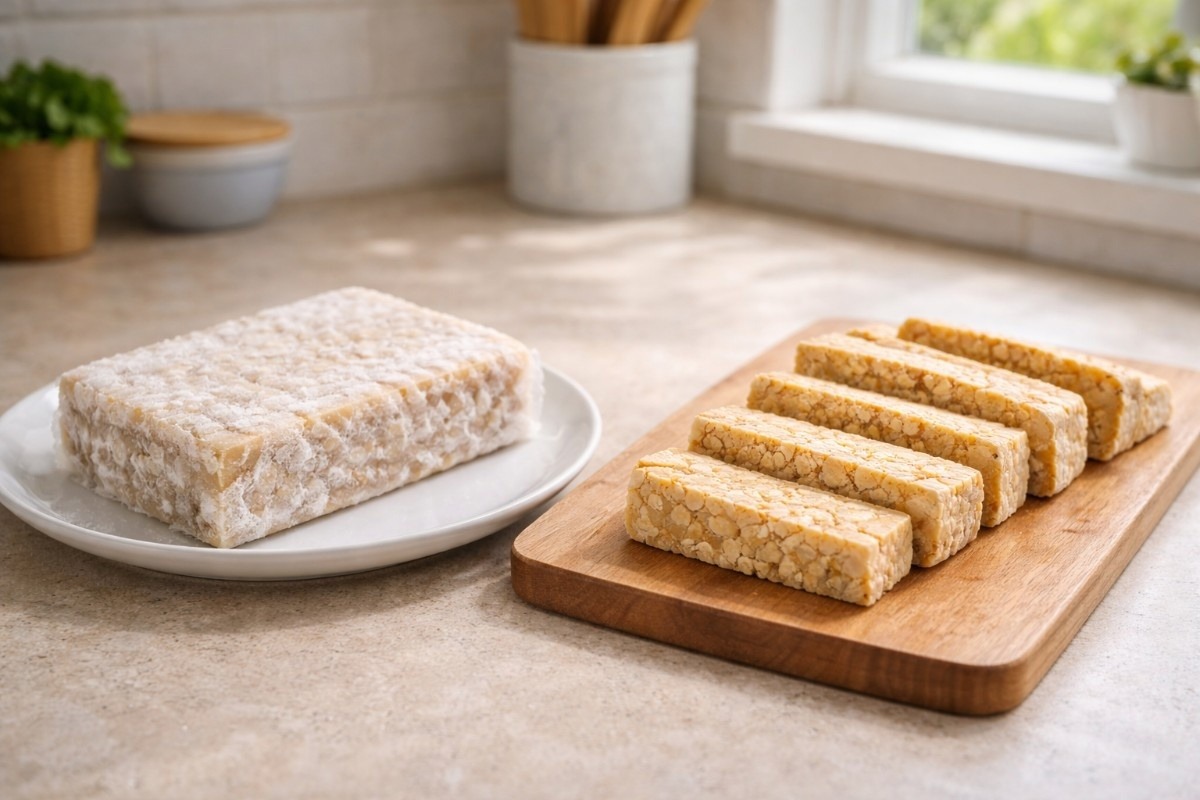
The safest ways to thaw frozen tempeh are in the refrigerator or by cooking it straight from frozen. These methods keep the temperature safe and protect the texture. After twenty years of daily work with tempeh and testing every idea in actual kitchens, we know what works. Proper thawing keeps tempeh firm, nutty, and ready to cook.
Mess it up, and you’ll get a soggy, bitter, or risky result. Here, we’ll show you the methods that actually work, explain why, and share how we do it at SoyaMaya. Read on to make your next tempeh meal simpler and much better.
Key Takeaways
- Refrigerator thawing is the safest and most consistent method for frozen tempeh.
- Cooking tempeh directly from frozen works well for fast meals and crisp results.
- Avoid room-temperature and microwave thawing to protect food safety and texture.
What Is the Safest Way to Thaw Frozen Tempeh?
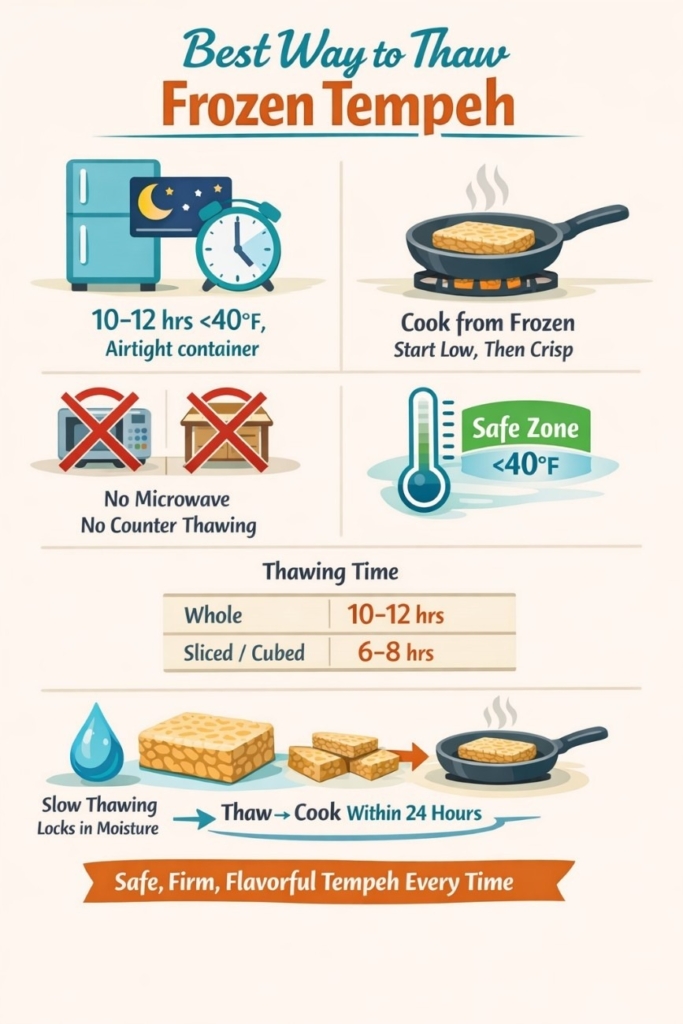
The safest way to thaw frozen tempeh is in the refrigerator below 40°F, which keeps it out of the 40–140°F danger zone defined by the Food and Drug Administration.
Soya Maya Fresh Tempeh is made the traditional way — no preservatives, no shortcuts. Delivered to your door.
Order Fresh Tempeh →We rely on refrigerator thawing whenever we plan ahead. This method keeps frozen tempeh defrosting slowly and evenly, which matters for food safety and quality.
Proper handling, including correct how to store tempeh practices, is essential to maintain tempeh’s integrity during thawing and beyond.
Cold thawing prevents rapid moisture release. That means fewer soggy slices and better structure once cooked.
It also protects fermented foods like tempeh, where temperature swings can affect aroma and surface texture.
When we thaw this way, we place tempeh in an airtight container or keep it sealed in its original packaging.
This method is especially important for fresh or unpasteurized tempeh. Key food safety reasons this works:
- Keeps tempeh below 40°F at all times
- Reduces bacterial growth risk per FDA guidance
- Preserves nutty flavor and firm bite
In our kitchen, this is the default because it is calm, predictable, and safe.
How Long Does It Take to Thaw Tempeh in the Fridge?
Refrigerator defrosting usually takes 8–12 hours, or overnight, based on timing standards used by United States Department of Agriculture-aligned kitchens.
A full block takes closer to 12 hours. Pre-sliced or cubed tempeh can thaw faster. We often portion tempeh before freezing. That single habit saves hours later.
Keeping tempeh sealed matters. Exposure to air causes drying and surface discoloration. Condensation is also reduced when tempeh stays wrapped during fridge thawing. Practical timing tips we use:
- Whole block: 10–12 hours
- Sliced or cubed: 6–8 hours
- Always store in an airtight container
Once thawed, we cook tempeh within 24 hours for best quality. This method supports consistent results, especially for artisanal frozen tempeh like what we make at SoyaMaya using non-GMO soybeans.
| Tempeh Form | Fridge Thaw Time | Best Storage Tip |
| Whole block | 10–12 hours | Keep sealed in an airtight container |
| Sliced tempeh | 6–8 hours | Store flat to prevent condensation |
| Cubed tempeh | 6–8 hours | Use shallow containers for even thawing |
Can You Cook Tempeh Directly From Frozen?
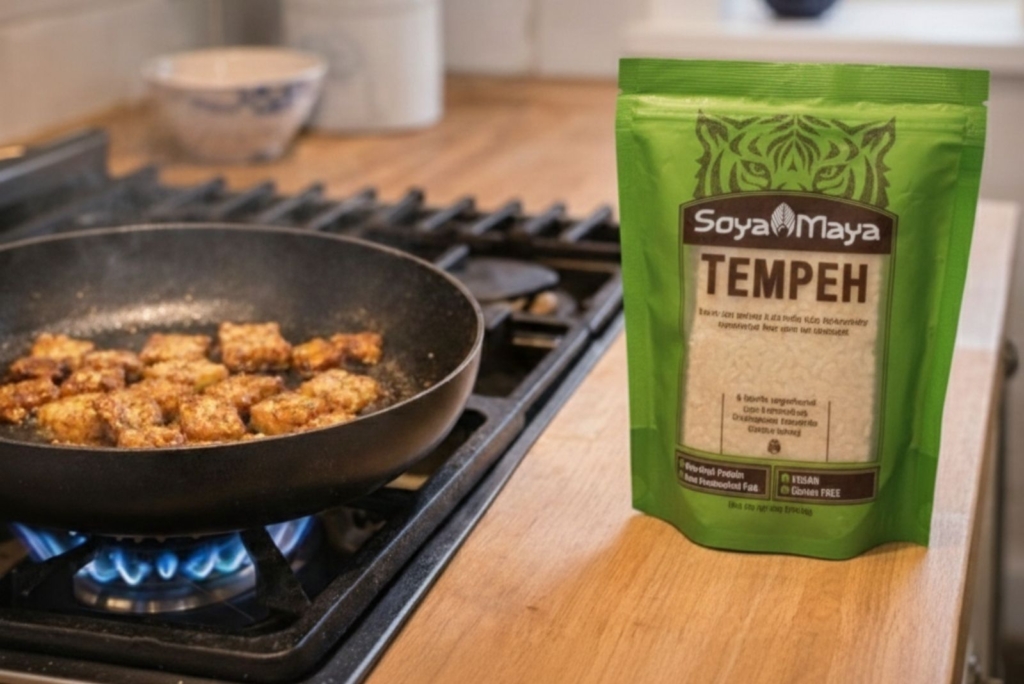
You can cook tempeh directly from frozen by pan-frying, steaming, or boiling, as long as you start at low heat and cook thoroughly.
We do this often when time is tight. It works surprisingly well. Pan-frying from frozen starts with low heat. This lets the center thaw before crisping. For freshly prepared or how to store fresh tempeh, proper thawing and cooking times make a huge difference in texture and flavor retention.
Steaming is our fastest controlled method. It thaws evenly and keeps tempeh firm. Boiling is useful when we want to reduce bitterness before seasoning. Reliable direct-cook options:
- Steam frozen tempeh for 7 minutes
- Boil a block for 10–15 minutes
- Pan-fry on low heat, then increase to crisp
According to Harvard Health Publishing, gentle heat methods help retain texture in plant proteins. We often steam first, then marinate. The pores open beautifully. This approach is common in traditional tempeh kitchens and works well with frozen storage.
Which Thawing Methods Should Be Avoided?
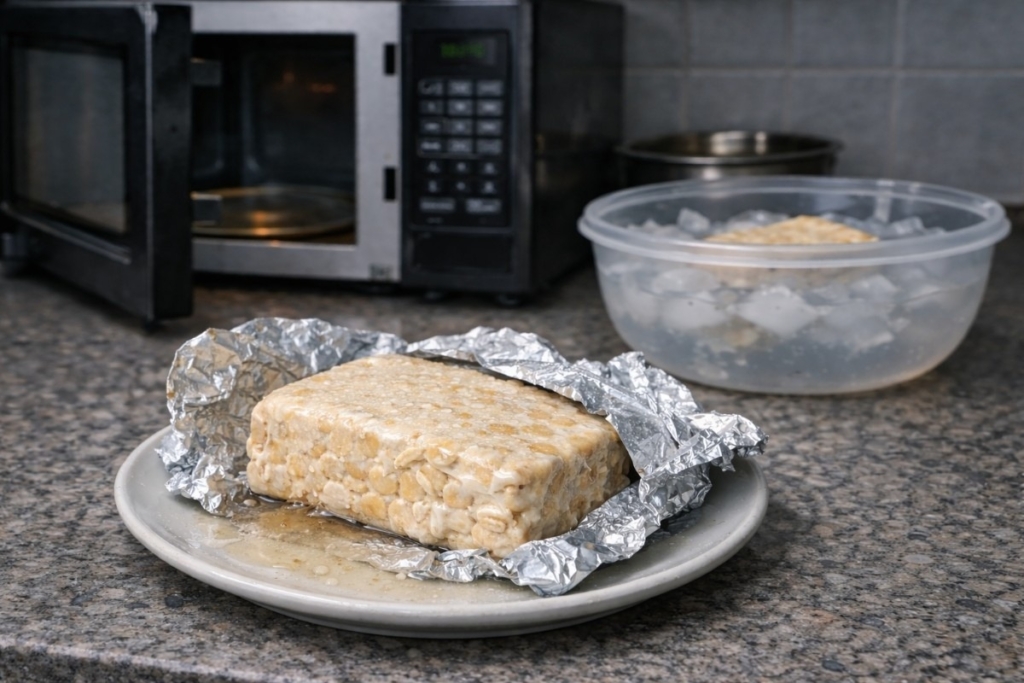
Room-temperature thawing and microwave defrosting should be avoided because they can push tempeh into unsafe temperature ranges, per Centers for Disease Control and Prevention guidance.
Leaving tempeh on the counter for more than 2 hours increases spoilage risk. Knowing how long does tempeh last after thawing will help prevent food safety issues and spoilage. Microwaves thaw unevenly. Edges heat up while the center stays frozen.
That temperature imbalance affects both safety and texture. We have tested microwave thawing. The result is often rubbery edges and wet centers. Methods we never recommend:
- Counter thawing over 2 hours
- Standard microwave defrost
- Warm water soaking
These methods also strip moisture control, which affects marinade absorption later. Food safety always comes first, especially with fermented foods.
Does Thawing Affect Tempeh Texture and Flavor?
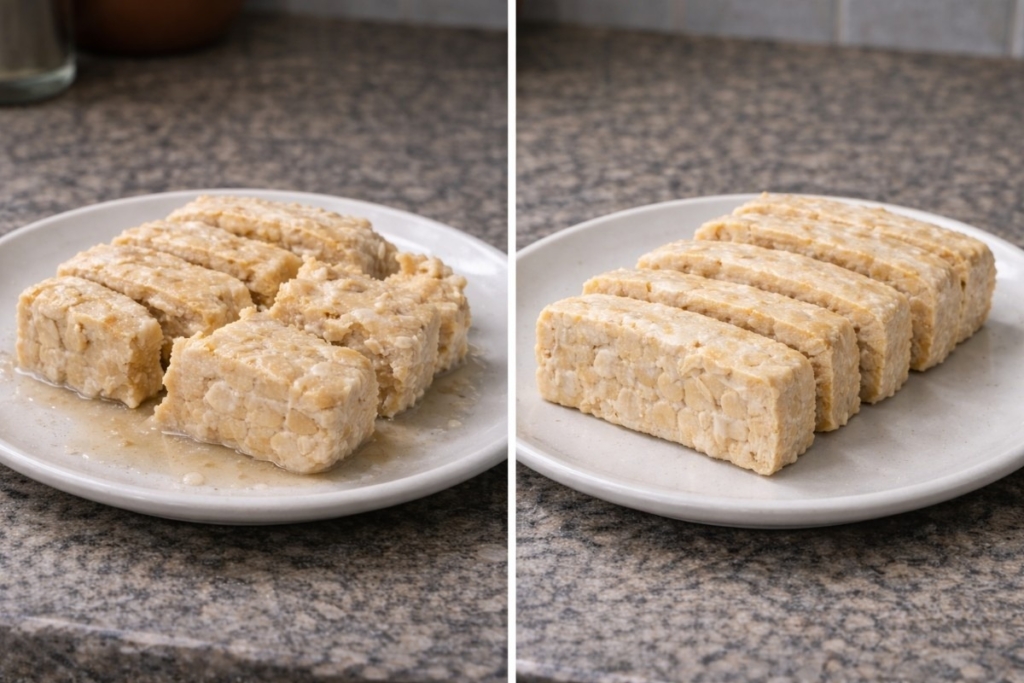
The thawing method directly affects firmness and flavor, with fridge thawing and steam-thawing giving the best texture after freezing.
Slow thawing keeps the soybean structure intact. Fast temperature changes force water out of the tempeh cake.
That water loss leads to crumbly slices and diluted flavor. We have found that steaming after thawing refreshes aroma and bite. Texture outcomes we see consistently:
- Fridge thaw: clean slices, firm chew
- Steam thaw: springy texture, mild flavor
- Direct fry: crisp outside, tender center
“Thawing at room temperature (25–30oC) for 30 minutes preserved the best quality.” – Ayu Putri Gitanjali Prayudani et al, BIO Web of Conferences
Frozen tempeh keeps quality up to 6 months when stored properly. At SoyaMaya, we freeze fresh tempeh quickly to lock in fermentation character and B-vitamin content. Handled well, frozen tempeh cooks beautifully.
What Is the Best Thawing Method for Unpasteurized or Fresh Tempeh?
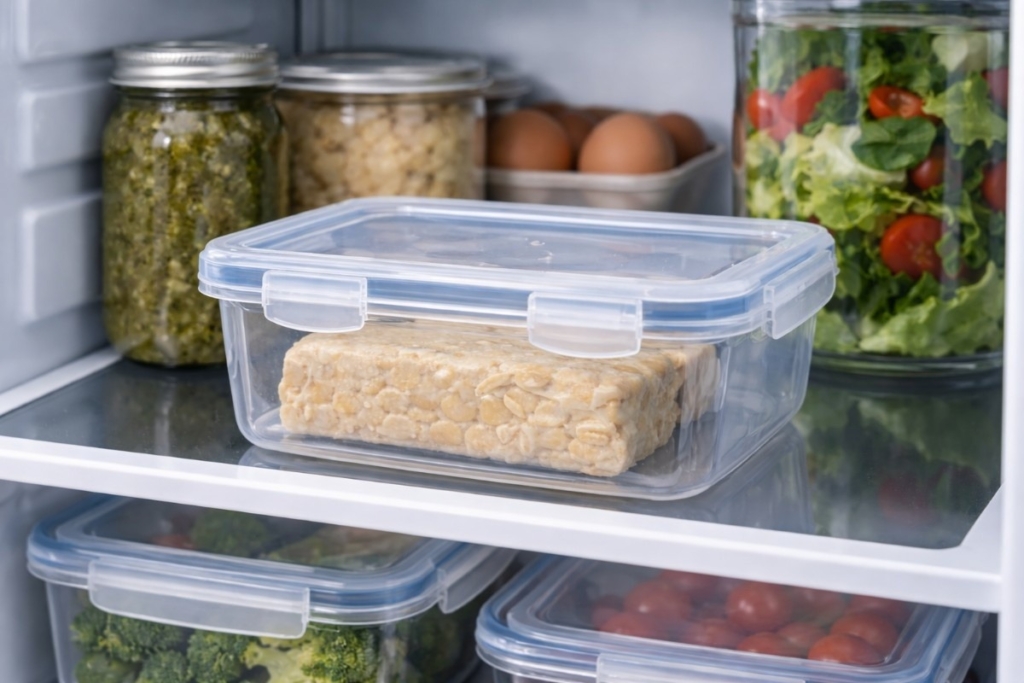
For unpasteurized tempeh, refrigerator thawing or brief steaming is safest, and it should be cooked within 24 hours after thawing.
Fresh tempeh is alive. Temperature control matters more. We always recommend fridge thawing first for safety.
Steaming for a few minutes helps stabilize texture before cooking. This method is widely used by small-batch producers in traditional tempeh regions. Best practices we follow:
- Thaw below 40°F
- Steam briefly if needed
- Cook within 24 hours
- Never refreeze.
“A significant safety step introduced in the public health policy was to acidify soaking water to a pH of 4.5 or lower to inhibit pathogen growth, and to require sanitary hygienic conditions in tempeh producing premises. L. McIntyre, Safety of
Fermented Foods
These steps protect fermentation quality and flavor. They also respect the craft behind good tempeh.
FAQ
How do you thaw frozen tempeh safely without hurting texture?
The safest way to thaw frozen tempeh is in the refrigerator at 0–4°C inside an airtight container. This method keeps tempeh out of the danger zone and limits bacterial growth. Slow refrigerator thawing helps retain moisture, prevents sogginess, and preserves a firm texture. It also protects the fermentation structure, which supports both safety and cooking quality.
Is overnight tempeh thawing in the refrigerator really necessary?
Overnight thawing allows frozen tempeh to defrost evenly without temperature swings. A steady refrigerator thaw reduces surface condensation and limits moisture loss. This method works especially well for sliced or cubed tempeh, which can dry out quickly if rushed. Slow thawing also supports stable fermentation and ensures tempeh is ready to cook within 24 hours.
Can you steam frozen tempeh instead of defrosting first?
Yes, steaming frozen tempeh is a reliable alternative when time is limited. Gentle steam warms the tempeh evenly while maintaining its structure. Stovetop steaming allows controlled heat and proper timing, which helps retain moisture and prevents crumbling. This approach also improves marinade absorption and follows traditional tempeh handling methods used in many kitchens.
Is cooking tempeh directly from frozen safe and effective?
Cooking tempeh directly from frozen is safe when done over low heat first. Starting at a low temperature allows the center to warm evenly before browning. When pan-frying, increase the heat only after the tempeh has softened. This method reduces excess water release, prevents burnt edges, and produces a crisp exterior with a tender center.
What thawing methods should you avoid for frozen tempeh?
Room-temperature thawing and microwave defrosting should be avoided. Both methods can push tempeh into unsafe temperature ranges and increase food safety risks. Microwaves thaw unevenly, which leads to dry edges and cold centers. These methods also cause moisture loss, weaken enzymes, and negatively affect texture during cooking.
Best Way to Thaw Frozen Tempeh for Better Cooking Results
Using the best way to thaw frozen tempeh makes cooking easier, safer, and more rewarding. When we thaw slowly or cook directly from frozen, tempeh keeps its structure, absorbs marinades better, and cooks evenly. That’s exactly how we handle our own SoyaMaya fresh frozen tempeh every day, crafted with care, tradition, and quality in mind. Ready to cook with tempeh that freezes and thaws beautifully? Shop SoyaMaya Tempeh.
References
- https://www.researchgate.net/publication/394869665_Quality_changes_in_air_blast_frozen_tempe_during_storage_and_thawing
- https://www.bccdc.ca/resource-gallery/Documents/Educational%20Materials/EH/FPS/Food/Fermented/Fermented%20Foods%20Guidance%20-%203.9%20Tempeh.pdf
Related Article
- https://mayasaritempeh.com/how-to-store-tempeh/
- https://mayasaritempeh.com/how-to-store-fresh-tempeh/
- https://mayasaritempeh.com/how-long-does-tempeh-last/
Soya Maya Fresh Tempeh
Traditionally fermented, no preservatives, shipped fresh and frozen to your door. The real deal, direct from us.
