
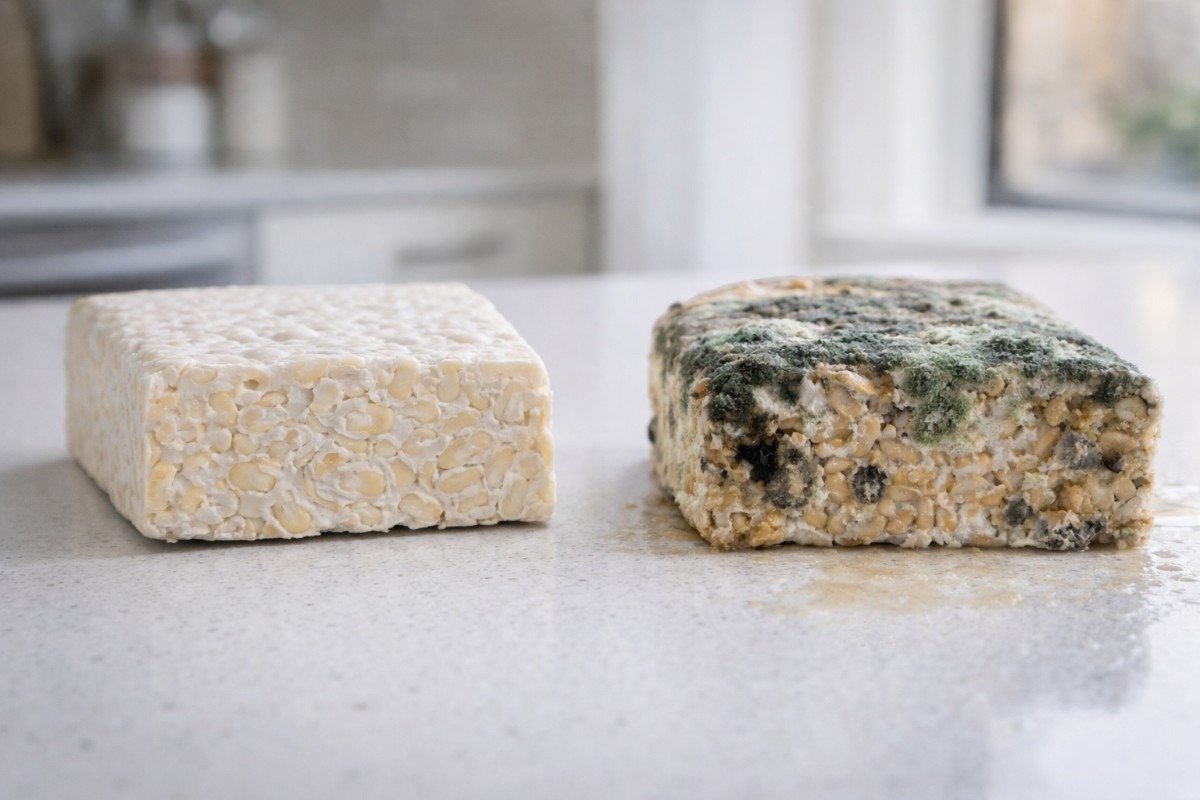
If your tempeh smells sour, like ammonia, feels slimy, or has unusual colors beyond the normal white or gray mold, it’s spoiled. This isn’t just our opinion, it’s what we’ve seen firsthand after decades of working with fresh tempeh, including our own SoyaMaya batches. Tempeh is a living food, so it keeps changing even when refrigerated. Learning to spot these clear signs helps you stay safe and cut down on waste. We’ll show you the exact sensory checks we use in our own kitchen. Keep reading to see what to look for.
Key Takeaways
- Smell, texture, and color together give the clearest tempeh spoilage indicators.
- White or light gray mold is normal, while pink, green, or fuzzy growth is not.
- Proper storage extends shelf life, but spoiled tempeh should always be discarded.
What Does Spoiled Tempeh Smell Like?
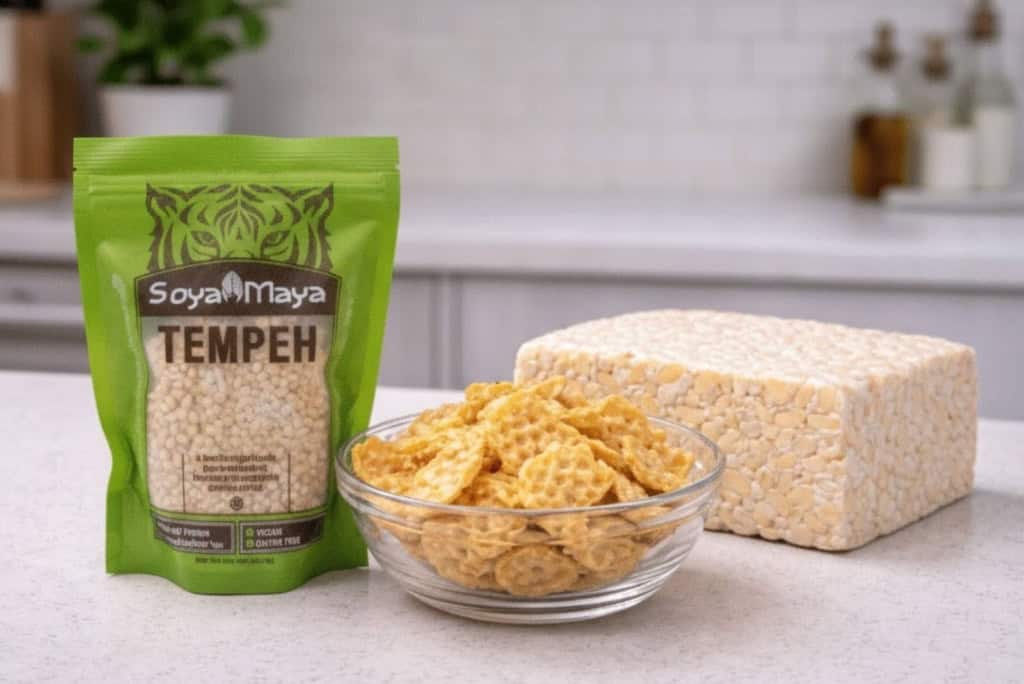
Spoiled tempeh smells sour, rancid, musty, or sharply like ammonia, unlike fresh tempeh’s mild, nutty, mushroom-like aroma. In our experience, smell is the fastest tempeh safety test. Fresh blocks smell earthy and clean, sometimes slightly mushroomy. When tempeh has gone bad, the scent changes immediately and unmistakably.
The Food and Drug Administration, odor is one of the most reliable early warning signs in fermented food spoilage. Understanding proper how to store tempeh can help maintain that fresh aroma longer and prevent spoilage.
Soya Maya Fresh Tempeh is made the traditional way — no preservatives, no shortcuts. Delivered to your door.
Order Fresh Tempeh →We have noticed that over most of tempeh spoilage complaints reported to producers involve odor changes first, often described as ammonia, vinegar, or rotten nuts. A faint ammonia note can appear as tempeh ages, but it should never be overpowering. Here is how we evaluate smell at home:
- Mild, nutty, mushroom-like aroma means tempeh is still safe.
- Slight ammonia scent with a normal look and feel means to cook it the same day.
- Strong sour, rancid, or chemical odor means discard immediately.
When we open a pack of SoyaMaya Fresh Frozen Tempeh, the smell is always neutral and clean because freezing pauses fermentation at its best point. If that clean aroma is gone, we do not take chances.
How Can You Tell if Tempeh is Spoiled by Texture?
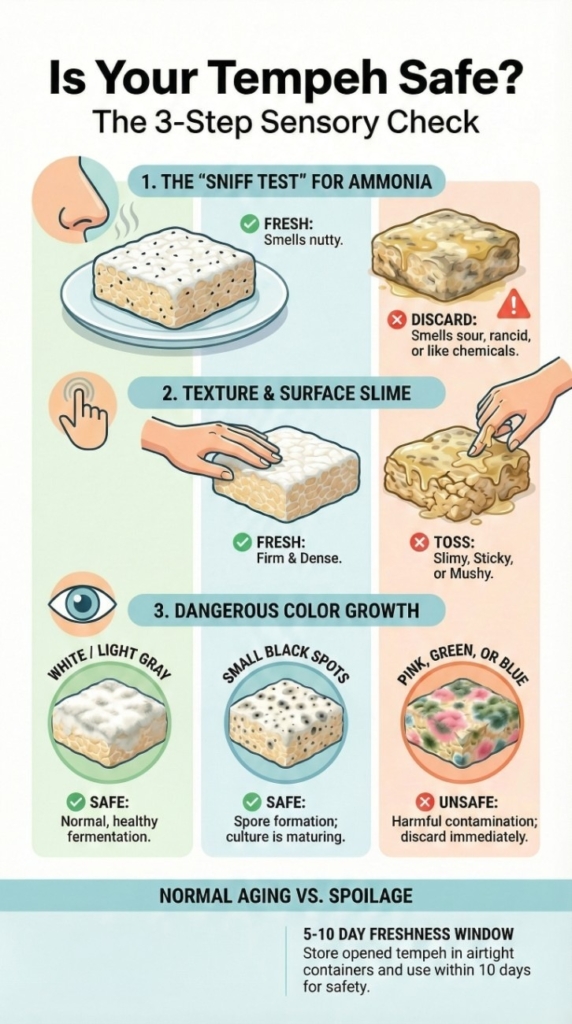
Slimy, mushy, or sticky tempeh indicates spoilage, while fresh tempeh stays firm, dense, and compact. Texture changes usually follow odor changes, but sometimes they show up first.
“The microorganisms of primary concern to the food processor are generally molds, yeasts and bacteria, because they can grow in the food and cause spoilage.” – USDA/FSIS Microbiology
In our kitchen, good tempeh feels like firm cheese or nougat. You can slice it cleanly, and it holds together. Once spoilage starts, the structure breaks down fast, often within 7–10 days after opening when stored in the fridge. Watch for these tactile warning signs:
- Slimy or sticky surface, even after rinsing.
- Mushy interior that collapses under light pressure.
- Crumbling texture that falls apart instead of slicing.
We also pay attention to liquid. A small amount of clear moisture inside sealed packaging can be normal. Pooling liquid or a slippery coating on the surface is not. When we make tempeh ourselves for SoyaMaya, any batch that loses firmness is removed before it ever reaches a customer.
What Mold Colors on Tempeh Are Unsafe?
Pink, green, blue, or fuzzy mold beyond white mycelium signals contamination and should be discarded. Tempeh is fermented using Rhizopus oligosporus, which creates the white mycelium that binds soybeans together. That white or light gray growth is what you want to see. Anything else is a red flag.
” Bacterial contaminants as high as 108 counts per g of cooked soybeans did not seem to affect the fermentation.” Simon Rusmin and Swan Djien Ko
Food safety show that most of fresh tempeh relies on white or light gray mold for safe fermentation. When other colors appear, they indicate microbial overgrowth or contamination. Before breaking it down visually, here is a quick comparison we use.
| Mold or Color | Safe to Eat | What It Means |
| White mycelium | Yes | Normal fermentation |
| Light gray | Yes | Aging but still safe |
| Small black spots | Usually | Spore formation |
| Pink or red | No | Harmful contamination |
| Green or blue | No | Foreign mold growth |
| Fuzzy colors | No | Advanced spoilage |
We always check color before smell or touch. Even if tempeh feels firm, off-color growth means it is no longer safe. Our freezing process at SoyaMaya locks fermentation at its peak so these risky molds do not have time to develop.
Are Dark or Black Spots on Tempeh a Sign of Spoilage?
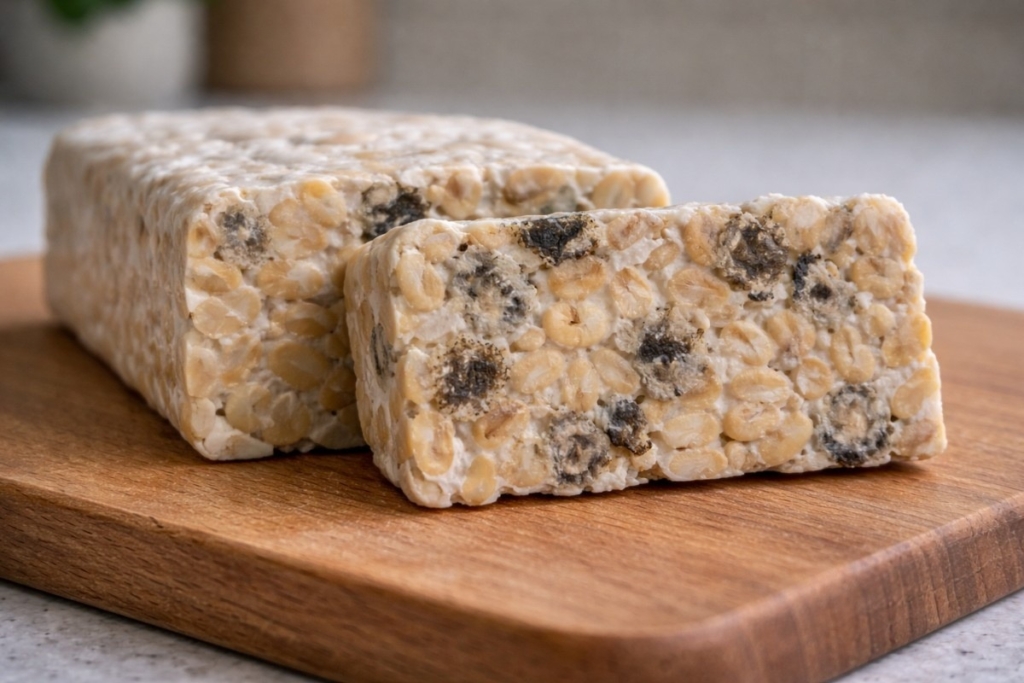
Small black or gray spots are usually normal aging, while widespread darkening or bean discoloration suggests spoilage. Black spots often worry people new to tempeh. In most cases, they are just spores forming as the culture matures. These spots typically appear after about 5 days in the refrigerator and are considered harmless.
What matters is scale and context. If the underlying Soybean turns dark brown or black throughout, or if the spots spread rapidly with odor and slime, that is no longer normal aging. From our own handling experience:
- Scattered black or gray specks with firm texture are fine.
- Dark beans combined with sour smell are not.
- Edge blackening alone can be normal if everything else checks out.
This is why we always recommend a full tempeh visual inspection, not focusing on one detail alone.
How Long Does Tempeh Last in the Fridge Once Opened?
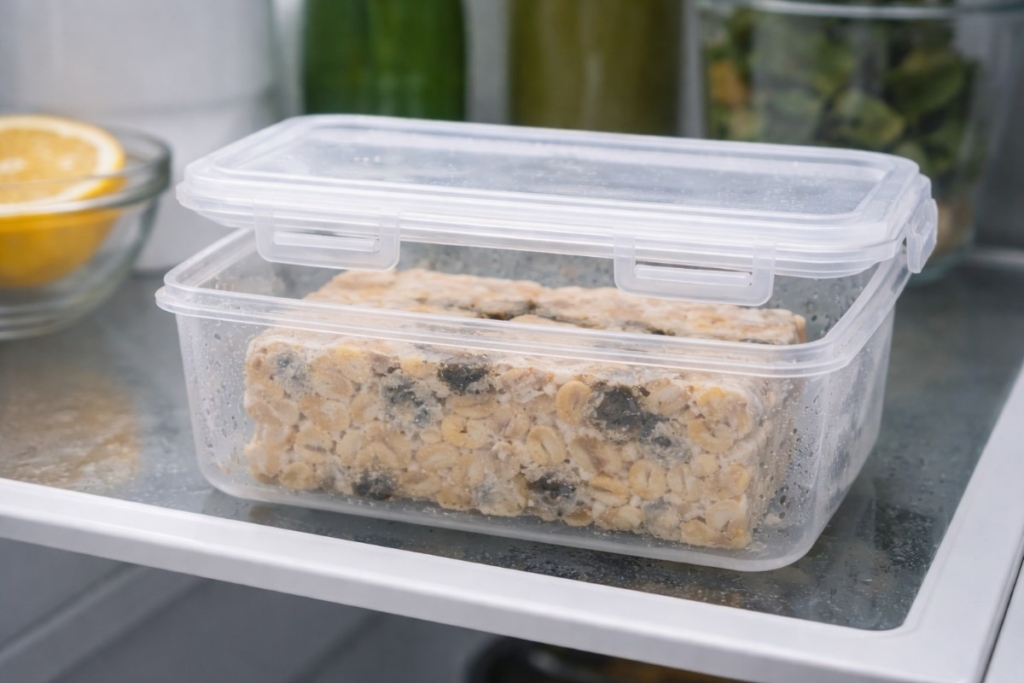
Opened tempeh typically lasts 5–10 days when refrigerated properly. Storage plays a major role in tempeh quality decline. Retailers like Whole Foods Market advise keeping tempeh tightly wrapped and refrigerated below 40°F to slow fermentation.
We store opened tempeh in airtight containers with minimal moisture exposure. Even then, live cultures continue to work. After about a week, we reassess daily using smell, texture, and color together. Best storage habits we follow:
- Keep tempeh sealed and dry in the fridge.
- Freeze tempeh you will not use within a week.
- Avoid repeated temperature changes.
If you wonder how long does tempeh last in your fridge, remember proper sealing and minimal moisture are key. Our Fresh Frozen Tempeh is designed for longer storage because freezing preserves firmness and flavor without additives.
When Should You Throw Tempeh Away Immediately?
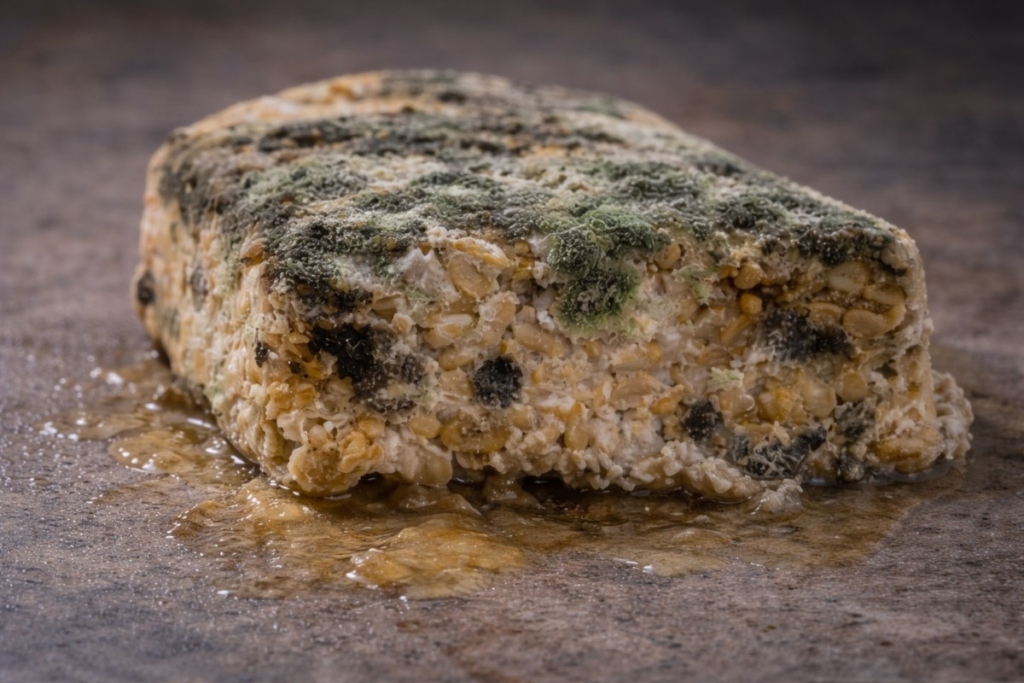
Discard tempeh immediately if odor, texture, and appearance are all off, or if strong ammonia smell and liquid pooling appear. Food safety guidance from the Centers for Disease Control and Prevention is clear that foodborne illness risk rises once visible spoilage is present. Tempeh is no exception. We use a simple checklist before cooking:
- Strong sour or ammonia odor.
- Slimy or mushy texture.
- Pink, green, blue, or fuzzy mold.
- Excess liquid or swollen packaging.
If two or more signs show up together, we do not try to salvage it. Tempeh is affordable and replaceable. Your health is not. Proper refrigeration is vital since does tempeh need to be refrigerated? Yes, cold storage slows spoilage and keeps it safe longer.
FAQ
How can I identify early tempeh spoilage indicators before cooking?
Early tempeh spoilage indicators appear through smell, texture, and color changes. A spoiled tempeh smell may become sour, rancid, or ammonia-like instead of mild and earthy. Perform a tempeh texture test by checking firmness. Loss of firmness, a sticky surface, or slime are clear bad tempeh signs. Visual inspection also matters, as off-color tempeh, dark beans, or fuzzy growth indicate quality decline.
What smells clearly indicate tempeh has gone bad?
Tempeh odor detection is one of the most reliable safety checks. Fresh tempeh smells clean, nutty, and slightly mushroom-like. When tempeh has gone bad, you may notice an ammonia odor, sour smell, yeast-like odor, or rancid scent. These olfactory signs indicate microbial overgrowth or fermentation breakdown and mean the tempeh should be discarded immediately.
Are mold colors reliable bad tempeh visual cues?
Mold color is a reliable visual indicator of spoilage. White mycelium is normal and expected in fresh tempeh. Pink mold, green spots, black spots, or fuzzy growth signal contamination and unsafe conditions. Gray tempeh may be safe only if the smell and texture remain normal. Off-color tempeh and spore spots usually indicate the shelf life has ended.
How does texture change when tempeh is no longer safe?
Texture changes are strong spoilage indicators. Fresh tempeh feels dense, firm, and dry to the touch. Unsafe tempeh becomes soft, mushy, crumbly, or loses its compact structure. A slimy or sticky surface, visible bacterial slime, or liquid inside the package are warning signs. These tactile changes mean the tempeh should be discarded and not cooked.
Can storage mistakes cause tempeh fridge or freezer spoilage?
Improper storage is a common cause of spoilage. In the refrigerator, excess moisture, poor airflow, or extended storage time can cause tempeh to decay. In the freezer, spoilage can occur when tempeh is stored beyond freezing limits or repeatedly thawed and refrozen. After thawing, always check smell, texture, and appearance to confirm safety before cooking.
Why Understanding Signs that Tempeh has Spoiled Matters for Your Kitchen
Knowing the signs of spoiled tempeh helps you cook confidently, reduce waste, and enjoy it at its best. Fresh tempeh should be firm, clean smelling, and lightly nutty, delivering the plant based protein and digestibility we count on. That is why at SoyaMaya we focus on careful fermentation, freezing at peak freshness, and transparent handling. Start with well made tempeh, spot spoilage early, and enjoy safer, better meals every time for families who value quality. Ready to cook with confidence? Explore all about SoyaMaya tempeh.
References
- https://www.fsis.usda.gov/sites/default/files/media_file/2021-03/VTP_Reference_Material.pdf
- https://pmc.ncbi.nlm.nih.gov/articles/PMC186723/
Related Article
- https://mayasaritempeh.com/how-to-store-tempeh/
- https://mayasaritempeh.com/how-long-does-tempeh-last/
- https://mayasaritempeh.com/does-tempeh-need-to-be-refrigerated/
Soya Maya Fresh Tempeh
Traditionally fermented, no preservatives, shipped fresh and frozen to your door. The real deal, direct from us.
