
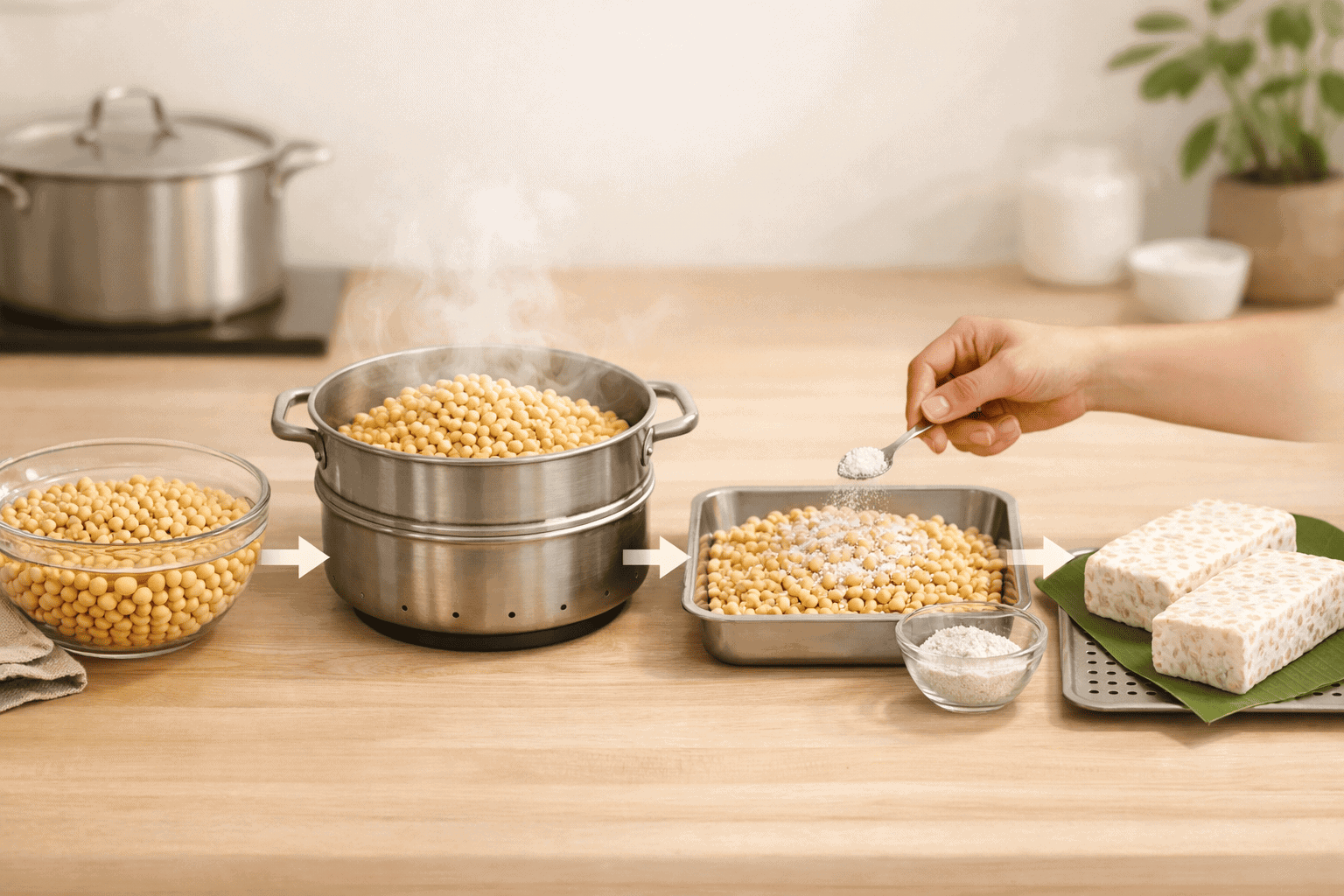
Tempeh processing is fermenting soybeans with Rhizopus oligosporus until they bind into a firm cake, usually in 24-48 hours. We have made tempeh long enough to know the steps are simple, but they do not forgive carelessness. If the room is too warm, it can overgrow. Too cool, and it drags.
When it works, the beans knit together with a mild, nutty smell and a clean finish. Most of what matters happens in small, easy-to-miss details. Keep reading, we will walk through it the way we handle it in practice.
We have worked with tempeh in both traditional kitchens and more controlled spaces, and it always comes back to steady fermentation. The mold binds the beans, but it also changes how they digest and how they taste.
Soya Maya Fresh Tempeh is made the traditional way — no preservatives, no shortcuts. Delivered to your door.
Order Fresh Tempeh →At SoyaMaya, we see the same pattern again and again. The difference between a decent batch and a good one often comes down to airflow, temperature, and the starter. No special equipment fixes those if they are off. We will go step by step and keep it grounded in how this is done day to day.
What to Know About Tempeh Processing
- Tempeh relies on microbial fermentation using Rhizopus oligosporus over 24-48 hours
- Proper control supports gut health, protein quality, and B vitamins
- Traditional and modern methods follow the same core steps, with different levels of control
What Are the Core Steps in Tempeh Processing?
Tempeh production follows a set order: cleaning, soaking, dehulling, cooking, cooling, inoculation, and fermentation.
We start with the soybeans. We rinse them a few times and pick out anything that does not look right. It is a small step, but it affects how the batch turns out.
Dirty or uneven beans can lead to uneven growth, and sometimes unwanted microbes like Bacillus subtilis show up. Working with properly prepared beans, especially when you start with tempeh soybean prep, makes this step more predictable from the beginning.
After that, we soak the beans for about 12-24 hours. They absorb water and soften. The soaking water starts to smell slightly sour by the end, which is normal. That comes from natural lactic acid bacteria, and it helps keep things in check before fermentation begins.
Then we cook. We boil the beans at around 100°C for 30-60 minutes until they are soft but not falling apart. Once drained, we spread them out and let the heat come down on its own. This part takes a bit of patience. If the beans are still warm when the starter goes in, it will not grow.
- Cleaning removes debris and uneven beans
- Soaking softens the beans and shifts the pH slightly
- Cooking prepares the texture and reduces unwanted microbes
- Cooling brings the beans to a safe temperature for inoculation
We learned this from a failed batch early on. The beans felt warm, but we went ahead anyway. Nothing formed the next day. Since then, we always wait a little longer than we think we need.
How Does Fermentation Transform Soybeans into Tempeh?
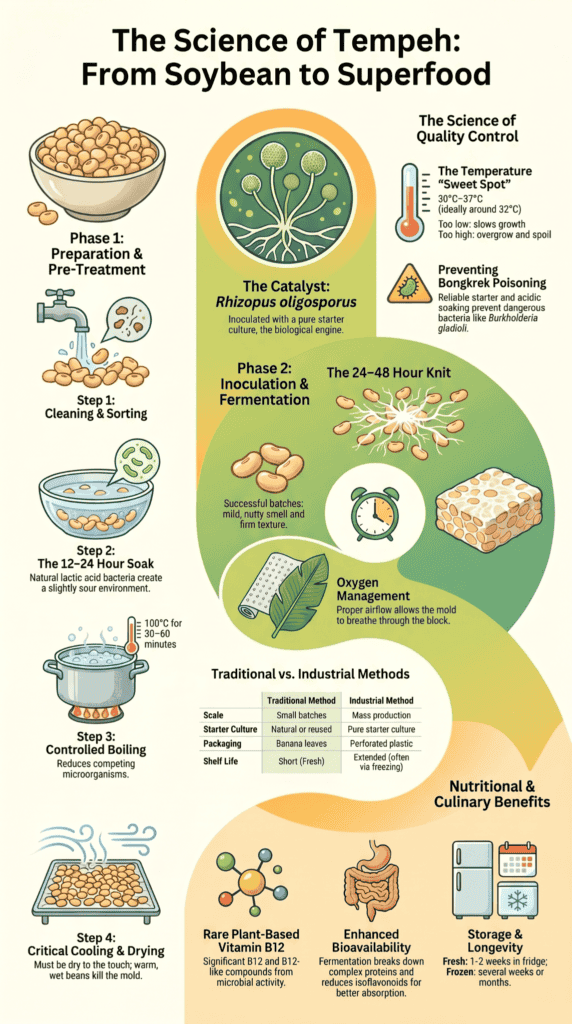
Fermentation is the point where the beans stop acting like separate pieces. Rhizopus oligosporus grows over them and starts linking them together.
On the first day, we usually see small white spots. Then they spread and connect. Once that happens, the beans hold when we press them. The smell stays mild. If it turns strong or sour, we take it as a bad sign.
Inside the beans, changes are happening, even if we do not see them. Some sugars break down. Proteins shift into simpler forms. We notice it later, mostly in how it cooks and how it feels to eat.
Research from A*STAR Research shows
“The right fermentation and preparation techniques can not only improve tempeh’s flavour and texture, but also enhance its protein profile in ways we’re only starting to understand. This approach revealed peptides typically overlooked by conventional analysis, shedding light on the diverse proteolytic activities of the microbes involved.” – A*STAR Research
- Increased B vitamins, including B12-like compounds
- Formation of bioactive peptides and antioxidants
- Improved digestibility through enzyme activity
We see the difference when slicing and cooking. A good batch stays firm and takes in flavors like kecap manis or vinegar past the surface.
Traditional vs. Industrial Tempeh Processing Methods
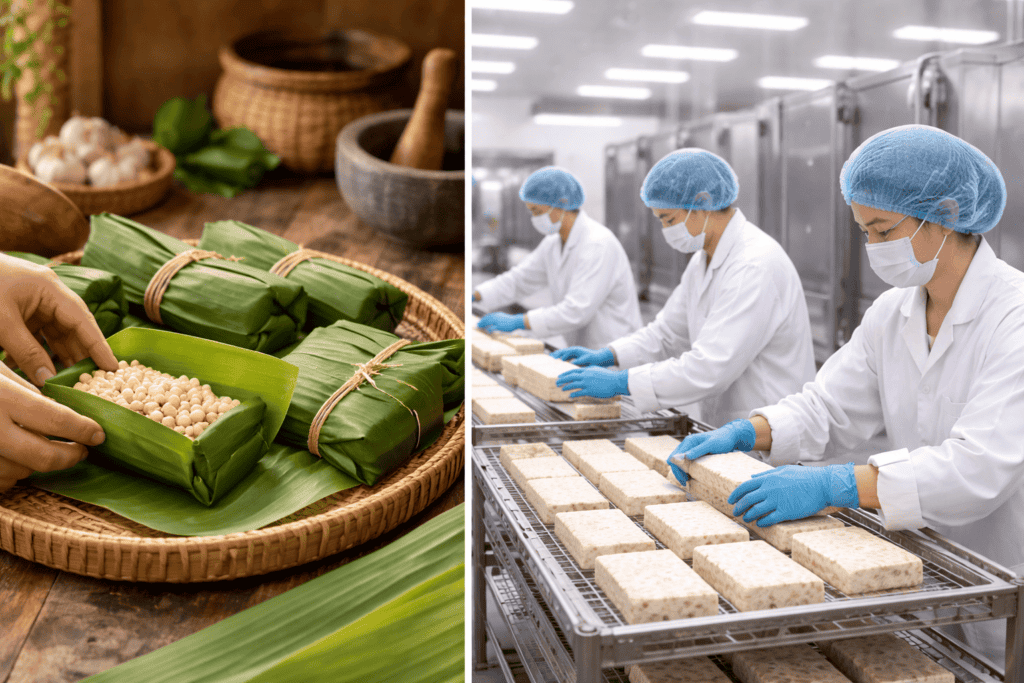
Traditional methods depend more on hands and habits. Industrial ones depend on steady control. This difference becomes clearer when comparing fresh vs pasteurized tempeh, where handling and post-fermentation treatment shape both texture and shelf life.
We have worked around both. In traditional setups, banana leaves are common, and sometimes part of an older batch is used again. Even when the steps are the same, the result can shift a bit each time.
In industrial production, the starter is measured, and the temperature stays between 30–37°C. The batches come out more uniform, and the tempeh can be stored longer, often frozen.
| Aspect | Traditional Method | Industrial Method |
| Scale | Small batches | Mass production |
| Starter | Natural or reused culture | Pure starter culture |
| Packaging | Banana leaves | Perforated plastic |
| Equipment | Manual tools | Stainless steel systems |
| Shelf Life | Short | Extended via freezing |
At SoyaMaya, we stay somewhere in the middle. We follow the same process each time, but we adjust based on how the batch is behaving.
It keeps the work steady and the results usable day to day.
What Are Common Home vs. Factory Processing Challenges?
Home batches usually fall apart on small details. In a factory, the same small issue just spreads faster.
At home, water is the usual problem. Beans come out of cooking, they look dry, but they are not. When we rushed this step, the beans stuck together and the inside stayed damp. Air could not move through, and the mold slowed down. The surface looked fine, the middle did not catch up.
Dehulling is another one people underestimate. Leaving some skins on does not ruin everything, but it does show. Parts bind tight, others stay loose. The texture ends up uneven. This is why many makers prefer starting with whole soybean tempeh, where consistency in the beans helps reduce these uneven patches.
In a factory, the pressure is different. One weak point in cleaning or handling can affect a full batch. Bacteria like Enterobacteriaceae can come back quickly if the space is not kept in check.
- Home challenges:
- Beans hold too much surface moisture
- Skins left on, leading to patchy binding
- Factory challenges:
- Keeping everything clean, all the time
- Holding the same conditions across large volumes
We have seen both. A small batch at home can fail and you only notice when slicing it. In a larger setup, there is no hiding it, the whole batch shows the same issue.
Are There Safety Risks in Tempeh Processing?
Yes, and most of them start early in the process.
If soaking does not go far enough, the beans stay neutral instead of slightly acidic. We have had batches like that before. They did not smell right by the next day. That early stage sets the tone for everything that follows.
There is also a rare case tied to Burkholderia gladioli, known from bongkrek poisoning. It tends to appear in poorly handled fermentation, especially with certain raw materials.
Clean handling matters just as much. Unwashed tools or surfaces can bring in bacteria like E. coli or Salmonella without much warning.
- Let soaking run long enough for a slight sour note
- Use a steady, reliable tempeh starter
- Keep tools clean and give the beans space for air
From our own batches, one habit helped more than we expected. After draining, we leave the beans spread out a bit longer than feels necessary. When they go dry to the touch, the fermentation holds steady.
How Do Processing Variables Affect Tempeh Quality?
Temperature, moisture, oxygen, and starter amount all show up in the final result.
We try to keep the room around 30-37°C. Somewhere near 32°C feels steady. If the weather cools down at night, the batch slows. We have had trays sit an extra day because of that.
Moisture is easy to get wrong. The beans can look dry but still feel tacky. We spread them out and wait until they feel dry in the hand. If we rush it, the outside sets first and the inside lags behind.
Air is just as important. Tempeh needs it to grow through the beans. If the pack is too tight, the center struggles. Using perforated wrap or banana leaves gives enough space for air to move through.
Research from ScienceDaily shows
“Fermentation was highlighted as an important processing method in the results. We found that in tempeh, for example, these isoflavonoids were in a form that is more readily absorbed due to the activity of the microbes used in fermentation. it is also important to note that food processing should not be seen as exclusively harmful, as fermentation, for example, can even improve the nutritional value of a product.” – ScienceDaily
- Temperature sets the pace
- Moisture affects how evenly it binds
- Oxygen helps the mold move through the beans
- Starter amount affects how dense the block feels
We have tried both simple and more controlled setups. Even with different tools, these same points decide how the batch turns out.
What Are Packaging and Storage Methods for Tempeh?
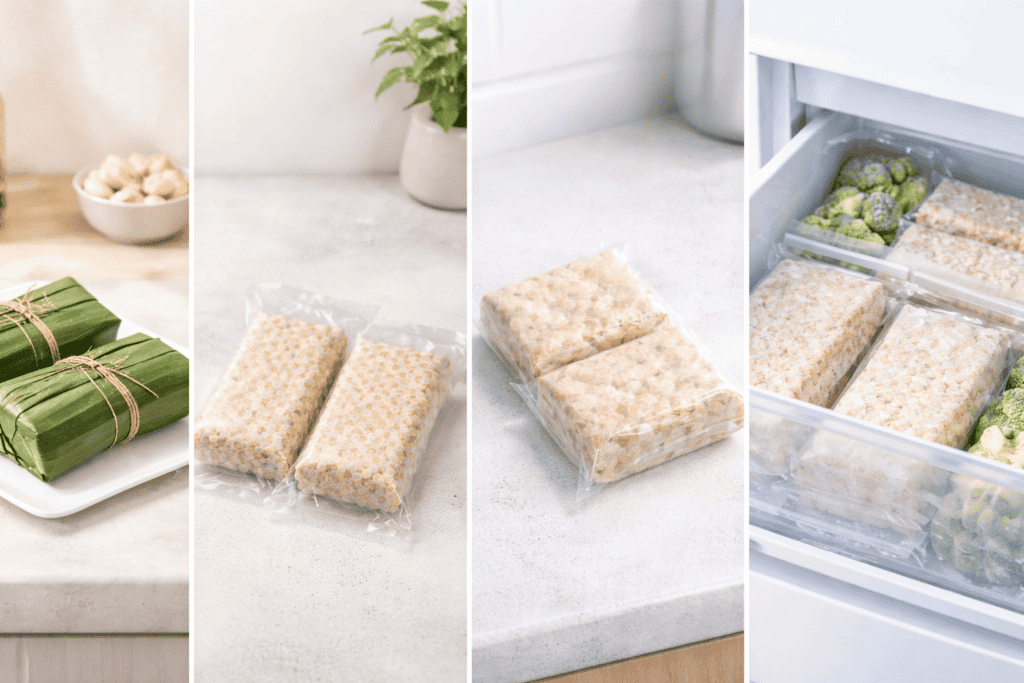
Once the tempeh is done, storage becomes the focus.
In many kitchens, it is wrapped in banana leaves and used within a few days. The taste shifts slightly as it sits, sometimes a bit stronger.
For longer storage, we use the fridge or freezer. In the fridge, it keeps for about a week or two. Freezing holds it much longer, so we often freeze it soon after it is ready.
- Refrigeration: about 1-2 weeks
- Freezing: keeps it for several weeks or longer
- Vacuum sealing: reduces air exposure
From what we see, frozen tempeh still cooks well. We have taken it straight from the freezer into an air fryer, and it keeps its shape, with a firm center and a crisp outside.
FAQ
What happens during the fermentation process in tempeh making?
The fermentation process transforms soybeans into a firm fermented soybean cake. Producers add a tempeh starter containing Rhizopus oligosporus and allow it to grow under controlled conditions.
This microbial fermentation binds the beans together and improves the nutritional profile. It increases amino acids, bioactive compounds, and supports gut health through microbiome modulation and short-chain fatty acids.
Why is temperature control important in tempeh starter culture growth?
Temperature control ensures that the tempeh starter culture grows properly and safely. If the temperature is too high or too low, Rhizopus oligosporus cannot develop well.
Proper conditions support RAPID FERMENTATION and reduce unwanted microbes such as Bacillus subtilis. This helps maintain a strong protein profile, stable texture, and consistent antioxidant activity in the fermented soybean product.
How do banana leaves affect tempeh flavor and fermentation quality?
Banana leaves support proper airflow and maintain balanced moisture during fermentation. This environment helps microbial fermentation occur evenly and can produce a mild mushroomy flavor.
Banana leaves also help preserve bioactive peptides and soy isoflavones. Compared to synthetic materials, they support a more natural process and help maintain the nutritional profile of this sustainable protein source.
What nutrients develop during tempeh fermentation and why do they matter?
Tempeh fermentation increases B vitamins, including B12-like analogues, and improves amino acids. It also produces isoflavone aglycones and enhances antioxidant activity.
These nutrients support gut health, bone health, and may help manage cholesterol levels and oxidative stress. As a result, tempeh becomes a valuable protein source and a reliable meat substitute in plant-based eating and plant-based foods.
How can tempeh processing methods affect shelf life and safety?
Tempeh processing methods directly affect shelf life and safety. Clean equipment such as petri dishes and proper drying materials like a kitchen towel help reduce contamination.
Correct temperature control and the use of a reliable tempeh starter culture support stable microbial fermentation. These steps prevent spoilage, improve food security, and ensure the fermented soybean remains safe for consumption.
Why Understanding Tempeh Processing Methods Matters
You can eat fresh tempeh raw. But ask yourself, why risk it when a little heat brings peace of mind? Think about the meals you trust most. The ones you serve without thinking twice. That feeling comes from simple habits done right. Cooking tempeh is one of those habits. It keeps what you want and takes away what you don’t.
You do not need to overthink it. Just take the extra step. A few minutes can change how you feel about every bite, safe, sure, and satisfied. If you want tempeh made with that same care from the start, explore SoyaMaya and bring that confidence to your table.
References
- https://en.antaranews.com/news/316179/tempeh-a-food-for-a-golden-generation
- https://www.sciencedaily.com/releases/2025/04/250410130744.htm
Related Articles
- https://mayasaritempeh.com/understanding-tempeh-soybean-prep/
- https://mayasaritempeh.com/fresh-vs-pasteurized-tempeh/
- https://mayasaritempeh.com/how-to-find-whole-soybean-tempeh/
Soya Maya Fresh Tempeh
Traditionally fermented, no preservatives, shipped fresh and frozen to your door. The real deal, direct from us.
