
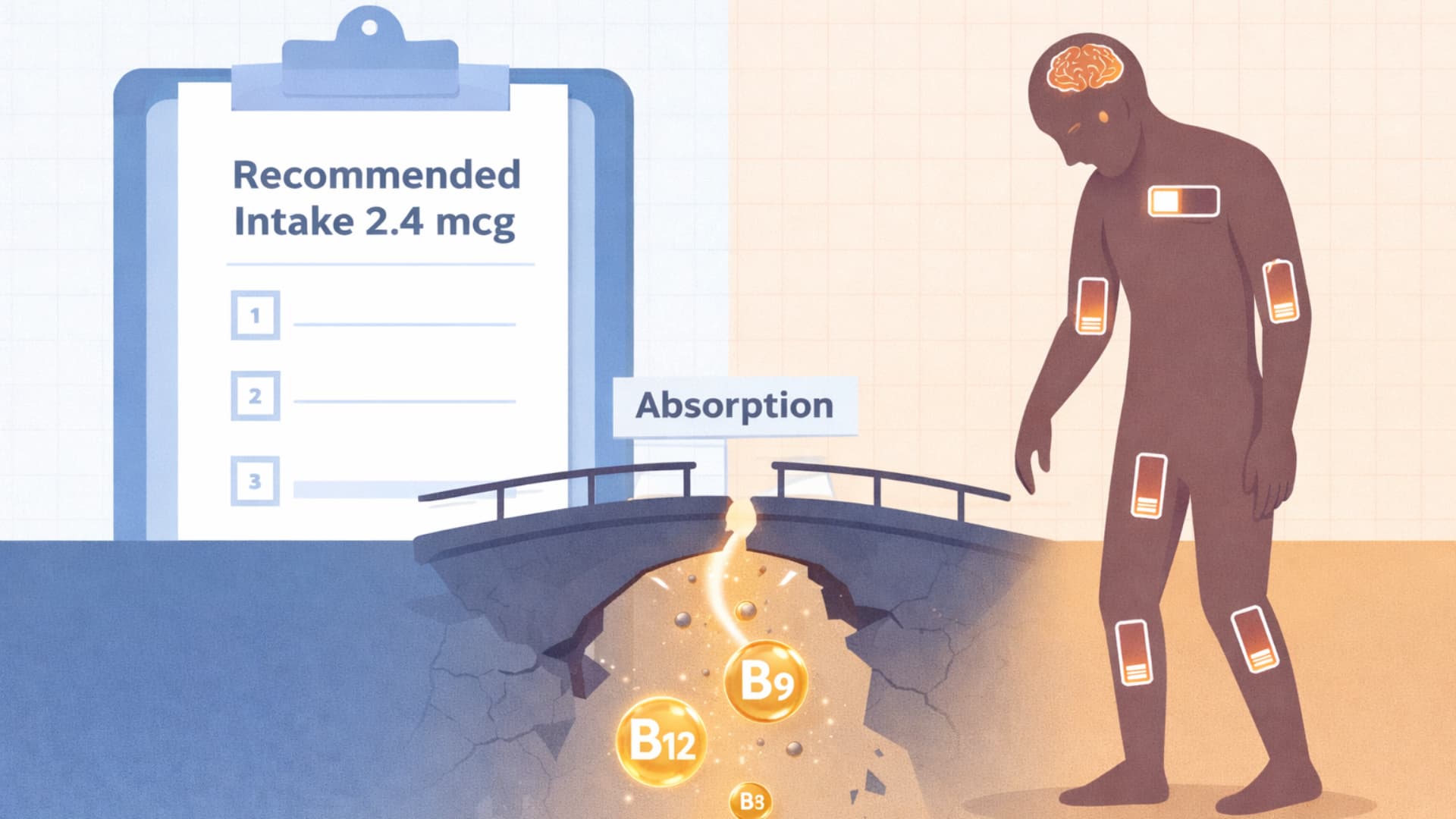
You need enough B12 that your body can use. Your B12 need can change with age, diet, and gut health. The 2.4 mcg value is a low base.
Age, gut acid, meds, and plant diets can raise B12 need. We tested tempeh and tracked B12 use. If you want your real B12 needs, not just the label, keep reading.
Key Takeaways
- The official 2.4 mcg daily is a minimum for young, omnivorous adults.
- After 50, or on a plant-based diet, your effective need can multiply.
- Absorption, not just intake, determines your true B12 status.
How Much B12 Do We Really Need?
Where Our Questions Started
We stood in our kitchen in Greensburg, Indiana, hands deep in organic soybeans, working with sourcing standards that reflect organic non-GMO soybeans chosen for soil integrity, clean fermentation, and long-term nutrient stability.
Soya Maya Fresh Tempeh is made the traditional way — no preservatives, no shortcuts. Delivered to your door.
Order Fresh Tempeh →The goal was simple: make a nourishing, fermented food we could feel good about serving every day. We saw that B12 was key.
B12 helps make red blood cells and nerve cells. Low B12 can harm nerve and blood cells. Energy fades. Thinking feels slower. The body feels off in ways that are hard to name.
We kept seeing the same number in the guidelines: 2.4 micrograms per day for adults. Clean. Simple. On paper, it made sense. Many people still felt weak and foggy. The numbers weren’t matching how people actually felt.
That’s when we started paying closer attention.
The Official Number And What It Assumes
The daily value is a low base. For a healthy 30-year-old who eats eggs, yogurt, and the occasional piece of meat, 2.4 micrograms is usually enough to keep blood levels steady. It supports red blood cell production and helps nerves send clean signals.
This assumes something important, though: that the body is absorbing B12 efficiently. B12 absorption is a complex two-step process: it requires stomach acid to release it from protein and a protein called ‘intrinsic factor’ to carry it into the blood. Some people make less of it. It’s a good system. It’s just not everyone’s system.
When Life Stages Shift the Need
Credits: Dr. Eric Berg DC
Life changes what the body asks for, and B12 is no exception.
- During pregnancy, the guideline rises to about 2.6 micrograms
- While breastfeeding, it moves closer to 2.8 micrograms
- Infants start around 0.4 micrograms
- By the teenage years, needs reach the adult baseline again [1]
These values help form new nerve cells and blood cells. Then there’s another shift that doesn’t get talked about as much. After around age 50, absorption often becomes less reliable.
Stomach acid changes. Intrinsic factor can decline. Even with the same intake on paper, less B12 actually makes it into the bloodstream. Many adults with low levels may feel weak, foggy, or experience ‘pins and needles’ in their hands and feet.
When Your Body Needs a Different Map
When Absorption Starts to Change
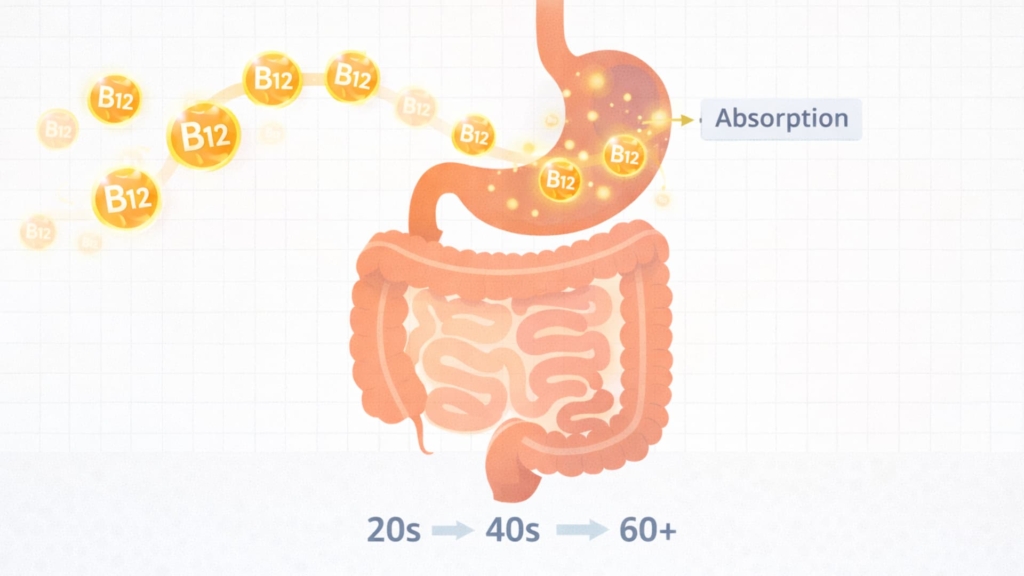
B12 use drops with age. Stomach acid production often declines, and intrinsic factor can become harder for the body to make and use.
You might still be eating the same 2.4 micrograms from a salmon fillet, but your body may only be absorbing a fraction of it.
That’s why many nutrition guidelines suggest a different path later in life, usually at least 25 to 100 micrograms per day, often through fortified foods or a straightforward supplement.
A higher dose helps when B12 use is low. It’s not an alarm bell. It’s a practical adjustment. Older adults need more B12.
When Animal Foods Aren’t on the Plate
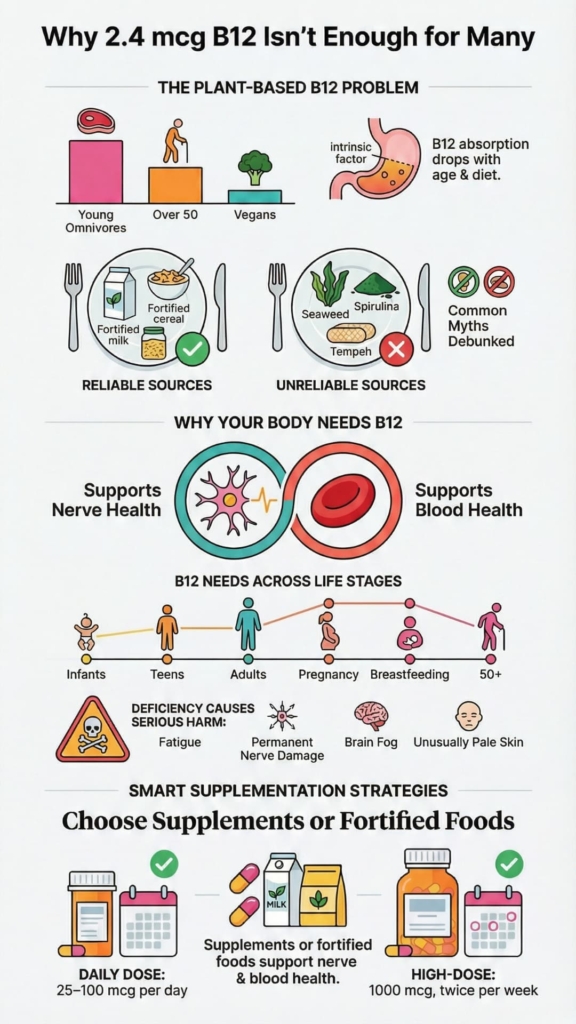
Vegans need extra B12. B12 is a unique vitamin; it isn’t made by plants or animals, but by bacteria that live in soil and the guts of animals, meat, dairy, and eggs. Vegans lack food-based B12.
Fortified foods can help fill that space. Things like certain plant milks, cereals, and nutritional yeast can contribute, and this is where b12 fortified tempeh becomes one of the few whole-food carriers that can reliably deliver usable B12 inside a plant-based plate.
But relying on them alone takes steady label-checking and consistency. A B12 pill can help. Large B12 doses still give some use.
In real life, that often looks like:
- At least 50 micrograms taken daily (or 2,000 mcg once weekly)
- Or a higher dose taken once a week
- Pairing supplements with fortified foods when possible
It’s not complicated, but it is important.
What Blood Tests and Real Plates Tell Us
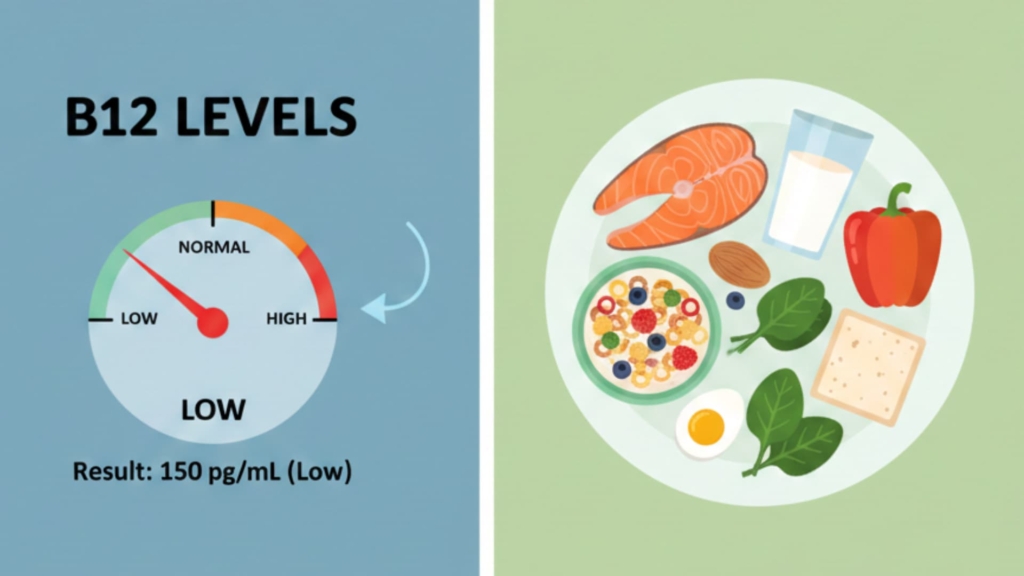
For anyone over 50, fortified foods or a daily supplement make sense. For vegans, a consistent supplement is the most dependable approach.
And for everyone, blood tests are the clearest way to see what’s actually getting into the bloodstream, not just what’s on the label.
Which brings us back to the plate. An 85-gram serving of beef or tuna easily covers more than a full day’s recommended intake. A cup of milk provides roughly half. For vegetarians, dairy and eggs often become the backbone of B12 intake.
But when your plate is built mostly from plants, the picture changes. This was our test goal. We wanted our tempeh to be more than just protein.
We wanted it to be a meaningful part of a balanced diet. Tempeh does not naturally contain reliable amounts of B12, as soybeans lack it, which is why understanding what B12 tempeh actually is matters when evaluating protein choices on a fully plant-based plate. We list all food facts. You deserve to know what’s fueling you, and what still needs to be layered in on purpose.
The Safe Harbor of Supplementation
How Much Vitamin B12 Do You Actually Need?
Think of high-dose therapy as a ‘repair job’ to refill your body’s empty reservoirs, while daily low doses are for ‘maintenance’ to keep the engine running.
| Purpose of Use | Typical Daily Amount | Who This Is For | Why This Dose Is Used |
| General maintenance | 2.4 mcg | Healthy adults with normal absorption | Covers the base daily requirement for basic nerve and blood cell support |
| Plant-based or low-intake diets | 25-100 mcg | Vegans or people eating few animal products | Compensates for limited natural B12 food sources |
| Absorption support | 100-250 mcg | Older adults or those with mild absorption issues | Ensures enough B12 gets through reduced absorption |
| Deficiency repair | 500-1000 mcg | People with low B12 levels | Rapidly rebuilds depleted body stores |
| Medical treatment | 1000 mcg (oral or injection) | Diagnosed B12 deficiency or nerve symptoms | Used to restore normal blood and nervous system function |
Food helps meet health needs. We also fund school aid. It’s also why we think about these things, about B12 and protein and how people truly nourish themselves. It’s not just about selling tempeh. The 2.4 mcg value is a base, not a full dose. [2]
FAQs
How many micrograms per day should I follow for recommended vitamin B12 intake?
Most adults should follow the recommended daily allowance for vitamin B12, which is listed in micrograms per day. This baseline amount supports normal blood cells, nerve function, and energy use. However, vitamin B12 intake needs can change with age, vegan diet habits, and certain health conditions. Blood testing helps confirm b12 levels and guides safe vitamin b12 dosage, especially for older adults.
What happens to blood cells when low levels of B12 go untreated?
Low levels of b12 weaken red blood cells and reduce oxygen delivery throughout the body. Untreated vitamin b12 deficiency can damage the nervous system and cause lasting numbness, poor balance, and memory problems. Folic acid and vitamin b6 support blood cell formation, but they cannot replace vitamin b12. Early care protects nerve tissue and restores healthy red blood cell production.
Which foods help raise B12 in your body without using supplements?
Animal products such as dairy products, eggs, and beef liver naturally raise b12 in your body. People following a vegan diet depend on fortified breakfast cereals to meet vitamin b12 intake needs. Vitamin b12 is water soluble and leaves the body daily, so regular micrograms per day intake is necessary to maintain stable levels of b12 and support normal nervous system function.
Are high doses of vitamin B12 safe, and what side effects appear?
High doses from vitamin b12 supplements are usually safe because vitamin b12 is water soluble, but some people experience side effects such as headache, nausea, or skin reactions. Vitamin b12 injections may be used for severe vitamin b12 deficiency. Blood testing confirms low levels of b12 and guides proper vitamin b12 dosage. Ongoing symptoms should be reported to a healthcare provider for review.
How do blood tests guide recommended daily vitamin B12 intake?
Blood tests measure red blood cells and vitamin b12 status to identify vitamin b12 deficiency early. The department of health publishes the rda for vitamin b12 as a recommended daily allowance in mcg of b12 per day. When low levels appear, clinicians may suggest vitamin b12 supplements or vitamin b12 injections. Pregnancy monitoring also supports proper neural tube development and long-term nervous system health.
Build a B12 Pattern You Can Rely On
Forget memorizing numbers, think in patterns. If you eat animal foods, you likely meet B12 needs naturally. If you’re over 50 or plant-based, your routine must include a planned source: a daily fortified food or reliable supplement. B12 supports healthy nerves and blood cells, and a simple blood test can confirm your status.
SoyaMaya tempeh adds protein and B12 to your pattern, locally crafted, small-batch fermented, and designed to be a steady, delicious part of a balanced diet. Make Your Plant Diet Complete, Start with SoyaMaya B12 Tempeh.
References
- https://pbdmedicine.org/ensuring-adequate-vitamin-b12-status-for-patients-on-a-plant-based-diet/
- https://www.nationalacademies.org/read/11537/chapter/19#189
Related Articles
- https://mayasaritempeh.com/b12-fortified-tempeh/
- https://mayasaritempeh.com/what-is-b12-tempeh/
- https://mayasaritempeh.com/why-organic-non-gmo-soybeans/
Soya Maya Fresh Tempeh
Traditionally fermented, no preservatives, shipped fresh and frozen to your door. The real deal, direct from us.
