
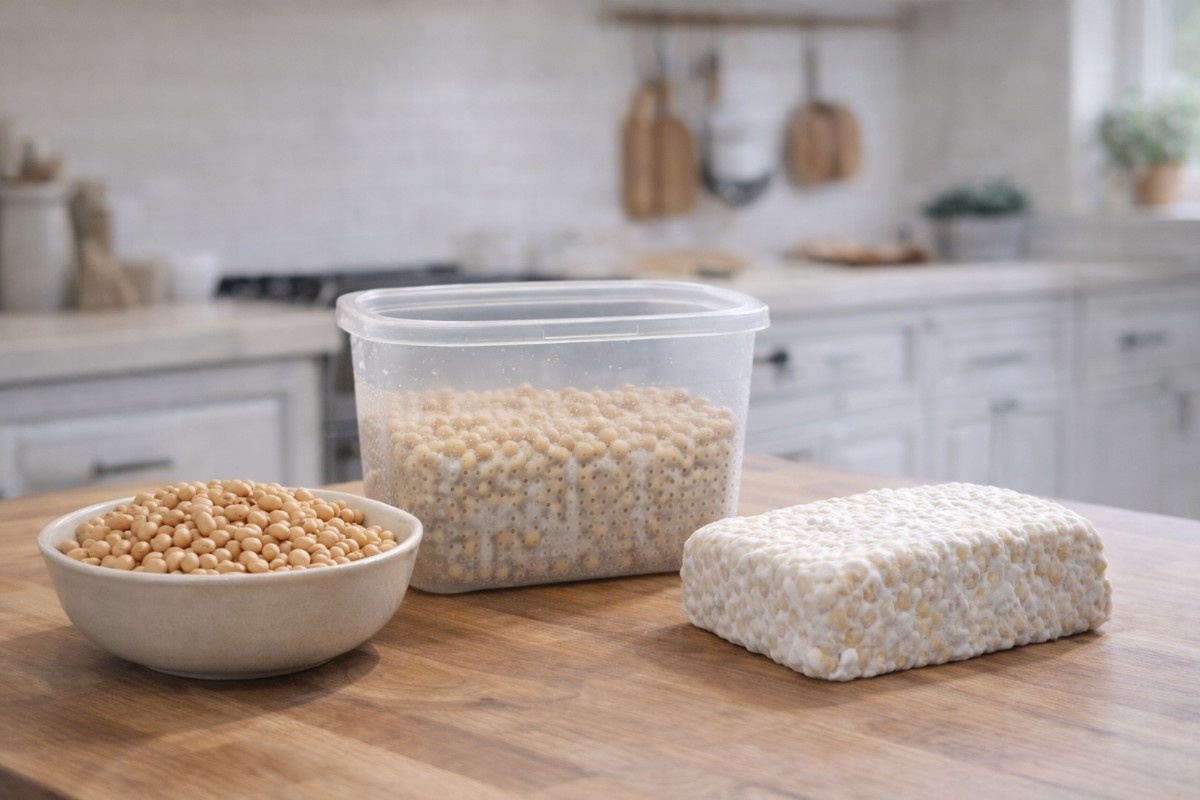
Ever wondered what makes small-batch tempeh different? It’s all about control, care, and time. In large factories, those things can get lost. Here, it’s a quiet kind of alchemy, soybeans transforming under the watch of a specific mold called Rhizopus oligosporus. We do it this way at SoyaMaya. The result is a firmer texture, a deeper, nuttier flavor, a more living food. It’s hands-on fermentation, not just production. Want to see how this process works and why it matters for what ends up in your kitchen? Stick around, we’re walking through it step by step.
Key Takeaways
- The foundation is perfect bean preparation: thorough soaking, cooking, and drying.
- Consistent, warm incubation is non-negotiable for the Rhizopus mold to thrive.
- Recognizing the signs of a successful, safe batch is the final, crucial skill.
What You Actually Need to Make Artisanal Tempeh
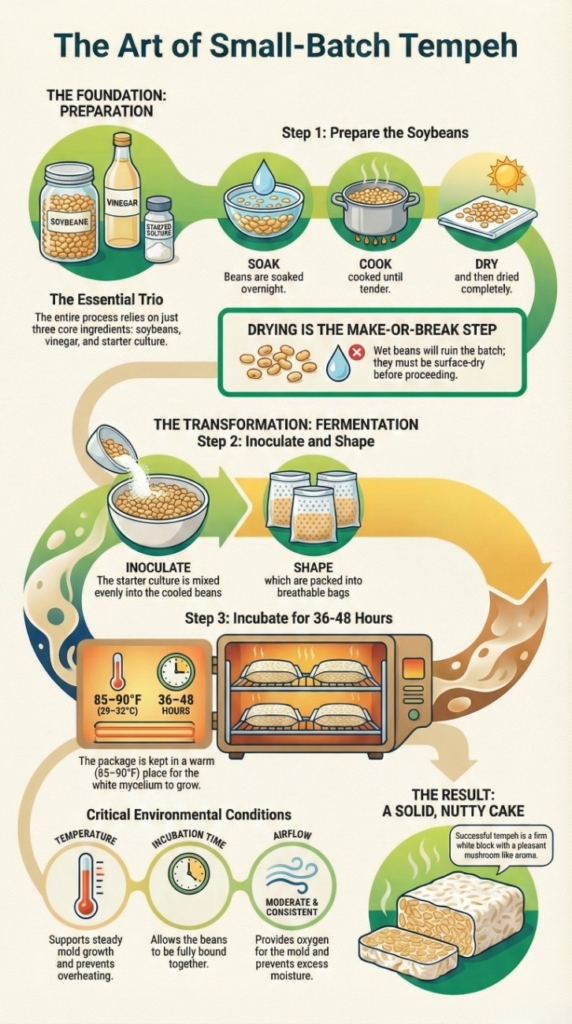
Forget complicated ingredient lists. At its heart, the small-batch tempeh process needs just three things. You start with about two cups of dried soybeans. That’s your canvas. We use non-GMO beans from Indiana farms, but any good-quality bean works.
Next, you need an acidifier, usually a tablespoon or two of vinegar. This isn’t for flavor. It lowers the pH, making the environment friendly for your mold and hostile to bad bacteria.
Soya Maya Fresh Tempeh is made the traditional way — no preservatives, no shortcuts. Delivered to your door.
Order Fresh Tempeh →Finally, the magic: a half-teaspoon of tempeh starter culture. This is a powder containing Rhizopus oligosporus spores. It’s the living engine of the whole operation.
- Dried Soybeans: The primary substrate. 2 cups yields about 1.5 pounds of tempeh.
- Vinegar (Apple Cider or White): The pH regulator. Creates a safe fermentation lane.
- Rhizopus oligosporus Starter: The essential microbial culture. You can’t make tempeh without it.
That’s the core toolkit. Everything else, perforated bags, containers, a warm spot, is just support. The simplicity is deliberate. It allows the natural fermentation process to be the star, not a list of additives. When we craft a batch, this minimalist approach is what ensures a clean-label, whole soybean fermentation product. You taste the bean, not the processing.
Preparing Soybeans: The Make-or-Break First Step
This step decides whether your tempeh succeeds or fails, don’t rush it.
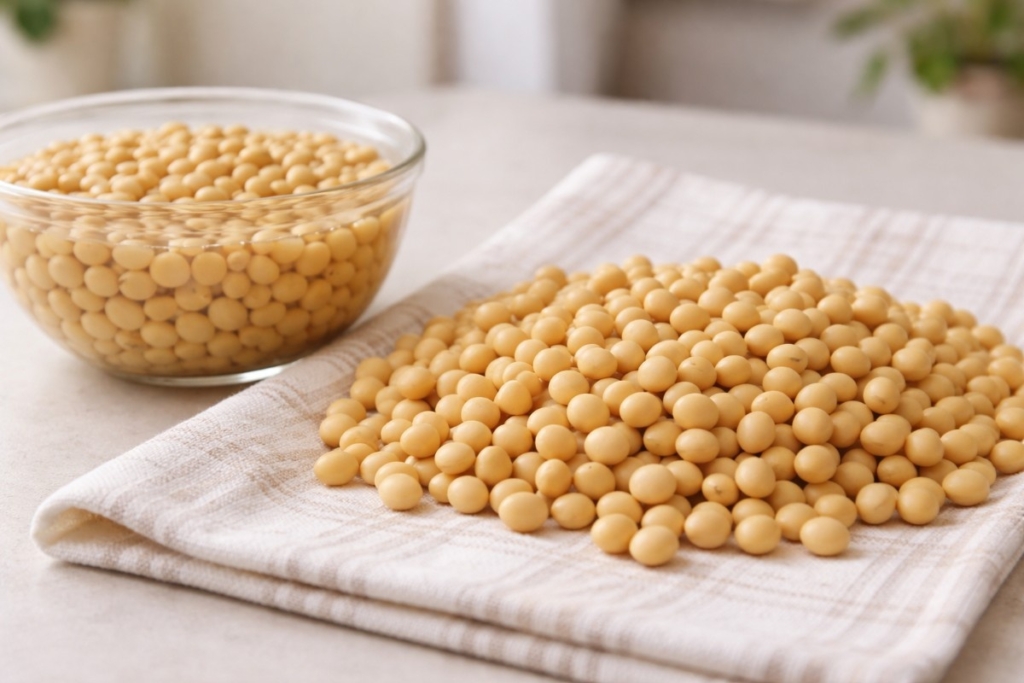
- Soak: Cover dried soybeans with water and soak 8–12 hours (overnight works best). They’ll swell and become easier to digest.
- Dehull (optional): Rub beans to loosen the skins and rinse them away. Partial dehulling is enough and helps the mold bind later.
- Cook: Boil in fresh water for 45–60 minutes. Beans should be tender but still firm, not mushy.
- Acidify: Add vinegar during the last 10 minutes of cooking. This protects the batch.
- Dry completely: Drain well, then spread beans on clean towels until surface-dry. No steam, no moisture, just warm to the touch.
Wet beans ruin tempeh. This drying stage may be the most important part of the whole process and is essential to producing the best fresh tempeh with authentic texture and flavor.
Inoculating and Shaping the Batch
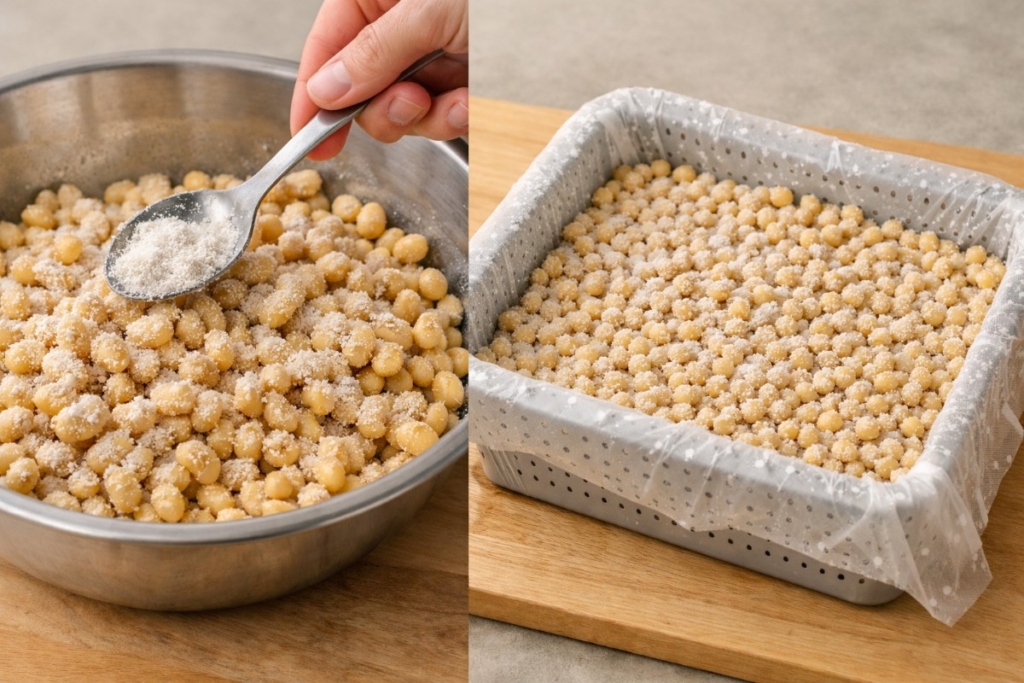
After cooling your beans to about 95°F, sprinkle the half-teaspoon of starter evenly over them. Mix thoroughly for 3–4 minutes to coat every bean, uneven mixing leads to patchy growth. For fermentation, tempeh needs air, so use a breathable container:
- Plastic bags with holes every half-inch
- Specialty perforated bags
- Traditional banana leaves (natural breathability, great for special batches)
“Commercially, tempeh is available in banana leaf or plastic wraps. The wraps are not only important for fermentation and giving final form of tempeh, but also potential source of food microbiome.” Muhammad Erdiansyah et al, Food Sci Technol
Pack the inoculated beans into a block about 1 inch thick, thin enough for oxygen to reach the center, but dense enough for the beans to bind. Press flat, fold the bag or leaf, and set it aside to ferment. You’ve created the perfect environment for the spores to grow.
The Incubation: Cultivating the White Mycelium
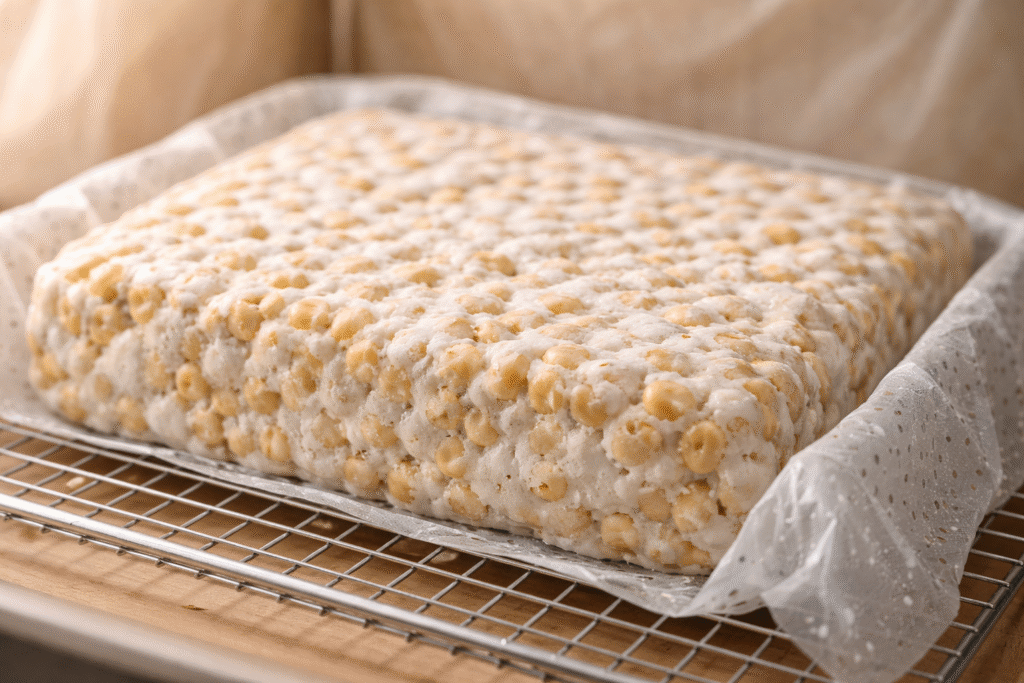
This is the quiet part. You place your packaged beans in a warm, dark place. The ideal tempeh fermentation temperature starts at 85 to 90°F. An oven with the light on often works. A turned-off microwave with a bowl of hot water.
A dedicated incubator if you’re serious. For the first 12 hours, not much happens. Then, if you peek, you might see a faint white fuzz starting on some beans.
The Rhizopus oligosporus is waking up. By 24 hours, the fuzz is more pronounced, a cobwebby white film. This is the mycelium, the body of the fungus. It’s weaving through and around the beans, secreting enzymes that bind them.
Here’s a funny thing about the tempeh incubation process. The living culture generates its own heat. A successful batch can raise its internal temperature by 10 or 15 degrees. So you have to watch it. If it gets much above 100°F for too long, it can cook itself or allow unwanted bacteria to grow.
This careful temperature control is part of what defines truly artisanal tempeh, ensuring the best flavor and probiotic benefits.
Sometimes, halfway through, you might need to crack the incubator door. It’s a dance of monitoring. This active phase lasts another day.
For a total of 36 to 48 hours, the tempeh mold growth continues until the beans are completely bound into a solid, white cake. You can feel it firm up. The aroma shifts from beany to deeply nutty, mushroomy, earthy. That smell is the signal.
| Factor | Ideal Range | Why It Matters |
| Temperature | 85–90°F (29–32°C) | Supports steady Rhizopus mold growth |
| Incubation Time | 36–48 hours | Allows full binding and flavor development |
| Airflow | Moderate and consistent | Prevents overheating and excess moisture |
| Humidity | Warm, not wet | Encourages even mycelium spread |
| Monitoring | Regular visual and temperature checks | Prevents overheating and contamination |
Knowing Your Tempeh is Ready and Safe
So how do you know it’s done, and done right? A perfect small-scale tempeh fermentation yields a firm, cohesive cake. The white mycelium should be thick and uniform, holding the beans in a solid block.
You might see some gray or black patches where the spores have formed. That’s normal, a sign of maturity. It’s safe. The smell should be pleasant, nutty, like fresh mushrooms. That’s your live tempeh culture at its peak.
You must also know the signs of failure. This is about food safety. If you see any fuzzy patches of pink, green, or red, that’s contamination.
“Tempe is classified as a compact cake-form product which is prepared from dehulled soybeans through
fermentation with Rhizopus spp. by Codex.” BCC Centre For Disease Control
Clean everything thoroughly before trying again. A successful batch, like our SoyaMaya tempeh straight from the incubator, is a fresh tempeh production triumph. It’s alive, unpasteurized, and packed with probiotics and Vitamin B12 from the fermentation.
You can refrigerate it for a week to slow the process, or freeze it for months. Always cook it before eating, which finishes the development and makes the nutrients more available.
From Kitchen Counter to Small Business
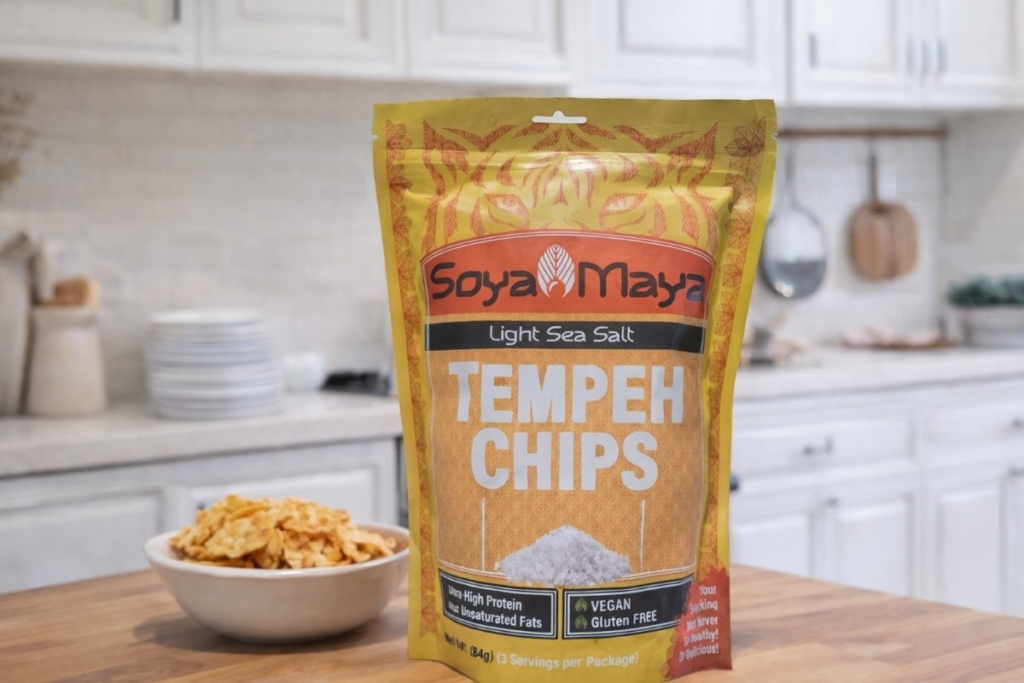
It starts small, a two-cup batch on your kitchen counter in a plastic bag. Then you get hooked on the process: the control, the living culture, the result. Scaling up? Same principles, just more beans and better tools. The real change comes with the tools:
- Containers: Move from plastic bags to stainless steel trays with holes (called GN pans).
- Environment: Replace homemade incubators with temperature-controlled cabinets and a little fan for airflow.
- Goal: Consistency. Every batch should match the last.
A key part of the craft: the starter culture lives on. Take a bit of a perfect batch, dry it, grind it with rice flour, and use it to start the next one. This cycle keeps your own strain alive and is the hallmark of fresh artisanal tempeh, preserving natural flavors and nutrition.
Small-batch making isn’t just about size. It’s about attention to detail. That’s the difference between mass-produced and truly crafted. You watch each batch carefully, trusting the slow, quiet growth of the white mycelium to do its work.
The Reason We Make Tempeh This Way
Understanding how small-batch tempeh is made changes how you see it. It’s not just an ingredient. It’s a preserved, transformed, living food. The tempeh texture development, that firm bite, comes from the careful drying and even incubation.
The tempeh flavor development, that deep umami nuttiness, comes from the full fermentation time, the enzymes working. The high protein, the B vitamins, they’re enhanced by this natural fermentation.
The small-batch method protects all that. It avoids the high heat of pasteurization that kills the live culture. It forgoes the additives and shortcuts.
That’s the benefit you get. A superior product. A tempeh that fries up crispier, marinates more deeply, and simply tastes more authentic.
When you choose a tempeh made with this level of care, you’re choosing flavor and nutrition that hasn’t been processed out. You’re supporting a way of making food that values quality over quantity.
We believe in this process, it’s the only way we make our tempeh at SoyaMaya. If you want to experience the difference that this traditional, attentive method makes, you can find the result of our latest batch in our shop. See what real tempeh is supposed to be like.
FAQ
How does airflow affect the small-batch tempeh process?
Airflow plays an essential role in the small-batch tempeh process because the fermentation mold requires oxygen to grow properly. During small-scale tempeh fermentation, steady airflow supports healthy Rhizopus mold fermentation and prevents excess heat and moisture from building up. Without enough airflow in tempeh fermentation, mold growth can become uneven, which weakens tempeh block formation and affects final texture.
Why is tempeh fermentation temperature closely monitored?
Tempeh fermentation temperature directly controls how the tempeh starter culture grows and spreads through the beans. In artisanal tempeh production, consistent warmth supports the tempeh fermentation process while preventing stress on the soybean mold culture. Temperatures that are too high can damage the culture, while low temperatures slow tempeh fermentation time and reduce binding strength.
What role does packaging play in handmade tempeh method?
Packaging determines how air and moisture move during the tempeh incubation process. Breathable tempeh packaging allows oxygen to reach the beans while releasing excess humidity created during fermentation. Plastic perforated tempeh bags and banana leaf wrapped tempeh both support natural binding fermentation. Proper packaging helps ensure even tempeh mold growth and stable tempeh texture development.
How does fresh versus pasteurized tempeh affect flavor?
Fresh versus pasteurized tempeh differs in how much fermentation activity remains after production. Unpasteurized tempeh making keeps the tempeh microbial culture active, which supports deeper tempeh flavor development. Pasteurization stops fermentation early to extend shelf life, but it also reduces enzymatic activity. Fresh tempeh production preserves natural processes that influence aroma, texture, and fermented plant protein quality.
How do producers maintain tempeh batch consistency?
Producers maintain tempeh batch consistency by carefully monitoring each stage of production. This includes tempeh soaking and dehulling, cooking soybeans for tempeh, inoculating tempeh starter, and controlling fermentation humidity. In small-batch fermented foods, consistent observation and adjustment help maintain clean-label tempeh process standards while ensuring reliable structure, flavor, and food safety across batches.
Why Small-Batch Tempeh Delivers Better Flavor
Knowing how small-batch tempeh is made explains why it tastes better and cooks differently. At SoyaMaya, careful bean preparation and patient fermentation shape the texture, aroma, and nutrition in every batch. This hands-on process protects live cultures, deep flavor, and natural integrity that shortcuts remove. Small-batch tempeh isn’t about nostalgia, it’s about respecting fermentation and crafting truly fresh, protein-rich food you can trust in your kitchen. Experience the difference yourself, shop SoyaMaya’s fresh frozen tempeh and protein tempeh chips.
References
- https://www.bccdc.ca/resource-gallery/Documents/Educational%20Materials/EH/FPS/Food/TempehFermentation.pdf
- https://pubmed.ncbi.nlm.nih.gov/35068574/
Related Article
- https://mayasaritempeh.com/fresh-tempeh/
- https://mayasaritempeh.com/what-is-artisanal-tempeh/
- https://mayasaritempeh.com/what-is-fresh-artisanal-tempeh
Soya Maya Fresh Tempeh
Traditionally fermented, no preservatives, shipped fresh and frozen to your door. The real deal, direct from us.
