
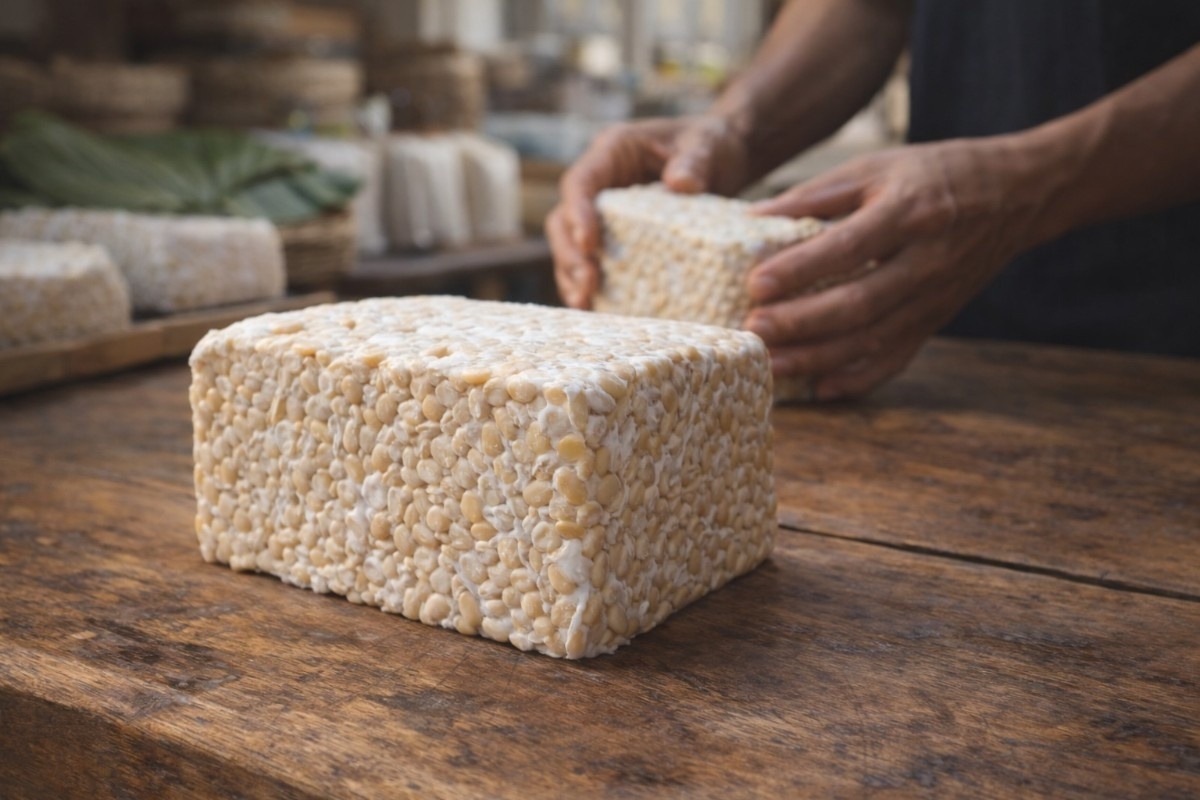
You want to know the real difference? It’s people. Handcrafted tempeh doesn’t come from a distant, automated line. It comes from a person, usually in a small workshop, treating fermentation like a living art. We’re talking about small-batch producers, families even, who care more about the bean than the spreadsheet.
You can taste it. That dense, nutty cake that holds together perfectly? That’s the human hand in the process. The choice is simple. Want to meet the makers who put that care on your plate? Let’s go.
Key Takeaways
- Handcrafted tempeh is defined by small-scale, manual processes overseen by artisans, not automated systems.
- The traditional method involves a precise, temperature-sensitive fermentation that builds superior texture and flavor.
- Choosing artisanal supports ethical food systems, from local soybean farmers to sustainable production.
The Human Touch in a Block of Tempeh
You can walk into any grocery store and find tempeh. It’s usually in a plastic tray, wrapped tight, sitting in the refrigerated case. It looks uniform, maybe a little damp.
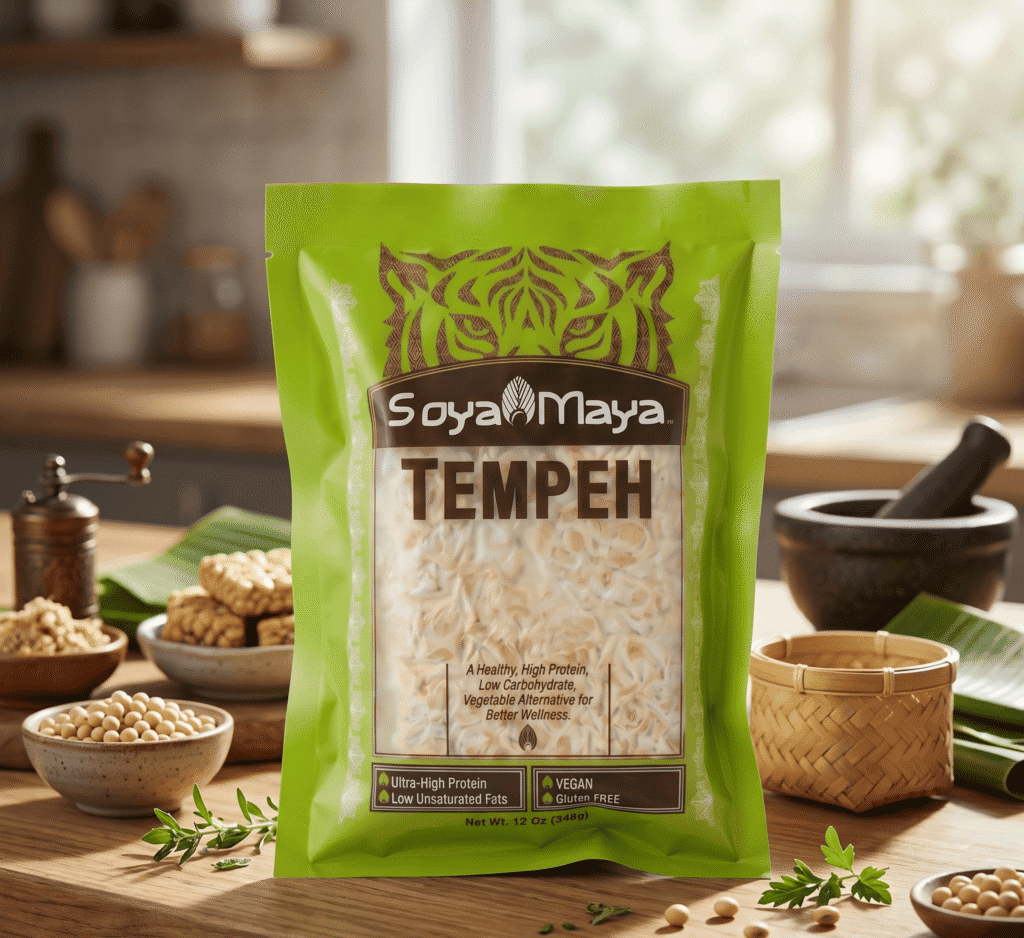
Soya Maya Fresh Tempeh is made the traditional way — no preservatives, no shortcuts. Delivered to your door.
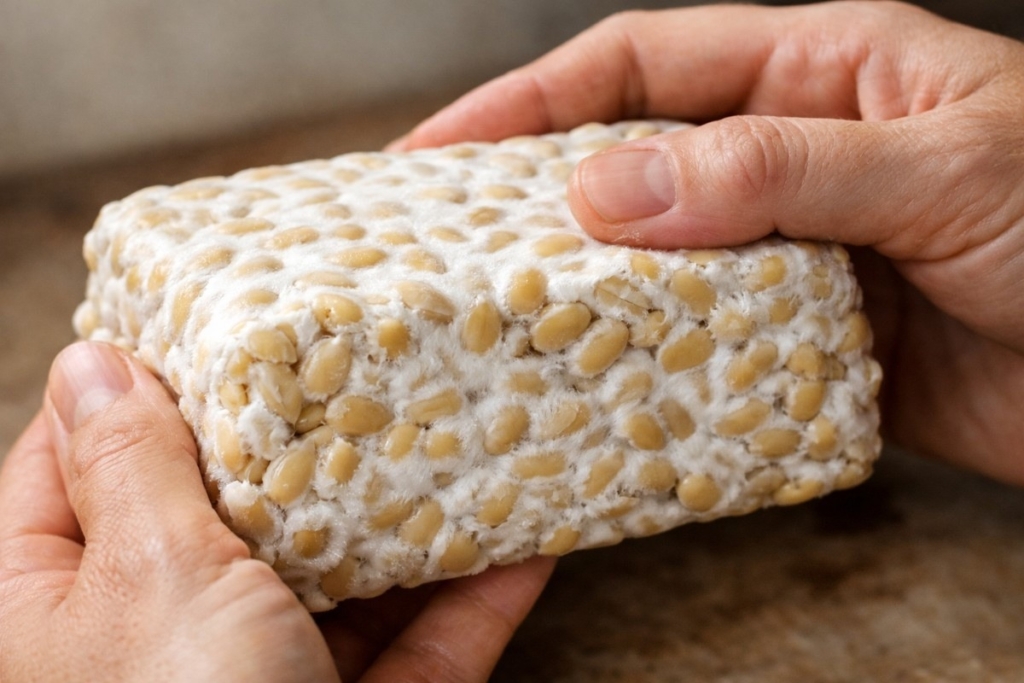
Order Fresh Tempeh →That’s one kind. Then there’s the other kind. The one you might find at a farmers market, or from a small brand online. It feels different in your hand, denser. It smells earthy, like mushrooms and fresh soil.
This second kind didn’t come from a factory. It came from a craftsman. This distinction is everything. It’s the heart of who makes handcrafted tempeh and why their work endures.
“Tempeh is a fermented food made from soybeans and consumed daily due to its delicious flavour and high nutritional value.” – Friska Citra Agustia et al, Journal of Agri-Food Science and Technology
Artisans like those at SoyaMaya claim over two decades of home-kitchen methods. It began in a home kitchen, not unlike the ones where tempeh has been made for centuries in Indonesia. The process hasn’t changed much, because it doesn’t need to. You start with beans, you cook them, you inoculate them with a live culture, and you wait. You watch. The magic isn’t in the machinery, it’s in the watching.
The Artisan’s Hand Versus the Factory Line
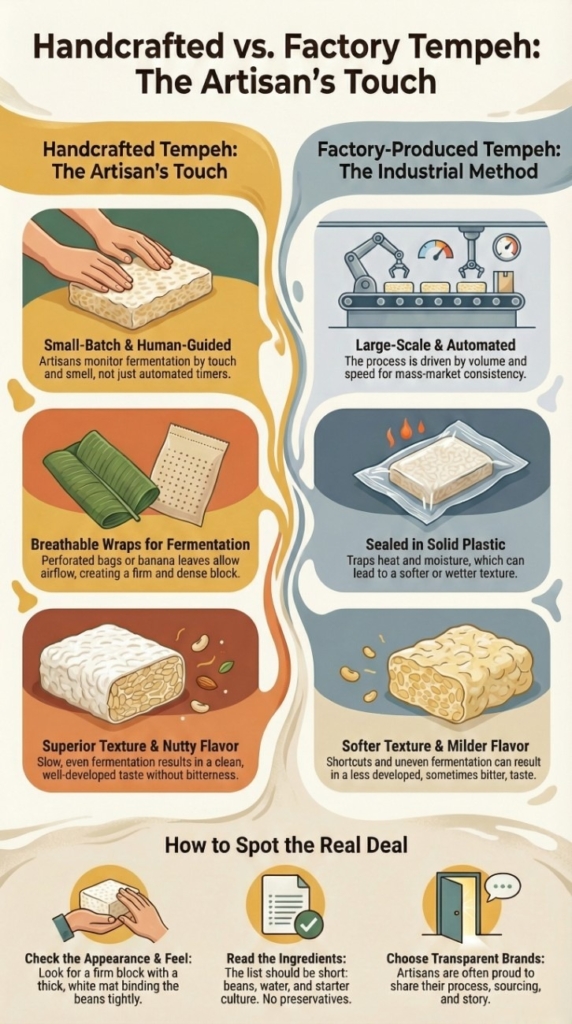
So, how does an artisan’s approach actually differ? It’s in the touchpoints, the steps where a person makes a decision a machine would not. Commercial producers aim for speed and volume. They might use shortcuts, like partial cooking or additives to stabilize the product. The goal is a consistent, shelf-stable block. The artisan’s goal is different. It’s to achieve a perfect fermentation.
- Inoculation by hand is the heart of artisanal tempeh production, emphasizing what is artisanal tempeh makers who rely on manual mixing rather than quick automated sprays. The cooked, cooled beans are often mixed with the Rhizopus oligosporus culture by hand in a large tub, ensuring every bean gets a light, even coating.
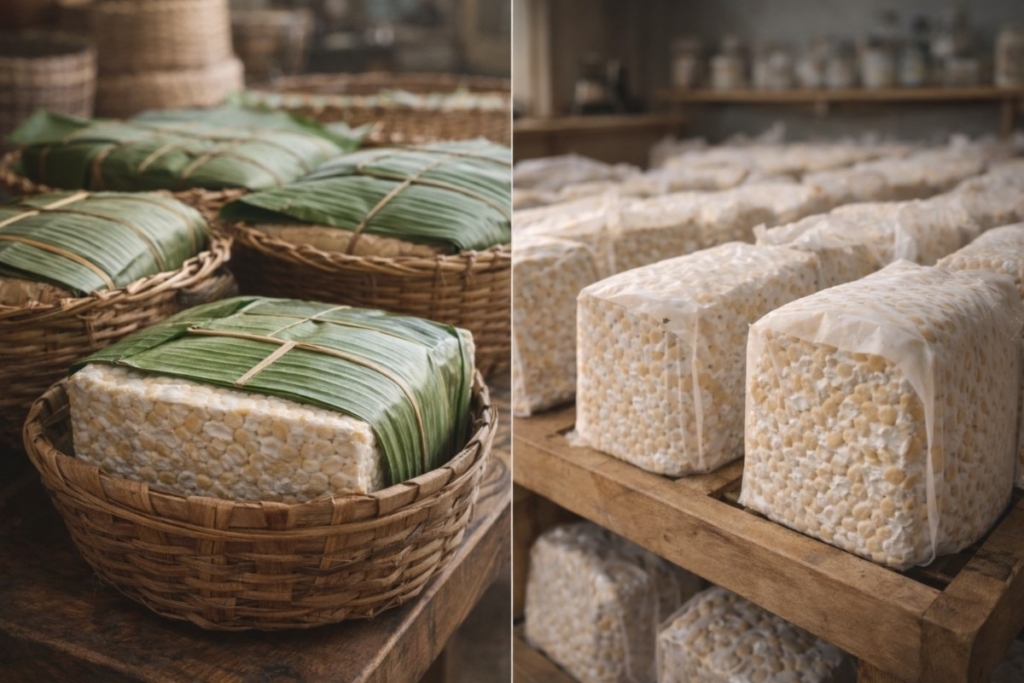
- Breathable Fermentation: Many small-batch makers use perforated bags or traditional banana leaves. This allows for crucial airflow, letting the mycelium breathe and bind the beans tightly. Some large-scale methods use solid plastic, which can trap heat and moisture, leading to a sloppy or bitter result.
- The Watchful Wait: Fermentation isn’t set on a timer. It’s done when it’s done. For us, that’s usually between 36 to 48 hours at a steady 88-90°F (31-32°C). Someone checks on it, feels the warmth of the batch, looks for that solid white mycelial mat. It’s a judgment call.
I think that last point is the most important one. You can’t automate a judgment call based on smell and touch. That’s the essence of the artisanal approach, where time, temperature, and care create truly handcrafted tempeh.
| Aspect | Handcrafted Tempeh | Factory-Produced Tempeh |
| Production Scale | Small batch, closely monitored | Large-scale, volume-driven |
| Fermentation Control | Guided by human judgment | Set by automated timers |
| Inoculation Method | Mixed by hand for even coating | Sprayed or mechanically dosed |
| Fermentation Material | Breathable bags or natural wraps | Solid plastic packaging |
| Texture Outcome | Firm, dense, tightly bound | Softer, often wetter |
| Flavor Profile | Clean, nutty, well-developed | Mild or occasionally bitter |
| Use of Additives | None or minimal | Often used for stability |
How Ingredients Influence the Flavor and Nutrition of Tempeh
While fermentation is the heart of high-quality tempeh, the ingredients themselves play a major role in determining flavor, texture, and nutritional content. This section would highlight:
- Legume Choice – Soybeans are classic, but blends with chickpeas, black beans, adzuki beans, or lentils create unique flavors and textures.
- Grain and Seed Additions – Some artisans incorporate brown rice, barley, or nuts, which add depth, sweetness, and crunch.
- Source and Quality – Non-GMO, and locally sourced beans are cleaner and result in a more consistent fermentation.
- Water and Environment – Even the water used for soaking and cooking can affect microbial activity and the final taste.
- Impact on Nutrition – Using diverse legumes can increase protein diversity, fiber, vitamins, and minerals, while careful fermentation enhances digestibility and bioavailability.
This craft isn’t confined to one place. It’s a global community of producers who carefully select beans, grains, and other ingredients, understanding that each choice shapes the flavor, texture, and nutritional profile of the tempeh. This approach exemplifies why choose artisanal over commercial tempeh puts quality before volume.
Why the Small Batch Makes a Big Difference
You might wonder if all this fuss over method is just romanticism. It’s not. The science of fermentation is delicate. The Rhizopus culture is alive. In a huge vat, heat and moisture can build up unevenly. The center can overheat, killing the culture or making it sporulate too early, which leads to bitterness. The edges might not ferment fully.
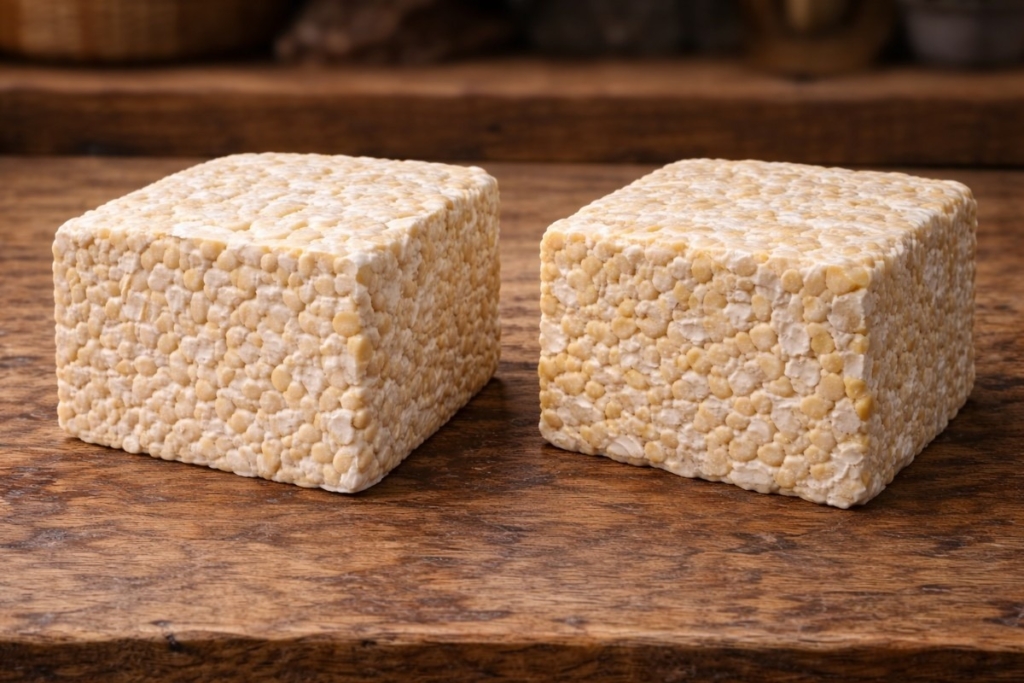
In a small batch, temperature is easier to manage. The mycelium grows evenly, weaving through every bean, creating that firm, cohesive mat. This does more than just make it easier to slice. That tight bind is a sign of complete protein synthesis. It means the fermentation has done its job, pre-digesting the beans and making all those nutrients, the protein, the B12, more available to your body. The flavor is cleaner, nuttier, more pronounced. It’s the difference between a solo instrument and a muffled orchestra.
Finding and Choosing True Handcrafted Tempeh
With all these wonderful makers out there, how do you spot their work? It’s easier than you might think. First, look at it. A well-made tempeh should have a thick, creamy white mycelium mat holding the beans together. You should see the beans, but they should be bound tight. It should smell pleasantly fungal, like mushrooms or fresh earth. Not sour, not ammoniac.
“ A mild ammonia smell may accompany good tempeh as it ferments, but it should not be overpowering.” – Wikipedia
Read the label. Look for words like “organic,” “non-GMO,” “small-batch.” The ingredient list should be short: soybeans (or another legume/grain), water, a starter culture (like Rhizopus oligosporus). That’s it. No vinegar, no preservatives, no added gums or flavors. Feel the package. There shouldn’t be a pool of liquid sloshing around inside. A little condensation is normal, but it shouldn’t be swimming.
Finally, consider the source. Is it from a company you can learn about? Do they talk about their process, their farmers, their fermentation time? That transparency is a hallmark of a craft producer. They’re proud of their work, and they want you to know about it.
The Real Benefit of a Handcrafted Block
When you choose a block of tempeh made by an artisan, you’re getting more than just dinner. You’re getting a product of attention. You’re supporting a supply chain that often values local farmers, like the Indiana soybean growers we work with.
This reflects why choosing what makes tempeh high quality crafted on a small scale ensures exceptional texture and nutrition without industrial shortcuts.
You’re choosing a food made without the shortcuts that prioritize shelf life over nutritional life. You’re participating in a tradition that’s hundreds of years old, kept alive by people who care deeply about fermentation.
The benefit is in every bite. It’s a denser texture that holds up in a stir-fry. It’s a richer, nuttier flavor that stands on its own, even with just a simple marinade. It supports a tradition prioritizing quality over mass production.
So next time you’re looking for tempeh, look for the hand behind it. Seek out the small brands, the local producers, the ones who tell you a story with their product.
That story ends up on your plate, and it makes all the difference. If you’re ready to taste the difference that small-batch, handcrafted care makes, you can find our Fresh Frozen Tempeh, made right here in Indiana, in our shop.
FAQ
Who makes handcrafted tempeh today, and how are they different from factories?
A handcrafted tempeh maker is typically an artisan tempeh producer working at a small scale. These producers include family-owned tempeh businesses, home-scale tempeh makers, and local tempeh artisans. Unlike factories, they rely on manual handling, close monitoring, and small batch tempeh production. Their focus is not speed or volume, but producing tempeh made by hand with better texture, flavor, and complete fermentation.
Where do traditional handcrafted tempeh makers usually learn their methods?
Traditional tempeh makers usually learn through cultural tempeh heritage passed down within families or local communities. Many traditional Indonesian tempeh makers begin by working with village tempeh producers who use old-world tempeh techniques. This knowledge is learned through daily practice. Fermented soybean artisans understand how time, temperature, and airflow affect authentic fermented soy products made using traditional methods.
Why do small-batch tempeh producers avoid industrial shortcuts?
Small-scale fermentation producers avoid shortcuts because non-industrial tempeh depends on careful control rather than speed. Slow-fermented tempeh requires even heat, proper airflow, and enough time for mycelium to fully bind the beans. Craft tempeh producers avoid additives and stabilizers to produce tempeh made without additives. This approach supports clean label tempeh maker values and real food tempeh standards.
How can shoppers identify tempeh made by craftsmen?
Tempeh made by craftsmen has a firm, dense texture with beans tightly bound by a white mycelium. Hand-pressed tempeh from independent tempeh producers smells earthy and clean, never sour or sharp. The ingredient list should be short and clear, indicating preservative-free tempeh production. Authentic tempeh craftsmen usually explain their fermentation process and sourcing practices in clear, specific terms.
Are handcrafted tempeh makers connected to sustainability and ethics?
Many natural tempeh producers are also sustainable tempeh producers who support ethical food systems. They often use locally sourced soybean tempeh and work within small producer tempeh networks. Fermented food artisans and traditional food artisans focus on low-waste practices, responsible sourcing, and preserving traditional soy fermentation. Their work supports both environmental care and long-term food traditions.
Why the People Behind Handcrafted Tempeh Matter
Handcrafted tempeh isn’t just a protein choice; it’s a choice for care, tradition, and integrity. Behind every firm, nutty block stands a maker closely guiding beans, culture, and time. That human judgment creates better texture, cleaner flavor, and more accessible nutrition than factory methods can deliver. Choosing small-batch tempeh supports artisans, sustainable farming, and a living food tradition rooted in heritage, community, and intention, one that you can taste in every bite, with pride. Taste tempeh made with purpose, shop SoyaMaya.
References
- https://www.researchgate.net/publication/394948326_Total_Phenolic_Content_and_Hedonic_Quality_of_Germinated_Jack_Bean_Tempeh_at_Different_Fermentation_Times_and_Packaging_Types
- https://en.wikipedia.org/wiki/Tempeh
Related Article
- https://mayasaritempeh.com/what-is-artisanal-tempeh/
- https://mayasaritempeh.com/why-choose-artisanal-over-commercial/
- https://mayasaritempeh.com/what-makes-tempeh-high-quality/
Soya Maya Fresh Tempeh
Traditionally fermented, no preservatives, shipped fresh and frozen to your door. The real deal, direct from us.
