
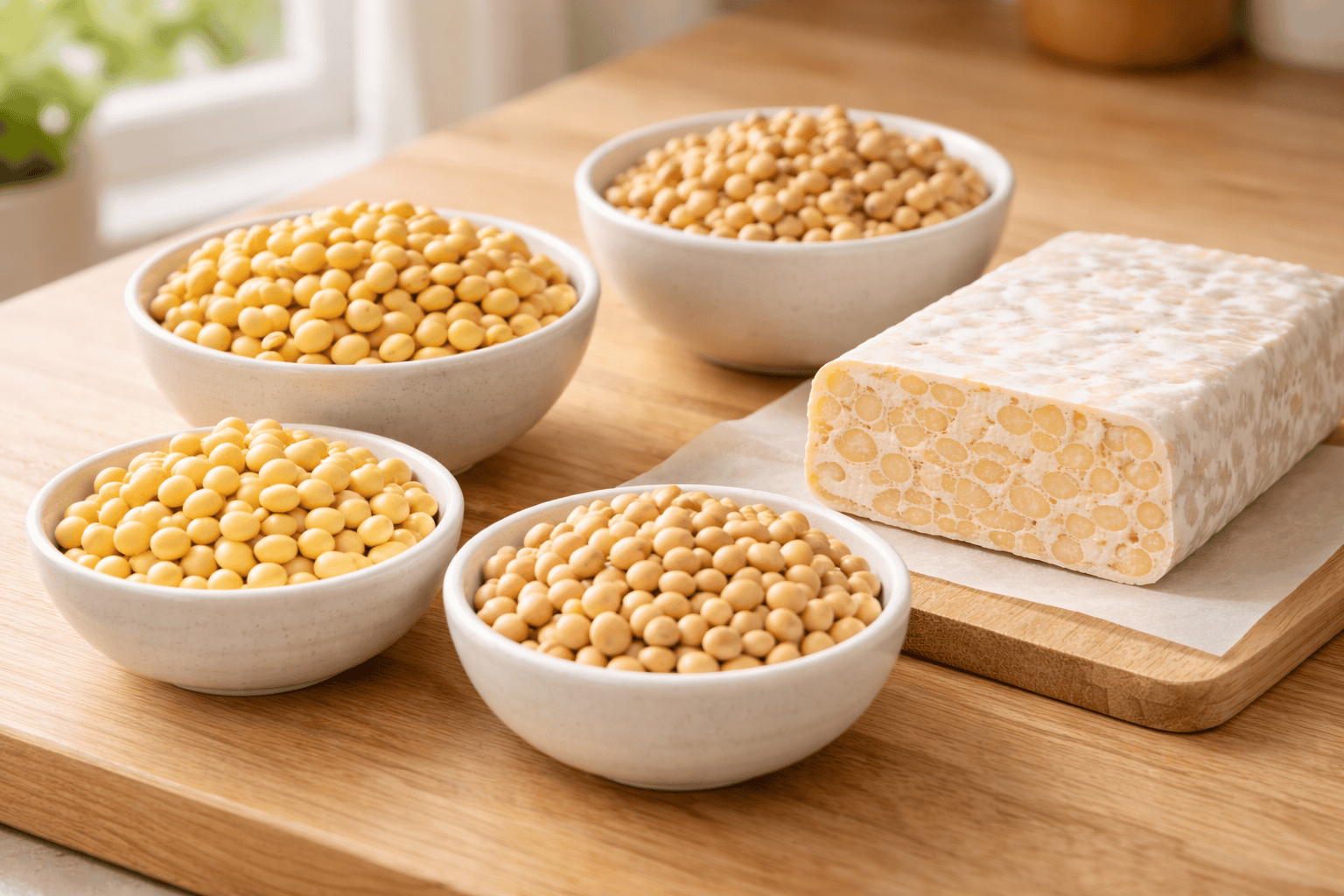
We make a lot of tempeh. After years of testing in our own kitchen, we’re convinced the best beans are fresh, whole, yellow soybeans that are non-GMO.
They have a high protein content and thin hulls, which lets the Rhizopus culture ferment everything evenly. The result is a firm, sliceable block with a clean, nutty flavor, not a crumbly mess.
It’s a simple truth: the right bean makes all the difference. We source ours directly from farms in Indiana. Want to know how to spot the good ones, whether you’re buying or making your own? Let’s get into the details.
Soya Maya Fresh Tempeh is made the traditional way — no preservatives, no shortcuts. Delivered to your door.
Order Fresh Tempeh →Smart Picks: What Really Makes the Best Tempeh Beans
- For the firmest texture and most reliable fermentation, you need high-protein, non-GMO yellow soybeans with thin hulls.
- The bean variety is only part of the story. How fresh they are, and how you prepare them, soaking, cooking, and drying them properly, matters just as much.
- Getting beans from a local source means they’re fresher. In our experience, that freshness is what gives you better flavor and consistent results every time.
Which Soybean Type Produces the Best Traditional Tempeh?
For the best traditional tempeh, you want the standard yellow soybean, Glycine max. It’s the one.
When we started making tempeh, we experimented. The winner was obvious. The common yellow soybean, the kind grown all over the Midwest, is the benchmark for a reason.
Its makeup is just right. It has a high protein content, typically around 36-40% in its dry state, which creates a firm, nutritious cake. The fat level is balanced, giving a satisfying richness without making the final product feel greasy.
These qualities are also part of the nutritional benefits of whole soybeans, which explains why whole beans are traditionally used in fermented foods like tempeh.
Performance matters more than theory. These beans, when handled right, cook evenly. They absorb water consistently and boil to a uniform tenderness.
That consistency is critical for fermentation. If some beans are soft and others are hard, the Rhizopus mold can’t spread properly. You get a fragile, crumbly block.
The traditional yellow bean, with its predictable size and structure, helps you achieve a solid, fully white cake.
- They offer the right protein and starch mix for the mold to work.
- Their uniform size means they cook and ferment evenly.
- They are the historical and practical choice for real tempeh.
What Qualities Should Soybeans Have for Optimal Fermentation?
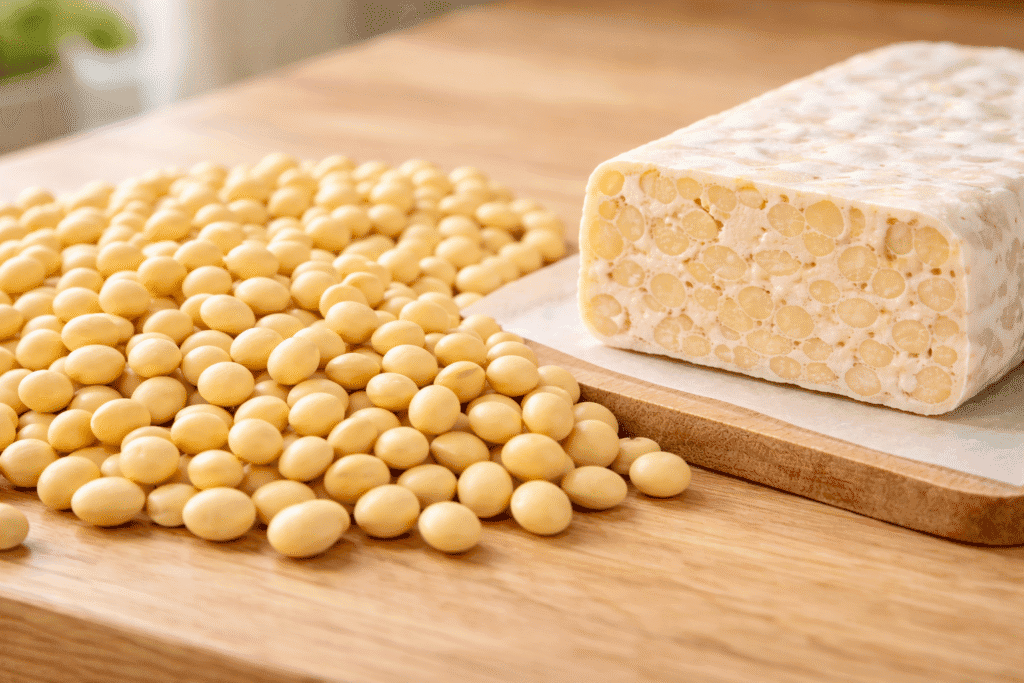
You need soybeans that are uniform in size, have thin hulls, and are organic or non-GMO. This guarantees even soaking, lets the mold get inside easier, and keeps the flavor clean.
Research from Illinois Soybean Association shows
“The smallest varieties are used for fermentables (Natto & Tempe) and the medium to large varieties (with a clear hilum) are most often used for making soy milk. Yellow soybeans make an outstanding high-protein hummus [and] cook up beautifully for vegetable sides.” – Illinois Soybean Association
Having the right type of bean isn’t enough. The quality has to be there. We check every batch that arrives. Consistency is the first test. A bag with a jumble of big, small, and broken beans will cause issues.
The tiny ones turn to paste when cooked, filling the gaps and blocking the air the mold needs to breathe. We look for medium-to-large beans that are whole.
The hull is important. A thick, tough hull acts like a wall. It can stop the mycelium from spreading through the bean correctly.
You can remove the hulls, but starting with a bean that has a naturally thin skin makes everything easier. That’s also part of why we use whole non-GMO soybeans for fermentation.
Whole beans with minimal processing tend to maintain better structure during soaking, cooking, and incubation.
We only use non-GMO beans. This isn’t a label for us. We noticed that beans grown without specific chemicals ferment more cleanly.
They don’t bring in any weird, bitter tastes that can mess with the simple, nutty flavor of good tempeh. That fermentation window around 28–32°C is delicate, and a pure bean is the best place to start.
Which Soybean Varieties are Considered the Best for Tempeh?
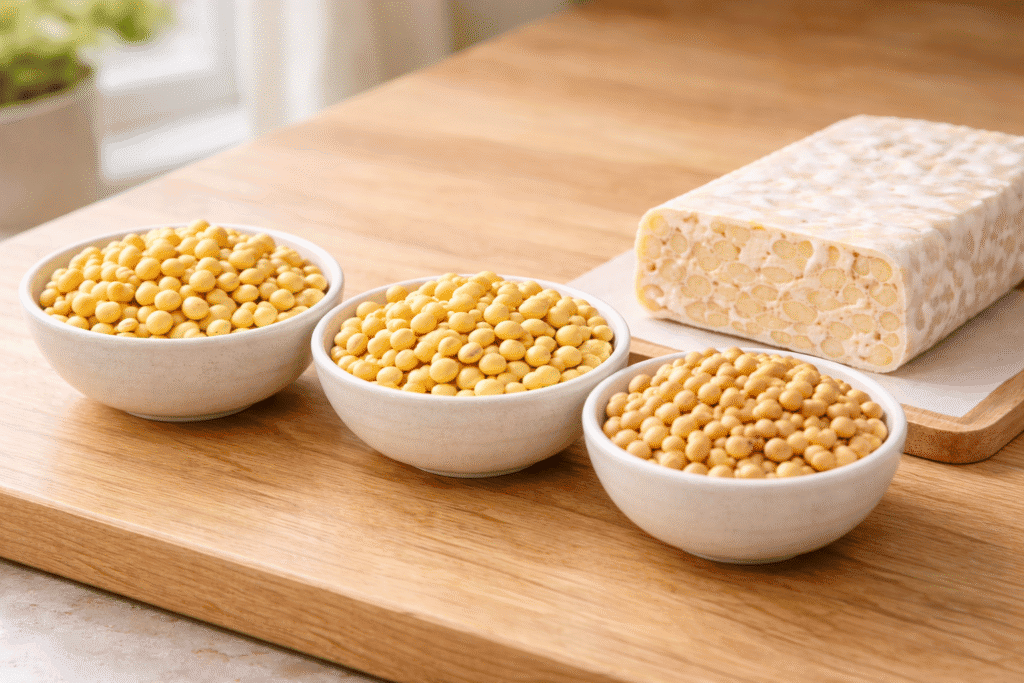
Some specific cultivars, like Devon-1, get attention for their high isoflavone levels. But the best bean is usually the freshest, highest-quality one you can find close to home.
As noted by Daily Cooking Quest
“The better the quality of your soybeans, the more delicious and higher quality your tempeh will be. So if possible, choose non-GMO and certified organic soybeans. They should have a yellow color, uniform in size, and about as big as frozen peas.” – Daily Cooking Quest
You can get into the weeds on soybean varieties. Research, especially from Indonesia, highlights types like Devon-1.
They have a higher amount of beneficial.isoflavones, averaging 1.12 mg/g (or ~0.11%). These antioxidants are a big part of why tempeh is seen as a health food. Even after 72 hours of fermentation, a lot of these compounds stay in the finished cake.
For us, while science is interesting, our focus is on what works and what’s local. The “perfect” variety means nothing if the beans are old or shipped from the other side of the globe. Stale beans ferment poorly.
They can taste off, and their nutritional value drops. We work with farmers in Indiana who grow specific, high-protein soybean types that do well in our local soil and weather. We get them right after harvest, when they’re freshest.
This local approach ensures peak freshness. You can’t put that on a varietal data sheet, but you can taste it and see it in the fermentation.
The mycelium grows dense and white, holding the beans together in a very firm block. So Devon-1 might look good on paper, but the best bean for your tempeh is the one that was grown properly, picked recently, and treated well.
Are Black Soybeans or Mixed Beans Good Alternatives?
Black soybeans and bean mixes can create interesting tempeh, but they’re alternatives. They don’t match the texture or reliability you get from traditional yellow soybeans.
We’ve tried them. Black soybeans produce a striking tempeh with a deeper, savory flavor and more antioxidants from the dark hulls.
The texture changes, though. It tends to be softer, less firm, and doesn’t keep as well. We usually leave the hulls on for color, which can also make the final cake a bit more fragile.
| Bean Type | Texture Result | Flavor Profile | Fermentation Reliability | Best Use |
| Yellow Soybeans | Firm and compact | Clean, nutty | Very consistent | Traditional tempeh, slicing, grilling |
| Black Soybeans | Softer, slightly fragile | Earthy, deeper flavor | Moderate | Specialty tempeh, antioxidant focus |
| Mixed Beans (lentils, chickpeas) | Uneven, less compact | Varies | Less predictable | Experimental batches |
Mixes are an experiment. Adding a portion of lentil or chickpea to soybeans gives you a unique taste and nutrition. The problem is that different beans cook at different speeds.
A lentil becomes paste while the soybean is still hard. This unevenness makes it difficult for the mold to form a solid, cohesive block.
You might end up with something tasty, but it won’t slice neatly for a sandwich or hold together on a grill. If you want the classic tempeh experience, a firm, sliceable protein block, yellow soybeans are still the best choice. They’re the consistent, reliable foundation.
What Production Conditions Maximize Soybean Performance in Tempeh?
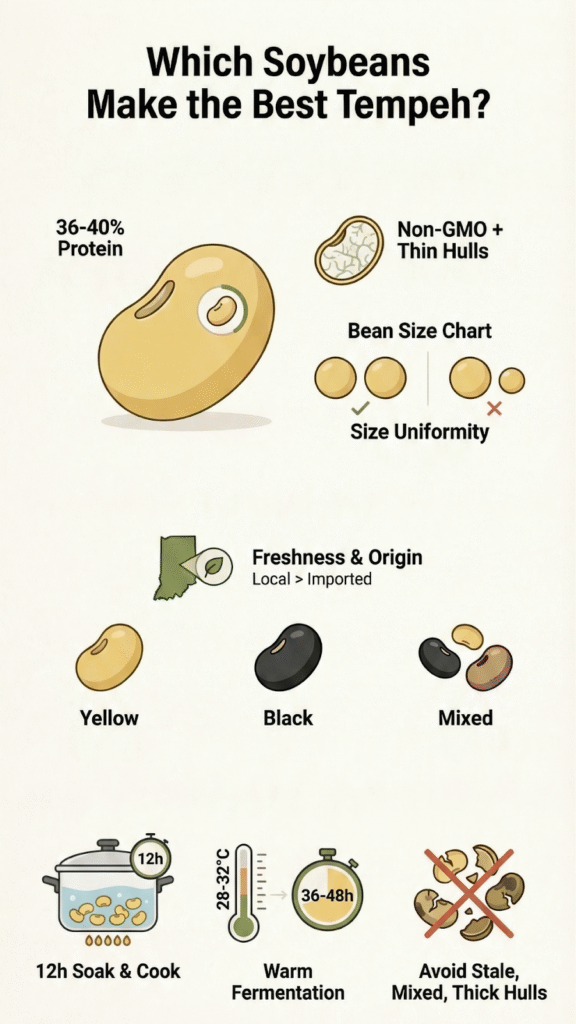
Great tempeh needs more than good beans. It needs careful preparation: a long soak, correct cooking, complete drying, and managed fermentation.
Picking the bean is just the beginning. How you handle it makes the difference. We use a specific process we’ve tuned after making thousands of batches.
First, we soak the beans. For whole beans, that’s roughly 12 hours. It fully rehydrates them and begins to loosen the hulls. At this stage, producers sometimes debate whole vs split soybeans tempeh methods.
Whole beans maintain the traditional texture and visible bean structure, while split or dehulled beans can create a more compact fermentation surface.
Next, we cook them. We’re aiming for tender, not mushy. You should be able to press a bean between your fingers easily, but it shouldn’t fall apart. The next stage is the one people most often miss: drying.
After cooking, the beans have to be dry on the surface. Any leftover water makes a damp, airless space where bad bacteria can thrive, fighting the Rhizopus culture for space.
We spread our beans out and let them cool down entirely, making sure there’s no wetness left. Only after that do we mix in the starter.
Fermentation happens in a controlled space, held between 28–32°C for around 36 to 48 hours. We watch the temperature closely. If the center of the block gets too hot, above 33°C, it can stop the mold and spoil the batch.
Airflow is critical here. When the beans are prepared properly and fermentation stays stable, the result is a dense block of fresh tempeh covered in a thick white layer of mycelium and carrying that clean, nutty aroma that signals a successful batch.
FAQ
What are the best soybeans for tempeh at home?
The best soybeans for tempeh are yellow soybeans for tempeh with a high soy protein percentage, ideally from high protein soybeans.
Choose food grade soybeans that are fresh soybeans for tempeh, low moisture soybeans, and non rancid soybeans.
Fermentation friendly soybeans with clean flavor and uniform cooking time support dense white mycelium growth and consistent fermentation results.
Should I choose whole soybeans vs split soybeans?
When comparing whole soybeans vs split soybeans, texture and binding are the main differences. Whole beans are common in traditional Indonesian tempeh beans, while dehulled soybeans for tempeh or peeled soybeans for tempeh improve soybean binding quality.
Hulled soybeans fermentation usually creates a compact tempeh cake texture with stronger tempeh mold growth support.
Do organic and non GMO soybeans for tempeh matter?
Organic soybeans for fermentation and non GMO soybeans for tempeh can improve overall quality when they meet clear soybean processing standards. Focus on soybean quality grading, soybeans with minimal defects, and soybeans with neutral aroma.
Clean flavor soybeans and non bitter soybeans help produce firm texture tempeh beans with balanced soy fiber content.
How do soybean size and moisture affect fermentation?
Soybean size uniformity and stable soybean moisture content directly affect fermentation performance. Medium size soybeans or large seed soybeans with low moisture variability cook evenly during boiling soybeans for fermentation.
Proper soybean soaking time and even cooking improve soybean digestibility improvement, support anti nutrient reduction soybeans benefits, and create compact tempeh cake texture.
Are local or imported soybeans better for artisan tempeh?
Local soybeans for tempeh and imported soybeans for tempeh, including Canadian soybeans for tempeh, US grown soybeans for tempeh, and Indonesian soybean varieties, can all perform well.
The key factors are soybean harvest freshness, correct soybean storage conditions, and non rancid soybeans. The best soy cultivar for tempeh produces high yield tempeh beans and reliable tempeh incubation quality.
Why the Right Bean Changes Everything
You can tell when tempeh starts with average soybeans. The texture turns soft, the flavor feels bland, and it doesn’t cook the way you hoped. Great tempeh begins with fresh, high-protein, non-GMO yellow soybeans grown locally and handled with care from soak to ferment. At SoyaMaya, we use premium Indiana beans to craft firm, satisfying Fresh Frozen Tempeh that truly shines in your kitchen. Ready to taste the difference? Shop SoyaMaya
References
- https://www.ilsoy.org/not-all-soybeans-are-the-same/
- https://dailycookingquest.com/homemade-tempeh.html
Related Articles
- https://mayasaritempeh.com/fresh-tempeh/
- https://mayasaritempeh.com/whole-vs-split-soybeans-tempeh/
- https://mayasaritempeh.com/nutritional-benefits-of-whole-soybeans
Soya Maya Fresh Tempeh
Traditionally fermented, no preservatives, shipped fresh and frozen to your door. The real deal, direct from us.
