
Non-GMO tempeh is easy to find these days, thanks to a growing number of grocery stores, online vendors, and local producers offering it. Labels like USDA Organic help confirm that the soybeans used are genuinely non-GMO, giving buyers peace of mind about quality and sourcing.
As Americans look for cleaner, plant-based proteins, tempeh is becoming a popular choice, not just for home cooks but also food businesses aiming for transparency. If you want to know where to get the best non-GMO tempeh and how to judge its quality, keep reading. This guide will help you shop with confidence.
Quick Reads: Non-GMO Tempeh Sourcing Snapshot
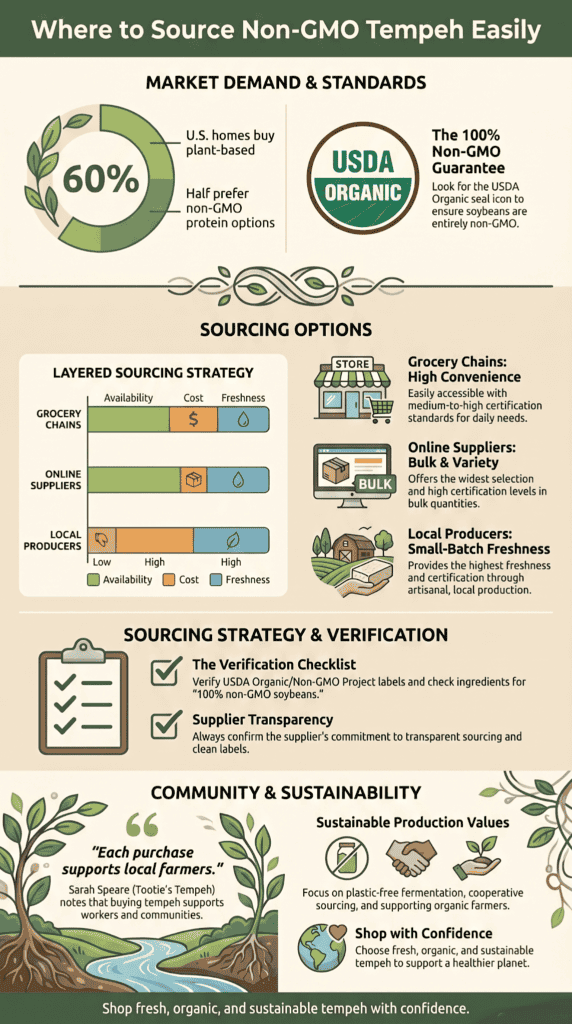
- 60% of U.S. homes buy plant-based; half prefer non-GMO
- Organic tempeh ensures non-GMO soybeans
- Many sourcing options fit different needs
What qualifies tempeh as Non-GMO in the U.S.
Working with fermented soybean suppliers taught us one thing: the certificate is everything, not the marketing talk. If you want non-GMO tempeh, look for the USDA Organic seal.
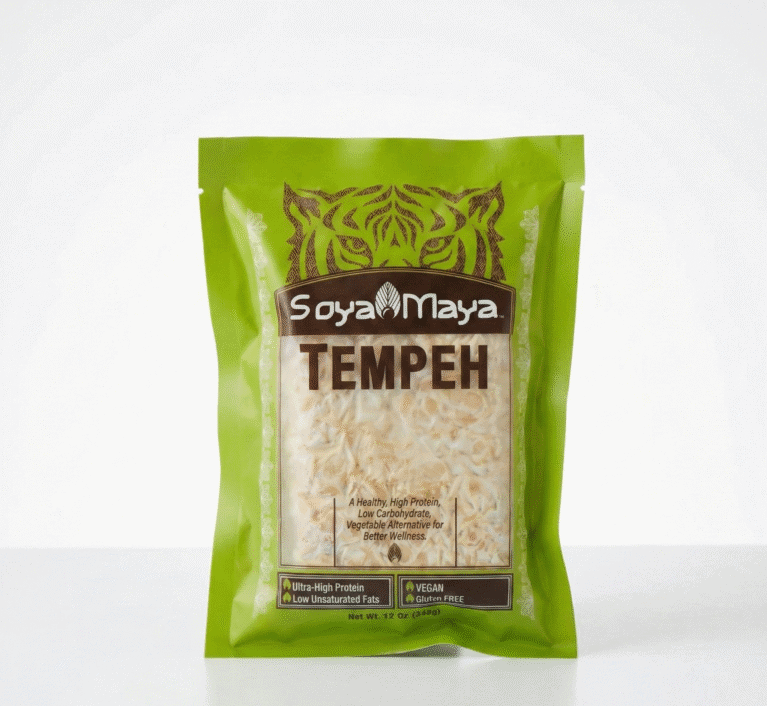
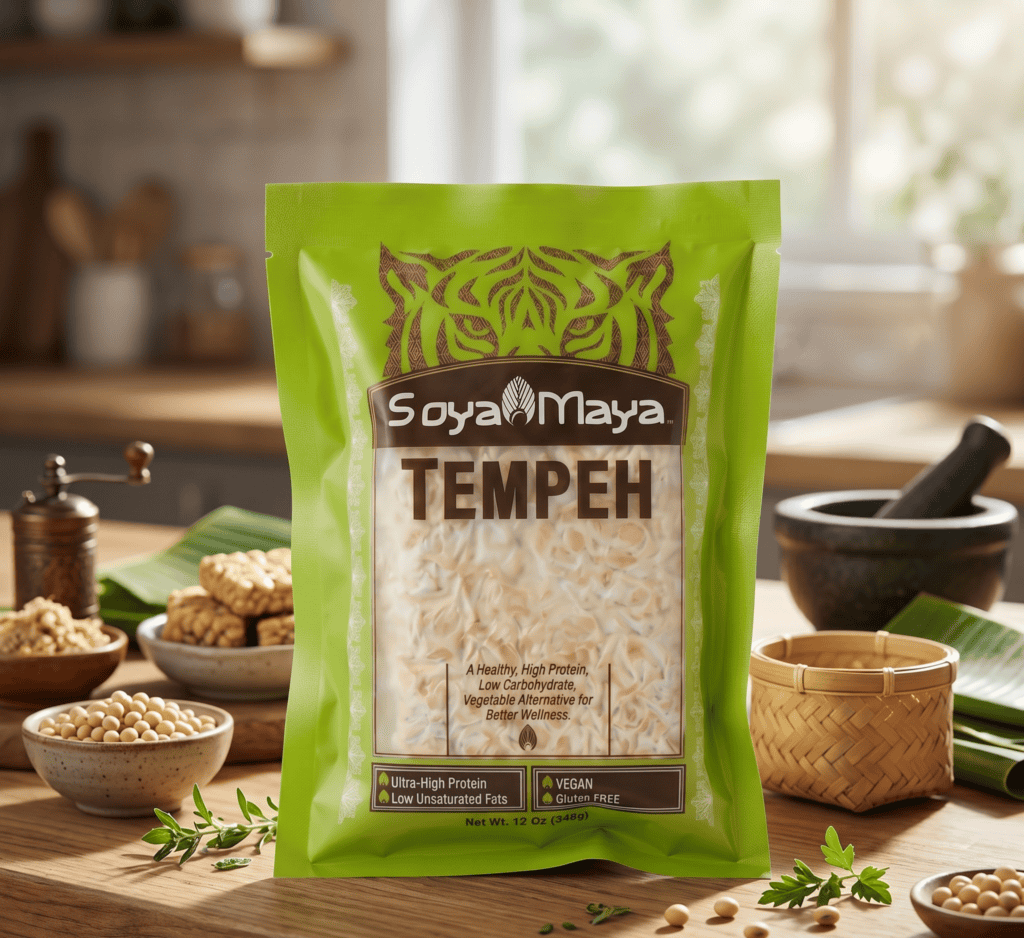
Soya Maya Fresh Tempeh is made the traditional way — no preservatives, no shortcuts. Delivered to your door.
Order Fresh Tempeh →That’s the rule, USDA organic means no GMO seeds, period. This is exactly why choosing non-GMO tempeh is important for anyone focused on clean, traceable ingredients from the start.
In a recent analysis by Organic Trade Association
“The use of genetically modified organisms (GMOs) is prohibited in organic products. This means an organic farmer can’t plant GMO seeds, an organic cow can’t eat GMO alfalfa or corn, and an organic soup producer can’t use any GMO ingredients.” –Organic Trade Association
We get tripped up by vague labels all the time. Words like “natural” or “plant-based” sound good, but they don’t promise anything about the beans. Good tempeh makers just tell you straight up what’s in there.
Here’s how to check a product fast:
- Find the USDA Organic label.
- Look for the words “100% non-GMO soybeans” on the package.
- See if they say where the beans come from.
You can always dig into the official USDA organic rules yourself for the fine print.
Getting this right from the start makes your whole sourcing plan solid, and saves a lot of headaches later.
Where to buy Non-GMO tempeh in grocery stores
In our experience, the easiest place to find non-GMO tempeh is at the grocery store. During our own sourcing runs, we see it in the refrigerated section almost every time, right with the other plant-based proteins.
Big chains and natural food stores are the most reliable spots. We’ve found organic tempeh stocked consistently at places like Sprouts and local co-ops, which makes sense given how big the plant-based market has gotten.
For most shoppers, this is also the easiest way of finding non-GMO certified tempeh without needing to dig too deep into sourcing.
Where to look is pretty standard. You’ll usually find it near the tofu or in a dedicated vegan section.
Specifically, check:
- The refrigerated plant-based protein coolers.
- The natural or organic food aisles.
- Any specialty vegan shelves.
We’ve watched availability grow a lot in the last few years. Even regular supermarkets often have at least one organic option now.
For grabbing what you need right away, grocery stores are perfect. But if you’re looking for larger amounts, you might need to look elsewhere.
Reliable online channels for Non-GMO tempeh
Online platforms and direct brand websites are where we go for certified Non-GMO tempeh. The transparency is better, and you can buy in bulk, which we need for consistent supply.
When we need a reliable, steady source, we shop online. Buying straight from the producer or a dedicated fermented foods supplier gives us a clear look at ingredients and their process.
We typically find suppliers in a few places:
- Brand-owned websites
- Big marketplace platforms
- Directories for organic fermented foods
The benefits for us are real:
- A much wider choice of smaller, artisanal producers.
- Access to bulk suppliers who sell by the case.
- Detailed product pages where you can check certifications before you buy.
For instance, in our own distribution, we focus on clear labeling and consistent fermentation. Online, buyers can see that information upfront.
For a look at how the plant-based supply is growing, the Good Food Institute has a detailed report.
This kind of sourcing is key for restaurants or retailers who need stable, large volumes. It takes the guesswork out of supply.
Local and regional tempeh producers as sources
Local tempeh producers are where you find the freshest, small-batch Non-GMO product. The supply chain is shorter and you can usually see exactly where things come from.
In our work, we’ve partnered with traditional producers and local soybean farmers. The difference in freshness is real. Small-batch makers often ferment their tempeh within a day or two, which keeps the texture firm and the flavor sharp.
The advantages we’ve seen are clear:
- A much shorter supply chain.
- You can talk directly to the person who made it.
- More transparency about where the soybeans were grown.
But there are definite trade-offs:
- They usually don’t ship very far.
- Availability can be spotty.
- You often have to pick it up yourself.
Local sourcing is perfect if your top priority is freshness, not volume. It’s for quality over scale.
How to verify tempeh is truly Non-GMO
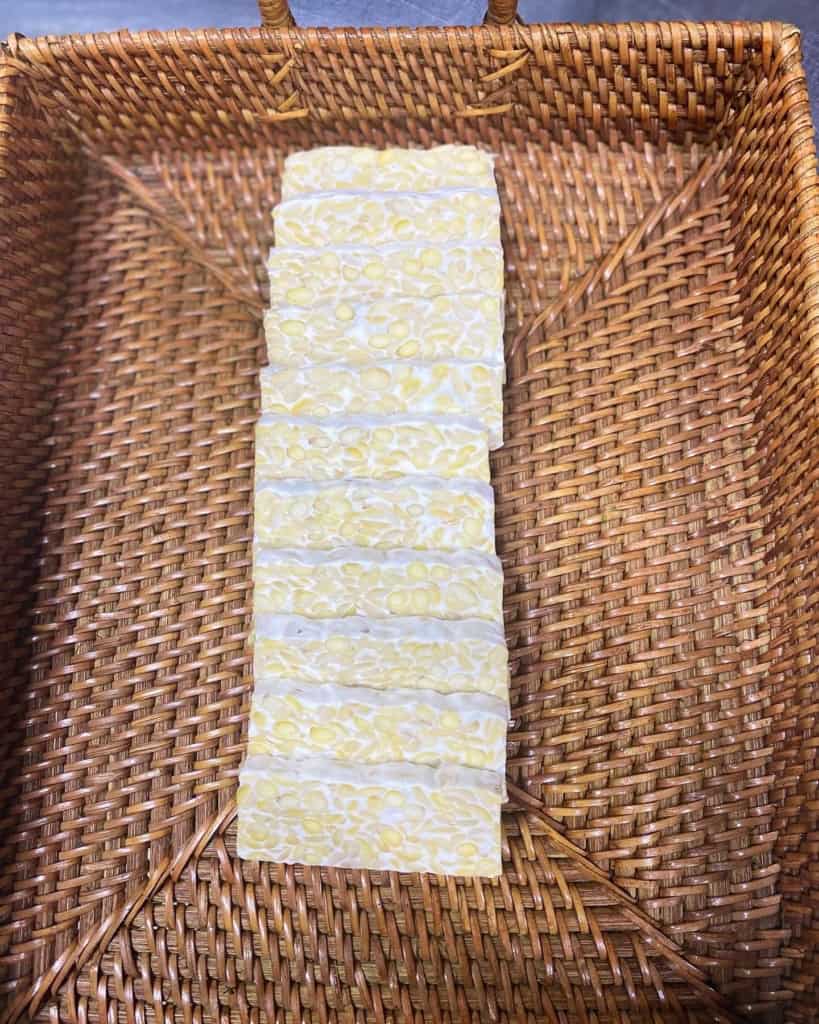
Checking your tempeh is a lot easier than most people think. The trick is to actually look at the label, read the fine print, and ignore any fuzzy marketing language. It’s a simple habit, but one that shoppers often skip.
We take the same approach with our own suppliers. Before anyone joins our network, we run them through a basic verification process.
Data from USDA Agricultural Marketing Service demonstrates
“Certified operations are inspected at least once a year by a third-party USDA-accredited certifying agent…If GMOs are suspected or detected, certifiers are required by law to conduct an investigation to determine if a violation…occurred.” –USDA Agricultural Marketing Service
Here’s our exact checklist:
- First, we look for an official seal. The USDA Organic or Non-GMO Project Verified mark is a solid starting point.
- Next, we read the ingredients. It should literally say “100% non GMO soybeans” or something equally clear.
- Finally, we review the supplier’s documentation to see where they source their beans from. This step is critical when you want to properly verify non-GMO ingredients and avoid unclear or misleading labeling.
Through the years, we’ve learned to spot a few red flags. Watch out for packages that don’t have any certification logo at all.
Be wary of generic terms like “all-natural” or “pure” that aren’t backed up by proof. And be cautious of any supplier who gets vague or defensive when you ask where their soybeans are actually grown.
The most important thing is to know who you’re buying from. Is it a local store, a large wholesaler, or an overseas importer? Each one has a different supply chain, and knowing the difference is the only way to be confident about what you’re bringing home.
Taking a minute to ask these questions can save you from a disappointing purchase later.
Best sourcing strategies for consistent supply
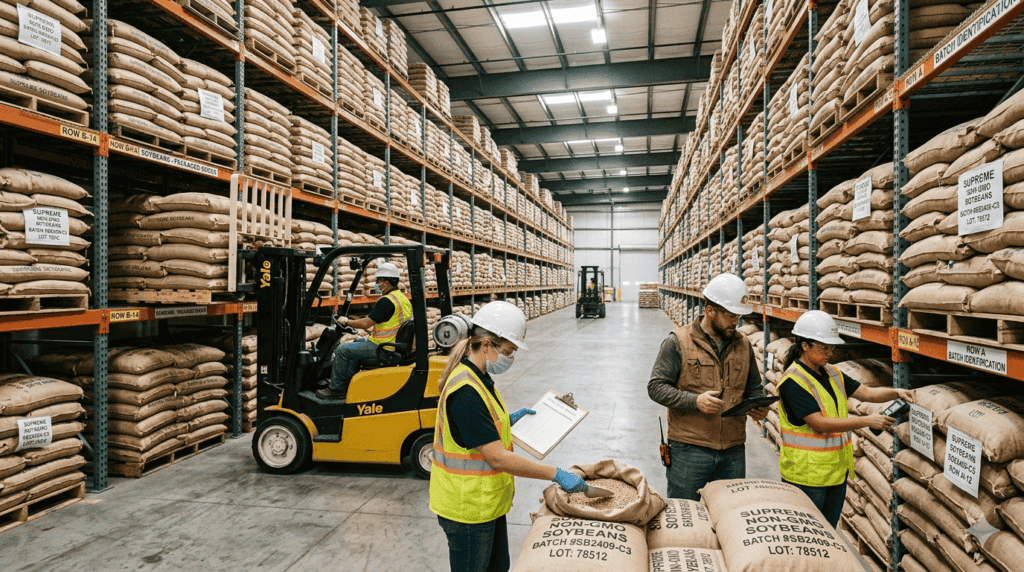
The best way to source tempeh isn’t about finding one perfect supplier. It’s about building a mix. Think about getting some from your local grocery, ordering a few packs online, and maybe finding a local maker at a farmers’ market.
This approach balances three things you always care about: what’s available, what it costs, and how fresh it is.
We run our own sourcing the same way. Relying on just one place is a gamble, and it becomes impossible if you need to scale up.
Here’s a real example of what that mix can look like for a business:
- Weekly runs to a trusted local organic market for immediate, fresh stock.
- Monthly bulk orders from a couple of online distributors to lock in better prices and ensure supply.
- Backup relationships with one or two local producers for specialty items or to fill sudden gaps.
Why does this matter? The right blend serves different goals. A home cook gets the flexibility to try new things.
A restaurant kitchen gets the predictable volume it needs to plan menus. A small retailer can smooth out their inventory cycles without that last-minute scramble.
Beyond the practical benefits, this layered strategy is just smart risk management. If one supplier has a bad batch, a shipping delay, or a price hike, your entire operation doesn’t grind to a halt.
You have other options already in place, which takes a lot of the stress out of the equation.
Comparison of Non-GMO tempeh sources
Think of your tempeh sources as tools for different jobs. The grocery store is for convenience, when you need something right now.
Online suppliers open up a world of variety and specialty brands. Local producers, however, are where you go for peak freshness and a direct connection. Each channel serves a distinct priority.
Managing these supply lines ourselves, we’ve seen how each one fits. Your choice really comes down to two things: how much you need, and how quickly you need it.
Here’s a practical breakdown based on what we’ve learned:
| Source Type | Availability | Certification Reliability | Key Advantage | Best For |
| Grocery Chains | Nationwide | Medium to High | Easy access and quick purchase | Everyday consumers |
| Online Suppliers | Nationwide shipping | High | Wide selection and bulk availability | Businesses and bulk buyers |
| Local Producers | Regional | High | Fresh, small-batch production | Quality-focused buyers |
A grocery chain is reliable, but its selection might be limited to one or two major brands. An online distributor can offer dozens of options, including imports, but you’ll wait for shipping.
A local maker provides the freshest product, often made just days before you buy it, though their output is naturally smaller.
Relying on just one of these is putting all your eggs in one basket. Combining them, however, builds a system that’s much harder to disrupt.
You get the convenience of the store, the choice from online, and the freshness from local, all at once. This layered approach simply covers more ground and gives you control over quality, cost, and timing.
Why Non-GMO tempeh sourcing matters for health-conscious consumers
Credits: SoyaMaya
Non-GMO tempeh isn’t a niche product anymore. It’s become a central part of a few major shifts in how people eat.
There’s the move toward clean labels with simple ingredients, the growing support for sustainable farming practices, and a genuine desire to know the story behind what’s on the plate. As a plant-based protein, it manages to align with all of these concerns at once.
The demand isn’t speculative; it’s measurable. Market reports consistently track growth in the plant-based food sector, and a significant driver is consumers becoming ingredient detectives. They’re not just buying “soy”; they’re looking at the specifics.
From our position in the supply chain, the change is clear. Buyers, both individuals and restaurants, are now asking pointed questions about the origin of the soybeans.
Businesses that use tempeh as a core ingredient need suppliers who deliver consistent quality, with no surprises from one batch to the next. And sustainability has moved from a marketing bonus to a concrete purchasing factor, people want to know their food choices have a lighter footprint.
Opting for a verified non-GMO source directly responds to this new landscape. It’s a straightforward way to meet the heightened expectations for transparency and responsibility that define the current market. It provides a clear answer before the question is even asked.
FAQ
Where can I find reliable non GMO tempeh suppliers today?
You can find reliable non GMO tempeh suppliers by exploring local tempeh producers, artisanal tempeh producers, and certified organic tempeh suppliers.
Many buyers also use tempeh distributors near me, search or browse tempeh sourcing platforms and tempeh producers directory listings. Always review sustainable tempeh sourcing practices and confirm that non GMO food suppliers tempeh provide clear certification and consistent product quality.
Is it better to buy non GMO tempeh online or locally?
Choosing to buy non GMO tempeh online or locally depends on your priorities, such as convenience, freshness, and variety. Online options provide access to broader tempeh sourcing companies worldwide and organic tempeh marketplace selections.
Local options, including local organic tempeh shops, fresh tempeh suppliers, and local soybean tempeh farmers, offer fresher products and support farm to table tempeh suppliers within your community.
How do I choose the right organic tempeh wholesale supplier?
To choose the right organic tempeh wholesale supplier, evaluate certified organic tempeh suppliers and verify their partnership with non GMO soybean distributors. Review their tempeh supply chain transparency, production standards, and delivery consistency.
Reliable tempeh wholesale distributors and tempeh factory suppliers usually provide detailed sourcing information, helping you confirm that the organic soybean tempeh source meets quality and safety expectations.
Are there sustainable options for tempeh sourcing in Indonesia?
Sustainable options for tempeh sourcing Indonesia are widely available through traditional tempeh producers Indonesia and eco friendly tempeh suppliers. Many small batch tempeh makers and sustainable soy tempeh suppliers collaborate directly with local farmers.
Choosing organic tempeh Indonesia or farm to table tempeh suppliers supports responsible agriculture, strengthens local supply networks, and improves transparency across the tempeh supply chain.
What should businesses consider when sourcing tempeh in bulk?
Businesses should evaluate tempeh sourcing options by reviewing tempeh bulk purchase suppliers, tempeh distribution channels, and plant based food wholesalers tempeh. It is important to partner with dependable tempeh supply partners, tempeh procurement sources, and non GMO tempeh manufacturers.
Careful assessment of logistics, storage, and delivery reliability from tempeh food supply companies ensures consistent product availability and stable business operations.
Finding a Reliable Non-GMO Tempeh Source
You’ve probably dealt with tempeh that tastes off or batches that don’t hold up, and it gets frustrating fast when quality keeps shifting. It’s not just about taste, it’s about knowing what you’re getting every time. That inconsistency can disrupt meals or your business.
That’s where SoyaMaya helps with steady fermentation and certified non-GMO soybeans you can trust. Skip the guesswork and get consistent results every time. Explore here with SoyaMaya for reliable, high-quality tempeh supply.
References
- https://ota.com/organic-101/organic-gmos#:~:text=To%20meet%20the%20USDA%20organic,their%20products%20from%20contact%20with
- https://www.ams.usda.gov/rules-regulations/organic/handbook/5031
Related Articles
- https://mayasaritempeh.com/why-is-non-gmo-tempeh-important/
- https://mayasaritempeh.com/finding-non-gmo-certified-tempeh/
- https://mayasaritempeh.com/how-to-verify-non-gmo-ingredients/
Soya Maya Fresh Tempeh
Traditionally fermented, no preservatives, shipped fresh and frozen to your door. The real deal, direct from us.
