
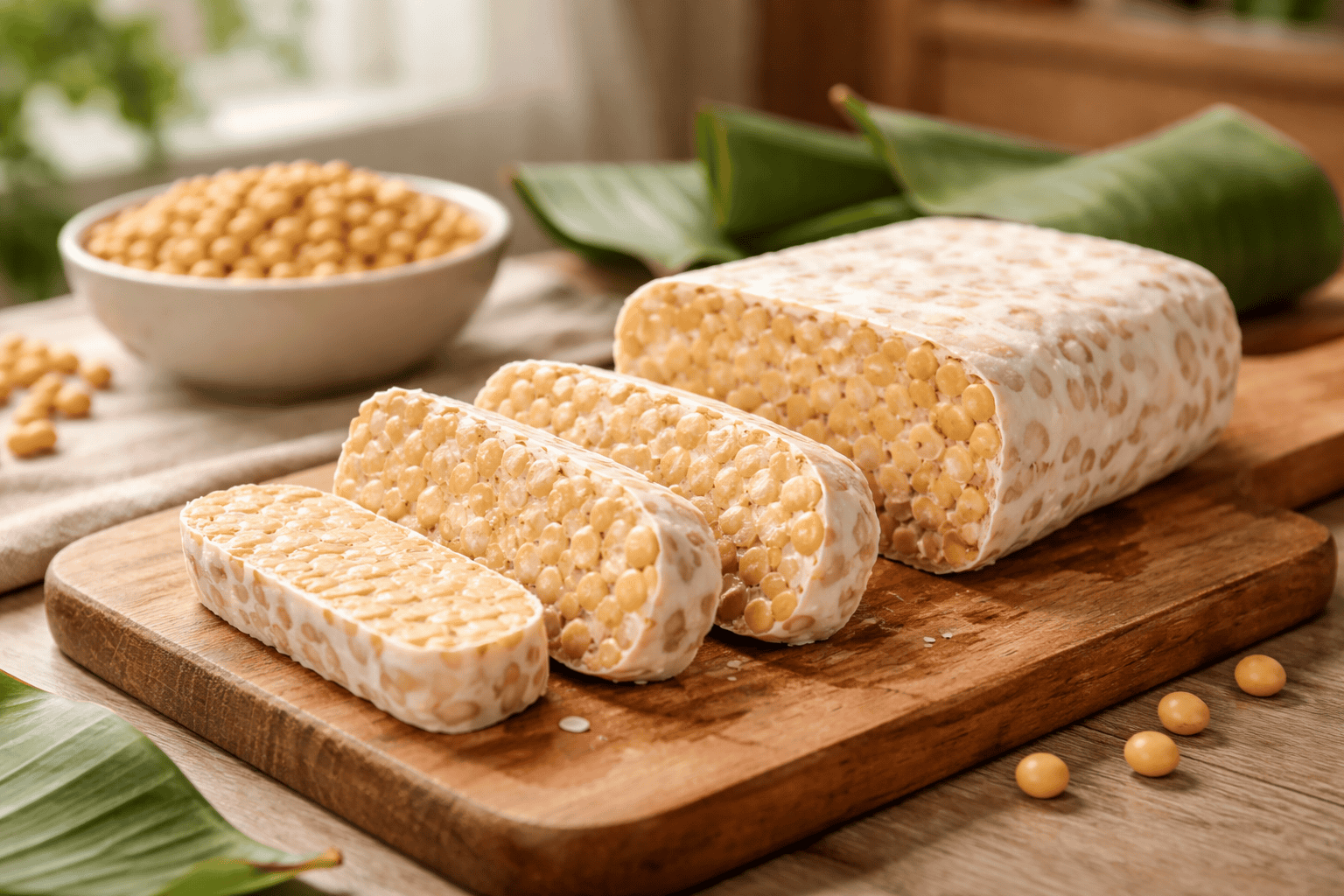
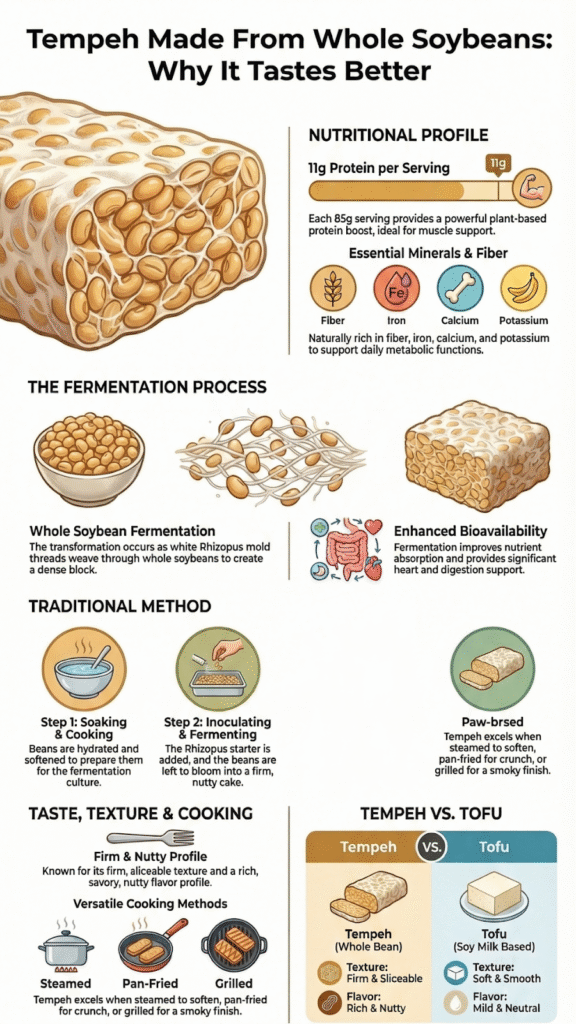
Tempeh is soybeans, fermented and pressed. We make it in our kitchen. A serving has about 11 grams of protein, and because we use the whole bean, all the fiber stays in.
We ferment it the traditional way. The result is a firm cake with a deep, nutty taste we use in everything from stews to sandwiches.
Next, we’ll show you how whole-bean tempeh comes together and the best ways we’ve found to cook it.
SoyaMaya Fresh Tempeh is made the traditional way — no preservatives, no shortcuts. Delivered to your door.
Order Fresh Tempeh →Tempeh Insights: Whole Bean Wins
- An 85-gram serving gives you around 11 grams of protein. Since it’s made from the whole soybean, not just extracted parts, the dietary fiber stays in the final product.
- The fermentation relies on a specific culture, Rhizopus oligosporus. This natural process binds the cooked beans into that solid, sliceable cake we all recognize.
- In our experience, this method creates a tempeh with a noticeably nutty taste and a firm, meaty texture. Nutritionally, it stands out from other soy foods because the entire bean is used, locking in a strong profile of protein, fiber, and minerals.
What Is Tempeh Made From Whole Soybeans?
It’s a fermented cake where whole soybeans are bound together by a specific mold, Rhizopus oligosporus. The result is a firm block packed with plant protein and fiber.
“Fermentation with Rhizopus oligosporus consistently achieved substantial reductions in anti-nutritional factors (64–67% decrease in trypsin inhibitors, up to 65% reduction in phytates) while maintaining consistent antioxidant activities (39–70% 2,2-diphenyl-1-picrylhydrazyl (DPPH) inhibition) across most variants.” – Department of Biotechnology and Food Analysis
Tempeh started in Indonesia, on the island of Java, centuries ago. Families used this natural fermentation to preserve soybeans and create a staple, everyday source of nutrition. It’s been a core part of the local diet for hundreds of years.
When we cut into a fresh block, you can see the individual beans held tight by a white, thread-like network. That visible structure is a clear sign of authentic, whole-bean tempeh.
If you’ve ever handled fresh tempeh right after fermentation, the structure is even more obvious. The beans are tightly bound together by white mycelium, forming a compact block that slices cleanly and holds its shape during cooking.
The fermentation changes the beans. Nutritionally, an 85-gram serving gives you about 11 grams of protein, plus a good amount of fiber, iron, and potassium.
Here’s what we look for in traditional tempeh:
- You can see the whole beans inside.
- It’s firm enough to slice.
- The flavor is earthy and nutty.
- The texture is dense and chewy.
In our own cooking, that whole-bean structure provides a substantial, satisfying bite that holds up well in everything from stir-fries to grilling.
How Is Tempeh Made From Whole Soybeans?
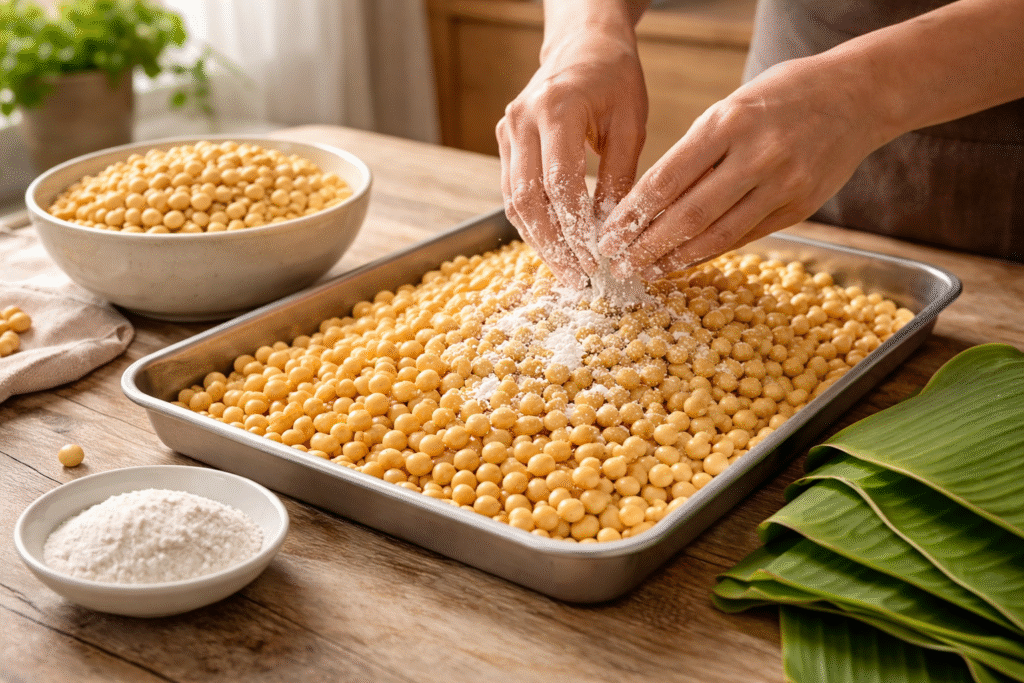
We make it by soaking, cooking, and then fermenting soybeans with Rhizopus oligosporus culture. This happens at a warm temperature, usually between 30–37 °C, for about one to two days. The white mold binds everything into a solid cake.
At SoyaMaya, we stick to the traditional Indonesian method we know. The steps seem straightforward, but each one changes the final product’s feel and taste.
1. Soaking the soybeans
We soak the whole beans in water for 8 to 24 hours. This softens them and starts a natural process that makes them ready for fermentation. It also begins to break down some of the compounds that can make soybeans tough to digest.
2. Dehulling and splitting
Next, we gently crack the beans so their outer hulls loosen and can be rinsed away. We split them just enough to help the mold get inside evenly later on. The beans stay mostly whole, but this step makes the fermentation more consistent.
The balance between whole and split beans is important for structure. If you’re curious about how this affects the final texture, we explain it in more detail in our guide to whole vs split soybeans in tempeh.
3. Cooking the soybeans
We then boil or steam the beans until they’re tender. Cooking cuts down on phytic acid, a substance that can stop your body from absorbing minerals.
Research, including work noted by Harvard Health, shows that fermentation reduces these compounds even more, which improves how easily your body can use the nutrients.
4. Inoculating with starter culture
After the beans cool, we mix in the Rhizopus oligosporus starter spores. This is where the real change begins. The mold produces enzymes that start breaking down the soy proteins and will eventually glue the beans together.
5. Fermentation
The inoculated beans sit in a warm place, around 30–32 °C, for 24 to 48 hours. During this time, white, thread-like mycelium grows through the mass, knitting it into a single, firm block.
When it’s done, we have a compact, sliceable cake of fermented soybeans. It should smell nutty and earthy, a sign the process worked.
What Makes Whole-Soybean Tempeh Nutritionally Unique?
The main advantage is using the entire soybean. Nothing is filtered out, so the food keeps all its original fiber and micronutrients. Much of this value comes directly from the bean itself.
Our guide on the nutritional benefits of whole soybeans explains how whole beans retain more fiber, minerals, and plant compounds compared with heavily processed soy products.
It gives you protein, fiber, minerals, and nutrients enhanced by fermentation. An 85-gram serving has about 11 grams of protein, and because we use the whole bean, all the natural fiber stays in.
Insights from The Non-GMO Project indicate
“Because it’s made from whole soybeans, it digests slowly and keeps you energized without the mid-afternoon crash or endless snacking providing the full benefit of the bean: protein, fiber and nutrients your body knows how to use.” – The Non-GMO Project Blog
The main advantage is using the entire soybean. Nothing is filtered out, so the food keeps all its original fiber and micronutrients. When we cook with our own tempeh, we can feel that difference, the texture is substantial, and even a modest portion keeps you full.
Here are the key nutrients you get:
- Protein: Roughly 11 grams per serving.
- Fiber: All the fiber from the intact bean.
- Iron
- Calcium
- Potassium
- B vitamins
The fermentation step itself changes things. It breaks down phytic acid, a compound that can block your body from absorbing minerals.
Research from sources like the National Institutes of Health notes this process can make the iron and other minerals in tempeh more available for your body to use.
A quick look at the nutrients
| Nutrient | What it does |
| Protein | Helps maintain muscle. |
| Fiber | Supports good digestion. |
| Iron | Carries oxygen in your blood. |
| Isoflavones | Associated with heart health benefits. |
| Calcium | Important for bone strength. |
We prefer whole-bean tempeh because it’s dense in nutrients without heavy processing. The fermentation adds a layer of nutritional value that plain, cooked soybeans don’t have.
What Health Benefits Are Linked to Tempeh Fermentation?
Fermenting whole soybeans into tempeh can support your heart, digestion, and metabolism. The process makes the protein easier to digest and creates beneficial compounds, including isoflavones.
Research on fermented soy has expanded in recent years. Many nutrition experts point to the combined impact of its protein, fiber, and the fermentation process itself.
From our own experience, eating fermented soy regularly seems to offer a few clear benefits.
Key advantages we’ve noticed include:
- Heart health support: The isoflavones in soy may help manage cholesterol levels.
- Digestive support: Fermentation produces prebiotics, which feed the good bacteria in your gut.
- Better mineral absorption: Fermentation breaks down phytic acid, an “anti-nutrient” that can block your body from absorbing iron and zinc.
- Helps with feeling full: The high protein and fiber content makes it satisfying, which can help with managing appetite.
Studies from institutions like Harvard have connected moderate soy intake to better cardiovascular health markers in some populations.
We see this in practice. When we use tempeh in place of heavier meats in a recipe, the meal feels complete and satisfying without leaving you feeling stuffed.
How Does Tempeh Compare to Tofu?
Tempeh comes from fermented whole soybeans, giving it a firm texture and all the bean’s fiber. Tofu is made from soy milk that’s coagulated and pressed into soft curds.
We use both in our kitchen, and the difference is obvious once you start cooking.
Tempeh uses the whole bean. Tofu starts by separating soy solids from liquid to make milk, which is then curdled.
Here’s a basic side-by-side look.
| Aspect | Tempeh | Tofu |
| Base ingredient | Whole soybeans | Soy milk |
| Fermentation | Yes, with Rhizopus oligosporus | No |
| Texture | Firm, chewy | Soft to extra firm |
| Fiber | Higher, from the whole bean | Lower |
| Flavor | Nutty, earthy | Very mild |
The texture difference really shows up when you cook them. Tempeh browns well and keeps its shape in a stir-fry or on a grill. Tofu soaks up sauces and marinades but stays tender.
Both are useful, but whole-bean tempeh brings a stronger, savory flavor and a much more substantial chew to a dish.
How We Cook Whole Soybean Tempeh at Home
Whole-bean tempeh is versatile. You can slice it, marinate it, grill it, or crumble it. Its firm texture means it won’t fall apart when you cook it.
In our kitchen, we use a few straightforward methods that let its natural, nutty flavor come through.
We usually start with a block of our own fresh tempeh, which we keep frozen until we’re ready to use it.
Some of our go-to cooking methods are:
- Pan-frying until the edges get crispy.
- Grilling for a bit of smoky char.
- Steaming first, then marinating, so it soaks up more flavor.
- Crumbling it into sauces, chili, or taco fillings.
A few dishes we make regularly:
- Simple fried tempeh, Indonesian-style (tempeh goreng).
- Stir-fries with whatever vegetables we have on hand.
- As a hearty sandwich or wrap filling.
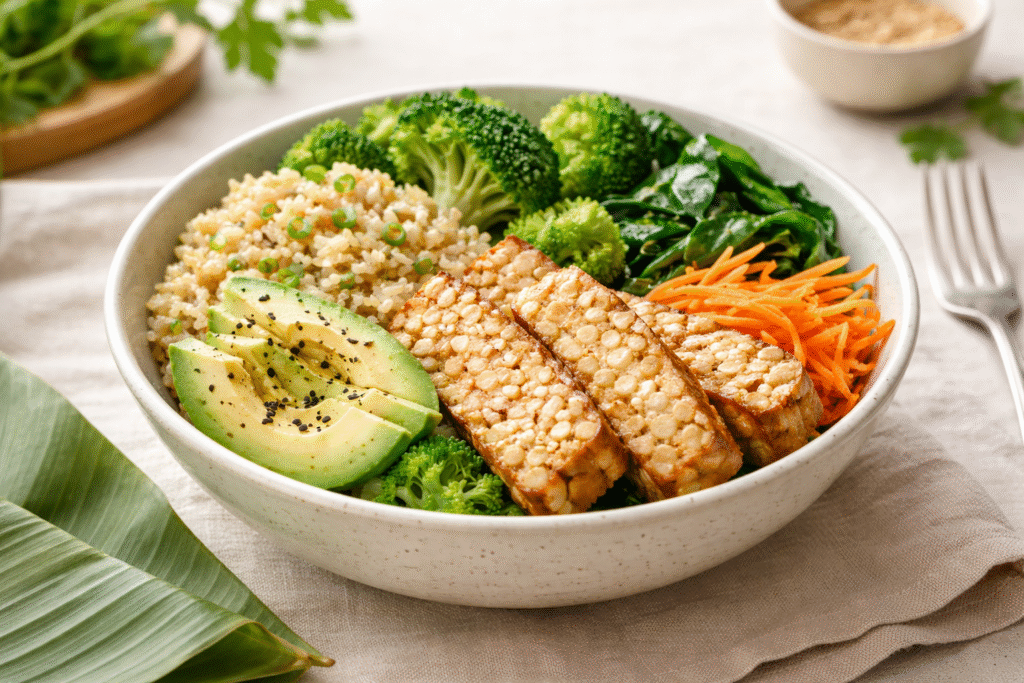
- Tossed into grain bowls with roasted veggies.
One tip we almost always follow: steam the tempeh for about ten minutes before doing anything else. It softens the beans just a bit and makes the block much better at absorbing a marinade.
Prepared like this, the tempeh turns out deeply savory and satisfying. The flavor is rich, but you can still taste the distinct, earthy note of the whole soybeans.
FAQ
How is whole soybean tempeh different from regular tempeh?
Whole soybean tempeh is made using intact soybeans, while some varieties use split soybeans. This preserves the whole bean tempeh texture, making it firmer and denser.
During whole soybean fermentation, the beans bind together naturally, creating a solid structure. This method reflects traditional soybean tempeh practices and gives a more satisfying bite compared to tempeh made from broken or processed beans.
What nutrition benefits come from tempeh made with whole soybeans?
Whole soybean tempeh nutrition is rich in protein, fiber, vitamins, and minerals because the beans remain whole during fermentation. It provides a high-quality whole soybean protein tempeh source and serves as a healthy plant-based protein tempeh option.
The fermented whole soybeans nutrition is easier to digest, and the probiotics formed during fermentation make whole soybean vegan protein a nutritious choice for daily meals.
Can you make homemade whole soybean tempeh at home?
Yes, you can make homemade whole soybean tempeh by following careful preparation steps. The whole soybean tempeh soaking process and cooking must be precise before adding a whole soybean tempeh starter culture.
The soybeans are then fermented using Rhizopus fermentation soybeans, which bind them into a solid cake. With proper temperature and humidity control, the whole soybean tempeh process usually completes within 24–48 hours.
What does whole soybean tempeh taste like when cooked?
Whole soybean tempeh taste is mild, earthy, and naturally nutty. The nutty flavor tempeh soybeans develops during natural soybean fermentation, and the intact beans give the firm whole soybean tempeh a satisfying texture.
When cooked, it holds its shape well and absorbs marinades or sauces evenly. Many people enjoy fermented soy cake prepared this way in stir-fries, grilling, or steaming for flavorful dishes.
Why is whole soybean tempeh important in Indonesian food culture?
Indonesian whole soybean tempeh is a cornerstone of traditional cooking. It comes from traditional Indonesian fermented soybeans techniques using whole soybean mold fermentation with Rhizopus culture.
The traditional tempeh fermentation method has been passed down for generations, and whole soybean tempeh traditional food Indonesia continues to represent authentic, nutritious, and plant-based meals deeply rooted in local food culture.
Why Whole-Bean Tempeh Deserves a Spot in Your Meals
Whole-bean tempeh deserves a place in your meals because it’s filling, flavorful, and naturally packed with protein and fiber. Unlike softer plant proteins, whole soybeans create a firm texture that holds up in cooking and delivers a satisfying bite. Small-batch fermentation also brings out a rich, nutty taste while preserving nutrients. It’s simple, versatile, and makes everyday meals more nourishing without complicated prep.
Ready to taste the difference? Shop fresh tempeh and tempeh snacks at SoyaMaya
References:
- https://www.mdpi.com/2076-3417/15/16/8888
- https://www.nongmoproject.org/blog/fuel-your-veganuary-the-right-way-why-tempeh-deserves-a-spot-on-your-plate/
Related Articles:
- https://mayasaritempeh.com/fresh-tempeh/
- https://mayasaritempeh.com/whole-vs-split-soybeans-in-tempeh/
- https://mayasaritempeh.com/nutritional-benefits-of-whole-soybeans/
SoyaMaya Fresh Tempeh
Traditionally fermented, no preservatives, shipped fresh and frozen to your door. The real deal, direct from us.
