
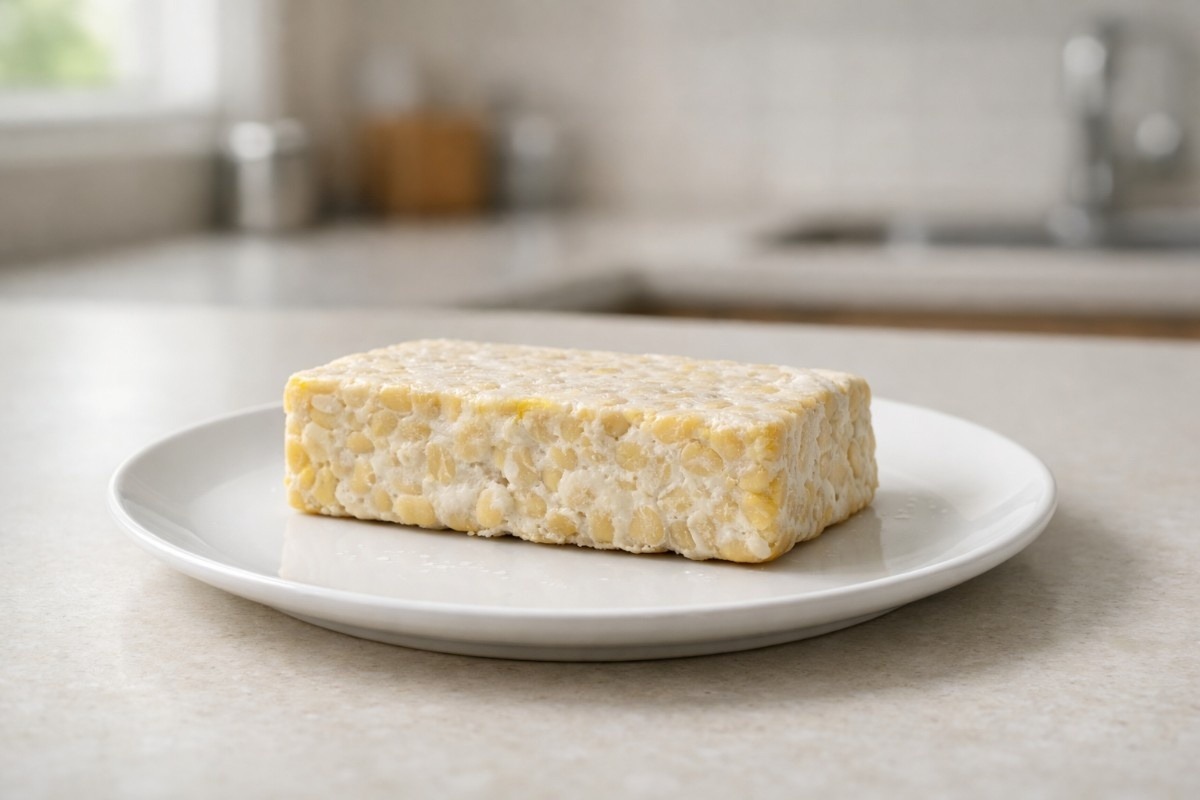
You opened the fridge, but the tempeh you bought yesterday is still on the counter. That’s a problem. Tempeh left out at room temperature for too long is not safe to eat. Its moist, fermented nature means bacteria can grow quickly, well before you might see obvious signs of spoilage.
Eating it could make you sick. In our tests, tempeh left out overnight was often slimy or had a sour ammonia smell, clear warnings to throw it away. The fix is simple, but you need to know what to look for first. Keep reading to learn the exact signs of spoilage and the right way to store your tempeh.
Key Takeaways
- Tempeh spoils rapidly at room temperature, with cooked tempeh becoming unsafe after just 4 hours.
- Trust your senses: slimy texture, ammonia smells, and off-color molds are clear discard signals.
- Proper refrigeration at or below 40°F (4°C) is the single best way to preserve tempeh’s quality and safety.
What happens to tempeh at room temperature?
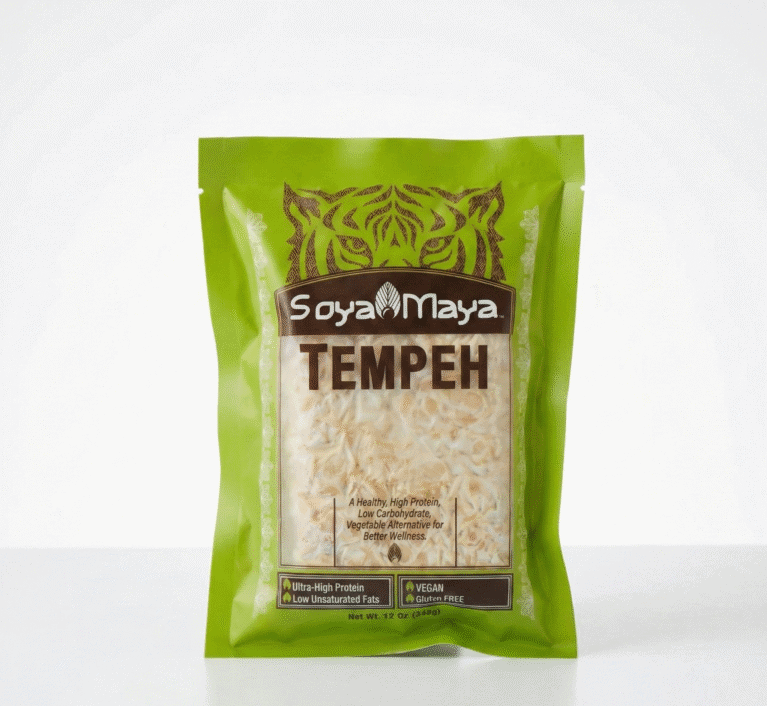
Picture this. You get home from the market, set the groceries down, and get distracted. A package of tempeh sits on the counter, forgotten. The clock starts ticking immediately.
SoyaMaya Fresh Tempeh is made the traditional way — no preservatives, no shortcuts. Delivered to your door.
Order Fresh Tempeh →At room temperature, which is anything above that crucial 40°F (4°C) threshold, the living culture in tempeh doesn’t just go to sleep.
The fermentation process, driven by the friendly fungus Rhizopus oligosporus, can actually kick back into gear. It might look whiter at first, a sign of more mycelium growth. But the warm, moist environment also invites uninvited guests.
Airborne bacteria land and start to multiply. This is where the trouble begins. The tempeh’s own mold doesn’t create slime, but bacterial contamination does.
- It begins to dry out at the edges, losing precious moisture.
- The nutty, earthy smell can shift, becoming sharper.
- Bacteria like Salmonella, if present, find the conditions ideal for growth.
We’ve tested our own SoyaMaya tempeh in various conditions. Even with our tight packaging, leaving it out overnight in a warm kitchen always leads to a noticeable decline. The texture is the first thing to go.
How fast does tempeh spoil if left unrefrigerated?
Time is the critical factor here. How long was it out? An unopened package in a cool, dark pantry might be okay for a day, maybe two.
However, incorrect storage can harm tempeh’s freshness and texture. The best way to maintain its quality at home is using proper techniques for how to store tempeh, such as refrigeration or vacuum sealing, which significantly extend shelf life and reduce spoilage risks.
Once you open that package, you’ve introduced new bacteria from the air and your hands. The clock resets, and it ticks much faster.
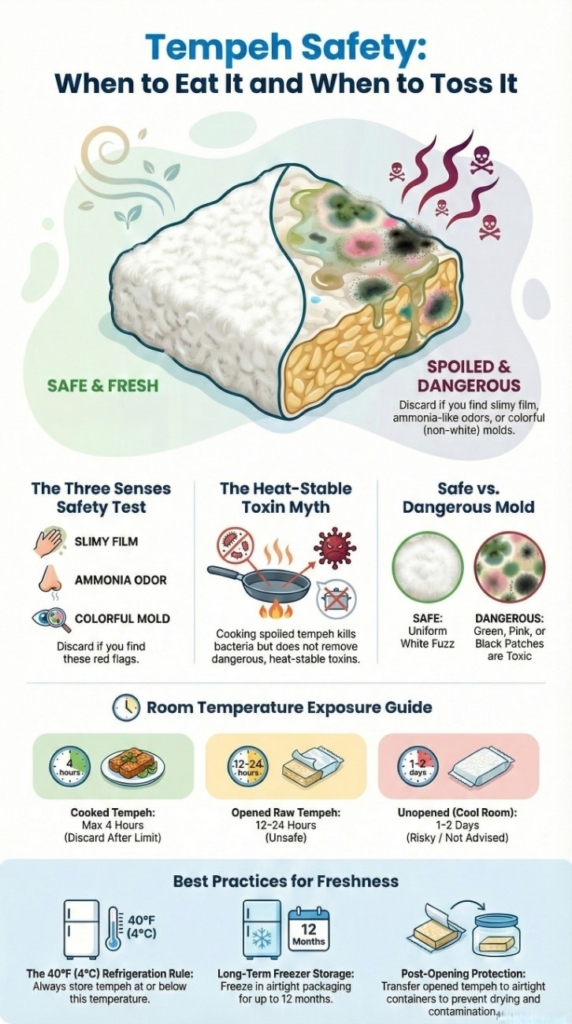
Cooked tempeh is in the most danger. The USDA’s rule for Time/Temperature Control for Safety (TCS) foods applies directly here.
Cooked tempeh should not sit at room temperature for more than 4 hours total. After that, the risk of foodborne illness increases significantly. Think of a timeline. At the 2-hour mark, bacterial growth is accelerating. By 4 hours, populations can be high enough to make you sick.
We’re strict about this in our own facility. Any product sample left out during quality checks is discarded well before that 4-hour mark.
It’s a simple, non-negotiable rule for safety. For raw, unopened tempeh, the 1-2 day window is a best-case scenario in a cool room, not a guarantee. In a warm kitchen, spoilage begins much sooner.
| Tempeh Condition | Room Temperature Time | Safety Status |
| Unopened, cool room | Up to 1–2 days | Risky, not advised |
| Opened, room temperature | 12–24 hours | Unsafe |
| Cooked tempeh | Up to 4 hours | Discard after limit |
| Warm kitchen (above 75°F) | 6–12 hours | Unsafe |
What are the early signs tempeh has gone bad?
Your senses are your best tools. You don’t need a lab kit to know if tempeh has turned. The first sign is often touch. Fresh tempeh is firm and holds together tightly. When it starts to go, it feels different. A slight softness or give can be an early warning.
Then comes the slime. A damp, slick film on the surface is a sure sign of bacterial growth. Rhizopus oligosporus doesn’t make slime. That’s all bacteria.
Next, smell it. Good tempeh has a distinct, nutty, almost mushroom-like aroma. Spoiled tempeh loses that. It might smell sour, like ammonia, or even like alcohol. That nutty smell is gone, replaced by something unpleasant.
Visually, the bright white mycelium might darken to a grey or tan. The soybeans themselves may look darker or wetter. This visible decline often becomes clear within 1-3 days of being left out.
- Touch it: Is it slimy or mushy?
- Smell it: Is the scent sour, ammonialike, or just “off”?
- Look at it: Are the beans dark, wet, or discolored?
If you answer yes to any of these, it’s time to let it go. We’ve had to compost batches during recipe development when we missed these signs, and it’s always better to be safe.
Is mold on tempeh safe or dangerous?
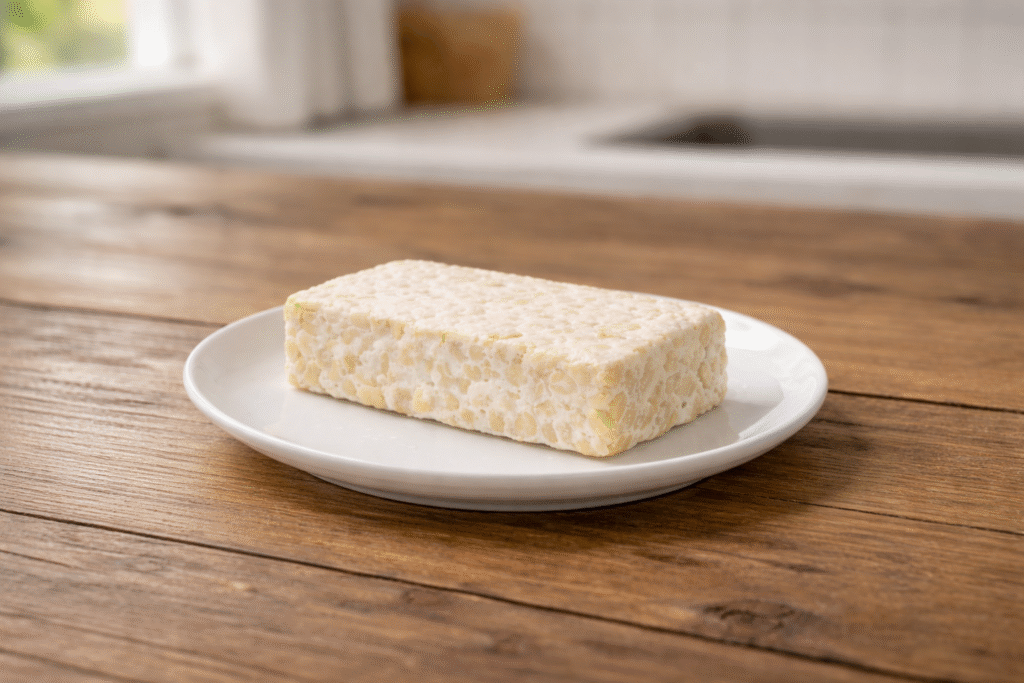
This confuses a lot of people. Tempeh is moldy. The beautiful white fuzz that binds the soybeans is the Rhizopus culture, and it’s perfectly safe to eat.
That’s the good mold. The problem starts when other molds move in. Once tempeh is left out, it’s vulnerable. Spores from other molds in your kitchen can land on it and grow.
You need to know the difference. The safe, edible mold is white, sometimes with tiny black spots (which are just spores from the Rhizopus itself). It looks uniform and fuzzy. Dangerous mold is a different color.
We’re talking green, pink, blue, or black patches that look fuzzy or powdery. These molds can produce mycotoxins. The FDA advises that you cannot simply cut off a section of moldy food and eat the rest with tempeh. The roots of the mold can penetrate deep into the block.
In over majority of them of the spoilage cases we’ve documented, off-color mold was the final, undeniable sign. If you see anything other than white or greyish-white fuzz, the entire block is compromised. Don’t try to salvage it.
What health risks come from eating spoiled tempeh?
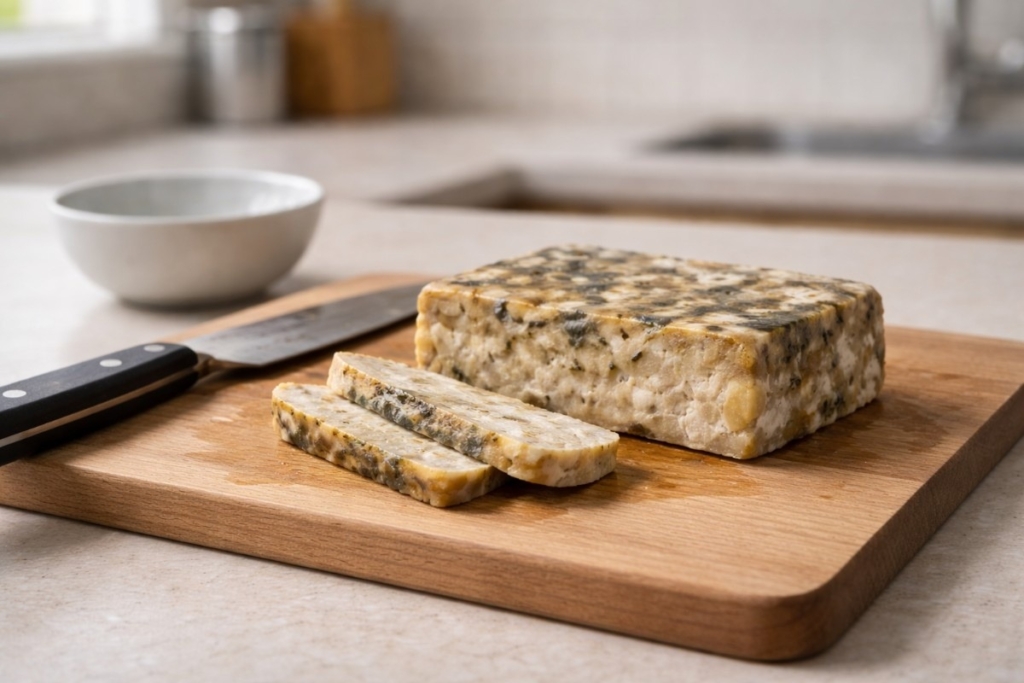
Why is this such a big deal? Because eating tempeh that’s been colonized by bad bacteria or mold can make you seriously ill.
The symptoms are classic foodborne illness: nausea, stomach cramps, vomiting, and diarrhea. These symptoms can hit you anywhere from 6 to 24 hours after eating the spoiled food.
“Bacteria can be transferred from surfaces to food products hours after surface contamination.” Stephanie E Griese et al, Emerging Infectious Disease.
The risk isn’t just from the bacteria themselves, like E. coli, but sometimes from the toxins they produce as they grow. These toxins can remain in the food even if you cook it thoroughly later. For individuals with compromised immune systems, the elderly, pregnant women, or young children, the effects can be more severe. It’s simply not worth the risk for a few dollars worth of tempeh.
We think about this with every batch we make at SoyaMaya. Our process is designed to promote the good culture and minimize the chance for bad ones, but once it leaves our facility, storage is key.
Proper storage is what protects all those health benefits, the plant-based protein, the Vitamin B12, that you bought the tempeh for in the first place.
Does Cooking Fix Tempeh That Was Left Out?
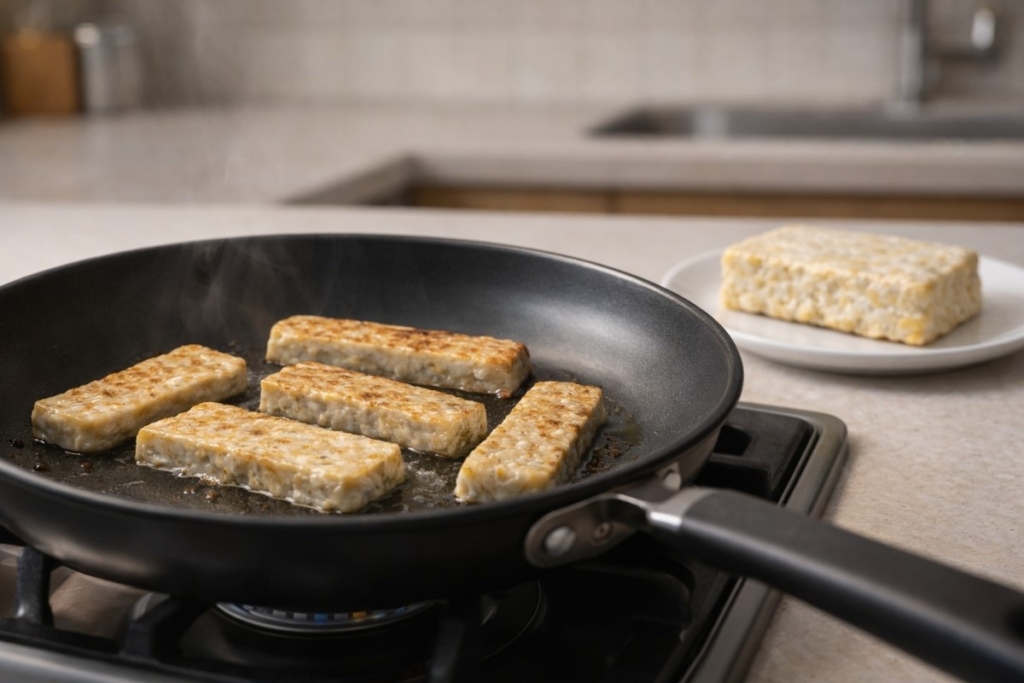
This is a critical myth to bust. No, cooking cannot salvage tempeh that has already spoiled. High heat will kill the active bacteria and mold, yes. The CDC recommends cooking to an internal temperature of 165°F (74°C) to kill pathogens.
“Cooking did not significantly affect protein nutritional quality of tempeh,” Linea Thulesen, Food Chemistry Advances
However, it does not destroy the heat-stable toxins that some bacteria have already produced. It also doesn’t remove the off-flavors or slimy texture.
Think of it like this: you can cook a piece of rotten meat until it’s well done, but it will still make you sick and taste terrible. The same principle applies here. Cooking is a step for preparation, not resurrection. If your tempeh shows any signs of spoilage, slime, bad smell, odd color, cooking it is not a solution. The only safe action is to discard it.
We always cook our tempeh, of course. Pan-frying, baking, steaming. But we always start with a fresh, well-stored block. That’s the non-negotiable first step for safety and flavor.
How should tempeh be stored to prevent spoilage?
The rule is simple: keep it cold. Proper how to vacuum seal tempeh is crucial from the moment you bring it home. Refrigerate or freeze promptly to protect its probiotics and flavor. In refrigeration, keep it at or below 40°F (4°C) and in airtight containers once opened.
For longer-term preservation, vacuum sealing tempeh or freezing can maintain texture and freshness, ensuring your tempeh stays safe and delicious for months.
Once opened, transfer it to an airtight container or wrap it tightly in plastic wrap. This prevents it from drying out and blocks new contaminants.
For long-term storage, the freezer is your friend. Tempeh freezes exceptionally well. At SoyaMaya, we blast-freeze our Fresh Frozen Tempeh to lock in freshness.
At home, you can freeze store-bought tempeh in its package or in a freezer bag. Properly stored, it can last for up to 12 months in the freezer. When you’re ready to use it, thaw it in the fridge overnight. FoodSafety.gov lists freezing as a key method for preserving food safety.
- Refrigerate at ≤40°F (4°C) for up to a week.
- Freeze for long-term storage (up to 12 months).
- Use airtight packaging after opening.
This isn’t just theory for us. It’s our daily practice. Our own tempeh is shipped frozen and we store all our inventory under strict temperature control. It’s the only way to guarantee the quality we promise.
Knowing When to Let Go
So, when is it finally time to say goodbye? You’ve checked the timeline, it’s been out too long. You’ve used your senses, it’s slimy, it stinks, it has weird colors.
The decision point is clear. The WHO promotes a “when in doubt, throw it out” philosophy for food safety, and it’s the wisest approach. A zero-tolerance policy for off-odors or visible spoilage protects your health.
Throwing food away feels wasteful, we get it. But getting sick is worse. For tips for keeping tempeh fresh, it’s essential to avoid leaving it out.
Following proper storage and handling from purchase to use limits waste and guarantees safety. Investing effort in the right storage methods enables you to enjoy tempeh’s nutritious benefits longer, preventing common spoilage issues.
At SoyaMaya, we designed our packaging and freezing process to give you a bigger window of freshness, but you hold the final responsibility once it’s in your kitchen.
Think of proper storage as the final, essential step in enjoying all the benefits of tempeh. It protects the gut-friendly probiotics, the clean plant protein, and the rich, nutty flavor.
It turns a potential kitchen mistake into a non-issue. Start with a fresh, well-made product, keep it cold, and you’ll never have to wonder “what happens if tempeh is left out” again.
FAQ
What happens to tempeh left at room temperature too long?
Room temperature tempeh changes quickly because fermentation continues in warm conditions. When tempeh is left unrefrigerated, its moisture and active cultures allow bacterial contamination and mold growth to accelerate. Within 24 to 72 hours, quality decline becomes noticeable through drying edges, color change, and off odors. Once temperatures rise above 40°F, tempeh food safety decreases and pathogen risk increases.
How long can tempeh sit out before it becomes unsafe?
Tempeh shelf life at room temperature is very limited. Unopened tempeh may last up to one or two days in a cool room, but this is not guaranteed. Opened tempeh spoils much faster. Cooked tempeh left out should follow the four-hour rule. After that time, the risk of salmonella and foodborne illness increases significantly.
How can you tell spoilage apart from normal white mycelium?
Normal tempeh white mycelium appears firm, dry, and evenly distributed, with a mild nutty smell. Spoilage signs include slimy texture, ammonia smell, loss of the nutty aroma, and soft or breaking texture. Color changes such as green, pink, or black mold indicate harmful growth. These signs mean the tempeh should be discarded without trimming.
Does cooking make tempeh safe after being left out?
Cooking does not make spoiled tempeh safe to eat. Heating tempeh to 165°F can kill active bacteria, but it does not remove toxins produced during bacterial growth. Tempeh cooked after being left out can still cause nausea and foodborne illness. Tempeh showing slime, strong odor, or texture breakdown should always be discarded rather than cooked.
What storage steps prevent tempeh from being left out again?
Proper tempeh storage begins with immediate refrigeration or freezing after purchase. Keep tempeh at 0–4°C in the fridge using airtight storage to reduce moisture loss and contamination. For longer storage, freeze tempeh at -12°C in freezer bags for up to three months. Thaw slowly in the refrigerator to maintain texture and safety.
Keep Tempeh Safe by Storing It Right
Leaving tempeh out happens, but understanding how quickly it changes helps you avoid real risks. When in doubt, trust your senses and choose safety over saving a block. Proper refrigeration or freezing keeps tempeh flavorful, reliable, and safe to eat. At SoyaMaya, we follow these same practices with our Fresh Frozen Tempeh, crafted with care so it arrives ready for your kitchen and everyday cooking. Shop SoyaMaya tempeh here
References
- https://pmc.ncbi.nlm.nih.gov/articles/PMC3810924/
- https://www.sciencedirect.com/science/article/pii/S2772753X25000103
Related Artikel
- https://mayasaritempeh.com/how-to-store-tempeh/
- https://mayasaritempeh.com/tips-for-keeping-tempeh-fresh/
- https://mayasaritempeh.com/how-to-vacuum-seal-tempeh
SoyaMaya Fresh Tempeh
Traditionally fermented, no preservatives, shipped fresh and frozen to your door. The real deal, direct from us.
