
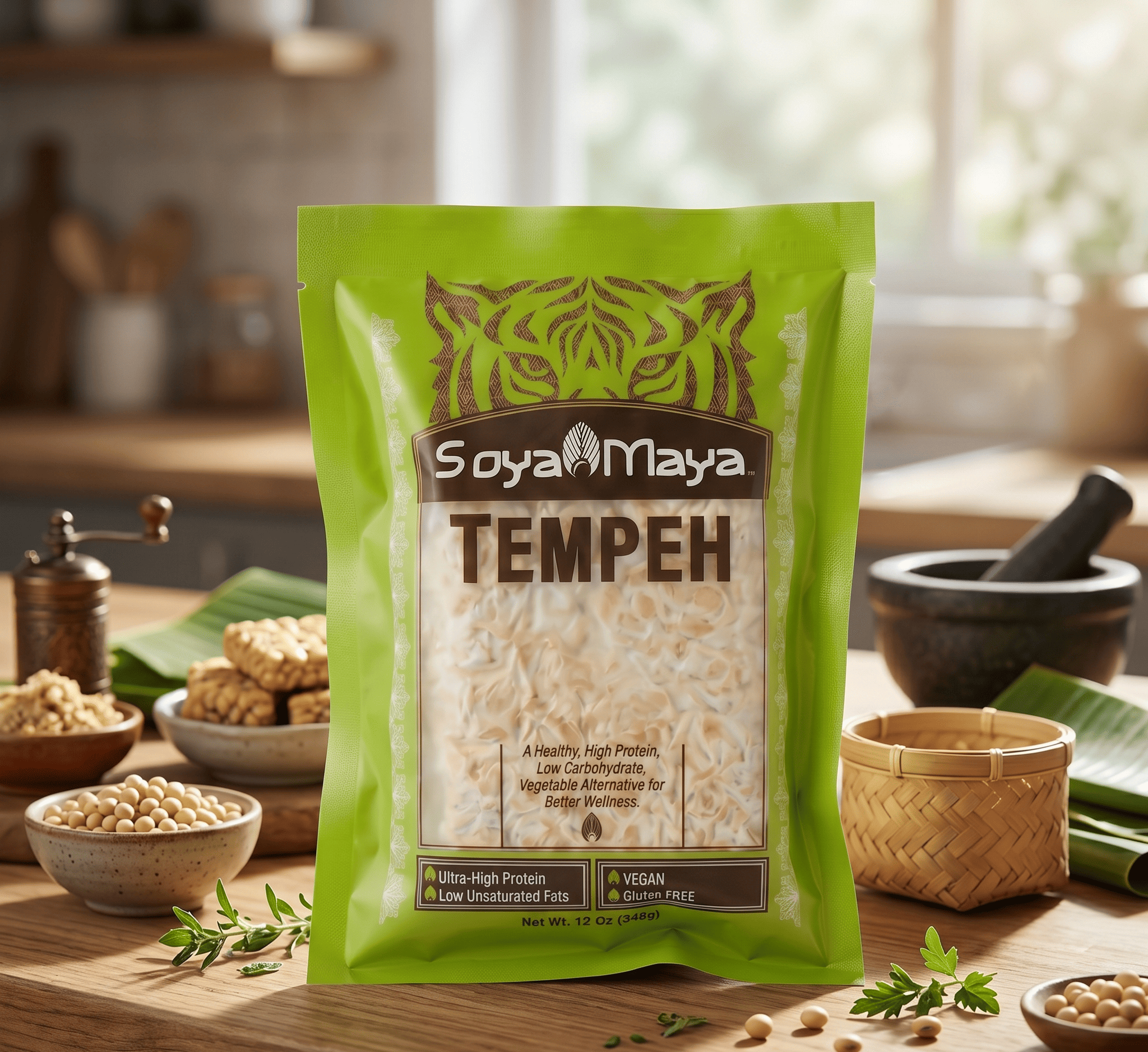
Rhizopus oligosporus is a fungus. It turns cooked soybeans into tempeh. We use it as a starter culture. In our work, it reliably forms a firm, white, protein-rich cake in a short time. We’ve run it in small batches and larger setups. It’s a dependable system for transforming plant protein.
This fungus is considered safe for food and is used globally for commercial tempeh. One starter we use often is SoyaMaya; we know its fermentation behavior is consistent and stable. Here, we explain how this culture functions, how it develops, and its practical importance in fermentation. Read on for the details.
Quick Read: Rhizopus Culture in Tempeh Fermentation
- Tempeh mold binds soybeans into solid protein
- Enzymes break down protein and fat in process
- Safe for food, GRAS by FDA
Rhizopus oligosporus culture and its role in fermentation
This is the fungus we use to make tempeh. It’s called Rhizopus oligosporus. You mix it with cooked soybeans, and then it grows.
Soya Maya Fresh Tempeh is made the traditional way — no preservatives, no shortcuts. Delivered to your door.
Order Fresh Tempeh →What it grows is a white, fuzzy net. This net wraps around all the beans and sticks them together tightly. That’s how you get a solid block of tempeh instead of just a pile of loose beans, especially when working with whole soybeans tempeh where structure really matters.
It does more than just glue things together.
Research from Critical Reviews in Microbiology shows
“the synthesis of enzymes, which hydrolyze soybean constituents enzymatic hydrolysis also may decrease or eliminate antinutritional constituents; consequently, the nutritional quality of the fermented product may be improved” – Critical Reviews in Microbiology
Our work shows it actually makes the soy protein easier for your body to use. The government says it’s perfectly safe to eat.
We’ve found this particular culture to be very dependable. It works the same way every time, whether we’re making a tiny sample or a big batch.
If you keep things clean and at the right temperature, this fungus grows fast and strong, which helps stop other, unwanted microbes from ruining the batch. That reliable performance is why we use it.
Quick reads: key facts about Rhizopus oligosporus culture
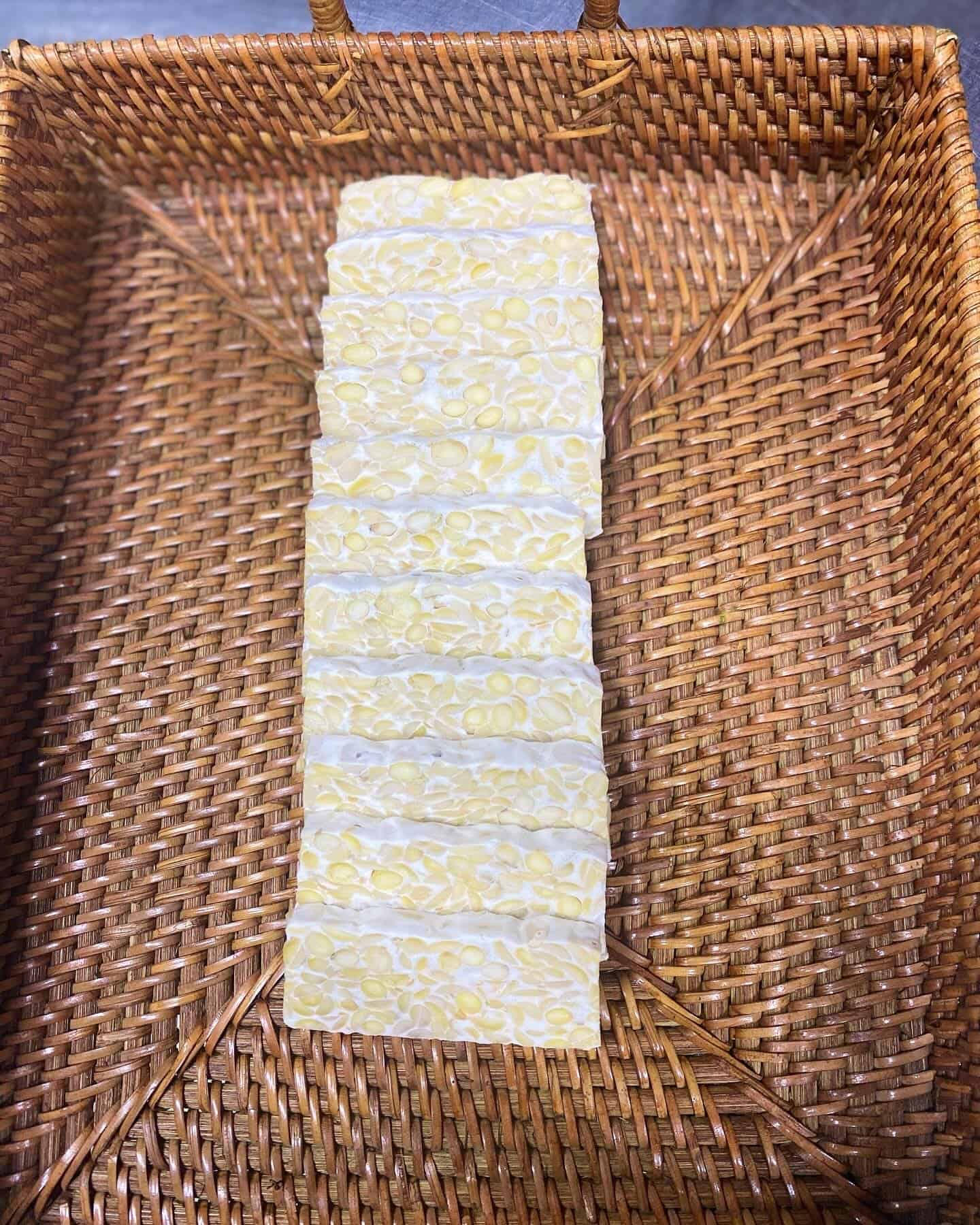
We use a specific mold to make tempeh. Its official name is Rhizopus oligosporus, but we just call it our starter culture. It’s completely safe to eat.
Here’s what it does in our work:
- It binds beans. We mix it with cooked soybeans. The mold grows a white, fuzzy web that wraps around every bean, sticking them all together into a solid block.
- It needs warmth and air. It grows best in a warm place with some airflow. We have to keep the humidity just right in our fermentation room.
- It makes soy easier to digest. As the mold grows, it changes the beans. Our tests show this process breaks down the soy protein, so your body can use it better.
This mold is a known player in food science. The best part for us is how reliable it is.
No matter what batch of soybeans we use, this culture behaves the same way every single time. That consistency lets us produce tempeh we can count on.
How Rhizopus oligosporus works in tempeh production
Rhizopus oligosporus is the little fungus that makes tempeh happen. In our production, we watch it colonize cooked soybeans, releasing enzymes that go to work on the beans’ proteins and fats.
At the same time, it spins a dense, white web of mycelium that knits everything together, which is exactly what defines fresh tempeh when the culture is still actively growing and binding the beans.
Here’s what that process looks like on our floor:
- The key enzymes are proteases and lipases.
- The full fermentation run takes us about 24 to 48 hours.
- The mycelium forms a solid, white mat that binds the beans.
- We have to give it air, oxygen is non-negotiable for healthy growth.
- For consistency, we rely on a controlled starter culture to inoculate every batch.
This fungal network does more than just bind; it creates a barrier. As the Rhizopus grows, it acidifies the environment and physically blocks other microbes from getting a foothold.
That’s the main reason a well-made tempeh block stays stable, the culture itself is guarding the fort.
The real magic is in the protein breakdown. From what we’ve seen and what the science confirms, the fermentation doesn’t just preserve the soybeans; it pre-digests them.
The enzymatic activity increases the availability of amino acids, making the final product more nutritious than the raw ingredients we started with, which also connects to how B12 tempeh is often discussed in fermentation science.
Ideal growth conditions for Rhizopus oligosporus culture
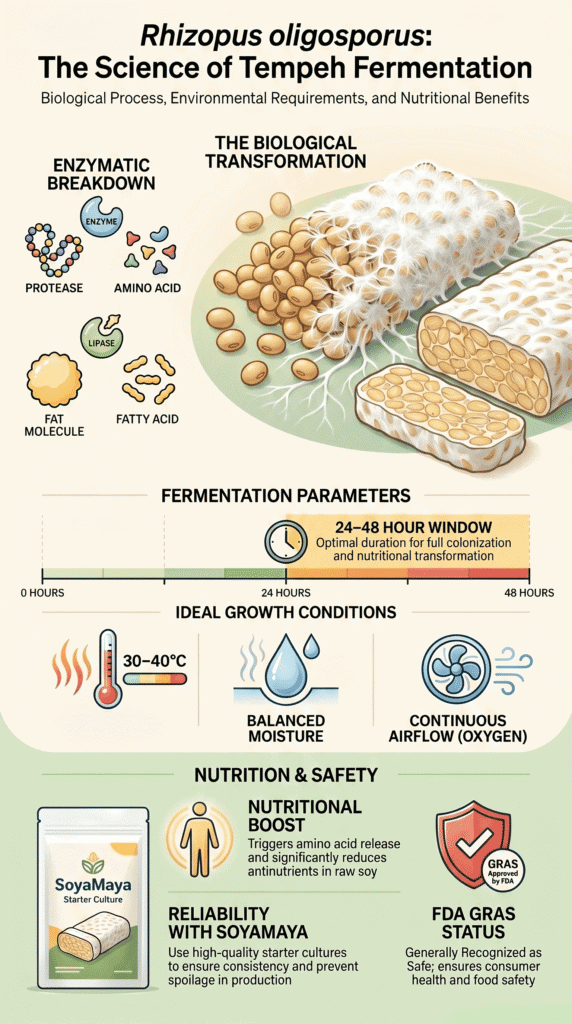
This fungus is a bit particular. It likes it cozy, airy, and not too wet. For us, the biggest battle is keeping the temperature steady, right in that 30 to 40°C window.
If it gets chilly, the fungus just sits there. Too hot, and the whole process goes haywire.
We keep a close eye on four things:
| Factor | Ideal Range | Risk if Uncontrolled |
| Temperature | 30-40°C | Slow growth (low) or culture damage (high) |
| Oxygen Supply | Continuous airflow | Growth stops without sufficient oxygen |
| Moisture Content | Balanced hydration | Too dry = no fermentation, too wet = contamination |
| Incubation Time | 24-48 hours | Underdeveloped or overgrown tempeh |
Here’s what we’ve learned by doing it:
- Air is non-negotiable. We poke holes in everything, bags, trays, to let it flow.
- The beans need to feel damp, not dripping. That moisture lets the enzymes work.
- A steady temperature means we can predict when a batch will be done.
- Fancy gear isn’t needed. A simple plastic bag with holes works great.
The research papers say the same thing we’ve figured out: this fungus absolutely needs oxygen. Our whole setup is basically just giving it what it wants to eat.
Production and inoculation of Rhizopus oligosporus culture
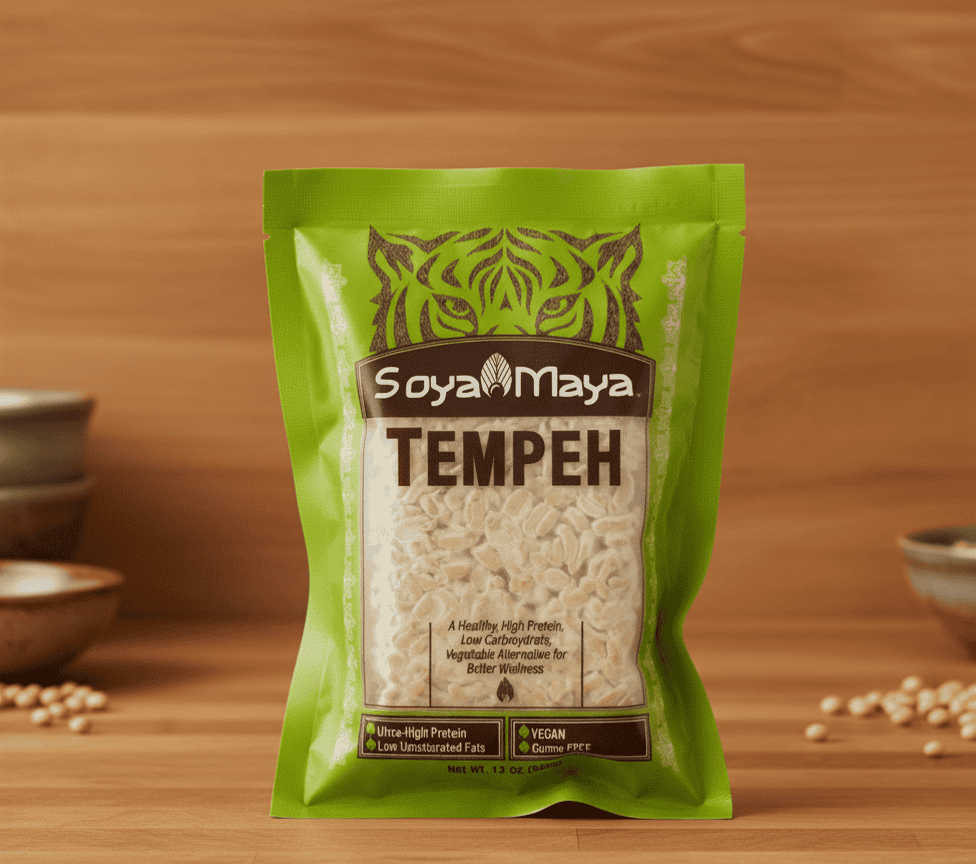
We make our starter by growing the tempeh fungus on something sterile, like cooked rice. Then, we sprinkle those spores onto our prepared soybeans. This first step, called inoculation, is where the magic starts.
We’re pretty careful about how we do this to keep things consistent:
- Grow the spores on sterile rice or agar.
- Mix them into the beans at a specific, measured amount.
- We aim for about 1 to 3 million spores per gram of beans.
- The fermentation begins the moment the spores hit the beans.
- We use a reliable, pre-made starter to avoid surprises.
Why do we fuss over this so much? Because if the spores aren’t mixed in evenly, the fungus grows in patches. You’ll get a block that’s half solid and half falling apart, it just won’t hold together.
When we get it right, we see the proof fast. A nice, even white fuzz blankets all the beans in the first 12 to 18 hours. That’s our sign that the mycelium is doing its job properly.
Benefits and safety of Rhizopus oligosporus culture
The fungus we use to make tempeh is completely safe. It’s even approved by food safety agencies. But its real job is to upgrade the soybeans.
Here’s a breakdown of what happens:
- Safety Approved: It’s on the official “safe to eat” list.
- Better Protein: It pre-digests the soy protein, so your body can use it more easily.
Data from Applied Food Research demonstrates
“proteolytic enzymes leading to the release of amino acids such as tyrosine, methionine, proline, tryptophan, and histidine from the bean proteins considered safe for use in the food industry, having received the Generally Recognized as Safe (GRAS) designation from the United States Food and Drug Administration” – Applied Food Research
- Fewer Blockers: It breaks down stuff in the beans that can stop you from absorbing nutrients.
- Clean Process: It keeps the fermentation safe from bad germs.
- Consistent Start: We begin every batch with a reliable, lab-made starter.
We watch this safety feature at work. As the good fungus spreads, it literally pushes out harmful bacteria.
It takes over all the real estate and makes the environment hostile to anything else. That’s why a good batch smells like fresh mushrooms, not something spoiled.
One last rule from our process: you must cook the tempeh before you eat it. Fermentation makes it safe, but cooking it makes it completely safe and ready to enjoy.
Choosing a commercial starter for home use
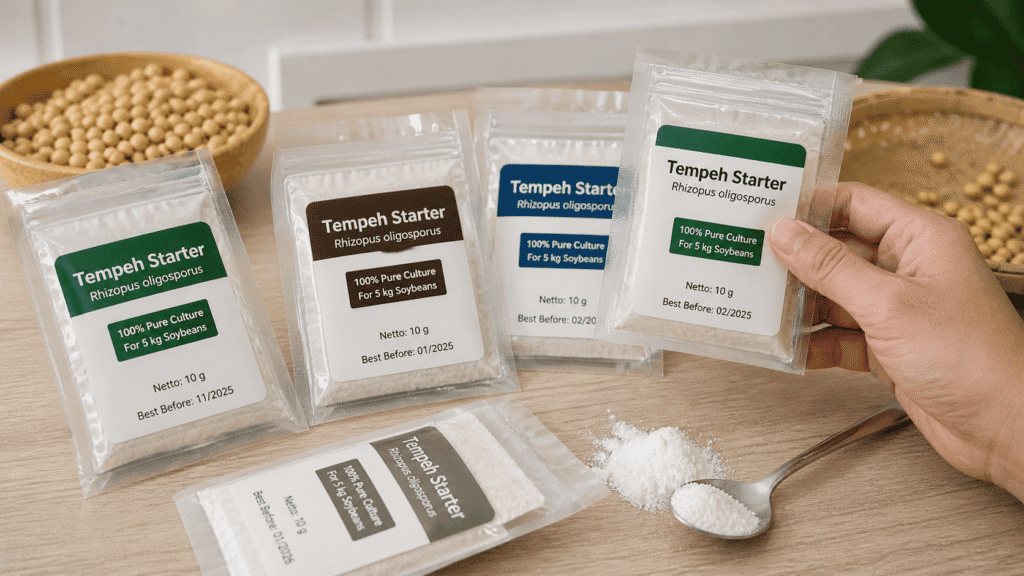
For a good tempeh starter, we look for a few key things. It needs stable, viable spores that don’t lose their punch after sitting in storage.
The fermentation has to be clean, no funky smells or odd colors, just white mycelium doing its job. And it absolutely has to get along with cooked soybeans, colonizing them evenly and completely.
In our shop, we’ve found that a consistent, reliable starter beats a fancy, complex one every time. We’ve tested plenty over the years.
Here’s what we prioritize:
- Spores that stay alive on the shelf. We check batch dates religiously.
- Clean fermentation behavior. Any sign of contamination and that batch is out.
- Full compatibility with soybeans. The mycelium should weave through the beans, binding them into a solid cake.
- Predictable aerobic growth. It should thrive with good airflow, not fight it.
We often point people toward reliable, proven starter systems because of this. A failed batch is wasted time and ingredients.
You’ll find starters in a couple of common forms: a fine powder or spores grown on a rice carrier. The format changes the game. Powdered types can be mixed in very evenly, while rice-based starters might spread the mycelium from specific points.
We’ve used both, and the choice often comes down to personal technique.
Our main rule? Freshness and controlled microbial activity trump a long shelf life. We’d rather use a starter that’s three months old and vigorous than one that’s been sitting for a year, even if it’s “still good.” A potent, active culture gives you a head start and fewer headaches.
Importance in modern food fermentation systems
Look, it all comes down to one thing: the right mold. This specific culture, Rhizopus oligosporus, is what turns plain soybeans into tempeh.
It’s a natural process, the mold grows through the beans, breaking them down and making them easier for your body to use. For us, it’s the perfect example of an old-school technique meeting modern food making.
Here’s what it does, plain and simple:
- Builds plant protein foods. It’s the key ingredient that makes the whole thing work.
- Let us make more of it. Because the process is so consistent, we can produce large batches without problems.
- Uses fewer chemicals. The mold itself does the heavy lifting, so we don’t need to add much else.
- It’s used everywhere. Big factories and small shops all rely on this same method.
- Fits into our setup. We built our process around it because it just works.
The best part is the enzymes. As the mold grows, it releases these natural substances that soften the beans and develop the flavor. We’ve tested this over and over, from tiny samples to our full production line.
It works the same way whether you’re making a small batch at home or a huge one for a store. That reliability is why it’s so important.
FAQ
What makes rhizopus oligosporus culture effective for tempeh fermentation?
Rhizopus oligosporus culture is effective because it produces dense rhizopus mycelium growth that firmly binds soybeans into a compact cake. The active rhizopus oligosporus spores release enzymes that support the rhizopus mold fermentation process and break down proteins.
This controlled rhizopus fermentation culture ensures consistent structure, clean flavor, and reliable performance as a soybean fermentation starter.
How do you prepare a rhizopus oligosporus inoculum correctly?
You prepare rhizopus oligosporus inoculum by evenly mixing tempeh starter culture with fully cooled and drained soybeans. This rhizopus starter inoculation method prevents overheating and supports uniform fungal starter culture tempeh development.
Proper rhizopus oligosporus inoculum preparation promotes fast spore activation, even rhizopus culture propagation, and stable fermentation mold starter performance across the entire batch.
What conditions support healthy rhizopus oligosporus growth during fermentation?
Healthy rhizopus oligosporus growth requires stable warmth, typically within the optimal rhizopus oligosporus fermentation temperature range, along with good airflow. These conditions support rhizopus oligosporus aerobic fermentation and strong binding mycelium formation.
Balanced moisture and a clean rhizopus culture medium are also essential. Together, these rhizopus culture fermentation conditions ensure steady microbial activity and consistent mold culture for tempeh production.
Why is rhizopus oligosporus considered a safe mold culture for food?
Rhizopus oligosporus is considered a safe mold culture because it is a domesticated organism used in rhizopus oligosporus traditional fermentation for generations. It does not produce harmful toxins under proper conditions and supports controlled food fermentation.
This rhizopus oligosporus edible mold culture is widely studied in rhizopus fermentation food microbiology and is trusted for producing safe, high-quality tempeh.
How does rhizopus oligosporus improve nutrition in soybean fermentation?
Rhizopus oligosporus improves nutrition by producing enzymes that drive rhizopus oligosporus protein breakdown and convert complex compounds into simpler forms. This process increases digestibility and enhances nutrient availability.
The rhizopus fermentation enzymes also reduce anti-nutrients. As a fungal starter for plant protein, this fermentation mold culture soybeans process delivers clear rhizopus oligosporus fermentation benefits.
A Simple Way to Get Consistent Tempeh Results
You can feel it when fermentation goes off, the texture turns uneven and the smell isn’t right. It’s frustrating. Working with Rhizopus oligosporus should give steady results, but without a reliable system, batches can become inconsistent and hard to control. That’s where SoyaMaya helps, giving you a stable starting point so you’re not guessing each time. It keeps your process smoother and outcomes more reliable. Ready for better batches? Get started with SoyaMaya
References
- https://pubmed.ncbi.nlm.nih.gov/8267862/
- https://www.sciencedirect.com/science/article/pii/S2772502224001938
Related Articles
- https://mayasaritempeh.com/tempeh-made-from-whole-soybeans-2/
- https://mayasaritempeh.com/fresh-tempeh/
- https://mayasaritempeh.com/what-is-b12-tempeh/
Soya Maya Fresh Tempeh
Traditionally fermented, no preservatives, shipped fresh and frozen to your door. The real deal, direct from us.
