
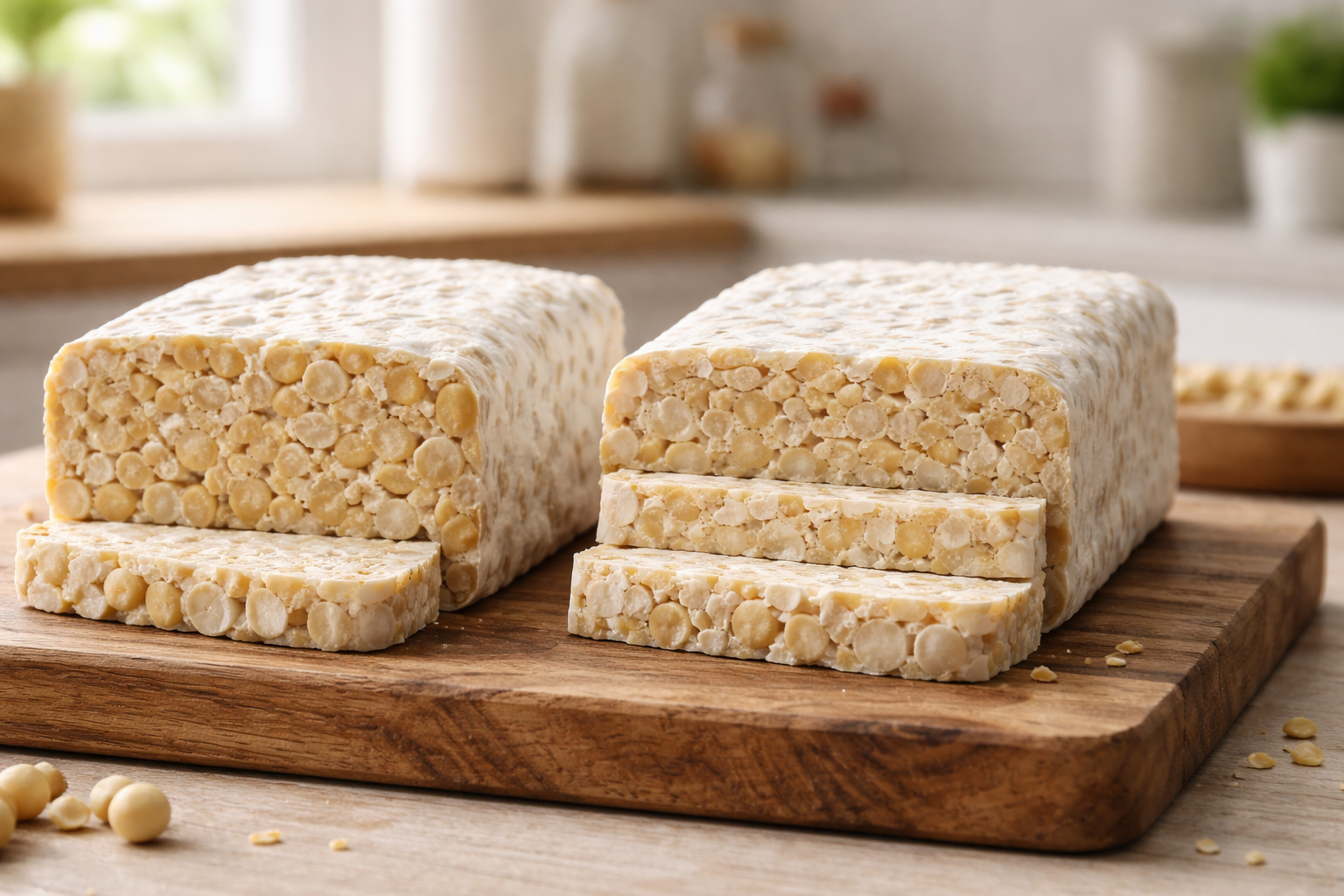
The texture of tempeh isn’t random. It’s decided before fermentation even starts, in how the soybeans are prepared. Whole beans and split beans create completely different structures as the Rhizopus culture grows.
We’ve tested this over years in our own production. A good batch feels solid and slices neatly. A less successful one might be crumbly or break apart.
That variation almost always comes back to the initial bean prep. Those early choices set the stage for the final texture, how dense it is, how it chews, and how it behaves when you cook it.
Soya Maya Fresh Tempeh is made the traditional way — no preservatives, no shortcuts. Delivered to your door.
Order Fresh Tempeh →This guide shares the practical lessons we’ve gathered from our benches. If you want to understand the why behind the texture, read on.
Tempeh Texture Tips: Whole vs. Split Beans
- The texture of your tempeh hinges on how you prepare the soybeans, specifically whether you use them whole or split before fermentation.
- In our experience, split beans tend to produce a denser, more cohesive block because the mycelium binds them tightly.
- Whole beans can sometimes lead to a looser, more crumbly texture. A proper 24-48 hour fermentation with Rhizopus oligosporus is what ultimately turns either preparation into a firm, sliceable tempeh that performs well when cooked.
What Texture Does Tempeh Made From Split Soybeans Produce?
Tempeh made from split soybeans gives you a dense, solid cake. The beans knit together tightly during fermentation because the split surfaces give the Rhizopus mold more area to grip and bind.
Insights from Food Research indicate:
“The formation of the white colour was due to the mycelium growth of Rhizopus spp., which fully covered the whole surface of tempeh. The inoculated beans were knitted together to form a firm, dense and chewy white mycelium cake, with no slimy texture on the surface. This phenomenon resulted in a firm texture that allowed the tempeh to be sliced into thin pieces without easily disintegrating.” – Food Research
When we started using split beans, the difference was obvious right away. The mycelium didn’t just coat the beans; it wove them into one firm piece. You could pick up the whole block without it breaking.
This creates the classic tempeh texture, firm and sliceable. You can cut thin pieces for frying or cubing, and they hold their shape. The interior is consistently dense, not crumbly, because the mold penetrates deeply into each bean half.
A few things stand out about this texture:
- The block is compact, with very few air pockets.
- It has a definite chew, a firmness you can feel when you bite.
- It slices cleanly without falling apart.
- The moisture feels even throughout, not soggy in some spots and dry in others.
Research, like that highlighted by Harvard Health, notes that fermentation changes the structure of soybeans, making them more digestible.
We watch this happen in our own batches. The mold’s enzymes work on the beans, transforming them into that cohesive, firm cake we pull from the incubator.
Why Split Soybeans Create Firmer Tempeh
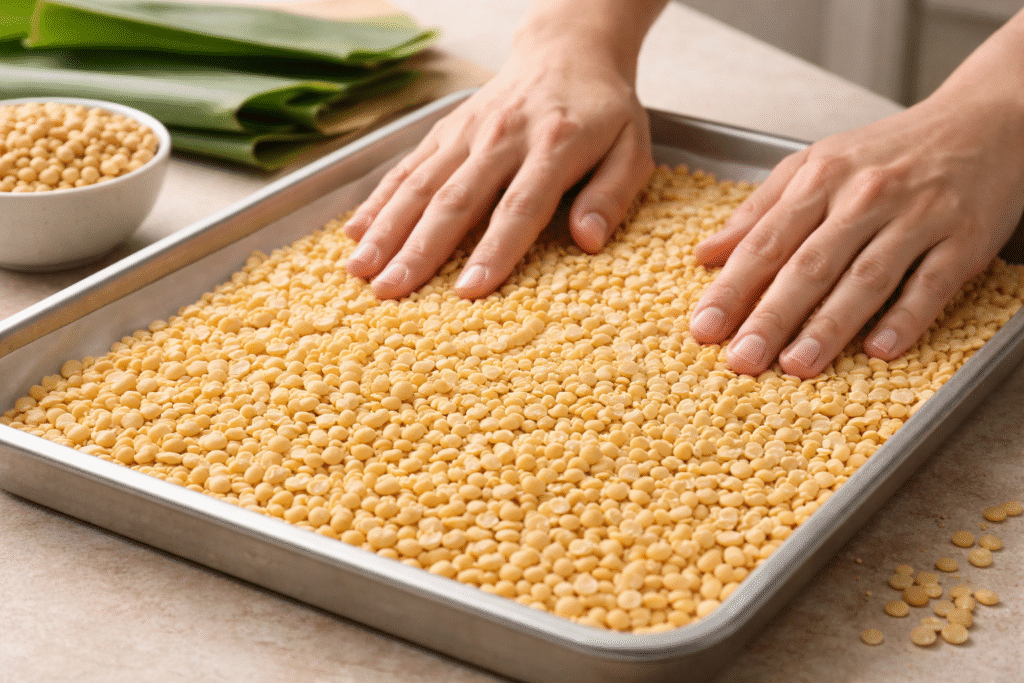
Split soybeans make firmer tempeh because the exposed insides of the beans give the Rhizopus mold a better surface to grow on. This lets it build a stronger network that binds everything tightly together.
The main reason is simple: more surface area. When a bean is split open, the mold can latch onto the inner part directly. This creates more connection points between the beans as they ferment.
If you want a deeper breakdown of how preparation methods affect fermentation structure, our guide on whole vs split soybeans in tempeh explains the process step by step.
Airflow is another big factor. Split beans don’t pack together as tightly. Those tiny gaps between them let oxygen move through the batch, which the mold needs to develop properly and strongly.
We’ve tested this side-by-side. Batches with split beans consistently formed a solid, bound block within a day. Batches with whole beans often took longer and sometimes never got past a loose, crumbly stage.
A few things work together to build that firm structure:
- The mold has more area to grow on.
- The binding happens faster and more completely.
- Oxygen circulates better through the batch.
- Less moisture gets trapped inside.
These conditions are what create the dense, uniform interior we look for in a good batch of tempeh.
How Whole Soybeans Change Tempeh Texture
Using whole soybeans tends to give you a looser, more crumbly tempeh. The Rhizopus mold struggles to get inside the intact beans, so the binding isn’t as strong or even.
We learned this early on. We tried a batch with beans left completely whole. The outside looked perfect, a solid white cake. But when we cut into it, the texture fell apart.
Some spots held together, while others just crumbled away. The mold couldn’t properly reach the inner surfaces of each bean, leading to weak spots.
You’ll often notice a few things with this method:
- A grainy, uneven texture where beans aren’t fully bound.
- A looser internal structure that’s less compact.
- Pockets of higher moisture trapped inside.
- Slices that lack firmness and can break easily.
This texture shows up when you cook it, too. When we pan-fry whole-bean tempeh, it sometimes breaks apart before it gets a good sear. It doesn’t hold its shape as well.
That said, it’s not a failure. Some people look for this exact texture. The softer, crumbly result works really well in dishes where you want the tempeh to break apart, like in a stew or as a taco filling.
Split vs Whole Soybeans: Tempeh Texture Comparison
The easiest way to understand the texture difference is to see the two styles side-by-side. We’ve done this comparison many times in our kitchen.
| Texture Feature | Split Soybeans | Whole Soybeans |
| Density | Compact, solid cake | Loose, less bound structure |
| Firmness | Firm and sliceable | Softer, often crumbly |
| Moisture | Balanced and even | Can have wetter pockets |
| Mycelium Growth | Deep, even coverage throughout | Mostly surface-level, patchy |
| Cooking Performance | Holds shape, crisps evenly | May break apart before browning |
This side-by-side look shows why traditional methods usually involve dehulling or splitting the beans. The exposed surfaces let the mold build a stable, interconnected structure that stays together when you slice it and stand up to cooking.
How Cooking Changes Tempeh Texture
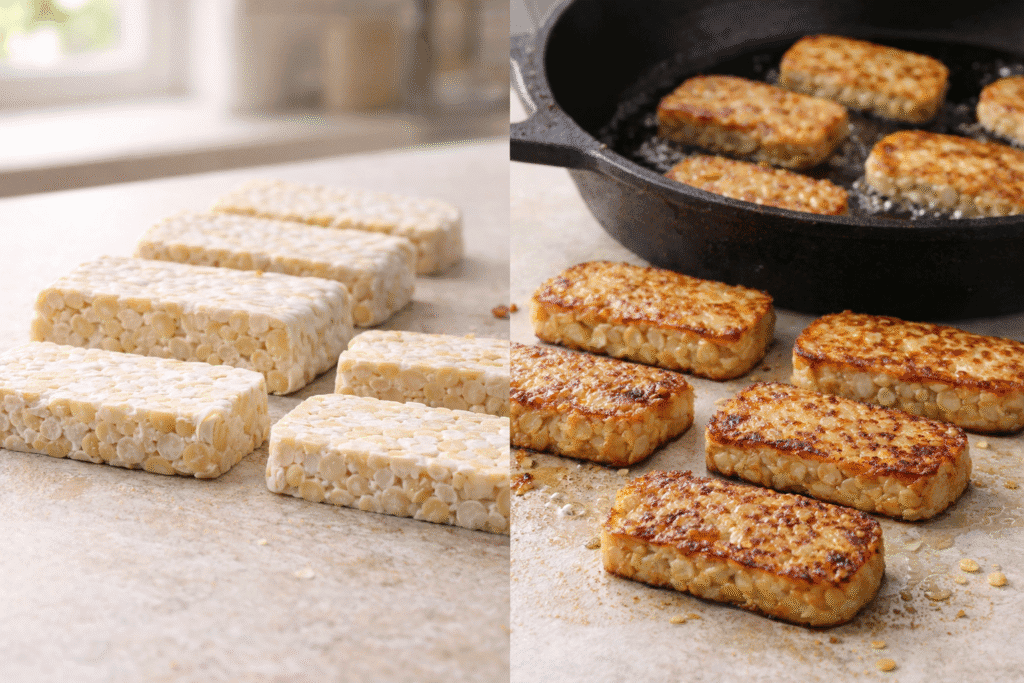
Cooking transforms tempeh’s texture again. It often gives you a crispy outside with a tender, chewy inside. The effect is especially noticeable when you start with fresh tempeh, which still has balanced moisture and an active mycelium structure from fermentation.
We cook tempeh all the time in our kitchen, and each method tweaks the final feel and bite. Two results show up most often.
The first is the classic pan-fried texture. When a firm slice hits a hot, oiled pan, the surface turns golden and crisp. The inside stays dense and chewy, creating a great contrast.
The second comes from steaming or simmering. This gentle heat softens the whole block, making it tender and almost spongy. It’s a completely different experience from frying.
A few cooking factors directly shape the texture:
- Pan-frying creates a crisp, browned crust.
- Steaming makes the interior soft and moist.
- How much moisture is left in the tempeh affects its chew.
- Thicker slices stay firmer; thinner ones can get crisp throughout.
According to data from USDA FoodData Central, tempeh holds onto its nutrition through these changes.
It still offers about 19 grams of protein per 100-gram serving, whether it’s fried or steamed. That combination of reliable protein and adaptable texture is why we use it so much.
How We Think About Texture at SoyaMaya
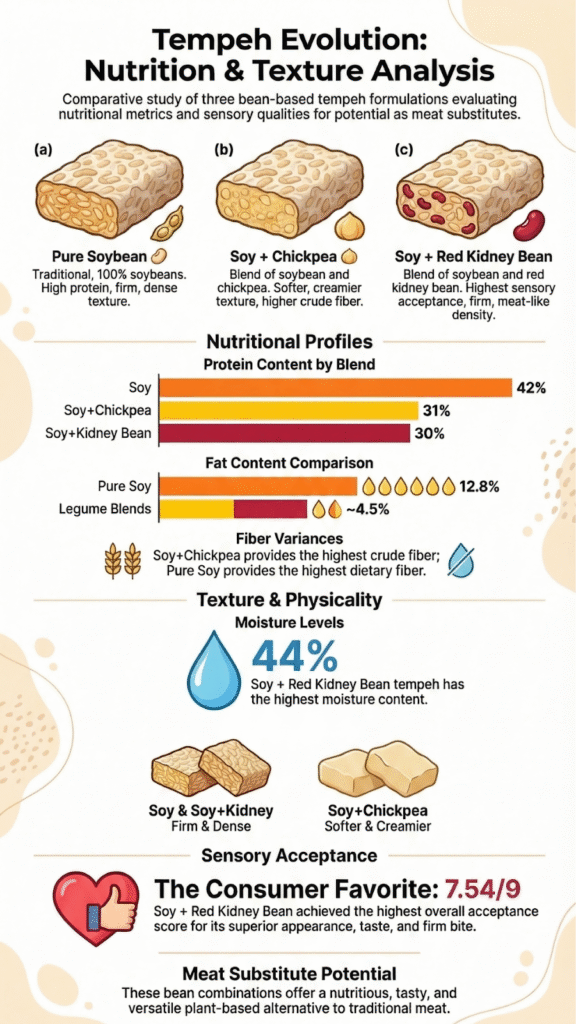
Texture is the first thing we check in a new batch of tempeh. It tells us right away if the fermentation process worked.
As highlighted by the Swedish University of Agricultural Sciences (SLU):
“In general, fresh tempeh of good quality is defined as a compact and sliceable mass of cooked particles of raw materials covered, penetrated and held together by dense non-sporulated mycelium of Rhizopus spp.” – Swedish University of Agricultural Sciences (SLU)
We learned that a consistent texture doesn’t start in the incubator, it starts with the beans. We use specific organic soybeans and handle them carefully before they ever see the mold.
Our approach is explained in more detail in why we use whole non-GMO soybeans, where bean quality, preparation, and sourcing all influence how well the mycelium can bind the beans into a single, solid piece.
From our work, the best tempeh always shows a few clear signs:
- A firm block you can slice cleanly.
- A dense, white network of mycelium holding everything together.
- Moisture that feels even, with no wet or dry patches.
When those three things line up, you get that satisfying, chewy bite that works so well on a grill, in a stir-fry, or seared in a pan. That’s the texture we aim for every time.
FAQ
What causes the texture difference in tempeh between whole and split soybeans?
The tempeh texture difference comes from using either whole or split soybeans. Tempeh texture from whole soybeans is firmer and denser, with a more compact tempeh block texture, while tempeh texture from split soybeans is softer and slightly crumbly.
The soybean form affects tempeh internal structure, tempeh mycelium texture, and tempeh binding strength during fermentation.
How does fermentation affect tempeh texture?
Fermentation transforms the soybeans by allowing the mycelium to bind them into a solid form, creating a cohesive tempeh structure.
It influences tempeh internal bean structure and the balance between firm and tender areas through tempeh moisture content texture.
Understanding tempeh texture from the fermentation process helps predict tempeh firmness after cooking and improves overall tempeh texture quality.
How does the cooking method change tempeh texture?
Cooking significantly affects tempeh texture impact cooking. Pan-frying produces tempeh crispy outside soft inside, while steaming keeps a tempeh soft interior texture.
Frying or grilling firms the tempeh dense interior structure and enhances tempeh bite resistance.
Observing tempeh cooking texture change ensures the desired tempeh texture profile for different dishes and culinary preferences.
How can I evaluate tempeh firmness and sliceability?
Tempeh sliceability texture depends on the block’s tempeh firmness when sliced and overall tempeh block consistency. A properly formed tempeh compact cake texture holds together, while crumbly tempeh lacks tempeh structural integrity.
Checking tempeh texture quality indicators, such as tempeh cohesive bean texture and tempeh crumb firmness, ensures better slicing, even cooking, and reliable results in recipes.
Why do some tempeh blocks feel dense while others are crumbly?
The tempeh dense vs crumbly texture depends on tempeh fermentation binding texture and tempeh mold binding texture. Whole soybeans create a dense tempeh structure, while dehulled or split soybeans tend to produce a crumbly tempeh texture.
Factors like tempeh internal compactness, tempeh moisture vs dryness texture, and tempeh structure density comparison determine firmness, chewiness, and overall tempeh texture characteristics.
Getting the Tempeh Texture You Actually Want
Getting the tempeh texture you actually want starts with quality fermentation and good soybeans. When tempeh is firm and well-formed, it slices cleanly, cooks evenly, and develops a crispy edge while staying satisfyingly chewy inside. Poorly made tempeh often crumbles or turns mushy, making meals frustrating to prepare. Choosing carefully crafted tempeh helps ensure every dish turns out flavorful, hearty, and reliable.
Ready for a better tempeh texture at home? Shop here SoyaMaya
References:
- https://pub.epsilon.slu.se/1186/1/xmffin0-online.pdf
- https://www.myfoodresearch.com/uploads/8/4/8/5/84855864/_16__fr-2023-088_tan.pdf
Related Articles:
- https://mayasaritempeh.com/fresh-tempeh/
- https://mayasaritempeh.com/whole-vs-split-soybeans-in-tempeh/
- https://mayasaritempeh.com/why-we-use-whole-non-gmo-soybeans/
Soya Maya Fresh Tempeh
Traditionally fermented, no preservatives, shipped fresh and frozen to your door. The real deal, direct from us.
