
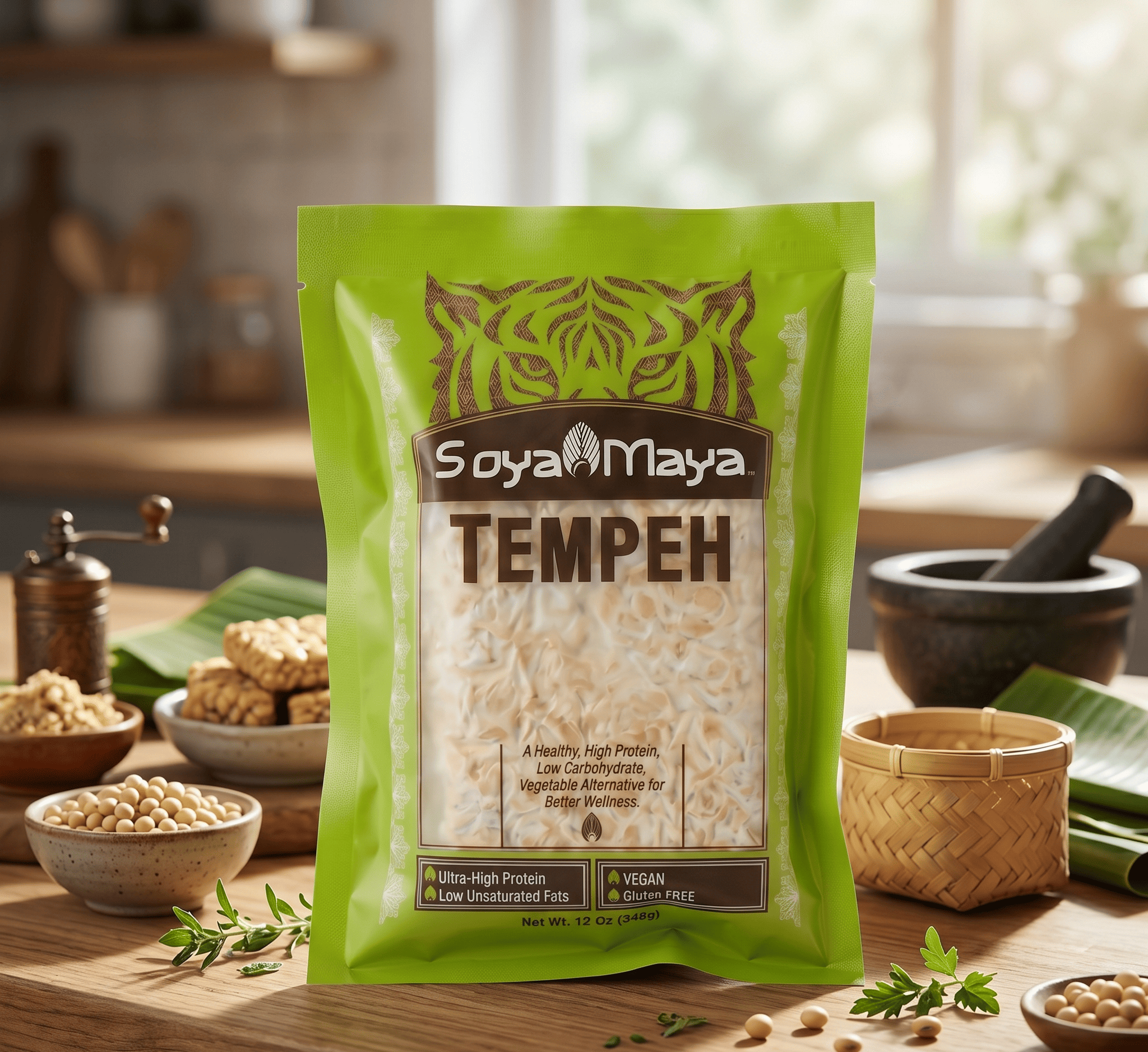
We start with whole, non-GMO soybeans. It’s a foundational choice for us. While raw beans are nutrient-dense, the real magic happens in the kitchen: a 100g serving of our prepared tempeh provides roughly 19–20g of complete protein and 5–9g of fiber.
At SoyaMaya, we’ve cooked and fermented a lot of beans. Whole ones just behave better. They keep their structure, so they don’t turn to porridge in the pot.
That structure matters for fermentation, too, it allows for a slower, more complete process that builds a deeper, more rounded flavor.
SoyaMaya Fresh Tempeh is made the traditional way — no preservatives, no shortcuts. Delivered to your door.
Order Fresh Tempeh →So we get them from growers we know and have worked with. The idea is straightforward: use the complete ingredient, then apply a careful, traditional process.
The rest tends to follow. Let’s get into the specifics of why this approach works so well for what we make.
Quick Read: Why We Use Whole Non-GMO Soybeans
- Whole, non-GMO soybeans keep their nutrition intact. You get the complete protein, the fiber, and the micronutrients exactly as nature packaged them. Nothing is stripped away.
- When we use the whole bean, it directly supports a better fermentation process. The result is a tempeh with a firm, satisfying bite and a richer, more authentic soybean taste.
- Sourcing non-GMO isn’t just a label for us. It’s about ingredient transparency and supporting farming methods that are better for the soil. It’s something our customers care about, and frankly, so do we.
What Are Whole Non-GMO Soybeans and Why Are They Preferred?
Whole non-GMO soybeans are grown from traditional seeds without genetic engineering. We use the entire bean, skin, cotyledons, and all. In tempeh making, this completeness is vital.
The bean’s natural skin gives the fermentation cultures a surface to bind to, creating a dense, firm texture that holds together perfectly when sliced.
When we say “whole,” we mean it literally. Nothing is removed or extracted, meaning the bean retains its fiber, natural oils, protein matrix, and micronutrients.
It’s the complete legume, just as it was harvested. In our work making tempeh, that completeness matters.
The bean’s natural skin and internal structure give the fermentation cultures something substantial to bind to. The result is a tempeh with a denser, firmer texture that holds together well.
As highlighted by The Non-GMO Project:
“Non-GMO soybeans, identity-preserved number 2 yellow soybeans. Many consumers see non-GMO soya as a cleaner, safer, and more natural option. Choosing non-GMO options helps support more sustainable farming, with less weedkillers and less collateral damage.” – The Non-GMO Project
The non-GMO aspect is important to a lot of people who buy our products. Surveys, like those cited by the Non-GMO Project, indicate most shoppers in the U.S. now look for that label.
It signals a choice for traditional farming and ingredient transparency, which aligns with how we operate.
A few key things define these beans for us:
- They are grown without genetic engineering.
- They keep their complete bean structure.
- They need very little processing before we use them.
These traits make them the right starting point for fermented foods.
Whole vs Processed Soy Ingredients
The gap between whole beans and processed soy ingredients is mostly about how much is altered before it gets to us.
| Soy Form | Processing Level | Nutritional Integrity |
| Whole Soybeans | Minimal (Soaked/Boiled) | Highest (Full fiber & phytonutrients) |
| Soy Concentrate | Moderate | Reduced (Some nutrients lost in extraction) |
| Soy Protein Isolate | High | Lowest (Fiber and minerals stripped) |
From our bench tests to full-scale production, the whole bean consistently gives us a better product.
Processed forms might be useful for some applications, but for traditional tempeh, they don’t ferment the same way or deliver the same final quality. You can learn more about whole vs split soybeans in tempeh. We stick with it whole.
Why Using Whole Soybeans Preserves More Nutrients
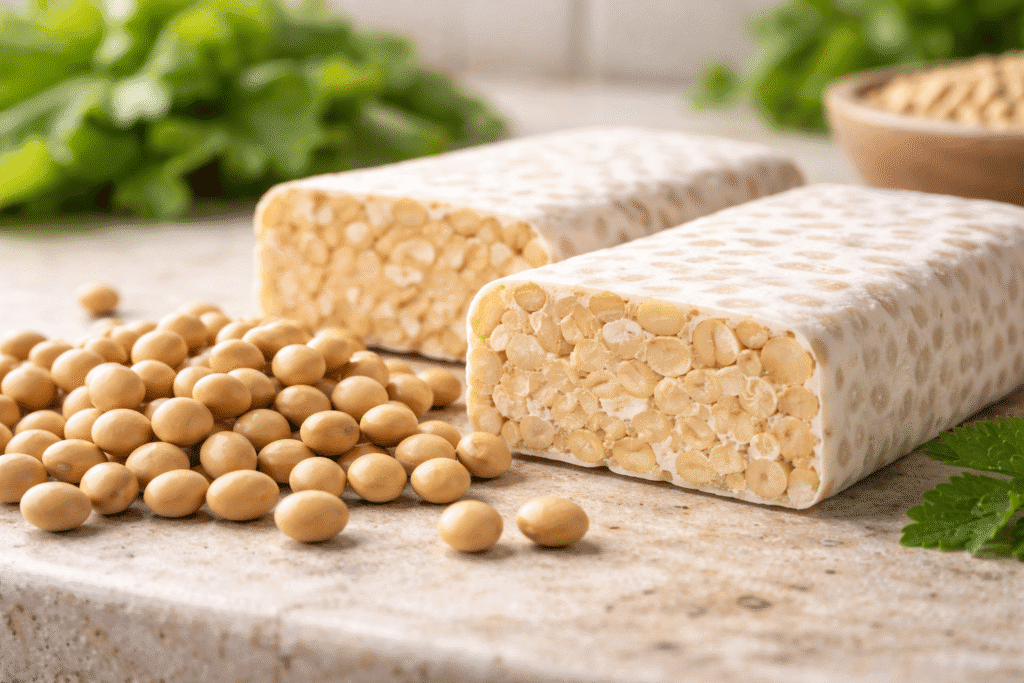
Whole soybeans preserve their full nutritional profile because the entire bean is used without extraction or fractionation.
Nothing is extracted or stripped away. According to the USDA, 100 grams of these beans deliver about 36.5 grams of protein and 9.3 grams of fiber.
Insights from the Harvard T.H. Chan School of Public Health indicate
“Soy is a nutrient-dense source of protein that can safely be consumed several times a week and its benefits depend on the type of soy food being studied. Is it a whole food like tofu or soybeans, or a more processed food like soy-based veggie burgers or protein powder? While half a cup of cooked soybeans has 55mg of isoflavones, for example, a soy burger has only 5mg.” – Harvard T.H. Chan School of Public Health
When an ingredient stays whole, its nutrients stay in their natural balance. They work together. We’ve seen this firsthand in our kitchen. For insight on processing choices, see our article on are dehulled soybeans better.
Whole beans hold onto their natural oils and their fibrous structure through cooking and fermentation. Once soy gets processed into an isolate or a concentrate, you lose a lot of that. The final product is different.
Here’s what you find in a whole soybean:
- A complete plant protein profile, roughly 36.5g per 100g serving.
- A solid amount of dietary fiber, around 9.3g.
- Polyunsaturated fats.
- Minerals like iron and magnesium.
- A range of phytonutrients.
Bioactive Compounds Maintained in Whole Beans
Whole soybeans typically contain 90–150 mg of isoflavones per 100g, though levels vary by soybean variety and growing conditions. Soybeans have natural plant compounds that add to their value.
These include isoflavones such as genistein and daidzein, along with polyphenols and other antioxidants naturally present in soybeans. They’re part of what makes the bean nutritious.
The problem with heavy processing is that it often damages or removes these compounds. Heat, chemical extraction, and refinement can break them down.
Nutrient Changes During Processing
Processing changes soy on a fundamental level.
- High heat and extraction methods can degrade sensitive nutrients.
- Making an isolate strips out all the natural dietary fiber.
- The concentration of beneficial plant compounds often drops.
For what we make, starting with the intact bean makes a clear difference in the final food’s quality and nutrition. If you want to see the full breakdown, the detailed data is available from the USDA’s FoodData Central database.
How Whole Non-GMO Soybeans Support Health and Safety
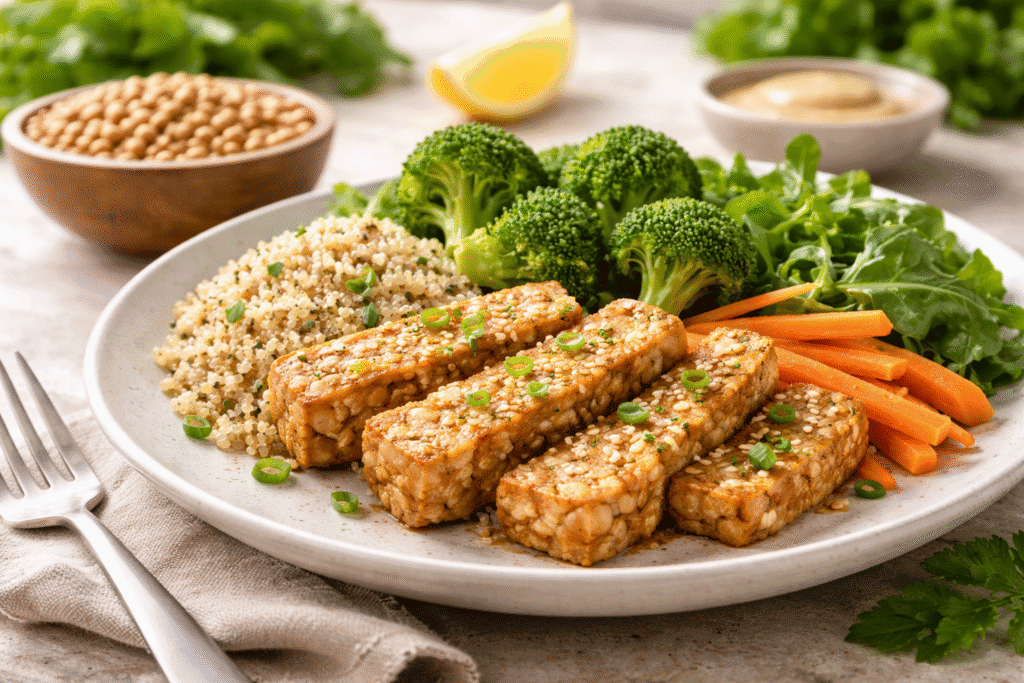
Whole, non-GMO soybeans deliver a complete package of plant protein, fiber, and beneficial compounds.
They avoid the genetic modifications some other crops use. Health bodies, like the WHO, point to legumes as foods that can support heart and metabolic health.
In our regular use, that balanced nutrition is clear. The beans bring protein, fiber, and healthy fats together in a single, whole ingredient.
You can see this in practice with fresh tempeh, where fermentation preserves the bean’s full nutritional profile while creating a firm, flavorful product. This combination supports health in a few specific ways.
Cardiovascular Support
The nutrients in whole soybeans are linked to heart health.
- Their high fiber content can help manage cholesterol absorption.
- They’re naturally low in saturated fat.
- They contain no dietary cholesterol.
For these reasons, they work well as a primary protein in plant-based eating.
Blood Sugar and Metabolic Balance
These beans also help with maintaining steady energy levels.
- Their protein slows down the digestion of carbohydrates.
- The fiber helps moderate blood sugar response.
- Compared to refined carbs, they have a low glycemic impact.
In a practical sense, this means they provide sustained energy without sharp spikes.
Natural Food Composition
Many people choose whole, non-GMO soybeans because the ingredient itself is straightforward. It involves fewer processing steps, maintains its whole-food structure, and keeps its naturally occurring plant compounds.
In our work, that intact structure does more than just look good on a label. It’s functional. For a fermented food like tempeh, it gives the beneficial cultures a better matrix to work with, which we believe contributes to both the quality and the safety of the final product.
Do Non-GMO Soybeans Reduce Agricultural Chemical Exposure?
Non-GMO soybean farming tends to use different methods. Organizations like the FAO note it often relies on crop rotation and managing pests in an integrated way, instead of systems built around herbicide-resistant crops.
When we started sourcing our beans, we visited farms and talked to growers. A lot of the non-GMO operations we work with use these more traditional field practices.
They’re not built for a single, repeated chemical application. That difference can affect both the environment and how traceable an ingredient is.
Concerns Often Raised About Herbicide Systems
Some modern crop systems are engineered to withstand specific herbicides. This has led to a few common concerns in farming circles and among consumers:
- Increased herbicide use in some areas.
- Worries about chemical residues on food.
- A trend toward less crop diversity in fields.
Practices Common in Non-GMO Farming
The non-GMO farms we’re familiar with generally focus on agricultural diversity. Their typical practices look different.
- Rotating soybeans with other crops, like corn or wheat.
- Using integrated pest management, which combines different control tactics.
- Paying close attention to soil health.
In our experience, these approaches aren’t just about avoiding GMOs. They’re about supporting soil stability and making a farm more resilient over the long term. It’s a system that makes sense to us.
For more on global agricultural methods, the Food and Agriculture Organization (FAO) provides a lot of detailed research.
How Whole Non-GMO Soybeans Support Environmental Sustainability
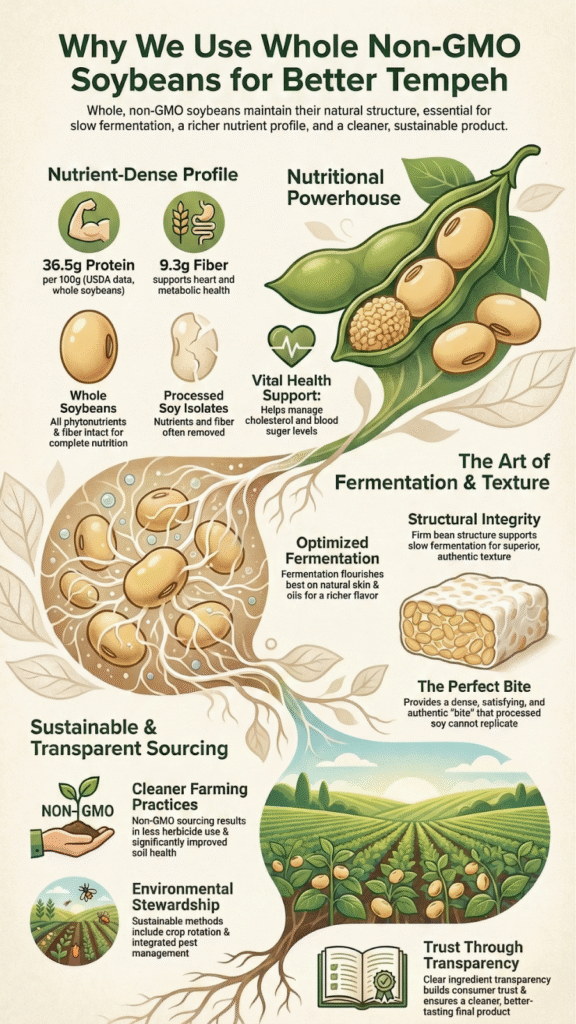
Non-GMO farming typically relies on Integrated Pest Management (IPM). Because these crops aren’t engineered to withstand specific herbicides, farmers often use crop rotation, alternating soy with wheat or corn, to manage weeds naturally.
As noted by the Rodale Institute, diversified crop rotation systems can increase soil organic matter and microbial diversity, improving long-term soil fertility.
For us, sustainability got real when we started sourcing beans locally. Visiting those farms, you see the connection.
Shorter supply chains mean fresher ingredients, but they also let you see the environmental impact, or the lack of it, firsthand. Using the whole bean adds to this, as it provides a dense source of plant protein without the waste of heavy processing.
Environmental Advantages
Growing non-GMO soy this way links to a few clear benefits.
- It improves the health of the soil itself.
- It reduces dependence on single-crop, monoculture systems.
- It encourages greater biodiversity within the farm’s cycle.
These aren’t abstract ideals. They’re methods that help keep farmland productive for the long term.
Farming Methods Often Used
The growers we work with typically use a set of interconnected techniques:
- Rotating soybeans with other crops.
- Focusing on soil regeneration.
- Managing pests through an integrated approach.
Environmental Comparison
| Factor | GMO Soy Farming | Non-GMO Soy Farming |
| Herbicide reliance | Higher in many common systems | Generally lower in diversified setups |
| Biodiversity impact | Often reduced | Typically improved |
| Crop diversity | Monoculture is standard | Crop rotation is more frequent |
From what we’ve observed, that agricultural diversity pays off. It builds resilience into the farm and, by extension, into the wider food system it supports.
FAQ
Why do many producers choose whole non-GMO soybeans for tempeh?
Many producers choose whole non-GMO soybeans for tempeh because they support reliable fermentation and consistent ingredient quality.
The benefits of whole non-GMO soybeans include stable whole soybean quality for fermentation and a clean, natural soybean flavor.
Using natural soybeans for tempeh production supports whole bean soy fermentation and helps maintain traditional soybeans for tempeh practices.
How do whole soybeans improve texture and structure in tempeh?
Whole soybeans improve tempeh texture because intact beans hold their shape during fermentation. When comparing whole soybeans vs split soybeans, whole beans create better structure in tempeh and support stronger binding.
This process produces dense tempeh texture and firm tempeh blocks. Whole soybeans for better binding also help maintain stable fermentation quality and consistent texture.
What nutritional advantages do whole non-GMO soybeans provide?
Whole non-GMO soybeans advantages include strong nutritional value because the beans remain intact and minimally processed. Whole soybeans whole bean nutrition provides balanced protein and fiber along with rich plant nutrients.
As a plant based protein source and natural protein source, whole soybeans support nutrient preservation and contribute to healthier tempeh and high fiber foods.
Why are whole soybeans often preferred in traditional tempeh fermentation?
Whole soybeans are preferred in traditional fermentation because they support stable microbial growth. Whole soybeans fermentation friendly beans provide a natural fermentation substrate that supports natural fermentation culture development.
Traditional fermentation methods rely on whole soybeans for authentic tempeh and traditional Indonesian tempeh because the beans maintain ingredient integrity and consistent fermentation stability.
Why do some people prefer foods made with whole non-GMO soybeans?
Many people prefer foods made with whole non-GMO soybeans because they value simple ingredients and clear sourcing. Non-GMO soybeans support food transparency, responsible sourcing, and traceable sources that build consumer trust.
Whole soybeans minimal processing and clean ingredient choices also align with whole food principles and support sustainable protein ingredients in natural foods.
Why Whole Non-GMO Soybeans Make a Real Difference
You can tell when fermented foods start with weak ingredients. The texture feels off, the flavor feels thin, and the nutrition doesn’t feel as satisfying. When soy is heavily processed, it loses the natural balance that makes traditional foods like tempeh so nourishing. At SoyaMaya, we use whole non-GMO soybeans so fermentation builds a firm texture, richer flavor, and naturally satisfying protein and fiber.
Curious to taste the difference? Explore SoyaMaya tempeh
References:
- https://www.nongmoproject.org/blog/a-soy-story-meet-plant-based-cuisines-star-ingredient/
- https://nutritionsource.hsph.harvard.edu/soy/
Related Articles:
- https://mayasaritempeh.com/fresh-tempeh/
- https://mayasaritempeh.com/whole-vs-split-soybeans-in-tempeh/
- https://mayasaritempeh.com/are-dehulled-soybeans-better/
SoyaMaya Fresh Tempeh
Traditionally fermented, no preservatives, shipped fresh and frozen to your door. The real deal, direct from us.
