
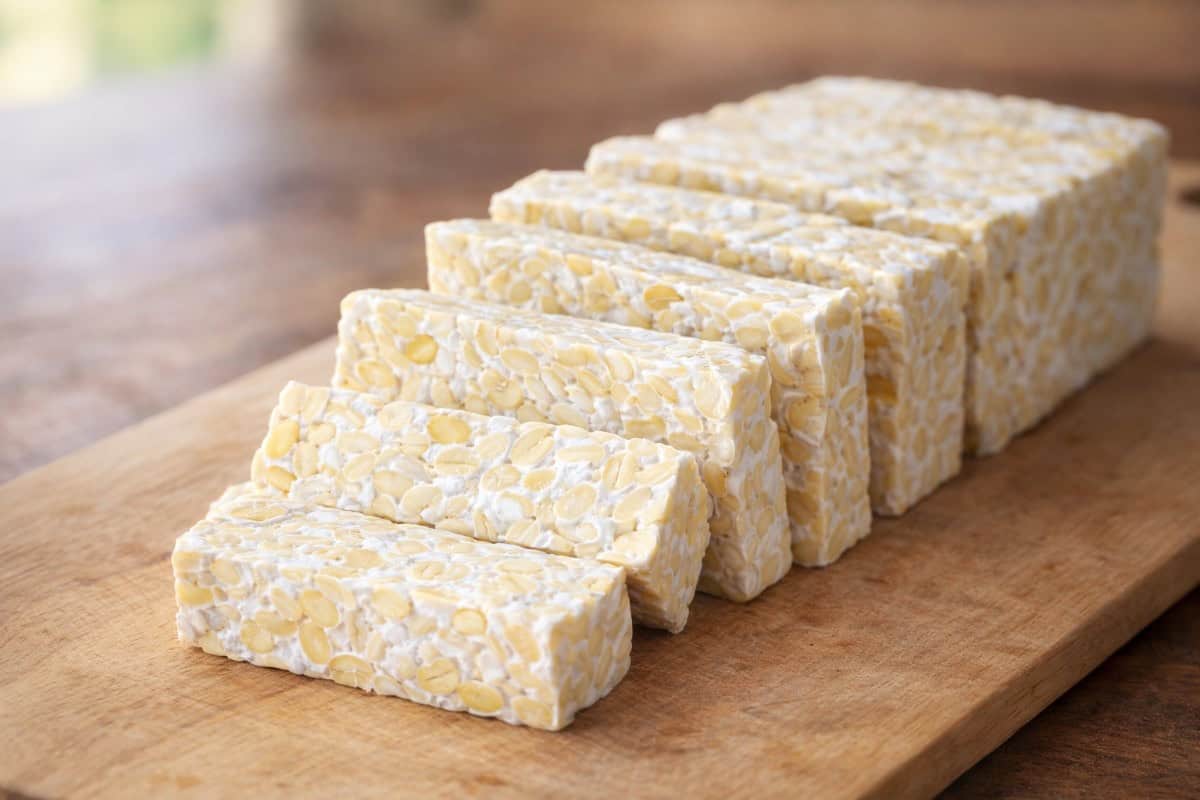
You can find fresh, artisanal tempeh at farmers’ markets or specialty shops. It’s a whole soybean cake, fermented in small batches and left unpasteurized, which means it’s a living food. Unlike the pasteurized, plastic-wrapped versions you see in most stores, this one’s teeming with probiotics and a deeper, nuttier flavor.
I’ve seen the difference on the shelf, one looks like a food product, the other feels like real food. If you’ve only tried the bland, mass-produced kind, you’re missing out. There’s a whole world of texture and taste waiting. Stick around, we’re just getting started.
Key Takeaways
- It’s defined by live cultures, traditional small-batch methods, and enhanced nutrition from live cultures.
- The process creates a uniquely firm, meaty texture and a nutty, earthy flavor.
- Sourcing authentic tempeh supports gut health, culinary quality, and skilled artisans.
What Is Fresh Artisanal Tempeh?
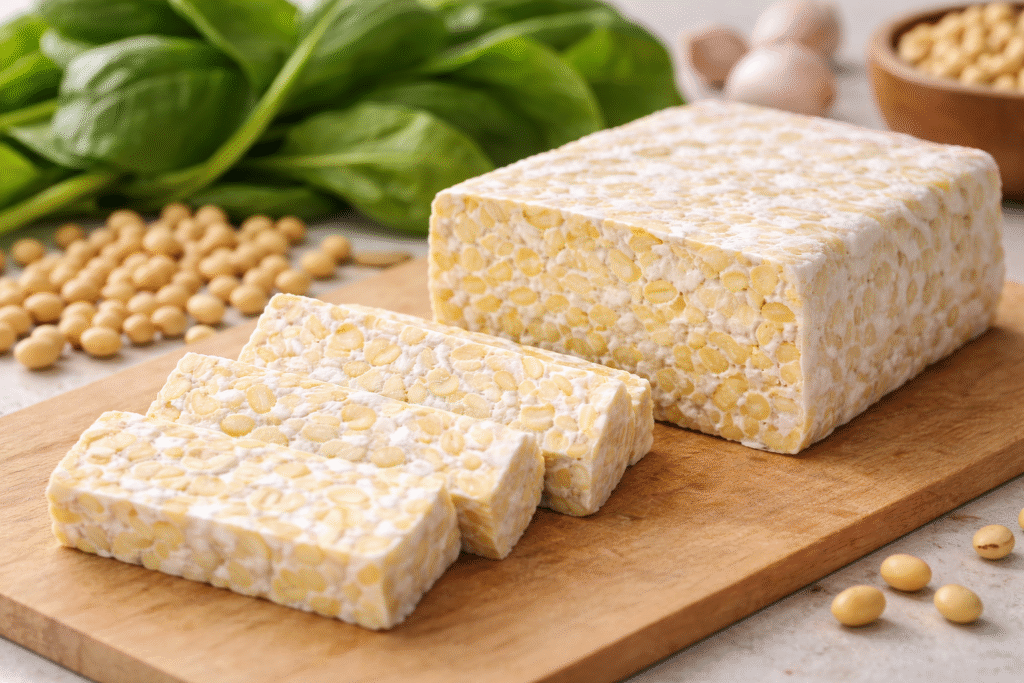
Think of it as the sourdough of soy. Fresh artisanal tempeh is whole soybeans bound by a dense, white mycelium from Rhizopus mold, fermented slowly in small batches.
Soya Maya Fresh Tempeh is made the traditional way — no preservatives, no shortcuts. Delivered to your door.
Order Fresh Tempeh →The “artisanal” tag means it’s crafted with care, often using traditional techniques and left unpasteurized to preserve its living probiotics.
It’s not an industrial commodity, it’s a cultivated food. Artisans like SoyaMaya treat each batch this way, starting with organic Indiana beans. The goal isn’t just a product, but a preserved piece of a food tradition that’s alive in every sense.
How Is Small-Batch Tempeh Made?
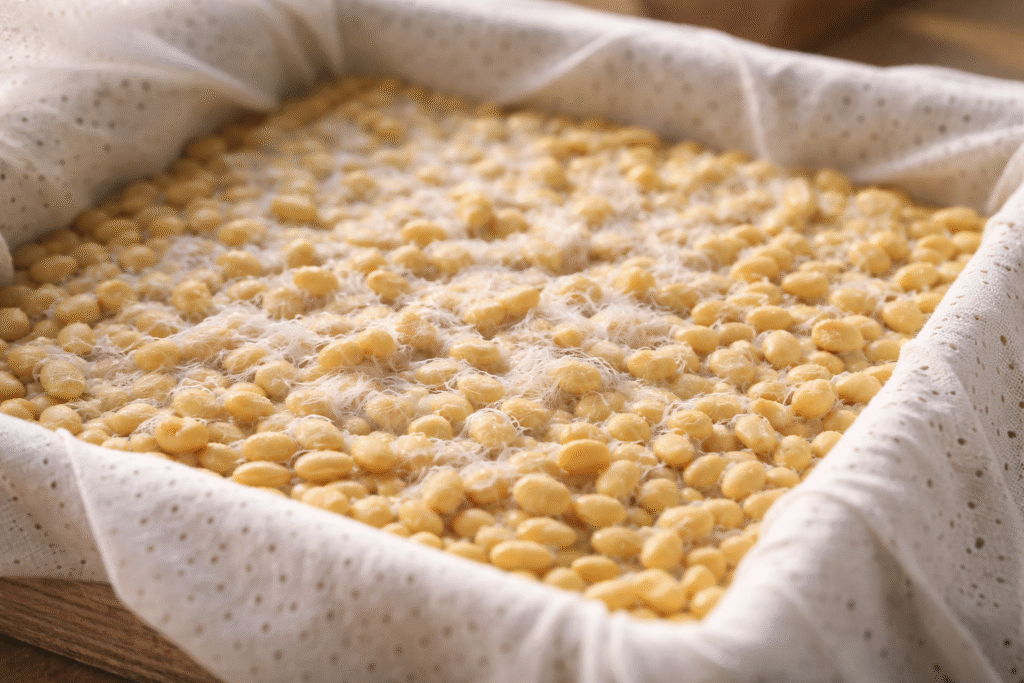
The method is deceptively simple, a quiet alchemy. Whole soybeans are soaked, dehulled, and cooked. After cooling, they’re mixed with a live starter culture of Rhizopus spores. This inoculated mixture is then laid out to incubate.
It needs steady warmth, about 30°C (86°F), and good airflow. Over 24 to 48 hours, the white fungal threads grow, weaving the beans into a solid, warm cake.
We use perforated bags for incubation, mimicking the breathable nature of traditional banana leaves. It’s a process you can’t hurry. Each batch is a testament to patience, resulting in a dense, cohesive block where the beans are still visible, held fast by the fungal network.
If you’re looking to elevate your snacks, the creamy dips for crunchy chips complement the firm texture and deep flavor perfectly.
Benefits of Unpasteurized Tempeh
The key difference lies in the heat. Commercial tempeh is usually pasteurized, heated to kill microbes for shelf stability. Unfortunately, this also destroys the live probiotics created during fermentation. Unpasteurized, artisanal tempeh keeps these beneficial cultures intact.
- These live probiotics directly support a healthy gut microbiome.
- The fermentation process pre-digests proteins and breaks down phytic acid, boosting nutrient absorption.
- It may produce B12 analogs, potentially supporting plant-based diets (though human bioavailability varies) for energy and metabolism often lacking in plant-based diets.
You’re not just eating protein, you’re consuming a functional, digestive-aid food.
What Does Fresh Tempeh Taste Like?
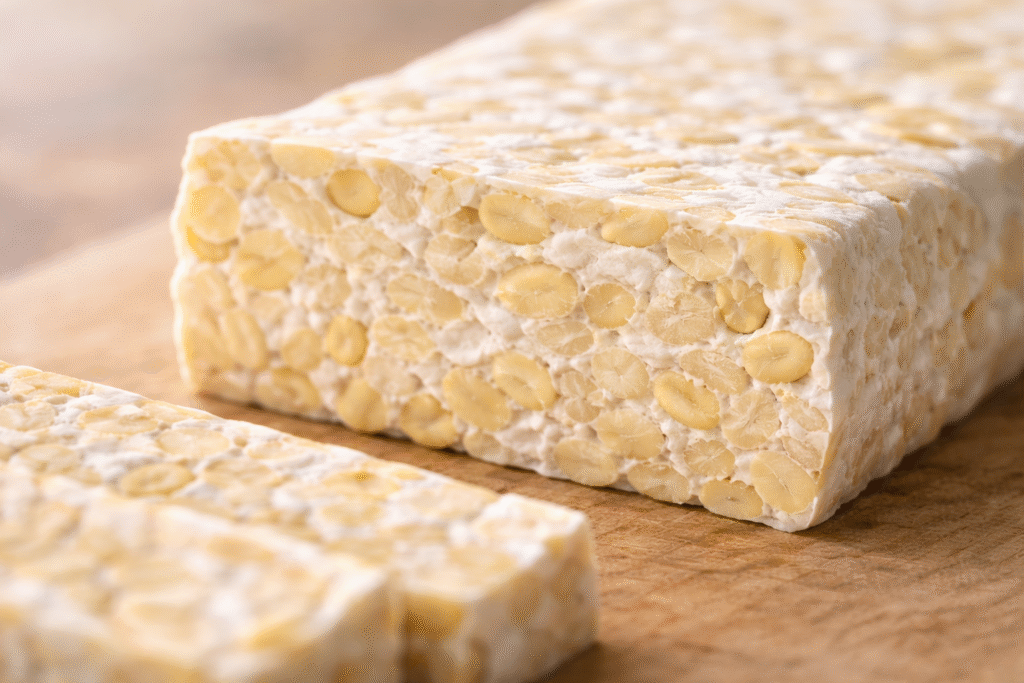
Forget everything you think you know about tempeh. The stuff from the back of the supermarket fridge? That’s not the real thing. Real, fresh tempeh is something else entirely.
You open the package and get a whiff of clean earth, like mushrooms just pulled from the ground, maybe a faint hint of fresh yeast. Nothing sour, nothing funky. That’s your first clue you’ve got the good stuff. So what does it actually taste like?
- Mild and Nutty. Think walnuts or almonds, but softer. It’s not bitter at all.
- Earthy and Savory. There’s a gentle, mushroom-like umami that sits in the background.
- Clean and Simple. The flavor is pure, it tastes like soybeans, but better. Like the bean finally became its best self.
If you want to explore new flavors, you might enjoy pairing it with fresh tempeh crafted with care and vibrant living cultures.
Sometimes you’ll see little gray or black specks in the block. Don’t freak out. Those are just the Rhizopus spores (the “starter” that makes tempeh, tempeh). They’re harmless, and they often mean the flavor gets deeper, more complex. Like nuts that have been aged a bit.
That’s the key, really. The taste isn’t something added. It’s the soybean itself, transformed by a living, breathing process. It’s quiet food, but it has a lot to say.
Finding Authentic Indonesian Tempeh
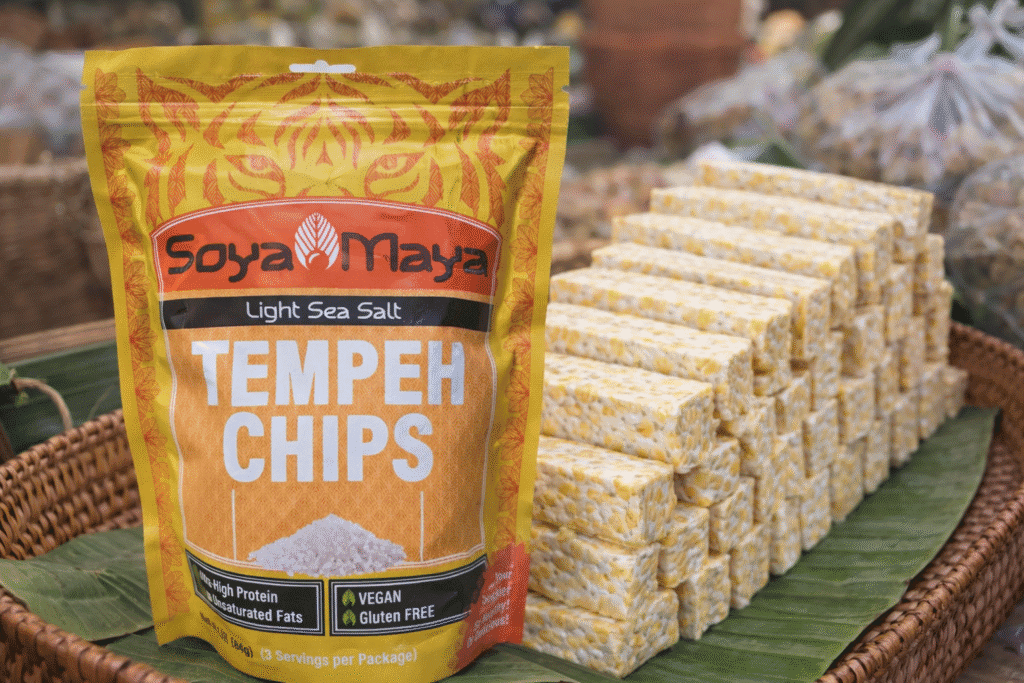
So, how do you find the real deal outside of Indonesia? You have to look at the details. In Indonesia, they call it tempe segar, fresh tempeh. You buy it from a market stall, sometimes still warm from the fermenter. That’s the benchmark. That’s what you’re trying to get close to.
Finding that level of authenticity means finding producers who treat it as a craft, not just a product. You have to look for a few key things:
- Unpasteurized. This is the big one. Pasteurization kills the culture and changes the flavor and texture. The label should say it.
- Small Batches. Mass production and traditional fermentation don’t mix well. Look for companies that talk about small-batch making.
- The Right Beans. Where the soybeans come from matters. Organic and non-GMO beans are a good sign of care from the very start [1].
“The GM soybean is one of the most widely used genetically modified plants in the world today.” – Tofu Deli
Producers like SoyaMaya, authenticity is about building that bridge. We use beans from farms we know in the Midwest, but we ferment them with the same respect for the process we learned from tradition.
It’s not about copying Indonesia, it’s about carrying the same spirit of the craft. The beans, the care, the living culture, that’s what defines the real thing.
Why Choose Artisanal Over Commercial?
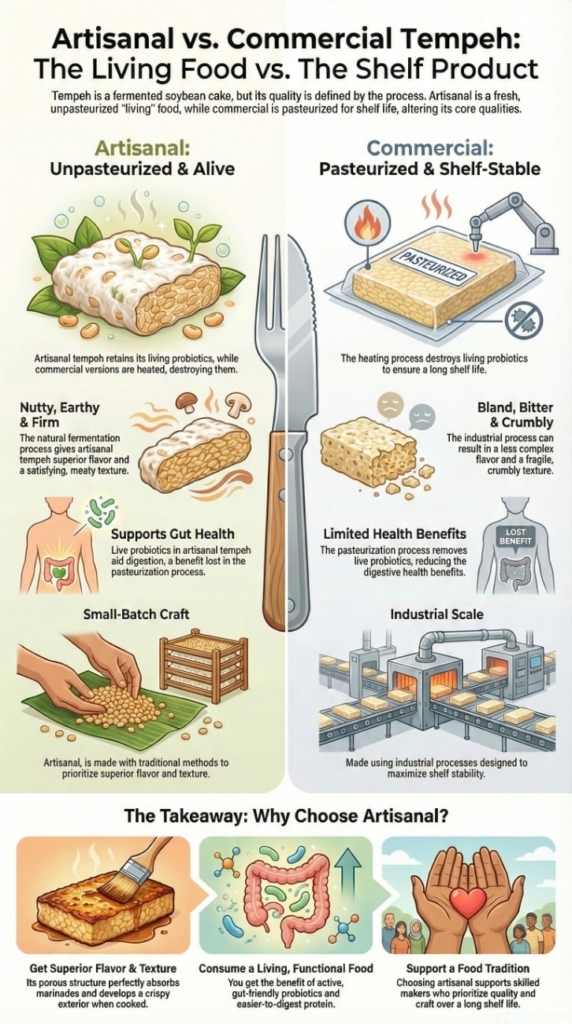
It’s a simple choice, really. Do you want a living food, or a product built for a shelf? Commercial tempeh is designed to last. They pasteurize it, which means they heat it up to kill the living culture inside.
That’s what gives it a long shelf life. But that process changes things. The texture can get drier, sometimes a little crumbly. You might even notice a faint, unpleasant bitterness that wasn’t there before. Artisanal tempeh is different. It’s made for flavor, not for sitting in a warehouse.
- It’s Alive. The Rhizopus culture is still active, which means the flavor keeps developing.
- Better Texture. It stays firm and pleasantly chewy, not dry or mealy.
- Cleaner Taste. No off-flavors from preservatives or processing.
Sure, it won’t last as long in your fridge, maybe 3-7 days refrigerated. But that’s the point. You’re trading long shelf life for something real.
Think of it like this: commercial tempeh is a shelf-stable pudding cup. Consistent, stable, inert. Artisanal tempeh is a cup of fresh, live-culture yogurt. It’s perishable, vibrant, and full of life. You’re choosing the food, not just the package.
| Feature | Artisanal Tempeh | Commercial Tempeh |
| Fermentation Method | Small-batch, traditionally fermented | Industrial-scale processing |
| Pasteurization | Unpasteurized | Pasteurized for shelf stability |
| Texture | Firm, dense, and cohesive | Often drier or crumbly |
| Flavor | Nutty, earthy, and clean | Mild or slightly bitter |
| Shelf Life | Shorter (about 3–7 days refrigerated) | Longer, shelf-focused |
| Culinary Use | Absorbs marinades and sauces deeply | Limited flavor absorption |
What Makes Tempeh High Quality?
Judge it with your eyes, hands, and nose. A high-quality block is firm and dense, not crumbly or soft. The mycelium should be a thick, creamy-white blanket, binding the beans into a solid cake you can slice cleanly.
It should smell pleasantly nutty and earthy. Gray or black spore spots are normal and indicate full fermentation.
Avoid any block with a sour, ammonia-like, or alcoholic smell, or any sign of slime. The block should feel substantial, with a slight give but no mushiness. That perfect structure is the direct result of ideal fermentation conditions, nothing rushed.
The Texture of Fresh Tempeh
This is where tempeh earns its place in the kitchen. The texture is uniquely firm, chewy, and meaty.
Fresh tempeh has a soft, mushroom-like aroma which comes from the aroma of the mold mycelium mixed with the delicious aroma of free amino acids and the aroma produced by the breakdown of fat – Wa Ode Karmila et al, Pattimura Journal of Biology and Learning
Because you can see the individual beans held in a porous mycelial net, it absorbs marinades, sauces, and spices incredibly well, right to its core. This porosity allows for deep flavor penetration whether you’re pan-frying, baking, or crumbling it.
- Pan-Fry: Creates a crispy exterior with a tender, flavorful interior.
- Crumble: Perfect for tacos or chili, offering a satisfying, ground meat-like texture.
- Stew or Braise: Holds its shape beautifully, absorbing the surrounding flavors.
It’s a versatile, substantial texture that makes it a compelling centerpiece.
Who Makes Handcrafted Tempeh?
It’s a global community rooted in local practice. In Indonesia, it’s a vast network of small-scale producers, part of the fabric of daily food culture.
Elsewhere, it’s often driven by passion, fermentation enthusiasts, chefs, or families wanting to recreate a traditional food. These makers share a hands-on approach. They’re personally involved in the soaking, inoculating, and incubating.
Artisanal makers maintain hands-on checks, that hands-on check, that sensory evaluation of each fermentation, remains non-negotiable. It’s this personal touch that defines the “handcrafted” label.
Where to Buy Fresh Tempeh
Your best bets are local artisans, farmers’ markets, specialty health food stores, or direct-from-producer online shops. When searching, prioritize those who are transparent about their process.
Many, like us, sell it frozen. Freezing is a gentle way to pause the fermentation at its peak, preserving the live cultures and fresh quality until it reaches your kitchen.
It’s a practical solution for getting authentic, living tempeh no matter where you are. Look for the story behind the product, it’s usually a good indicator of what you’ll find inside the package.
FAQ
Is unpasteurized tempeh safe to eat, and how is food safety maintained?
Unpasteurized tempeh is safe to eat when it is produced under controlled and sanitary conditions. Proper tempeh production depends on clean soybean fermentation, active Rhizopus mold, and consistent tempeh incubation at around 30°C. When fermentation is done correctly, beneficial microbes dominate and limit harmful bacteria. High-quality tempeh should never smell sour, alcoholic, or slimy, which can indicate contamination such as E. coli.
How does artisanal tempeh affect digestion compared to other plant-based protein foods?
Artisanal tempeh is easier to digest because soybean fermentation breaks down complex proteins and carbohydrates before consumption. This process improves tempeh digestibility and supports tempeh digestion through prebiotic fiber and live probiotics. Compared to many plant-based protein foods, fresh tempeh is gentler on the digestive system while still providing complete tempeh protein and meaningful tempeh nutrition.
Does tempeh from different regions taste different, like Indonesian or regional tempeh?
Yes, tempeh flavor varies by region due to differences in soybeans, climate, and fermentation methods. Indonesian tempeh, including East Java tempeh and Surabaya tempeh, often follows traditional tempeh practices such as banana leaf tempeh. These regional factors influence fresh tempeh taste, nutty tempeh flavor, earthy tempeh aroma, and mild mushroom-like tempeh notes.
How should fresh tempeh be stored to maintain quality and shelf life?
Fresh tempeh has a shorter tempeh shelf life because it is unpasteurized tempeh. It should be stored under refrigeration to slow tempeh aging and prevent overly funky tempeh or strong yeasty tempeh scent. Freezing fresh tempeh pauses fermentation while preserving tempeh texture, porous tempeh structure, and dense mycelium, making advance storage practical.
What makes high-quality tempeh different from commercial or pasteurized tempeh?
High-quality tempeh has a firm tempeh structure, a chewy tempeh texture, and a cohesive white tempeh block bound by dense mycelium. Small gray tempeh spots are normal signs of maturity. In the artisanal vs commercial comparison, artisanal tempeh retains active cultures, absorbs flavors better during tempeh cooking, and delivers cleaner taste than pasteurized tempeh.
Why Artisanal Tempeh Belongs in a Living Kitchen
Fresh artisanal tempeh brings food back to its roots. It’s alive, intentional, and crafted to nourish rather than simply last. With a clean, nutty flavor, satisfying texture, and naturally active cultures, it fits easily into everyday cooking while offering something deeper than convenience.
Choosing unpasteurized, small-batch tempeh is a commitment to real fermentation, real taste, and real nourishment, one simple ingredient that quietly elevates how you cook, eat, and connect to food’s origins.Experience rooted in Indonesian tradition and crafted with purpose by Soya Maya.
References
- https://tofudeli.id/gmo-versus-non-gmo-soybean/
- file:///C:/Users/Dell/Downloads/14116-Article%20Text-103280-1-10-20250326.pdf
Soya Maya Fresh Tempeh
Traditionally fermented, no preservatives, shipped fresh and frozen to your door. The real deal, direct from us.
