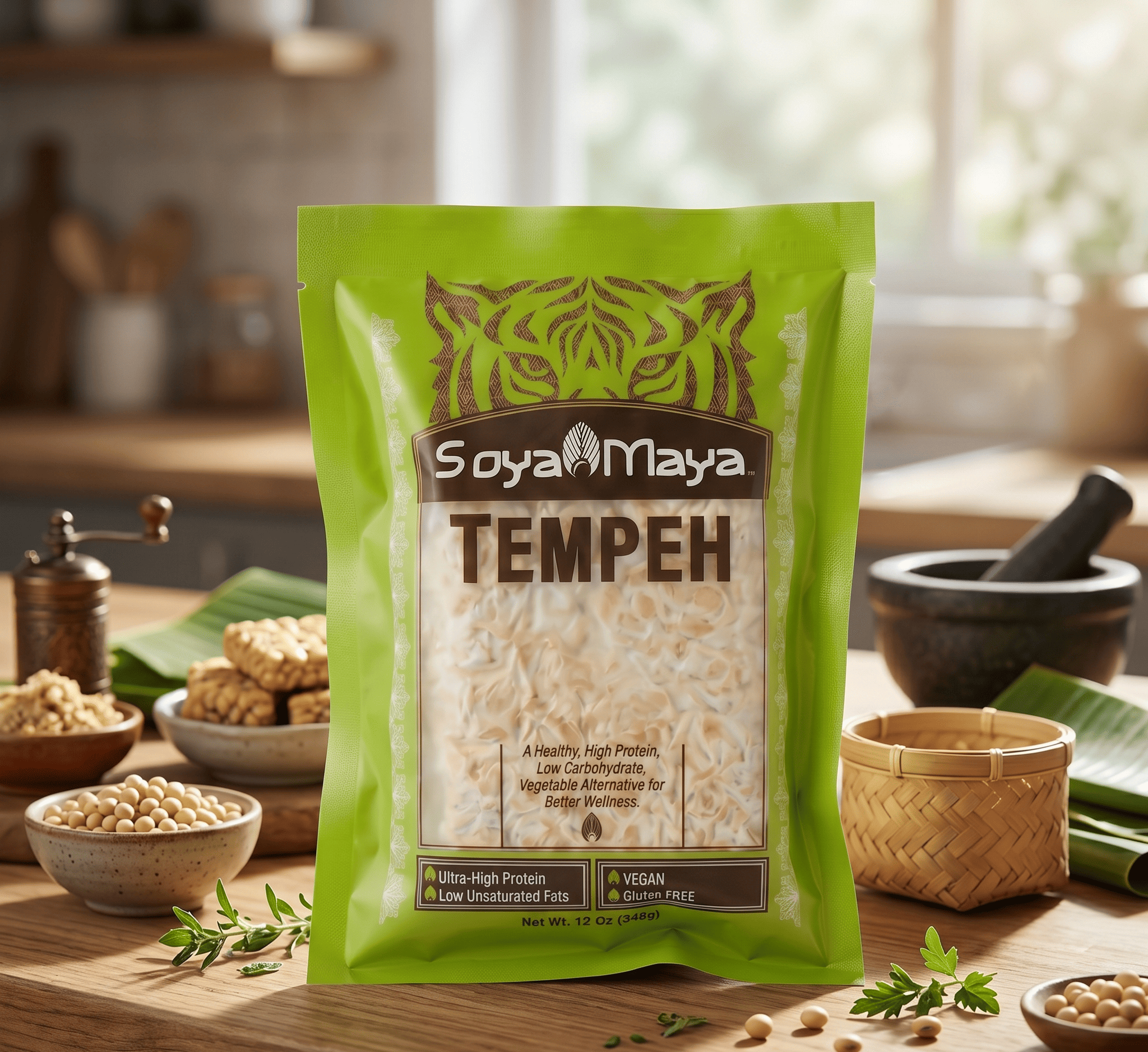
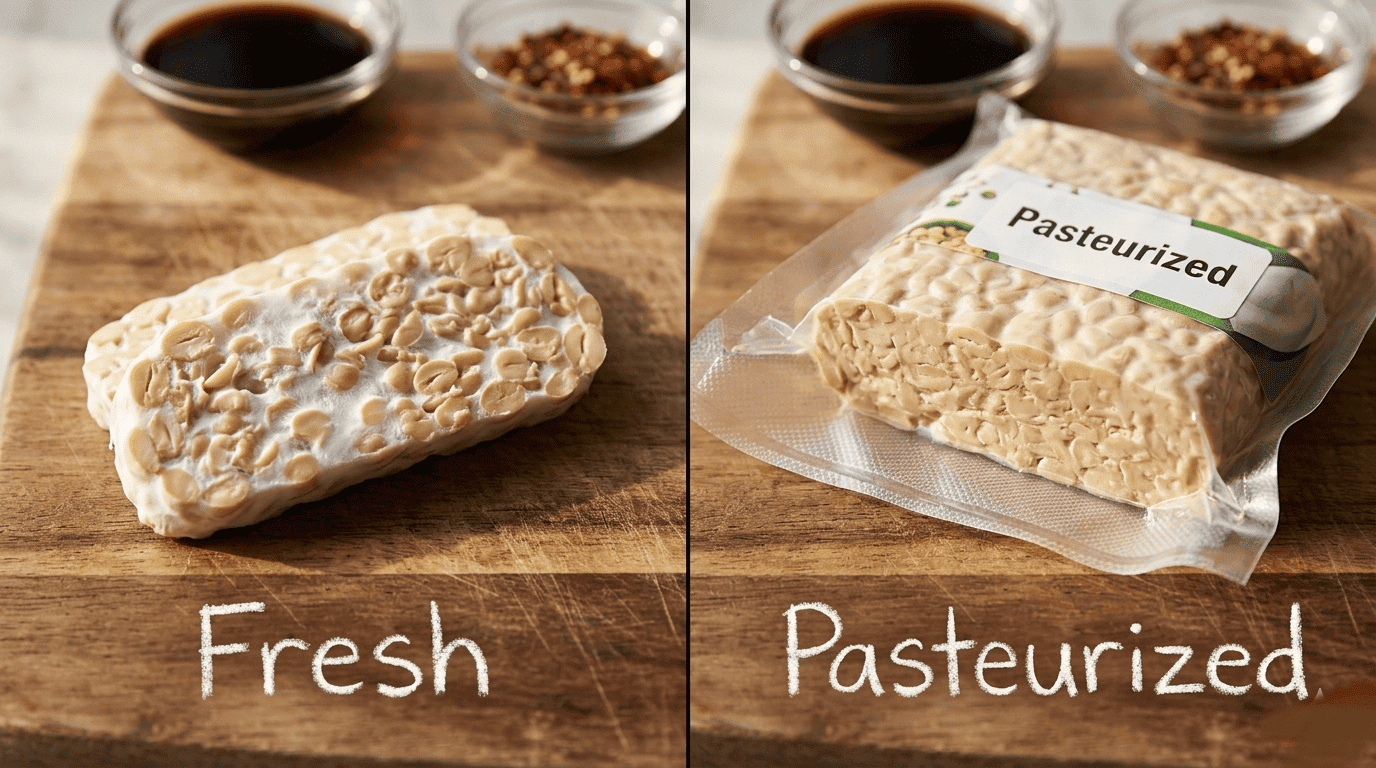
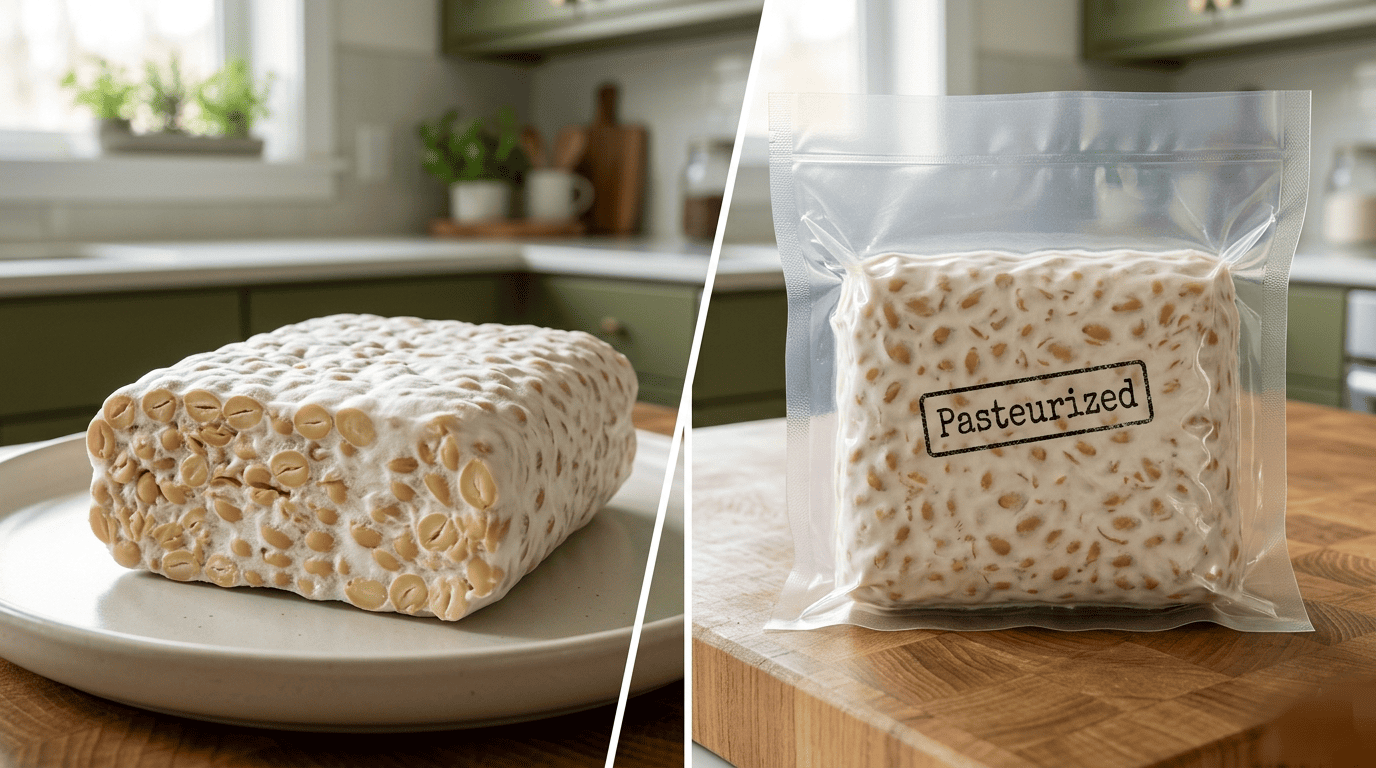
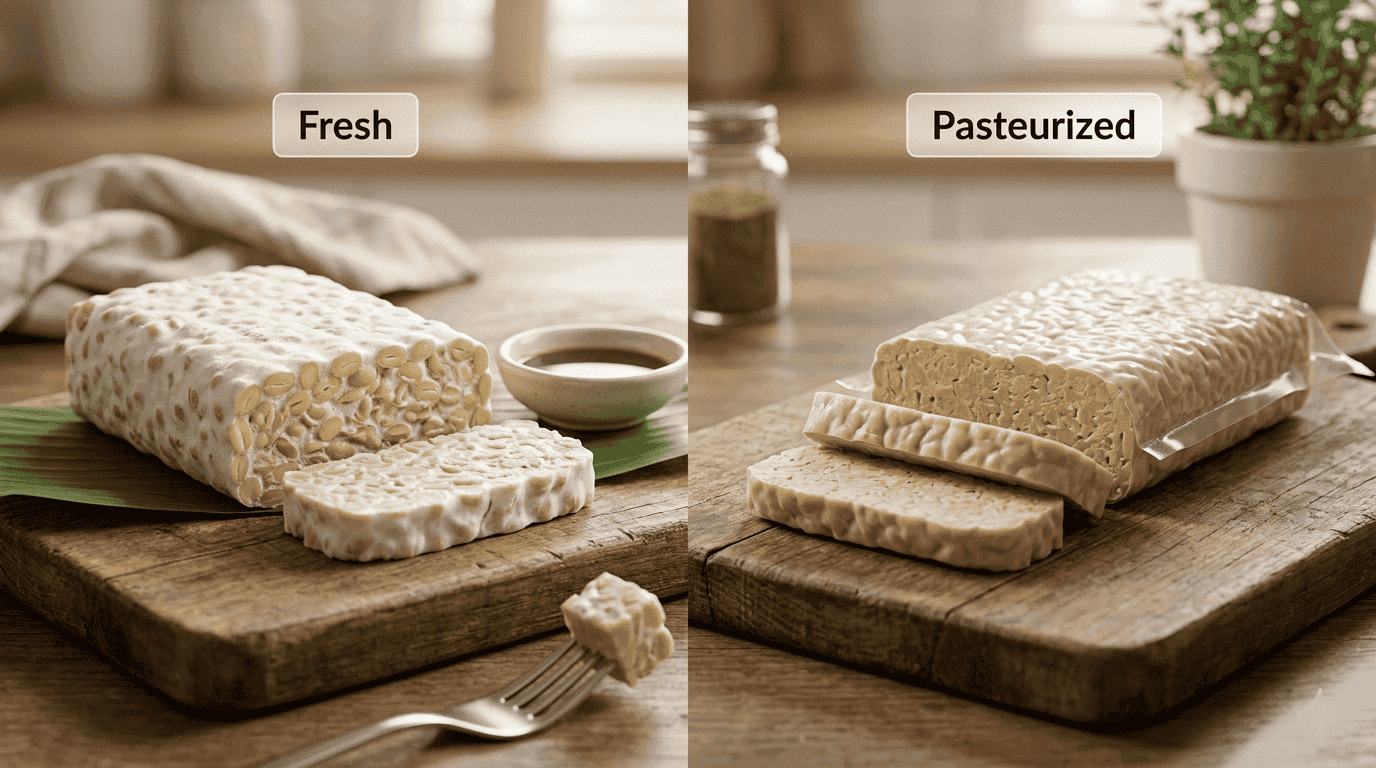
You can't reliably tell if tempeh is pasteurized by its color or smell. You have to check the label and packaging. Most retail tempeh is pasteurized at controlled temperatures (typically…
Fresh tempeh has a nutty, yeasty flavor that feels alive. Pasteurized tempeh is milder, flatter, and can have a slight bitterness. That bitterness happens because pasteurization stops fermentation early. The…
Pasteurized tempeh is fermented soybeans that have been heat-treated to stop fermentation, extend shelf life, and improve food safety while preserving most nutrients. We work with tempeh every day, from…
You're choosing between two different foods. Fresh tempeh is alive, with active cultures and a richer, nuttier taste. The shelf-stable kind has been pasteurized, stopping that activity for safety and…
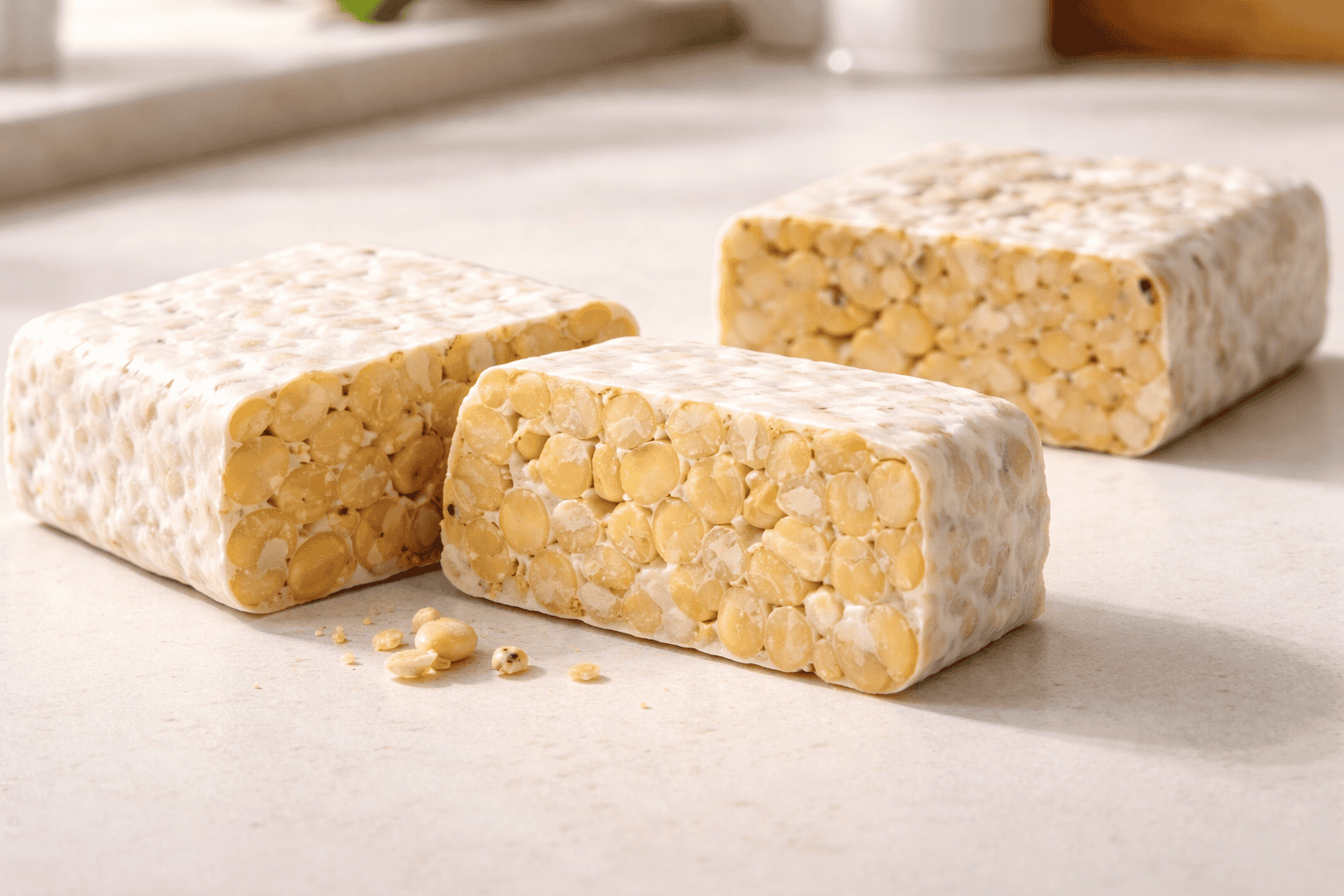
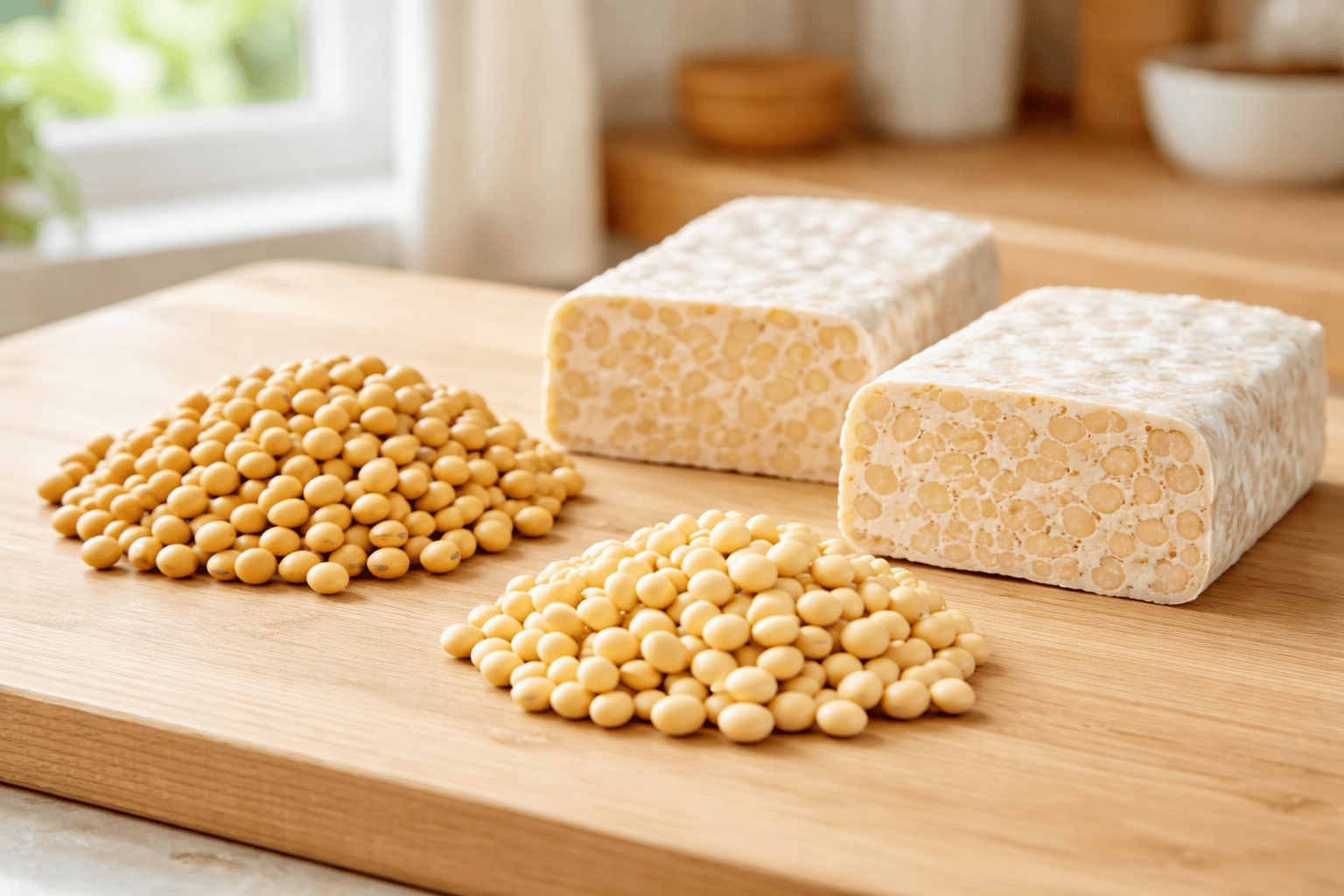
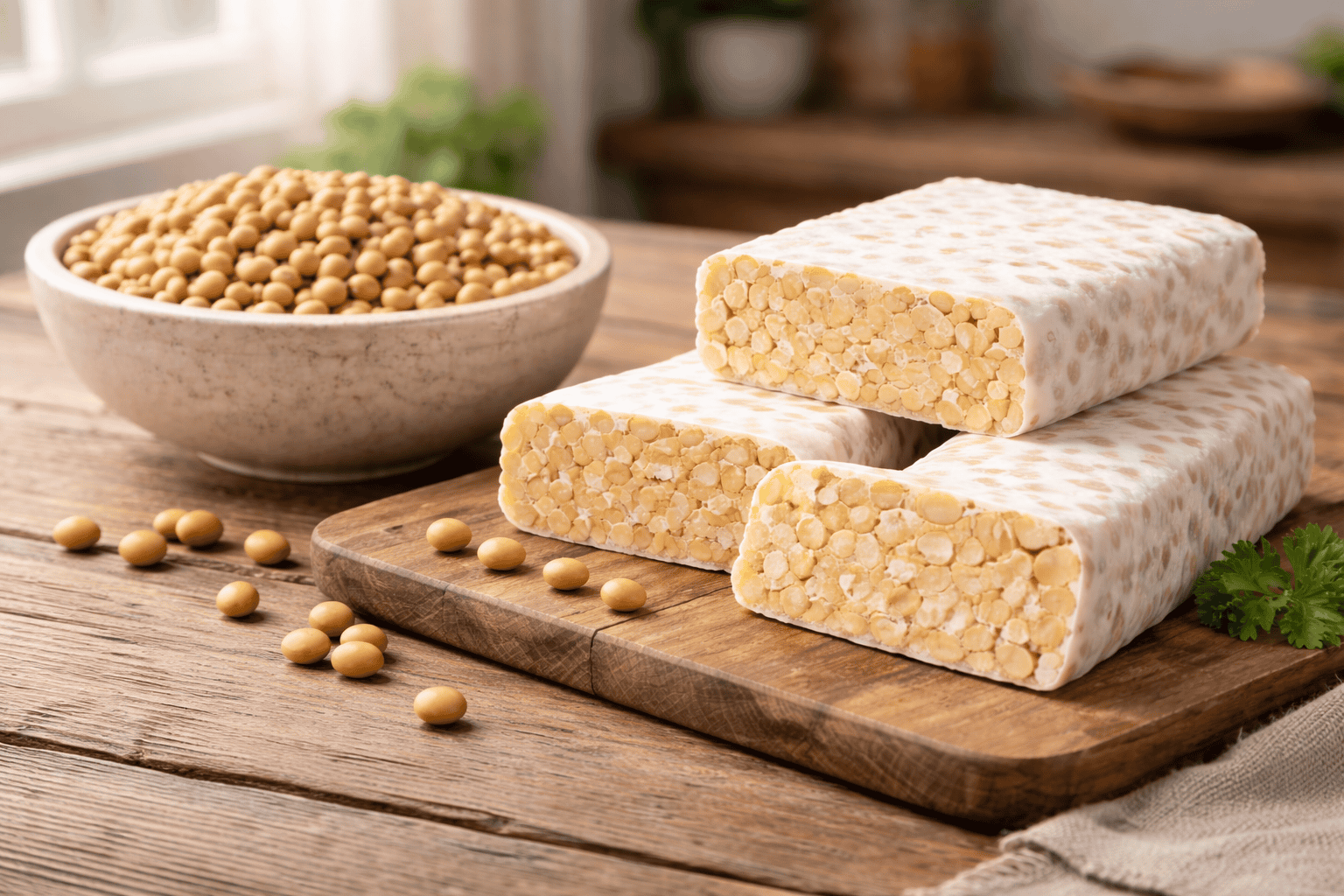
This is what real whole soybean tempeh looks like: a solid block of whole, organic soybeans woven together by a soft white mold. You can see every bean. The texture…
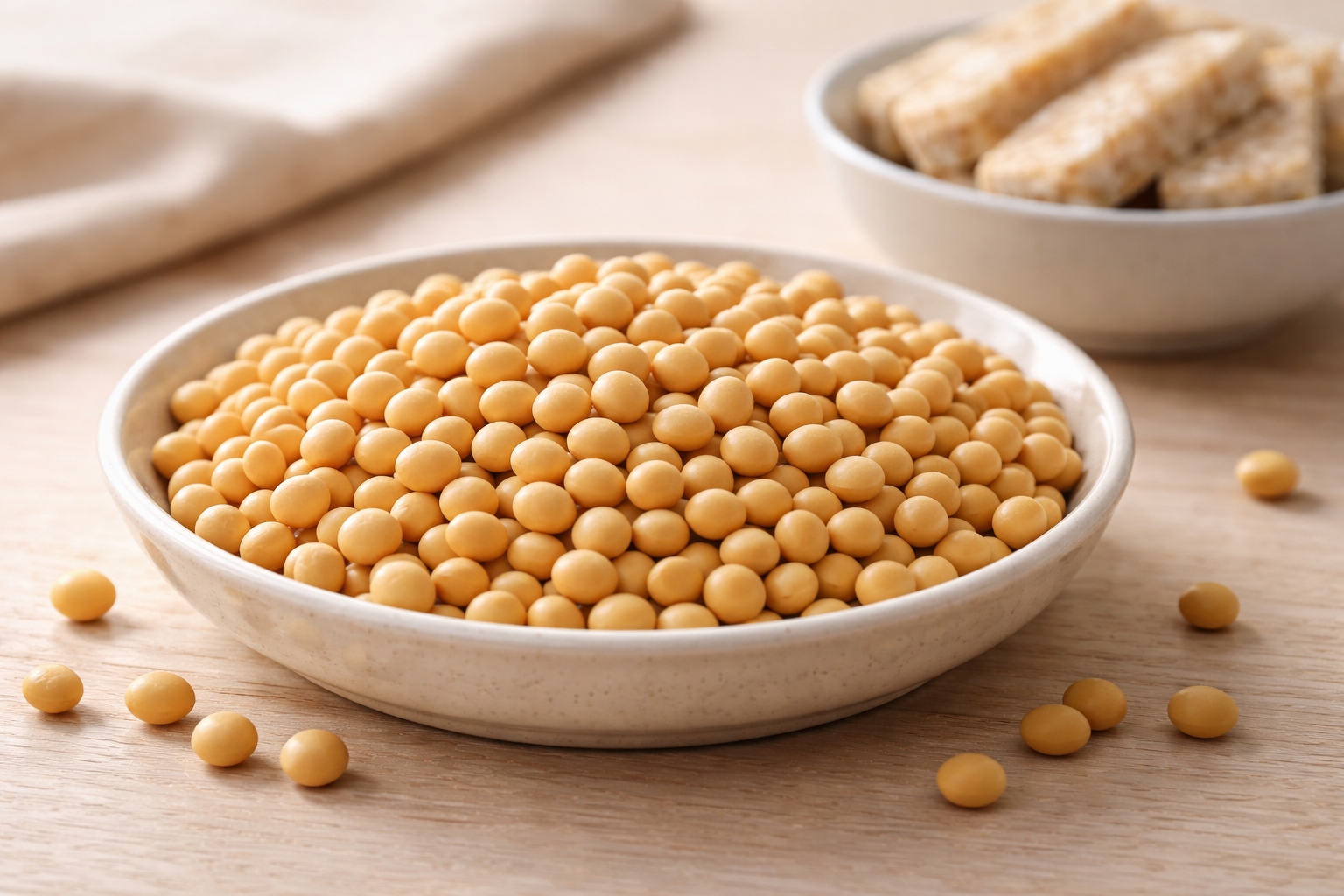
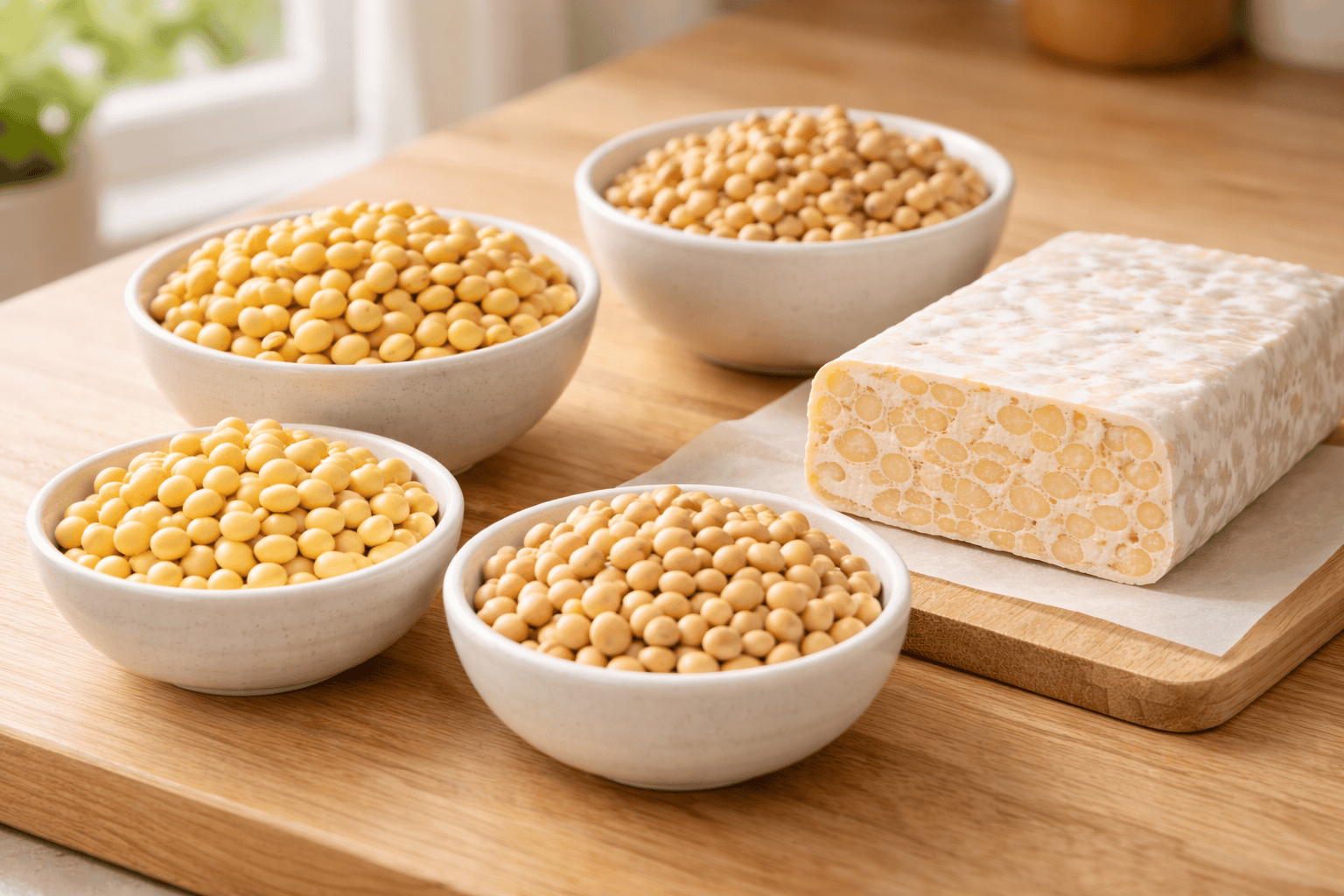
The best soybeans for tempeh are whole, dried yellow soybeans (Glycine max). They give you a firm block, a strong fermentation, and plenty of protein. We've run tests on dozens…
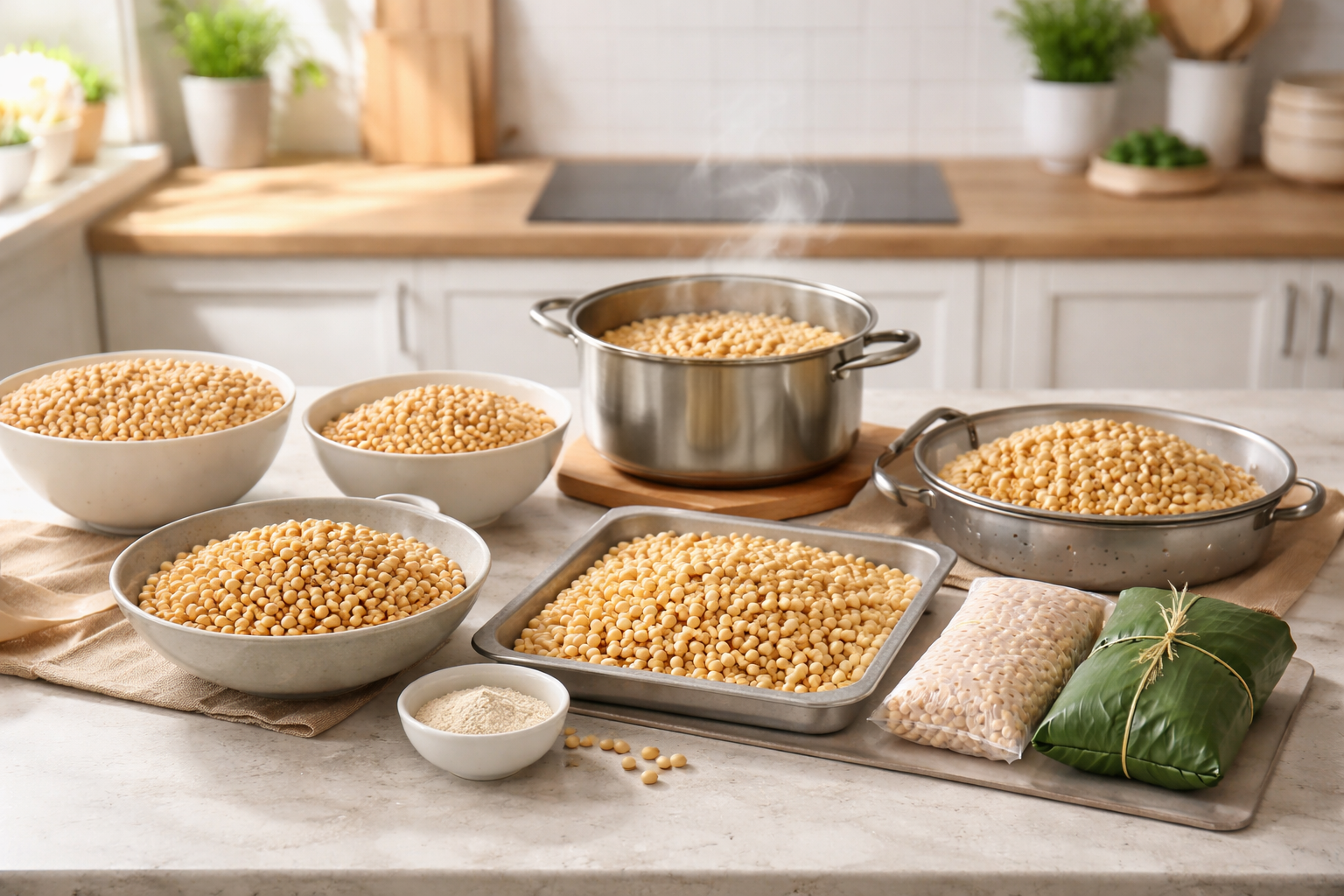
We turn soybeans into tempeh through fermentation. We use a particular culture called Rhizopus oligosporus. It breaks down the beans, making them firmer, boosting the protein you can actually absorb,…
We make a lot of tempeh. After years of testing in our own kitchen, we're convinced the best beans are fresh, whole, yellow soybeans that are non-GMO. They have a…
Forget the whole beans. If you want tempeh that slices clean and holds up in the pan, you need to start with dehulled soybeans. We learned this the hard way…
Flavor starts with the bean. Whole soybeans give you a mild, nutty base, a little sweetness, and a natural savoriness that soaks up other flavors during cooking or fermenting. We've…